
How to Become a Fire Safety Officer: Complete Career Guide, Salary & Requirements
Fire safety is one of the most critical aspects of workplace health and safety management. Every year, fire incidents cause injuries, fatalities, and significant property damage in workplaces across the world. To prevent such incidents, organizations rely on trained professionals known asFire Safety Officers who ensure that fire risks are properly managed and safety regulations are followed.If you are wondering how to become a fire safety officer, this guide will help you understand the required qualifications, skills, and career path.
A career as a fire safety officer is both rewarding and in high demand, especially in industries such as construction, manufacturing, oil and gas, healthcare, and hospitality. These professionals play an essential role in protecting employees, visitors, and assets by implementing fire prevention strategies, conducting inspections, and responding effectively during emergencies.To build a strong foundation in fire prevention and risk management, it’s essential to understand core concepts—explore our Fire Safety Complete Guide for a complete overview.
For individuals aiming to build a professional career in this field, learning the pathway is crucial. A detailed guide on how to become a fire safety officer can help you understand the qualifications and skills required.
Before pursuing a career in fire safety, it is important to understand the basic concepts of fire prevention, hazards, and workplace safety practices. If you are new to the topic, you can first read our detailed guide on What is Fire Safety? Importance, Rules, and Workplace Guidelines.
How to Become a Fire Safety Officer?
Becoming a Fire Safety Officer requires a combination of education, professional training, practical experience, and recognized certifications. This career is ideal for individuals who are interested in safety management, risk prevention, and protecting lives and property from fire hazards.
The journey to becoming a fire safety officer is structured and step-by-step, ensuring that candidates develop both theoretical knowledge and practical skills required for the role.
1. Complete Basic Education
The first step is to complete your basic education, such as a high school diploma or equivalent. While this is the minimum requirement, having a degree in fields like safety management, engineering, or environmental health can provide a strong advantage.
A solid educational background helps in understanding technical safety concepts and regulations.
2. Enroll in Fire Safety Training
Professional training is essential to gain knowledge about fire prevention, protection systems, and emergency response.
Training Covers:
- Fire hazards and risk assessment
- Fire prevention techniques
- Use of fire safety equipment
- Emergency evacuation planning
These courses build the foundation required to work in real-world environments.
3. Obtain Professional Certifications
Certifications play a crucial role in becoming a qualified fire safety officer. Employers prefer candidates with recognized certifications.
Popular Certifications:
- NEBOSH Fire Safety Certificate
- IOSH Managing Safely
- Diploma in Fire Safety
Certifications increase your credibility and job opportunities.
4. Gain Practical Experience
Practical experience is essential for developing real-world skills. You can gain experience by:
- Working as a safety assistant
- Participating in fire drills
- Assisting in risk assessments
- Joining internships or training programs
Experience helps you understand how to handle real emergencies effectively.
5. Develop Key Skills
To succeed in this role, you need both technical and soft skills.
Important Skills:
- Hazard identification
- Emergency response handling
- Communication and teamwork
- Problem-solving ability
These skills ensure effective safety management and quick decision-making.
6. Apply for Fire Safety Officer Jobs
Once you have completed your education, training, and certifications, you can apply for jobs in various industries such as construction, manufacturing, healthcare, and oil & gas.
Entry-level positions help you gain experience and grow in your career.
In simple terms, the path to becoming a fire safety officer includes:
Education
Training
Certification
Experience
Skill development
When these elements are combined, they create a strong foundation for a successful and rewarding career in fire safety.
Role in the Health and Safety Management Team
In many organizations, Fire Safety Officers are part of the health and safety management team. They work closely with:
- management and supervisors
- safety professionals
- emergency response teams
- employees across different departments
Together, they develop and implement workplace safety policies to maintain a safe working environment.
Summary
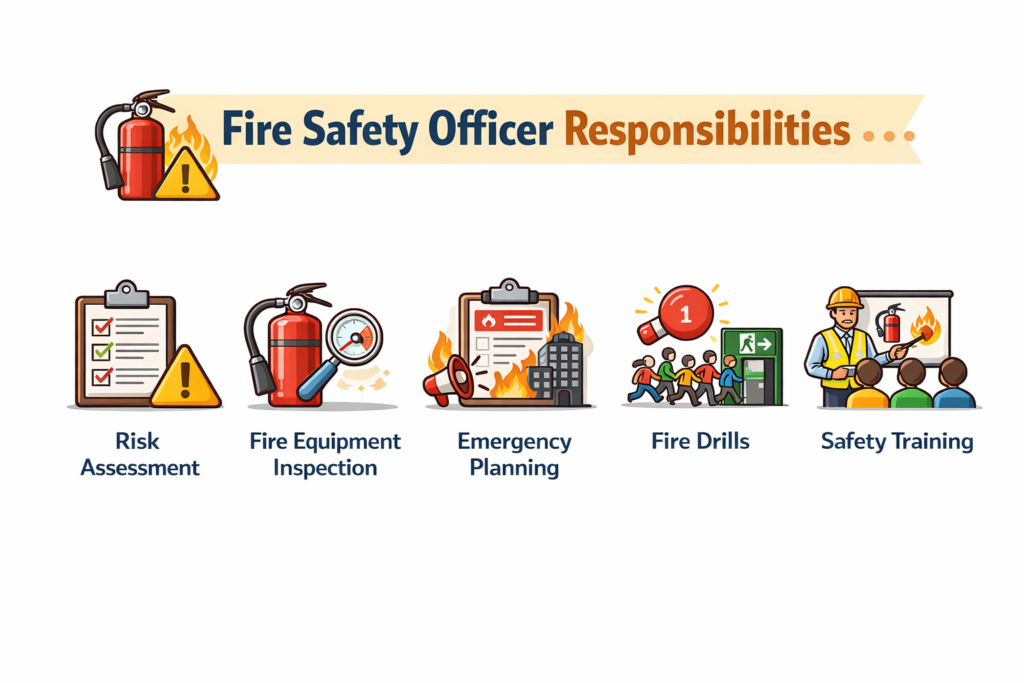
A Fire Safety Officer plays a vital role in preventing fires and ensuring workplace safety. Their responsibilities include:
- identifying fire hazards
- conducting fire risk assessments
- inspecting fire safety equipment
- developing fire prevention strategies
- organizing fire drills
- providing fire safety training
- ensuring compliance with fire safety regulations
By performing these duties, Fire Safety Officers help organizations reduce fire risks, protect lives, and maintain safe workplaces.
Importance of Fire Safety Officers in the Workplace
Fire safety officers play a crucial role in preventing accidents and protecting organizations from serious risks. Without proper fire safety management, workplaces can face dangerous situations that may lead to injuries, loss of life, and financial damage.
Some of the key reasons why fire safety officers are important include:
Protecting Lives
The primary goal of a fire safety officer is to protect human life. By identifying hazards and implementing preventive measures, they help reduce the chances of fire-related injuries or fatalities.
Preventing Property Damage
Fire incidents can destroy buildings, machinery, and equipment. Fire safety officers help prevent such losses by ensuring that fire prevention systems are properly maintained.
Ensuring Legal Compliance
Most countries have strict fire safety regulations that organizations must follow. Fire safety officers ensure that workplaces comply with these regulations and maintain proper safety standards.
Improving Workplace Safety Culture
Through training programs and safety awareness campaigns, fire safety officers help create a workplace culture where safety becomes a shared responsibility.
Key Responsibilities of a Fire Safety Officer
Fire safety officers perform a wide range of duties to ensure that workplaces remain safe from fire hazards.
Some of their key responsibilities include:
Fire Safety Officers perform several important tasks to ensure workplace fire safety. Their responsibilities typically include the following:
1. Identifying Fire Hazards
One of the primary duties of a Fire Safety Officer is to identify possible fire hazards in the workplace. These hazards may include:
- Faulty electrical systems
- Overloaded circuits or damaged wiring
- Flammable liquids and chemicals
- Poor housekeeping practices
- Unsafe storage of combustible materials
By identifying these hazards early, Fire Safety Officers help organizations take preventive actions to reduce fire risks.
2. Conducting Fire Risk Assessments
Fire Safety Officers conduct fire risk assessments to evaluate potential fire hazards and determine the level of risk within the workplace.
This process involves:
- Identifying possible sources of fire
- Assessing who may be at risk
- Evaluating existing safety measures
- Implementing additional control measures if necessary
Regular risk assessments help organizations improve safety and comply with fire safety regulations.
3. Inspecting Fire Safety Equipment
Another important responsibility is ensuring that all fire protection equipment is properly maintained and functioning.
Fire Safety Officers regularly inspect:
- Fire extinguishers
- Fire alarm systems
- Smoke detectors
- Sprinkler systems
- Emergency lighting
- Fire exit doors and escape routes
Proper maintenance of these systems ensures that they work effectively during emergencies.
4. Developing Fire Prevention Strategies
Fire Safety Officers develop strategies to prevent fires before they occur. These strategies may include:
- Improving workplace safety procedures
- Ensuring safe storage of flammable materials
- Monitoring electrical systems and equipment
- Promoting safe work practices among employees
Preventive measures significantly reduce the chances of fire incidents.
5. Organizing Fire Drills and Emergency Evacuations
Fire Safety Officers organize regular fire drills and evacuation exercises to ensure employees know how to respond during emergencies.
Fire drills help employees:
- Locate emergency exits
- Understand evacuation routes
- Reach designated assembly points safely
- Follow proper emergency procedures
These drills prepare workers to respond quickly and calmly during real emergencies.
6. Providing Fire Safety Training
Training employees is a key part of fire safety management.
Fire Safety Officers conduct training sessions to educate employees on:
- Fire prevention practices
- Emergency evacuation procedures
- Proper use of fire extinguishers
- Workplace fire safety rules
This training helps create a strong safety culture within the organization.
7. Ensuring Compliance with Fire Safety Regulations
Organizations must follow local and international fire safety laws and regulations. Fire Safety Officers ensure that workplaces meet these requirements by:
- Implementing fire safety policies
- Monitoring safety standards
- Maintaining proper documentation
- Ensuring compliance with industry regulations
Skills Required to Become a Fire Safety Officer
To become successful in this field, individuals need a combination of technical knowledge, analytical skills, and communication abilities.A strong understanding of fire safety and risk assessment is essential—explore our complete practical guide to learn more.
Some essential skills include:
Risk Assessment Skills
Fire safety officers must be able to identify hazards and evaluate risks effectively.
Knowledge of Fire Safety Regulations
Understanding fire safety laws and safety standards is crucial for ensuring compliance.
Emergency Response Planning
Fire safety officers must know how to manage emergency situations and coordinate evacuation procedures.
Communication Skills
They must communicate safety instructions clearly to employees and management.
Leadership Skills
Fire safety officers often lead safety teams and coordinate emergency responses.
Problem-Solving Ability
They must quickly identify solutions to safety problems and implement preventive measures.
| Skill | Description |
|---|---|
| Risk Assessment | Ability to identify fire hazards and evaluate risks |
| Communication | Explaining safety procedures clearly |
| Emergency Planning | Managing evacuation and response plans |
| Technical Knowledge | Understanding fire protection systems |
| Leadership | Coordinating safety teams during emergencies |
Step-by-Step Guide to Become a Fire Safety Officer
Becoming a fire safety officer requires education, training, and practical experience. Below is a step-by-step guide to help you start your career in this field.
Step 1: Complete Basic Education
The first step toward becoming a fire safety officer is completing basic education, typically a high school diploma or equivalent qualification.
While a high school education is the minimum requirement in many cases, individuals who pursue higher education in safety management, fire engineering, or occupational health and safety may have better career opportunities.
Step 2: Enroll in Fire Safety Training Programs
Professional training is essential for gaining the knowledge and skills required for this role.
Fire safety training programs typically cover topics such as:
- fire prevention and protection
- fire risk assessment
- fire safety regulations
- emergency evacuation planning
- fire detection systems
- use of fire extinguishers
Many training institutions offer Fire Safety Courses from Level 1 to Level 6, which provide progressive knowledge from basic fire awareness to advanced fire safety management.
Step 3: Gain Practical Experience
Practical experience is an important part of becoming a fire safety professional.
Many individuals begin their careers as:
- safety assistants
- fire wardens
- safety supervisors
- emergency response team members
Working in these roles allows individuals to gain hands-on experience in fire prevention, safety inspections, and emergency response procedures.
Step 4: Obtain Professional Certifications
Professional certifications help demonstrate competence and increase career opportunities.
Some recognized certifications include:
- Fire Safety Diploma
- Fire Risk Assessment Certification
- Occupational Health and Safety Certification
- Fire Safety Management Courses
These certifications provide advanced knowledge of fire safety systems, emergency planning, and regulatory compliance.
Salary of Fire Safety Officer
The salary of a fire safety officer varies depending on experience, qualifications, industry, and location. It is a rewarding career with strong earning potential, especially for those with advanced certifications and practical experience.
Salary Breakdown
Entry-Level
- Fresh candidates or beginners
- Basic certifications
- Approx: $500 – $1,000 per month
Mid-Level
- 2–5 years experience
- Professional certifications
- Approx: $1,000 – $3,000 per month
Senior-Level
- Experienced professionals
- Advanced qualifications
- $3,000+ per month
Factors Affecting Salary
- Level of certification (NEBOSH, IOSH, etc.)
- Industry (oil & gas, construction, manufacturing)
- Country or region
- Work experience
With continuous learning and certifications, salary increases significantly over time.
Skills Required to Become a Fire Safety Officer
To perform effectively, a fire safety officer must possess a combination of technical knowledge and practical skills.
Core Skills
Technical Skills
- Fire safety systems knowledge
- Risk assessment and hazard identification
- Understanding safety regulations
Practical Skills
- Fire extinguisher handling
- Emergency response management
- Conducting safety inspections
Soft Skills
- Communication and teamwork
- Problem-solving ability
- Attention to detail
- Leadership skills
These skills ensure quick decision-making and effective safety management.
Job Responsibilities of a Fire Safety Officer
A fire safety officer is responsible for maintaining safety standards and preventing fire hazards in the workplace.
Key Responsibilities
- Conduct fire risk assessments
- Inspect fire safety equipment regularly
- Develop emergency evacuation plans
- Train employees on fire safety procedures
- Ensure compliance with safety laws
- Investigate fire incidents and prepare reports
Their role is essential in protecting lives and ensuring a safe environment.
Career Opportunities in Fire Safety
Fire safety is a growing field with opportunities across multiple industries.
Industries Hiring
- Construction and infrastructure
- Oil & gas sector
- Manufacturing industries
- Healthcare facilities
- Educational institutions
Career Growth Path
- Fire Safety Officer
- Senior Safety Officer
- Safety Supervisor
- HSE Manager
With experience, professionals can move into higher-level management roles.
Certifications (UK & International)
Certifications play a crucial role in becoming a qualified fire safety officer.
UK Certifications
- NEBOSH Fire Safety Certificate
- IOSH Managing Safely
- Level 3 / Level 4 Fire Safety Diplomas
International Certifications
- OSHA Safety Courses
- NFPA Certifications
- Diploma in Fire Safety Engineering
These certifications improve job opportunities and global career prospects.
Fire Safety Officer Qualifications
Different organizations may have different qualification requirements, but most employers prefer candidates who have completed professional fire safety training programs.
Common qualifications include:
- ProQual Level 5 Award in Fire Risk Assessment
- ProQual Level 5 Diploma in Fire Engineering Design
- ProQual Level 5 Award in Fire Engineering Design
- ProQual Level 5 Diploma in Fire Risk Assessment
- ProQual Level 4 Certificate in Advance Fire Risk Assessment
- ProQual Level 4 Award in Advanced Fire Risk Assessment
- ProQual Level 5 Diploma in Fire Safety and Risk Management
- ProQual Level 3 Award in Fire Risk Assessment Awareness
- ProQual Level 5 Diploma in Passive Fire Protection Inspection
- ProQual Level 3 Award in the Inspection and Testing of Fire Resisting Door Installations
- ProQual Level 3 Award in the Inspection and Testing of Fire-Rated Intumescent Coatings
- ProQual Level 3 Award in the Inspection and Testing of Fire Stopping Installations
These qualifications help individuals build a strong foundation in fire safety and prepare them for advanced roles in safety management.
Industries That Hire Fire Safety Officers
Fire safety officers are required in many industries where fire hazards may exist.
Some of the major industries that employ fire safety professionals include:
Construction Industry
Construction sites often involve welding, electrical work, and flammable materials, making fire safety management essential.
Manufacturing Industry
Factories and industrial plants require fire safety officers to monitor equipment, chemicals, and machinery that may pose fire risks.
Oil and Gas Industry
Oil refineries and gas facilities have high fire risks, making fire safety professionals extremely important.
Healthcare Facilities
Hospitals and healthcare institutions must maintain strict fire safety standards to protect patients and staff.
Hotels and Hospitality Industry
Large hotels and resorts employ fire safety officers to manage emergency procedures and ensure guest safety.
Airports and Transportation Facilities
Airports require fire safety officers to manage fire risks associated with aircraft operations and fuel storage.
Fire Safety Officer Salary
Professionals with advanced certifications and extensive experience can progress into higher-paying roles such as Fire Safety Manager, HSE Manager, or Safety Director, where salaries are significantly higher.
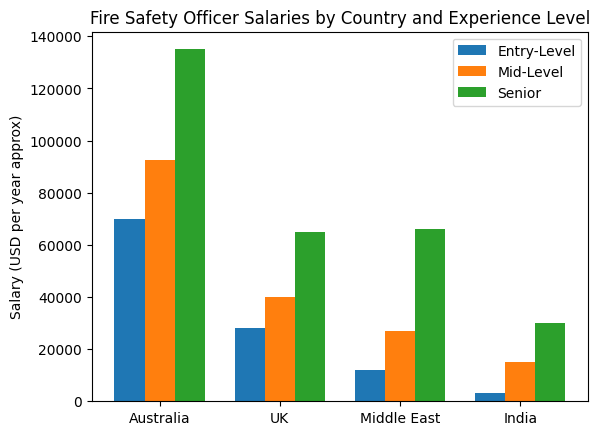
Fire Safety Officer Salaries by Country (2026 Estimates)
Salary levels differ across regions, with the highest-paying opportunities typically found in Australia, the UK, and the Middle East, especially in industries like oil & gas, construction, and energy.
Australia (High Demand Market)
- Entry-Level: AUD 65,000 – 75,000/year
- Mid-Level: AUD 85,000 – 100,000/year
- Senior/Manager: AUD 120,000 – 150,000/year
Australia offers some of the highest salary packages due to strict safety regulations and strong industry demand.
United Kingdom (UK)
- Entry-Level: £25,000 – £32,000/year
- Mid-Level: £35,000 – £45,000/year
- Senior/Manager: £55,000 – £75,000/year
The UK has a well-established safety framework, making certified professionals highly valuable.
Middle East (Saudi Arabia / UAE / Qatar)
- Entry-Level: $800 – $1,200/month
- Mid-Level: $1,500 – $3,000/month
- Senior/Manager: $4,000 – $7,000/month
The Middle East is known for tax-free salaries, accommodation benefits, and high demand, especially in construction and oil & gas sectors.
Saudi Arabia Specific:
- Average salary (Dammam): ~SAR 95,099/year
- Senior roles: SAR 106,000+ per year
India
- Entry-Level: ₹18,000 – ₹30,000/month
- Senior/Manager: ₹1.2 – ₹2.5 Lakh/month
Salaries increase significantly with experience and international certifications.
Other Regions
Israel
- ₪7,034 – ₪14,995/month
- Senior roles: ₪106,000+ annually
Turkey (Istanbul)
- Average: ₺455,728/year
- Senior roles: ₺514,629/year
Indonesia
- Average: ~Rp163 million/year
Key Factors That Affect Fire Safety Officer Salary
Experience Level
Professionals with 8+ years of experience can earn double or more compared to entry-level positions.
Professional Certifications
Certifications such as NEBOSH, IOSH, OSHA, CSP, and CHST significantly increase earning potential and are often required for higher-level roles.
Industry Type
High-risk industries offer higher salaries, including:
- Oil & Gas
- Construction
- Refineries
- Energy and Infrastructure
Location
Countries with strict safety regulations and large-scale industrial projects tend to offer better compensation packages.
Career Growth & Earning Potential
To strengthen your knowledge base, you should also read our detailed Fire Safety Guide: Key Principles for Prevention, Protection, and Risk Control.Becoming a fire safety officer requires not only qualifications but also a strong understanding of core safety principles. To build a solid foundation, it is highly recommended to read our detailed article on fire safety fundamentals, where key concepts and real-world practices are explained.The Ultimate Fire Safety Guide: Prevention, Risk Assessment, and Emergency Preparedness.To build strong knowledge in this field, it is recommended to study a complete fire safety guide to protect lives and property:
To strengthen your knowledge and practical understanding, explore:
With the right qualifications, certifications, and experience, Fire Safety Officers can progress into senior roles such as:
- Fire Safety Manager
- HSE Manager
- Safety Consultant
- Safety Director
These positions offer substantially higher salaries, leadership responsibilities, and international career opportunities.
Career Progression in Fire Safety
A career in fire safety offers many opportunities for professional growth and advancement. As individuals gain more training, experience, and qualifications, they can move into higher-level roles with greater responsibilities in safety management and risk control.A fire safety officer must have a strong understanding of core safety principles, including prevention, protection, and emergency preparedness. You can learn more about these essential concepts in this guide on fire safety essentials prevention protection and preparedness.
The career path in fire safety usually begins with entry-level roles and gradually progresses to senior management positions.
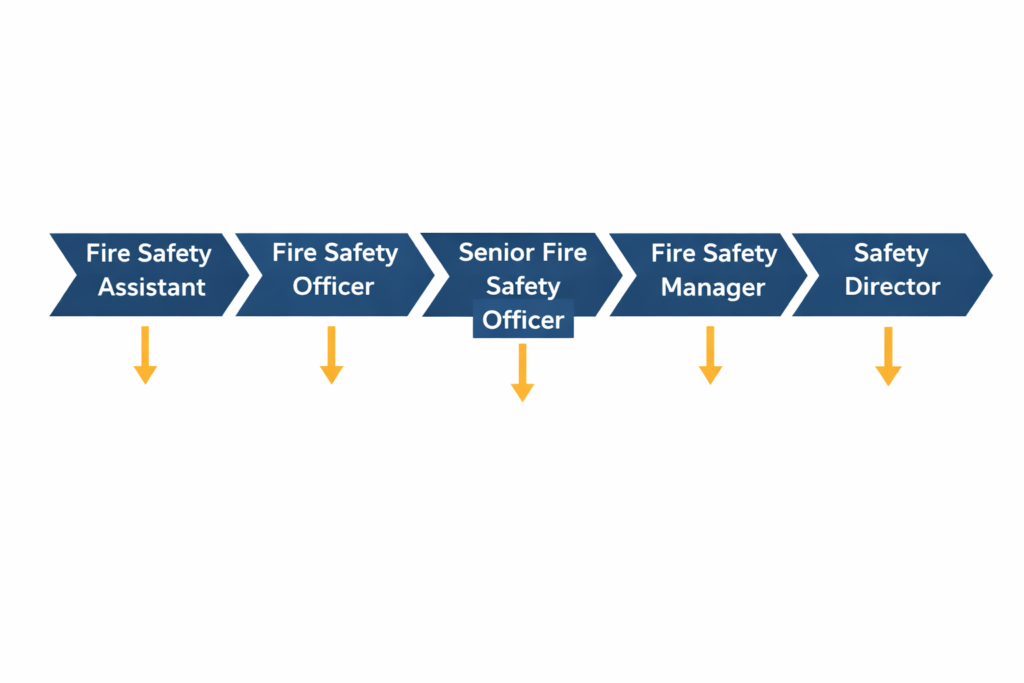
Typical Career Path in Fire Safety
Below is a common career progression route for professionals working in the fire safety field:
- Fire Safety Assistant
At the beginning of their career, many professionals start as fire safety assistants or safety trainees. In this role, they support senior safety staff by helping with basic tasks such as safety inspections, equipment checks, and assisting in safety training activities. - Fire Safety Officer
After gaining experience and completing relevant training, individuals can progress to the role of Fire Safety Officer. In this position, they are responsible for identifying fire hazards, conducting fire risk assessments, ensuring compliance with fire safety regulations, and training employees on fire safety procedures. - Senior Fire Safety Officer
With additional experience, professionals can advance to a senior role where they supervise safety teams, manage fire safety programs, and coordinate emergency preparedness plans within the organization. - Fire Safety Manager
At this level, professionals oversee the entire fire safety management system within an organization. They develop fire safety policies, manage risk assessment programs, and ensure that all departments follow fire safety regulations and standards. - Health and Safety Manager
Many experienced fire safety professionals expand their expertise into broader workplace safety roles. As Health and Safety Managers, they are responsible for managing overall workplace safety, including fire safety, occupational health, risk management, and regulatory compliance. - Safety Director
This is a senior leadership position where professionals are responsible for developing and managing an organization’s complete safety strategy. Safety Directors oversee safety policies, compliance programs, and risk management systems across multiple departments or locations.
Specialization Opportunities in Fire Safety
With advanced training and professional development, fire safety professionals can also specialize in specific areas such as:
- Fire Risk Assessment – conducting detailed risk evaluations and safety audits
- Fire Engineering – designing fire protection systems and safety infrastructure
- Safety Consultancy – advising organizations on fire safety policies and compliance
- Emergency Management – planning and managing emergency response systems
- Fire Safety Training – educating employees and organizations on fire prevention and emergency procedures
These specialized roles allow professionals to build highly rewarding careers while contributing to safer workplaces and communities.
Importance of Fire Safety Training
Fire safety training is essential for both individuals and organizations. Proper training helps individuals understand fire hazards, implement preventive measures, and respond effectively during emergencies.
Benefits of fire safety training include:
- improved workplace safety
- reduced fire risks
- compliance with fire safety regulations
- increased employee awareness
- better emergency preparedness
Organizations that invest in fire safety training create safer environments and reduce the likelihood of fire incidents.
How to Choose the Right Fire Safety Course
Choosing the right training program is important for building a successful career in fire safety.
When selecting a course, consider the following factors:
Accreditation and Recognition
Ensure that the training program is recognized by reputable organizations and follows international safety standards.
Course Content
The course should cover important topics such as fire prevention, risk assessment, emergency planning, and fire safety management.
Practical Training
Hands-on training helps learners gain real-world experience and develop practical skills.
Career Support
Some training providers offer career guidance and job placement assistance.
Challenges Faced by Fire Safety Officers
Although the profession is rewarding, fire safety officers may face several challenges in their work.
Some common challenges include:
- identifying hidden fire hazards in complex environments
- ensuring employee compliance with safety procedures
- managing emergency situations effectively
- maintaining safety standards in high-risk industries
Despite these challenges, the role provides opportunities to make a significant impact on workplace safety.
Future Demand for Fire Safety Professionals
The demand for fire safety professionals continues to grow as organizations prioritize safety and regulatory compliance.
Several factors contribute to this increasing demand:
- stricter fire safety regulations
- expansion of industrial sectors
- increased awareness of workplace safety
- growing emphasis on risk management
As industries continue to evolve, qualified fire safety officers will remain essential for protecting workplaces from fire hazards.
Becoming a fire safety officer is an excellent career choice for individuals who are passionate about safety and risk management. These professionals play a vital role in preventing fires, protecting lives, and ensuring that organizations comply with fire safety regulations.
By completing the necessary education, gaining professional training, and acquiring practical experience, individuals can build a successful career in fire safety management.
With the increasing demand for safety professionals worldwide, pursuing a career as a fire safety officer offers strong job opportunities, career growth, and the satisfaction of contributing to safer workplaces.Becoming a fire safety officer requires proper training, certifications, and practical experience.
Investing in professional fire safety training is the first step toward becoming a qualified fire safety officer and making a meaningful impact in workplace safety.To strengthen your knowledge and practical understanding, explore our complete fire safety blueprint guide