
Fire Safety and Risk Assessment: A Practical Guide to Prevention and Safer Environments
Fire incidents remain one of the most serious and preventable threats to both life and property across homes, workplaces, and industrial environments. Each year, uncontrolled fires result in significant financial losses, operational disruptions, and, in many cases, tragic injuries or fatalities. What makes this more concerning is that a large percentage of these incidents occur due to overlooked hazards, lack of awareness, or inadequate safety planning—factors that can be effectively controlled with the right approach.You can also explore our detailed fire safety explanation to improve workplace safety and preparedness.
What is Fire Safety Risk Assessment?
A fire safety risk assessment is a systematic process used to identify fire hazards, evaluate potential risks, and implement control measures to ensure safety in workplaces and buildings.
A proper fire safety risk assessment helps organizations prevent fire incidents and protect people, property, and operations from serious damage.
Examples:
- Identifying faulty electrical wiring in an office
- Detecting improper storage of flammable materials
Fire safety is not simply about responding to emergencies; it is about creating a proactive system that minimizes risks before they escalate. This is where fire risk assessment plays a critical role. By systematically identifying potential hazards, evaluating their impact, and implementing appropriate preventive measures, individuals and organizations can significantly reduce the likelihood of fire incidents. These practices are not only essential for legal compliance but are also fundamental to ensuring a safe, secure, and resilient environment.If you’re looking to take your understanding beyond just theory and apply fire safety in real-life situations, you should definitely check out our guide on fire safety fundamentals. It breaks things down in a way that’s easy to follow and implement.
Whether you are managing a workplace, overseeing a facility, or safeguarding your home, understanding the principles of fire safety and risk assessment is essential. This guide provides a practical and comprehensive overview of fire prevention strategies, hazard identification, and emergency planning. It is designed to help you build safer environments through informed decision-making, modern safety practices, and a structured approach to risk management.
What is Fire Safety?
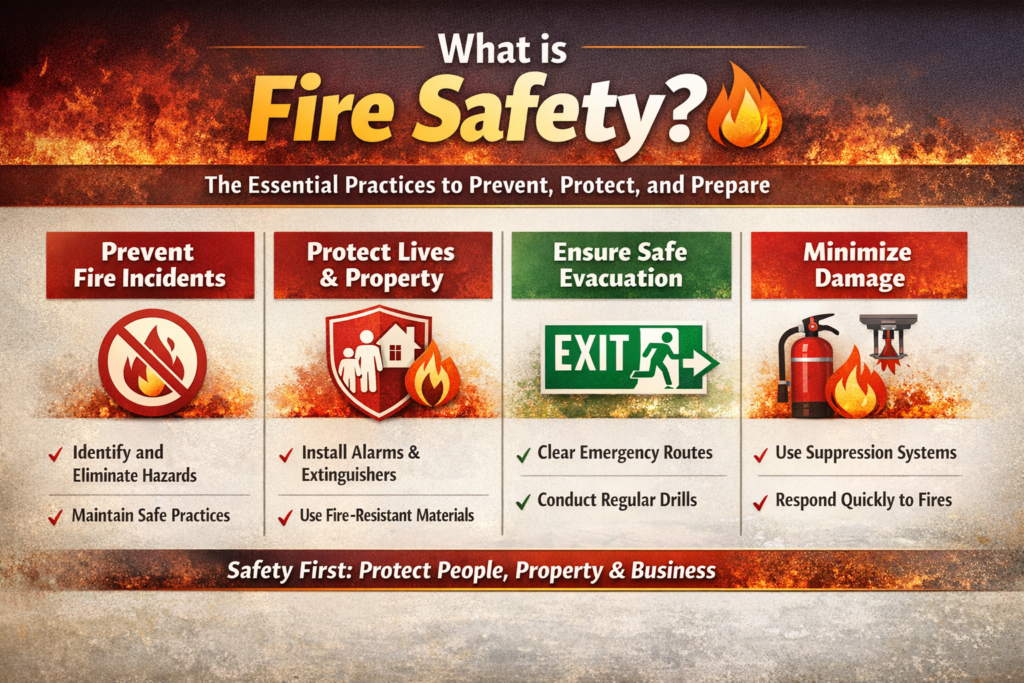
Fire safety is a comprehensive approach that involves planning, prevention, protection, and response strategies to reduce the risk of fire incidents and minimize their impact. It is not limited to installing fire alarms or extinguishers—it includes a wide range of measures designed to identify potential risks, control hazards, and ensure people can respond effectively during an emergency.
In simple terms, fire safety is about being prepared before a fire happens, protected during a fire, and capable of responding safely after a fire starts.
Whether in homes, offices, factories, or public buildings, fire safety plays a critical role in maintaining a secure and risk-free environment. It combines proper equipment, regular inspections, staff training, and emergency planning to ensure that fire risks are kept under control at all times.
Why Fire Safety is Important
Understanding fire safety is essential because fires can spread rapidly and cause irreversible damage within minutes. Without proper safety measures, even a small spark can turn into a major disaster.
Key reasons why fire safety matters:
- It reduces the chances of fire incidents occurring
- It helps save lives by enabling quick evacuation
- It protects valuable assets, infrastructure, and business operations
- It ensures compliance with safety regulations and standards
- It builds a culture of awareness and responsibility
Key Objectives of Fire Safety
Fire safety is built around several important objectives. Each objective plays a vital role in creating a safe and controlled environment.
1. Prevent Fire Incidents
The primary goal of fire safety is to stop fires before they start. Prevention focuses on identifying and eliminating potential fire hazards.
How this is achieved:
- Regular inspection of electrical systems
- Safe storage of flammable materials
- Proper maintenance of machinery and equipment
- Avoiding unsafe practices like overloading circuits
Explanation:
Most fires are caused by negligence or unnoticed hazards. By addressing these issues early, the likelihood of fire incidents can be significantly reduced.
2. Protect Lives and Property
Protecting human life is the highest priority in any fire safety plan. At the same time, safeguarding property, equipment, and infrastructure is also essential.
Key protective measures:
- Installation of smoke detectors and fire alarms
- Use of fire-resistant materials
- Availability of fire extinguishers and suppression systems
- Clear safety signage and warnings
Explanation:
These measures ensure that people are alerted quickly and have access to tools that can control or extinguish fires before they spread.
3. Ensure Safe Evacuation
In the event of a fire, safe and quick evacuation is critical. Fire safety planning ensures that everyone knows how to exit the building without panic or confusion.
Important evacuation elements:
- Clearly marked emergency exits
- Unobstructed escape routes
- Emergency lighting systems
- Regular fire drills and training
Explanation:
A well-prepared evacuation plan reduces panic and ensures that people can leave the area safely, even in low visibility or high-stress situations.
4. Minimize Damage and Loss
Even if a fire occurs, effective fire safety measures can limit its impact and prevent it from escalating.
Ways to minimize damage:
- Early detection systems (alarms and sensors)
- Fire suppression systems (sprinklers, extinguishers)
- Quick emergency response procedures
- Proper containment strategies
Explanation:
The faster a fire is detected and controlled, the less damage it will cause. This helps reduce financial losses and ensures faster recovery.
The table below provides a quick summary of the key objectives of fire safety and their practical implementation:
| Objective | Description | Key Actions |
|---|---|---|
| Prevent Fire Incidents | Stop fires before they start by identifying and controlling hazards | Inspect electrical systems, avoid overloading, safe storage of flammable materials |
| Protect Lives & Property | Ensure safety of people and minimize damage to assets | Install alarms, use fire-resistant materials, maintain extinguishers |
| Ensure Safe Evacuation | Enable quick and safe exit during emergencies | Mark exits clearly, keep routes unobstructed, conduct fire drills |
| Minimize Damage | Reduce the impact and spread of fire | Use suppression systems, early detection, quick emergency response |
Fire Safety as a Continuous Process
Fire safety is not a one-time task—it is an ongoing process that requires regular monitoring and improvement.
Continuous actions include:
- Routine safety inspections
- Updating risk assessments
- Training employees and occupants
- Testing safety equipment
Explanation:
As environments change (new equipment, layout changes, etc.), fire risks also change. Continuous evaluation ensures that safety measures remain effective.
Fire safety is a vital practice that combines prevention, protection, and preparedness to create safer environments. By focusing on preventing fires, protecting lives, ensuring safe evacuation, and minimizing damage, individuals and organizations can significantly reduce fire-related risks.
A strong fire safety system not only protects people and property but also promotes confidence, compliance, and long-term safety.
What is Fire Risk Assessment?
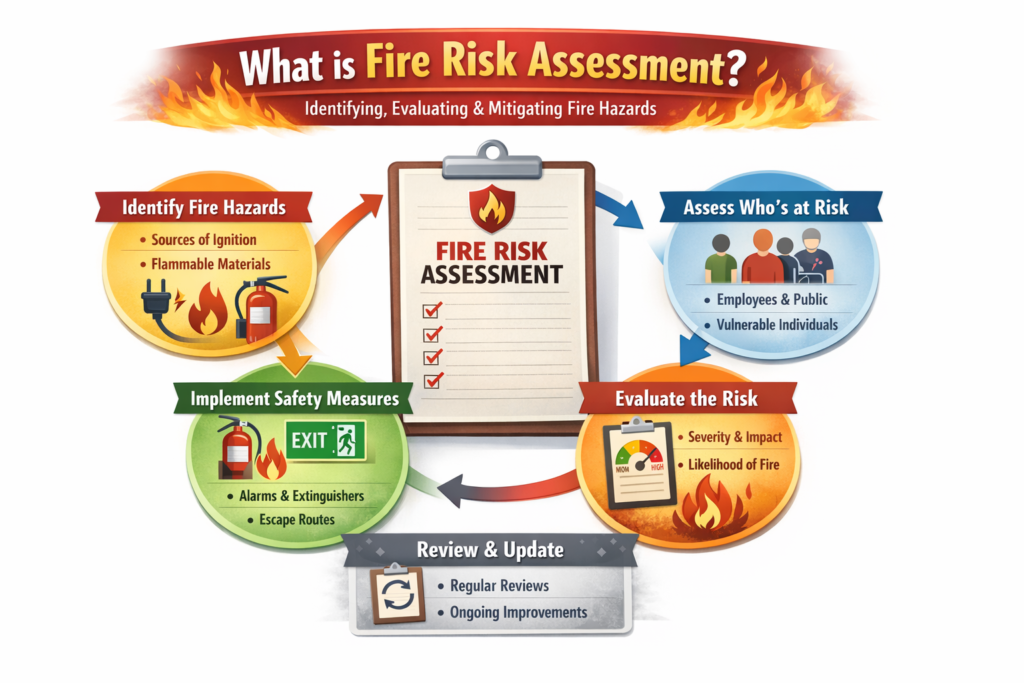
A fire risk assessment is a structured and systematic process used to identify potential fire hazards, evaluate the level of risk they pose, and implement effective measures to reduce or eliminate those risks. It is one of the most important components of fire safety, helping individuals and organizations prevent fires before they occur and minimize their impact if they do.
Rather than reacting to emergencies, a fire risk assessment focuses on proactive planning. It ensures that all possible fire hazards are identified in advance and that appropriate safety measures are in place to protect people, property, and operations.
In simple terms, it answers a critical question:
“How likely is a fire to occur here, and what can we do to stop it or control it?”
Why Fire Risk Assessment is Important
Conducting a fire risk assessment is essential because it helps create a safe and controlled environment. Fires can spread quickly, and without proper planning, even a small hazard can lead to serious consequences.
Key benefits include:
- Reducing the chances of fire incidents
- Protecting lives and minimizing injuries
- Preventing damage to buildings, equipment, and assets
- Ensuring compliance with safety regulations
- Improving emergency preparedness and response
Explanation:
By identifying risks early, you can take preventive action before a dangerous situation develops, saving both lives and resources.
Key Questions a Fire Risk Assessment Answers
A well-conducted fire risk assessment focuses on answering several important questions. These questions help in understanding the overall fire safety condition of a place.
1. What Can Cause a Fire?
This involves identifying sources of ignition and potential hazards that could start a fire.
Common causes include:
- Faulty electrical wiring
- Overloaded circuits
- Open flames (candles, cooking equipment)
- Heating systems and machinery
Explanation:
Recognizing these sources helps eliminate or control them before they lead to a fire.
2. Who is at Risk?
This step identifies people who could be affected in case of a fire.You can also explore fire safety management strategies for prevention control and emergency response for a comprehensive approach to prevention and emergency planning.
People at risk may include:
- Employees and workers
- Visitors and customers
- Residents or occupants
- Vulnerable individuals (elderly, disabled)
Explanation:
Understanding who is at risk helps in planning specific safety measures, such as additional support for vulnerable individuals.
3. How Severe Could the Damage Be?
This involves evaluating the potential impact of a fire if it occurs.
Factors to consider:
- Size and layout of the building
- Type of materials present (flammable or not)
- Number of people in the area
- Availability of fire protection systems
Explanation:
Assessing severity helps prioritize risks and determine which areas need immediate attention.
4. What Control Measures Are Needed?
Once risks are identified, the next step is to implement control measures to reduce or eliminate them.
Examples of control measures:
- Installing fire alarms and detection systems
- Providing fire extinguishers
- Maintaining clear escape routes
- Training staff in fire safety procedures
Explanation:
These measures ensure that risks are managed effectively and that people can respond quickly in an emergency.
The table below provides a simplified overview of the key elements involved in a fire risk assessment:
| Assessment Area | What It Involves | Examples | Purpose |
|---|---|---|---|
| Fire Hazards | Identifying anything that can start or fuel a fire | Faulty wiring, open flames, flammable materials | Prevent fire incidents before they occur |
| People at Risk | Identifying individuals who may be affected | Employees, visitors, elderly, disabled persons | Ensure safety planning for all occupants |
| Risk Evaluation | Assessing likelihood and potential impact of fire | Building layout, material type, occupancy level | Prioritize high-risk areas |
| Control Measures | Implementing actions to reduce or eliminate risks | Fire alarms, extinguishers, training, escape routes | Minimize risk and improve safety |
| Review & Monitoring | Regularly updating and improving assessment | Safety audits, inspections, updates after changes | Ensure ongoing effectiveness |
Fire Risk Assessment as an Ongoing Process
A fire risk assessment is not something you do once and forget—it must be reviewed and updated regularly.
When should it be reviewed?
- After changes in building layout
- When new equipment is installed
- After an incident or near-miss
- Periodically (e.g., annually)
Explanation:
Environments change over time, and new risks may arise. Regular reviews ensure that safety measures remain effective and up to date.
Key Components of an Effective Fire Risk Assessment
To be effective, a fire risk assessment should include:
Hazard Identification
Identifying all possible fire hazards
Risk Evaluation
Analyzing likelihood and severity
Control Measures
Implementing preventive and protective actions
Documentation
Recording findings and actions taken
Monitoring & Review
Continuously improving safety measures
A fire risk assessment is a vital process that helps identify dangers, evaluate risks, and implement safety measures to prevent fire incidents. By answering key questions about hazards, people at risk, potential damage, and control measures, it ensures a safer environment for everyone.
When carried out properly and reviewed regularly, it becomes a powerful tool for preventing fires, protecting lives, and maintaining long-term safety.
Types of Fire Hazards
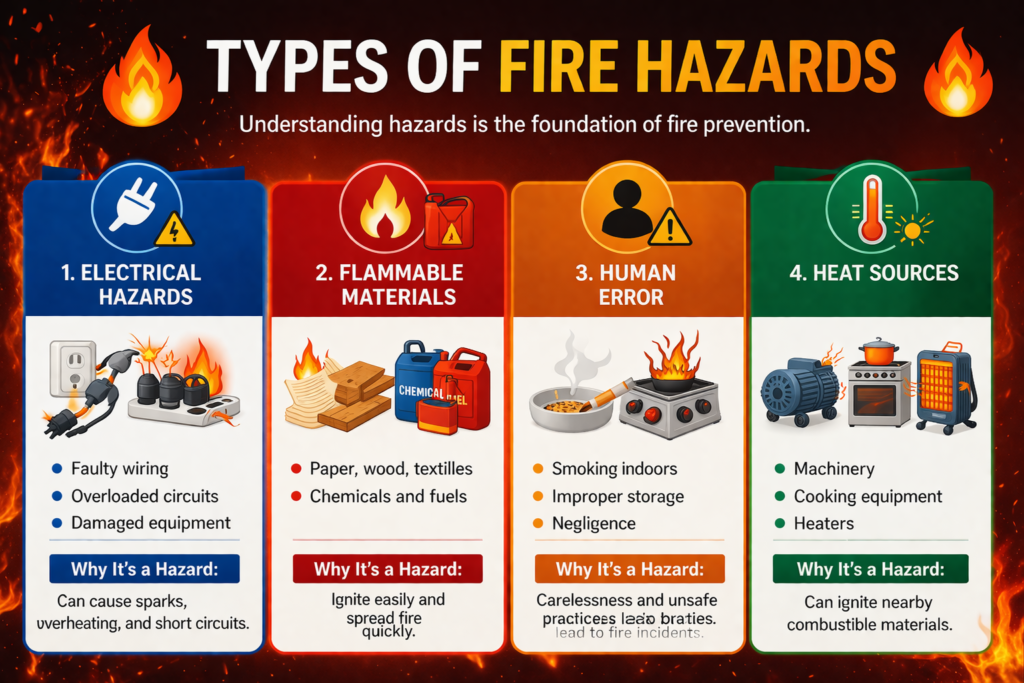
Understanding different types of fire hazards is the first and most important step in preventing fires. A fire hazard is anything that has the potential to start a fire, fuel it, or allow it to spread quickly. These hazards can exist in homes, workplaces, and industrial environments, often without being noticed.
By identifying and managing these hazards early, individuals and organizations can significantly reduce the risk of fire incidents and create a safer environment for everyone.
Fire hazards are generally categorized into four main types:
1. Electrical Hazards
Electrical hazards are one of the leading causes of fires worldwide, especially in workplaces and residential buildings. These hazards occur when electrical systems are poorly maintained, overloaded, or used improperly.
Common Electrical Hazards:
- Faulty Wiring
Damaged or outdated wiring can generate heat and sparks, which can easily ignite nearby materials. - Overloaded Circuits
Plugging too many devices into a single outlet can cause overheating, increasing the risk of fire. - Damaged Equipment
Electrical appliances with broken cords or internal faults can malfunction and become ignition sources.
Explanation:
Electricity is essential, but when not managed properly, it becomes highly dangerous. Regular inspection and maintenance of electrical systems can prevent short circuits and overheating, which are common fire triggers.
2. Flammable Materials
Flammable materials are substances that can ignite easily and burn rapidly. These materials act as fuel for fires, allowing them to spread quickly once started.
Common Flammable Materials:
- Paper, Wood, and Textiles
Common in offices and homes, these materials can catch fire quickly when exposed to heat or sparks. - Chemicals and Fuels
Substances such as gasoline, cleaning agents, and industrial chemicals are highly combustible.
Explanation:
Improper storage of flammable materials significantly increases fire risk. Keeping such materials away from heat sources and storing them in designated, secure areas is essential for fire prevention.
3. Human Error
Human behavior is a major contributor to fire incidents. Many fires occur due to carelessness, lack of awareness, or unsafe practices.
Common Examples of Human Error:
- Smoking Indoors
Carelessly discarded cigarettes can ignite furniture, carpets, or paper. - Improper Storage
Placing flammable materials near heat sources increases fire risk. - Negligence
Leaving cooking unattended or ignoring safety protocols can lead to dangerous situations.
Explanation:
Unlike other hazards, human error is completely preventable through awareness, training, and responsible behavior. Educating people about fire safety practices can significantly reduce these risks.
4. Heat Sources
Heat sources are objects or equipment that generate heat and can act as ignition points for fires.
Common Heat Sources:
- Machinery
Industrial machines can overheat if not properly maintained. - Cooking Equipment
Stoves and ovens are among the most common causes of household fires. - Heaters
Portable heaters placed near flammable materials can easily start fires.
Explanation:
Heat sources are unavoidable in daily life, but they must be used carefully. Maintaining a safe distance between heat sources and combustible materials is crucial for preventing fires.
The table below provides a quick summary of the main types of fire hazards, their causes, and prevention methods:
| Hazard Type | Description | Common Examples | Prevention Measures |
|---|---|---|---|
| Electrical Hazards | Risks caused by faulty or overloaded electrical systems | Faulty wiring, overloaded circuits, damaged appliances | Regular inspections, avoid overloading, maintain equipment |
| Flammable Materials | Substances that ignite easily and spread fire rapidly | Paper, wood, textiles, chemicals, fuels | Safe storage, keep away from heat sources, proper labeling |
| Human Error | Unsafe actions or negligence leading to fire incidents | Smoking indoors, improper storage, unattended cooking | Training, awareness, following safety protocols |
| Heat Sources | Equipment or objects that generate heat and ignite materials | Machinery, cooking equipment, heaters | Maintain safe distance, regular maintenance, supervision |
Why Understanding Fire Hazards is Important
Recognizing these hazards helps you take preventive action before a fire starts.
Key Benefits:
- Reduces fire risks significantly
- Improves workplace and home safety
- Helps in conducting effective fire risk assessments
- Supports compliance with safety standards
Practical Tip
Always follow this simple rule:
“Identify – Control – Monitor”
- Identify hazards
- Control or eliminate risks
- Monitor regularly
Fire hazards can arise from electrical systems, flammable materials, human behavior, and heat sources. By understanding these categories and taking appropriate preventive measures, you can significantly reduce the chances of fire incidents and ensure a safer environment.
Common Fire Hazards
Understanding common fire hazards is a crucial part of any fire safety risk assessment. Fire hazards are conditions or materials that increase the likelihood of a fire starting or spreading. Identifying these hazards early helps in implementing preventive measures and reducing risks significantly.
Below are the most common fire hazards found in workplaces, buildings, and industrial environments:
Electrical Faults
Electrical issues are one of the leading causes of fire incidents in workplaces and homes. Faulty electrical systems can generate heat, sparks, or short circuits, which may ignite nearby materials.
Key Causes:
- Damaged or worn-out wiring
- Loose electrical connections
- Faulty appliances or equipment
- Lack of regular electrical maintenance
Why It’s Dangerous:
Electrical faults often go unnoticed until a fire starts. They can quickly ignite surrounding materials, especially in areas with poor ventilation.
Prevention Tips:
Flammable Materials
Flammable materials are substances that can easily catch fire when exposed to heat, sparks, or open flames. These materials are commonly found in workplaces such as factories, warehouses, and offices.
Examples:
- Paper, cardboard, and wood
- Chemicals and fuels
- Cleaning products and solvents
- Gas cylinders
Why It’s Dangerous:
Even a small spark can ignite flammable materials, causing fires to spread rapidly and become uncontrollable.
Prevention Tips:
- Store flammable materials in designated safe areas
- Keep them away from heat sources
- Use proper labeling and handling procedures
- Ensure proper ventilation in storage areas
Poor Storage Practices
Improper storage of materials can significantly increase fire risks. Cluttered and disorganized spaces make it easier for fires to start and spread quickly.
Common Issues:
- Blocking emergency exits
- Storing combustible materials near heat sources
- Overcrowded storage areas
- Mixing incompatible materials
Why It’s Dangerous:
Poor storage can obstruct evacuation routes and make firefighting efforts more difficult during emergencies.
Prevention Tips:
- Maintain clean and organized storage areas
- Keep fire exits clear at all times
- Store materials according to safety guidelines
- Separate hazardous and non-hazardous materials
Human Negligence
Human error is a major contributor to fire incidents. Unsafe behavior and lack of awareness can lead to serious fire hazards.
Examples:
- Smoking in restricted areas
- Leaving equipment unattended
- Improper use of electrical devices
- Ignoring safety procedures
Why It’s Dangerous:
Even small mistakes can result in major fire incidents, especially in environments with flammable materials.
Prevention Tips:
Overloaded Circuits
Overloading electrical circuits occurs when too many devices are connected to a single power source, exceeding its capacity. This can lead to overheating and fire hazards.
Common Causes:
- Using multiple high-power devices on one socket
- Excessive use of extension cords
- Poor electrical system design
Why It’s Dangerous:
Overloaded circuits can overheat wires and cause sparks, leading to fires that spread quickly.
Prevention Tips:
- Avoid overloading sockets and extension leads
- Use proper circuit breakers and fuses
- Distribute electrical load evenly
- Upgrade electrical systems if necessary
Common fire hazards such as electrical faults, flammable materials, poor storage practices, human negligence, and overloaded circuits can significantly increase the risk of fire incidents. Identifying and controlling these hazards through proper fire safety risk assessment helps create a safer environment and prevents potential disasters.
Step-by-Step Fire Risk Assessment Process
Conducting a fire risk assessment is not just about identifying hazards—it’s about following a structured and systematic process to ensure all risks are properly evaluated and controlled. A well-organized approach helps improve safety, ensures legal compliance, and reduces the chances of overlooking critical risks.
By following these five essential steps, individuals and organizations can create a safe, controlled, and well-prepared environment.
Step 1: Identify Fire Hazards
The first and most important step is to identify anything that could start a fire or contribute to its spread. This includes recognizing potential sources of ignition, materials that can fuel a fire, and environmental factors that support combustion.
Key Elements to Identify:
- Sources of Ignition
These are items that can generate heat or sparks, such as electrical equipment, open flames, heaters, or machinery. - Fuel Sources
Materials that can burn easily, including paper, wood, textiles, chemicals, and flammable liquids. - Oxygen Supply
Fire needs oxygen to grow. Open windows, ventilation systems, and air circulation can increase fire intensity.
Explanation:
A fire requires three elements—heat, fuel, and oxygen (often called the fire triangle). Identifying these elements helps eliminate or control conditions that could lead to a fire.
Step 2: Identify People at Risk
Once hazards are identified, the next step is to determine who could be affected if a fire occurs. This ensures that safety measures are tailored to protect everyone, especially vulnerable individuals.
People Who May Be at Risk:
- Employees and Workers
People working in the building daily. - Visitors and Customers
Individuals unfamiliar with the layout or emergency exits. - Disabled or Vulnerable Individuals
People who may require assistance during evacuation.
Explanation:
Different groups have different needs. For example, a disabled person may need additional support during evacuation. Identifying these needs helps in creating an inclusive and effective safety plan.
Step 3: Evaluate the Risks
After identifying hazards and people at risk, the next step is to analyze how serious the risk is and determine whether existing safety measures are sufficient.
What to Evaluate:
- Likelihood of Fire Occurring
How probable is it that a fire could start? - Impact Severity
What would be the consequences if a fire occurs? (e.g., injuries, property damage, business disruption)
Explanation:
This step helps prioritize risks. High-risk areas require immediate attention, while lower risks can be monitored and managed over time.
Step 4: Record Findings and Implement Measures
Once risks are evaluated, it is important to document all findings and take action to reduce or eliminate identified risks.
What to Record:
- Identified hazards
- People at risk
- Risk levels
- Safety measures implemented
Actions to Take:
- Install fire alarms and extinguishers
- Improve escape routes and signage
- Provide fire safety training
- Remove or control hazards
Explanation:
Documentation ensures accountability and provides a reference for future reviews. It also helps demonstrate compliance with safety regulations.
Step 5: Review and Update Regularly
Fire risk assessment is not a one-time activity—it must be reviewed and updated regularly to remain effective.
When to Review:
- After changes in building layout
- Introduction of new equipment or materials
- After a fire incident or near-miss
- During routine safety inspections
Explanation:
As environments change, new risks can emerge. Regular reviews ensure that safety measures remain relevant and effective.
| Step | Action | Purpose |
|---|---|---|
| Identify Hazards | Locate fire risks | Prevent incidents |
| Identify People at Risk | Employees, visitors | Ensure safety |
| Evaluate Risks | Analyze severity | Prioritize actions |
| Implement Controls | Apply safety measures | Reduce risk |
| Review Regularly | Update assessment | Maintain safety |
Why Following This Process is Important
Following a step-by-step approach ensures:
- No hazard is overlooked
- Risks are properly evaluated
- Safety measures are effective
- Compliance with regulations
- Continuous improvement in fire safety
The fire risk assessment process is a structured method that involves identifying hazards, recognizing people at risk, evaluating potential dangers, implementing control measures, and reviewing them regularly. By following these steps, you can significantly reduce fire risks and create a safer environment for everyone.
Fire Prevention Strategies
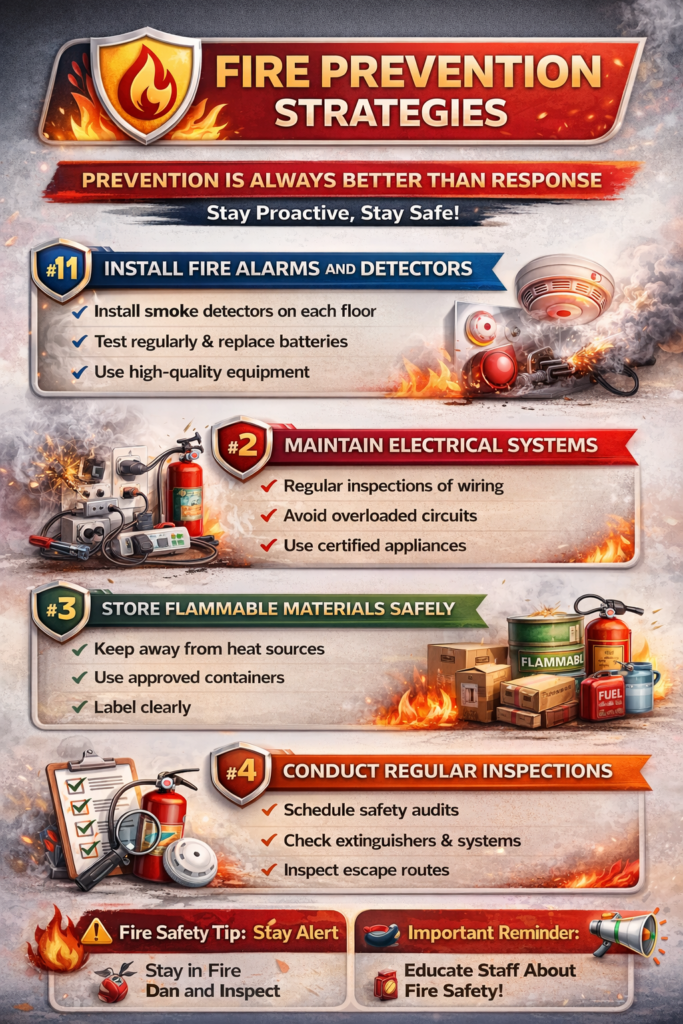
Fire prevention is the most effective way to protect lives, property, and business operations. While emergency response measures are important, preventing a fire from occurring in the first place is always safer, more cost-effective, and less disruptive.
Fire prevention involves identifying potential risks, implementing safety measures, and maintaining a proactive approach to reduce the chances of fire incidents. By adopting the right strategies, individuals and organizations can create a safe and controlled environment where fire hazards are minimized.
Why Fire Prevention is Important
Fires can spread rapidly and cause severe damage within minutes. Without proper preventive measures, even a minor issue—such as faulty wiring or improper storage—can escalate into a major disaster.
Key benefits of fire prevention:
- Reduces the likelihood of fire incidents
- Protects lives and prevents injuries
- Minimizes property damage and financial losses
- Ensures compliance with safety regulations
- Improves overall safety culture
Key Fire Prevention Strategies
Implementing the following strategies can significantly reduce fire risks and improve safety.
1. Install Fire Alarms and Detection Systems
Early detection is critical in preventing fires from spreading. Fire alarms and smoke detectors provide immediate alerts, allowing people to take action quickly.
Best Practices:
- Install smoke detectors on every floor
- Place alarms near high-risk areas (kitchens, electrical rooms)
- Test alarms regularly to ensure proper functioning
- Replace batteries and maintain systems
Explanation:
Early warning systems can save lives by giving occupants enough time to evacuate or control a small fire before it becomes uncontrollable.
2. Maintain Electrical Systems
Electrical faults are one of the most common causes of fires. Proper maintenance of electrical systems helps prevent overheating, sparks, and short circuits.
Preventive Measures:
- Conduct regular inspections of wiring and equipment
- Avoid overloading sockets and extension cords
- Replace damaged cables immediately
- Use certified electrical appliances
Explanation:
Well-maintained electrical systems reduce the risk of ignition, making this one of the most important fire prevention strategies.
3. Store Flammable Materials Safely
Flammable materials can ignite quickly and fuel a fire, causing it to spread rapidly. Proper storage is essential to minimize this risk.
Safe Storage Practices:
- Keep flammable substances away from heat sources
- Use approved storage containers
- Clearly label hazardous materials
- Store chemicals in well-ventilated areas
Explanation:
By controlling how and where flammable materials are stored, you can significantly reduce the chances of accidental ignition.
4. Conduct Regular Inspections and Safety Checks
Routine inspections help identify potential fire hazards before they become serious threats.
What to Inspect:
- Electrical systems and equipment
- Fire alarms and extinguishers
- Storage areas for flammable materials
- Emergency exits and escape routes
Explanation:
Regular checks ensure that all safety systems are functioning properly and that hazards are addressed promptly.
The table below provides a quick summary of the most effective fire prevention strategies and their practical benefits:
| Strategy | Description | Key Actions | Benefit |
|---|---|---|---|
| Fire Alarms & Detection | Early warning systems to detect fire quickly | Install smoke detectors, test regularly, replace batteries | Faster response and safer evacuation |
| Electrical Safety | Prevent fires caused by electrical faults | Inspect wiring, avoid overloading, use certified equipment | Reduces ignition risks |
| Safe Storage of Flammable Materials | Proper handling and storage of combustible items | Keep away from heat, use proper containers, label materials | Prevents rapid fire spread |
| Regular Inspections | Routine checks to identify hazards early | Inspect equipment, alarms, exits, and storage areas | Ensures continuous safety |
| Training & Awareness | Educating people about fire safety practices | Conduct training sessions, fire drills, awareness programs | Improves response and reduces human error |
| Clear Escape Routes | Ensuring safe evacuation during emergencies | Keep exits clear, install signage, provide emergency lighting | Enables quick and safe evacuation |
Additional Fire Prevention Measures
To make your blog stronger than competitors, include these extra strategies:
Fire Safety Training and Awareness
Educating people about fire risks and safety procedures is essential.
Key Actions:
- Conduct fire safety training sessions
- Teach proper use of fire extinguishers
- Promote awareness of hazards
Why it matters:
Trained individuals can respond quickly and effectively during emergencies.
Maintain Clear Escape Routes
Blocked exits can lead to panic and injuries during evacuation.
Best Practices:
- Keep emergency exits unobstructed
- Clearly mark escape routes
- Install emergency lighting
Use Modern Fire Safety Technology
Modern systems enhance fire prevention and detection.
Examples:
- Smart fire alarms (IoT-based)
- Automated suppression systems
- Remote monitoring tools
Why this is important:
Most competitors don’t include this—this gives your blog a ranking advantage.
Common Fire Prevention Mistakes to Avoid
Even with strategies in place, mistakes can increase fire risk.
- Ignoring small hazards
- Skipping regular maintenance
- Overloading electrical outlets
- Poor storage of flammable materials
- Lack of training
Fire prevention is a proactive approach that focuses on reducing risks before a fire occurs. By installing detection systems, maintaining electrical equipment, storing flammable materials safely, and conducting regular inspections, individuals and organizations can significantly improve safety.
When combined with training, modern technology, and continuous monitoring, these strategies create a strong defense against fire hazards and ensure a safer environment for everyone.
Emergency Planning and Preparedness
Having an effective emergency plan is one of the most critical components of fire safety. While prevention strategies aim to stop fires from occurring, emergency planning ensures that if a fire does happen, people can respond quickly, safely, and efficiently.
Fires can escalate within seconds, leaving very little time to react. Without a clear plan, confusion and panic can lead to serious injuries or even loss of life. A well-prepared emergency response system helps individuals understand what to do, where to go, and how to act during a fire incident.You can also follow our fire safety blueprint for building a safer environment.
In simple terms, emergency planning is about being ready before an emergency occurs, so that everyone can respond calmly and effectively when it does.
Why Emergency Planning is Important
Emergency preparedness is essential because it reduces uncertainty and ensures a coordinated response during a fire.
Key benefits:
- Saves lives through quick and safe evacuation
- Reduces panic and confusion
- Minimizes injuries and property damage
- Improves response time during emergencies
- Ensures compliance with safety regulations
Explanation:
A prepared environment allows people to act confidently rather than react impulsively, which significantly improves safety outcomes.
Essential Elements of Emergency Planning
A strong emergency plan includes several key components. Each element plays a vital role in ensuring safety during a fire incident.
1. Clearly Marked Emergency Exits
Emergency exits are the primary escape routes during a fire. They must be easy to locate, accessible at all times, and clearly marked with visible signage.
Best Practices:
- Install illuminated exit signs
- Ensure exits are not blocked or locked
- Keep escape routes free from obstacles
- Provide multiple exit points if possible
Explanation:
In an emergency, visibility may be reduced due to smoke. Clearly marked exits help people quickly find their way out without confusion.
2. Regular Fire Drills
Fire drills are practice exercises that prepare people for real emergency situations. They help individuals understand evacuation procedures and identify potential weaknesses in the plan.
Key Actions:
- Conduct drills at regular intervals
- Simulate real-life scenarios
- Evaluate response time and behavior
- Improve procedures based on feedback
Explanation:
Practicing evacuation reduces panic and ensures that people know exactly what to do when a fire occurs.
3. Staff Training and Awareness
Training ensures that employees and occupants are well-informed and confident in handling fire emergencies.
Training Should Include:
- How to respond during a fire
- How to use fire extinguishers
- Understanding evacuation routes
- Assisting vulnerable individuals
Explanation:
Trained individuals can act quickly and effectively, reducing risks and improving overall safety.
4. Accessible Fire Extinguishers
Fire extinguishers are essential tools for controlling small fires before they spread.
Best Practices:
- Place extinguishers in visible and accessible locations
- Ensure proper maintenance and regular inspection
- Train staff on correct usage
- Use appropriate types of extinguishers for different fire classes
Explanation:
Quick access to fire extinguishers can prevent a minor incident from becoming a major disaster.
Additional Emergency Preparedness Measures
To make your blog more powerful than competitors, include these advanced points:
Emergency Communication Plan
Clear communication is crucial during emergencies.
Include:
- Alarm systems
- Public address systems
- Emergency contact numbers
Ensures everyone receives timely instructions.
Emergency Lighting Systems
During a fire, power outages are common.
Importance:
- Helps visibility in smoke-filled areas
- Guides people to exits
Assembly Points
Designated safe areas where people gather after evacuation.
Benefits:
- Ensures everyone is accounted for
- Helps emergency services manage the situation
Evacuation Plans and Maps
Clearly displayed evacuation maps help guide occupants.
Should Include:
- Exit routes
- Fire equipment locations
- Assembly points
Common Mistakes in Emergency Planning
Avoid these common issues:
- Blocked or unclear exit routes
- Lack of training
- No regular drills
- Poor communication systems
- Inaccessible fire equipment
Emergency planning and preparedness are essential for ensuring safety during fire incidents. By clearly marking exits, conducting regular drills, training staff, and providing accessible fire equipment, organizations and individuals can respond effectively in emergencies.
When combined with communication systems, emergency lighting, and proper evacuation planning, these measures create a safe and well-prepared environment that protects lives and reduces risks.
Comparison Table: With vs Without Fire Safety
| Factor | Without Fire Safety | With Fire Safety |
|---|---|---|
| Risk Level | High | Low |
| Damage | Severe | Minimal |
| Response Time | Slow | Fast |
| Safety | Compromised | Controlle |
Modern Fire Safety Technologies
In today’s rapidly evolving world, fire safety is no longer limited to traditional tools like alarms and extinguishers. With the advancement of technology, modern fire safety systems are becoming smarter, faster, and more reliable, offering enhanced protection for homes, workplaces, and industrial environments.
This is where your blog can stand out. Many competitors focus only on basic fire safety practices, but integrating modern technologies into your content gives you a strong SEO and informational advantage.
Modern fire safety technologies are designed to detect fires earlier, respond automatically, and provide real-time data, helping to prevent small incidents from turning into major disasters.
Why Modern Fire Safety Technology Matters
Traditional fire safety methods are effective, but they often rely on manual intervention. Modern systems, on the other hand, use automation and intelligence to detect and respond instantly, reducing delays and human error.
Key advantages:
- Early and accurate fire detection
- Faster emergency response
- Improved monitoring and control
- Reduced reliance on human action
- Enhanced safety and efficiency
Smart Fire Safety Innovations
Let’s explore the most important modern technologies transforming fire safety today:
1. Smart Fire Alarms (IoT-Based)
Smart fire alarms use Internet of Things (IoT) technology to connect devices and provide instant alerts.
Key Features:
- Real-time notifications on mobile devices
- Integration with building management systems
- Remote monitoring and control
- Automatic alerts to emergency services
Explanation:
Unlike traditional alarms, smart systems notify you even when you are not on-site. This allows for faster response and better control of fire incidents.
2. AI-Powered Fire Detection
Artificial Intelligence (AI) is revolutionizing fire detection by analyzing data and identifying fire risks more accurately.
How It Works:
- Uses cameras and sensors to detect smoke, flames, or unusual heat patterns
- Differentiates between real threats and false alarms
- Provides early warnings before fire spreads
Explanation:
AI systems can detect fire hazards at a much earlier stage compared to conventional methods, reducing false alarms and improving reliability.
3. Automated Fire Suppression Systems
These systems are designed to control or extinguish fires automatically without human intervention.
Examples:
- Sprinkler systems
- Gas suppression systems (for server rooms, data centers)
- Foam-based systems for industrial use
Explanation:
Automated systems activate immediately when a fire is detected, helping to contain it before it spreads, which significantly reduces damage.
4. Remote Monitoring Systems
Remote monitoring allows safety teams to track fire risks and system performance in real time, even from different locations.
Key Capabilities:
- 24/7 monitoring of fire safety systems
- Instant alerts for system failures or risks
- Data tracking and reporting
Explanation:
This technology ensures that fire safety systems are always operational and any issue is addressed immediately.
Key Benefits of Modern Fire Safety Technologies
Implementing these advanced systems provides several important benefits:
Faster Detection
Modern technologies can identify fire risks at an early stage, allowing quick action before the situation worsens.
Reduced Human Error
Automation reduces reliance on manual processes, minimizing mistakes caused by negligence or delayed response.
Real-Time Alerts and Monitoring
Instant notifications ensure that responsible individuals are informed immediately, enabling faster decision-making
Enhanced Safety and Protection
Advanced systems provide comprehensive protection, covering detection, response, and monitoring in one integrated solution.
Cost Efficiency in the Long Run
Although initial investment may be higher, these systems help reduce:
- Property damage
- Business downtime
- Insurance costs
Modern fire safety technologies are transforming the way we prevent and respond to fire incidents. From smart alarms and AI detection to automated suppression and remote monitoring, these innovations provide faster, smarter, and more reliable protection.
By integrating these advanced solutions into your fire safety strategy, you can significantly enhance safety, reduce risks, and stay ahead of traditional approaches.
Common Fire Safety Mistakes to Avoid
While implementing fire safety measures is essential, avoiding common mistakes is equally important. Many fire incidents occur not because safety measures are absent, but because they are ignored, poorly maintained, or incorrectly implemented.
Even small oversights—such as a blocked exit or a faulty wire—can lead to serious consequences. By understanding these common mistakes and taking proactive steps to avoid them, individuals and organizations can significantly reduce fire risks and improve overall safety.
Why Avoiding Mistakes Matters
Fire safety is not just about having systems in place—it’s about ensuring they are effective, functional, and properly used.
Key reasons:
- Prevents avoidable fire incidents
- Ensures safety systems work when needed
- Reduces risk of injuries and fatalities
- Improves compliance with safety regulations
- Strengthens overall safety culture
Explanation:
Mistakes often create hidden risks that go unnoticed until it’s too late. Addressing these issues early helps maintain a safe and prepared environment.
Most Common Fire Safety Mistakes
Let’s explore the most frequent fire safety mistakes and how they can be prevented:
1. Ignoring Small Hazards
Small issues are often overlooked because they seem insignificant, but they can quickly escalate into major fire risks.
Examples:
- Loose or exposed wiring
- Minor equipment faults
- Small accumulations of flammable materials
Explanation:
What starts as a minor issue can become a serious hazard if left unattended. Regular inspections and prompt action are essential to eliminate these risks early.
2. Lack of Emergency Planning
Many organizations fail to develop or implement a proper emergency plan, leaving people unprepared during a fire.
Common Problems:
- No evacuation plan
- Unclear emergency procedures
- No designated assembly points
Explanation:
Without a clear plan, people may panic or act unpredictably during emergencies. A well-structured plan ensures a coordinated and safe response.
3. Poor Maintenance of Equipment
Fire safety equipment is only effective if it is properly maintained. Neglecting maintenance can render safety systems useless when they are needed most.
Common Issues:
- Expired or faulty fire extinguishers
- Non-functional smoke detectors
- Damaged alarm systems
Explanation:
Regular testing and maintenance ensure that all equipment is ready to function during an emergency.
4. Lack of Training and Awareness
Even with proper systems in place, untrained individuals may not know how to respond during a fire.
Key Gaps:
- Not knowing how to use fire extinguishers
- Lack of awareness about evacuation routes
- Panic during emergencies
Explanation:
Training empowers individuals to respond quickly and effectively, reducing confusion and improving safety outcomes.
5. Blocked or Inaccessible Escape Routes
Obstructed exits are one of the most dangerous fire safety mistakes.
Common Causes:
- Storing items in hallways or near exits
- Locked emergency doors
- Poor signage
Explanation:
During a fire, every second counts. Blocked escape routes can delay evacuation and increase the risk of injuries.
Additional Mistakes Most People Overlook
To make your blog stand out, include these extra points that competitors often miss:
Overloading Electrical Systems
Plugging too many devices into one outlet can cause overheating and fire.
Improper Use of Fire Extinguishers
Using the wrong type of extinguisher can worsen the situation.
Poor Storage Practices
Storing flammable materials near heat sources increases fire risk.
Not Updating Fire Risk Assessments
Failing to review assessments regularly can leave new hazards unnoticed.
How to Avoid These Mistakes
- Conduct regular inspections
- Maintain all fire safety equipment
- Provide training and awareness programs
- Keep escape routes clear
- Update safety plans regularly
Avoiding common fire safety mistakes is a critical part of effective fire prevention. By addressing issues such as ignored hazards, lack of planning, poor maintenance, and inadequate training, individuals and organizations can significantly reduce fire risks.
A proactive approach ensures that safety measures are not only in place but also functional, reliable, and effective when needed most.
Who Needs Fire Risk Assessment?
Fire risk assessment is not limited to large industries or high-risk environments—it is a critical safety requirement for almost everyone. Whether it’s a small home, a busy office, or a large industrial facility, fire hazards can exist anywhere.
A fire risk assessment helps identify these hazards, evaluate the risks, and implement measures to protect people, property, and operations. Simply put, if a place has people, equipment, or activities, it needs fire safety planning.If you are interested in this field, learn how to start a fire safety career.
Why Fire Risk Assessment is Essential for Everyone
Fire does not discriminate—it can occur in any setting. Without proper assessment and planning, even a minor hazard can lead to serious consequences.
Key reasons why everyone needs it:
- Protects human life and well-being
- Prevents property damage and financial loss
- Ensures compliance with safety regulations
- Improves preparedness and response
- Reduces business disruption and downtime
Explanation:
A fire risk assessment ensures that risks are identified early and controlled effectively, regardless of the size or type of environment.
1. Businesses
All types of businesses—small or large—must conduct fire risk assessments to ensure the safety of employees, customers, and assets.
Examples:
- Retail stores
- Restaurants
- Warehouses
- Service providers
Why it’s important:
- Protects staff and customers
- Prevents operational disruptions
- Ensures compliance with legal requirements
Explanation:
Businesses often involve electrical systems, equipment, and human activity—all of which can increase fire risk if not properly managed.
2. Factories and Industrial Sites
Factories are considered high-risk environments due to the presence of machinery, chemicals, and flammable materials.
Common Risks:
- Overheating machinery
- Chemical storage
- High-energy processes
Why it’s critical:
- Prevents large-scale fire incidents
- Protects workers and infrastructure
- Reduces financial and production losses
Explanation:
Industrial fires can escalate quickly, making regular risk assessments essential for maintaining safety and control.
3. Offices
Although offices may seem low-risk, they still contain several fire hazards.
Common Hazards:
- Electrical equipment (computers, printers)
- Paper and furniture
- Overloaded power outlets
Why it matters:
- Ensures employee safety
- Prevents data and asset loss
- Maintains business continuity
Explanation:
Even a small electrical fault can cause a fire, making fire safety planning necessary in office environments.
4. Landlords and Property Owners
Landlords have a legal and ethical responsibility to ensure that their properties are safe for tenants.
Responsibilities include:
- Providing fire alarms and extinguishers
- Ensuring safe electrical installations
- Maintaining clear escape routes
Why it’s important:
- Protects tenants
- Avoids legal liabilities
- Maintains property value
Explanation:
Failure to conduct fire risk assessments can lead to serious consequences, including legal penalties and safety risks.
5. Homeowners
Fire risk assessment is equally important in residential settings. Many fires start in homes due to everyday activities.
Common Causes:
- Cooking accidents
- Faulty wiring
- Heating equipment
Why homeowners need it:
- Protects family members
- Prevents property loss
- Improves emergency preparedness
Explanation:
Simple precautions, such as installing smoke detectors and checking electrical systems, can significantly reduce fire risks at home.
Additional Groups That Should Consider Fire Risk Assessment
To make your blog more comprehensive than competitors, include these:
Schools and Educational Institutions
- Large number of occupants
- Need for structured evacuation plans
Hospitals and Healthcare Facilities
- Presence of vulnerable individuals
- Need for specialized emergency procedures
Hotels and Public Buildings
- High occupancy and unfamiliar visitors
- Increased responsibility for safety
Shopping Centers and Public Spaces
- Large crowds
- Complex layouts requiring clear evacuation plans
Key Insight
If people are present, fire risk exists.
If fire risk exists, assessment is necessary.
Fire risk assessment is essential for everyone—from businesses and factories to landlords and homeowners. Each environment has its own unique risks, but the goal remains the same: to identify hazards, protect lives, and prevent fire incidents.
By conducting regular assessments and implementing safety measures, individuals and organizations can create safer environments and reduce the impact of fire-related risks.
Real-Life Example
A small office experienced a fire due to faulty wiring. No prior risk assessment had been conducted. The result was significant financial loss and operational downtime.
After implementing fire safety measures:
- Risks were reduced
- Insurance compliance improved
- Employee confidence increased
Fire Safety Checklist
Use this quick fire safety checklist to ensure your home or workplace is fully protected:
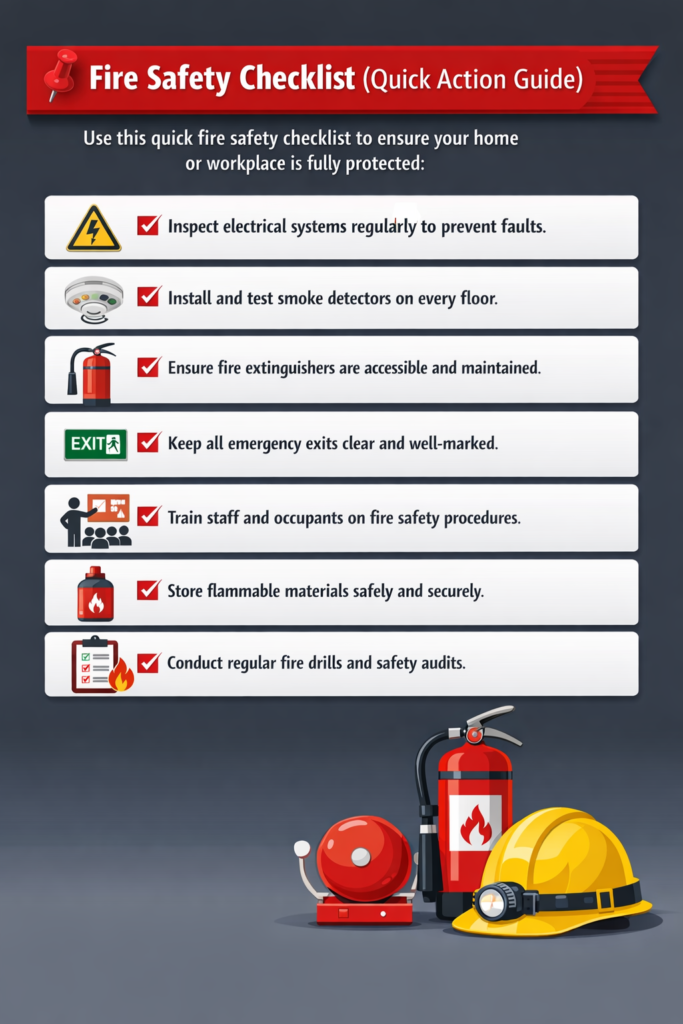
A fire safety checklist is a simple yet powerful tool that helps ensure your home, workplace, or facility is properly protected against fire risks. It provides a quick overview of essential safety measures that should be regularly checked and maintained.
Instead of waiting for an emergency to reveal weaknesses, this checklist allows you to proactively identify and fix potential hazards, ensuring that your environment remains safe at all times.
Use this quick fire safety checklist to ensure your home or workplace is fully protected:
Check Electrical Systems Regularly
Electrical faults are one of the most common causes of fire incidents, making regular inspection essential.
What to check:
- Damaged or exposed wiring
- Overloaded sockets and extension cords
- Faulty electrical appliances
- Loose connections
Why it matters:
Electrical issues can generate heat or sparks, which can ignite nearby materials. Regular checks help prevent short circuits and overheating.
Tip: Schedule periodic inspections by qualified professionals for added safety
Install and Test Smoke Detectors
Smoke detectors are your first line of defense in detecting fire early.
Best practices:
- Install detectors on every floor
- Place them near bedrooms and high-risk areas
- Test alarms monthly
- Replace batteries regularly
Why it matters:
Early detection provides critical time to evacuate and respond, significantly reducing the risk of injury or damage.
Maintain Fire Extinguishers
Fire extinguishers are essential for controlling small fires before they spread.
What to ensure:
- Extinguishers are easily accessible
- They are suitable for the type of fire risk (electrical, chemical, etc.)
- Regular inspection and servicing are carried out
- Staff or occupants know how to use them
Why it matters:
A properly maintained extinguisher can stop a fire in its early stages, preventing major damage.
Keep Emergency Exits Clear
Clear and accessible exit routes are crucial for safe evacuation during emergencies.
Important actions:
- Keep hallways and exits free from obstacles
- Ensure doors are not locked or blocked
- Install visible exit signage
- Provide emergency lighting
Why it matters:
During a fire, smoke and panic can reduce visibility and increase confusion. Clear escape routes ensure quick and safe evacuation.
Train Staff and Occupants Regularly
Training ensures that everyone knows how to respond effectively during a fire emergency.
Training should include:
- Fire evacuation procedures
- Use of fire extinguishers
- Identifying fire hazards
- Assisting vulnerable individuals
Why it matters:
Well-trained individuals can act quickly and confidently, reducing panic and improving overall safety.
Additional Checklist Items
To make your blog stronger than competitors, include these extra points:
Conduct Regular Fire Safety Inspections
- Check alarms, extinguishers, and equipment
- Identify new hazards
Store Flammable Materials Safely
- Keep away from heat sources
- Use proper containers
Perform Fire Drills
- Practice evacuation regularly
- Improve response time
Review Fire Risk Assessment
- Update after changes
- Ensure ongoing safety
Common Mistakes When Using a Checklist
- Treating it as a one-time task
- Ignoring small issues
- Not updating regularly
- Lack of accountability
A fire safety checklist is an essential tool for maintaining a safe environment. By regularly checking electrical systems, installing smoke detectors, maintaining fire extinguishers, keeping exits clear, and providing proper training, you can significantly reduce fire risks.
When combined with inspections, drills, and proper storage practices, this checklist becomes a powerful preventive tool that protects lives and property.
Importance of Fire Safety Risk Assessment
A fire safety risk assessment plays a vital role in creating a safe and secure environment in workplaces, residential buildings, and industrial settings. It is not just a legal requirement but a proactive approach to identifying potential fire hazards and implementing effective control measures. By conducting a proper fire safety risk assessment, organizations can significantly reduce risks, protect lives, and ensure smooth operations.
Below are the key reasons why fire safety risk assessment is essential:
Ensures Protection of Human Life
The primary objective of any fire safety risk assessment is to protect human life. Fires can spread rapidly and cause severe injuries or fatalities if proper precautions are not in place.
- Helps identify potential fire hazards before they become dangerous
- Ensures proper emergency exits and evacuation plans are in place
- Reduces the risk of injuries, burns, and smoke inhalation
- Improves preparedness through fire drills and safety training
By identifying risks early, organizations can take preventive measures that save lives and ensure a safer working environment for everyone.
Reduces Property Damage
Fire incidents can cause significant damage to buildings, equipment, and valuable assets. A well-conducted fire safety risk assessment helps minimize such losses.
- Identifies areas where fire is most likely to occur
- Encourages installation of fire protection systems such as alarms and sprinklers
- Protects important documents, machinery, and infrastructure
- Reduces repair and replacement costs
Preventing fire damage not only saves money but also helps maintain the long-term value of property and assets.
Helps in Legal Compliance
Fire safety regulations require organizations to conduct regular fire risk assessments and implement safety measures. Failure to comply can result in heavy penalties or legal consequences.
- Ensures adherence to local and international fire safety standards
- Helps organizations avoid fines, legal actions, and business shutdowns
- Demonstrates commitment to employee and public safety
- Supports compliance with workplace health and safety laws
A proper fire safety risk assessment ensures that businesses meet all necessary legal obligations and operate responsibly.
Supports Business Continuity
A fire incident can disrupt operations, leading to financial losses and reputational damage. Fire safety risk assessment helps ensure that businesses continue to operate smoothly even in emergencies.
- Reduces the chances of unexpected fire incidents
- Ensures quick recovery through emergency planning
- Protects business data, systems, and infrastructure
- Maintains customer trust and organizational reputation
By preventing disruptions, businesses can maintain productivity and avoid costly downtime.
Improves Workplace Safety Culture
A strong safety culture is essential for any organization, and fire safety risk assessment plays a key role in building it.
- Raises awareness about fire hazards among employees
- Encourages safe behavior and responsibility
- Promotes regular safety training and drills
- Creates a proactive approach to risk management
When employees understand fire risks and safety procedures, they contribute to a safer and more secure workplace.
In summary, a fire safety risk assessment is a critical process that protects lives, reduces property damage, ensures legal compliance, supports business continuity, and promotes a strong safety culture. It is an essential step for any organization aiming to create a safe and risk-free environment.
Conclusion
Fire safety and risk assessment are essential pillars of creating a secure, resilient, and well-managed environment. Throughout this guide, we have explored how identifying fire hazards, evaluating risks, and implementing preventive measures can significantly reduce the likelihood of fire incidents. From understanding different types of hazards to following a structured risk assessment process, each step plays a crucial role in protecting people, property, and daily operations. Fire safety is not just about reacting to emergencies—it is about building a system that prevents them from occurring in the first place.For a complete overview of fire safety practices, explore:The Ultimate Fire Safety Guide: Prevention, Risk Assessment, and Emergency Preparedness
In addition, adopting modern fire safety technologies and maintaining strong emergency preparedness further enhances protection. Smart detection systems, regular inspections, staff training, and clear evacuation plans all contribute to a proactive safety culture. Avoiding common mistakes and consistently reviewing safety measures ensures that fire protection strategies remain effective over time. Whether in homes, workplaces, or industrial settings, a well-planned approach can make a significant difference in minimizing risks and ensuring quick, safe responses when needed.
Ultimately, fire safety is a shared responsibility that requires continuous attention and improvement. By taking a proactive and informed approach, individuals and organizations can not only meet safety requirements but also safeguard lives, assets, and long-term sustainability. Investing in fire safety today means creating a safer and more secure future for everyone.For a complete overview of fire safety, including prevention, protection, and risk control, visit our Fire Safety Guide: Key Principles for Prevention, Protection, and Risk Control.