
The Ultimate Fire Safety Guide: Prevention, Risk Assessment, and Emergency Preparedness
Fire remains one of the most unpredictable and destructive hazards, capable of causing devastating consequences within seconds. Across homes, workplaces, and public environments, fire incidents continue to result in serious injuries, loss of life, and substantial financial damage. Even with modern safety standards and advanced fire protection technologies, many incidents still occur due to human error, unsafe practices, and a lack of proper planning.You can also explore a detailed explanation of fire safety concepts in our guide.What is Fire Safety
Understanding fire safety goes far beyond simply reacting to an emergency situation. It involves a proactive approach that focuses on preventing fire hazards, assessing potential risks, and ensuring readiness to respond effectively when a fire occurs. Without proper awareness and preparation, even a minor ignition source can quickly escalate into a major disaster.For a complete and detailed understanding of fire safety, prevention strategies, and risk assessment, don’t miss our comprehensive guide on fire safety fundamentals prevention and risk assessment—a must-read for anyone serious about safety.
In both residential and professional settings, adopting structured fire safety measures is essential. From maintaining safe electrical systems and handling flammable materials correctly to implementing clear evacuation procedures, every step plays a critical role in minimizing risks. Organizations, in particular, must ensure that employees are trained, safety systems are functional, and risk assessments are regularly conducted to maintain a secure environment.To complement this guide, you can read fire safety management strategies for prevention control and emergency response for in-depth insights.
This ultimate guide is designed to provide a complete and practical understanding of fire safety, covering the key areas of prevention, fire risk assessment, and emergency preparedness. It brings together essential knowledge, step-by-step strategies, and best practices to help individuals and organizations reduce fire hazards and respond confidently in emergency situations. By applying the concepts outlined in this guide, you can create safer surroundings, protect valuable assets, and most importantly, safeguard human lives.
Understanding Fire Safety
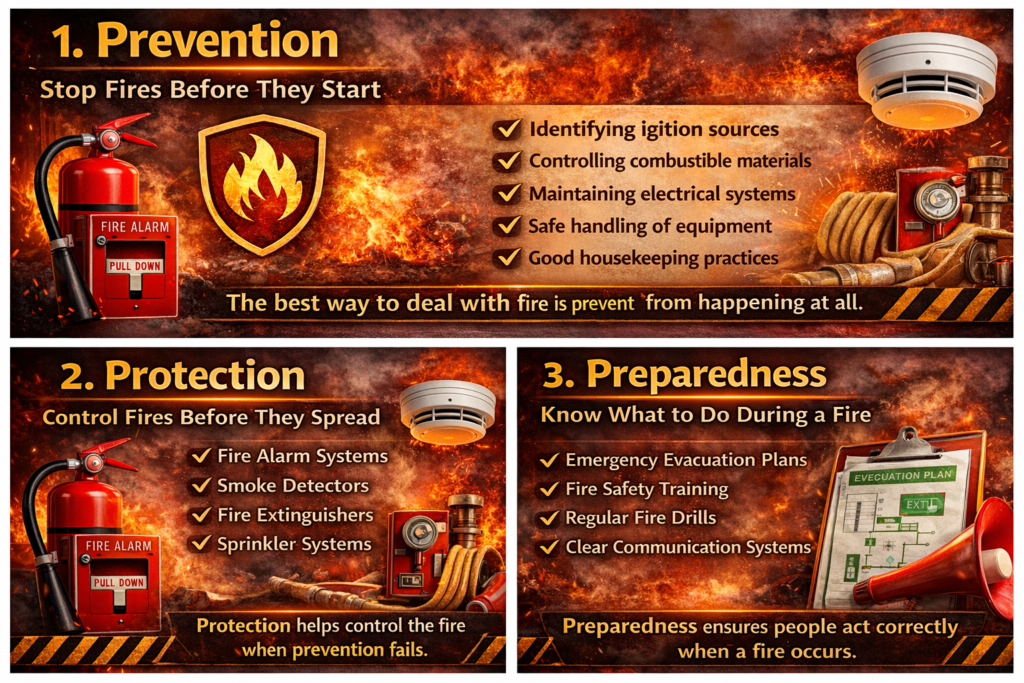
Fire safety is a comprehensive approach that focuses on reducing the likelihood of fire incidents, minimizing damage when fires occur, and ensuring the safe evacuation of people. It is not limited to using fire extinguishers or responding during emergencies—instead, it involves a combination of planning, awareness, systems, and responsible behavior.For a deeper understanding, read our complete resource on.Fire Safety Essentials: Prevention, Protection, and Preparedness
A well-implemented fire safety strategy protects lives, property, and business operations. It also helps organizations comply with safety regulations and build a culture of responsibility and preparedness.
At its core, fire safety is built upon three fundamental pillars: Prevention, Protection, and Preparedness. Each of these plays a vital role, and together they create a complete fire safety framework.
Fire Safety Framework Overview:
| Pillar | Purpose | Key Actions | Examples (Home & Workplace) |
|---|---|---|---|
| Prevention | Stop fires before they start | Identify hazards, maintain electrical systems, safe storage, housekeeping | Avoid overloading sockets, safe chemical storage |
| Protection | Detect and control fires | Install alarms, extinguishers, sprinklers, fire-resistant materials | Smoke detectors, fire exits, sprinkler systems |
| Preparedness | Ensure effective emergency response | Evacuation plans, fire drills, training, communication systems | Fire drills, emergency exits, staff training |
1. Prevention
Fire prevention is the first and most important line of defense. The goal of prevention is to stop fires from starting in the first place by identifying and eliminating potential hazards.
What Does Fire Prevention Involve?
Fire prevention focuses on recognizing risks and taking proactive steps to control them before they lead to an incident.
Key Fire Prevention Measures:
- Identifying ignition sources
Such as faulty wiring, open flames, overheated equipment, and sparks - Controlling combustible materials
Proper storage of flammable liquids, paper, chemicals, and gases - Maintaining electrical systems
Regular inspection of wiring, plugs, and appliances to avoid short circuits - Safe handling of equipment
Using machinery and tools according to safety guidelines - Good housekeeping practices
Keeping workspaces clean and free from unnecessary clutter
Example (Home Environment):
- Never leave cooking unattended
- Keep candles away from curtains or furniture
- Avoid overloading electrical sockets
Example (Workplace):
- Conduct routine safety inspections
- Store hazardous materials in designated areas
- Ensure proper ventilation in high-risk zones
Why Prevention Matters:
- Reduces the chances of fire incidents
- Saves lives and prevents injuries
- Minimizes property damage
- Lowers financial and operational risks
In simple terms: The best way to deal with fire is to prevent it from happening at all.
2. Protection
While prevention reduces risks, fire protection focuses on detecting fires early and controlling them before they spread. It involves installing systems and equipment that actively or passively respond to fire incidents.You can also explore a complete fire safety guide here:Fire Safety: Complete Guide to Prevention, Equipment & Risk Assessment
What Does Fire Protection Include?
Fire protection systems are designed to:
- Alert occupants about fire
- Control or suppress fire
- Provide safe escape routes
Types of Fire Protection Systems:
Active Fire Protection
These systems take action when a fire occurs:
- Fire alarm systems – Detect smoke or heat and alert occupants
- Smoke detectors – Provide early warning signals
- Fire extinguishers – Used to control small fires
- Sprinkler systems – Automatically release water to suppress fire
Passive Fire Protection
These features help contain fire and slow its spread:
- Fire-resistant walls and doors
- Fire compartments within buildings
- Protected escape routes
- Fire-rated construction materials
Example (Home):
- Installing smoke detectors in key areas
- Keeping a fire extinguisher in the kitchen
Example (Workplace):
- Installing automatic sprinkler systems
- Maintaining fire exits and emergency lighting
Why Protection is Important:
- Provides early warning during fire incidents
- Controls fire before it becomes uncontrollable
- Gives people more time to evacuate safely
- Reduces overall damage
In simple words: Protection helps control the fire when prevention fails.
3. Preparedness
Preparedness focuses on ensuring that people know exactly what to do during a fire emergency. Even with the best prevention and protection systems, human response plays a critical role in saving lives.
What Does Preparedness Involve?
Preparedness includes planning, training, and practicing emergency procedures so that individuals can respond quickly and calmly.
Key Elements of Fire Preparedness:
- Emergency evacuation plans
Clearly defined escape routes and assembly points - Fire safety training
Teaching individuals how to use fire extinguishers and respond to alarms - Regular fire drills
Practicing evacuation procedures to ensure readiness - Clear communication systems
Emergency alarms, announcements, and instructions - Assigned responsibilities
Fire wardens and safety officers guiding evacuation
Example (Home):
- Planning escape routes with family members
- Teaching children what to do during a fire
Example (Workplace):
- Conducting fire drills regularly
- Training employees on emergency procedures
Why Preparedness is Critical:
- Reduces panic during emergencies
- Ensures quick and organized evacuation
- Saves lives by improving response time
- Enhances overall safety awareness
Simply put: Preparedness ensures that people act correctly when a fire occurs.
Fire safety is most effective when all three pillars work together:
- Prevention stops fires from starting
- Protection controls fires if they occur
- Preparedness ensures safe and effective response
Ignoring any one of these elements can weaken the entire fire safety system.
A strong fire safety approach is not based on a single action but on a combination of awareness, systems, and preparedness. By understanding and implementing these three pillars, individuals and organizations can create a safer environment and significantly reduce fire-related risks.
The Fire Triangle
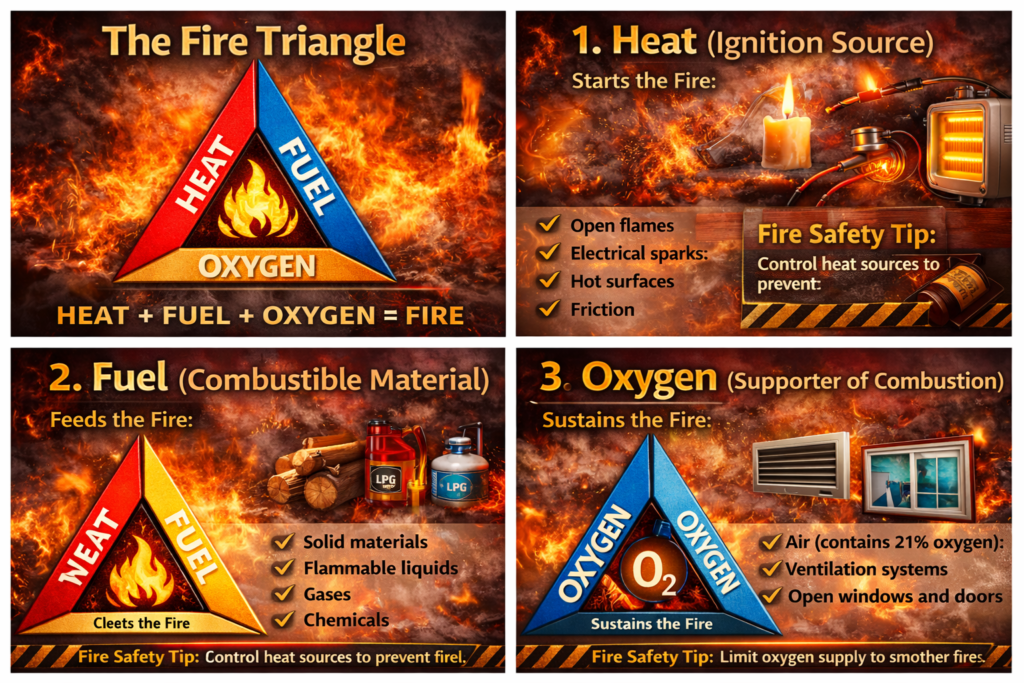
“The Fire Triangle: Heat + Fuel + Oxygen = Fire”
The fire triangle is one of the most fundamental concepts in fire safety. It explains how fires start, how they continue to burn, and how they can be controlled or extinguished. Understanding this concept is essential for anyone involved in fire prevention, safety management, or emergency response.
At its core, the fire triangle consists of three essential elements that must be present for a fire to ignite and sustain itself:
- Heat
- Fuel
- Oxygen
If any one of these elements is removed, the fire cannot start—or if already burning, it will be extinguished. This simple principle forms the foundation of nearly all fire safety strategies.
1. Heat (Ignition Source)
Heat is the energy required to start a fire. It raises the temperature of a material to the point where it can ignite and begin burning.
Common Sources of Heat:
- Open flames (candles, matches, lighters)
- Electrical sparks or faulty wiring
- Hot surfaces (heaters, stoves, machinery)
- Friction from mechanical equipment
- Lightning or natural heat sources
How Heat Contributes to Fire:
Heat causes materials to release flammable vapors. Once these vapors mix with oxygen, they can ignite and create a fire.
Fire Safety Tip (Heat Control):
- Keep heat sources away from flammable materials
- Regularly inspect electrical systems
- Avoid overheating equipment
Controlling heat sources is one of the most effective ways to prevent fires.
2. Fuel (Combustible Material)
Fuel refers to any material that can burn. Without fuel, a fire has nothing to consume and cannot continue.
Common Types of Fuel:
- Solid materials (wood, paper, textiles)
- Flammable liquids (petrol, diesel, oil)
- Gases (LPG, natural gas)
- Chemicals and plastics
How Fuel Contributes to Fire:
Fuel provides the substance that burns during a fire. The type and amount of fuel determine how intense and fast a fire spreads.
Fire Safety Tip (Fuel Control):
- Store flammable materials safely
- Keep combustible items away from heat sources
- Dispose of waste materials properly
Reducing fuel sources helps limit fire growth and spread.
3. Oxygen (Supporter of Combustion)
Oxygen is the element that supports and sustains combustion. Fires typically require at least 16% oxygen in the air to continue burning.
Sources of Oxygen:
- Air (contains about 21% oxygen)
- Ventilation systems
- Open windows and doors
How Oxygen Contributes to Fire:
Oxygen reacts with fuel and heat to produce flames. The more oxygen available, the more intense the fire can become.
Fire Safety Tip (Oxygen Control):
- Close doors and windows during a fire to limit oxygen supply
- Use fire blankets or extinguishers to smother flames
Cutting off oxygen is a key method used in fire extinguishing.
Summary of Heat, Fuel, and Oxygen in Fire Safety:
| Element | Description | Examples | How It Contributes to Fire | Prevention / Control Method |
|---|---|---|---|---|
| Heat | Energy required to ignite a fire | Flames, electrical sparks, hot surfaces, friction | Raises temperature of materials until they ignite | Keep heat sources away, maintain equipment, avoid overheating |
| Fuel | Any combustible material that can burn | Wood, paper, petrol, gases, chemicals | Provides substance for fire to grow and spread | Store safely, remove excess materials, proper disposal |
| Oxygen | Supports combustion process | Air (21% oxygen), ventilation systems | Reacts with fuel and heat to sustain fire | Limit airflow, close doors/windows, use extinguishers |
How the Fire Triangle Works Together
A fire only starts when all three elements—heat, fuel, and oxygen—are present at the same time. These elements work together in a continuous process:
- Heat ignites the fuel
- Fuel burns and releases energy
- Oxygen supports the combustion process
This creates a chain reaction that allows the fire to grow and spread.
Breaking the Fire Triangle (How to Stop Fire)
The most effective way to control or extinguish a fire is by removing one or more elements of the fire triangle.
Removing Heat (Cooling Method):
- Using water to reduce temperature
- Common for Class A fires
Removing Fuel:
- Isolating or removing combustible materials
- Turning off gas supply
Removing Oxygen (Smothering Method):
- Using fire blankets
- Applying foam or CO₂ extinguishers
Practical Examples
Home Example:
A kitchen fire can be controlled by:
- Turning off the stove (removes heat)
- Covering the pan with a lid (removes oxygen)
Workplace Example:
In an industrial setting:
- Shutting down machinery (removes heat)
- Isolating flammable chemicals (removes fuel)
Why Understanding the Fire Triangle is Important
- Helps identify fire hazards quickly
- Improves prevention strategies
- Guides proper use of fire extinguishers
- Enhances emergency response effectiveness
The fire triangle is a simple yet powerful concept that explains the science behind fire. By understanding how heat, fuel, and oxygen interact, individuals and organizations can take effective steps to prevent fires, control their spread, and respond safely during emergencies.s crucial for effective fire prevention and response.
Types (Classes) of Fire
Different types of fires require specific extinguishing methods. Understanding fire classes helps in choosing the correct firefighting approach.
| Fire Class | Description | Examples | Suitable Extinguisher |
|---|---|---|---|
| Class A | Solid combustibles | Wood, paper, textiles | Water, foam |
| Class B | Flammable liquids | Petrol, oil, solvents | Foam, CO₂ |
| Class C | Electrical fires | Wiring, appliances | CO₂ |
| Class D | Metal fires | Magnesium, sodium | Dry powder |
| Class K/F | Cooking oils | Kitchen fires | Wet chemical |
Common Causes of Fire
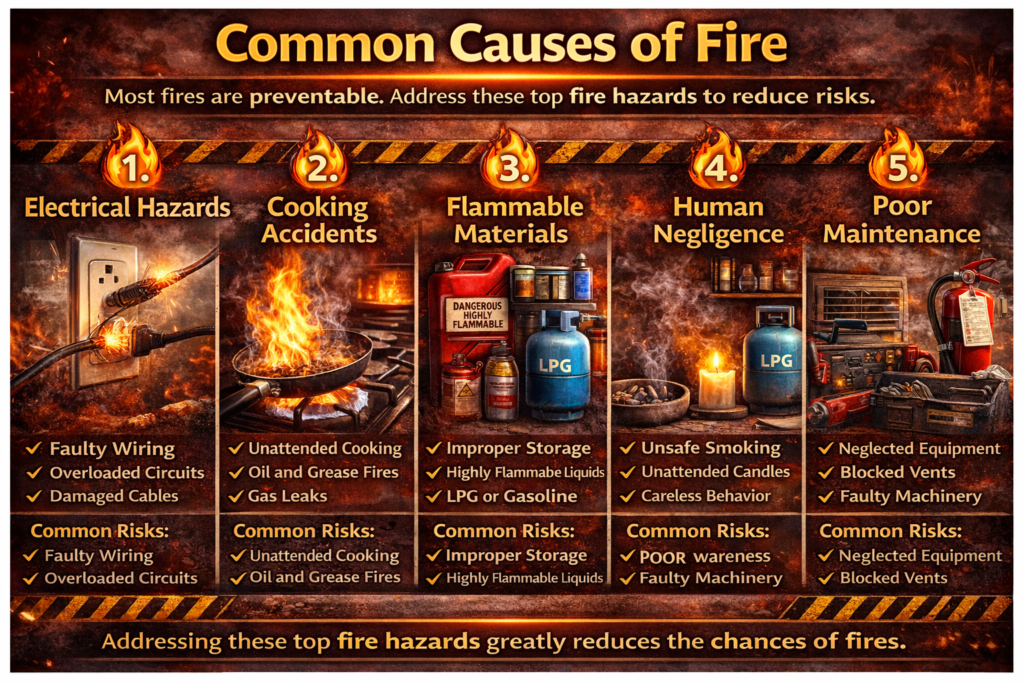
Top Causes of Fire: Electrical, Cooking, Flammable Materials, Negligence, and Poor Maintenance.
Understanding the common causes of fire is a critical step in preventing fire incidents. Most fires do not occur randomly—they are usually the result of unsafe conditions, human error, or lack of proper maintenance. By identifying these causes, individuals and organizations can take proactive measures to eliminate risks and create safer environments.
Below are the most frequent causes of fire, explained in detail along with practical insights and prevention tips.
| Cause | Description | Common Risks | How Fire Starts | Prevention Measures |
|---|---|---|---|---|
| Electrical Hazards | Faulty or overloaded electrical systems | Damaged wires, overloaded sockets, faulty appliances | Overheating or sparks ignite nearby materials | Inspect wiring, avoid overload, use certified devices |
| Cooking Accidents | Fires caused during cooking activities | Unattended cooking, grease fires, gas leaks | Oil or flames ignite nearby items | Stay attentive, control heat, keep flammable items away |
| Flammable Materials | Improper handling/storage of combustible substances | Fuels, chemicals, gases, paper | Exposure to heat or sparks causes ignition | Store safely, ensure ventilation, follow safety rules |
| Human Negligence | Unsafe behavior or lack of awareness | Smoking, unattended candles, misuse of equipment | Careless actions create ignition sources | Follow guidelines, increase awareness, avoid risky behavior |
| Poor Maintenance | Lack of inspection and upkeep of systems | Faulty machinery, blocked vents, damaged systems | Equipment failure leads to overheating or sparks | Regular maintenance, repair faults, routine inspections |
1. Electrical Hazards
Electrical issues are among the leading causes of fire incidents in both residential and commercial settings. Faulty electrical systems can generate heat or sparks, which can easily ignite nearby combustible materials.
Common Electrical Fire Risks:
- Damaged or frayed wires
- Overloaded sockets and extension cords
- Faulty appliances
- Loose electrical connections
- Poor-quality wiring installations
How Electrical Fires Start:
When electrical systems are overloaded or damaged, they can overheat. This heat may ignite insulation materials, surrounding objects, or even cause sparks that lead to fire.
Prevention Tips:
- Regularly inspect wiring and electrical equipment
- Avoid overloading power outlets
- Use certified and high-quality electrical devices
- Replace damaged cables immediately
- Hire qualified professionals for installations
Key Point: Electrical safety is essential because even a small fault can quickly escalate into a serious fire.
2. Cooking Accidents
Cooking-related incidents are one of the most common causes of residential fires, especially in kitchens. These fires often occur due to negligence or lack of attention during cooking.
Common Cooking Fire Risks:
- Leaving cooking unattended
- Overheating oil or grease
- Flammable items near stoves
- Gas leaks or faulty appliances
How Cooking Fires Start:
Oil and grease can ignite when they reach high temperatures. Additionally, flames from stoves can easily spread to nearby combustible materials such as curtains, paper, or clothing.
Prevention Tips:
- Never leave cooking unattended
- Keep flammable items away from heat sources
- Monitor cooking temperatures carefully
- Turn off gas appliances when not in use
- Keep a fire extinguisher in the kitchen
Key Point: Most kitchen fires are preventable with simple attention and safe cooking habits.
3. Flammable Materials
The presence and improper handling of flammable materials significantly increase the risk of fire. These materials can ignite easily and contribute to rapid fire spread.
Examples of Flammable Materials:
- Petrol, diesel, and other fuels
- Chemicals and solvents
- Paper, cardboard, and textiles
- Gases such as LPG
How Fires Start from Flammable Materials:
When flammable substances are exposed to heat or sparks, they can ignite instantly. Improper storage or leakage can make the situation even more dangerous.
Prevention Tips:
- Store flammable materials in approved containers
- Keep them away from heat and ignition sources
- Ensure proper ventilation in storage areas
- Follow safety guidelines for handling chemicals
Key Point: Proper storage and handling of flammable materials can significantly reduce fire risks.
4. Human Negligence
Human error is a major contributing factor in many fire incidents. Lack of awareness, carelessness, or unsafe behavior often leads to preventable fires.
Common Examples of Negligence:
- Smoking in prohibited areas
- Improper use of electrical equipment
- Ignoring fire safety rules
- Leaving candles or heaters unattended
How Negligence Causes Fires:
Even small mistakes—such as forgetting to turn off an appliance or discarding a lit cigarette—can act as ignition sources and lead to serious fire incidents.
Prevention Tips:
- Follow fire safety guidelines strictly
- Avoid risky behaviors such as careless smoking
- Stay alert when using heat-producing devices
- Promote awareness and safety training
Key Point: Awareness and responsible behavior play a crucial role in fire prevention.
5. Poor Maintenance
Lack of regular maintenance can create unsafe conditions that increase fire risks. Equipment and systems that are not properly maintained may fail or overheat.
Common Maintenance Issues:
- Neglected electrical systems
- Faulty machinery
- Blocked ventilation systems
- Non-functional fire safety equipment
How Poor Maintenance Leads to Fire:
When systems are not maintained, faults can go unnoticed. Over time, these faults can cause overheating, sparks, or system failure, leading to fire incidents.
Prevention Tips:
- Conduct regular inspections and maintenance
- Repair or replace faulty equipment immediately
- Ensure fire safety systems are functional
- Follow scheduled maintenance plans
Key Point: Regular maintenance helps detect risks early and prevents unexpected failures.
Although these causes may seem different, they are often interconnected. For example, poor maintenance can lead to electrical hazards, while human negligence can result in cooking accidents.
Understanding these causes allows you to:
- Identify potential fire hazards
- Take preventive action
- Improve safety practices
- Reduce overall fire risks
Most fires are preventable. By addressing electrical risks, practicing safe cooking, handling flammable materials correctly, avoiding negligence, and maintaining equipment properly, individuals and organizations can significantly reduce the likelihood of fire incidents.
A proactive approach to identifying and controlling these common causes is essential for building a safe and secure environment.
Fire Prevention Strategies
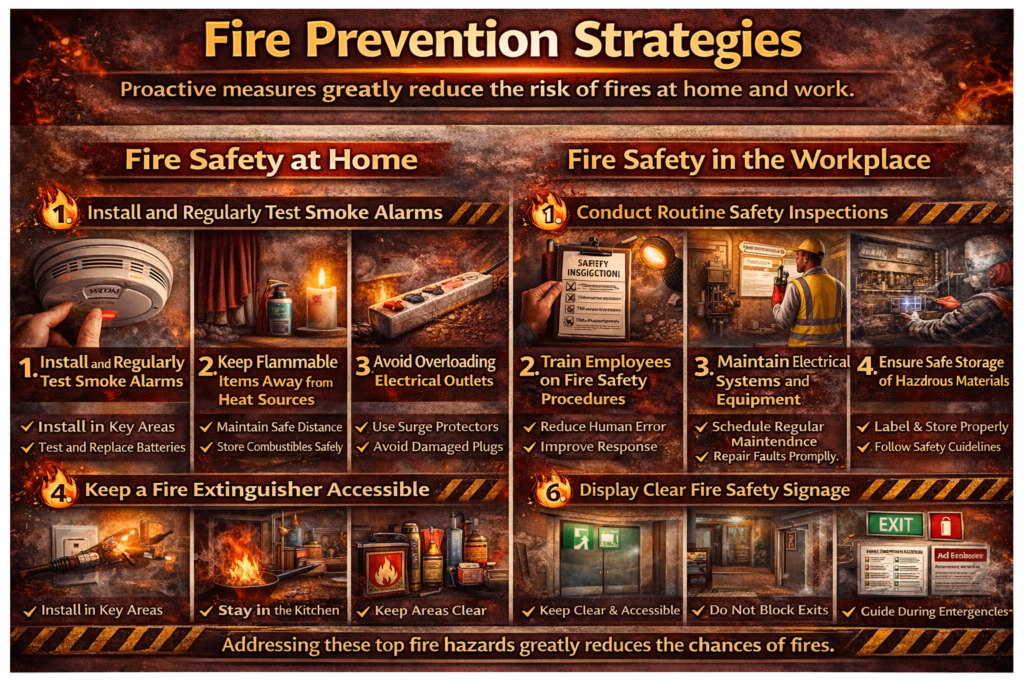
“Fire Prevention Strategies for Home and Workplace Safety”
Fire prevention is the most effective and reliable way to reduce fire risks. Instead of dealing with the consequences of a fire, prevention focuses on eliminating hazards before they turn into dangerous situations. A well-planned prevention strategy not only protects lives but also reduces property damage, financial loss, and operational disruption.For a broader perspective, check out.Fire Safety Blueprint: Building a Safer Environment Through Prevention & Preparedness
Fire prevention is not a one-time action—it is an ongoing process that requires awareness, regular checks, proper equipment use, and responsible behavior. Whether at home or in the workplace, adopting the right preventive measures can significantly lower the chances of fire incidents.
| Area | Strategy | Key Actions | Benefits |
|---|---|---|---|
| Home Safety | Install Smoke Alarms | Install in key areas, test monthly, replace batteries | Early fire detection and quick response |
| Home Safety | Keep Flammable Items Away | Maintain safe distance from heat sources, store properly | Reduces ignition risk |
| Home Safety | Avoid Electrical Overload | Use certified devices, avoid multiple plugs | Prevents overheating and electrical fires |
| Home Safety | Safe Cooking Practices | Never leave cooking unattended, monitor temperature | Prevents kitchen fires |
| Home Safety | Safe Storage of Matches | Keep away from children, store securely | Prevents accidental ignition |
| Home Safety | Fire Extinguisher Access | Keep in kitchen, ensure usability | Controls small fires quickly |
| Workplace Safety | Routine Inspections | Check wiring, equipment, exits | Identifies hazards early |
| Workplace Safety | Employee Training | Fire drills, extinguisher training | Improves emergency response |
| Workplace Safety | Equipment Maintenance | Repair faults, regular servicing | Reduces risk of system failure |
| Workplace Safety | Safe Material Storage | Proper labeling, secure storage | Prevents fire hazards |
| Workplace Safety | Clear Emergency Exits | Keep pathways unobstructed | Ensures safe evacuation |
| Workplace Safety | Safety Signage | Display exit signs and instructions | Improves awareness and response |
Fire Safety at Home
Homes are one of the most common places where fires occur, often due to everyday activities such as cooking, heating, or using electrical appliances. Therefore, it is essential to follow simple but effective fire prevention practices to ensure a safe living environment.
1. Install and Regularly Test Smoke Alarms
Smoke alarms are the first line of defense in detecting fires early.
Why It Matters:
Smoke alarms provide early warning, allowing occupants enough time to evacuate safely before the fire spreads.
Best Practices:
- Install smoke alarms in bedrooms, kitchens, and hallways
- Test alarms at least once a month
- Replace batteries regularly
- Ensure alarms are functioning properly at all times
Early detection can save lives by giving crucial time to respond.
2. Keep Flammable Items Away from Heat Sources
Flammable materials can easily catch fire if placed near heat-producing devices.
Common Flammable Items:
- Curtains and furniture
- Paper and cardboard
- Cleaning chemicals and sprays
Prevention Tips:
- Maintain a safe distance between heat sources and flammable items
- Avoid placing objects near heaters or stoves
- Store combustible materials safely
Small precautions can prevent major accidents.
3. Avoid Overloading Electrical Outlets
Overloaded circuits can overheat and cause electrical fires.
Common Risks:
- Plugging multiple devices into one socket
- Using low-quality extension cords
- Running high-power appliances simultaneously
Prevention Tips:
- Use certified power strips with surge protection
- Distribute electrical load evenly
- Avoid using damaged plugs or wires
Proper electrical usage reduces fire hazards significantly.
4. Never Leave Cooking Unattended
Cooking is one of the leading causes of house fires, especially when left unattended.
Common Risks:
- Overheated oil or grease
- Open flames near combustible materials
Prevention Tips:
- Stay in the kitchen while cooking
- Turn off the stove if leaving the area
- Keep flammable items away from cooking areas
Constant supervision is key to preventing kitchen fires.
5. Store Matches and Lighters Safely
Matches and lighters can pose serious risks, especially around children.
Prevention Tips:
- Keep them out of reach of children
- Store them in secure, designated areas
- Avoid leaving them unattended
Proper storage prevents accidental ignition.
6. Keep a Fire Extinguisher Accessible
Having a fire extinguisher readily available can help control small fires before they spread.
Best Practices:
- Place extinguishers in kitchens and accessible locations
- Ensure all household members know how to use them
- Check expiry dates and maintenance regularly
Quick action with the right equipment can stop a fire early.
Fire Safety in the Workplace
Workplaces often involve more complex environments, including machinery, electrical systems, and hazardous materials. Therefore, fire prevention in workplaces requires structured planning, regular monitoring, and employee training.
1. Conduct Routine Safety Inspections
Regular inspections help identify potential hazards before they become serious threats.
What to Check:
- Electrical systems
- Storage areas
- Fire safety equipment
- Escape routes
Benefits:
- Early detection of risks
- Improved compliance with safety standards
Prevention starts with identifying hazards early.
2. Train Employees on Fire Safety Procedures
Employees play a critical role in maintaining workplace safety.
Training Should Include:
- Fire prevention practices
- Emergency response procedures
- Use of fire extinguishers
Benefits:
- Reduces human error
- Improves emergency response
A well-trained workforce is a safer workforce.
3. Maintain Electrical Systems and Equipment
Faulty equipment can lead to overheating and fire hazards.
Prevention Tips:
- Schedule regular maintenance
- Repair damaged equipment immediately
- Avoid overloading circuits
Proper maintenance ensures safe operations.
4. Ensure Safe Storage of Hazardous Materials
Workplaces often deal with flammable or hazardous substances.
Best Practices:
- Store chemicals in designated areas
- Use proper labeling and containers
- Follow safety guidelines for handling materials
Safe storage reduces the risk of accidental ignition.
5. Keep Emergency Exits Unobstructed
Clear escape routes are essential for safe evacuation during emergencies.
Important Points:
- Do not block exits with equipment or furniture
- Ensure doors open easily
- Maintain clear pathways at all times
Easy access to exits saves lives.
6. Display Clear Fire Safety Signage
Signage helps guide people during emergencies and improves awareness.
Examples:
- Exit signs
- Fire extinguisher locations
- Emergency instructions
Benefits:
- Reduces confusion during evacuation
- Improves response time
Clear communication is essential during emergencies.
Fire prevention strategies are effective only when they are consistently implemented and regularly reviewed. Both homes and workplaces require a proactive approach that includes awareness, proper equipment, and responsible behavior.
Preventing fire is always better than responding to it. By following simple yet effective strategies—such as maintaining electrical systems, practicing safe cooking, storing materials properly, and ensuring awareness—individuals and organizations can significantly reduce fire risks.
A strong prevention strategy not only protects lives but also creates a safer and more secure environment for everyone.
Fire Risk Assessment (Step-by-Step Guide)
A fire risk assessment is a structured and systematic process used to identify fire hazards, evaluate the level of risk, and implement appropriate control measures to reduce or eliminate those risks. It is one of the most important components of fire safety, especially in workplaces, commercial buildings, and public environments.To learn more about conducting assessments, visit:What is a Fire Risk Assessment
The purpose of a fire risk assessment is not only to prevent fire incidents but also to ensure that, if a fire does occur, people can evacuate safely and quickly with minimal harm.
A well-conducted fire risk assessment helps organizations:
- Protect lives and property
- Comply with legal and safety requirements
- Improve emergency preparedness
- Reduce operational disruptions
Step 1: Identify Fire Hazards
The first step is to identify anything that could cause a fire (ignition source) or fuel a fire (combustible material).
What to Look For:
Sources of Ignition:
- Electrical equipment and wiring
- Open flames (candles, heaters, cooking appliances)
- Hot surfaces or machinery
- Sparks from tools or equipment
Sources of Fuel:
- Paper, wood, and textiles
- Flammable liquids (fuel, oil, chemicals)
- Gases (LPG, natural gas)
- Waste materials and clutter
Why This Step is Important:
Identifying hazards allows you to recognize potential fire risks before they lead to an incident.
Practical Tip:
Conduct regular inspections of all areas, including hidden spaces such as storage rooms and electrical panels.
Step 2: Identify People at Risk
Once hazards are identified, the next step is to determine who could be affected in the event of a fire.
People to Consider:
- Employees and workers
- Visitors, customers, or contractors
- Children or elderly individuals
- People with disabilities or mobility challenges
- Individuals working in isolated or high-risk areas
Why This Step is Important:
Different individuals may require special assistance or additional time to evacuate, so planning must consider their needs.
Practical Tip:
Ensure that emergency plans include provisions for assisting vulnerable individuals.
Step 3: Evaluate and Reduce Risks
This step involves assessing how likely a fire is to occur and how severe its impact could be. Based on this evaluation, appropriate control measures are implemented.
Risk Evaluation Includes:
- Likelihood of fire occurring
- Potential consequences (injury, damage)
- Existing safety measures
Ways to Reduce Risks:
Eliminate Hazards:
- Remove unnecessary combustible materials
- Replace faulty equipment
Control Hazards:
- Store flammable materials safely
- Install fire-resistant barriers
Implement Safety Systems:
- Fire alarms and smoke detectors
- Fire extinguishers and sprinkler systems
Improve Practices:
- Train staff on fire safety
- Establish clear safety procedures
Why This Step is Important:
It helps in reducing both the probability and impact of fire incidents, making the environment safer.
Practical Tip:
Always prioritize high-risk hazards and address them immediately.
Step 4: Record Findings
After identifying and evaluating risks, it is essential to document all findings and actions taken.
What Should Be Recorded:
- Identified fire hazards
- People at risk
- Existing safety measures
- Actions taken to reduce risks
- Areas that require improvement
Why Documentation Matters:
- Provides a clear record for future reference
- Helps ensure accountability
- Supports compliance with legal requirements
- Assists in audits and inspections
Practical Tip:
Keep records updated and easily accessible for safety personnel.
Step 5: Review and Update
A fire risk assessment is not a one-time task—it must be regularly reviewed and updated to remain effective.
When to Review:
- After changes in layout or operations
- Introduction of new equipment or materials
- After a fire incident or near-miss
- Periodically (e.g., annually)
Why This Step is Important:
Environments change over time, and new risks may emerge. Regular reviews ensure that safety measures remain relevant and effective.
Practical Tip:
Schedule periodic reviews and assign responsibility to a qualified person.
Each step in the fire risk assessment process is interconnected:
- Identify hazards
- Identify people at risk
- Evaluate and reduce risks
- Record findings
- Review and update
Skipping any step can weaken the entire safety system.
A fire risk assessment is a proactive and essential tool for preventing fire incidents and ensuring safety. By carefully identifying hazards, protecting people, implementing control measures, and continuously reviewing the process, individuals and organizations can significantly reduce fire risks.
A well-executed fire risk assessment not only enhances safety but also builds confidence, compliance, and preparedness in any environment.ment to ensure it remains relevant and effective.
Fire Protection Systems
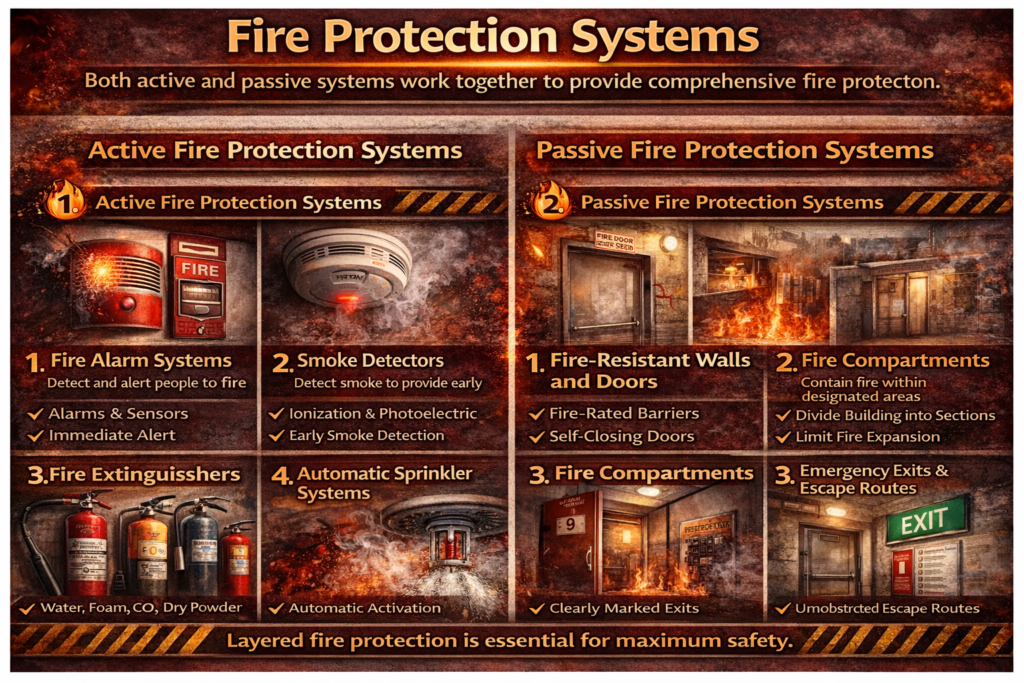
“Active and Passive Fire Protection Systems Working Together for Safety”
Fire protection systems are an essential part of any comprehensive fire safety strategy. While prevention aims to stop fires from starting, fire protection systems are designed to detect fires early, control their spread, and minimize damage if an incident occurs.
These systems not only protect lives but also safeguard property, business operations, and critical infrastructure. A well-designed fire protection system ensures that people are alerted in time, evacuation is possible, and the fire is either contained or extinguished before it escalates.
Fire protection systems are broadly divided into two main categories:
- Active Fire Protection Systems
- Passive Fire Protection Systems
Both systems work together to provide complete safety and must be properly installed, maintained, and regularly tested.
“Comparison of Active and Passive Fire Protection Systems”
| Type | System | Description | Key Function | Examples |
|---|---|---|---|---|
| Active Protection | Fire Alarm Systems | Detect smoke or heat and alert occupants | Early warning | Sirens, sensors, alarm panels |
| Active Protection | Smoke Detectors | Detect smoke before flames appear | Early detection | Ionization, photoelectric detectors |
| Active Protection | Fire Extinguishers | Control small fires manually | Fire suppression | Water, CO₂, foam extinguishers |
| Active Protection | Sprinkler Systems | Automatically release water during fire | Fire control | Ceiling sprinkler systems |
| Passive Protection | Fire-Resistant Walls & Doors | Prevent fire spread between areas | Containment | Fire-rated doors, walls |
| Passive Protection | Fire Compartments | Divide building into sections | Limit fire spread | Compartment walls, floors |
| Passive Protection | Emergency Exits & Routes | Provide safe evacuation paths | Safe escape | Exit doors, emergency lighting |
Active Fire Protection Systems
Active fire protection systems are those that require action or activation—either automatically or manually—to respond to a fire. Their main purpose is to detect, alert, and suppress fires at an early stage.
1. Fire Alarm Systems
Fire alarm systems are designed to detect signs of fire such as smoke, heat, or flames and alert occupants immediately.
Key Features:
- Audible alarms (sirens or bells)
- Visual alerts (flashing lights)
- Automatic detection sensors
How They Work:
When smoke or heat is detected, the system triggers an alarm to warn occupants, allowing them to evacuate quickly.
Importance:
- Provides early warning
- Reduces panic during emergencies
- Saves valuable evacuation time
Fire alarms are often the first line of defense in any fire emergency.
2. Smoke Detectors
Smoke detectors are specialized devices that identify the presence of smoke in the air, often before flames are visible.
Types of Smoke Detectors:
- Ionization detectors (detect fast-flaming fires)
- Photoelectric detectors (detect smoldering fires)
Why They Matter:
Early detection of smoke can prevent a small fire from becoming a major disaster.
Best Practices:
- Install in key areas such as bedrooms and hallways
- Test regularly
- Replace batteries as needed
Smoke detectors provide critical early warnings that can save lives.
3. Fire Extinguishers
Fire extinguishers are portable devices used to control or extinguish small fires before they spread.
Common Types:
- Water extinguishers (for solid materials)
- Foam extinguishers (for liquids)
- CO₂ extinguishers (for electrical fires)
- Dry powder extinguishers (for multiple fire types)
How They Help:
They allow individuals to take immediate action during the early stages of a fire.
Best Practices:
- Place extinguishers in accessible locations
- Train individuals on proper usage (PASS method)
- Inspect regularly
Quick use of a fire extinguisher can prevent major damage.
4. Automatic Sprinkler Systems
Sprinkler systems are designed to automatically release water when a fire is detected, helping to control or extinguish the fire.
How They Work:
Sprinkler heads activate individually when exposed to high temperatures.
Benefits:
- Controls fire at an early stage
- Reduces fire spread
- Minimizes damage
Key Advantage:
Sprinklers often control fires before emergency services arrive.
These systems are highly effective in commercial and industrial settings.
Passive Fire Protection Systems
Passive fire protection systems do not require activation. Instead, they are built into the structure of a building and are designed to contain fire, slow its spread, and provide safe evacuation routes.
1. Fire-Resistant Walls and Doors
These are specially designed structures that can withstand fire for a specific period of time.
Purpose:
- Prevent fire from spreading between rooms
- Protect escape routes
Features:
- Fire-rated materials
- Self-closing fire doors
They act as barriers that limit fire damage.
2. Fire Compartments
Fire compartments divide a building into smaller sections to contain fire within a limited area.
How They Work:
Walls, floors, and ceilings are constructed to resist fire and prevent it from spreading.
Benefits:
- Limits fire growth
- Protects other parts of the building
- Allows more time for evacuation
Compartmentation is a key strategy in large buildings.
3. Emergency Exits and Escape Routes
Escape routes are designed to ensure that occupants can evacuate safely and quickly during a fire emergency.
Key Features:
- Clearly marked exit signs
- Unobstructed pathways
- Emergency lighting
Why They Are Important:
During a fire, visibility may be low, and panic can occur. Properly designed escape routes help guide people to safety.
Best Practices:
- Keep exits clear at all times
- Ensure doors open easily
- Regularly inspect escape routes
Safe evacuation depends heavily on well-maintained escape routes.
How Active and Passive Systems Work Together
A strong fire protection strategy combines both active and passive systems:
- Active systems detect and fight the fire
- Passive systems contain the fire and protect occupants
Together, they create multiple layers of safety, ensuring maximum protection.
Fire protection systems are essential for minimizing the impact of fire incidents. By combining early detection systems, firefighting equipment, and structural safety features, these systems provide a comprehensive approach to fire safety.
Proper installation, regular maintenance, and user awareness are critical to ensuring that these systems function effectively when needed most.
Emergency Preparedness and Response
Emergency preparedness is a critical component of fire safety that focuses on ensuring individuals and organizations are ready to respond quickly, safely, and effectively during a fire incident. Even with strong prevention and protection systems in place, emergencies can still occur. Therefore, being well-prepared can significantly reduce injuries, save lives, and minimize damage.For practical insights, read:Fire Safety and Risk Assessment: A Practical Guide to Prevention and Safer Environments
Preparedness is not just about having a plan—it is about ensuring that everyone understands the plan, knows their role, and can act without hesitation during an emergency.
Key Elements of an Emergency Plan
A well-structured emergency plan provides clear guidance on what actions to take during a fire. It ensures that confusion is minimized and evacuation is carried out in an organized manner.
1. Clearly Defined Evacuation Routes
Evacuation routes are pre-planned pathways that guide people to exit a building safely.
Important Features:
- Clearly marked with visible signs
- Free from obstructions
- Easily accessible from all areas
Why It Matters:
During a fire, visibility may be low, and panic can occur. Clearly defined routes help people evacuate quickly and safely.
2. Designated Assembly Points
Assembly points are safe locations outside the building where occupants gather after evacuation.
Purpose:
- Ensure everyone is accounted for
- Prevent re-entry into dangerous areas
- Help emergency responders manage the situation
Best Practice:
Choose assembly points at a safe distance from the building and communicate them clearly to all occupants.
3. Emergency Contact Numbers
Having quick access to emergency contacts is essential during a fire incident.
Examples:
- Fire department
- Emergency medical services
- Safety officers
Importance:
Immediate communication can speed up response time and reduce the impact of the fire.
4. Assigned Roles and Responsibilities
Assigning roles ensures that specific individuals take charge of critical tasks during an emergency.
Examples of Roles:
- Fire wardens to guide evacuation
- First aid responders
- Safety officers to coordinate actions
Why It Matters:
Clear responsibilities prevent confusion and ensure that the emergency plan is executed effectively.
Fire Evacuation Procedures
Evacuation procedures outline the step-by-step actions individuals must take during a fire emergency. Following these procedures correctly can save lives.
Step-by-Step Evacuation Guidelines:
1. Remain Calm and Avoid Panic
Staying calm allows individuals to think clearly and act responsibly.
2. Activate the Fire Alarm
Immediately alert others by triggering the alarm system.
3. Evacuate Using Designated Routes
Follow marked exit routes and leave the building quickly but safely.
4. Do Not Use Elevators
Elevators can fail or become unsafe during a fire. Always use stairs.
5. Assist Vulnerable Individuals
Help those who may require assistance, such as elderly or disabled individuals.
6. Gather at the Assembly Point
Once outside, proceed to the designated assembly area and wait for further instructions.
Important Reminder:
Never re-enter a building until it has been declared safe by authorities.
Importance of Fire Drills
Fire drills are practice exercises that simulate real fire emergencies. They are essential for ensuring that people are familiar with evacuation procedures.
Benefits of Fire Drills:
- Improves response time during real emergencies
- Reduces panic and confusion
- Helps identify weaknesses in the emergency plan
- Builds confidence among occupants
Best Practices:
- Conduct drills regularly (at least once or twice a year)
- Evaluate performance after each drill
- Update procedures based on observations
Regular practice ensures that everyone knows exactly what to do when it matters most.
Common Fire Safety Mistakes
Avoiding common mistakes is just as important as implementing safety measures. Many fire incidents occur due to simple but preventable errors.
Major Mistakes to Avoid:
Ignoring Fire Alarms
Treating alarms as false warnings can delay evacuation and increase risk.
Blocking Emergency Exits
Obstructed exits can prevent safe evacuation and lead to serious consequences.
Lack of Training and Awareness
Untrained individuals may panic or respond incorrectly during emergencies.
Poor Maintenance of Equipment
Faulty alarms, extinguishers, or systems may fail when needed most.
Overloading Electrical Systems
Excessive electrical load increases the risk of fire incidents.
Avoiding these mistakes significantly improves overall fire safety.
Fire Safety Best Practices
Adopting best practices ensures a proactive approach to fire safety and risk reduction.
Recommended Practices:
- Conduct regular fire safety inspections
- Maintain all fire protection equipment
- Install clear and visible signage
- Promote a safety-first culture
- Follow all applicable safety regulations
Why Best Practices Matter:
They help create a consistent and reliable safety system that reduces risks and improves preparedness.
Professional Fire Safety Tips
For a more advanced and effective fire safety approach, consider the following expert recommendations:
Key Professional Tips:
- Use certified and approved fire safety equipment
- Provide regular training and awareness programs
- Perform routine maintenance and safety checks
- Ensure emergency exits are clearly marked and accessible
- Develop and enforce strong safety policies
Additional Insight:
Organizations that invest in professional fire safety practices are better equipped to prevent incidents and respond effectively.
You can also refer to our comprehensive fire safety guide to protect lives and property effectively:
Conclusion
Fire safety is not a one-time effort but a continuous and evolving responsibility that requires consistent attention, proper planning, and proactive action. Every environment—whether a home, workplace, or public space—contains potential fire risks that must be identified and managed effectively. By understanding how fires start, recognizing common hazards, and implementing preventive strategies, individuals and organizations can significantly reduce the chances of fire incidents occurring. Prevention, combined with awareness and responsible behavior, forms the foundation of a strong fire safety culture.
A comprehensive fire safety approach goes beyond prevention and includes well-structured risk assessments, reliable protection systems, and clearly defined emergency procedures. Proper training ensures that people are not only aware of potential risks but are also confident in their ability to respond during emergencies. When individuals know how to act—whether it is using fire equipment, following evacuation routes, or assisting others—the chances of minimizing harm and damage increase significantly. Regular drills, maintenance of safety systems, and adherence to safety standards further strengthen this preparedness.If you’re interested in building a career in this field, check:How to Become a Fire Safety Officer
Ultimately, investing in fire safety is an investment in human life, property protection, and long-term sustainability. A safe environment fosters confidence, reduces losses, and ensures business continuity. By adopting a proactive and well-informed approach to fire safety today, we can build safer communities, protect valuable assets, and create a more secure and resilient future for everyone.To further strengthen your knowledge, explore:Fire Safety Guide: Key Principles for Prevention, Protection, and Risk Control