
Fire Safety Management: Strategies for Prevention, Control, and Emergency Response
Fire safety management is a fundamental pillar of modern safety practices, designed to protect people, property, and operations from the devastating impact of fire incidents. It goes beyond basic precautions by establishing a structured and proactive approach that focuses on prevention, effective control measures, and a well-coordinated emergency response. In today’s environments—whether workplaces, industrial facilities, or public spaces—the risk of fire cannot be completely eliminated, but it can be significantly reduced through proper planning and management.To understand the basics, you can explore this detailed guide onwhat is fire safety which explains core concepts and importance.
Fires have the potential to cause severe consequences, including loss of life, serious injuries, financial damage, and long-term disruption to business activities. Even a small fire incident can escalate quickly if adequate safety systems are not in place. This is why organizations must not rely on reactive measures alone; instead, they should adopt a comprehensive fire safety management framework that anticipates risks, identifies hazards early, and implements appropriate safeguards.
An effective fire safety management system is built on three core pillars: prevention, control, and emergency response. Prevention involves identifying potential fire hazards—such as faulty electrical systems, improper storage of flammable materials, or unsafe work practices—and taking corrective actions before an incident occurs. Control measures focus on minimizing the impact of a fire through systems like alarms, sprinklers, fire-resistant structures, and clear safety protocols. Meanwhile, emergency response ensures that when a fire does occur, individuals know exactly how to react, evacuate safely, and coordinate with emergency services.
In addition, fire safety management emphasizes continuous improvement through regular risk assessments, safety audits, staff training, and compliance with legal and regulatory requirements. It encourages organizations to create a strong safety culture where everyone understands their role in preventing fires and responding effectively during emergencies.
This guide explores the key strategies of fire safety management in detail, covering prevention techniques, risk control methods, and emergency preparedness planning. By understanding and implementing these strategies, organizations and individuals can create safer environments, reduce potential hazards, and ensure a rapid and effective response when it matters most.
What is Fire Safety Management?
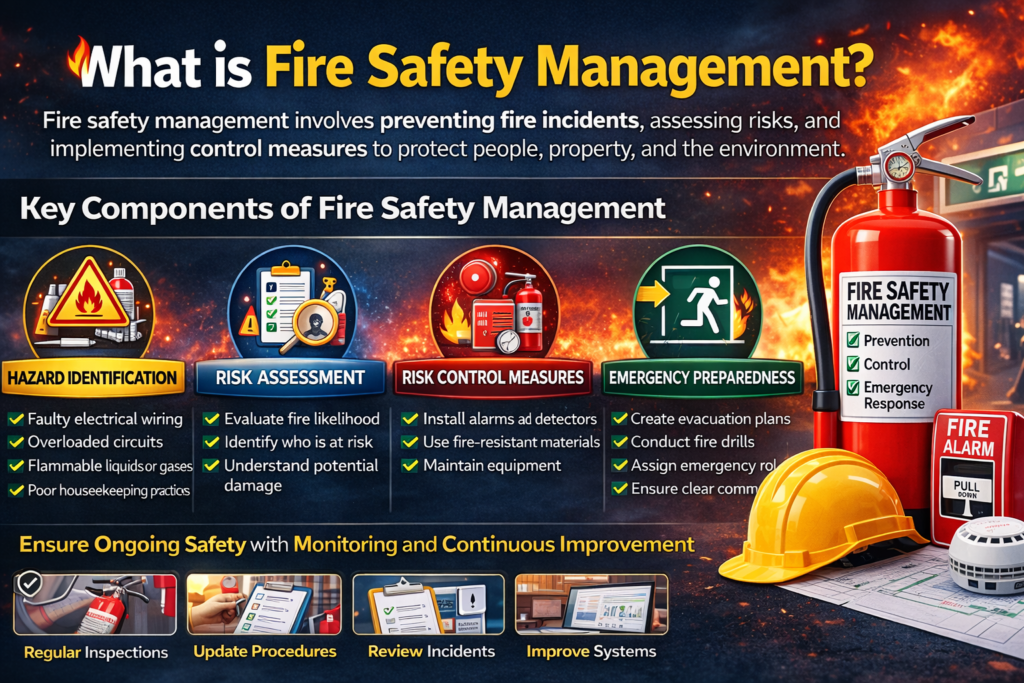
Fire safety management is a structured and continuous process that focuses on preventing fire incidents, reducing potential risks, and ensuring that effective systems are in place to protect people, property, and the environment. It is not just about installing fire extinguishers or alarms—it is a comprehensive approach that combines planning, implementation, monitoring, and improvement of fire safety practices within an organization or environment.If you’re interested in building a professional career in this field, read this guide on how to become a fire safety officer.
At its core, fire safety management involves three major activities:
- Identifying fire hazards – recognizing anything that could start or fuel a fire
- Assessing risks – evaluating how likely a fire is to occur and its potential impact
- Implementing control measures – taking practical steps to eliminate or reduce those risks
This systematic approach ensures that fire safety is not handled randomly but managed in a professional and organized manner.
Key Components of Fire Safety Management
To fully understand fire safety management, it is important to break it down into its essential components:
1. Hazard Identification
This is the first and most important step. It involves identifying potential sources of fire such as:
- Faulty electrical wiring
- Overloaded circuits
- Flammable liquids or gases
- Poor housekeeping practices
Without identifying hazards, it is impossible to prevent fires effectively.
2. Risk Assessment
Once hazards are identified, the next step is to evaluate:
- How likely the hazard is to cause a fire
- Who might be affected
- What damage could occur
This helps prioritize actions and focus on high-risk areas.
3. Risk Control Measures
After assessment, appropriate control measures are implemented, such as:
- Installing fire alarms and detection systems
- Using fire-resistant materials
- Maintaining equipment regularly
- Providing proper ventilation
These measures reduce the chances of fire and limit its spread.
4. Emergency Preparedness
Even with strong prevention, fires can still happen. Fire safety management ensures readiness by:
- Creating evacuation plans
- Conducting fire drills
- Assigning emergency roles
- Ensuring clear communication systems
This minimizes panic and ensures quick, safe evacuation.
5. Monitoring and Continuous Improvement
Fire safety is not a one-time task. It requires:
- Regular inspections
- Updating safety procedures
- Reviewing past incidents
- Improving systems continuously
This keeps the safety system effective over time.
Key Objectives of Fire Safety Management
| Objective | Description | Key Actions | Outcome |
|---|---|---|---|
| Prevent Fire Incidents | Focuses on stopping fires before they occur by identifying and controlling hazards early. | Regular inspections and maintenanceSafe handling of flammable materialsProper electrical system managementEmployee awareness and training | Reduces fire risks and avoids costly damage |
| Protect Human Life | Ensures the safety and well-being of people during fire emergencies. | Clear evacuation routesEmergency lighting and alarmsFire safety trainingAccessibility for all individuals | Saves lives and reduces injuries |
| Minimize Property Damage | Aims to limit destruction caused by fire to buildings and assets. | Install fire suppression systemsUse fire-resistant materialsImplement compartmentation | Reduces financial losses and downtime |
| Ensure Legal Compliance | Ensures adherence to fire safety laws and regulations. | Conduct fire risk assessmentsMaintain safety recordsInstall approved systemsProvide mandatory training | Avoids penalties and ensures safe operations |
| Promote Safety Awareness | Encourages a culture where everyone takes responsibility for fire safety. | Regular training sessionsSafety signs and instructionsSafety-first cultureEmployee education | Improves behavior and prevents accidents |
The primary goals of fire safety management go beyond basic protection. Each objective plays a vital role in creating a safe and secure environment.
1. Prevent Fire Incidents
The most important objective is to stop fires before they start.
This is achieved through:
- Regular inspections and maintenance
- Safe handling of flammable materials
- Proper electrical system management
- Employee awareness and training
Prevention is always more effective and less costly than dealing with fire damage.
2. Protect Human Life
Human safety is the top priority in any fire safety strategy.
This includes:
- Providing clear evacuation routes
- Installing emergency lighting and alarms
- Training people on how to respond during a fire
- Ensuring accessibility for all individuals
A well-prepared system can save lives during critical situations.
3. Minimize Property Damage
Fires can destroy buildings, equipment, and valuable assets.
To reduce damage:
- Install fire suppression systems (sprinklers, extinguishers)
- Use fire-resistant construction materials
- Implement compartmentation to stop fire spread
Quick control of fire reduces financial losses and downtime.
4. Ensure Legal and Regulatory Compliance
Organizations must follow fire safety laws and standards set by authorities.
This involves:
- Conducting regular fire risk assessments
- Maintaining safety records and documentation
- Installing approved fire safety systems
- Providing mandatory training
Compliance not only avoids penalties but also ensures a safe working environment.
5. Promote Safety Awareness
Fire safety is everyone’s responsibility, not just management’s.
Awareness can be improved by:
- Conducting regular training sessions
- Displaying safety signs and instructions
- Encouraging a safety-first culture
- Educating employees about risks and responsibilities
When people are aware, they act responsibly and prevent accidents.
Why This Section Matters
Understanding fire safety management helps individuals and organizations:
- Take proactive safety measures
- Reduce risks effectively
- Respond confidently during emergencies
- Build a strong safety culture
In simple terms, fire safety management is about being prepared, staying alert, and acting responsibly to ensure that fire risks are controlled and lives are protected at all times.
Importance of Fire Safety Management
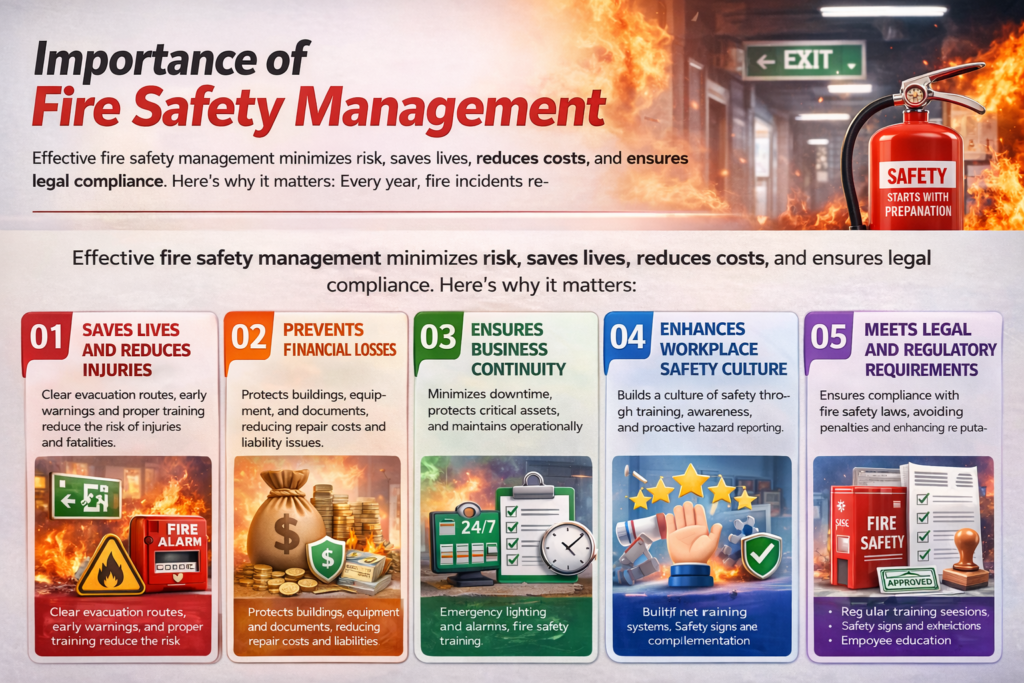
Fire safety management is not only a regulatory obligation—it is a fundamental responsibility that directly impacts human life, organizational stability, and long-term sustainability. Every year, fire incidents result in serious injuries, fatalities, property destruction, and financial losses that could have been prevented with proper planning and safety measures.
A well-implemented fire safety management system ensures that risks are minimized, people are protected, and organizations can operate safely and efficiently. It creates a proactive environment where hazards are identified early, and effective measures are taken before a disaster occurs.
Why Fire Safety Management Matters
Understanding the importance of fire safety management helps organizations and individuals take it seriously and invest in the right safety practices.
1. Saves Lives and Reduces Injuries
The most critical reason for implementing fire safety management is to protect human life.
Fires can spread rapidly, producing heat, smoke, and toxic gases that can be fatal within minutes. Without proper safety measures, people may become trapped, confused, or unable to evacuate in time.
Fire safety management helps by:
- Providing clear evacuation routes and emergency exits
- Installing fire alarms and detection systems for early warning
- Training individuals on how to respond during emergencies
- Ensuring accessibility for vulnerable individuals
When people are aware and prepared, the chances of survival increase significantly.
2. Prevents Financial Losses
Fire incidents can cause severe financial damage to businesses and property owners.
Losses may include:
- Destruction of buildings and infrastructure
- Damage to equipment, inventory, and documents
- Cost of repairs and replacements
- Legal liabilities and insurance claims
Fire safety management reduces these risks by:
- Preventing fire incidents through hazard control
- Limiting damage with fire protection systems
- Ensuring quick response to minimize impact
Investing in fire safety is far more cost-effective than dealing with the aftermath of a fire.
3. Ensures Business Continuity
A fire can disrupt business operations for days, weeks, or even permanently.
Without proper safety planning:
- Operations may stop completely
- Data and records may be lost
- Customers and clients may lose trust
- Revenue streams may be affected
Fire safety management supports business continuity by:
- Protecting critical assets and infrastructure
- Establishing emergency response and recovery plans
- Reducing downtime after an incident
- Maintaining operational stability
A prepared organization can recover quickly and continue its activities with minimal disruption.
4. Enhances Workplace Safety Culture
Fire safety management plays a key role in building a strong safety culture within an organization.
A positive safety culture means:
- Employees are aware of risks
- Safety procedures are followed consistently
- Everyone takes responsibility for preventing hazards
This can be achieved through:
- Regular fire safety training and drills
- Clear communication of safety policies
- Encouraging reporting of hazards
- Leadership commitment to safety
When safety becomes part of everyday behavior, the risk of accidents decreases significantly.
5. Meets Legal and Regulatory Requirements
Governments and regulatory bodies have established fire safety laws and standards that organizations must follow.
These requirements typically include:
- Conducting fire risk assessments
- Installing and maintaining fire safety systems
- Providing employee training
- Keeping safety records and documentation
Failure to comply can result in:
- Legal penalties and fines
- Business shutdowns
- Damage to reputation
Fire safety management ensures compliance and demonstrates a commitment to responsible operations.
Additional Benefits of Fire Safety Management
Beyond the core reasons, fire safety management also provides several additional advantages:
Protects the Environment
Fires can release harmful gases and pollutants into the environment. Preventing fires helps reduce environmental damage.
Improves Organizational Reputation
Organizations that prioritize safety gain trust from employees, clients, and stakeholders.
Boosts Employee Confidence
Employees feel safer and more secure in a well-managed environment, which improves productivity and morale.
Fire safety management is essential because it protects lives, safeguards assets, and ensures smooth operations. It is not something that should be implemented only to meet legal requirements—it should be a core part of every organization’s values and daily practices.
In simple terms, effective fire safety management means:
- Being prepared before a fire occurs
- Acting quickly and effectively during an emergency
- Recovering efficiently after an incident
By understanding its importance and implementing proper strategies, organizations can create safer environments and significantly reduce the risks associated with fire hazards.
Fire Prevention Strategies
Fire prevention is the first and most effective line of defense in fire safety management. It focuses on stopping a fire before it starts by identifying potential hazards and taking proactive steps to eliminate or control them. Unlike fire control or emergency response—which deal with fires after they occur—prevention aims to reduce the likelihood of fire incidents altogether.Learn more about prevention techniques in this detailed guide on fire safety complete guide to prevention equipment risk assessment.
A strong fire prevention strategy not only protects lives and property but also reduces operational disruptions, financial losses, and legal risks. It requires a combination of awareness, proper planning, regular inspections, and responsible behavior at all levels of an organization.You can also explore fire safety essentials prevention protection and preparedness for practical safety tips.
Common Fire Hazards
| Hazard | Description | Why It’s Dangerous | Prevention Tips |
|---|---|---|---|
| Faulty Electrical Systems | Damaged wiring, loose connections, old equipment, substandard components | Can generate heat or sparks that ignite nearby materials | Regular inspectionsReplace damaged wiresUse certified equipmentAvoid unsafe wiring |
| Flammable Materials | Chemicals, fuels, paper, wood, gases | Can easily catch fire and spread rapidly | Safe storageProper labelingKeep away from ignition sourcesEnsure ventilation |
| Poor Housekeeping | Waste buildup, clutter, blocked exits | Acts as fuel and blocks evacuation routes | Maintain cleanlinessDispose waste regularlyKeep exits clear |
| Overloaded Circuits | Too many devices on one outlet, excessive extension use | Causes overheating and electrical fires | Avoid overloadingUse circuit breakersDistribute load properly |
| Human Negligence | Unsafe behavior, ignoring safety rules | Small mistakes can lead to major fires | Safety trainingEnforce rulesPromote awareness |
Understanding fire hazards is the foundation of effective prevention. A fire hazard is anything that has the potential to start a fire or contribute to its spread.
1. Faulty Electrical Systems
Electrical issues are one of the leading causes of fires in workplaces and homes.
Common Problems:
- Damaged or exposed wiring
- Loose electrical connections
- Old or poorly maintained equipment
- Use of substandard electrical components
Why It’s Dangerous:
Faulty wiring can generate heat or sparks, which can easily ignite nearby combustible materials.
Prevention Tips:
- Conduct regular electrical inspections
- Replace damaged wires immediately
- Use certified and high-quality equipment
- Avoid temporary or unsafe wiring setups
2. Flammable Materials
Many environments contain materials that can easily catch fire if exposed to heat or sparks.
Examples:
- Chemicals and solvents
- Fuels (petrol, diesel)
- Paper, wood, and textiles
- Gases and aerosols
Why It’s Dangerous:
Improper storage or handling of these materials increases the risk of fire spreading rapidly.
Prevention Tips:
- Store flammable materials in designated safe areas
- Use proper containers and labeling
- Keep them away from ignition sources
- Ensure proper ventilation
3. Poor Housekeeping
A cluttered and unclean environment can significantly increase fire risks.
Common Issues:
- Accumulation of waste materials
- Dust and debris buildup
- Blocked emergency exits
- Improper storage of items
Why It’s Dangerous:
Waste materials can act as fuel for fires, while blocked exits can hinder evacuation.
Prevention Tips:
- Maintain cleanliness and organization
- Dispose of waste regularly
- Keep exits and pathways clear
- Follow proper storage practices
4. Overloaded Circuits
Overloading electrical outlets and circuits is a common but often overlooked hazard.
Causes:
- Plugging multiple devices into a single outlet
- Using extension cords excessively
- Running high-power equipment on low-capacity circuits
Why It’s Dangerous:
Overloading can cause overheating, leading to sparks or electrical fires.
Prevention Tips:
- Avoid overloading sockets
- Use proper circuit breakers
- Distribute electrical load evenly
- Limit the use of extension cords
5. Human Negligence
Human error is a major contributing factor in many fire incidents.
Examples:
- Leaving electrical equipment unattended
- Smoking in restricted areas
- Improper handling of flammable substances
- Ignoring safety procedures
Why It’s Dangerous:
Even small mistakes can trigger serious fire incidents.
Prevention Tips:
- Promote a safety-first culture
- Enforce strict safety rules
- Provide regular training and awareness programs
- Encourage accountability among employees
Fire Prevention Measures
| Measure | Description | Key Actions | Benefit |
|---|---|---|---|
| Electrical Inspections | Regular checking of electrical systems | Check wiringInspect panelsMonitor equipmentDetect overheating | Prevents electrical fire risks |
| Safe Storage | Proper handling of hazardous materials | Use fire-resistant cabinetsLabel materialsSeparate incompatible items | Reduces fire ignition chances |
| Good Housekeeping | Maintaining clean and organized environment | Clean regularlyRemove clutterKeep exits clear | Minimizes fire fuel sources |
| Fire Detection Systems | Early warning systems for fire incidents | Install smoke detectorsUse alarmsHeat detection systems | Enables quick response |
| Employee Training | Educating people about fire safety | Hazard awarenessEmergency trainingEquipment usage | Improves prevention and response |
Once hazards are identified, the next step is to implement effective prevention measures. These measures help reduce risks and create a safer environment.
1. Regular Inspection of Electrical Systems
Routine inspections help detect problems before they become serious hazards.
What to Check:
- Wiring conditions
- Electrical panels and circuits
- Equipment performance
- Signs of overheating or damage
Benefit:
Early detection prevents electrical faults from turning into fire incidents.
2. Safe Storage of Hazardous Materials
Proper storage is essential to prevent accidental ignition.
Best Practices:
- Use fire-resistant storage cabinets
- Label all hazardous materials clearly
- Keep incompatible materials separated
- Limit the quantity of stored flammable substances
Benefit:
Reduces the chances of fire starting and spreading.
3. Maintaining Cleanliness and Order
Good housekeeping is a simple yet powerful fire prevention method.
Key Actions:
- Clean work areas regularly
- Remove unnecessary clutter
- Store materials properly
- Ensure clear access to exits and equipment
Benefit:
Minimizes fuel sources for fire and improves overall safety.
4. Installing Fire Detection Systems
Early detection systems play a crucial role in preventing small incidents from becoming major disasters.
Types of Systems:
- Smoke detectors
- Heat detectors
- Fire alarms
Benefit:
Provides early warning, allowing quick action to control or extinguish the fire.
5. Employee Awareness and Training
People are the first line of defense in fire prevention.
Training Should Include:
- Identifying fire hazards
- Safe work practices
- Emergency procedures
- Proper use of fire equipment
Benefit:
Educated individuals can prevent incidents and respond effectively in emergencies.
Proactive Approach to Fire Prevention
| Activity | Purpose |
|---|---|
| Regular Safety Audits | Identify new risks and ensure compliance |
| Updating Procedures | Keep safety measures current |
| Reviewing Incidents | Learn from past mistakes |
| Continuous Improvement | Enhance overall fire safety system |
Effective fire prevention is not a one-time effort—it requires continuous monitoring and improvement.
Ongoing Activities:
- Regular safety audits
- Updating procedures
- Reviewing past incidents
- Implementing improvements
A proactive approach ensures that fire risks are consistently managed and reduced over time.
Fire prevention is the foundation of fire safety management. By identifying hazards, understanding risks, and implementing effective control measures, organizations can significantly reduce the likelihood of fire incidents.
In simple terms:
- Know the risks
- Control the hazards
- Train the people
When these elements work together, fire prevention becomes highly effective, creating a safer and more secure environment for everyone.
Fire Risk Assessment
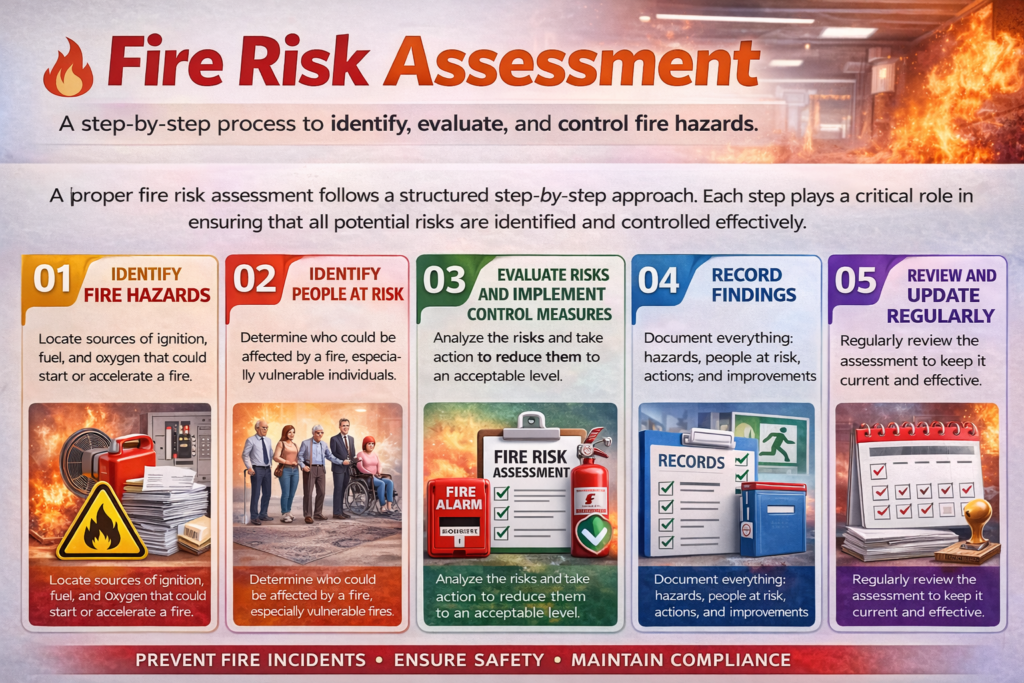
Fire risk assessment is a systematic and essential process used to identify fire hazards, evaluate the level of risk, and implement appropriate control measures to prevent fire incidents. It is one of the most important elements of fire safety management because it helps organizations understand where risks exist, how serious they are, and what actions are needed to reduce them.For a deeper understanding, check out this complete article on what is a fire risk assessment.
Rather than reacting to fire incidents after they occur, fire risk assessment allows you to take a proactive approach—eliminating hazards before they lead to dangerous situations. It also ensures that safety measures are not applied randomly but are based on careful analysis and real risk factors.You can also read a more advanced guide on fire safety risk assessment complete guide for detailed insights.
Key Steps in Fire Risk Assessment
A proper fire risk assessment follows a structured step-by-step approach. Each step plays a critical role in ensuring that all potential risks are identified and controlled effectively.
1. Identify Fire Hazards
The first step is to identify anything that could start a fire or contribute to its spread.
Common Types of Hazards:
- Sources of ignition – electrical equipment, open flames, sparks
- Sources of fuel – paper, wood, chemicals, flammable liquids
- Sources of oxygen – air, ventilation systems, oxygen cylinders
What to Do:
- Inspect all areas of the workplace or building
- Check equipment, storage areas, and work processes
- Identify unsafe practices or conditions
This step helps you understand where a fire could start and how it might spread.
2. Identify People at Risk
After identifying hazards, the next step is to determine who might be affected if a fire occurs.
People at Risk May Include:
- Employees and workers
- Visitors and customers
- People with disabilities
- Children or elderly individuals
- Staff working in isolated or high-risk areas
What to Consider:
- Location of people within the building
- Their ability to respond quickly in an emergency
- Special assistance requirements
This ensures that safety measures are designed to protect everyone, especially vulnerable individuals.
3. Evaluate Risks and Implement Control Measures
This step involves analyzing the likelihood and severity of fire risks and taking action to reduce them.
Risk Evaluation Includes:
- How likely a fire is to occur
- How quickly it could spread
- The potential impact on people and property
Control Measures May Include:
- Removing or reducing fire hazards
- Installing fire detection and alarm systems
- Providing fire extinguishers and suppression systems
- Improving ventilation and storage practices
- Establishing safe work procedures
Goal:
- Eliminate risks where possible
- Reduce risks to an acceptable level
This step transforms risk identification into practical safety actions.
4. Record Findings
It is important to document all findings from the fire risk assessment.
What to Record:
- Identified hazards
- People at risk
- Risk evaluation results
- Control measures implemented
- Responsibilities and actions taken
Why It Matters:
- Provides a clear safety record
- Helps track improvements
- Ensures accountability
- Supports legal compliance
Proper documentation ensures that fire safety is organized, traceable, and verifiable.
5. Review and Update Regularly
Fire risk assessment is not a one-time activity—it must be reviewed regularly.
When to Review:
- After any fire incident or near miss
- When there are changes in layout or processes
- When new equipment or materials are introduced
- Periodically (e.g., annually)
Purpose:
- Ensure safety measures remain effective
- Identify new risks
- Continuously improve fire safety
Regular reviews keep the system up-to-date and reliable.
Benefits of Fire Risk Assessment
| Benefit | Description | Key Actions | Outcome |
|---|---|---|---|
| Reduces Fire Risks | Identifies hazards early and applies control measures to prevent incidents | Hazard identificationRisk control measuresRegular monitoring | Lower chances of fire incidents |
| Improves Safety Planning | Provides data to create effective emergency and evacuation plans | Develop response plansDesign evacuation routesAllocate resources | Faster and more organized response |
| Ensures Legal Compliance | Helps meet fire safety laws and regulatory requirements | Conduct assessmentsMaintain documentationFollow standards | Avoid fines and legal issues |
| Enhances Emergency Preparedness | Prepares organizations to respond effectively in emergencies | Staff trainingEquipment placementImprove communication systems | Reduced panic and better response |
| Protects Business Operations | Minimizes disruptions and ensures continuity | Risk reduction strategiesEmergency planningAsset protection | Business stability and reduced downtime |
Conducting a proper fire risk assessment provides several important advantages that contribute to overall safety and organizational success.
1. Reduces Fire Risks
By identifying hazards early and implementing control measures, the likelihood of fire incidents is significantly reduced.
Prevention becomes easier when risks are clearly understood.
2. Improves Safety Planning
Risk assessment provides valuable information that helps in:
- Developing emergency response plans
- Designing evacuation procedures
- Allocating safety resources effectively
Better planning leads to faster and more effective responses.
3. Ensures Legal and Regulatory Compliance
Many laws and regulations require organizations to conduct fire risk assessments.
Compliance Helps:
- Avoid legal penalties and fines
- Meet industry standards
- Demonstrate responsibility and professionalism
It ensures that the organization operates within legal requirements.
4. Enhances Emergency Preparedness
Knowing the risks allows organizations to prepare for emergencies more effectively.
This Includes:
- Training staff based on real risks
- Positioning fire equipment strategically
- Improving communication systems
Preparedness reduces panic and improves response during emergencies.
5. Protects Business Operations
By minimizing risks and preparing for emergencies, organizations can:
- Avoid major disruptions
- Reduce downtime
- Maintain productivity
A safer environment supports long-term business stability.
Best Practices for Effective Fire Risk Assessment
| Best Practice | Description | Benefit |
|---|---|---|
| Regular Assessments | Conduct assessments periodically and after changes | Keeps safety measures updated |
| Involve Professionals | Use trained safety officers or experts | Ensures accurate risk evaluation |
| Employee Involvement | Engage staff in hazard identification | Improves awareness and detection |
| Use Standard Procedures | Apply checklists and structured methods | Ensures consistency and completeness |
| Continuous Improvement | Update systems based on findings and incidents | Enhances long-term safety |
To get the best results, follow these best practices:
- Conduct assessments regularly and thoroughly
- Involve trained professionals or safety officers
- Engage employees in identifying hazards
- Use checklists and standardized procedures
- Continuously improve based on findings
Fire risk assessment is a core element of fire safety management that helps organizations stay proactive rather than reactive. It provides a clear understanding of risks and ensures that appropriate measures are in place to prevent fires and protect lives.
In simple terms:
- Identify the hazards
- Understand the risks
- Take action to control them
- Keep reviewing and improving
By following this approach, organizations can create a safer environment and significantly reduce the chances of fire-related incidents.
Fire Protection and Control Measures
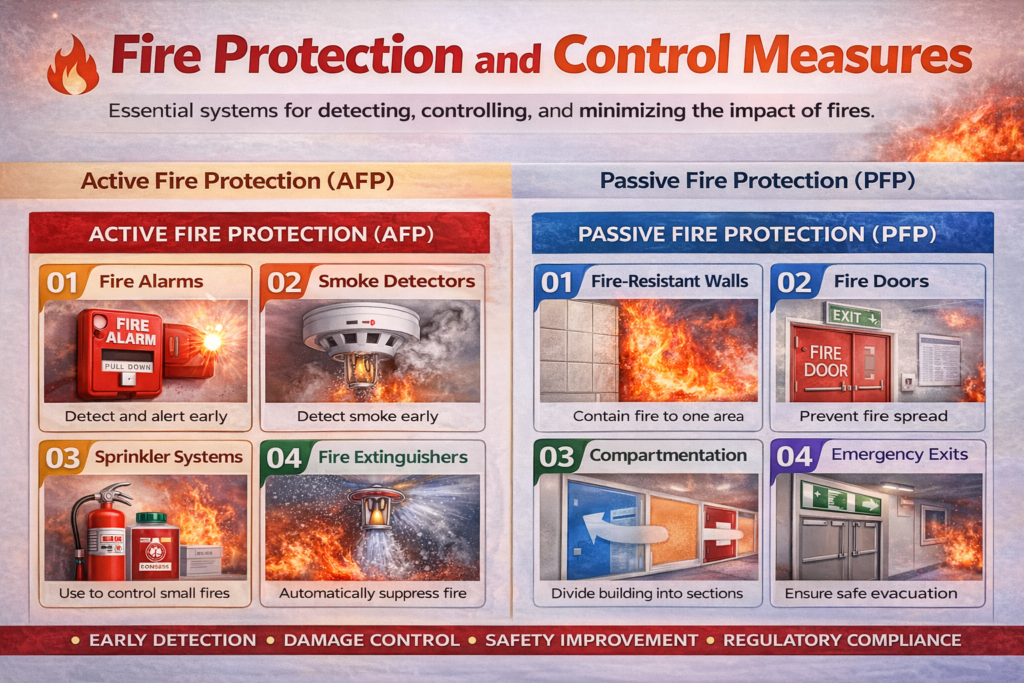
Fire protection and control measures are essential components of fire safety management. While prevention focuses on stopping fires before they start, fire protection focuses on detecting, controlling, and minimizing the impact of a fire once it occurs. These measures are designed to protect lives, reduce damage, and provide enough time for safe evacuation and emergency response.For a broader understanding, read fire safety blueprint building a safer environment.Another useful resource is fire safety explained essential principles.
Fire protection is generally divided into two main categories:
- Active Fire Protection (AFP) – systems that actively respond to fire
- Passive Fire Protection (PFP) – built-in structural features that limit fire spread
Both types work together to create a comprehensive safety system.
Active Fire Protection (AFP)
Active fire protection systems require manual or automatic activation to detect and control fires. These systems are designed to respond quickly, alert occupants, and suppress the fire in its early stages.
1. Fire Alarms
Fire alarms are one of the most critical components of any fire safety system.
How They Work:
- Detect fire through sensors (smoke, heat, or flame)
- Trigger an audible and visual alert
- Notify occupants to evacuate immediately
Importance:
- Provides early warning
- Reduces response time
- Prevents panic by giving clear signals
Best Practices:
- Install alarms in all key areas
- Test them regularly
- Ensure backup power supply
2. Smoke Detectors
Smoke detectors are designed to identify the presence of smoke, often before flames are visible.
Types of Smoke Detectors:
- Ionization detectors (fast for flaming fires)
- Photoelectric detectors (effective for smoldering fires)
Importance:
- Early detection of fire hazards
- Alerts occupants before fire spreads
Best Practices:
- Install on ceilings and near sleeping/work areas
- Keep them clean and dust-free
- Replace batteries regularly
3. Sprinkler Systems
Sprinkler systems automatically release water when a fire is detected.
How They Work:
- Heat activates sprinkler heads
- Water is discharged directly onto the fire
Importance:
- Controls or extinguishes fire quickly
- Prevents fire from spreading
- Reduces damage and risk to life
Best Practices:
- Maintain water pressure and supply
- Inspect regularly
- Ensure no obstruction to sprinkler heads
4. Fire Extinguishers
Fire extinguishers are portable devices used to control small fires in their early stages.
Types of Extinguishers:
- Water (for solid materials)
- Foam (for liquids)
- CO₂ (for electrical fires)
- Dry powder (multi-purpose)
Importance:
- First line of defense
- Helps control fire before it grows
Best Practices:
- Place in easily accessible locations
- Train staff on proper use (PASS technique)
- Check expiry and pressure levels regularly
Passive Fire Protection (PFP)
Passive fire protection systems are built into the structure of a building and do not require activation. Their main purpose is to contain fire, slow its spread, and maintain structural integrity.
1. Fire-Resistant Walls
Fire-resistant walls are designed to withstand fire for a specific period.
Features:
- Made from fire-resistant materials
- Prevent fire from spreading between areas
Importance:
- Limits fire damage
- Provides safe zones within buildings
2. Fire Doors
Fire doors are specially designed doors that prevent the spread of fire and smoke.
Key Characteristics:
- Self-closing mechanism
- Fire-resistant materials
- Sealed edges to block smoke
Importance:
- Protect escape routes
- Allow safe evacuation
Best Practices:
- Keep doors closed when required
- Do not block or tamper with them
- Inspect regularly
3. Compartmentation
Compartmentation involves dividing a building into sections to contain fire within a limited area.
How It Works:
- Uses walls, floors, and ceilings to create compartments
- Prevents fire and smoke from spreading rapidly
Importance:
- Slows down fire progression
- Gives more time for evacuation and response
4. Emergency Exits
Emergency exits provide safe routes for people to evacuate during a fire.
Key Features:
- Clearly marked and illuminated
- Easily accessible
- Free from obstructions
Importance:
- Ensures quick and safe evacuation
- Reduces risk of injury or panic
Best Practices:
- Keep exits clear at all times
- Conduct regular evacuation drills
- Install proper signage and lighting
Integration of Active and Passive Systems
For maximum effectiveness, both active and passive fire protection systems must work together.
Example:
- A smoke detector identifies fire (active)
- A fire alarm alerts occupants (active)
- Fire doors and walls contain the fire (passive)
- Sprinklers or extinguishers control the fire (active)
This combination ensures a layered defense system.
Key Benefits of Fire Protection Measures
Implementing proper fire protection and control measures offers several advantages:
- Early detection and quick response
- Reduced fire spread and damage
- Improved safety for occupants
- Better emergency management
- Compliance with safety regulations
Best Practices for Effective Fire Protection
To ensure effectiveness, organizations should:
- Regularly inspect and maintain all systems
- Train employees on equipment usage
- Conduct fire drills and emergency simulations
- Update systems based on new risks
- Ensure proper installation by professionals
Fire protection and control measures are essential for minimizing the impact of fire incidents. While prevention reduces the chances of fire, protection systems ensure that if a fire occurs, it is detected early, controlled quickly, and contained effectively.
In simple terms:
- Active systems detect and fight the fire
- Passive systems contain and slow it down
Together, they create a strong and reliable fire safety system that protects lives and property.
Emergency Response Planning
Emergency response planning is a critical part of fire safety management that focuses on preparing individuals and organizations to respond effectively when a fire or emergency occurs. While prevention and protection measures aim to reduce risks, an emergency response plan ensures that when an incident happens, people know exactly what to do, where to go, and how to stay safe.You can also explore fire safety guide key principles for prevention protection and risk control for additional strategies.
A well-developed emergency plan can save lives, reduce panic, and minimize damage by providing clear instructions and coordinated actions during high-pressure situations. Without proper planning, confusion and delays can lead to serious consequences.For complete emergency preparedness, read ultimate fire safety guide prevention risk assessment and emergency preparedness.
Why Emergency Response Planning is Important
| Benefit | Description | Outcome |
|---|---|---|
| Quick & Safe Evacuation | Ensures people can exit the building safely using planned routes | Reduces injuries and fatalities |
| Reduces Panic & Confusion | Provides clear instructions to avoid chaos during emergencies | Improves calm and controlled response |
| Improves Coordination | Defines roles and responsibilities for staff | Efficient emergency handling |
| Faster Emergency Response | Supports quick communication with emergency services | Saves time and minimizes damage |
| Protects Lives & Assets | Ensures safety of people and critical resources | Reduces overall loss |
Emergency situations often occur suddenly and escalate quickly. In such moments, people may panic or make poor decisions if they are not properly trained.
A strong emergency response plan helps to:
- Ensure quick and safe evacuation
- Reduce confusion and panic
- Improve coordination among staff
- Enable faster response from emergency services
- Protect lives and critical assets
In simple terms, planning ahead ensures a controlled response instead of chaos.
Key Components of an Emergency Response Plan
| Component | Description | Key Elements | Benefit |
|---|---|---|---|
| Evacuation Procedures | Step-by-step instructions for safe exit | Escape routesAssisting othersAvoiding hazards | Quick and safe evacuation |
| Emergency Exits | Designated exit routes for emergencies | Clear signageAccessible pathsEmergency lighting | Prevents congestion and delays |
| Assembly Points | Safe gathering locations after evacuation | HeadcountsSafe distanceDefined locations | Ensures accountability and safety |
| Communication Systems | Tools for delivering alerts and instructions | AlarmsPA systemsRadiosMobile alerts | Improves coordination and response |
| Roles & Responsibilities | Assigned duties during emergencies | Fire wardensFirst aidersCoordinators | Reduces confusion and improves efficiency |
An effective emergency response plan includes several essential elements. Each component plays a specific role in ensuring safety during a fire incident.
1. Evacuation Procedures
Evacuation procedures provide step-by-step instructions on how to leave the building safely during a fire.
What It Includes:
- Clear directions for exiting the building
- Designated escape routes
- Instructions for assisting others
- Guidelines for avoiding hazards like smoke
Importance:
- Ensures everyone knows how to evacuate quickly
- Reduces confusion during emergencies
Best Practices:
- Keep procedures simple and easy to understand
- Display evacuation plans in visible areas
- Train employees regularly
2. Emergency Exits
Emergency exits are designated routes that allow people to leave the building safely.
Key Features:
- Clearly marked with visible signage
- Easily accessible from all areas
- Free from obstructions
- Equipped with emergency lighting
Importance:
- Provides safe escape paths
- Prevents overcrowding and bottlenecks
Best Practices:
- Inspect exits regularly
- Ensure doors open easily
- Never block or lock emergency exits
3. Assembly Points
Assembly points are safe locations where people gather after evacuation.
Purpose:
- Account for all individuals
- Ensure no one is left inside
- Provide a safe distance from danger
Importance:
- Helps emergency teams manage the situation
- Prevents people from re-entering the building
Best Practices:
- Clearly define and communicate assembly points
- Place them at a safe distance from the building
- Conduct headcounts after evacuation
4. Communication Systems
Effective communication is essential during emergencies to provide instructions and updates.
Types of Communication:
- Fire alarms and sirens
- Public address systems
- Two-way radios
- Mobile alerts or messaging systems
Importance:
- Ensures everyone receives timely information
- Helps coordinate evacuation and response
Best Practices:
- Use clear and simple messages
- Test communication systems regularly
- Have backup communication methods
5. Roles and Responsibilities
Assigning specific roles ensures that everyone knows their duties during an emergency.
Key Roles May Include:
- Fire wardens or safety officers
- Evacuation coordinators
- First aid responders
- Communication officers
Importance:
- Improves coordination and efficiency
- Prevents confusion and duplication of tasks
Best Practices:
- Clearly define responsibilities
- Provide proper training
- Conduct regular drills to practice roles
| Best Practice | Purpose |
|---|---|
| Regular Drills | Improve preparedness and response time |
| Clear Signage | Guide people during evacuation |
| Equipment Testing | Ensure systems work properly |
| Staff Training | Build awareness and confidence |
Evacuation Planning
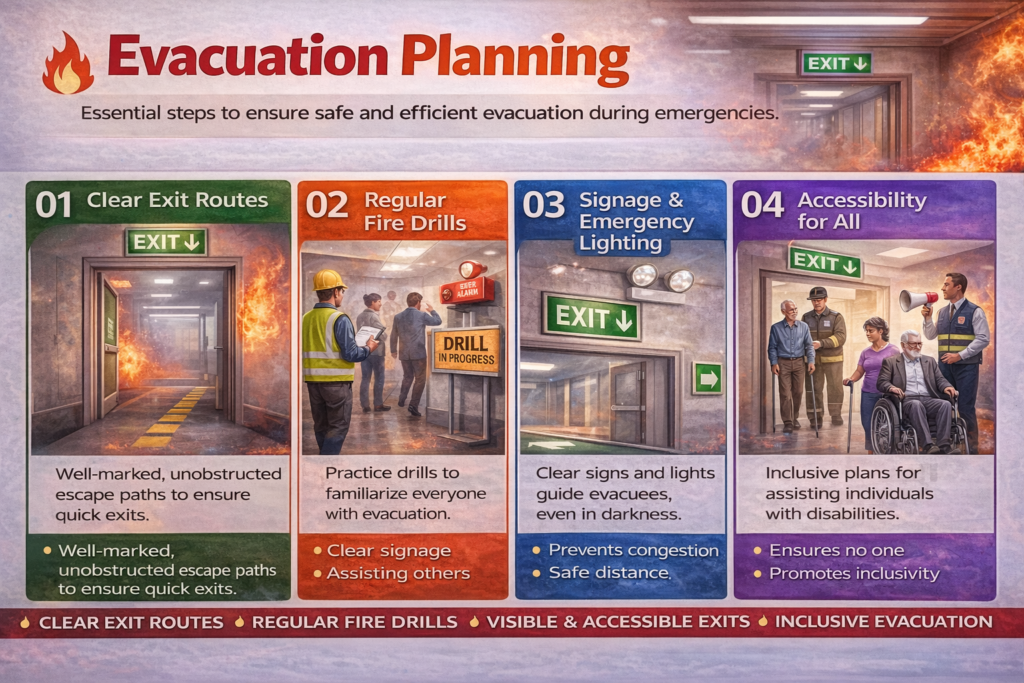
Evacuation planning is one of the most critical parts of emergency response. It ensures that people can exit the building quickly and safely.
1. Clear Exit Routes
Exit routes must be well-planned and easy to follow.
Key Considerations:
- Multiple escape routes available
- Direct and shortest paths to exits
- Free from obstacles
Clear routes reduce evacuation time and improve safety.
2. Regular Fire Drills
Fire drills help people practice evacuation procedures in a controlled environment.
Benefits:
- Familiarizes people with escape routes
- Reduces panic during real emergencies
- Identifies weaknesses in the plan
Best Practices:
- Conduct drills periodically
- Simulate realistic scenarios
- Evaluate and improve after each drill
3. Signage and Emergency Lighting
Proper signage and lighting guide people during evacuation, especially in low visibility conditions.
Includes:
- Exit signs
- Directional arrows
- Emergency lighting systems
Importance:
- Helps people find exits quickly
- Ensures visibility during power outages
4. Accessibility for All
Emergency plans must consider the needs of all individuals, including those with disabilities.
Considerations:
- Wheelchair-accessible routes
- Assistance for visually or hearing-impaired individuals
- Special evacuation equipment if needed
Importance:
- Ensures no one is left behind
- Promotes inclusivity and safety for everyone
Continuous Improvement of Emergency Plans
Emergency response planning should be reviewed and updated regularly.
When to Update:
- After drills or real incidents
- When building layout changes
- When new risks are identified
Continuous improvement ensures the plan remains effective and relevant.
Emergency response planning is about being prepared for the worst while hoping for the best. It ensures that when a fire occurs, people can respond quickly, safely, and efficiently.
In simple terms:
- Plan the escape
- Train the people
- Practice regularly
A well-prepared emergency response plan not only saves lives but also creates confidence and control during critical situations.
Fire Safety Training and Awareness
Fire safety training and awareness are essential elements of fire safety management that focus on preparing individuals to recognize risks, prevent fire incidents, and respond effectively during emergencies. Even the best fire safety systems can fail if people do not know how to use them or how to act in a critical situation.Fire safety knowledge is also important in healthcare environments—learn more in this guide on health and social care complete guide careers importance.
Training ensures that employees, staff, and occupants are not only aware of fire hazards but are also confident and capable of taking the right actions when needed. It transforms fire safety from a set of rules into practical knowledge and responsible behavior.
Why Fire Safety Training is Important
In emergency situations, people often react based on what they know and have practiced. Without proper training:
- Panic and confusion can increase
- Evacuation may be delayed
- Incorrect actions may worsen the situation
With proper training:
- People respond quickly and calmly
- Risks are identified and managed early
- Lives and property are better protected
In simple terms, trained individuals make safer decisions during emergencies.
Key Areas Covered in Fire Safety Training
| Training Area | What It Covers | Importance | Best Practices |
|---|---|---|---|
| Use of Fire Extinguishers | Types (water, foam, CO₂, dry powder)Correct usagePASS technique (Pull, Aim, Squeeze, Sweep) | Controls small firesPrevents misuse | Hands-on trainingAccessible equipmentRegular checks |
| Emergency Evacuation Drills | Exit routesAssembly pointsEmergency procedures | Reduces panicImproves evacuation speed | Regular drillsRealistic scenariosPerformance review |
| Hazard Identification | Unsafe conditionsRisky behaviorsFire causes | Prevents incidentsImproves awareness | Encourage reportingRegular inspectionsEmployee involvement |
| First Aid Basics | Treat burnsHandle smoke inhalationUse first aid kits | Reduces injury severityProvides immediate care | Train first aidersMaintain kitsRefresher training |
A comprehensive fire safety training program includes several important topics. Each area equips individuals with specific knowledge and skills.
1. Use of Fire Extinguishers
Knowing how to use a fire extinguisher correctly is a critical skill.
What Training Covers:
- Types of fire extinguishers (water, foam, CO₂, dry powder)
- Which extinguisher to use for different types of fires
- The PASS technique:
- Pull the pin
- Aim at the base of the fire
- Squeeze the handle
- Sweep side to side
Importance:
- Helps control small fires before they spread
- Prevents misuse of equipment
Best Practices:
- Provide hands-on training
- Ensure extinguishers are easily accessible
- Regularly check equipment condition
2. Emergency Evacuation Drills
Evacuation drills prepare individuals to leave the building safely and quickly during a fire.
What Training Covers:
- Evacuation routes and exits
- Assembly points
- Procedures for assisting others
- Actions to take during different scenarios
Importance:
- Reduces panic and confusion
- Improves evacuation speed and efficiency
Best Practices:
- Conduct drills regularly
- Simulate realistic emergency conditions
- Review performance and improve procedures
3. Hazard Identification
Employees should be able to identify potential fire hazards in their environment.
Training Includes:
- Recognizing unsafe conditions (faulty wiring, clutter, flammable materials)
- Identifying risky behaviors
- Understanding how hazards can lead to fire incidents
Importance:
- Encourages proactive prevention
- Reduces the likelihood of fire incidents
Best Practices:
4. First Aid Basics
Basic first aid knowledge is important for handling injuries during fire emergencies.
Training Covers:
- Treating burns and smoke inhalation
- Providing immediate care until help arrives
- Using first aid kits properly
Importance:
- Reduces severity of injuries
- Provides immediate support in critical situations
Best Practices:
- Train designated first aiders
- Keep first aid kits accessible and updated
- Conduct refresher training sessions
Benefits of Fire Safety Training and Awareness
| Benefit | Description | Outcome |
|---|---|---|
| Reduces Panic | Builds confidence and awareness during emergencies | Calm and controlled response |
| Improves Response Time | Enables quick action and evacuation | Prevents fire escalation |
| Saves Lives | Ensures proper response and evacuation | Protects people from harm |
Implementing regular training programs provides several important advantages for both individuals and organizations.
1. Reduces Panic During Emergencies
When people know what to do, they are less likely to panic.
How It Helps:
- Builds confidence
- Encourages calm and controlled actions
- Prevents chaos
Calm individuals make better decisions during emergencies.
2. Improves Response Time
Quick response is crucial in fire situations.
Training Helps By:
- Enabling faster evacuation
- Ensuring immediate use of fire equipment
- Reducing delays in decision-making
A faster response can prevent small fires from becoming major incidents.
3. Saves Lives
The ultimate goal of fire safety training is to protect human life.
How It Contributes:
- Ensures safe evacuation
- Reduces exposure to fire hazards
- Provides immediate assistance to injured individuals
Proper training can make the difference between life and death in critical situations.
Building a Culture of Fire Safety Awareness
Training should not be a one-time activity—it should be part of an ongoing effort to build awareness.
Ways to Promote Awareness:
- Display fire safety signs and instructions
- Share safety tips regularly
- Conduct refresher training sessions
- Encourage employee participation
A strong safety culture ensures that everyone takes responsibility for fire prevention and response.
Best Practices for Effective Training Programs
To maximize the effectiveness of fire safety training:
- Make training interactive and practical
- Use real-life scenarios and examples
- Conduct regular refresher courses
- Evaluate employee understanding
- Update training based on new risks or changes
Fire safety training and awareness are essential for ensuring that people are prepared to act safely and effectively during emergencies. It empowers individuals with the knowledge and confidence needed to prevent fires and respond appropriately when they occur.
In simple terms:
- Learn the risks
- Practice the response
- Stay prepared at all times
By investing in proper training and awareness, organizations can create a safer environment, reduce risks, and protect lives more effectively.
Fire Safety Regulations and Compliance
Fire safety regulations and compliance refer to the legal and professional standards that organizations must follow to ensure a safe environment for employees, visitors, and property. These regulations are established by government authorities and safety organizations to minimize fire risks, protect lives, and prevent major incidents.
Compliance is not just about avoiding penalties—it is about demonstrating responsibility, maintaining safety standards, and building trust. Organizations that follow fire safety regulations are better prepared to handle emergencies and reduce the likelihood of fire-related disasters.
Why Fire Safety Compliance is Important
Fire safety laws are designed to protect people and ensure that organizations take necessary precautions.
Key Reasons:
- Protects employees, visitors, and assets
- Reduces the risk of fire incidents
- Ensures a safe working environment
- Helps avoid legal penalties and fines
- Enhances organizational reputation
In simple terms, compliance ensures that safety is not optional but mandatory.
Key Requirements of Fire Safety Regulations
To comply with fire safety standards, organizations must meet several essential requirements. Each requirement plays a crucial role in maintaining a safe environment.
1. Conduct Fire Risk Assessments
Fire risk assessment is a fundamental legal requirement in most safety regulations.
What It Involves:
- Identifying potential fire hazards
- Evaluating risks to people and property
- Implementing control measures
- Reviewing and updating assessments regularly
Why It Matters:
- Helps prevent fire incidents
- Ensures hazards are managed effectively
- Provides a clear safety plan
Best Practices:
- Conduct assessments periodically
- Involve trained professionals
- Document all findings and actions
2. Install Fire Safety Systems
Organizations must install appropriate fire detection and protection systems.
Required Systems May Include:
- Fire alarms and smoke detectors
- Fire extinguishers
- Sprinkler systems
- Emergency lighting and signage
Why It Matters:
- Enables early detection of fire
- Helps control and suppress fire quickly
- Supports safe evacuation
Best Practices:
- Ensure proper installation by qualified experts
- Perform regular testing and maintenance
- Upgrade systems when necessary
3. Maintain Safety Records and Documentation
Proper documentation is a key part of compliance.
Records May Include:
- Fire risk assessment reports
- Maintenance and inspection logs
- Training records
- Incident reports
Why It Matters:
- Provides proof of compliance
- Helps track safety performance
- Supports continuous improvement
Best Practices:
- Keep records organized and up to date
- Store documents securely
- Review records regularly
4. Provide Fire Safety Training
Training employees is a mandatory requirement in most fire safety regulations.
Training Should Cover:
- Fire prevention practices
- Emergency procedures
- Use of fire safety equipment
- Evacuation plans
Why It Matters:
- Ensures employees know how to respond during emergencies
- Reduces risk of human error
- Improves overall safety awareness
Best Practices:
- Conduct regular training sessions
- Provide refresher courses
- Evaluate employee understanding
Consequences of Non-Compliance
Failing to meet fire safety regulations can have serious consequences.
Possible Outcomes:
- Legal penalties and fines
- Business closure or suspension
- Increased risk of fire incidents
- Damage to reputation
- Loss of trust from employees and clients
Non-compliance not only affects the organization legally but also puts lives at risk.
Continuous Compliance and Improvement
Fire safety compliance is not a one-time effort—it requires ongoing attention and improvement.
Key Actions:
- Regular inspections and audits
- Updating safety procedures
- Adapting to new regulations
- Learning from past incidents
Continuous improvement ensures that safety measures remain effective and up to date.
Building a Culture of Compliance
Compliance should be part of the organization’s culture, not just a checklist.
How to Promote It:
- Leadership commitment to safety
- Clear communication of policies
- Employee involvement in safety practices
- Encouraging reporting of hazards
A strong compliance culture ensures that everyone takes responsibility for safety.
Fire safety regulations and compliance are essential for creating a safe and secure environment. By following legal requirements, organizations can prevent fire incidents, protect lives, and maintain operational stability.
In simple terms:
- Follow the rules
- Implement safety measures
- Train your people
- Keep improving continuously
Compliance is not just about meeting legal standards—it is about ensuring safety, responsibility, and long-term success.
Common Mistakes in Fire Safety Management
Even with good intentions, many organizations make critical mistakes in fire safety management that can significantly increase the risk of fire incidents. These errors often occur due to lack of awareness, poor planning, or negligence, and they can lead to serious consequences such as injuries, property damage, and legal penalties.
Understanding these common mistakes is essential so they can be identified early and corrected effectively. By avoiding these errors, organizations can strengthen their fire safety systems and create a safer environment for everyone.
Why Identifying Mistakes is Important
Recognizing common mistakes helps organizations:
- Improve their safety strategies
- Reduce fire risks
- Ensure compliance with regulations
- Enhance emergency preparedness
In simple terms, learning from mistakes prevents future disasters.
Major Mistakes in Fire Safety Management
Below are some of the most common and dangerous mistakes that organizations must avoid.
1. Ignoring Regular Inspections
Regular inspections are essential to ensure that fire safety systems and procedures are working properly.
What Goes Wrong:
- Fire alarms and detectors are not tested
- Fire extinguishers are expired or non-functional
- Electrical systems are not checked
- Hazards go unnoticed
Why It’s Dangerous:
Without inspections, small issues can turn into major fire hazards. Faulty equipment may fail during an emergency when it is needed the most.
How to Avoid:
- Schedule routine inspections (weekly, monthly, annually)
- Assign responsibility to trained personnel
- Use checklists to ensure nothing is missed
- Document all inspection results
Regular inspections ensure that everything is ready before an emergency occurs.
2. Lack of Employee Training
Employees play a crucial role in fire safety, but many organizations fail to train them properly.
What Goes Wrong:
- Employees don’t know how to use fire extinguishers
- Confusion during evacuation
- Lack of awareness about fire hazards
- Panic in emergency situations
Why It’s Dangerous:
Untrained individuals may make incorrect decisions, delay evacuation, or worsen the situation.
How to Avoid:
- Conduct regular fire safety training sessions
- Provide hands-on practice with equipment
- Organize evacuation drills
- Educate employees about risks and responsibilities
Trained employees act quickly and confidently, reducing risks.
3. Poor Maintenance of Fire Safety Equipment
Fire safety equipment must always be in proper working condition.
What Goes Wrong:
- Fire extinguishers are not refilled or replaced
- Sprinkler systems are blocked or damaged
- Smoke detectors have dead batteries
- Alarm systems malfunction
Why It’s Dangerous:
If equipment fails during a fire, it can lead to uncontrolled fire spread and severe damage.
How to Avoid:
- Perform regular maintenance and servicing
- Follow manufacturer guidelines
- Replace outdated or damaged equipment
- Keep maintenance records
Well-maintained equipment ensures quick and effective fire control.
4. No Emergency Response Plan
Some organizations operate without a clear emergency response plan.
What Goes Wrong:
- No defined evacuation routes
- No assembly points
- Lack of communication systems
- No assigned roles or responsibilities
Why It’s Dangerous:
In an emergency, lack of planning leads to confusion, panic, and delayed response.
How to Avoid:
- Develop a clear and detailed emergency plan
- Communicate the plan to all employees
- Conduct regular drills
- Update the plan as needed
A proper plan ensures organized and safe evacuation.
5. Inadequate Fire Risk Assessment
Skipping or poorly conducting fire risk assessments is a major mistake.
What Goes Wrong:
- Hazards are not identified properly
- Risks are underestimated
- Control measures are not implemented
- Assessments are not updated
Why It’s Dangerous:
Unidentified risks can lead to unexpected fire incidents and unprepared responses.
How to Avoid:
- Conduct thorough and regular risk assessments
- Involve qualified professionals
- Review assessments periodically
- Take immediate action on findings
Proper risk assessment helps in preventing fires before they occur.
Additional Mistakes to Watch Out For
Beyond the main issues, organizations should also avoid:
Blocking Emergency Exits
- Obstructed exits can delay evacuation and cause injuries
Poor Housekeeping
- Clutter and waste materials increase fire risks
Ignoring Safety Signs
- Lack of proper signage can confuse people during emergencies
Overloading Electrical Systems
- Leads to overheating and potential fire hazards
How to Improve Fire Safety Management
To avoid these mistakes, organizations should adopt a proactive approach:
Key Actions:
- Conduct regular audits and inspections
- Provide continuous training and awareness
- Maintain all fire safety equipment properly
- Develop and practice emergency plans
- Review and update safety procedures regularly
Continuous improvement ensures long-term safety and effectiveness.
Mistakes in fire safety management can have serious consequences, but they are preventable with proper planning and awareness.
In simple terms:
- Inspect regularly
- Train your people
- Maintain your systems
- Plan for emergencies
- Assess risks properly
By avoiding these common mistakes, organizations can significantly improve their fire safety standards and create a safer environment for everyone.
Advanced Fire Safety Strategies (Competitive Edge)
In today’s competitive digital landscape, simply covering basic fire safety concepts is not enough to achieve high rankings on search engines. To stand out and outrank competitors, your content must go beyond fundamentals and include advanced, modern, and forward-thinking strategies.
These advanced fire safety approaches demonstrate expertise, authority, and innovation, which are key factors that search engines value. They also provide real value to readers by introducing them to the latest developments in fire safety management.
Smart Technologies in Fire Safety
Technology is transforming the way fire risks are detected, monitored, and managed. Integrating smart systems into fire safety management improves efficiency, accuracy, and response time.
1. AI-Based Fire Detection
Artificial Intelligence (AI) is being increasingly used in fire safety systems to detect fire hazards more accurately and quickly.
How It Works:
- Uses advanced algorithms to analyze data from sensors and cameras
- Detects smoke, heat patterns, or unusual changes in the environment
- Identifies fire risks before they escalate
Benefits:
- Faster and more accurate detection
- Reduces false alarms
- Enables early intervention
Practical Application:
- AI-powered surveillance systems in industrial areas
- Smart fire detection in high-risk environments
AI enhances fire safety by predicting and preventing incidents before they occur.
2. IoT-Enabled Fire Alarms
The Internet of Things (IoT) connects fire safety devices to a centralized system, allowing real-time monitoring and control.
Features:
- Connected smoke detectors and alarms
- Real-time alerts sent to mobile devices
- Integration with building management systems
Benefits:
- Immediate notifications, even when off-site
- Improved coordination during emergencies
- Better monitoring of multiple locations
Practical Application:
- Smart buildings with connected safety systems
- Remote monitoring of warehouses or facilities
IoT improves fire safety by providing instant information and control.
3. Remote Monitoring Systems
Remote monitoring allows safety systems to be supervised from any location.
How It Works:
- Uses cloud-based platforms
- Monitors fire alarms, sensors, and equipment status
- Sends alerts in case of abnormalities
Benefits:
- Continuous surveillance
- Quick response to issues
- Reduced need for on-site monitoring
Practical Application:
- Large organizations managing multiple sites
- Industrial facilities requiring constant monitoring
Remote monitoring ensures 24/7 safety oversight and faster response.
Data-Driven Fire Safety Management
Modern fire safety is not just about equipment—it’s about using data to make informed decisions and improve safety strategies.
1. Incident Analysis
Analyzing past fire incidents helps identify patterns and root causes.
What It Involves:
- Reviewing previous fire events or near-misses
- Identifying causes and weaknesses
- Evaluating response effectiveness
Benefits:
- Prevents similar incidents in the future
- Improves safety procedures
- Enhances decision-making
Learning from past incidents leads to smarter prevention strategies.
2. Risk Trend Monitoring
Tracking trends over time helps organizations understand how fire risks are evolving.
Examples:
- Increase in electrical faults
- Repeated safety violations
- High-risk areas within a facility
Benefits:
- Identifies recurring issues
- Helps prioritize safety improvements
- Supports proactive risk management
Monitoring trends ensures that risks are identified before they become serious problems.
3. Continuous Improvement
Fire safety management should evolve based on new data and experiences.
Key Actions:
- Updating safety procedures
- Improving training programs
- Upgrading equipment and systems
- Implementing new technologies
Benefits:
- Keeps safety measures effective
- Adapts to changing environments
- Enhances overall performance
Continuous improvement ensures long-term safety and reliability.
Sustainability in Fire Safety
Sustainability is becoming an important aspect of modern fire safety management. Organizations are now focusing on solutions that are not only effective but also environmentally responsible.
1. Eco-Friendly Fire Extinguishers
Traditional extinguishers may contain chemicals that are harmful to the environment. Eco-friendly alternatives are designed to minimize environmental impact.
Features:
- Use non-toxic and biodegradable agents
- Reduce environmental pollution
- Safe for human health
Benefits:
- Environmentally responsible fire control
- Safer for indoor use
- Supports sustainability goals
Eco-friendly solutions balance safety and environmental protection.
2. Energy-Efficient Fire Safety Systems
Modern fire safety systems are designed to consume less energy while maintaining high performance.
Examples:
- Low-power fire alarms and sensors
- Smart lighting systems for emergency exits
- Energy-efficient monitoring systems
Benefits:
- Reduces operational costs
- Supports green building standards
- Improves overall efficiency
Energy-efficient systems contribute to sustainable and cost-effective safety management.
How These Strategies Help You Rank Higher
Including advanced fire safety strategies in your blog gives you a competitive SEO advantage.
Why It Works:
- Shows expertise and authority (Google E-E-A-T)
- Covers modern and trending topics
- Provides more value than competitors
- Increases user engagement and time on page
Most competitors only cover basic concepts—adding advanced strategies makes your content more comprehensive and rank-worthy.
Key Takeaway
Advanced fire safety strategies take your safety management approach to the next level by combining technology, data, and sustainability.
In simple terms:
- Use smart technology for faster detection
- Leverage data for better decision-making
- Adopt sustainable practices for long-term impact
By integrating these advanced strategies, organizations can not only improve safety but also stay ahead of competitors and establish themselves as leaders in fire safety management.
Conclusion
Fire safety management is a vital element of any safe and responsible environment, whether in workplaces, industrial settings, or public spaces. It is not limited to installing equipment or following basic procedures—it is a comprehensive and continuous process that involves prevention, risk assessment, control measures, training, and emergency preparedness. By identifying potential hazards early, implementing effective prevention strategies, and ensuring that people are well-trained, organizations can significantly reduce the likelihood of fire incidents and minimize their impact.To strengthen your understanding, you can also explore fire safety fundamentals prevention risk assessment protecting lives and workplaces and fire safety and risk assessment practical guide.
An effective fire safety management system works best when all its components function together. Prevention strategies help eliminate risks before they escalate, fire protection systems detect and control incidents, and emergency response planning ensures that people can act quickly and safely during critical situations. In addition, regular fire risk assessments and compliance with safety regulations ensure that safety measures remain relevant, up to date, and aligned with legal requirements. This integrated approach creates a strong safety framework that protects both human life and valuable assets.
Moreover, adopting a proactive mindset is essential for long-term success in fire safety management. Organizations should not wait for incidents to occur but should continuously monitor risks, improve systems, and adapt to new challenges. The use of modern technologies, data-driven strategies, and sustainable practices further enhances the effectiveness of fire safety measures and helps organizations stay ahead in today’s evolving safety landscape.
In conclusion, fire safety management is not just a requirement—it is a responsibility that demands commitment, awareness, and continuous improvement. By prioritizing safety, investing in proper systems and training, and fostering a strong safety culture, organizations can create secure environments where risks are minimized, people are protected, and operations can continue without disruption.