
Fire Safety Guide: Key Principles for Prevention, Protection, and Risk Control
Fire safety is a fundamental element of modern life, playing a vital role in safeguarding people, protecting assets, and ensuring the continuity of homes, workplaces, and industries. Fire incidents can arise suddenly from a wide range of causes, including human error, electrical failures, or hazardous conditions. When preventive measures are lacking, even a small ignition can escalate rapidly into a serious emergency, leading to severe consequences such as injuries, loss of life, and extensive property damage.
As urban development and industrial activities continue to expand, the complexity of fire risks has increased significantly. This makes it essential for both individuals and organizations to move beyond reactive responses and adopt a proactive, well-planned approach to fire safety. Understanding potential hazards, applying effective prevention techniques, and establishing reliable protection systems are now critical components of responsible safety management.To gain a deeper understanding of fire safety fundamentals, you can explore our detailed guide on what is fire safety.
This guide, “Fire Safety Guide: Key Principles for Prevention, Protection, and Risk Control,” is designed to provide a complete and practical understanding of fire safety. It brings together the core principles of preventing fire incidents, protecting people and property, and controlling risks through structured assessments and safety measures. In addition, it offers clear, actionable insights and best practices that can be applied in both residential and workplace settings to create a safer, more prepared environment.To better understand the core principles of fire safety, it is helpful to explore a more detailed resource like fire safety fundamentals, where all fundamental concepts are explained clearly.
What is Fire Safety?
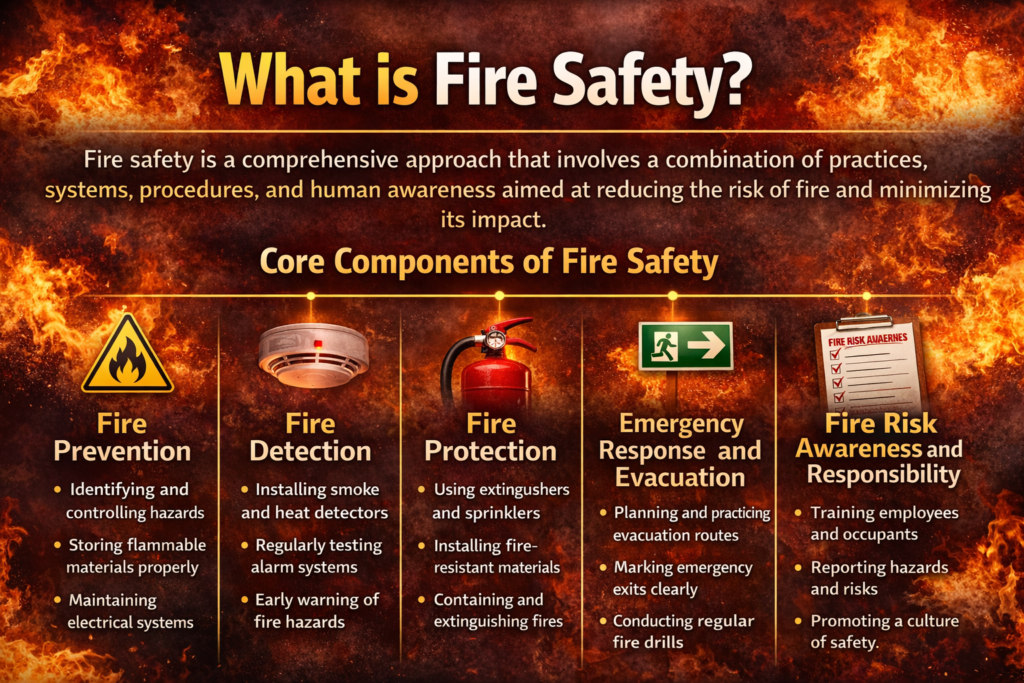
Fire safety is a comprehensive approach that involves a combination of practices, systems, procedures, and human awareness aimed at reducing the risk of fire and minimizing its impact if it occurs. It is not just a single action or tool, but a complete safety framework designed to protect lives, property, and the environment from fire-related hazards.
At its core, fire safety focuses on three key objectives:
- Preventing fires from starting
- Detecting fires at an early stage
- Responding effectively to control and manage fire incidents
These objectives are achieved through the integration of technical solutions, organizational policies, and individual responsibility.
Understanding the Concept of Fire Safety
Fire safety is often misunderstood as simply having fire extinguishers or alarms installed. In reality, it is much broader and involves a proactive and continuous process of identifying risks, implementing preventive measures, and preparing for emergencies.
It ensures that:
- Fire hazards are identified and controlled
- People are aware of safety procedures
- Emergency systems function effectively
- Damage and loss are minimized
This makes fire safety an essential part of both daily life and professional environments.
Core Components of Fire Safety
| Component | Description | Key Actions |
|---|---|---|
| Fire Prevention | Focuses on stopping fires before they start by eliminating hazards | Electrical maintenance, safe storage, housekeeping, control ignition sources |
| Fire Detection | Identifies fire at an early stage for quick response | Install smoke detectors, heat detectors, fire alarm systems |
| Fire Protection | Controls and extinguishes fires to reduce damage | Use extinguishers, sprinklers, fire blankets, fire-resistant materials |
| Emergency Response & Evacuation | Ensures safe and quick exit during fire emergencies | Emergency exits, evacuation plans, drills, emergency lighting |
| Fire Risk Awareness & Responsibility | Promotes safety culture and awareness among individuals | Training, reporting hazards, following safety procedures |
The table below provides a quick overview of the key components of fire safety and their functions:
To fully understand fire safety, it is important to break it down into its main components:
1. Fire Prevention
Fire prevention involves taking steps to eliminate or reduce the chances of a fire starting. This is the most important aspect of fire safety because preventing a fire is always better than dealing with its consequences.
Examples of Fire Prevention Measures:
- Regular inspection of electrical wiring and equipment
- Proper storage of flammable and combustible materials
- Avoiding overloading electrical outlets
- Maintaining clean and organized workspaces
- Controlling ignition sources such as open flames and sparks
By addressing potential hazards early, fire prevention significantly reduces risks.
2. Fire Detection
Fire detection focuses on identifying a fire as early as possible, allowing for quick action to prevent it from spreading.
Common Fire Detection Systems Include:
- Smoke detectors that sense smoke particles
- Heat detectors that respond to temperature changes
- Fire alarm systems that alert occupants immediately
Early detection is critical because it:
- Provides more time to evacuate
- Reduces the spread of fire
- Increases the chances of controlling the fire quickly
3. Fire Protection
Fire protection involves the use of equipment and systems designed to control, contain, or extinguish fires.
Examples of Fire Protection Systems:
- Fire extinguishers for small fires
- Automatic sprinkler systems for larger areas
- Fire blankets for specific hazards
- Fire-resistant materials in construction
These systems play a crucial role in limiting damage and protecting both people and property.
4. Emergency Response and Evacuation
Even with preventive measures in place, it is important to be prepared for emergencies. This component focuses on ensuring that people can respond quickly and evacuate safely.
Key Elements Include:
- Clearly marked emergency exits
- Evacuation plans and routes
- Emergency lighting systems
- Regular fire drills and training
Effective emergency response reduces panic and ensures a safe and orderly evacuation.
5. Fire Risk Awareness and Responsibility
Fire safety is not only about systems and equipment—it also depends heavily on human behavior and awareness.
Important Aspects:
- Training employees and occupants on fire safety procedures
- Promoting a culture of safety
- Encouraging responsible use of equipment and materials
- Reporting hazards and unsafe conditions
When individuals understand their role in fire safety, the overall risk is significantly reduced.
Fire Safety is a Proactive Approach
A key point to understand is that fire safety is not just about reacting to fire incidents. Instead, it is primarily focused on preventing fires before they occur and being fully prepared in case they do.
This proactive approach includes:
- Identifying potential hazards in advance
- Implementing control measures
- Continuously monitoring safety conditions
- Updating safety procedures regularly
By taking preventive action, organizations and individuals can avoid costly and dangerous incidents.
Where Fire Safety Applies
The table below highlights where fire safety applies and the key risks and measures for each environment:
| Environment | Description | Key Fire Risks | Essential Fire Safety Measures |
|---|---|---|---|
| Homes | Residential areas where families live and daily activities take place | Cooking fires, electrical faults, gas leaks, unattended appliances | Smoke alarms, safe cooking practices, proper wiring, emergency escape plans |
| Workplaces | Offices and commercial environments with employees and equipment | Electrical overload, equipment faults, human error | Fire risk assessments, training, alarms, clear exits, safety policies |
| Industrial Sites | High-risk environments with machinery, chemicals, and heavy operations | Flammable materials, machinery overheating, chemical reactions | Specialized fire systems, PPE, strict safety procedures, regular inspections |
| Public Buildings | Places with large numbers of people such as schools, hospitals, malls | Overcrowding, electrical systems, emergency evacuation challenges | Fire alarms, emergency exits, evacuation plans, regular drills, safety signage |
Fire safety is essential in all environments, including:
- Homes – to protect families and property
- Workplaces – to ensure employee safety and compliance
- Industrial sites – where fire risks are higher due to machinery and materials
- Public buildings – such as schools, hospitals, and shopping centers
Each setting requires specific fire safety measures based on its risks and activities.
In simple terms, fire safety is a complete system of prevention, detection, protection, and preparedness. It goes beyond equipment and focuses on creating a safe environment through planning, awareness, and continuous improvement.
By understanding and applying fire safety principles, individuals and organizations can significantly reduce risks, protect lives, and ensure a safer future.
Importance of Fire Safety
Fire safety is a fundamental requirement for protecting lives, property, and the overall stability of any environment—whether residential, commercial, or industrial. It is not just a legal obligation but a critical responsibility that ensures the well-being of individuals and the smooth functioning of organizations.
Fires can cause devastating consequences within minutes, including loss of life, destruction of assets, and long-term disruption of operations. Therefore, implementing effective fire safety measures is essential to minimize risks and create a secure environment.
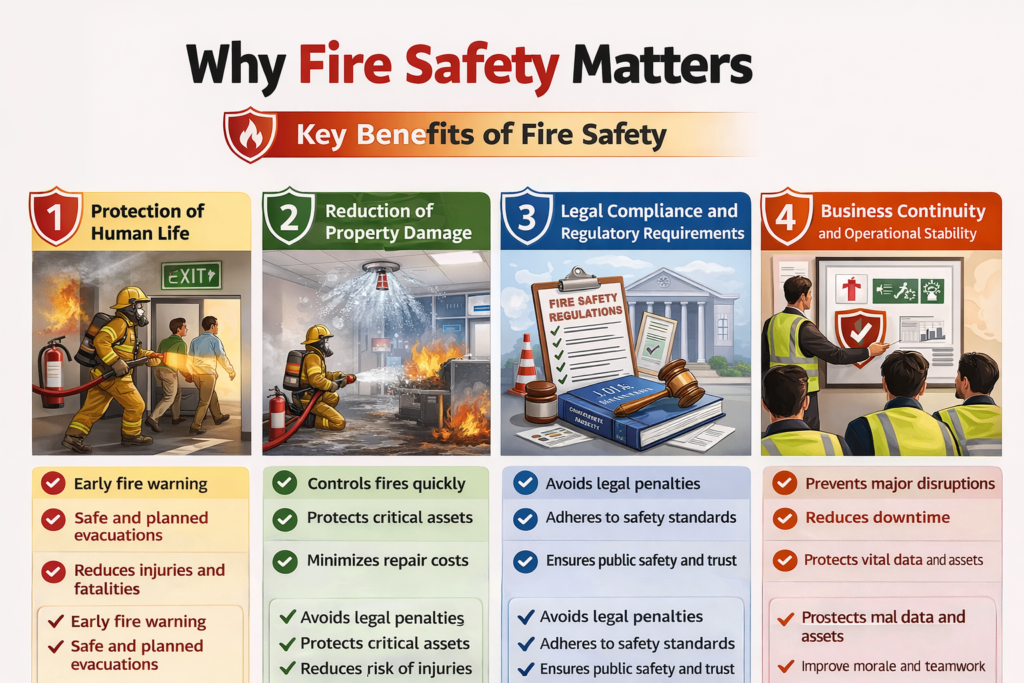
Why Fire Safety Matters
Fire safety plays a vital role in reducing the likelihood of fire incidents and limiting their impact if they occur. It provides a structured approach to identifying hazards, implementing preventive measures, and preparing for emergencies.
By prioritizing fire safety, individuals and organizations can:
- Prevent avoidable accidents
- Respond quickly to emergencies
- Reduce damage and losses
- Ensure compliance with safety standards
Key Benefits of Fire Safety
Below are the major advantages of implementing proper fire safety practices:
1. Protection of Human Life
The most important objective of fire safety is to protect people from harm. Fires can spread rapidly, producing heat, smoke, and toxic gases that pose serious risks.
How Fire Safety Helps:
- Provides early warning through alarm systems
- Ensures safe evacuation through planned routes
- Reduces the risk of injuries and fatalities
A well-prepared environment can save lives by allowing people to respond quickly and safely.
2. Reduction of Property Damage
Fire incidents can result in severe damage to buildings, equipment, and valuable assets. In many cases, the financial loss can be overwhelming.
Fire Safety Measures Help By:
- Controlling fires before they spread
- Protecting critical infrastructure
- Minimizing repair and replacement costs
Investing in fire safety is far more cost-effective than dealing with the aftermath of a fire.
3. Legal Compliance and Regulatory Requirements
Organizations are required to follow fire safety regulations and standards to ensure a safe environment.
Why Compliance is Important:
- Avoids legal penalties and fines
- Ensures adherence to national and international safety standards
- Demonstrates responsibility toward employees and the public
Failure to comply with fire safety laws can result in serious legal consequences and damage to reputation.
4. Business Continuity and Operational Stability
A fire incident can disrupt business operations, leading to downtime, loss of productivity, and financial instability.
Fire Safety Supports Business Continuity By:
- Preventing major incidents
- Reducing operational disruptions
- Protecting important data and equipment
Organizations with strong fire safety systems can recover more quickly and maintain long-term stability.
5. Promotion of a Strong Safety Culture
Fire safety encourages a culture where safety becomes a shared responsibility among all individuals.
Benefits of a Safety Culture:
- Increased awareness and accountability
- Improved employee confidence and morale
- Better adherence to safety procedures
When people are trained and aware, they are more likely to act responsibly and prevent potential hazards.
Consequences of Ignoring Fire Safety
Neglecting fire safety can lead to serious and often irreversible consequences:
- Loss of human life and severe injuries
- Destruction of property and valuable assets
- Legal penalties, fines, and possible shutdown of operations
- Damage to organizational reputation
- Long-term financial losses and recovery challenges
In many cases, the impact of a fire extends beyond immediate damage, affecting families, businesses, and communities.
Importance Across Different Environments
Fire safety is essential in all types of settings, each with its own risks:
Homes
- Protects families and personal belongings
- Reduces risks from cooking, electrical faults, and heating systems
Workplaces
- Ensures employee safety
- Maintains compliance with occupational safety regulations
Industrial Sites
- Manages high-risk environments with machinery and hazardous materials
- Prevents large-scale accidents
Public Buildings
- Protects large numbers of people
- Ensures safe evacuation during emergencies
In summary, fire safety is not optional—it is a necessity. It plays a crucial role in protecting lives, safeguarding property, ensuring legal compliance, and maintaining operational continuity.
By implementing effective fire safety measures and promoting awareness, individuals and organizations can significantly reduce risks and create a safer, more secure environment for everyone.ancial losses, and reputational damage.
Common Causes of Fire
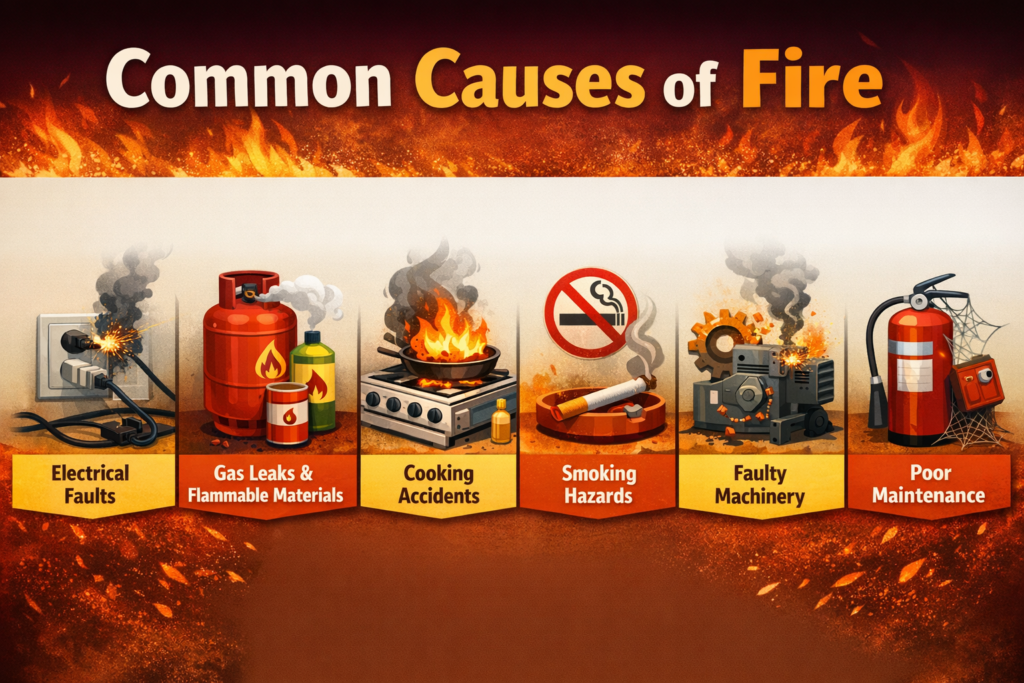
Understanding the common causes of fire is a critical step in preventing fire incidents. Most fires do not occur randomly—they are usually the result of identifiable hazards, unsafe practices, or lack of proper maintenance.
By recognizing these causes and addressing them proactively, individuals and organizations can significantly reduce the likelihood of fire outbreaks and create a safer environment.Understanding fire hazards in detail is crucial—learn more in our guide on fire safety risk assessment complete guide to hazards prevention control measures.
Why Understanding Fire Causes is Important
Before implementing fire safety measures, it is essential to understand how and why fires start. This knowledge helps in:
- Identifying potential hazards early
- Applying appropriate preventive measures
- Reducing the chances of unexpected fire incidents
- Improving overall safety awareness
A well-informed approach allows for better decision-making and risk control.
Major Causes of Fire
The table below summarizes the most common causes of fire along with their risks and prevention measures:
| Cause of Fire | Description | Common Risk Factors | Prevention Measures |
|---|---|---|---|
| Electrical Faults & Short Circuits | Faulty wiring or overloaded systems can generate heat and sparks, causing fires | Damaged wiring, overloaded sockets, loose connections, poor-quality equipment | Regular inspections, avoid overloading, replace damaged wires, use certified devices |
| Gas Leaks & Flammable Materials | Leaking gas or improper storage of flammable substances can easily ignite. | Gas leaks, poor ventilation, improper storage, exposure to heat sources | Check gas systems, ensure ventilation, store safely, keep away from ignition sources |
| Cooking Accidents | Unattended cooking or overheating oil can quickly start fires | Overheated oil, unattended stoves, flammable items near cooking areas | Never leave cooking unattended, keep area clean, turn off appliances properly |
| Smoking in Unsafe Areas | Improper disposal of cigarettes can ignite flammable materials | Lit cigarette butts, smoking near chemicals, unsafe disposal | Use designated areas, extinguish properly, avoid hazardous zones |
| Faulty Machinery & Overheating Equipment | Overused or poorly maintained machinery can overheat and ignite | Overworked machines, lack of cooling, faulty components | Regular maintenance, monitor temperature, shut down overheating equipment |
| Poor Maintenance of Systems | Neglecting safety systems increases fire risks significantly | Non-functional alarms, outdated systems, blocked ventilation | Routine inspections, maintain equipment, update systems regularly |
Below are the most common causes of fire, explained in detail:
1. Electrical Faults and Short Circuits
Electrical issues are one of the leading causes of fires in both homes and workplaces. Faulty wiring, damaged cables, and overloaded circuits can generate excessive heat, leading to sparks and ignition.
Common Electrical Hazards:
- Old or damaged wiring systems
- Overloaded sockets and extension cords
- Loose electrical connections
- Use of low-quality or faulty electrical equipment
Prevention Tips:
- Conduct regular electrical inspections
- Avoid overloading power outlets
- Replace damaged wires immediately
- Use certified and high-quality electrical devices
Proper electrical maintenance plays a crucial role in fire prevention.
2. Gas Leaks and Flammable Materials
Gas leaks are extremely dangerous because gases can spread quickly and ignite with even a small spark. Similarly, improper handling or storage of flammable materials increases fire risk.
Risk Factors:
- Leaking gas pipes or cylinders
- Poor ventilation in storage areas
- Storing flammable liquids near heat sources
Prevention Tips:
- Regularly check gas connections and pipelines
- Store flammable materials in designated areas
- Ensure proper ventilation
- Keep ignition sources away from flammable substances
Controlling flammable materials is essential to reduce fire hazards.
3. Cooking Accidents and Unattended Flames
Cooking is one of the most common causes of fires, especially in residential settings. Leaving cooking unattended or mishandling kitchen equipment can quickly lead to fire incidents.
Common Issues:
- Oil overheating and catching fire
- Unattended stoves or ovens
- Flammable items placed near cooking areas
Prevention Tips:
- Never leave cooking unattended
- Keep flammable objects away from heat
- Turn off appliances after use
- Use appropriate cooking equipment safely
Simple awareness in the kitchen can prevent many fire incidents.
4. Smoking in Unsafe Areas
Improper disposal of cigarettes or smoking in restricted areas can easily ignite flammable materials.
Common Risks:
- Throwing lit cigarettes into waste bins
- Smoking near flammable substances
- Smoking in prohibited zones
Prevention Tips:
- Use designated smoking areas
- Properly extinguish cigarette butts
- Avoid smoking near hazardous materials
Responsible behavior is key to reducing fire risks associated with smoking.
5. Faulty Machinery and Overheating Equipment
In industrial and workplace environments, machinery and equipment can overheat due to excessive use, lack of maintenance, or mechanical faults.
Risk Factors:
- Overworked machines
- Lack of lubrication or cooling
- Faulty components
Prevention Tips:
- Perform regular equipment maintenance
- Monitor machinery temperature
- Shut down overheating equipment immediately
Proper equipment management helps prevent large-scale industrial fires.
6. Poor Maintenance of Systems
Neglecting maintenance of electrical systems, fire protection equipment, and safety infrastructure can increase fire risks significantly.
Common Issues:
- Non-functional fire alarms or extinguishers
- Outdated electrical systems
- Blocked ventilation systems
Prevention Tips:
- Schedule regular inspections
- Maintain and test fire safety equipment
- Update outdated systems
Routine maintenance ensures that safety systems work effectively when needed.
Additional Contributing Factors
Apart from the major causes, several other factors can also increase fire risk:
- Lack of fire safety awareness and training
- Improper storage of combustible materials
- Human negligence and carelessness
- Absence of fire safety policies
Addressing these factors helps create a more comprehensive fire safety strategy.
The Role of Human Error
It is important to note that many fire incidents are caused by human error or negligence. Simple mistakes such as forgetting to turn off appliances, ignoring safety procedures, or mishandling materials can lead to serious consequences.
Promoting awareness and responsibility is essential in reducing these risks.
In summary, fires are often preventable when their causes are properly understood and managed. Electrical faults, gas leaks, cooking accidents, smoking, faulty equipment, and poor maintenance are among the most common causes of fire.
By identifying these risks early and implementing effective preventive measures, individuals and organizations can significantly reduce fire hazards and ensure a safer environment. appropriate control measures can be implemented to prevent incidents.
Key Principles of Fire Safety
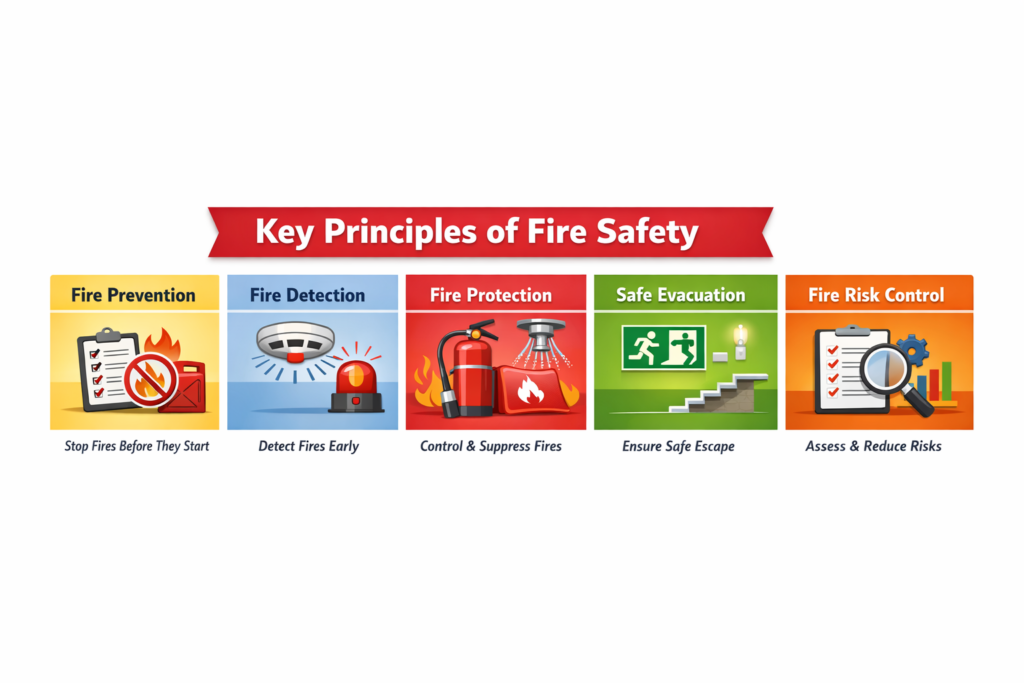
Fire safety is not based on a single action or system—it is built on a structured framework of key principles that work together to prevent fires, reduce risks, and protect lives and property. These principles form the foundation of an effective fire safety strategy in homes, workplaces, and industrial environments.For a complete breakdown of modern fire safety strategies, refer to fire safety management strategies for prevention control and emergency response.
By understanding and applying these principles, individuals and organizations can move from a reactive approach to a proactive and well-controlled safety system.
Overview of the Core Principles
You can also explore a broader explanation of fire safety strategies in our guide on fire safety essentials prevention protection and preparedness
The table below provides a clear overview of the key principles of fire safety and their practical applications:
| Principle | Description | Key Objectives | Practical Measures |
|---|---|---|---|
| Fire Prevention | Focuses on stopping fires before they start by eliminating hazards | Prevent fire incidents, reduce risks, avoid damage | Electrical safety, safe storage, housekeeping, control ignition sources |
| Fire Detection | Identifies fire at an early stage to allow quick response | Early warning, quick evacuation, minimize spread | Smoke detectors, heat detectors, fire alarm systems, regular testing |
| Fire Protection | Controls and extinguishes fires to reduce damage | Limit fire spread, protect property, support emergency response | Fire extinguishers, sprinklers, fire blankets, fire-resistant materials |
| Safe Evacuation | Ensures people can exit safely during emergencies | Protect lives, reduce panic, ensure safe escape | Emergency exits, evacuation plans, drills, emergency lighting |
| Fire Risk Control | Continuously identifies and reduces fire risks | Maintain safety, prevent future incidents, improve systems | Risk assessments, monitoring, safety updates, continuous training |
The key principles of fire safety include:
- Fire Prevention
- Fire Detection
- Fire Protection
- Safe Evacuation
- Fire Risk Control
Each principle plays a unique role, and together they create a comprehensive safety system that minimizes fire hazards and ensures preparedness.
1.Fire Prevention
What is Fire Prevention?
Fire prevention focuses on stopping fires before they start. It is the most important and effective principle because eliminating hazards reduces the need for emergency response.
Fire prevention involves identifying potential risks and taking steps to remove or control them at an early stage.
Why Fire Prevention is Important
- Prevents loss of life and injuries
- Reduces property damage
- Saves costs related to fire incidents
- Minimizes operational disruptions
Prevention is always more effective and less costly than dealing with the consequences of a fire.
Key Fire Prevention Measures
Electrical Safety
- Inspect wiring systems regularly
- Avoid overloading sockets
- Replace damaged cables immediately
Safe Handling of Flammable Materials
- Store chemicals and fuels in designated areas
- Keep flammable items away from heat sources
- Use proper containers and labeling
Good Housekeeping
- Remove unnecessary combustible materials
- Keep workspaces clean and organized
- Dispose of waste safely
Control of Ignition Sources
- Manage open flames carefully
- Avoid sparks in hazardous areas
- Use safe equipment in high-risk environments
Fire prevention is about eliminating risks before they turn into hazards, making it the first and most crucial line of defense.
2. Fire Detection
What is Fire Detection?
Fire detection involves identifying a fire at its earliest stage, allowing immediate action to prevent it from spreading.
Importance of Early Detection
Early detection can:
- Save lives by providing time to evacuate
- Reduce fire spread and damage
- Enable quicker emergency response
Even a few seconds can make a significant difference during a fire.
Common Fire Detection Systems
Smoke Detectors
- Detect smoke particles in the air
- Ideal for homes and offices
Heat Detectors
- Respond to temperature increases
- Suitable for industrial areas
Fire Alarm Systems
- Alert occupants through sound and signals
- Connected to emergency response systems
Maintenance of Detection Systems
- Test alarms regularly
- Replace batteries when needed
- Ensure systems are fully functional
A detection system is only effective if it is properly maintained.
Fire detection ensures that fires are identified quickly, allowing immediate response and minimizing damage.
3.Fire Protection
What is Fire Protection?
Fire protection focuses on controlling, containing, or extinguishing fires once they occur. It reduces the severity of fire incidents and limits damage.
Importance of Fire Protection
- Prevents fire from spreading
- Protects people and property
- Supports emergency response efforts
Common Fire Protection Equipment
Fire Extinguishers
- Used for small fires
- Available in different types for different fire classes
Automatic Sprinkler Systems
- Activate automatically when heat is detected
- Effective in controlling large fires
Fire Blankets
- Used to smother small fires
- Ideal for kitchen and specific hazards
Importance of Proper Usage
- Different fires require different extinguishing methods
- Incorrect use can worsen the situation
- Training is essential for safe and effective use
Fire protection systems act as a second line of defense, helping to control fires and reduce damage.
4.Safe Evacuation
What is Safe Evacuation?
Safe evacuation ensures that people can exit a building quickly and safely during a fire emergency.
Why Evacuation is Critical
Key Evacuation Measures
Emergency Exits
- Clearly marked and easy to access
- Must remain unobstructed
Escape Routes
- Clearly defined pathways
- Free from obstacles
Emergency Lighting
- Helps visibility during power failure
- Guides people to exits
Evacuation Plans and Drills
- Pre-planned procedures
- Regular practice improves response time
Role of Training
- Educates people on what to do
- Reduces panic during emergencies
- Improves evacuation efficiency
Safe evacuation ensures that everyone can escape quickly and safely, minimizing injuries and fatalities.
5.Fire Risk Control
What is Fire Risk Control?
Fire risk control involves continuously identifying, assessing, and reducing fire risks to maintain a safe environment.
Importance of Risk Control
- Ensures long-term safety
- Adapts to changing conditions
- Prevents future incidents
Key Risk Control Actions
Risk Assessments
- Identify hazards
- Evaluate potential risks
Implement Control Measures
- Remove or reduce hazards
- Improve safety systems
Monitoring and Review
- Regularly check safety measures
- Update procedures when needed
Continuous Improvement
Fire safety is not a one-time process. It requires:
- Regular updates
- Ongoing training
- Continuous monitoring
Fire risk control ensures that safety measures remain effective over time and adapt to new risks.
Principles of Fire Safety
The key principles of fire safety—prevention, detection, protection, evacuation, and risk control—work together to create a complete safety system.
- Prevention stops fires from starting
- Detection identifies fires early
- Protection controls fire spread
- Evacuation saves lives
- Risk control ensures continuous safety
By applying all these principles together, individuals and organizations can achieve a high level of fire safety, reduce risks, and protect lives and property effectively.ces.
Fire Risk Assessment
A fire risk assessment is a structured and systematic process used to identify potential fire hazards, evaluate the level of risk, and implement appropriate control measures to reduce or eliminate those risks.
It is one of the most important components of fire safety because it helps organizations and individuals take a proactive approach rather than reacting after a fire incident has already occurred.
A properly conducted fire risk assessment ensures that environments remain safe, compliant with regulations, and prepared for emergencies.
What is the Purpose of Fire Risk Assessment?
The main purpose of a fire risk assessment is to protect lives, property, and operations by identifying and controlling fire-related hazards.
Key Objectives:
- Identify potential fire hazards in the environment
- Determine who may be at risk
- Evaluate the likelihood and impact of fire incidents
- Implement effective control and preventive measures
- Ensure continuous monitoring and improvement
By achieving these objectives, fire risk assessments help reduce both the probability and consequences of fire incidents.
Why Fire Risk Assessment is Important
Conducting regular fire risk assessments is essential for several reasons:
- Helps prevent fire incidents before they occur
- Ensures compliance with legal and safety requirements
- Protects employees, residents, and visitors
- Reduces financial losses and property damage
- Improves emergency preparedness and response
Without proper assessment, hidden hazards can go unnoticed and lead to serious consequences.
Steps in Fire Risk Assessment
A fire risk assessment follows a structured process. Each step plays a crucial role in identifying and managing fire risks effectively.
Identify Fire Hazards
What This Step Involves
This step focuses on identifying anything that could start a fire or contribute to its spread.
Common Fire Hazards:
- Electrical equipment and faulty wiring
- Flammable liquids and gases
- Combustible materials such as paper, wood, and textiles
- Sources of ignition like open flames, sparks, or heat
How to Identify Hazards:
- Conduct physical inspections of the premises
- Review equipment and processes
- Observe workplace activities
Goal of This Step
To recognize all possible sources of fire so they can be controlled or eliminated
Identify People at Risk
What This Step Involves
This step involves identifying individuals who may be affected in the event of a fire.
People at Risk May Include:
- Employees and workers
- Visitors and customers
- Residents (in homes or buildings)
- Vulnerable individuals such as children, elderly, or disabled persons
Special Considerations:
- People unfamiliar with the building layout
- Individuals with limited mobility
- Areas with high occupancy
Goal of This Step
To ensure that all individuals are considered when planning safety measures and evacuation procedures.
Evaluate and Reduce Risks
What This Step Involves
Once hazards and people at risk are identified, the next step is to evaluate the level of risk and take action to reduce it.
Risk Evaluation:
- Assess the likelihood of a fire occurring
- Determine the potential severity of consequences
Risk Reduction Measures:
- Remove or reduce fire hazards
- Install fire detection and protection systems
- Improve housekeeping and storage practices
- Provide training and awareness programs
Goal of This Step
To minimize both the chance of fire occurrence and its potential impact.
Record Findings and Implement Measures
What This Step Involves
All findings from the assessment should be properly documented, and necessary actions should be implemented.
What to Record:
- Identified hazards
- People at risk
- Control measures in place
- Additional actions required
Implementation Actions:
- Install or upgrade safety systems
- Update safety procedures
- Provide employee training
Goal of This Step
To ensure accountability, proper documentation, and effective implementation of safety measures.
Review and Update Regularly
What This Step Involves
Fire risk assessments are not a one-time activity. They must be reviewed and updated regularly to remain effective.
When to Review:
- After significant changes (e.g., new equipment, layout changes)
- Following a fire incident or near miss
- At regular intervals (annually or as required)
Continuous Improvement:
- Update control measures
- Improve safety procedures
- Address newly identified risks
Goal of This Step
To ensure that fire safety measures remain relevant and effective over time.
Who Should Conduct a Fire Risk Assessment?
A fire risk assessment should be carried out by a competent person who has knowledge of fire safety principles.
This May Include:
- Safety officers
- Facility managers
- Qualified fire risk assessors
Proper expertise ensures accurate identification of hazards and effective risk control.
Practical Example of Fire Risk Assessment
To better understand, consider a workplace scenario:
- Electrical equipment is inspected for faults
- Flammable materials are stored safely
- Emergency exits are checked for accessibility
- Fire alarms and extinguishers are tested
This practical approach ensures a safer working environment.
Common Mistakes to Avoid
- Ignoring small hazards
- Failing to update assessments regularly
- Lack of proper documentation
- Not providing training to staff
Avoiding these mistakes improves the effectiveness of fire safety management.
A fire risk assessment is a critical process that forms the backbone of effective fire safety management. It involves identifying hazards, evaluating risks, implementing control measures, and continuously reviewing safety practices.
By following a structured approach, individuals and organizations can significantly reduce fire risks, ensure compliance, and create a safe and secure environment for everyone.ment and complying with safety regulations.
Fire Safety Checklist
| Area | Safety Measure |
|---|---|
| Electrical Systems | Regular inspection and maintenance |
| Fire Equipment | Easily accessible and functional |
| Emergency Exits | Clearly marked and unobstructed |
| Training | Regular fire drills and awareness |
| Storage | Safe handling of flammable materials |
Types of Fire Extinguishers
Fire extinguishers are one of the most essential tools in fire safety. They are designed to control or extinguish small fires before they spread, helping to prevent serious damage and protect lives.
However, not all fires are the same. Different types of fires are caused by different materials, and each type requires a specific extinguishing method. Using the wrong type of extinguisher can be ineffective—or even dangerous.
Therefore, understanding the different classes of fire and the appropriate extinguishers is critical for safe and effective fire response.
Why Different Types of Fire Extinguishers Are Needed
Fires are classified based on the type of fuel involved, such as solid materials, liquids, gases, metals, or electrical equipment. Each type of fuel reacts differently to extinguishing agents.
For example:
- Water can effectively extinguish wood fires
- But using water on electrical fires can cause electric shock
- Using the wrong extinguisher may spread the fire instead of controlling it
This is why fire extinguishers are categorized into different classes, each designed for specific fire risks.
Fire Classes and Their Extinguishing Methods
Below are the main types of fire classes and the appropriate extinguishers used for each:
Class A – Ordinary Combustibles
What is Class A Fire?
Class A fires involve solid combustible materials that burn easily.
Common Materials:
- Wood
- Paper
- Cloth
- Plastics
Suitable Extinguishers:
- Water extinguishers
- Foam extinguishers
- Dry powder extinguishers
Why These Work:
These extinguishers work by cooling the fire and removing heat, which is essential to stop combustion.
Class B – Flammable Liquids
What is Class B Fire?
Class B fires involve flammable liquids that can ignite easily and spread rapidly.
Common Materials:
- Petrol (gasoline)
- Diesel
- Paints
- Solvents
Suitable Extinguishers:
- Foam extinguishers
- Carbon dioxide (CO₂) extinguishers
- Dry powder extinguishers
Important Note:
Water should NOT be used on Class B fires because it can spread the burning liquid, making the fire worse.
Class C – Electrical Fires
What is Class C Fire?
Class C fires involve electrical equipment and energized systems.
Common Sources:
- Electrical panels
- Wiring systems
- Appliances
- Machinery
Suitable Extinguishers:
- CO₂ extinguishers
- Dry powder extinguishers
Safety Warning:
Never use water on electrical fires, as it can lead to electric shock or electrocution.
Class D – Combustible Metals
What is Class D Fire?
Class D fires involve flammable metals, which are often found in industrial settings.
Common Metals:
- Magnesium
- Sodium
- Potassium
- Aluminum powders
Suitable Extinguishers:
- Specialized dry powder extinguishers
Important Note:
These fires require special handling, as metals can react violently with water or other extinguishing agents.
Class K / F – Cooking Oils and Fats
What is Class K/F Fire?
Class K (or F in some regions) fires involve cooking oils and fats, typically in kitchens.
Common Sources:
- Deep fryers
- Cooking oils
- Grease
Suitable Extinguishers:
- Wet chemical extinguishers
Why Special Extinguishers Are Needed:
Cooking oil fires burn at very high temperatures and can reignite easily. Wet chemical extinguishers work by forming a layer that cools and smothers the fire.
Importance of Choosing the Right Extinguisher
Using the correct type of fire extinguisher is critical because:
- It ensures effective fire control
- Prevents the fire from spreading
- Reduces the risk of injury
- Avoids dangerous reactions
Using the wrong extinguisher can worsen the situation and put lives at risk.
Basic Steps for Using a Fire Extinguisher (PASS Method)
To use a fire extinguisher safely, follow the PASS technique:
- P – Pull the safety pin
- A – Aim at the base of the fire
- S – Squeeze the handle
- S – Sweep from side to side
This method ensures effective use of the extinguisher.
Placement of Fire Extinguishers
Proper placement of extinguishers is equally important:
- Install in easily accessible locations
- Place near exits and high-risk areas
- Ensure clear visibility and proper signage
- Keep them free from obstruction
Maintenance and Inspection
Fire extinguishers must be regularly maintained to ensure they function properly:
- Check pressure levels
- Inspect for physical damage
- Ensure seals and pins are intact
- Conduct periodic servicing
A non-functional extinguisher can fail during emergencies.
Common Mistakes to Avoid
- Using the wrong type of extinguisher
- Not knowing how to operate it
- Ignoring maintenance and inspection
- Blocking access to extinguishers
Avoiding these mistakes improves fire safety effectiveness.
Understanding the different types of fire extinguishers is essential for effective fire safety management. Each class of fire—A, B, C, D, and K/F—requires a specific extinguishing method based on the material involved.
By selecting the right extinguisher, using it correctly, and maintaining it properly, individuals and organizations can significantly reduce fire risks and respond effectively in emergency situations.e classifications ensures the correct response during emergencies.
Fire Safety in the Workplace
Fire safety in the workplace is both a legal requirement and a critical responsibility for employers and management. Work environments often involve electrical systems, machinery, flammable materials, and human activity—all of which can increase the risk of fire if not properly managed.
Ensuring workplace fire safety is not only about compliance with regulations but also about protecting employees, assets, and business operations. A well-implemented fire safety system can prevent incidents, reduce risks, and ensure a quick and effective response in emergencies.For a more comprehensive understanding of workplace fire safety and prevention strategies, visit fire safety complete guide to prevention equipment risk assessment.
Why Workplace Fire Safety is Important
Workplace fires can lead to serious consequences, including injuries, loss of life, financial damage, and operational disruption.
Key Reasons to Prioritize Workplace Fire Safety:
- Protect employees and visitors from harm
- Prevent damage to equipment, infrastructure, and data
- Ensure compliance with health and safety laws
- Maintain business continuity and productivity
- Enhance organizational reputation and responsibility
A safe workplace creates confidence among employees and contributes to overall efficiency.
Key Workplace Fire Safety Measures
To create a safe working environment, organizations must implement the following essential fire safety measures:
1.Conduct Fire Risk Assessments
What It Involves
A fire risk assessment identifies potential fire hazards, evaluates risks, and determines control measures.
Key Actions:
- Inspect the workplace for fire hazards
- Identify people at risk
- Evaluate the likelihood and impact of fire
- Implement preventive and control measures
Why It Matters
Regular assessments help detect hidden risks and ensure that safety measures remain effective.
2.Install Fire Detection and Protection Systems
What It Involves
Workplaces must be equipped with systems that can detect and control fires quickly.
Detection Systems:
- Smoke detectors
- Heat detectors
- Fire alarm systems
Protection Systems:
- Fire extinguishers
- Sprinkler systems
- Fire blankets
Why It Matters
These systems provide early warning and help control fires before they escalate.
3.Provide Employee Training and Awareness
What It Involves
Employees must be trained to understand fire risks and respond appropriately during emergencies.
Training Includes:
- How to use fire extinguishers
- Emergency evacuation procedures
- Identifying fire hazards
- Reporting unsafe conditions
Why It Matters
Trained employees can act quickly, reduce panic, and prevent small incidents from becoming major disasters.
4.Maintain Clear Emergency Exits and Signage
What It Involves
Emergency exits and escape routes must be clearly visible and easily accessible at all times.
Key Requirements:
- Clearly marked exit signs
- Unobstructed escape routes
- Emergency lighting for visibility
- Posted evacuation plans
Why It Matters
In an emergency, quick and safe evacuation can save lives. Clear exits reduce confusion and panic.
5.Regular Maintenance and Safety Reviews
What It Involves
All fire safety systems and procedures must be regularly checked and updated.
Key Actions:
- Inspect fire alarms and extinguishers
- Review evacuation plans
- Update safety procedures
- Conduct fire drills
Why It Matters
Continuous monitoring ensures that systems remain effective and up to date.
6.Employer Responsibilities
Employers are legally responsible for ensuring workplace safety. This includes:
- Implementing fire safety policies
- Providing necessary equipment and training
- Conducting regular inspections
- Ensuring compliance with safety regulations
Failure to meet these responsibilities can lead to serious consequences, including legal penalties and operational shutdowns.
Fire Safety at Home
Fire safety is equally important in residential settings, where everyday activities such as cooking, heating, and electrical usage can create fire risks.
Unlike workplaces, homes often lack formal safety systems, making awareness and simple precautions even more important.
Why Home Fire Safety Matters
- Protects family members and property
- Reduces the risk of accidental fires
- Ensures quick response during emergencies
- Provides peace of mind
Even small preventive actions can make a significant difference in reducing fire risks at home.
Practical Fire Safety Tips for Home
1.Install and Maintain Smoke Alarms
What to Do:
- Install smoke alarms in key areas such as kitchens and bedrooms
- Test alarms regularly
- Replace batteries when needed
Why It Matters:
Smoke alarms provide early warning, allowing more time to escape.
2.Avoid Overloading Electrical Outlets
What to Do:
- Do not plug too many devices into one socket
- Use high-quality extension cords
- Replace damaged wires
Why It Matters:
Overloaded circuits can overheat and cause electrical fires.
3.Keep Flammable Materials Away from Heat
What to Do:
- Store flammable items safely
- Keep curtains, paper, and fabrics away from heaters and stoves
Why It Matters:
Reducing exposure to heat sources lowers the risk of ignition.
4.Practice Safe Cooking Habits
What to Do:
- Never leave cooking unattended
- Turn off appliances after use
- Keep cooking areas clean
Why It Matters:
Cooking-related incidents are one of the leading causes of home fires.
5.Plan and Practice Emergency Escape Routes
What to Do:
- Identify at least two exit routes
- Practice evacuation with family members
- Keep exits clear
Why It Matters:
Preparedness ensures quick and safe evacuation during emergencies.
Additional Home Safety Measures
- Keep fire extinguishers in accessible locations
- Avoid smoking indoors or near flammable materials
- Store gas cylinders safely
- Supervise children around fire hazards
Common Mistakes to Avoid
- Ignoring faulty electrical systems
- Blocking exits with furniture or objects
- Not testing smoke alarms
- Leaving candles or flames unattended
Avoiding these mistakes significantly reduces fire risks.
Fire safety in both workplaces and homes is essential for protecting lives, property, and overall well-being. While workplaces require structured systems and compliance measures, homes rely more on awareness and simple preventive actions.
By implementing proper safety measures, conducting regular checks, and promoting awareness, individuals and organizations can create a safe, prepared, and fire-resilient environment.n significantly reduce the risk of fire at home.
Career Opportunities in Fire Safety
Fire safety has become a rapidly growing and highly respected profession across the world. With increasing regulations, urban development, industrial expansion, and a stronger focus on health and safety, the demand for qualified fire safety professionals continues to rise.If you’re interested in pursuing this career path, check out our step-by-step guide on how to become a fire safety officer.
Organizations today are more aware than ever of the importance of protecting lives, property, and business operations. As a result, they actively seek skilled professionals who can identify fire risks, implement safety measures, and ensure compliance with regulations.
A career in fire safety is not only stable and rewarding but also offers opportunities for growth, international recognition, and specialization in various industries.
Why Choose a Career in Fire Safety?
Choosing a career in fire safety offers several long-term benefits:
High Demand Worldwide
Fire safety professionals are required in:
- Construction and infrastructure projects
- Oil and gas industries
- Manufacturing and industrial sectors
- Hospitals, schools, and public buildings
This creates strong job opportunities both locally and internationally
Career Growth and Advancement
The field offers clear progression paths, allowing professionals to move from entry-level roles to senior management positions.
Competitive Salaries
Due to the specialized nature of the field, fire safety professionals often receive attractive salary packages, especially with certifications and experience.
Meaningful and Impactful Work
Fire safety professionals play a vital role in:
- Saving lives
- Preventing accidents
- Creating safer environments
This makes the career both professionally and personally rewarding.
Key Career Roles in Fire Safety
Below are some of the most common and in-demand roles in the fire safety field:
1.Fire Safety Officer
Role Overview
A Fire Safety Officer is responsible for ensuring that fire safety measures are properly implemented within an organization.
Key Responsibilities:
- Conduct fire safety inspections
- Monitor safety systems and procedures
- Ensure compliance with fire safety regulations
- Train employees on fire safety practices
Skills Required:
- Knowledge of fire safety regulations
- Attention to detail
- Strong communication skills
2.Fire Risk Assessor
Role Overview
A Fire Risk Assessor evaluates potential fire hazards and recommends measures to reduce risks.
Key Responsibilities:
- Conduct fire risk assessments
- Identify hazards and vulnerable areas
- Suggest control measures
- Prepare detailed reports
Skills Required:
- Analytical thinking
- Risk assessment expertise
- Knowledge of safety standards
3.Health and Safety Manager
Role Overview
A Health and Safety Manager oversees overall workplace safety, including fire safety.
Key Responsibilities:
- Develop safety policies and procedures
- Ensure compliance with regulations
- Conduct training programs
- Manage safety audits
Skills Required:
- Leadership and management skills
- Strong understanding of safety laws
- Problem-solving ability
4.Fire Protection Inspector
Role Overview
A Fire Protection Inspector ensures that fire protection systems are properly installed and maintained.
Key Responsibilities:
- Inspect fire alarms and sprinkler systems
- Verify system compliance
- Conduct safety audits
- Recommend improvements
Skills Required:
- Technical knowledge of fire systems
- Inspection and auditing skills
- Attention to detail
Importance of Professional Qualifications
To build a successful career in fire safety, obtaining recognized qualifications and certifications is essential. These qualifications provide the knowledge, skills, and credibility required to perform effectively in the field.
Benefits of Professional Certifications
- Enhance knowledge and technical expertise
- Increase job opportunities and career growth
- Provide international recognition
- Improve earning potential
Popular Learning Areas
Fire safety training programs typically cover:
- Fire risk assessment
- Fire prevention and protection systems
- Emergency planning and evacuation
- Health and safety regulations
Career Progression Path
A typical career path in fire safety may look like:
- Entry-Level Safety Assistant
- Fire Safety Officer
- Senior Safety Specialist
- Health and Safety Manager
- Safety Consultant or Auditor
With experience and qualifications, professionals can move into leadership and consultancy roles.
Industries Hiring Fire Safety Professionals
Fire safety professionals are needed in a wide range of industries:
- Construction and engineering
- Oil and gas
- Manufacturing and factories
- Healthcare facilities
- Educational institutions
- Government and public services
Skills Needed for Success
To succeed in fire safety, professionals should develop:
- Strong analytical and problem-solving skills
- Knowledge of safety regulations and standards
- Communication and training abilities
- Attention to detail
- Ability to handle emergency situations
A career in fire safety offers excellent opportunities for growth, stability, and professional development. With increasing demand across industries, qualified professionals can build a rewarding career while contributing to the safety and well-being of others.
By gaining the right qualifications, developing essential skills, and staying updated with industry standards, individuals can achieve long-term success in this important and impactful field.s and certifications can open doors to rewarding careers in safety management and compliance.
Conclusion
Fire safety is not a one-time action but a continuous and shared responsibility that requires awareness, planning, and consistent improvement. Whether in homes, workplaces, or industrial environments, understanding fire risks and taking proactive measures plays a crucial role in preventing incidents before they occur. By identifying potential hazards, implementing effective prevention strategies, and ensuring proper safety systems are in place, individuals and organizations can significantly reduce both the likelihood and severity of fire-related emergencies.For a detailed explanation of how to conduct a fire risk assessment, read our complete guide on what is a fire risk assessment.
An effective fire safety approach goes beyond basic precautions—it involves preparedness, training, and regular evaluation of safety measures. When people are well-informed and properly trained, they can respond quickly and confidently during emergencies, minimizing panic and ensuring safe evacuation. At the same time, maintaining fire detection and protection systems, conducting regular risk assessments, and updating safety procedures help create a strong and reliable safety framework.You can also read our detailed guide here:The Ultimate Fire Safety Guide: Prevention, Risk Assessment, and Emergency Preparedness
To further enhance your knowledge, explore our detailed resources such as fire safety blueprint building a safer environment through prevention preparedness and fire safety and risk assessment a practical guide to prevention and safer environments.Ultimately, adopting a proactive and well-structured fire safety strategy leads to long-term benefits, including the protection of lives, preservation of property, legal compliance, and uninterrupted operations. It fosters a culture of safety where everyone understands their role and contributes to a secure environment. By prioritizing fire safety today, we can build safer communities, stronger organizations, and a more resilient future.For a deeper dive, read our fire safety explained guide focusing on prevention and life protection: