
Fire Safety Fundamentals: Prevention, Risk Assessment & Protecting Lives and Workplaces
Fire safety is a fundamental responsibility that plays a vital role in safeguarding human lives, protecting valuable assets, and ensuring the smooth operation of workplaces. A single fire incident—whether caused by faulty electrical systems, unsafe handling of flammable materials, or simple human oversight—can escalate rapidly and result in devastating consequences, including injuries, financial loss, and even loss of life.To build a deeper understanding, you can also explore our detailed guide on what is fire safety and learn the core concepts in detail.To expand your knowledge, check our complete fire safety explained guide covering principles and risk assessment:
In today’s fast-paced environments, both homes and organizations face a wide range of fire risks. This makes it essential to move beyond basic awareness and adopt a proactive approach toward fire prevention and safety management. By understanding fire safety fundamentals, individuals and businesses can identify potential hazards early, implement effective preventive measures, and minimize the chances of fire incidents occurring in the first place.To build on these fundamentals, check out fire safety management strategies for prevention control and emergency response.
A key component of fire safety is fire risk assessment, which allows you to systematically evaluate potential dangers, determine who may be at risk, and take appropriate actions to control or eliminate those risks. Alongside prevention, being prepared for emergencies is equally important. Having clear evacuation procedures, properly maintained fire protection systems, and trained personnel can make a critical difference in reducing harm during a fire event.
This guide provides a complete overview of fire safety fundamentals, covering essential areas such as prevention strategies, risk assessment processes, workplace safety practices, and emergency preparedness. Whether you are a homeowner, employee, or safety professional, this blog will equip you with practical knowledge and actionable insights to create a safer environment, ensure compliance with safety standards, and confidently protect lives and workplaces from fire-related hazards.For a broader understanding, explore our complete resource on fire safety complete guide to prevention equipment risk assessment.
What is Fire Safety?
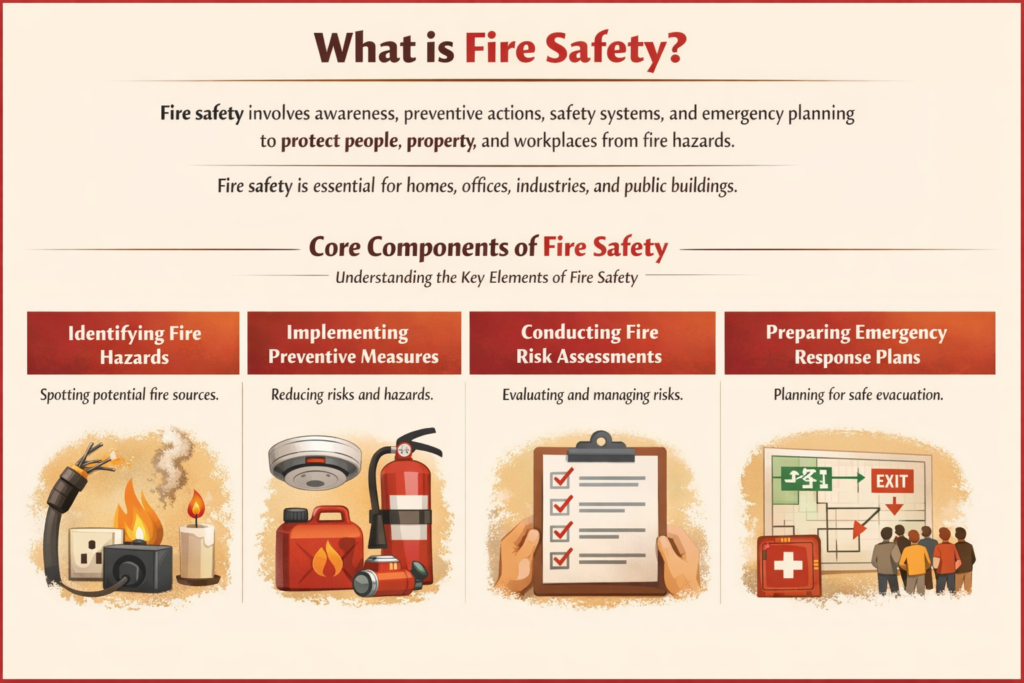
Fire safety is a comprehensive approach that involves a combination of awareness, preventive actions, safety systems, and emergency planning to reduce the risk of fire and protect people, property, and workplaces from harm.
It is not just about reacting to fire incidents—it is about stopping fires before they start, controlling risks, and ensuring that if a fire does occur, its impact is minimized as much as possible.
Fire safety applies to homes, offices, industries, public buildings, and construction sites, making it an essential part of everyday life and workplace management.For a more detailed explanation, read our complete article on what is fire safety
Core Components of Fire Safety
| Component | Description | Key Examples | Why It Matters |
|---|---|---|---|
| Identifying Fire Hazards | Recognizing anything that can start or spread a fire | Faulty wiring, gas leaks, flammable liquids, open flames | Helps detect risks early and prevent fire incidents |
| Implementing Preventive Measures | Taking actions to eliminate or control fire hazards | Installing alarms, safe storage, electrical maintenance | Reduces chances of fire and improves safety |
| Fire Risk Assessment | Systematic evaluation of fire hazards and risks | Identifying hazards, evaluating risks, reviewing safety | Ensures no risk is overlooked and improves compliance |
| Emergency Response Planning | Preparing actions to respond during a fire emergency | Evacuation plans, alarms, emergency contacts | Saves lives and ensures quick, organized response |
To fully understand fire safety, it is important to break it down into its key components. Each element plays a critical role in building a safe environment.
1. Identifying Fire Hazards
The first step in fire safety is recognizing anything that could potentially cause a fire.
What are fire hazards?
Fire hazards are sources that can ignite a fire or fuel its spread.
Common Examples:
- Faulty electrical wiring
- Overloaded power sockets
- Flammable liquids and chemicals
- Gas leaks
- Open flames (candles, smoking)
Why it matters:
If hazards are not identified early, they can easily turn into serious fire incidents. Early detection helps prevent accidents before they happen.
2. Implementing Preventive Measures
Once hazards are identified, the next step is to take actions to eliminate or control them.
Examples of Preventive Measures:
- Regular maintenance of electrical systems
- Safe storage of flammable materials
- Installing smoke detectors and alarms
- Keeping fire extinguishers accessible
- Avoiding unsafe practices like overloading circuits
Why it matters:
Prevention is the most effective way to reduce fire risks. A well-prepared environment significantly lowers the chances of fire outbreaks.
3. Conducting Fire Risk Assessments
A fire risk assessment is a systematic process used to evaluate fire hazards and determine how dangerous they are.
What does it involve?
- Identifying potential fire hazards
- Determining who may be at risk
- Evaluating the likelihood and severity of fire
- Taking steps to reduce or eliminate risks
Simple Breakdown:
- Identify hazards
- Identify people at risk
- Evaluate risks
- Record findings
- Review regularly
Why it matters:
Risk assessment ensures that no danger is overlooked and helps organizations stay compliant with safety regulations.
4. Preparing Emergency Response Plans
Even with the best prevention strategies, emergencies can still happen. That’s why having a clear plan is essential.
What should an emergency plan include?
- Fire alarm systems
- Evacuation routes and exits
- Assembly points
- Emergency contact numbers
- Roles and responsibilities
Key Actions During a Fire:
- Raise the alarm immediately
- Evacuate the building safely
- Use fire extinguishers if trained
- Call emergency services
Why it matters:
A well-prepared response plan can save lives and reduce panic during critical situations.
In Simple Words
Fire safety means being aware of fire risks, taking steps to prevent fires, and knowing exactly what to do if a fire occurs.
It is about:
- Staying alert
- Acting responsibly
- Being prepared
Fire safety is not a one-time action—it is an ongoing process that requires continuous monitoring, training, and improvement. Whether at home or in the workplace, practicing fire safety ensures a secure environment for everyone.
If you want, I can now:stopping fires before they start and being ready if they happen.
Importance of Fire Safety
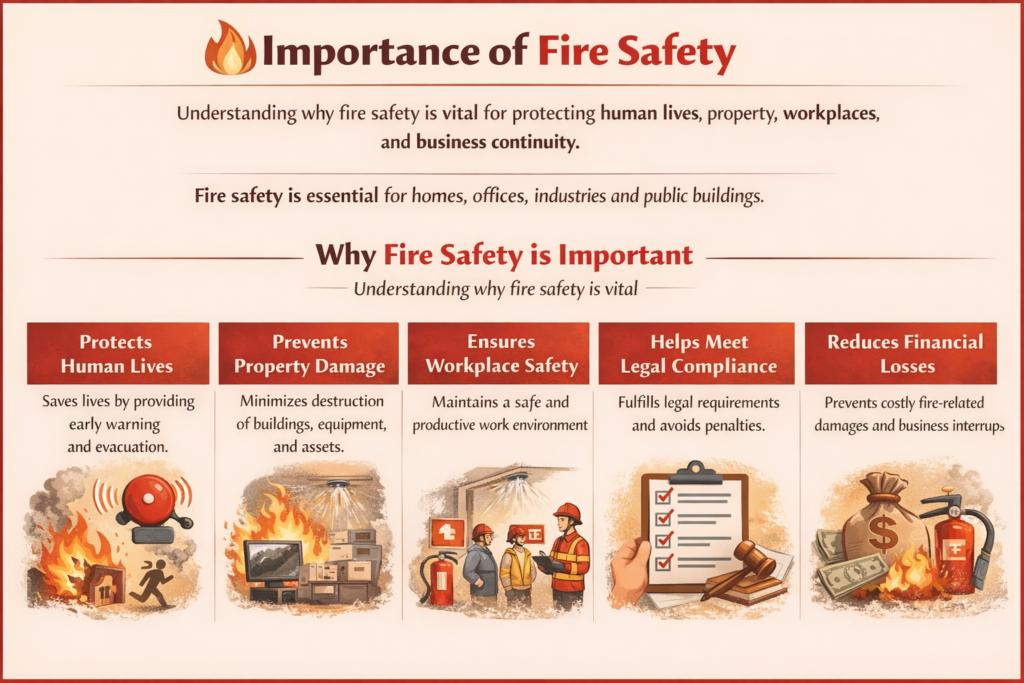
Fire safety is not just a precaution—it is a critical necessity for protecting people, property, and business operations. Fires can spread rapidly within minutes, causing irreversible damage if proper safety measures are not in place. Understanding the importance of fire safety helps individuals and organizations take proactive steps to prevent disasters and respond effectively in emergencies.
Implementing strong fire safety practices creates a safer environment, reduces risks, and ensures long-term protection for everyone involved.
Why Fire Safety is Important
| Key Aspect | Explanation | Risks Without Fire Safety | Benefits of Fire Safety |
|---|---|---|---|
| Protects Human Lives | Ensures people can detect fire early and evacuate safely | Injuries, fatalities, smoke inhalation | Saves lives through early warning and proper response |
| Prevents Property Damage | Protects buildings, equipment, and valuable assets | Destruction of property, data loss, costly repairs | Minimizes damage and protects resources |
| Ensures Workplace Safety | Creates a secure and controlled working environment | Workplace accidents, panic, unsafe conditions | Improves productivity and employee confidence |
| Helps Meet Legal Compliance | Ensures adherence to fire safety laws and regulations | Fines, legal action, business closure | Maintains legal protection and business credibility |
| Reduces Financial Losses | Prevents costly damages and business interruptions | Loss of income, high insurance costs, downtime | Saves money and ensures business continuity |
Fire safety plays a vital role in multiple areas of life and work. Below are the key reasons why it should always be a top priority:
1. Protects Human Lives
The most important objective of fire safety is to save lives.
Fires can produce:
- Toxic smoke
- Extreme heat
- Rapidly spreading flames
These factors can quickly trap people and lead to serious injuries or fatalities.
How fire safety helps:
- Early warning systems (smoke alarms) alert people in time
- Clear evacuation plans ensure safe exit
- Fire training prepares individuals to respond calmly
Simple understanding:
Fire safety gives people time and knowledge to escape safely, which can make the difference between life and death.
2. Prevents Property Damage
Fires can destroy buildings, equipment, and valuable assets within minutes.
What can be damaged?
- Offices and homes
- Machinery and tools
- Documents and data
- Inventory and stock
Role of fire safety:
- Fire prevention reduces the chances of fire starting
- Fire protection systems (sprinklers, extinguishers) control damage
- Regular inspections identify risks early
Why it matters:
Protecting property means avoiding costly repairs, rebuilding, and loss of important resources.
3. Ensures Workplace Safety
In workplaces, fire safety is essential to maintain a safe and productive environment.
Risks in workplaces:
- Electrical equipment
- Flammable materials
- High human activity
Fire safety ensures:
- Employees are protected
- Safe working conditions are maintained
- Emergency procedures are clear
Impact:
A safe workplace increases employee confidence, reduces accidents, and improves overall productivity.
4. Helps Meet Legal Compliance
Fire safety is not optional—it is often a legal requirement for businesses and organizations.
Why compliance matters:
- Governments require fire safety measures
- Regular inspections may be conducted
- Non-compliance can lead to penalties or closure
Examples of compliance:
- Fire risk assessments
- Installation of fire safety equipment
- Staff training
Key point:
Following fire safety regulations protects not only people but also the legal standing of a business.
5. Reduces Financial Losses
Fires can cause significant financial damage, including:
- Property destruction
- Business interruption
- Insurance costs
- Loss of customers
How fire safety reduces losses:
- Prevents fire incidents
- Minimizes damage if fire occurs
- Ensures quicker recovery
Simple understanding:
Investing in fire safety today can save huge costs in the future.
Real-Life Example
Imagine a workplace where an electrical wire is slightly damaged but ignored. Over time, the fault worsens and sparks a fire late at night. Within minutes, the fire spreads through office furniture and documents, causing massive damage.
As a result:
- Expensive equipment is destroyed
- Important data is lost
- Business operations are stopped
- Employees face safety risks
However, if proper fire safety measures had been in place—such as regular inspections, functioning smoke detectors, and fire suppression systems—the fire could have been prevented or controlled at an early stage.
Lesson:
Small risks can turn into major disasters if ignored, but proper fire safety can stop incidents before they escalate.
Fire safety is essential because it:
- Saves lives
- Protects valuable assets
- Ensures safe workplaces
- Maintains legal compliance
- Prevents financial damage
It is not just about following rules—it is about creating a culture of safety and responsibility.
Common Fire Hazards
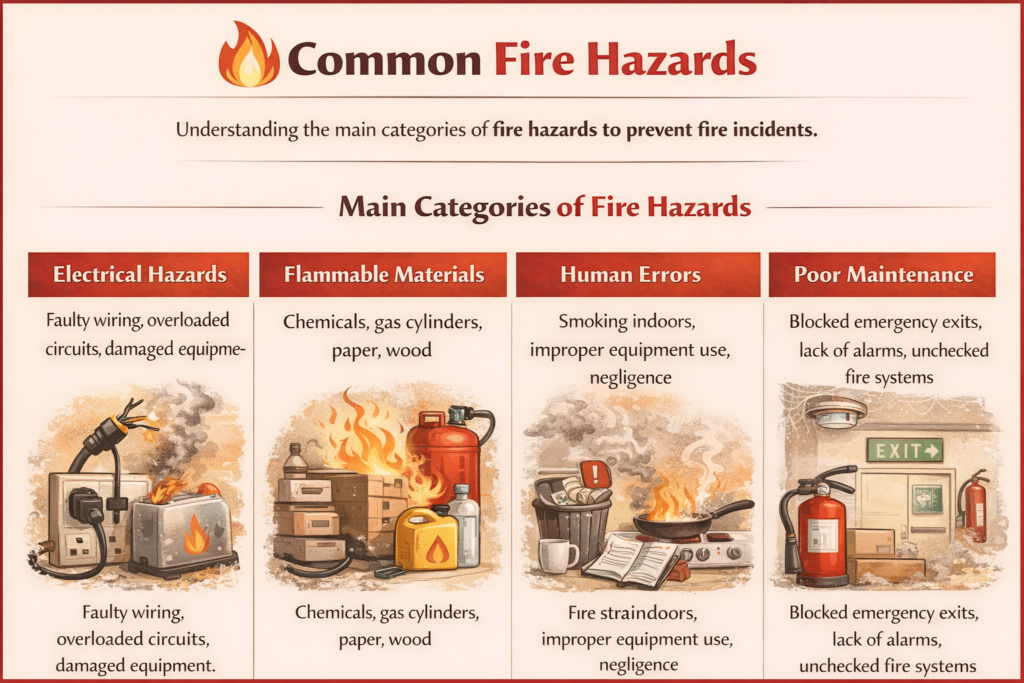
Understanding fire hazards is the first and most important step in preventing fire incidents. A fire hazard is anything that has the potential to start a fire, fuel it, or make it spread quickly. Many fire hazards are often overlooked in daily life, but even a small issue can lead to a major disaster if not addressed on time.
By identifying and controlling these hazards, individuals and organizations can significantly reduce the risk of fire and create a safer environment.
Main Categories of Fire Hazards
| Hazard Category | Description | Common Examples | Prevention Tips |
|---|---|---|---|
| Electrical Hazards | Fire risks caused by faulty or overloaded electrical systems | Faulty wiring, overloaded sockets, damaged equipment | Inspect wiring regularly, avoid overloading, replace damaged devices |
| Flammable Materials | Substances that easily catch fire and fuel its spread | Chemicals, gas cylinders, paper, wood | Store safely, keep away from heat, ensure ventilation |
| Human Errors | Fires caused by unsafe human behavior or negligence | Smoking indoors, improper equipment use, unattended cooking | Follow safety rules, increase awareness, provide training |
| Poor Maintenance | Risks due to lack of inspection or faulty safety systems | Blocked exits, broken alarms, unchecked extinguishers | Conduct inspections, maintain equipment, keep exits clear |
Fire hazards can generally be grouped into four major categories. Each category represents common risks found in homes, offices, and industrial settings.
1. Electrical Hazards
Electrical issues are one of the leading causes of fires worldwide. Since electricity is used in almost every environment, even minor faults can result in dangerous situations.
Common Electrical Hazards:
- Faulty Wiring
Old, damaged, or poorly installed wiring can spark and ignite nearby materials. Wires with exposed insulation are especially dangerous. - Overloaded Circuits
Plugging too many devices into a single socket can cause overheating, increasing the risk of fire. - Damaged Equipment
Broken appliances, loose connections, or malfunctioning devices can produce sparks or excessive heat.
Why Electrical Hazards Are Dangerous:
Electric fires often start silently behind walls or inside equipment, making them difficult to detect early.
Prevention Tips:
- Regularly inspect wiring and electrical systems
- Avoid overloading sockets
- Replace damaged equipment immediately
- Use certified and high-quality electrical devices
2. Flammable Materials
Flammable materials are substances that can easily catch fire and burn rapidly. When these materials are stored or handled improperly, they significantly increase fire risks.
Common Flammable Materials:
- Chemicals
Industrial chemicals, cleaning agents, and fuels can ignite if exposed to heat or sparks. - Gas Cylinders
Leaks from gas cylinders can create highly explosive environments. - Paper and Wood
Everyday materials like paper, cardboard, and wood can fuel a fire and help it spread quickly.
Why They Are Dangerous:
These materials act as fuel for fire, allowing it to grow rapidly and become harder to control.
Prevention Tips:
- Store flammable substances in designated safe areas
- Keep them away from heat sources
- Ensure proper ventilation
- Follow safety guidelines for handling hazardous materials
3. Human Errors
Human negligence is one of the most common causes of fire incidents. Simple mistakes or careless behavior can easily trigger dangerous situations.
Common Human Errors:
- Smoking Indoors
Cigarettes that are not properly extinguished can ignite furniture, carpets, or paper. - Improper Use of Equipment
Misusing electrical or heating equipment can lead to overheating or sparks. - Negligence
Leaving cooking unattended, ignoring safety procedures, or failing to report hazards can result in fire outbreaks.
Why Human Errors Are Critical:
Even with advanced systems in place, unsafe human behavior can override all safety measures.
Prevention Tips:
- Follow safety guidelines strictly
- Avoid careless handling of fire sources
- Ensure proper training and awareness
- Always stay alert and responsible
4. Poor Maintenance
Lack of maintenance is a hidden but serious fire hazard. Many fire incidents occur because safety systems are not properly maintained or inspected.
Common Maintenance Issues:
- Blocked Emergency Exits
Obstructed exits can prevent safe evacuation during a fire emergency. - Lack of Fire Alarms
Without early warning systems, fires can spread before anyone notices. - Unchecked Fire Systems
Fire extinguishers, sprinklers, and alarms that are not regularly tested may fail during emergencies.
Why Maintenance Matters:
Even the best fire safety systems are useless if they are not functioning properly when needed.
Prevention Tips:
- Conduct regular inspections and maintenance
- Keep emergency exits clear at all times
- Test fire alarms and extinguishers periodically
- Replace or repair faulty safety equipment
How Fire Hazards Lead to Fire Incidents
Most fire incidents occur when three elements come together:
- Heat (e.g., electrical sparks)
- Fuel (e.g., flammable materials)
- Oxygen
This combination is known as the Fire Triangle. Removing any one of these elements can prevent a fire.
Fire hazards are present in almost every environment, but they can be controlled with awareness and proper action.
By:
- Identifying hazards early
- Taking preventive measures
- Maintaining safety systems
- Promoting responsible behavior
You can significantly reduce the risk of fire and create a safer environment for everyone.
Fire Prevention Methods
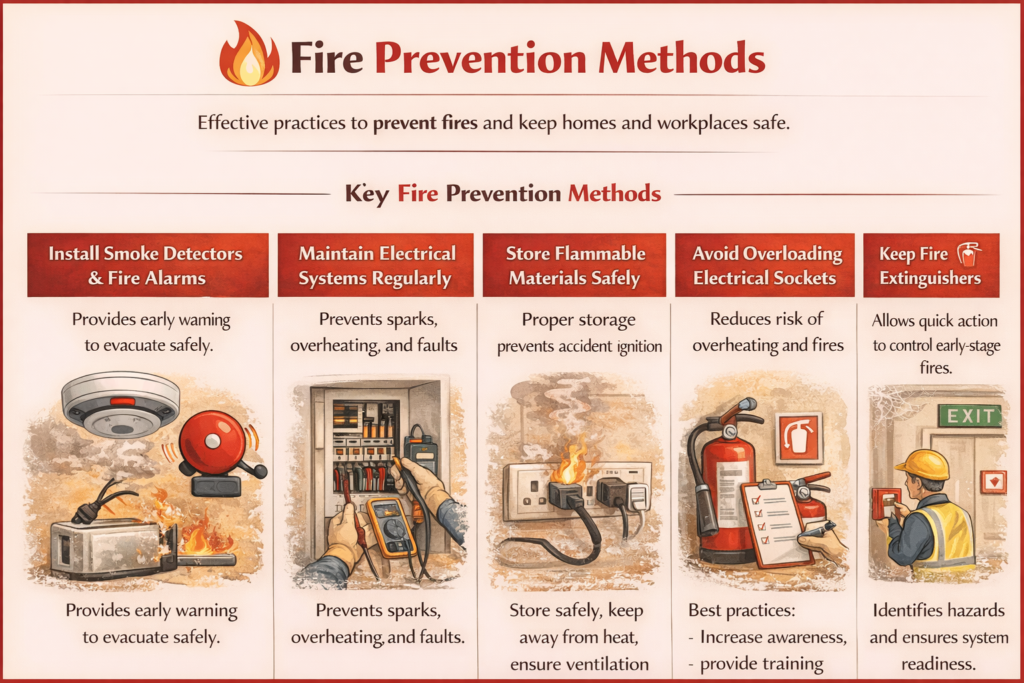
Preventing a fire is always far more effective—and far less costly—than dealing with its consequences. Once a fire starts, it can spread rapidly within seconds, putting lives, property, and business operations at serious risk. That’s why fire prevention is considered the first and most important line of defense in any fire safety strategy.You can also read our detailed blueprint on fire safety blueprint building a safer environment through prevention preparedness.
Fire prevention involves identifying potential risks, eliminating hazards, and adopting safe practices to stop fires before they occur. Whether in homes, offices, or industrial settings, proactive prevention measures can significantly reduce the likelihood of fire incidents.To learn more strategies, read our in-depth article on fire safety essentials prevention protection and preparedness.
Why Fire Prevention is Important
- Reduces the chances of fire outbreaks
- Protects lives and valuable assets
- Minimizes damage and financial loss
- Ensures compliance with safety regulations
- Promotes a culture of safety and responsibility
Simple idea:
Stopping a fire before it starts is always safer, easier, and more cost-effective than controlling it later.
Key Fire Prevention Methods
| Prevention Method | Description | Common Risks Prevented | Best Practices |
|---|---|---|---|
| Install Smoke Detectors & Fire Alarms | Devices that detect smoke or fire and provide early warning | Delayed response, unnoticed fire spread | Install in key areas, test regularly, replace batteries |
| Maintain Electrical Systems | Regular inspection and maintenance of wiring and equipment | Short circuits, overheating, electrical fires | Fix damaged wires, avoid faulty devices, hire professionals |
| Store Flammable Materials Safely | Proper handling and storage of combustible substances | Fire ignition, rapid fire spread | Keep away from heat, use proper containers, ensure ventilation |
| Avoid Overloading Electrical Sockets | Managing electrical load to prevent overheating | Socket overheating, electrical sparks | Use surge protectors, avoid excessive extensions |
| Keep Fire Extinguishers Accessible | Availability of extinguishers for immediate fire control | Small fires turning into major incidents | Place visibly, inspect regularly, train users |
| Conduct Regular Inspections | Routine checks of safety systems and environment | Undetected hazards, system failure | Inspect alarms, exits, wiring, and equipment regularly |
Below are the most effective and widely recommended fire prevention practices. Each method plays a critical role in maintaining a safe environment.
1. Install Smoke Detectors and Fire Alarms
Smoke detectors are one of the most essential fire safety devices. They provide early warning when smoke or fire is detected.
How they help:
- Alert occupants immediately
- Provide time to evacuate safely
- Reduce the risk of injury or death
Best Practices:
- Install detectors in key areas (rooms, hallways, workplaces)
- Test them regularly
- Replace batteries when needed
Why it matters:
Early detection can prevent a small fire from becoming a major disaster.
2. Maintain Electrical Systems Regularly
Electrical faults are a major cause of fires, making regular maintenance essential.
What to check:
- Wiring condition
- Electrical panels
- Appliances and equipment
Preventive Actions:
- Fix damaged or exposed wires immediately
- Avoid using faulty equipment
- Hire qualified professionals for inspections
Why it matters:
Well-maintained electrical systems reduce the risk of sparks, overheating, and short circuits.
3. Store Flammable Materials Safely
Improper storage of flammable substances can significantly increase fire risks.
Examples of flammable materials:
- Chemicals
- Fuel and gas
- Paper and packaging
Safe Storage Tips:
- Keep materials away from heat sources
- Store in properly labeled containers
- Use ventilated and designated storage areas
Why it matters:
Proper storage prevents accidental ignition and limits fire spread.
4. Avoid Overloading Electrical Sockets
Overloading sockets can cause overheating, leading to fire hazards.
Common mistakes:
- Plugging multiple devices into one outlet
- Using low-quality extension cords
Prevention Tips:
- Use power strips with surge protection
- Distribute electrical load evenly
- Avoid excessive use of extensions
Why it matters:
Reducing electrical load prevents overheating and potential fire outbreaks.
5. Keep Fire Extinguishers Accessible and Ready
Fire extinguishers are essential for controlling small fires before they escalate.
Key points:
- Place extinguishers in visible and accessible locations
- Ensure they are suitable for different fire types
- Train people on how to use them properly
Regular Maintenance:
- Check pressure levels
- Inspect for damage
- Replace or service when required
Why it matters:
Quick access to fire extinguishers can stop a fire in its early stage.
6. Conduct Regular Inspections and Safety Checks
Routine inspections help identify potential risks before they turn into serious problems.
What to inspect:
- Electrical systems
- Fire alarms and detectors
- Fire extinguishers
- Emergency exits
Benefits:
- Early hazard detection
- Improved safety compliance
- Reduced risk of unexpected incidents
Why it matters:
Regular checks ensure that all safety systems are functioning properly at all times.
Additional Fire Prevention Best Practices
To further enhance safety, consider these additional measures:
- Train employees and occupants on fire safety awareness
- Keep emergency exits clear and accessible
- Avoid leaving cooking or machinery unattended
- Implement strict no-smoking policies in restricted areas
- Maintain proper housekeeping to reduce fire load
Real-Life Insight
A workplace that regularly inspects its electrical systems and maintains fire safety equipment is far less likely to experience a major fire incident compared to one that ignores routine checks. Prevention measures may seem simple, but they play a crucial role in avoiding serious consequences.
Fire prevention is a proactive approach that focuses on:
- Identifying risks
- Eliminating hazards
- Maintaining safety systems
- Promoting responsible behavior
By implementing these fire prevention methods, individuals and organizations can significantly reduce fire risks and ensure a safer environment for everyone.
Fire Safety Checklist
A fire safety checklist is a simple yet powerful tool used to ensure that all essential fire prevention and protection measures are in place. It helps individuals, workplaces, and organizations identify gaps, maintain compliance, and reduce fire risks effectively.
Instead of relying on assumptions, a checklist provides a structured approach to verify that every safety requirement is properly implemented and maintained.
Why this matters:
Many fire incidents occur not because safety measures don’t exist—but because they are not checked, maintained, or followed properly.
Why Use a Fire Safety Checklist?
Using a fire safety checklist helps to:
- Ensure all safety systems are functioning properly
- Identify hazards before they become dangerous
- Maintain compliance with fire safety regulations
- Improve workplace and home safety
- Create a culture of responsibility and awareness
Simple understanding:
A checklist acts like a safety reminder system that keeps everything under control.
Complete Fire Safety Checklist
Below is a comprehensive checklist with clear explanations of each point to help you understand what to check and why it matters.
1. Fire Alarms Installed and Working
Fire alarms are the first line of defense in detecting fire.
What to check:
- Are fire alarms installed in key areas?
- Are they functioning properly?
- Are batteries replaced regularly?
Why it is important:
Fire alarms provide early warning, giving people enough time to evacuate safely and respond quickly.
Without alarms, fires can spread unnoticed until it is too late.
2. Emergency Exits Clearly Marked
Emergency exits are crucial for safe evacuation during a fire.
What to check:
- Are exits clearly visible and labeled?
- Are exit signs illuminated?
- Are routes easy to follow?
Why it is important:
In an emergency, panic can cause confusion. Clearly marked exits help people leave quickly and safely without delay.
3. Fire Extinguishers Available and Inspected
Fire extinguishers are essential for controlling small fires before they spread.
What to check:
- Are extinguishers placed in accessible locations?
- Are they suitable for different fire types?
- Are they regularly inspected and maintained?
Why it is important:
A properly functioning extinguisher can stop a fire in its early stage, preventing major damage.
4. Staff Trained in Fire Safety
People play a key role in fire safety. Without proper training, even the best systems may fail.
What to check:
- Are employees trained in fire safety procedures?
- Do they know how to use fire extinguishers?
- Are fire drills conducted regularly?
Why it is important:
Training ensures that individuals respond quickly, calmly, and effectively during emergencies.
5. Evacuation Plan Clearly Displayed
An evacuation plan provides a clear guide on what to do during a fire.
What to check:
- Is the evacuation plan visible to everyone?
- Does it include exit routes and assembly points?
- Is it updated regularly?
Why it is important:
A well-defined plan reduces confusion and ensures organized and safe evacuation.
6. Electrical Systems Checked Regularly
Electrical faults are a major cause of fires, making regular inspection essential.
What to check:
- Are wires in good condition?
- Are circuits overloaded?
- Are appliances functioning properly?
Why it is important:
Regular checks help prevent short circuits, overheating, and sparks, which can lead to fire incidents.
7. No Blocked Escape Routes
Escape routes must always remain clear and accessible.
What to check:
- Are hallways and exits free from obstacles?
- Are doors easy to open?
- Is there any storage blocking pathways?
Why it is important:
Blocked escape routes can trap people during emergencies, increasing the risk of injuries or fatalities.
Additional Checklist Items
To make your checklist even more effective, include these additional checks:
- Smoke detectors tested regularly
- Fire sprinkler systems functional
- Flammable materials stored safely
- Emergency lighting working properly
- Fire doors in good condition
- Safety signs clearly displayed
These extra points give your blog a competitive SEO advantage over others.
Real-Life Insight
Many workplaces have fire extinguishers and alarms installed—but during emergencies, they fail because they were not inspected or maintained. A simple checklist could have identified these issues in advance and prevented serious consequences.
A fire safety checklist is not just a formality—it is a life-saving tool that ensures:
- Safety systems are working
- Hazards are identified early
- People are prepared
- Risks are minimized
By consistently using a checklist, you can create a safe, compliant, and well-prepared environment.
Types of Fire Hazards
Fire hazards are situations, materials, or conditions that can cause a fire to start or spread quickly. Understanding different types of fire hazards is essential for preventing accidents and ensuring safety in homes, workplaces, and industrial environments.
Below are the most common types of fire hazards explained in detail:
1. Electrical Fire Hazards
Electrical hazards are one of the leading causes of fires, especially in workplaces and buildings with heavy equipment.
Common Causes:
- Faulty wiring or damaged cables
- Overloaded electrical circuits
- Loose electrical connections
- Use of low-quality electrical devices
Explanation:
When electrical systems are not properly maintained, they can generate heat or sparks. These sparks can ignite nearby materials such as wood, paper, or fabric, leading to a fire.
Prevention:
- Regular inspection of electrical systems
- Avoid overloading sockets
- Use certified and high-quality equipment
- Repair damaged wires immediately
2. Flammable Materials Hazards
Flammable materials can easily catch fire when exposed to heat, sparks, or flames.
Examples:
- Petrol, diesel, and other fuels
- Chemicals and gases
- Paper, cardboard, and fabrics
Explanation:
These materials require very little heat to ignite. If they are stored improperly or near ignition sources, they can quickly start a fire and make it spread faster.
Prevention:
- Store flammable materials in safe, labeled containers
- Keep them away from heat sources
- Ensure proper ventilation
3. Cooking and Heating Hazards
Cooking equipment and heating systems are common fire hazards, especially in kitchens and industrial areas.
Common Causes:
- Unattended cooking
- Overheated oil or grease
- Faulty heating equipment
Explanation:
Leaving cooking unattended or overheating oil can cause it to ignite. Similarly, heaters placed too close to flammable materials can start fires.
Prevention:
- Never leave cooking unattended
- Keep flammable items away from heat
- Maintain heating equipment regularly
4. Human Error and Negligence
Human behavior plays a major role in many fire incidents.
Examples:
- Smoking in restricted areas
- Improper use of electrical equipment
- Ignoring safety procedures
Explanation:
Careless actions, lack of awareness, or failure to follow safety rules can easily lead to fire hazards.
Prevention:
- Provide fire safety training
- Enforce safety rules
- Promote awareness among employees
5. Poor Housekeeping
Poor housekeeping increases the risk of fire by allowing hazardous materials to accumulate.
Examples:
- Cluttered workspaces
- Accumulation of waste materials
- Blocked emergency exits
Explanation:
Dust, waste, and clutter can act as fuel for fires. They also make it harder to control fires and evacuate safely.
Prevention:
- Keep work areas clean and organized
- Dispose of waste regularly
- Ensure clear access to exits
6. Chemical Fire Hazards
Chemicals can be highly dangerous and may react with each other, causing fires or explosions.
Examples:
- Industrial chemicals
- Cleaning agents
- Reactive substances
Explanation:
Some chemicals can ignite when mixed or exposed to air, heat, or water. Improper handling increases the risk significantly.
Prevention:
- Store chemicals properly
- Follow safety guidelines
- Use protective equipment
7. Mechanical and Equipment Hazards
Machines and equipment can also create fire risks due to friction, overheating, or malfunction.
Examples:
- Overheated machinery
- Lack of maintenance
- Oil leaks in machines
Explanation:
When machines overheat or are not maintained properly, they can produce sparks or excessive heat, leading to fire.
Prevention:
- Regular maintenance of equipment
- Monitor machine temperature
- Fix faults immediately
Understanding the different types of fire hazards helps in early identification and prevention of fire risks. By recognizing these hazards and taking proper precautions, individuals and organizations can create a safer environment and protect lives and property.
Fire Risk Assessment (Step-by-Step Guide)
A fire risk assessment is a systematic and structured process used to identify fire hazards, evaluate risks, and implement appropriate safety measures to prevent fire incidents. It is not only a best practice but also a legal requirement in many workplaces and industries to ensure the safety of employees, visitors, and property.
The purpose of a fire risk assessment is simple:
To identify potential dangers before they turn into real emergencies.
By following a clear step-by-step approach, organizations and individuals can effectively reduce fire risks and create a safer environment.
Why Fire Risk Assessment is Important
- Helps identify hidden fire hazards
- Reduces the chances of fire incidents
- Protects people and property
- Ensures compliance with safety laws
- Improves emergency preparedness
Simple understanding:
A fire risk assessment is like a safety check-up that helps you find and fix problems before they cause harm.
Step-by-Step Fire Risk Assessment Process
To conduct an effective fire risk assessment, follow these five essential steps:
Step 1: Identify Fire Hazards
The first step is to identify anything that could start a fire or contribute to its spread.
Key Hazard Types:
Sources of Ignition
These are elements that can produce heat or sparks:
- Electrical equipment
- Open flames
- Heating systems
- Machinery
Flammable Materials (Fuel)
These materials can easily catch fire:
- Chemicals
- Paper and wood
- Fuel and gas
- Fabrics and packaging
Why this step is important:
If hazards are not identified early, they can remain unnoticed and lead to serious fire incidents.
Goal:
Recognize all possible sources of fire in the environment.
Step 2: Identify People at Risk
After identifying hazards, the next step is to determine who could be affected if a fire occurs.
People at Risk Include:
- Employees working on-site
- Visitors or customers
- Contractors
- Vulnerable individuals (elderly, disabled, children)
What to consider:
- Are people familiar with the building layout?
- Do they know evacuation procedures?
- Do they need special assistance?
Why this step is important:
Different individuals may require different levels of support during an emergency.
Goal:
Ensure that everyone can evacuate safely and quickly.
Step 3: Evaluate Risks and Take Action
This step involves analyzing how likely a fire is to occur and how severe its impact could be.
Two Key Factors:
Likelihood of Fire
- How probable is a fire incident?
- Are hazards controlled or unmanaged?
Potential Impact
- How severe would the damage be?
- Could it result in injuries, fatalities, or major losses?
Risk Evaluation:
Based on the above factors, risks are categorized as:
- Low risk
- Medium risk
- High risk
Taking Action:
Once risks are evaluated, appropriate measures should be implemented:
- Remove or reduce hazards
- Install fire safety systems
- Improve safety procedures
Goal:
Minimize risks to an acceptable and safe level.
Step 4: Record Findings and Implement Measures
After completing the assessment, it is important to document all findings and actions taken.
What should be recorded:
- Identified hazards
- People at risk
- Risk evaluation results
- Safety measures implemented
Why documentation matters:
- Provides a clear safety record
- Helps in future inspections
- Ensures accountability
Goal:
Keep a written record that shows how risks are managed and controlled.
Step 5: Review and Update Regularly
A fire risk assessment is not a one-time activity—it must be reviewed and updated regularly.
When should it be reviewed?
- After changes in the workplace
- When new equipment is installed
- After an incident or near-miss
- Periodically (e.g., annually)
Why this step is important:
New hazards can arise over time, and existing risks may change.
Goal:
Ensure that fire safety measures remain effective and up-to-date.
Additional Best Practices
To make your fire risk assessment more effective:
- Conduct assessments by trained professionals
- Involve employees in safety discussions
- Use checklists and digital tools
- Combine with regular fire drills
- Ensure compliance with local safety regulations
You can explore a more detailed breakdown in our guide on what is a fire risk assessment and also check our advanced resource on fire safety risk assessment complete guide to hazards prevention control measures.
Real-Life Example
Imagine a factory storing flammable chemicals near electrical equipment. Without a proper risk assessment, this setup could easily lead to a fire.For practical insights, check our guide on fire safety and risk assessment a practical guide to prevention and safer environments.
However, after conducting a fire risk assessment:
- Hazards are identified
- Materials are relocated
- Fire safety systems are installed
As a result, the risk is significantly reduced, and the workplace becomes safer.
A fire risk assessment is a proactive safety tool that helps:
- Identify hazards
- Protect people
- Reduce risks
- Improve preparedness
By following this structured step-by-step approach, individuals and organizations can prevent fire incidents and ensure a safe environment for everyone.pproach is highly valued by Google and safety standards
Fire Safety Best Practices
Fire safety best practices are the key actions and precautions that help prevent fires and protect people, property, and workplaces. By following these practices, organizations can reduce risks, improve safety awareness, and ensure a quick response in case of emergencies.
Below are the most important fire safety best practices explained in detail:
1. Provide Fire Safety Training to Employees
What it means:
Fire safety training involves educating employees about how to prevent fires, identify hazards, and respond during emergencies.
Why it is important:
Many fire incidents happen due to a lack of knowledge. When employees are properly trained, they can act quickly and safely, reducing the chances of injury and damage.
What should be included in training:
- How to use fire extinguishers
- Understanding fire alarms and warning systems
- Emergency evacuation procedures
- Identifying fire hazards in the workplace
Best practice:
Training should be conducted regularly, especially for new employees or when there are changes in the workplace.
2. Install and Maintain Fire Alarms
What it means:
Fire alarms are devices that detect smoke or fire and alert people immediately.
Why it is important:
Early warning systems are critical because they give people enough time to evacuate safely and reduce the spread of fire.
Key points:
- Install fire alarms in all important areas
- Ensure alarms are clearly audible
- Connect alarms to emergency response systems if possible
Best practice:
Fire alarms should be tested regularly and maintained to ensure they are always working properly.
3. Keep Emergency Exits Clear
What it means:
Emergency exits are designated pathways that allow people to leave a building quickly and safely during a fire.
Why it is important:
Blocked or unclear exits can cause panic, delay evacuation, and increase the risk of injuries or fatalities.
Common issues:
- Storing items in exit pathways
- Locked or inaccessible doors
- Poor signage
Best practice:
- Always keep exit routes free from obstacles
- Clearly mark exits with visible signs
- Ensure doors open easily in emergencies
4. Store Flammable Materials Safely
What it means:
Flammable materials are substances that can easily catch fire, such as fuels, chemicals, paper, and certain gases.
Why it is important:
Improper storage of these materials increases the risk of fire and can make fires spread more quickly.
Safe storage guidelines:
- Use proper containers and labeling
- Keep materials away from heat sources
- Store in well-ventilated areas
Best practice:
Follow all safety regulations and ensure that employees handling these materials are properly trained.
5. Regularly Check Electrical Systems
What it means:
Electrical systems include wiring, equipment, and devices that can become fire hazards if not properly maintained.
Why it is important:
Faulty electrical systems are one of the most common causes of fires.
Common risks:
- Damaged wires
- Overloaded circuits
- Old or faulty equipment
Best practice:
- Conduct regular inspections
- Avoid overloading power outlets
- Replace or repair damaged equipment immediately
Following these fire safety best practices helps create a safe and secure environment in any workplace or building. Regular training, proper maintenance, and awareness of potential risks play a vital role in preventing fires and ensuring quick and effective emergency response.
Common Fire Safety Mistakes to Avoid
Fire safety is not only about taking the right actions—it is also about avoiding common mistakes that can increase the risk of fire incidents. Many accidents happen because of simple negligence or lack of awareness. By understanding these mistakes, individuals and organizations can take better precautions and create a safer environment.
Below are some of the most common fire safety mistakes explained in detail:
1. Not Doing Regular Fire Risk Assessments
What it means:
A fire risk assessment is the process of identifying fire hazards, evaluating risks, and taking steps to reduce them.
Why it is a mistake:
Many workplaces either skip this process or do it only once. However, risks can change over time due to new equipment, layout changes, or increased workload.
Problems caused:
- Hidden fire hazards remain unnoticed
- Increased chances of fire incidents
- Lack of proper safety planning
Best practice:
Fire risk assessments should be conducted regularly and updated whenever changes occur in the workplace.
2. Blocking Emergency Exits
What it means:
Emergency exits are pathways used for quick and safe evacuation during a fire.
Why it is a mistake:
Blocking these exits with furniture, equipment, or storage items can delay evacuation and create panic during emergencies.
Problems caused:
- Slower evacuation
- Increased risk of injury or fatalities
- Confusion during emergencies
Best practice:
- Always keep exit routes clear
- Clearly mark exits with proper signage
- Ensure doors are easily accessible and not locked
3. Not Training Employees
What it means:
Employees are not given proper knowledge about fire safety procedures and emergency response.
Why it is a mistake:
Untrained employees may panic or make wrong decisions during a fire, which can worsen the situation.
Problems caused:
- Improper use of fire extinguishers
- Delayed response to fire alarms
- Unsafe evacuation
Best practice:
Provide regular fire safety training so employees know how to prevent fires and respond effectively.
4. Not Maintaining Fire Equipment
What it means:
Fire safety equipment such as fire extinguishers, alarms, and sprinkler systems are not regularly checked or serviced.
Why it is a mistake:
Even if equipment is installed, it may fail during an emergency if it is not properly maintained.
Problems caused:
- Fire extinguishers may not work
- Alarms may fail to alert people
- Increased damage due to delayed response
Best practice:
- Inspect fire equipment regularly
- Service and replace faulty items
- Keep maintenance records
5. Overloading Electrical Circuits
What it means:
Using too many devices on a single electrical outlet or circuit.
Why it is a mistake:
Overloading can cause overheating, sparks, or short circuits, which can easily start a fire.
Problems caused:
- Electrical fires
- Damage to equipment
- Risk of power failure
Best practice:
- Avoid plugging too many devices into one outlet
- Use proper wiring and circuit breakers
- Regularly check electrical systems
Avoiding these common fire safety mistakes is just as important as following safety practices. Regular assessments, proper training, equipment maintenance, and awareness can significantly reduce fire risks. By taking these precautions seriously, organizations can ensure a safer workplace and protect lives and property.
Workplace Fire Safety
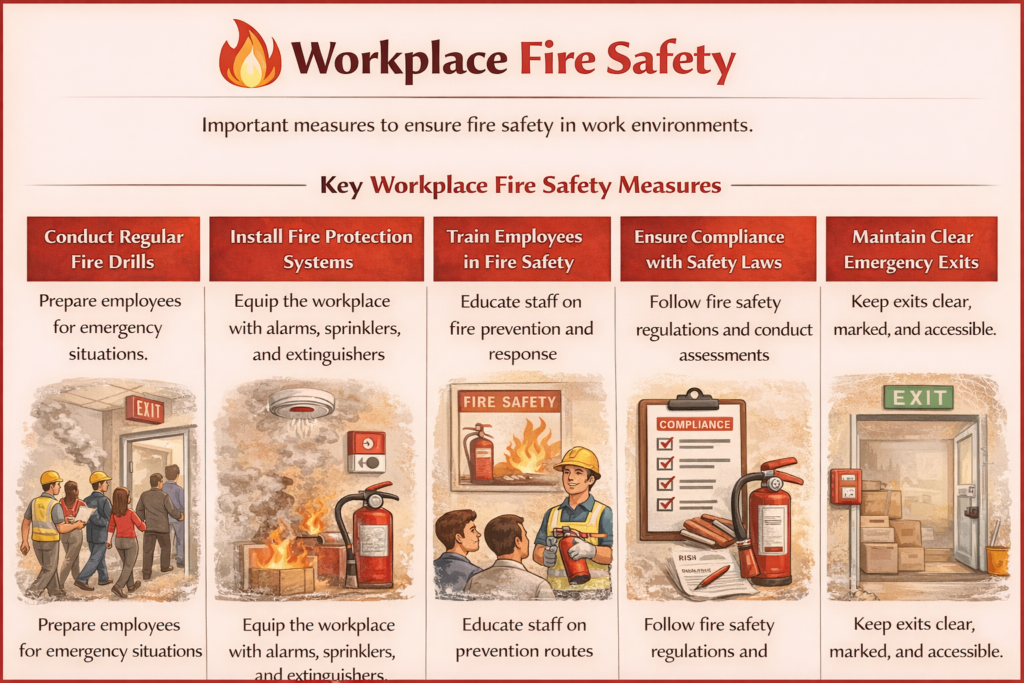
Workplaces can become high-risk environments if fire safety is not properly managed. Offices, factories, warehouses, and construction sites often involve electrical systems, machinery, flammable materials, and human activity—all of which can increase the likelihood of fire incidents.
Without proper planning and safety measures, even a small mistake can lead to a serious fire, causing injuries, property damage, and business disruption. That’s why workplace fire safety is essential for ensuring a secure, compliant, and productive environment.If you are planning a career in this field, check our guide on how to become a fire safety officer.
Why Workplace Fire Safety is Important
- Protects employees and visitors
- Prevents workplace accidents
- Reduces operational downtime
- Ensures compliance with safety regulations
- Protects company assets and reputation
Simple understanding:
A safe workplace is not just good practice—it is a legal and moral responsibility.
Key Workplace Fire Safety Measures
| Safety Measure | Description | Risks Without It | Key Benefits |
|---|---|---|---|
| Conduct Regular Fire Drills | Practice emergency scenarios to prepare employees for real fire situations | Panic, confusion, delayed evacuation | Improves response time and builds confidence |
| Install Fire Protection Systems | Use alarms, sprinklers, and extinguishers to detect and control fires | Late detection, rapid fire spread | Provides early warning and reduces damage |
| Train Employees in Fire Safety | Educate staff on fire prevention, response, and equipment use | Poor response, unsafe actions | Enhances awareness and quick decision-making |
| Ensure Compliance with Safety Laws | Follow legal fire safety standards and regulations | Fines, legal issues, unsafe workplace | Protects business and ensures safety compliance |
| Maintain Clear Emergency Exits | Keep exits accessible and clearly marked for evacuation | Blocked escape routes, injuries | Enables safe and quick evacuation |
To effectively manage fire risks, workplaces must implement the following essential safety measures:
1. Conduct Regular Fire Drills
Fire drills are practice exercises that prepare employees for real emergency situations.
What fire drills involve:
- Simulated fire scenarios
- Practicing evacuation routes
- Testing response times
Why they are important:
- Help employees understand what to do during a fire
- Reduce panic and confusion
- Improve coordination and response speed
Key benefit:
Employees become confident and prepared, which can save lives during real emergencies.
2. Install Fire Protection Systems
Fire protection systems are designed to detect, control, and suppress fires.
Common fire protection systems:
- Fire alarms and smoke detectors
- Sprinkler systems
- Fire extinguishers
- Fire suppression systems
Why they are important:
- Provide early warning
- Control fire spread
- Reduce damage
Key benefit:
These systems act as a first response mechanism, helping to manage fires before they escalate.
3. Train Employees in Fire Safety
Employees are the first responders in any workplace emergency. Without proper training, even advanced systems may not be effective.
Training should cover:
- Fire prevention practices
- Emergency response actions
- Equipment handling
Why it is important:
- Builds awareness
- Encourages safe behavior
- Improves response during emergencies
Key benefit:
A trained workforce can identify risks early and respond effectively.
4. Ensure Compliance with Safety Laws
Workplaces must follow fire safety regulations set by authorities.
Compliance includes:
- Conducting fire risk assessments
- Installing required safety equipment
- Maintaining safety records
- Providing employee training
Why it is important:
- Avoids legal penalties
- Ensures a safe working environment
- Builds trust and credibility
Key benefit:
Compliance protects both the organization and its employees.
5. Maintain Clear Emergency Exits
Emergency exits are essential for safe evacuation during a fire.
What to ensure:
- Exits are clearly marked
- Pathways are free from obstacles
- Doors are easy to open
Why it is important:
- Enables quick and safe evacuation
- Prevents crowding and confusion
- Reduces risk of injury
Key benefit:
Clear exits ensure that everyone can leave the building safely and quickly.
Fire Safety Training
Fire safety training is a crucial part of workplace safety. It equips employees with the knowledge, skills, and confidence needed to prevent fires and respond effectively during emergencies.
Training is not just a one-time activity—it should be regular, updated, and practical.
Benefits of Fire Safety Training
Training provides several important advantages:
1. Improves Awareness
Employees become more aware of:
- Fire hazards
- Unsafe practices
- Safety procedures
Impact:
Awareness helps prevent mistakes that could lead to fire incidents.
2. Enhances Emergency Response
Training prepares employees to:
- React quickly
- Follow evacuation procedures
- Use safety equipment
Impact:
Faster and more organized response reduces damage and saves lives.
3. Reduces Fire Risks
When employees understand fire hazards, they are more likely to:
- Follow safety rules
- Report risks
- Avoid unsafe behavior
Impact:
This significantly lowers the chances of fire incidents.
4. Ensures Compliance with Regulations
Many safety laws require employee training.
Impact:
Training helps organizations meet legal requirements and avoid penalties.
What Fire Safety Training Includes
A comprehensive training program should cover the following key areas:
1. Fire Extinguisher Use
Employees should learn:
- Types of fire extinguishers
- When and how to use them
- Safety precautions
Why it matters:
Proper use of extinguishers can control small fires before they spread.
2. Evacuation Procedures
Training should include:
- Evacuation routes
- Assembly points
- Emergency roles
Why it matters:
Clear procedures ensure safe and organized evacuation.
3. Hazard Identification
Employees should be able to:
- Recognize fire hazards
- Report risks
- Take preventive actions
Why it matters:
Early identification prevents accidents before they occur.
Real-Life Insight
In many workplaces, fire safety equipment is available—but employees don’t know how to use it. During emergencies, this lack of knowledge can lead to panic and ineffective response.
However, in workplaces with regular training:
- Employees act quickly
- Fire incidents are controlled early
- Evacuation is smooth and safe
Lesson:
Training transforms employees from passive individuals into active safety contributors.
Workplace fire safety is a combination of:
- Proper planning
- Effective systems
- Trained individuals
By implementing safety measures and investing in training, organizations can create a safe, compliant, and well-prepared workplace environment.
Emergency Fire Procedures
Knowing what to do during a fire emergency can make the difference between life and death. Fires spread quickly, produce toxic smoke, and create panic if people are not prepared. That’s why having clear and well-understood emergency procedures is essential for both homes and workplaces.
Emergency fire procedures are a set of planned actions that help people respond quickly, evacuate safely, and minimize damage during a fire incident.
Why Emergency Procedures Are Important
- Save lives by enabling quick evacuation
- Reduce panic and confusion
- Improve coordination during emergencies
- Minimize injuries and property damage
- Support effective response by emergency services
Simple understanding:
When everyone knows what to do, emergencies become manageable instead of chaotic.
Step-by-Step Emergency Fire Procedures
Below are the key steps that should be followed immediately when a fire is detected:
1. Raise the Alarm Immediately
The first and most important action is to alert everyone in the building.
How to raise the alarm:
- Activate the fire alarm system
- Shout “Fire!” if no alarm is available
- Notify nearby people
Why it is important:
Early warning gives people valuable time to evacuate safely and prevents the fire from going unnoticed.
Key point:
Never delay—every second counts in a fire emergency.
2. Evacuate Immediately and Safely
Once the alarm is raised, everyone should leave the building without delay.
Evacuation guidelines:
- Use the nearest emergency exit
- Do not use elevators
- Stay calm and move quickly
- Assist others if needed
Why it is important:
Staying inside a burning building increases exposure to smoke, heat, and flames.
Key point:
Evacuation should always be the top priority.
3. Use Fire Extinguishers (Only If Safe)
Fire extinguishers can be used to control small fires—but only under safe conditions.
When to use:
- Fire is small and manageable
- You are trained to use the extinguisher
- You have a clear escape route
When NOT to use:
- Fire is spreading rapidly
- Smoke is thick
- You feel unsafe
Key point:
Your safety is more important than trying to control the fire.
4. Call Emergency Services
Contact emergency responders as soon as possible.
What to provide:
- Location of the fire
- Type of fire (if known)
- Any injuries or trapped individuals
Why it is important:
Professional firefighters are trained to handle fire situations effectively.
Key point:
Even if the fire seems small, always inform emergency services.
5. Assemble at a Safe Meeting Point
After evacuation, gather at a designated assembly point.
Why this step matters:
- Helps ensure everyone is safe
- Prevents confusion
- Allows headcount verification
Important rule:
- Do not re-enter the building until authorities declare it safe
Key point:
Assembly points help maintain order and accountability during emergencies.
Common Fire Safety Mistakes
Even with safety systems in place, certain mistakes can significantly increase fire risks or worsen emergency situations. Avoiding these common errors is essential for effective fire safety.
1. Ignoring Minor Hazards
Small issues are often overlooked but can lead to major incidents.
Examples:
- Slightly damaged wires
- Small gas leaks
- Overheating equipment
Why it is dangerous:
Minor hazards can escalate into serious fires if not addressed promptly.
2. Blocking Emergency Exits
Obstructed exits can delay evacuation and trap people during a fire.
Common causes:
- Storing items in hallways
- Locked or jammed doors
Why it is dangerous:
Blocked exits can result in panic, injuries, or fatalities.
3. Not Maintaining Fire Equipment
Fire safety equipment must be regularly checked to ensure it works when needed.
Common issues:
- Expired fire extinguishers
- Faulty alarms
- Non-functional sprinklers
Why it is dangerous:
Equipment failure during an emergency can lead to uncontrolled fire spread.
4. Lack of Training
Untrained individuals may panic or take incorrect actions during a fire.
Common problems:
- Not knowing evacuation routes
- Improper use of fire extinguishers
- Delayed response
Why it is dangerous:
Lack of knowledge increases confusion and reduces the effectiveness of safety measures.
5. Overloading Electrical Systems
Using too many devices on a single outlet can cause overheating.
Common mistakes:
- Excessive use of extension cords
- Poor-quality electrical equipment
Why it is dangerous:
Overloaded systems are a major cause of electrical fires.
Why This Section is Important for Your Blog
Adding emergency procedures and common mistakes:
- Increases user engagement
- Provides practical value
- Improves readability
- Helps rank for featured snippets
- Builds authority and trust
In a fire emergency:
- Act quickly
- Stay calm
- Follow procedures
At the same time, avoiding common mistakes is just as important as following safety rules.
Preparedness + Awareness = Effective Fire Safetyases engagement + ranking
Fire Protection Systems
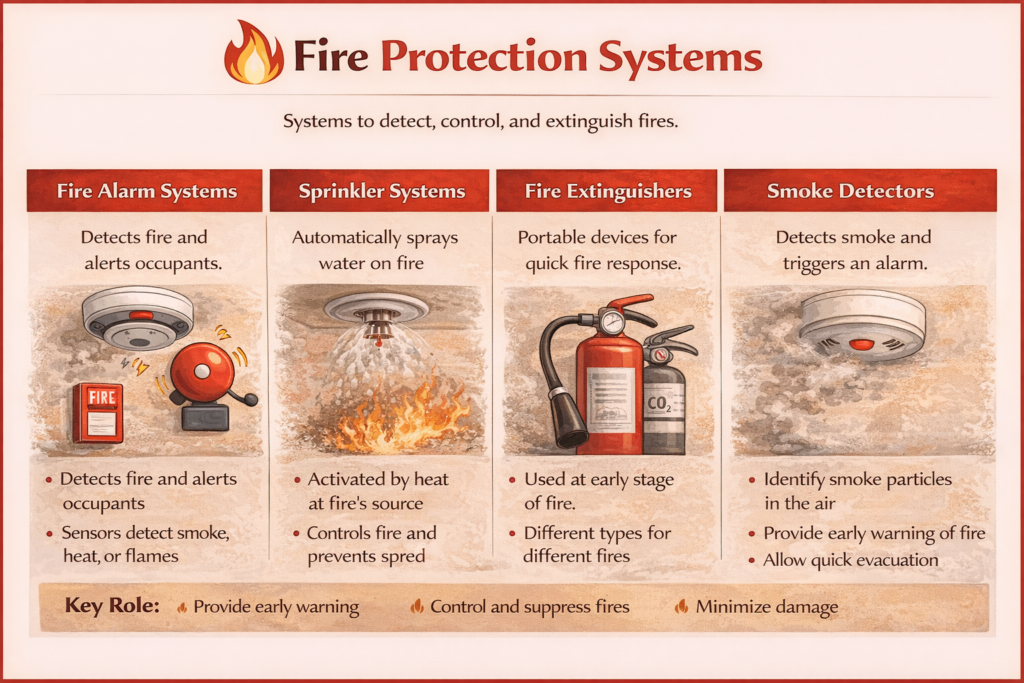
Fire protection systems are essential tools and technologies designed to detect, control, and suppress fires before they cause serious damage. These systems act as a critical line of defense, helping to protect lives, property, and business operations.
Fire protection systems are generally divided into two main categories:
- Detection systems (to identify fire early)
- Suppression systems (to control or extinguish fire)
Simple understanding:
These systems work together to detect fire quickly and stop it from spreading.
Types of Fire Protection Systems
| System Type | Description | How It Works | Key Benefits |
|---|---|---|---|
| Fire Alarm Systems | Systems that detect fire and alert occupants immediately | Detect smoke, heat, or flames and trigger alarms | Provides early warning and enables quick evacuation |
| Sprinkler Systems | Automatic systems that release water to control fire | Activated by heat, spray water directly on fire source | Controls fire early and reduces damage |
| Fire Extinguishers | Portable devices used to extinguish small fires | Manually operated to suppress fire at early stage | Immediate response and prevents fire escalation |
| Smoke Detectors | Devices that detect smoke particles in the air | Sense smoke and activate alarms automatically | Early detection before flames become visible |
1. Fire Alarm Systems
Fire alarm systems are designed to alert people immediately when a fire is detected.
How they work:
- Detect smoke, heat, or flames
- Trigger an audible or visual alarm
- Notify occupants to evacuate
Key Features:
- Manual call points
- Automatic detection sensors
- Alarm sounders and flashing lights
Why they are important:
They provide early warning, allowing people to take action before the fire spreads.
Key benefit:
Quick alerts save lives by giving people time to evacuate.
2. Sprinkler Systems
Sprinkler systems automatically release water when a fire is detected.
How they work:
- Heat from fire activates sprinkler heads
- Water is discharged directly onto the fire
Advantages:
- Controls fire at an early stage
- Reduces fire spread
- Minimizes property damage
Where they are used:
- Offices
- Factories
- Warehouses
- Commercial buildings
Key benefit:
Sprinklers can control or extinguish fires before emergency services arrive.
3. Fire Extinguishers
Fire extinguishers are portable devices used to put out small fires.
Types of extinguishers:
- Water extinguishers
- Foam extinguishers
- CO₂ extinguishers
- Dry powder extinguishers
When to use:
- At the early stage of fire
- When it is safe to do so
Important:
Users must be trained to use extinguishers correctly.
Key benefit:
They provide immediate response to small fires, preventing escalation.
4. Smoke Detectors
Smoke detectors identify smoke particles in the air and trigger an alarm.
How they work:
- Detect smoke at an early stage
- Activate alarms automatically
Why they are important:
- Fires often produce smoke before flames become visible
- Early detection allows faster response
Key benefit:
Smoke detectors help detect fires even before they become visible.
Key Role of Fire Protection Systems
Together, these systems:
- Detect fire early
- Alert occupants
- Control fire spread
- Support safe evacuation
Result:
Reduced damage, improved safety, and faster emergency response.
Legal Compliance & Fire Safety Standards
Fire safety is not just a recommendation—it is a legal requirement in most countries and industries. Organizations must follow specific fire safety regulations to ensure the safety of people and property.
Why Legal Compliance is Important
1. Avoid Penalties and Legal Consequences
Failure to comply with fire safety regulations can result in:
- Fines
- Legal action
- Business shutdown
Key point:
Compliance protects organizations from serious legal and financial consequences.
2. Ensure Employee and Public Safety
Employers have a responsibility to provide a safe environment.
Compliance ensures:
- Proper safety systems are in place
- Risks are minimized
- Emergency procedures are established
Key point:
Safety laws exist to protect lives, not just businesses.
3. Maintain Operational Continuity
A fire incident can disrupt or completely stop business operations.
Compliance helps:
- Prevent fire incidents
- Reduce downtime
- Protect assets and reputation
Key point:
Following safety standards ensures business stability and continuity.
Examples of Compliance Requirements
- Conducting fire risk assessments
- Installing fire protection systems
- Training employees
- Maintaining safety equipment
- Keeping proper safety records
Pro Tips for Fire Safety Excellence
To go beyond basic safety and achieve high-level fire protection, consider the following expert tips:
1. Conduct Regular Fire Safety Audits
Audits help evaluate the effectiveness of existing safety measures.
Benefits:
- Identify hidden risks
- Ensure compliance
- Improve safety performance
Tip:
Schedule audits periodically to maintain high safety standards.
2. Use Modern Fire Detection Systems
Advanced technologies provide faster and more accurate detection.
Examples:
- Smart fire alarms
- Automated monitoring systems
- Integrated safety solutions
Tip:
Investing in modern systems improves early detection and response.
3. Train Staff Frequently
Training should be continuous, not just a one-time activity.
Include:
- Fire drills
- Equipment usage
- Emergency procedures
Tip:
Regular training ensures employees remain prepared and confident.
4. Keep Emergency Plans Updated
Fire safety plans should reflect current conditions.
Update when:
- Layout changes
- New equipment is installed
- New employees join
Tip:
An updated plan ensures effective response during emergencies.
Fire protection systems, legal compliance, and continuous improvement work together to create a strong fire safety framework.
By:
- Installing proper systems
- Following regulations
- Adopting best practices
Organizations can ensure maximum safety, compliance, and long-term protection.
Conclusion
Fire safety is far more than a regulatory obligation—it is a shared responsibility that directly impacts the well-being of individuals, the protection of property, and the continuity of workplaces. Throughout this guide, we have explored the essential elements of fire safety fundamentals, including hazard identification, prevention methods, fire risk assessment, workplace safety practices, and emergency response procedures. Each of these components plays a vital role in creating a safe and prepared environment where risks are minimized and lives are protected.
By taking a proactive approach—such as implementing preventive measures, maintaining fire protection systems, conducting regular inspections, and ensuring proper training—individuals and organizations can significantly reduce the likelihood of fire incidents. Fire safety is not a one-time effort but an ongoing process that requires awareness, consistency, and continuous improvement. Even small actions, like checking electrical systems or keeping emergency exits clear, can make a significant difference in preventing disasters.Learn more about core concepts in our article on fire safety guide key principles for prevention protection and risk control.
Ultimately, investing in fire safety today is an investment in a safer and more secure future. Whether at home, in the workplace, or in public environments, adopting strong fire safety practices helps protect lives, preserve valuable assets, and ensure peace of mind. A well-prepared environment not only reduces risks but also empowers people to respond confidently and effectively in emergencies—making fire safety an essential part of everyday life.For a complete understanding, don’t miss our comprehensive guide onthe ultimate fire safety guide prevention risk assessment and emergency preparedness.
Fire safety is very important for protecting lives and workplaces. By understanding fire hazards, doing proper risk assessment, and following safety practices, risks can be reduced. Regular training and proper planning help create a safe environment. Following these fire safety fundamentals ensures better protection and safety for everyone.