
Fire Safety Explained: Essential Principles to Protect Lives and Property
Fire safety is far more than a regulatory obligation—it is a fundamental safeguard that underpins the protection of human life, valuable assets, and the continuity of businesses. Fires can start unexpectedly and escalate within minutes, often leading to severe injuries, loss of life, operational disruption, and long-term financial damage. In many cases, these incidents are preventable and occur due to overlooked hazards, inadequate safety measures, or a lack of proper planning and awareness.To build a strong foundation, it is important to first understand the basics of fire safety. You can explore a detailed explanation in our guide on what is fire safety:
In today’s fast-evolving environments—ranging from residential homes to modern workplaces and complex industrial settings—the risk of fire is influenced by multiple factors such as electrical systems, flammable materials, and emerging technologies. This makes it essential for individuals and organizations to adopt a proactive approach by understanding fire safety principles, identifying potential hazards, and applying effective prevention strategies.
This guide, “Fire Safety Explained: Essential Principles, Prevention & Risk Assessment Guide,” is designed to provide a complete and practical understanding of fire safety. It covers the core principles that form the foundation of fire protection, highlights modern fire risks that are often overlooked, and explains a step-by-step approach to conducting fire risk assessments. By the end of this guide, you will be equipped with the knowledge and actionable insights needed to create safer environments, minimize fire risks, and respond effectively in case of emergencies.
What is Fire Safety?
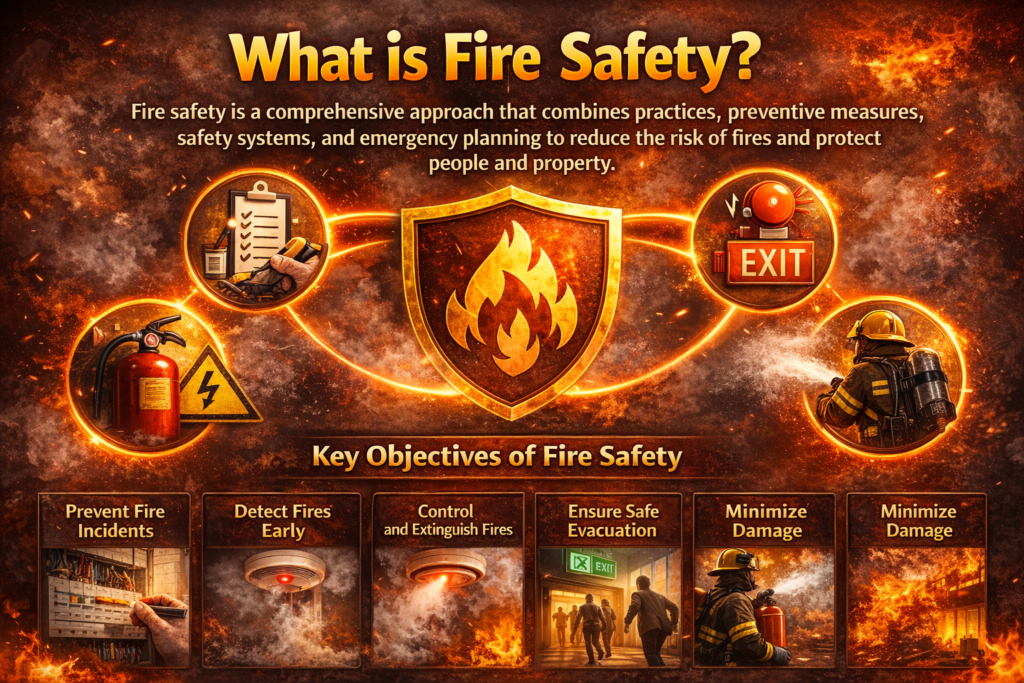
Fire safety is a comprehensive approach that involves a combination of practices, preventive measures, safety systems, and emergency planning aimed at reducing the risk of fire incidents and protecting people, property, and the environment. It is not limited to just installing fire extinguishers or alarms—it is a continuous process that includes awareness, preparation, monitoring, and response.For a more detailed understanding, read our complete article on fire safety fundamentals and concepts.For a more detailed and structured understanding, explore fire safety management strategies for prevention control and emergency response.
In simple terms, fire safety ensures that:
- Fires are prevented before they start
- If a fire occurs, it is detected quickly
- Appropriate measures are in place to control and extinguish it
- People can evacuate safely without panic
- Damage to life and property is minimized as much as possible
Fire safety applies to homes, offices, construction sites, factories, hospitals, and public places, making it a universal responsibility for individuals and organizations alike.
Key Objectives of Fire Safety
| Objective | Description | Purpose |
|---|---|---|
| Prevent Fire Incidents | Identify hazards and eliminate risks before a fire starts | Reduce chances of fire occurrence |
| Detect Fires Early | Use alarms and detection systems to identify fire quickly | Provide early warning and response time |
| Control & Extinguish Fires | Use extinguishers, sprinklers, and suppression systems | Stop fire from spreading |
| Ensure Safe Evacuation | Provide clear exits, plans, and drills | Help people exit safely without panic |
| Minimize Damage | Use fire-resistant materials and quick response actions | Reduce loss of life and property |
To fully understand fire safety, it is important to break it down into its core objectives. Each objective plays a critical role in building a safe and secure environment.
1. Prevent Fire Incidents
The first and most important goal of fire safety is prevention. Stopping a fire before it starts is always better than dealing with its consequences.
How Fire Prevention Works:
Fire prevention involves identifying potential hazards and eliminating or controlling them before they become dangerous.
Common Preventive Measures:
- Regular inspection of electrical wiring and equipment
- Safe storage of flammable and combustible materials
- Avoiding overloaded power sockets
- Maintaining heating systems and machinery
- Following proper workplace safety protocols
Example:
A faulty electrical wire left unchecked can spark and cause a fire. Regular maintenance can prevent this risk entirely.
2. Detect Fires Early
Early detection is critical because it provides valuable time to respond and evacuate.
Why Early Detection Matters:
- Fires spread rapidly within minutes
- Early warning reduces panic
- Increases chances of saving lives and property
Common Fire Detection Systems:
- Smoke detectors
- Heat detectors
- Fire alarm systems
- Automatic detection technologies
Example:
A smoke detector in a building can alert occupants immediately, allowing them to evacuate before the fire becomes uncontrollable.
3. Control and Extinguish Fires
Once a fire starts, the next objective is to control and extinguish it quickly to prevent it from spreading.
Fire Control Methods:
- Using fire extinguishers
- Installing sprinkler systems
- Fire suppression systems
- Fire-resistant building materials
Types of Fire Extinguishers:
- Water (for solid materials)
- Foam (for flammable liquids)
- CO₂ (for electrical fires)
- Dry powder (for multiple fire types)
Example:
A small kitchen fire can be controlled immediately with the right extinguisher, preventing a major disaster.
4. Ensure Safe Evacuation
In case a fire cannot be controlled immediately, safe evacuation becomes the top priority.
Key Elements of Safe Evacuation:
- Clearly marked emergency exits
- Unobstructed escape routes
- Emergency lighting
- Evacuation plans and drills
Best Practices:
- Conduct regular fire drills
- Train employees and residents
- Assign evacuation responsibilities
Example:
In a well-prepared office, employees know exactly where to go during a fire, reducing confusion and saving time.
5. Minimize Damage
Even with all precautions, some fires may still occur. The goal is to limit their impact.
How Damage is Minimized:
- Quick emergency response
- Fire-resistant construction materials
- Insurance and safety compliance
- Proper fire compartmentation
Benefits:
- Reduces financial losses
- Protects critical infrastructure
- Ensures faster recovery after incidents
Example:
A building with fire-resistant walls can prevent fire from spreading to other sections, limiting overall damage.
Why Understanding Fire Safety is Important
Understanding fire safety is essential because it empowers individuals and organizations to:
- Act quickly and correctly in emergencies
- Reduce risks through preventive measures
- Protect lives and valuable assets
- Comply with safety regulations
Fire safety is not just about equipment—it is about awareness, preparedness, and responsibility.
Fire safety is a structured system built on five key objectives:
- Prevention
- Detection
- Control
- Evacuation
- Damage reduction
When all these elements work together, they create a safer environment where risks are minimized and people are protected.
Importance of Fire Safety
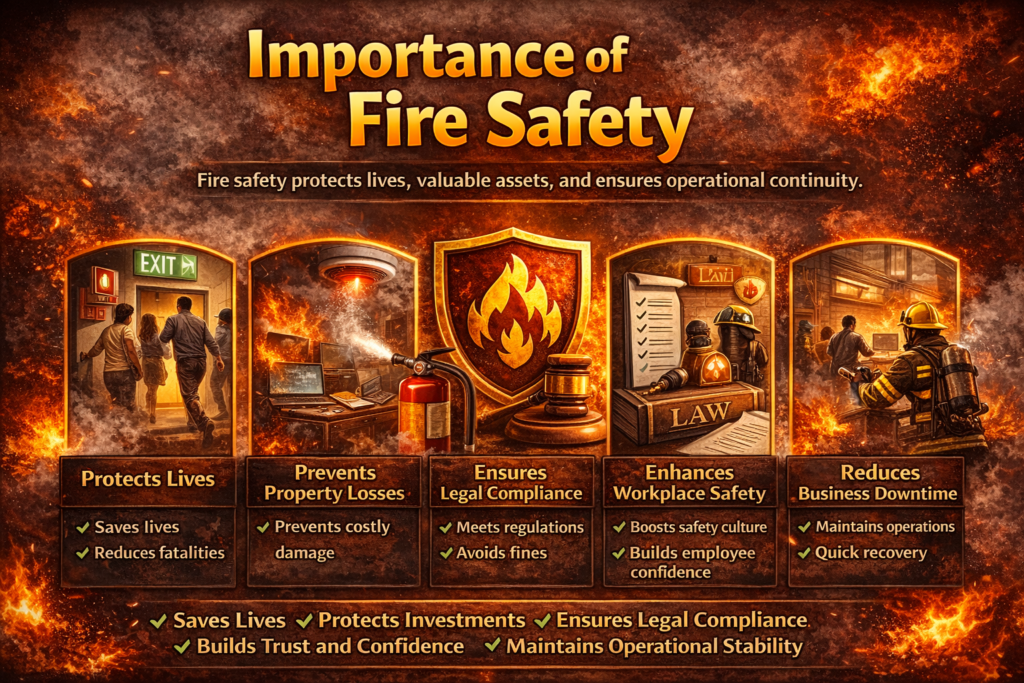
Fire safety is a vital component of everyday life and organizational management. It is not just about following rules or installing equipment—it is about protecting human life, safeguarding valuable assets, and ensuring the smooth continuity of operations. A single fire incident can lead to devastating consequences, including injuries, loss of life, financial setbacks, and long-term disruption to businesses.For a broader perspective, you can also explore how safety plays a role in care environments in our health and social care complete guide:
Understanding the importance of fire safety helps individuals and organizations take proactive steps to prevent incidents and respond effectively when emergencies occur.
Why Fire Safety Matters
| Benefit | Description | Impact |
|---|---|---|
| Protects Lives | Reduces fatalities by ensuring early detection, evacuation, and safety awareness | Saves human life and reduces injuries |
| Prevents Property Loss | Minimizes damage to buildings, equipment, and assets through preventive measures | Reduces financial losses |
| Ensures Legal Compliance | Helps organizations meet fire safety laws and regulations | Avoids fines, penalties, and legal action |
| Enhances Safety Culture | Promotes awareness, training, and responsibility among employees | Improves confidence and teamwork |
| Reduces Business Downtime | Prevents disruptions and supports faster recovery after incidents | Maintains productivity and operations |
Let’s explore the key reasons why fire safety plays such a critical role in homes, workplaces, and industries.
1. Protects Lives and Reduces Fatalities
The most important purpose of fire safety is to save lives. Fires can spread rapidly, producing smoke and toxic gases that can be fatal within minutes.
Why This is Critical:
- Smoke inhalation is a leading cause of death in fires
- Panic during emergencies can lead to injuries
- Lack of awareness increases risk
How Fire Safety Helps:
- Early warning systems (alarms) alert people quickly
- Evacuation plans guide people to safety
- Fire drills prepare individuals for real situations
Example:
In a building with proper fire safety systems, occupants receive early alerts and evacuate safely, reducing the risk of casualties.
2. Prevents Property and Financial Losses
Fires can cause severe damage to buildings, equipment, and valuable assets, leading to significant financial losses.
Potential Impacts:
- Destruction of infrastructure
- Loss of important documents and data
- Expensive repairs and replacements
Role of Fire Safety:
- Fire-resistant materials slow down fire spread
- Suppression systems reduce damage
- Preventive measures stop fires before they start
Example:
A small fire in an office can destroy computers, records, and furniture—but with proper fire protection systems, the damage can be minimized.
3. Ensures Legal Compliance
Fire safety is a legal requirement in many countries, especially for businesses and public buildings.
Why Compliance is Important:
- Governments enforce strict fire safety regulations
- Non-compliance can result in fines or closure
- Legal responsibility to protect employees and visitors
Key Requirements:
- Fire risk assessments
- Installation of safety equipment
- Staff training and emergency planning
Example:
A company that fails to meet fire safety standards may face penalties or legal action if an incident occurs.
4. Enhances Workplace Safety Culture
Fire safety contributes to creating a safe and responsible work environment where employees feel secure.
Benefits of a Strong Safety Culture:
- Increased employee confidence and morale
- Better awareness of risks
- Improved teamwork during emergencies
How to Build It:
- Regular safety training sessions
- Clear communication of safety procedures
- Encouraging employee participation
Example:
Employees who are trained in fire safety are more likely to act calmly and responsibly during emergencies.
5. Reduces Downtime in Businesses
Fire incidents can disrupt business operations, sometimes for weeks or even months.
Consequences of Downtime:
- Loss of productivity
- Interrupted services
- Damage to brand reputation
How Fire Safety Helps:
- Prevents incidents that cause shutdowns
- Enables quick recovery after emergencies
- Protects critical business functions
Example:
A factory with proper fire safety measures can resume operations quickly after a minor incident, avoiding major losses.
Overall Impact of Fire Safety
When fire safety is properly implemented, it creates a protective system that:
- Saves lives
- Protects investments
- Ensures legal compliance
- Builds trust and confidence
- Maintains operational stability
Fire safety is essential because it directly influences both human safety and business success. By prioritizing fire safety, individuals and organizations can prevent disasters, reduce risks, and create a secure environment for everyone.
The Fire Triangle Explained
Understanding how a fire starts is the foundation of effective fire safety. The Fire Triangle is a simple yet powerful concept that explains the three essential elements required for a fire to ignite and continue burning. If any one of these elements is removed, the fire cannot start—or will be extinguished.
What is the Fire Triangle?
The Fire Triangle consists of three key components:
- Heat
- Fuel
- Oxygen
These elements must be present together in the right conditions for a fire to occur. Think of it as a chain reaction—if one link is broken, the entire process stops.
The Three Elements of Fire
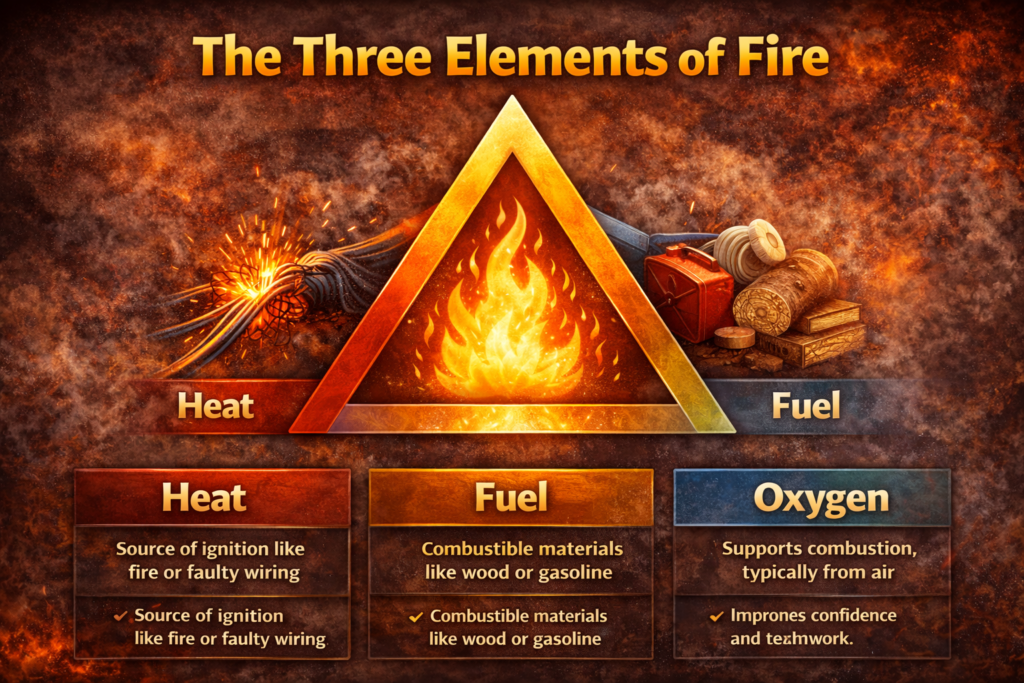
Let’s explore each element in detail so you can clearly understand how fires start and how they can be prevented.
1. Heat
Heat is the energy source that raises the temperature of a material to its ignition point, allowing the fire to begin.
Common Sources of Heat:
- Electrical equipment and faulty wiring
- Open flames (candles, stoves, matches)
- Friction from machinery
- Hot surfaces and heating systems
Why Heat Matters:
Without sufficient heat, fuel cannot ignite. Heat is often the trigger that starts a fire.
Example:
An overheated electrical wire can generate enough heat to ignite nearby materials like insulation or paper.
2. Fuel
Fuel is any material that can burn and sustain a fire once it has started.
Common Types of Fuel:
- Solid fuels: wood, paper, fabric
- Liquid fuels: petrol, diesel, oils
- Gaseous fuels: propane, natural gas
Why Fuel Matters:
Fuel feeds the fire and allows it to grow. The more fuel available, the more intense the fire becomes.
Example:
Stacks of paper in an office can act as fuel, allowing a small fire to spread rapidly.
3. Oxygen
Oxygen supports the chemical reaction of combustion. Most fires use oxygen from the air (which contains about 21% oxygen).
Sources of Oxygen:
- Air in the environment
- Ventilation systems
- Open windows and doors
Why Oxygen Matters:
Without oxygen, a fire cannot sustain itself. Reducing oxygen levels can slow down or completely stop a fire.
Example:
Closing doors and windows during a fire can limit oxygen supply and slow its spread.
Key Insight: How to Stop a Fire
The most important concept of the Fire Triangle is:
Remove any one of the three elements, and the fire will be extinguished.
This principle is the basis of all fire prevention and firefighting techniques.
Methods to Break the Fire Triangle
Different fire control methods work by removing one or more elements of the triangle:
1. Removing Heat (Cooling)
This method reduces the temperature below the ignition point.
Common Technique:
- Using water to cool the fire
Example:
Water is commonly used to extinguish fires involving solid materials like wood and paper.
2. Removing Oxygen (Smothering)
This method cuts off the oxygen supply to the fire.
Common Techniques:
- Fire blankets
- Foam extinguishers
- Covering flames with a lid
Example:
Placing a fire blanket over a small fire prevents oxygen from reaching it, causing it to go out.
3. Removing Fuel (Starvation)
This method removes or isolates the material that is burning.
Common Techniques:
- Clearing combustible materials
- Turning off gas supply
- Creating firebreaks
Example:
Turning off a gas valve stops the supply of fuel, extinguishing the fire.
Why the Fire Triangle is Important
Understanding the Fire Triangle helps individuals and organizations:
- Identify potential fire risks
- Take preventive actions
- Choose the right firefighting method
- Respond quickly and effectively during emergencies
It transforms fire safety from guesswork into a scientific and controlled approach.
Practical Application in Real Life
In real-world situations, the Fire Triangle is used in:
- Fire safety training programs
- Emergency response planning
- Workplace hazard identification
- Firefighting strategies
The Fire Triangle explains that fire requires:
- Heat
- Fuel
- Oxygen
By removing any one of these elements, a fire can be prevented or extinguished. This simple concept is the foundation of all fire safety practices and plays a crucial role in protecting lives and property.
Essential Principles of Fire Safety
Fire safety is built on a set of core principles that work together to prevent fires, detect them early, control their impact, and protect lives. These principles are not isolated—they form a complete system. When implemented correctly, they significantly reduce the likelihood of fire incidents and ensure an effective response if a fire does occur.
Let’s explore each principle in detail so you can understand how they function in real-life situations.
1. Fire Prevention
Fire prevention is the first and most important principle of fire safety. The goal is simple: stop fires before they start.
What is Fire Prevention?
It involves identifying potential fire hazards and taking steps to eliminate or control them.
Key Fire Prevention Measures
Identify and Eliminate Fire Hazards
- Inspect workplaces and homes regularly
- Look for risks such as faulty wiring, overheating equipment, and open flames
- Remove unnecessary combustible materials
Proper Storage of Flammable Materials
- Store chemicals, fuels, and gases in designated areas
- Use approved containers and labeling
- Keep flammable materials away from heat sources
Maintain Electrical Systems
- Avoid overloading sockets
- Repair damaged wires immediately
- Conduct routine electrical inspections
Example:
A factory that regularly inspects machinery and safely stores chemicals greatly reduces the chances of a fire outbreak.
2. Fire Detection
Even with strong prevention measures, fires can still occur. That’s why early detection is critical.
What is Fire Detection?
It refers to systems and devices that identify fire or smoke at an early stage and alert occupants.
Fire Detection Systems
Smoke Detectors and Fire Alarms
- Detect smoke particles in the air
- Provide immediate warning signals
- Essential for homes and workplaces
Heat Detection Systems
- Activate when temperature rises beyond a safe level
- Useful in areas where smoke detectors may not work effectively (e.g., kitchens, industrial zones)
Why Detection Matters:
- Provides time to evacuate
- Reduces panic
- Allows faster emergency response
Example:
A smoke alarm in an office can alert employees within seconds, allowing safe evacuation before the fire spreads.
3. Fire Protection
Fire protection focuses on controlling and suppressing fires to minimize damage and prevent spread.
What is Fire Protection?
It includes equipment, systems, and building designs that help contain or extinguish fires.
Key Fire Protection Measures
Fire Extinguishers
- First line of defense against small fires
- Different types for different fire classes (water, foam, CO₂, dry powder)
Sprinkler Systems
- Automatically release water when heat is detected
- Highly effective in controlling fire spread
Fire-Resistant Materials
- Used in construction to slow down fire
- Includes fire-rated doors, walls, and insulation
Example:
A building equipped with sprinklers can control a fire in its early stage, preventing it from becoming a major disaster.
4. Safe Evacuation
When a fire cannot be immediately controlled, the priority shifts to getting people to safety quickly and efficiently.
What is Safe Evacuation?
It involves planning and implementing strategies to ensure people can exit a building safely during a fire.
Key Elements of Safe Evacuation
Clear Emergency Exits
- Exits must be clearly marked and easily accessible
- Pathways should remain unobstructed at all times
Evacuation Plans
- Clearly defined escape routes
- Assigned assembly points
- Instructions displayed visibly
Regular Fire Drills
- Practice evacuation procedures
- Help people respond calmly in real situations
- Identify weaknesses in evacuation plans
Example:
In a well-prepared office, employees know exactly where to go during an emergency, reducing confusion and saving lives.
5. Fire Response
Fire response is the final principle, focusing on how individuals and teams act during a fire emergency.
What is Fire Response?
It involves immediate actions taken to control the situation, assist others, and coordinate with emergency services.
Key Fire Response Strategies
Emergency Response Training
- Train employees and residents on how to react
- Teach proper use of fire extinguishers
- Provide first aid knowledge
Quick Action Plans
- Clear instructions for reporting fires
- Defined roles and responsibilities
- Coordination with fire services
Example:
A trained employee can quickly use a fire extinguisher to control a small fire before it spreads.
You can explore a more detailed explanation in our fire safety guide covering key principles and risk control strategies:
How These Principles Work Together
These five principles are interconnected:
- Prevention reduces the chances of fire
- Detection provides early warning
- Protection controls the fire
- Evacuation ensures safety
- Response minimizes damage
When combined, they create a complete fire safety system.
The essential principles of fire safety include:
- Fire Prevention
- Fire Detection
- Fire Protection
- Safe Evacuation
- Fire Response
Understanding and applying these principles ensures a safer environment and significantly reduces fire-related risks.
Fire Risk Assessment (Step-by-Step Guide)
A fire risk assessment is a structured and systematic process used to identify potential fire hazards, evaluate the level of risk, and implement measures to reduce or eliminate those risks. It is a critical component of fire safety management and is often a legal requirement for workplaces and commercial environments.To gain deeper insights into evaluation methods, check our guide on what is a fire risk assessment:
The purpose of a fire risk assessment is not just to comply with regulations, but to protect lives, property, and business operations by proactively managing fire risks.You can also explore a complete breakdown in our fire safety risk assessment complete guide:
For practical implementation, read our article on fire safety and risk assessment in real environments:
What is a Fire Risk Assessment?
A fire risk assessment involves:
- Identifying possible sources of fire
- Recognizing people who may be at risk
- Evaluating how likely a fire is to occur
- Taking steps to prevent and control fire hazards
- Continuously reviewing and improving safety measures
Why is Fire Risk Assessment Important?
- Prevents fire incidents before they occur
- Reduces potential damage and losses
- Ensures safety of employees and occupants
- Helps organizations meet legal and safety standards
- Improves emergency preparedness
Step-by-Step Fire Risk Assessment Process
Let’s break down each step in detail so it’s easy to understand and apply.
Step 1: Identify Fire Hazards
The first step is to identify anything that could start a fire or contribute to its spread.
Common Fire Hazards
Electrical Equipment
- Faulty wiring
- Overloaded circuits
- Damaged electrical appliances
Flammable Substances
- Petrol, diesel, and oils
- Chemicals and cleaning agents
- Paper, wood, and textiles
Heat Sources
- Open flames (candles, stoves)
- Heating systems
- Industrial machinery
Key Tip:
Look for the Fire Triangle (heat, fuel, oxygen) when identifying hazards.
Example:
A workplace storing chemicals near heat sources increases the risk of fire ignition.
Step 2: Identify People at Risk
After identifying hazards, the next step is to determine who is at risk in case of a fire.
Groups to Consider
Employees
- Office workers
- Factory staff
- Maintenance teams
Visitors
- Clients
- Contractors
- Customers
Vulnerable Individuals
- Disabled persons
- Elderly individuals
- People unfamiliar with the building
Why This Matters:
Different people have different abilities to respond to emergencies, so safety plans must consider everyone.
Example:
A visitor unfamiliar with exit routes may require clear signage and guidance during evacuation.
Step 3: Evaluate Risks
In this step, you analyze how serious each hazard is by considering two main factors:
Key Risk Factors
Likelihood of Fire
- How likely is a fire to occur?
- Are hazards frequent or rare?
Severity of Impact
- How much damage could occur?
- Could it result in injuries or fatalities?
Risk Evaluation Approach:
- High likelihood + high severity = High risk (urgent action required)
- Low likelihood + low severity = Lower priority
Example:
A faulty electrical panel in a crowded office has both high likelihood and high impact—making it a critical risk.
Step 4: Implement Control Measures
Once risks are evaluated, the next step is to take practical actions to reduce or eliminate them.
Common Fire Safety Control Measures
Install Fire Detection Systems
- Smoke alarms
- Heat detectors
- Fire alarm systems
Improve Ventilation
- Reduces buildup of flammable gases
- Helps control smoke spread
Use Fireproof Materials
- Fire-resistant walls and doors
- Flame-retardant materials
Provide Firefighting Equipment
- Fire extinguishers
- Sprinkler systems
Develop Safety Procedures
- Emergency evacuation plans
- Staff training programs
Example:
Installing smoke detectors and training employees can significantly reduce response time during a fire.
Step 5: Review and Update
A fire risk assessment is not a one-time process—it must be regularly reviewed and updated.
When to Review:
- After any fire incident
- When new equipment or processes are introduced
- Changes in building layout
- Periodically (e.g., annually)
Key Activities:
- Conduct regular inspections
- Update safety procedures
- Test fire safety equipment
- Review evacuation plans
Example:
If a company expands its office space, the evacuation plan must be updated to reflect new exit routes.
Practical Tips for Effective Fire Risk Assessment
- Keep records of assessments and updates
- Involve trained professionals when needed
- Ensure employee participation
- Use checklists for consistency
- Conduct regular fire drills
Common Mistakes to Avoid
- Ignoring small hazards
- Failing to train staff
- Not updating risk assessments
- Blocking emergency exits
- Relying only on equipment without planning
A fire risk assessment follows five essential steps:
- Identify fire hazards
- Identify people at risk
- Evaluate risks
- Implement control measures
- Review and update regularly
By following this structured approach, individuals and organizations can significantly reduce fire risks and ensure a safer environment for everyone.
Workplace Fire Safety
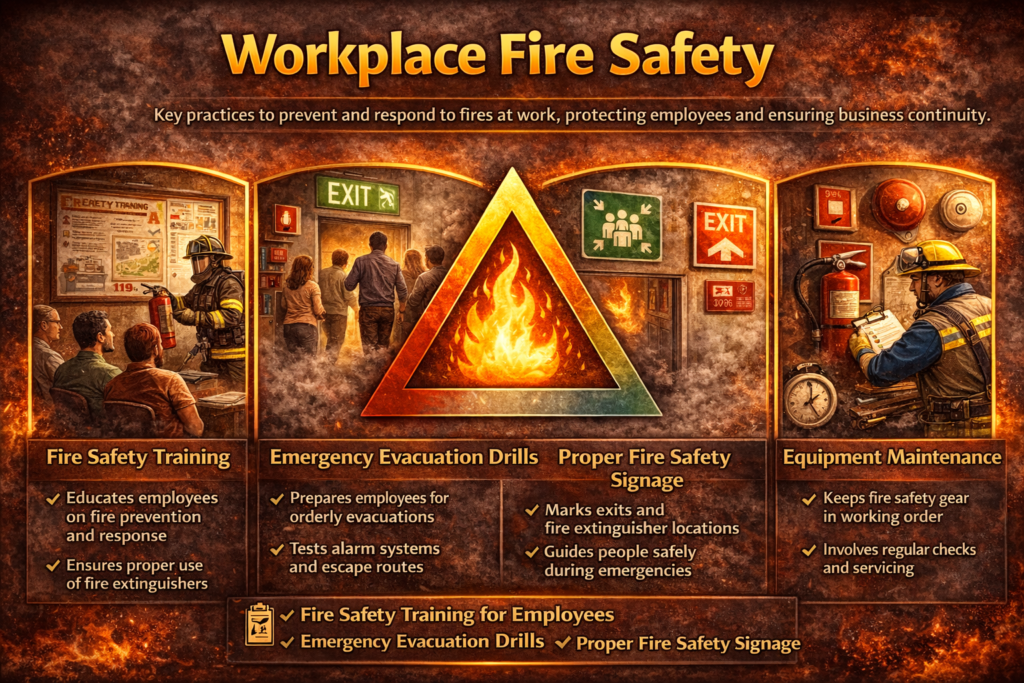
Workplace fire safety is a critical aspect of organizational management that focuses on protecting employees, visitors, property, and business operations from fire-related risks. Unlike homes, workplaces often involve complex environments, including machinery, electrical systems, chemicals, and large numbers of people—making them more vulnerable to fire hazards.If you are planning a career in this field, check our guide on how to become a fire safety officer:
Because of these risks, workplaces must adopt strict fire safety measures, structured procedures, and regular training to ensure a safe and compliant environment.
Why Workplaces Are High-Risk Environments
Workplaces can become high-risk areas for fires due to several factors:
Common Workplace Fire Risks:
- Heavy use of electrical equipment
- Storage of flammable materials
- Industrial processes generating heat
- Human error and negligence
- Lack of proper maintenance
Example:
A factory with overheating machinery and flammable chemicals has a significantly higher fire risk compared to a typical home environment.
Objectives of Workplace Fire Safety
The main goals of workplace fire safety include:
- Preventing fire incidents
- Protecting employees and visitors
- Ensuring safe evacuation
- Minimizing property damage
- Maintaining business continuity
Key Practices for Effective Workplace Fire Safety
| Area | Key Actions | Purpose / Benefit |
|---|---|---|
| Fire Safety Training | Train employees on fire hazards, extinguisher use, evacuation procedures, and first aid | Ensures quick response and reduces panic during emergencies |
| Emergency Evacuation Drills | Practice escape routes, assign roles, and test alarm systems regularly | Improves response time and identifies gaps in planning |
| Fire Safety Signage | Install clear exit signs, alarm points, and assembly area indicators | Guides people safely and reduces confusion |
| Equipment Maintenance | Inspect and service extinguishers, alarms, sprinklers, and emergency lighting | Ensures all systems work effectively during emergencies |
To achieve these objectives, organizations must implement a combination of training, planning, equipment management, and awareness strategies.
1. Fire Safety Training for Employees
Training is one of the most important elements of workplace fire safety. Employees must know how to prevent fires and how to respond effectively during emergencies.
What Training Should Include:
- Understanding fire hazards and risks
- Proper use of fire extinguishers
- Emergency evacuation procedures
- Fire alarm response
- Basic first aid awareness
Why Training is Important:
- Reduces panic during emergencies
- Ensures quick and correct response
- Empowers employees to take action
Example:
An employee trained in fire safety can quickly use a fire extinguisher to control a small fire before it spreads.
2. Emergency Evacuation Drills
Evacuation drills prepare employees for real-life emergency situations by practicing safe and orderly evacuation procedures.
Key Elements of Evacuation Drills:
- Identifying escape routes
- Practicing assembly point procedures
- Assigning roles (fire wardens, supervisors)
- Testing alarm systems
Benefits of Regular Drills:
- Improves response time
- Identifies weaknesses in evacuation plans
- Builds confidence among employees
Example:
In a well-trained office, employees evacuate calmly and efficiently during drills, reducing confusion during actual emergencies.
3. Proper Fire Safety Signage
Clear and visible signage plays a vital role in guiding people during emergencies.
Types of Fire Safety Signs:
- Exit signs
- Fire extinguisher location signs
- Fire alarm points
- Emergency assembly points
Why Signage Matters:
- Helps people quickly locate exits
- Reduces confusion during emergencies
- Assists visitors unfamiliar with the building
Example:
A clearly marked exit sign can help employees and visitors find the quickest escape route during a fire.
4. Equipment Maintenance
Fire safety equipment must always be in working condition to be effective during emergencies.
Equipment That Requires Maintenance:
- Fire extinguishers
- Smoke detectors
- Alarm systems
- Sprinkler systems
- Emergency lighting
Key Maintenance Practices:
- Regular inspections and servicing
- Replacing expired or damaged equipment
- Testing alarm systems periodically
Example:
A fire extinguisher that is not maintained may fail during an emergency, leading to serious consequences.
Additional Workplace Fire Safety Measures (Your Competitive Advantage)
To make your blog stronger than competitors, include these advanced practices:
Risk Assessment and Hazard Control
- Conduct regular fire risk assessments
- Identify and eliminate hazards proactively
Fire Safety Policies and Procedures
- Develop clear fire safety policies
- Ensure all employees understand them
Installation of Fire Protection Systems
- Automatic sprinklers
- Fire suppression systems
- Fire-resistant construction materials
Assign Fire Safety Responsibilities
- Appoint fire wardens or safety officers
- Define roles during emergencies
Electrical Safety Management
- Avoid overloaded circuits
- Regularly inspect electrical systems
Common Workplace Fire Safety Mistakes
Avoid these common errors:
- Ignoring small fire hazards
- Blocking emergency exits
- Lack of employee training
- Poor equipment maintenance
- Not conducting regular drills
Workplace fire safety is essential because it protects:
- Employees and visitors
- Business assets
- Organizational operations
Key practices include:
- Employee training
- Evacuation drills
- Proper signage
- Equipment maintenance
When combined with advanced safety measures, these practices create a safe, compliant, and prepared workplace environment.
Modern Fire Risks (2026 Update)
Fire risks are evolving rapidly due to technological advancements, increased energy consumption, and modern workplace practices. While traditional fire hazards like open flames and faulty wiring still exist, today’s environments introduce new and often overlooked risks that can lead to serious fire incidents if not properly managed.
Why Modern Fire Risks Matter
Modern fire hazards are often:
- Hidden and difficult to detect
- Linked to everyday technology
- More complex than traditional risks
- Capable of causing rapid and intense fires
Key Insight:
As technology increases, so does the potential for new types of fire hazards, making it essential to stay updated and proactive.
Emerging Fire Hazards in 2026
Let’s explore the most important modern fire risks in detail.
1. Lithium-Ion Battery Fires
Lithium-ion batteries are widely used in:
- Smartphones
- Laptops
- Power banks
- Electric vehicles
- Industrial tools
Why They Are Dangerous:
- Can overheat and catch fire suddenly
- Risk of thermal runaway (chain reaction causing explosion)
- Difficult to extinguish once ignited
Common Causes:
- Overcharging
- Physical damage
- Manufacturing defects
- Exposure to high temperatures
Prevention Tips:
- Use certified chargers
- Avoid overcharging devices
- Do not use damaged batteries
- Store batteries in cool, dry places
Example:
A faulty power bank left charging overnight can overheat and ignite, causing a fire in a home or office.
2. Overloaded Electrical Systems
With increasing use of electronic devices, electrical systems are often under heavy load.
Risks Involved:
- Overheating of wires
- Short circuits
- Electrical sparks leading to fire
Common Causes:
- Plugging too many devices into one socket
- Poor wiring installations
- Lack of regular maintenance
Prevention Measures:
- Avoid overloading power outlets
- Use circuit breakers and surge protectors
- Conduct regular electrical inspections
Example:
An office using multiple high-power devices on a single extension board increases the risk of electrical fire.
3. Smart Devices Overheating
Modern homes and workplaces rely heavily on smart technology, including:
- Smart thermostats
- IoT devices
- Automated systems
- Smart appliances
Why This is a Growing Risk:
- Continuous operation generates heat
- Poor-quality devices may lack safety features
- Software or hardware faults can cause overheating
Risk Factors:
- Cheap or uncertified devices
- Poor ventilation
- Long periods of uninterrupted usage
Prevention Tips:
- Use high-quality certified devices
- Ensure proper ventilation
- Turn off devices when not in use
- Monitor device temperature
Example:
A smart home device left running continuously in a confined space can overheat and ignite nearby materials.
4. Industrial Machinery Risks
Industrial environments introduce high-intensity fire risks due to machinery and processes.
Common Hazards:
- Friction and overheating
- Sparks from machinery
- Use of flammable chemicals
- High-pressure systems
Risk Factors:
- Lack of maintenance
- Operator error
- Continuous heavy usage
Prevention Measures:
- Regular servicing of machinery
- Proper lubrication to reduce friction
- Installation of fire suppression systems
- Employee safety training
Example:
A poorly maintained machine generating excessive heat can ignite nearby flammable materials in a factory.
Additional Modern Fire Risks (Advanced Insight)
To make your blog even stronger than competitors, include these extra risks:
Charging Stations & Power Banks
- Overheating due to continuous charging
- Use of low-quality accessories
Electric Vehicles (EVs)
- Battery-related fire risks
- High-energy ignition sources
Construction Site Hazards
- Temporary wiring
- Flammable building materials
- Welding sparks
Chemical Storage Risks
- Improper handling of hazardous substances
- Mixing incompatible chemicals
Why These Risks Are Often Ignored
Many people overlook modern fire risks because:
- Devices appear safe and routine
- Lack of awareness about hidden dangers
- Overconfidence in technology
How to Stay Safe from Modern Fire Risks
- Stay updated with latest safety guidelines
- Use certified and high-quality equipment
- Conduct regular inspections
- Train employees on modern hazards
- Implement smart fire detection systems
Modern fire risks in 2026 include:
- Lithium-ion battery hazards
- Overloaded electrical systems
- Smart device overheating
- Industrial machinery risks
Understanding these emerging threats allows individuals and organizations to stay ahead of potential dangers and implement proactive fire safety strategies.
Fire Prevention Measures
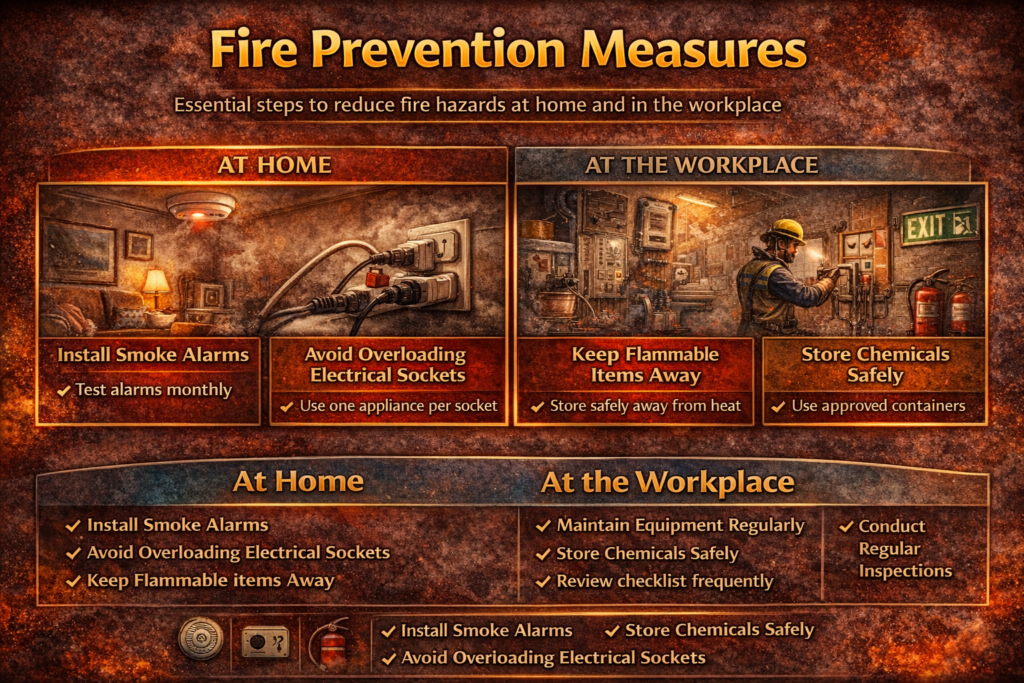
Fire prevention is the first line of defense in any fire safety strategy. While fire detection and response are important, the most effective way to protect lives and property is to stop fires from starting in the first place.To learn more about prevention strategies, explore our fire safety essentials guide covering prevention, protection, and preparedness:
Fire prevention involves identifying potential hazards, adopting safe practices, and maintaining systems that reduce the likelihood of ignition. These measures apply to both homes and workplaces, although the level of complexity may vary.You can also read our fire safety blueprint for building safer environments:
Why Fire Prevention is Important
| Area | Measure | Key Actions | Purpose / Benefit |
|---|---|---|---|
| Home | Install Smoke Alarms | Install in key areas, test monthly, replace batteries | Early fire detection and quick response |
| Home | Avoid Overloading Sockets | Limit devices per outlet, use quality wiring | Prevent electrical fires |
| Home | Keep Flammable Items Away | Store safely away from heat sources | Reduce ignition risks |
| Workplace | Maintain Equipment | Regular inspection and servicing of machinery | Prevent overheating and sparks |
| Workplace | Store Chemicals Safely | Use proper containers, ventilation, follow SDS | Avoid chemical fires and reactions |
| Workplace | Conduct Inspections | Check systems, exits, and hazards regularly | Identify and eliminate risks early |
- Reduces the chances of fire incidents
- Protects lives and valuable assets
- Minimizes financial losses
- Ensures a safe living and working environment
- Supports compliance with safety regulations
Fire Prevention Measures at Home
Homes are one of the most common places where fires occur, often due to carelessness, electrical faults, or unattended appliances. Implementing simple yet effective measures can significantly reduce these risks.
1. Install Smoke Alarms
Smoke alarms are essential for early fire detection, providing a warning before the fire spreads.
Best Practices:
- Install smoke alarms in bedrooms, hallways, and kitchens
- Test alarms regularly (at least once a month)
- Replace batteries periodically
- Ensure alarms are properly maintained
Why It Matters:
Early detection gives occupants enough time to evacuate safely and call emergency services.
Example:
A smoke alarm can alert a family at night, allowing them to escape before smoke becomes life-threatening.
2. Avoid Overloading Electrical Sockets
Electrical fires are one of the leading causes of home fires.
Common Causes:
- Plugging too many devices into one outlet
- Using low-quality extension cords
- Faulty or outdated wiring
Prevention Tips:
- Use one appliance per socket when possible
- Avoid daisy-chaining extension leads
- Replace damaged wires immediately
- Use certified electrical products
Example:
Connecting multiple high-power appliances to a single extension can cause overheating and lead to a fire.
3. Keep Flammable Items Away
Flammable materials can easily ignite when exposed to heat sources.
Common Flammable Items:
- Curtains and fabrics
- Paper and cardboard
- Cleaning chemicals
- Cooking oils
Safety Measures:
- Keep flammable items away from stoves, heaters, and candles
- Store chemicals in safe, designated areas
- Avoid placing items near electrical equipment
Example:
Placing paper near a heater can cause it to ignite within minutes.
Fire Prevention Measures at the Workplace
Workplaces often involve higher risks due to machinery, electrical systems, and large numbers of people. Therefore, fire prevention measures must be more structured and strictly enforced.
1. Maintain Equipment Regularly
Poorly maintained equipment is a major cause of workplace fires.
Key Maintenance Practices:
- Regular inspection of machinery and electrical systems
- Immediate repair of faults or damage
- Scheduled servicing of equipment
Why It Matters:
Well-maintained equipment operates safely and reduces the risk of overheating or sparks.
Example:
A machine with worn-out components can overheat and ignite nearby materials if not serviced properly.
2. Store Chemicals Safely
Many workplaces use chemicals that are highly flammable or reactive.
Safe Storage Guidelines:
- Use approved containers and labels
- Store chemicals in ventilated areas
- Keep incompatible substances separate
- Follow safety data sheet (SDS) instructions
Why It Matters:
Improper storage can lead to chemical reactions, leaks, or explosions.
Example:
Mixing incompatible chemicals accidentally can trigger a fire or explosion.
3. Conduct Regular Inspections
Routine inspections help identify and eliminate fire hazards before they become serious.
What to Check:
- Electrical systems
- Fire safety equipment
- Storage areas
- Emergency exits
Best Practices:
- Use a fire safety checklist
- Assign responsibility to trained personnel
- Document findings and corrective actions
Example:
An inspection may reveal blocked exits or faulty wiring, allowing corrective action before an incident occurs.
Additional Fire Prevention Strategies (Advanced Insight)
To make your blog stronger than competitors, include these advanced measures:
Implement Fire Safety Policies
- Establish clear safety rules and procedures
- Ensure all employees follow them
Provide Fire Safety Training
- Educate employees and residents
- Raise awareness about fire risks
Electrical Safety Management
- Regular electrical audits
- Installation of circuit breakers
Install Fire Protection Systems
- Sprinklers
- Fire alarms
- Fire extinguishers
Common Fire Prevention Mistakes
Avoid these mistakes to improve safety:
- Ignoring small hazards
- Using low-quality electrical products
- Blocking ventilation areas
- Storing flammable items improperly
- Skipping regular inspections
Fire prevention measures are essential for reducing fire risks in both homes and workplaces.
Key Actions Include:
- Installing smoke alarms
- Managing electrical safety
- Keeping flammable materials away
- Maintaining equipment
- Conducting regular inspections
By adopting these practices, individuals and organizations can create safer environments and significantly reduce the likelihood of fire incidents.
Fire Safety Checklist
A fire safety checklist is a practical tool used to ensure that all essential safety measures are in place and functioning properly. It helps individuals, homeowners, and organizations systematically review fire safety conditions, identify gaps, and take corrective action before an incident occurs.
Unlike general guidelines, a checklist provides a clear, actionable approach that can be followed regularly to maintain a safe environment.
Why a Fire Safety Checklist is Important
- Ensures nothing is overlooked
- Helps maintain consistent safety standards
- Identifies potential hazards early
- Supports compliance with safety regulations
- Improves emergency preparedness
Essential Fire Safety Checklist
Below is a detailed breakdown of the key elements every fire safety checklist should include:
Smoke Alarms Installed and Functional
Smoke alarms are the first line of defense in detecting fire at an early stage.
What to Check:
- Smoke alarms are installed in key areas (bedrooms, hallways, workplaces)
- Devices are tested regularly
- Batteries are replaced on time
- Alarms are not damaged or outdated
Why It Matters:
Early detection can save lives by providing enough time to evacuate before the fire spreads.
Example:
A working smoke alarm can alert occupants during the night, preventing a potentially fatal situation.
Fire Extinguishers Available and Accessible
Fire extinguishers are essential for controlling small fires before they escalate.
What to Check:
- Extinguishers are placed in visible and accessible locations
- Correct type of extinguisher is used (water, CO₂, foam, etc.)
- Equipment is regularly inspected and serviced
- Staff know how to use them
Why It Matters:
A quick response using the right extinguisher can stop a fire in its early stage.
Example:
An employee trained to use a fire extinguisher can prevent a minor fire from becoming a major incident.
Emergency Exits Clear and Accessible
Emergency exits are critical for safe and quick evacuation during a fire.
What to Check:
- Exit routes are clearly marked
- Pathways are free from obstructions
- Emergency lighting is functional
- Doors open easily without obstruction
Why It Matters:
Blocked or unclear exits can lead to panic, delays, and increased risk during emergencies.
Example:
In an emergency, a clear exit route allows people to evacuate quickly and safely.
Staff Trained in Fire Safety
Training ensures that individuals know how to prevent fires and respond effectively during emergencies.
What to Check:
- Employees receive regular fire safety training
- Staff understand evacuation procedures
- Fire wardens or responsible persons are assigned
- Training includes use of fire extinguishers
Why It Matters:
Trained individuals act quickly and calmly, reducing confusion and saving lives.
Example:
A trained team can coordinate evacuation efficiently, preventing chaos during a fire.
Regular Inspections Conducted
Regular inspections help maintain safety standards and identify risks early.
What to Check:
- Fire safety equipment is tested
- Electrical systems are inspected
- Hazardous materials are stored properly
- Fire risk assessments are updated
Why It Matters:
Routine checks ensure that safety measures remain effective and up to date.
Example:
An inspection may detect faulty wiring before it causes a fire.
Additional Checklist Items
To make your blog stronger than competitors, include these extra points:
- Fire evacuation plan displayed
- Emergency contact numbers available
- Fire drills conducted regularly
- Flammable materials stored safely
- Electrical systems maintained
- Fire alarm systems tested
Real-Life Scenario: The Cost of Ignoring Fire Safety
To understand the true importance of fire safety, consider this realistic scenario:
Situation: Unsafe Workplace Environment
Imagine a workplace where basic fire safety measures are ignored:
- No smoke alarms installed
- Emergency exits are blocked
- Employees are not trained
- No fire extinguishers available
What Happens Next?
A small electrical fault sparks a fire. Because there are no alarms, the fire goes unnoticed initially.
Consequences:
Delayed Evacuation
- Employees are unaware of the fire
- Panic spreads quickly
- Evacuation becomes chaotic
Increased Casualties
- Smoke inhalation risks increase
- People may get trapped due to blocked exits
Severe Financial Loss
- Damage to equipment and infrastructure
- Business operations come to a halt
- Legal and compensation costs
Reputation Damage
- Loss of trust from clients and stakeholders
- Long-term impact on business credibility
Key Lesson
This scenario clearly shows that ignoring fire safety can lead to devastating consequences. Even a small fire can escalate into a major disaster if proper measures are not in place.
A fire safety checklist is an essential tool to ensure:
- Early detection of fire
- Availability of firefighting equipment
- Safe evacuation routes
- Trained personnel
- Regular monitoring and improvement
By following a structured checklist and learning from real-life scenarios, individuals and organizations can significantly reduce fire risks and create a safer environment for everyone.
Conclusion
Fire safety is an essential part of modern living and effective workplace management, playing a critical role in protecting human life, safeguarding property, and ensuring the smooth functioning of daily operations. Throughout this guide, we have explored the key aspects of fire safety—from understanding its core principles and the fire triangle to implementing prevention strategies and conducting detailed fire risk assessments. Each of these elements works together to create a comprehensive safety system that not only reduces the likelihood of fire incidents but also ensures a swift and organized response if an emergency occurs.
In today’s rapidly evolving environments, where new technologies and workplace complexities introduce additional risks, adopting a proactive approach to fire safety is more important than ever. Regular inspections, proper training, clear evacuation planning, and the use of modern fire protection systems can significantly minimize potential hazards. Whether at home or in a professional setting, being aware of risks and taking preventive measures empowers individuals and organizations to maintain a safe and secure environment.For a complete understanding, you can also explore our ultimate fire safety guide covering prevention, risk assessment, and emergency preparedness:
Additionally, our comprehensive fire safety guide to prevention, equipment, and risk assessment provides further practical insights:
Ultimately, fire safety is not a one-time effort but a continuous responsibility that requires awareness, commitment, and regular improvement. Staying prepared is not optional—it is a necessity. By prioritizing fire safety, you not only protect lives and valuable assets but also contribute to long-term sustainability, resilience, and peace of mind in any environment.