
Health and Social Care: Complete Guide, Careers & Importance
Health and Social Care is a vital and rapidly growing sector that focuses on improving the physical, emotional, and social well-being of individuals. It encompasses a wide range of services, including healthcare, social support, and community-based care, all designed to enhance quality of life and promote independence. Whether supporting children, adults, or the elderly, health and social care services play a crucial role in ensuring individuals receive the right care at the right time.
In today’s fast-changing world, the demand for health and social care is increasing due to factors such as aging populations, rising healthcare needs, and greater awareness of mental health. Governments and organizations are investing heavily in health and social care services to address complex health challenges and reduce inequalities in access to care. As a result, this sector has become a cornerstone of sustainable and inclusive societies.Health and social care is an important sector that supports individuals in need. If you want to build a career in this field, you can explore this
Health and Social Care Course
Moreover, health and social care careers are becoming highly attractive for individuals seeking job stability, professional growth, and the opportunity to make a real difference in people’s lives. With a strong emphasis on compassion, skills, and continuous learning, this field offers rewarding pathways for those who are passionate about supporting others and contributing to community well-being.
What is Health and Social Care?
Definition of Health and Social Care
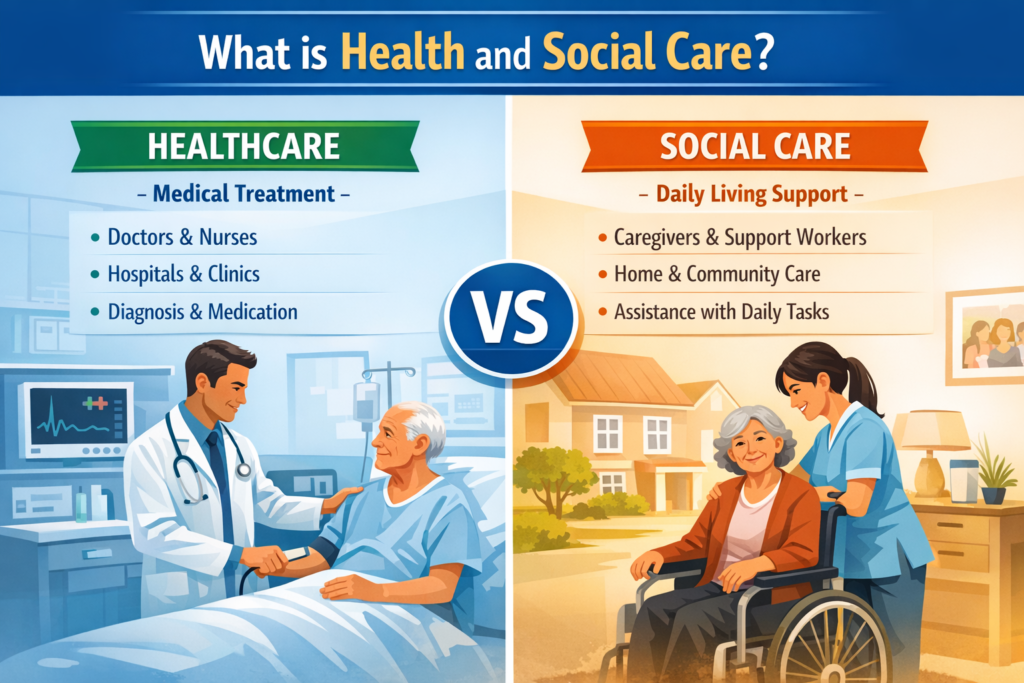
Health and Social Care is a comprehensive and integrated system of services designed to promote, maintain, and improve an individual’s physical health, mental well-being, and social functioning. It combines medical care with social support mechanisms to ensure that individuals can live safely, independently, and with dignity at every stage of life.
This sector goes beyond the treatment of illness. It focuses on prevention, rehabilitation, emotional support, and enabling individuals to manage their daily lives effectively. Health and social care services are delivered across a wide range of settings, including hospitals, care homes, and community environments, ensuring accessibility and continuity of care.
While health and social care are closely connected, they serve different purposes within the care system. Healthcare focuses on medical treatment and clinical support, whereas social care helps individuals with daily living and independence. To understand this distinction in detail, you can read this guide: Healthcare vs Social Care – Complete Comparison
Purpose and Objectives of Health and Social Care
The primary purpose of health and social care is to provide person-centred and holistic support that meets the diverse needs of individuals.
Key Objectives Include:
- Supporting individuals in achieving and maintaining optimal health
- Promoting independence and self-reliance
- Enhancing overall quality of life
- Providing protection and care for vulnerable populations
- Reducing inequalities in access to healthcare and social services
- Ensuring dignity, respect, and ethical care practices
Core Components of Health and Social Care
Health and Social Care consists of several interconnected services that work collaboratively to deliver comprehensive support.
1. Healthcare Services
Healthcare services are responsible for diagnosing, treating, and preventing illnesses and medical conditions.
Key Functions:
- Conducting medical assessments and diagnoses
- Providing treatment and clinical interventions
- Preventing diseases through vaccinations and screenings
- Supporting recovery through rehabilitation services
Examples of Healthcare Services:
- Hospitals and specialized medical centres
- General practitioners (GPs)
- Nursing and midwifery services
- Emergency and urgent care services
2. Social Care Services
Social care services focus on supporting individuals who require assistance with daily living due to age, disability, illness, or social circumstances.
Key Functions:
- Assisting with personal care activities such as bathing and dressing
- Supporting independent living in home or community settings
- Providing long-term care for elderly individuals
- Safeguarding individuals from abuse, neglect, or harm
Examples of Social Care Services:
- Home care and domiciliary services
- Residential and nursing care homes
- Support workers and caregivers
- Child and adult protection services
3. Mental Health Services
Mental health services play a vital role in addressing emotional, psychological, and behavioural well-being.
Key Functions:
- Assessing and diagnosing mental health conditions
- Providing therapeutic interventions such as counseling and psychotherapy
- Offering crisis support and intervention
- Supporting long-term mental health management and recovery
Examples of Mental Health Services:
- Counseling and therapy sessions
- Psychiatric treatment and care
- Community mental health programs
- Support groups and rehabilitation services
4. Community-Based Care
Community-based care focuses on delivering services within local communities, enabling individuals to remain in familiar environments while receiving the support they need.
Key Functions:
- Providing care within homes or community settings
- Encouraging social inclusion and participation
- Reducing dependence on hospital-based services
- Supporting individuals with long-term or chronic conditions
Examples of Community Care:
- Home visits by healthcare professionals
- Day care centres and community hubs
- Outreach and support programs
- Local health and well-being initiatives
Holistic Approach in Health and Social Care
A defining characteristic of health and social care is its holistic approach, which considers the individual as a whole rather than focusing solely on medical conditions.
This approach addresses:
- Physical health needs
- Emotional and psychological well-being
- Social environment and living conditions
- Personal preferences, beliefs, and values
By integrating these aspects, health and social care ensures that individuals receive comprehensive, personalised, and effective support tailored to their unique circumstances.
Key Components of Health and Social Care
Health and Social Care is a broad and multifaceted sector made up of several essential components that work together to deliver comprehensive and effective care. These components ensure that individuals receive the right level of medical attention, social support, and rehabilitation services according to their needs.
Each component plays a distinct yet interconnected role in promoting overall well-being, preventing illness, and supporting recovery.
| Feature | Healthcare | Social Care |
|---|---|---|
| Focus | Medical treatment | Daily living support |
| Provided By | Doctors, nurses | Care workers, support staff |
| Location | Hospitals, clinics | Homes, care centres |
| Purpose | Diagnose and treat illness | Support independence |
| Examples | Surgery, medication | Personal care, home assistance |
Healthcare Services
Healthcare services form a fundamental part of the health and social care system, primarily focusing on the diagnosis, treatment, and prevention of diseases and medical conditions. These services are delivered by trained medical professionals and are essential for maintaining and restoring physical health.
Healthcare services operate across various levels, ranging from primary care to specialized treatment, ensuring that individuals receive timely and appropriate medical attention.
Purpose of Healthcare Services
The main aim of healthcare services is to improve health outcomes and enhance the quality of life for individuals.
Key Objectives Include:
- Early diagnosis and effective treatment of illnesses
- Prevention of diseases through screenings and vaccinations
- Management of chronic and long-term conditions
- Providing emergency and critical care services
- Supporting recovery through rehabilitation and follow-up care
Types of Healthcare Services
Healthcare services are categorized based on the level and type of care provided.
Primary Care Services
Primary care is the first point of contact for individuals seeking medical assistance.
Includes:
- General practitioners (GPs)
- Routine check-ups
- Preventive care and health education
Secondary Care Services
Secondary care involves specialized medical services typically provided after referral from primary care.
Includes:
- Specialist consultations
- Hospital-based treatments
- Diagnostic tests and procedures
Tertiary Care Services
Tertiary care provides advanced and highly specialized medical treatment.
Includes:
- Complex surgeries
- Intensive care units (ICUs)
- Specialized treatment centres
Examples of Healthcare Services
Healthcare services are delivered through a variety of institutions and professionals.
Hospitals and Clinics
- Provide comprehensive medical care and treatment
- Offer emergency, inpatient, and outpatient services
- Equipped with advanced medical technology
Nursing and Midwifery Services
- Deliver patient care and support recovery
- Assist in medical procedures and monitoring
- Provide maternal and newborn care
General Practitioners (GPs)
- Act as the first point of contact for patients
- Diagnose common illnesses and provide treatment
- Refer patients to specialists when necessary
Rehabilitation Services
- Help individuals recover from illness or injury
- Support physical, mental, and emotional recovery
- Include physiotherapy, occupational therapy, and speech therapy
Importance of Healthcare Services
Healthcare services are essential for maintaining a healthy society and ensuring individuals receive appropriate medical support.
Key Benefits:
- Improves life expectancy and health outcomes
- Reduces the spread of diseases
- Supports early detection of health conditions
- Enhances recovery and quality of life
- Provides continuous and coordinated care
Social Care Services
Social care services are a vital component of the health and social care system, focusing on supporting individuals who require assistance with daily living activities. These services aim to help people maintain their independence, dignity, and quality of life, particularly those who are elderly, disabled, vulnerable, or facing challenging life circumstances.
Unlike healthcare services, which primarily address medical needs, social care services focus on the social, emotional, and practical aspects of an individual’s life. They play a crucial role in enabling individuals to live safely and comfortably within their homes and communities.
Purpose of Social Care Services
The primary goal of social care services is to provide tailored support that meets the unique needs of individuals while promoting independence and well-being.
Key Objectives Include:
- Supporting individuals in managing daily living activities
- Promoting independence and self-sufficiency
- Protecting vulnerable individuals from harm or neglect
- Enhancing emotional and social well-being
- Improving overall quality of life
Types of Social Care Services
Social care services are delivered in various forms depending on the needs and circumstances of individuals.
1. Elderly Care
Elderly care focuses on supporting older adults who may require assistance due to age-related conditions, reduced mobility, or health issues.
Key Services Include:
- Personal care (bathing, dressing, hygiene)
- Assistance with mobility and daily routines
- Medication support and monitoring
- Companionship and emotional support
Settings:
- Residential care homes
- Nursing homes
- Home-based care services
2. Disability Support
Disability support services are designed to assist individuals with physical, intellectual, or developmental disabilities in leading independent and fulfilling lives.
Key Services Include:
- Assistance with daily activities
- Access to mobility aids and assistive technologies
- Support in education and employment
- Social inclusion and community participation
3. Home Care Services
Home care services, also known as domiciliary care, provide support to individuals in their own homes, allowing them to maintain independence while receiving necessary assistance.
Key Services Include:
- Personal care and hygiene support
- Household tasks such as cleaning and cooking
- Medication reminders
- Companionship and supervision
Benefits:
- Enables individuals to remain in familiar surroundings
- Reduces the need for institutional care
- Promotes comfort and independence
4. Child Protection Services
Child protection services focus on safeguarding children and young people from abuse, neglect, and exploitation.
Key Services Include:
- Monitoring and assessing child welfare
- Providing family support and intervention
- Ensuring safe living environments
- Legal protection and advocacy
Importance of Social Care Services
Social care services are essential for creating a supportive and inclusive society where individuals can live with dignity and independence.
Key Benefits:
- Enhances independence and self-confidence
- Supports vulnerable and at-risk individuals
- Reduces pressure on healthcare systems
- Promotes social inclusion and well-being
- Improves overall quality of life
Mental Health Services
Mental health services are a fundamental component of the health and social care system, focusing on the psychological, emotional, and behavioural well-being of individuals. Mental health is equally as important as physical health, as it influences how individuals think, feel, and behave in their daily lives.
These services are designed to support individuals experiencing mental health conditions, emotional distress, or psychological challenges, while also promoting resilience, stability, and overall well-being. Mental health services aim not only to treat conditions but also to prevent issues and support long-term recovery.
Purpose of Mental Health Services
The primary goal of mental health services is to improve emotional well-being and provide individuals with the support they need to lead balanced and fulfilling lives.
Key Objectives Include:
- Diagnosing and treating mental health conditions
- Providing emotional and psychological support
- Preventing mental health crises
- Promoting mental well-being and resilience
- Supporting recovery and long-term stability
Types of Mental Health Services
Mental health services are delivered through various approaches, depending on the severity and nature of the condition.
1. Counseling and Therapy
Counseling and therapy services provide a safe and supportive environment where individuals can discuss their thoughts, emotions, and experiences.
Key Features:
- One-to-one or group sessions
- Evidence-based therapeutic approaches
- Emotional support and coping strategies
- Stress, anxiety, and depression management
Common Types:
- Cognitive Behavioural Therapy (CBT)
- Psychotherapy
- Family and relationship counseling
2. Psychiatric Care
Psychiatric care involves the diagnosis and medical treatment of mental health disorders by qualified psychiatrists and healthcare professionals.
Key Features:
- Clinical assessment and diagnosis
- Medication management
- Treatment for complex mental health conditions
- Ongoing monitoring and evaluation
Examples of Conditions Treated:
- Depression
- Anxiety disorders
- Bipolar disorder
- Schizophrenia
3. Crisis Support Services
Crisis support services provide immediate assistance to individuals experiencing severe emotional distress or mental health emergencies.
Key Features:
- 24/7 emergency support
- Suicide prevention services
- Crisis intervention and stabilization
- Immediate psychological assistance
Examples:
- Helplines and hotlines
- Emergency mental health teams
- Crisis centres
4. Community Mental Health Programs
Community-based mental health programs aim to provide accessible and ongoing support within local communities.
Key Features:
- Support groups and peer networks
- Rehabilitation and recovery programs
- Outreach and awareness initiatives
- Long-term community support
Benefits:
- Encourages social inclusion
- Reduces stigma around mental health
- Provides continuous support outside clinical settings
Importance of Mental Health Services
Mental health services play a crucial role in maintaining a healthy and balanced society by addressing emotional and psychological needs.
Key Benefits:
- Improves overall well-being and quality of life
- Supports individuals in managing stress and challenges
- Reduces the risk of severe mental health conditions
- Promotes early intervention and recovery
- Enhances social and emotional functioning
Community Care
Community-Based Care Services
Community-based care services are an essential part of the health and social care system, focusing on delivering support outside of hospital settings. These services are designed to help individuals receive the care they need while remaining in their own homes or within their local communities.
Community care promotes independence, social inclusion, and continuity of care by reducing the need for long-term hospital stays or institutional care. It is particularly beneficial for elderly individuals, people with chronic conditions, and those requiring ongoing support.
Purpose of Community-Based Care
The primary aim of community-based care is to provide accessible, personalized, and continuous support in a familiar environment.
Key Objectives Include:
- Enabling individuals to live independently at home
- Reducing reliance on hospital and residential care
- Promoting social interaction and community engagement
- Supporting long-term health and well-being
- Providing cost-effective and accessible care solutions
Types of Community-Based Care Services
Community care services are delivered through a variety of programs and support systems tailored to individual needs.
1. Home-Based Care
Home-based care involves providing medical and personal support to individuals in their own homes, ensuring comfort and familiarity.
Key Services Include:
- Personal care (bathing, dressing, hygiene)
- Medication management and monitoring
- Assistance with daily activities
- Nursing and healthcare visits
Benefits:
- Allows individuals to remain in a familiar environment
- Promotes independence and dignity
- Reduces hospital admissions
2. Day Care Centres
Day care centres provide structured support and supervision during the day for individuals who require assistance or social interaction.
Key Services Include:
- Social and recreational activities
- Health monitoring and basic care
- Meals and nutritional support
- Group interaction and engagement
Benefits:
- Reduces isolation and loneliness
- Supports mental and emotional well-being
- Provides respite for caregivers
3. Outreach Services
Outreach services focus on reaching individuals within the community who may not actively seek care but require support.
Key Services Include:
- Home visits by healthcare or social workers
- Community awareness and support programs
- Assistance for vulnerable or at-risk individuals
- Health education and preventive care
Benefits:
- Improves access to care for underserved populations
- Promotes early intervention
- Enhances community health and safety
Importance of Community-Based Care
Community-based care plays a crucial role in creating a sustainable and patient-centred healthcare system.
Key Benefits:
- Supports independent living
- Reduces pressure on hospitals
- Encourages social inclusion
- Provides continuous and personalized care
- Improves overall quality of life
Importance of Health and Social Care
Why Health and Social Care Matters
Health and Social Care plays a critical role in building a healthy, inclusive, and well-functioning society. It ensures that individuals receive the necessary medical support and social assistance required to live safe, independent, and fulfilling lives.
This sector is particularly important for vulnerable groups such as the elderly, individuals with disabilities, and those facing physical or mental health challenges. By integrating healthcare with social support, it provides a holistic approach that addresses both medical needs and social well-being.
Core Objectives of Health and Social Care
The importance of health and social care can be understood through its key objectives, which focus on improving individual and community well-being.
Key Objectives Include:
- Enhancing overall health and quality of life
- Providing care and protection for vulnerable individuals
- Promoting independence and self-sufficiency
- Ensuring equal access to essential services
- Supporting long-term health and well-being
- Reducing health inequalities within society
Key Benefits of Health and Social Care
Health and Social Care delivers a wide range of benefits that positively impact individuals, families, and communities.
1. Enhances Physical and Mental Health
Health and social care services ensure timely diagnosis, treatment, and ongoing support for both physical and mental health conditions.
Impact:
- Improves overall well-being
- Supports early detection of illnesses
- Promotes mental and emotional stability
2. Supports Aging Populations
With increasing life expectancy, health and social care plays a vital role in supporting older adults.
Impact:
- Provides long-term care and assistance
- Helps manage age-related health conditions
- Ensures dignity and comfort in later life
3. Reduces Pressure on Healthcare Systems
By offering preventive care and community-based support, health and social care helps reduce the burden on hospitals.
Impact:
- Minimizes unnecessary hospital admissions
- Promotes early intervention
- Improves efficiency of healthcare services
4. Promotes Dignity and Independence
Health and social care empowers individuals to live independently while maintaining their dignity and self-respect.
Impact:
- Encourages self-reliance
- Supports decision-making and autonomy
- Improves confidence and quality of life
5. Strengthens Communities
A strong health and social care system contributes to healthier and more connected communities.
Impact:
- Promotes social inclusion
- Reduces inequalities
- Enhances community well-being and productivity
Role in Modern Society
In today’s rapidly evolving world, health and social care has become more important than ever due to:
- Aging populations
- Rising mental health awareness
- Increasing chronic health conditions
- Growing demand for accessible care services
These factors highlight the need for a well-structured and effective health and social care system that can meet the diverse needs of society.
Core Principles of Health and Social Care
Foundation of Effective Care Practice
The delivery of high-quality health and social care services is guided by a set of fundamental principles that ensure care is ethical, respectful, and person-focused. These principles form the foundation for all professional practices within the sector and help maintain standards that protect individuals while promoting their well-being.
By applying these principles, healthcare and social care professionals can provide consistent, safe, and compassionate care that meets the diverse needs of individuals and communities.
Key Principles of Health and Social Care
1. Person-Centred Care
Person-centred care is at the heart of health and social care practice. It focuses on treating individuals as unique, with their own preferences, values, and needs.
Key Features:
- Care plans tailored to individual requirements
- Respect for personal choices and cultural values
- Active involvement of individuals in decision-making
- Focus on dignity, respect, and compassion
Impact:
- Improves patient satisfaction and outcomes
- Builds trust between care providers and individuals
- Promotes independence and confidence
2. Equality and Diversity
Equality and diversity ensure that all individuals are treated fairly and have equal access to health and social care services, regardless of their background.
Key Features:
- Non-discriminatory practices
- Inclusive care environments
- Respect for cultural, religious, and social differences
- Equal opportunities for all individuals
Impact:
- Reduces inequalities in healthcare access
- Promotes fairness and social justice
- Enhances trust and inclusivity within communities
3. Confidentiality
Confidentiality is a critical principle that involves protecting personal and sensitive information related to individuals receiving care.
Key Features:
- Secure handling of personal data
- Sharing information only with authorized professionals
- Compliance with legal and ethical standards
- Respect for privacy and personal boundaries
Impact:
- Builds trust between individuals and care providers
- Ensures privacy and dignity
- Protects individuals from misuse of information
4. Safeguarding
Safeguarding focuses on protecting individuals, especially vulnerable groups, from abuse, harm, neglect, or exploitation.
Key Features:
- Identifying and reporting risks or concerns
- Implementing protective measures
- Ensuring safe care environments
- Following legal safeguarding policies and procedures
Impact:
- Enhances safety and security of individuals
- Prevents harm and abuse
- Promotes a culture of accountability and protection
5. Empowerment
Empowerment involves supporting individuals to take control of their own lives and make informed decisions about their care and well-being.
Key Features:
- Encouraging independence and self-confidence
- Providing clear and accessible information
- Supporting informed decision-making
- Respecting individual choices and autonomy
Impact:
- Increases confidence and self-esteem
- Promotes independence
- Enhances overall quality of life
Importance of These Principles in Practice
Applying these core principles ensures that health and social care services are delivered in a way that is:
- Ethical and professional
- Safe and reliable
- Inclusive and respectful
- Focused on individual needs
These principles not only guide professionals in their daily responsibilities but also help create a care system that is compassionate, effective, and responsive to the needs of society.
Health and Social Care Careers
Growing Demand for Health and Social Care Professionals
The health and social care sector is one of the fastest-growing industries worldwide, driven by increasing healthcare needs, aging populations, and greater awareness of mental health and well-being. As societies continue to evolve, the demand for skilled and compassionate professionals in health and social care careers is rising significantly across both public and private sectors.
This field offers a wide range of career opportunities for individuals who are passionate about making a positive impact on people’s lives while building a stable and rewarding professional future.
Top Career Opportunities in Health and Social Care
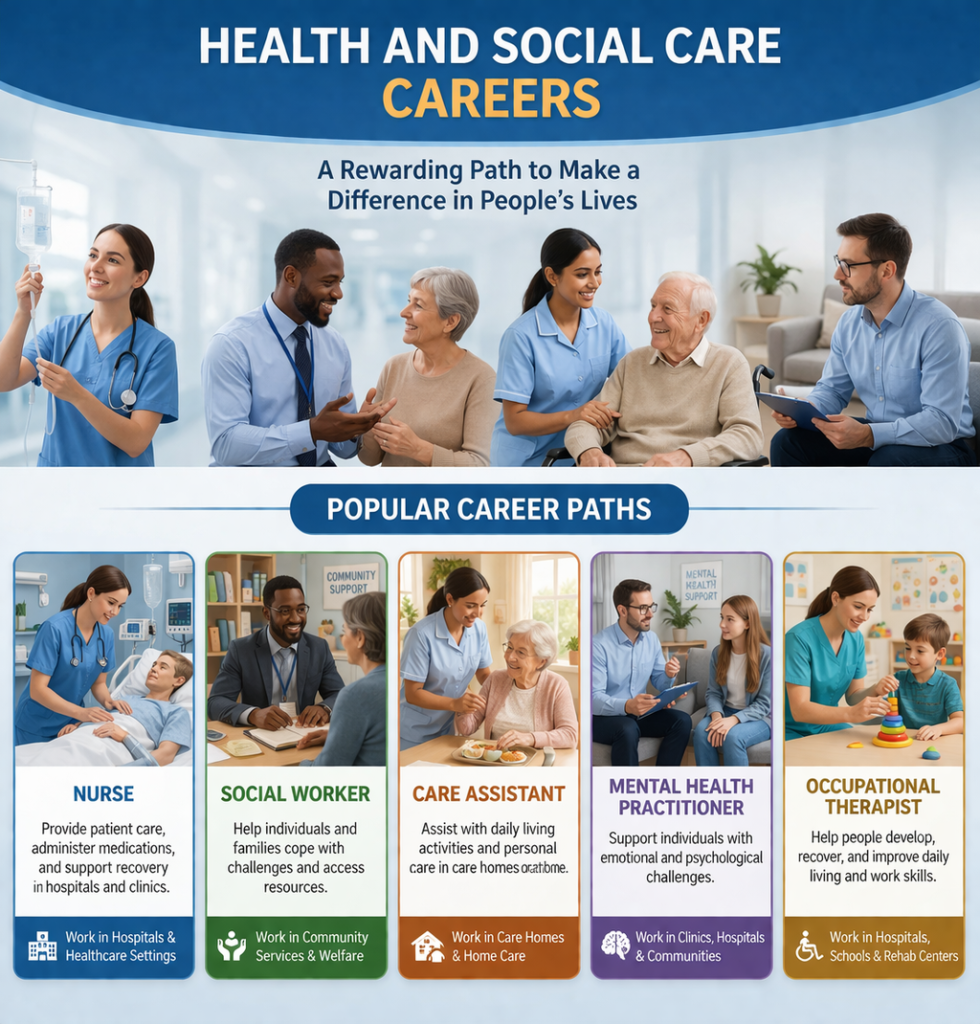
Health and social care provides diverse career pathways, allowing individuals to specialize in different areas based on their interests, skills, and qualifications.
1. Healthcare Assistant
Healthcare assistants provide essential support to medical professionals and help patients with their daily needs.
Key Responsibilities:
- Assisting patients with personal care
- Monitoring health conditions
- Supporting nurses and doctors
- Ensuring patient comfort and safety
2. Nurse
Nurses play a critical role in delivering medical care, supporting patients, and promoting recovery.
Key Responsibilities:
- Providing clinical care and treatment
- Administering medication
- Monitoring patient progress
- Educating patients and families
3. Social Worker
Social workers support individuals and families facing social, emotional, or financial challenges.
Key Responsibilities:
- Assessing individual needs
- Providing guidance and support
- Safeguarding vulnerable individuals
- Coordinating with other care services
4. Care Worker
Care workers assist individuals who need help with daily living activities, particularly the elderly and those with disabilities.
Key Responsibilities:
- Providing personal care
- Assisting with daily tasks
- Offering emotional support
- Promoting independence
5. Mental Health Practitioner
Mental health practitioners focus on supporting individuals experiencing psychological or emotional difficulties.
Key Responsibilities:
- Providing counseling and therapy
- Assessing mental health conditions
- Supporting recovery and rehabilitation
- Developing care plans
6. Occupational Therapist
Occupational therapists help individuals develop or regain skills needed for daily living and working.
Key Responsibilities:
- Assessing physical and mental abilities
- Developing rehabilitation programs
- Supporting independence
- Improving quality of life
| Job Role | Main Responsibility | Work Environment |
|---|---|---|
| Nurse | Delivering comprehensive patient care, treatments, and health monitoring | Hospitals, clinics, healthcare facilities |
| Social Worker | Providing guidance and support to individuals and families facing social challenges | Community services, social organizations |
| Care Assistant | Supporting individuals with daily living activities and personal care | Care homes, home care settings |
| Mental Health Practitioner | Offering mental health care, counseling, and emotional support | Clinics, community centers |
| Occupational Therapist | Assisting patients in rehabilitation and improving functional independence | Hospitals, rehab centers, clinics |
Why Choose a Career in Health and Social Care?
Choosing a career in health and social care offers numerous professional and personal benefits, making it an attractive option for individuals seeking meaningful and stable employment.
1. High Job Demand
The need for qualified professionals in health and social care is continuously increasing across the globe.
Benefits:
- Strong job security
- Wide range of employment opportunities
- Consistent demand in both public and private sectors
2. Global Career Opportunities
Health and social care qualifications are widely recognized, allowing professionals to work internationally.
Benefits:
- Opportunities to work abroad
- Exposure to diverse healthcare systems
- Career mobility and flexibility
3. Career Growth and Development
The sector offers clear pathways for career progression and specialization.
Benefits:
- Opportunities for promotions and advanced roles
- Access to continuous professional development
- Ability to specialize in specific fields
4. Meaningful and Rewarding Work
Health and social care careers provide the opportunity to make a real difference in people’s lives.
Benefits:
- Personal satisfaction and fulfillment
- Positive impact on individuals and communities
- Strong sense of purpose and contribution
Skills Required for Career Success
To succeed in health and social care careers, individuals must develop both professional and personal skills.
Essential Skills Include:
- Effective communication
- Empathy and compassion
- Problem-solving abilities
- Teamwork and collaboration
- Time management
- Emotional resilience
Career Outlook and Future Opportunities
With advancements in healthcare technology, increasing global health challenges, and a growing focus on well-being, the future of health and social care careers remains highly promising.
Professionals in this field will continue to play a vital role in shaping healthier societies and delivering high-quality care services.
Skills Needed in Health and Social Care
Essential Skills for Success in Health and Social Care
Working in health and social care requires a combination of professional expertise and strong interpersonal abilities. Professionals in this field interact with individuals from diverse backgrounds, often in sensitive and challenging situations. Therefore, developing the right set of skills is essential to deliver high-quality, compassionate, and effective care.
These skills not only enhance the quality of service provided but also contribute to better outcomes for individuals receiving care.
Core Skills in Health and Social Care
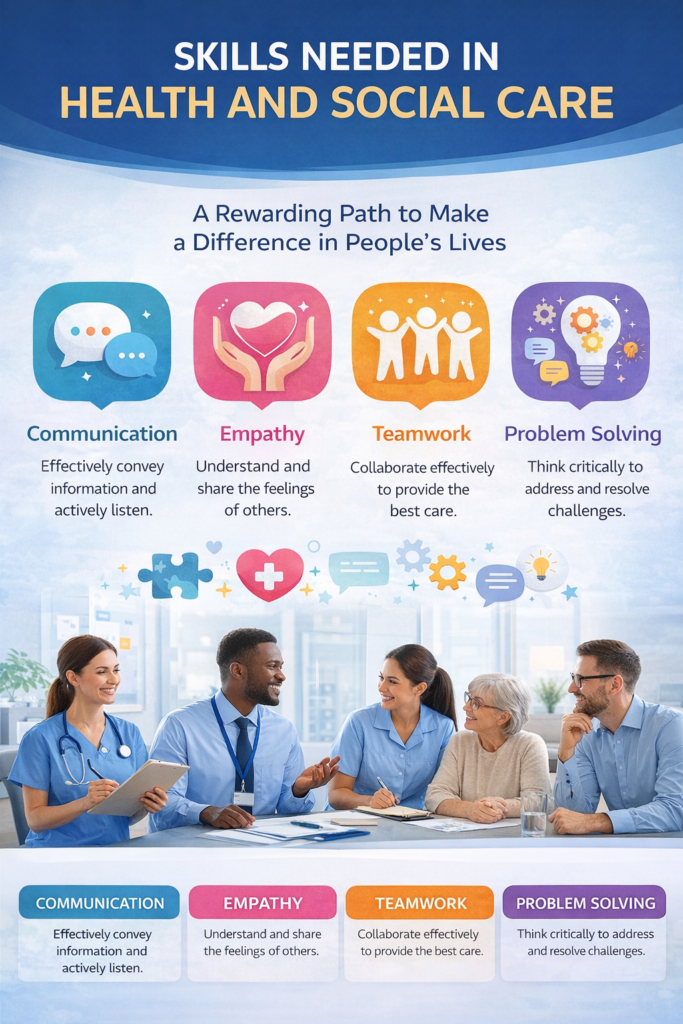
1. Communication Skills
Effective communication is one of the most important skills in health and social care. It ensures clear interaction between professionals, patients, and their families.
Key Aspects:
- Active listening and understanding
- Clear verbal and written communication
- Non-verbal communication (body language, tone)
- Explaining complex information in a simple way
Importance:
- Builds trust and strong relationships
- Reduces misunderstandings and errors
- Improves patient satisfaction and care outcomes
2. Empathy and Compassion
Empathy involves understanding and sharing the feelings of others, while compassion focuses on providing care with kindness and sensitivity.
Key Aspects:
- Understanding emotional needs
- Showing kindness and respect
- Providing emotional support
- Being patient and non-judgmental
Importance:
- Enhances patient comfort and well-being
- Builds meaningful connections
- Improves the overall care experience
3. Problem-Solving Skills
Health and social care professionals often face complex and unpredictable situations that require quick and effective decision-making.
Key Aspects:
- Identifying problems accurately
- Analyzing situations logically
- Making informed decisions
- Adapting to changing circumstances
Importance:
- Ensures effective care delivery
- Helps manage emergencies and challenges
- Improves efficiency and outcomes
4. Teamwork and Collaboration
Health and social care services are delivered by multidisciplinary teams working together to provide comprehensive care.
Key Aspects:
- Working effectively with colleagues
- Sharing information and responsibilities
- Respecting different roles and expertise
- Supporting team members
Importance:
- Enhances coordination and efficiency
- Improves quality of care
- Creates a positive working environment
5. Time Management
Time management is essential in a fast-paced environment where multiple tasks and responsibilities must be handled efficiently.
Key Aspects:
- Prioritizing tasks effectively
- Managing workload efficiently
- Meeting deadlines
- Balancing multiple responsibilities
Importance:
- Ensures timely care delivery
- Reduces stress and workload pressure
- Improves productivity and organization
6. Emotional Resilience
Emotional resilience is the ability to cope with stress, pressure, and emotionally challenging situations commonly encountered in health and social care settings.
Key Aspects:
- Managing stress and emotions
- Maintaining professionalism under pressure
- Adapting to difficult situations
- Staying positive and focused
Importance:
- Prevents burnout
- Supports mental well-being of professionals
- Ensures consistent and high-quality care
| Skill | Description | Importance |
|---|---|---|
| Communication | Effectively conveying information and interacting clearly with patients | Builds trust and ensures proper understanding |
| Empathy | Understanding and sharing patients’ emotions and experiences | Enhances patient comfort and care quality |
| Problem-Solving | Ability to handle complex situations and make informed decisions | Ensures effective and timely care |
| Teamwork | Collaborating with healthcare professionals and support staff | Improves coordination and overall outcomes |
| Time Management | Organizing tasks and managing time efficiently | Increases productivity and reduces delays |
| Emotional Resilience | Ability to cope with stress and emotional challenges | Prevents burnout and maintains performance |
Developing Skills in Health and Social Care
These essential skills can be developed and strengthened through education, training, and practical experience.
Ways to Improve Skills:
- Enrolling in professional health and social care courses
- Participating in workshops and training programs
- Gaining hands-on experience in care settings
- Continuous learning and self-development
Role of Skills in Quality Care Delivery
Strong skills are the foundation of effective health and social care practice. They enable professionals to provide safe, respectful, and person-centred care while responding to the diverse needs of individuals.
By developing these skills, professionals can enhance both their career prospects and the quality of care they deliver.
Challenges in Health and Social Care
Understanding the Challenges in Health and Social Care
The health and social care sector is highly rewarding, but it also presents a range of challenges that professionals must navigate on a daily basis. Due to the nature of the work, which involves caring for individuals with diverse and often complex needs, professionals are required to manage physical demands, emotional responsibilities, and operational pressures simultaneously.
Understanding these challenges is essential for improving service delivery, supporting the workforce, and ensuring high standards of care across the sector.
Key Challenges in Health and Social Care
1. High Workload and Demand
One of the most significant challenges in health and social care is the increasing workload caused by rising demand for services.
Key Factors:
- Growing aging population
- Increase in chronic illnesses
- Higher demand for mental health services
- Limited resources in healthcare systems
Impact:
- Increased pressure on professionals
- Reduced time per patient
- Risk of decreased service quality
2. Emotional and Psychological Pressure
Health and social care professionals often work in emotionally demanding environments, dealing with illness, trauma, and vulnerable individuals.
Key Factors:
- Exposure to patient suffering and distress
- Handling sensitive situations (e.g., end-of-life care)
- Supporting families during difficult times
Impact:
- Emotional fatigue and stress
- Risk of burnout
- Mental health challenges among professionals
3. Staff Shortages
Staff shortages are a major issue affecting the efficiency and effectiveness of health and social care services.
Key Factors:
- Increasing demand for care services
- Limited number of qualified professionals
- High staff turnover rates
Impact:
- Increased workload for existing staff
- Delays in service delivery
- Reduced quality of care
4. Continuous Learning and Skill Development
The health and social care sector is constantly evolving, requiring professionals to update their knowledge and skills regularly.
Key Factors:
- Advancements in medical technology
- Changing healthcare policies and regulations
- Introduction of new treatment methods
Impact:
- Need for ongoing training and education
- Time and cost investment for skill development
- Pressure to stay up-to-date with industry standards
Addressing These Challenges
To overcome these challenges, organizations and professionals must adopt effective strategies and supportive practices.
Key Approaches Include:
- Providing adequate staffing and resources
- Offering mental health support for professionals
- Encouraging work-life balance
- Promoting continuous professional development
- Implementing efficient management systems
Importance of Overcoming Challenges
Addressing these challenges is essential to ensure the sustainability and effectiveness of health and social care services.
Key Outcomes:
- Improved quality of care
- Enhanced staff well-being
- Better patient outcomes
- More efficient healthcare systems
Future Trends in Health and Social Care

Evolution of Health and Social Care in a Modern World
The future of health and social care is being shaped by rapid advancements in technology, changing population demographics, and an increased focus on holistic well-being. As global healthcare demands continue to rise, the sector is undergoing significant transformation to deliver more efficient, accessible, and patient-centred services.
Innovation is at the core of this evolution, enabling care providers to improve outcomes, enhance service delivery, and respond effectively to complex health and social challenges. These developments are not only improving the quality of care but also creating new opportunities for professionals within the sector.
Emerging Trends in Health and Social Care
1. Digital Healthcare Systems
Digital healthcare is revolutionizing how health and social care services are delivered and managed.
Key Features:
- Electronic health records (EHRs)
- Digital patient monitoring systems
- Mobile health applications
- Online appointment and consultation systems
Impact:
- Improves efficiency and accuracy of care
- Enhances data management and accessibility
- Enables faster and more informed decision-making
2. Telemedicine and Remote Care
Telemedicine allows healthcare services to be delivered remotely using digital communication technologies.
Key Features:
- Virtual consultations via video calls
- Remote diagnosis and monitoring
- Online medical advice and follow-ups
Impact:
- Increases access to healthcare services
- Reduces the need for hospital visits
- Supports patients in remote or underserved areas
3. Artificial Intelligence in Healthcare
Artificial intelligence (AI) is transforming healthcare by enhancing diagnosis, treatment planning, and patient care.
Key Features:
- AI-powered diagnostic tools
- Predictive analytics for disease prevention
- Automated administrative processes
- Personalized treatment plans
Impact:
- Improves accuracy and efficiency
- Reduces human error
- Supports faster and more effective decision-making
4. Aging Population Care
With increasing life expectancy, there is a growing need for specialized care services for older adults.
Key Features:
- Long-term and palliative care services
- Support for age-related conditions
- Home-based and community care solutions
- Assisted living and residential care facilities
Impact:
- Increases demand for care professionals
- Promotes dignity and quality of life for the elderly
- Encourages development of age-friendly care systems
5. Increased Focus on Mental Health Awareness
Mental health is gaining greater recognition as a critical component of overall well-being.
Key Features:
- Expansion of mental health services
- Public awareness campaigns
- Workplace mental health initiatives
- Early intervention and prevention programs
Impact:
- Reduces stigma around mental health
- Encourages individuals to seek support
- Improves emotional and psychological well-being
| Trend | Description | Impact |
|---|---|---|
| Digital Healthcare | Integration of digital systems and electronic health records | Enables faster and more efficient care |
| Telemedicine | Providing healthcare services through remote consultations | Increases accessibility and convenience |
| AI in Healthcare | Use of artificial intelligence for diagnosis and treatment support | Enhances accuracy and decision-making |
| Aging Care | Focus on services tailored for the elderly population | Drives higher demand for specialized care |
| Mental Health Focus | Increased awareness and development of mental health support programs | Improves overall well-being and quality of life |
Impact of Future Trends on Health and Social Care
These emerging trends are transforming the way care is delivered, making it more accessible, efficient, and personalized.
Key Outcomes:
- Improved patient experience and satisfaction
- Greater accessibility to care services
- Enhanced efficiency and cost-effectiveness
- Increased opportunities for innovation and growth
- Development of a more sustainable healthcare system
Opportunities for Professionals
The evolving landscape of health and social care is creating new career opportunities and roles.
Key Opportunities Include:
- Increased demand for skilled care professionals
- Specialization in digital health technologies
- Careers in telehealth and remote care
- Roles in data analysis and healthcare innovation
Why Study Health and Social Care?
Building a Rewarding Future in Health and Social Care
Studying health and social care provides individuals with the knowledge, practical skills, and professional competencies required to succeed in one of the most impactful and in-demand sectors worldwide. It equips learners with a deep understanding of healthcare systems, social support structures, and person-centred approaches to care.
As the demand for qualified professionals continues to grow, pursuing education in health and social care offers a strong foundation for a stable, meaningful, and future-proof career.
Key Benefits of Studying Health and Social Care
1. Professional Development
Health and social care education focuses on developing both theoretical knowledge and practical skills required in real-world care settings.
Key Advantages:
- In-depth understanding of health and social care practices
- Development of critical thinking and decision-making skills
- Hands-on training and practical experience
- Continuous learning and skill enhancement
Impact:
- Prepares individuals for professional roles
- Builds confidence and competence
- Enhances overall career readiness
2. Higher Employability
One of the major benefits of studying health and social care is the increased employability it offers.
Key Advantages:
- High demand for qualified professionals
- Wide range of job opportunities
- Opportunities in both public and private sectors
- Strong job security
Impact:
- Improves chances of employment
- Provides access to diverse career paths
- Ensures long-term career stability
3. Global Recognition
Health and social care qualifications are widely recognized across many countries, making it a globally relevant field of study.
Key Advantages:
- Internationally accepted certifications
- Opportunities to work abroad
- Exposure to global healthcare systems
- Career mobility and flexibility
Impact:
- Expands career opportunities worldwide
- Enhances professional credibility
- Opens doors to international roles
4. Career Advancement Opportunities
Studying health and social care provides clear pathways for career growth and progression.
Key Advantages:
- Opportunities for promotions and specialization
- Access to advanced qualifications and training
- Ability to move into leadership and management roles
- Continuous professional development
Impact:
- Supports long-term career growth
- Increases earning potential
- Enables specialization in specific fields
Long-Term Value of Health and Social Care Education
Investing in health and social care education is not only beneficial for career growth but also for personal development. It allows individuals to contribute positively to society while building a fulfilling and respected profession.
Key Outcomes:
- Ability to make a meaningful difference in people’s lives
- Development of empathy, responsibility, and professionalism
- Strong sense of purpose and job satisfaction
- Contribution to healthier and more supportive communitie
Conclusion
Health and Social Care is a fundamental pillar of a well-functioning and compassionate society, playing a crucial role in supporting individuals at every stage of life. By integrating medical services with social support systems, it ensures that people receive comprehensive, person-centred care that enhances their physical health, emotional well-being, and overall quality of life. This sector not only addresses immediate healthcare needs but also focuses on long-term support, prevention, and the promotion of independence and dignity, making it essential for building healthier and more inclusive communities.
As global healthcare demands continue to rise, along with aging populations and advancements in technology, the importance of health and social care is expanding rapidly. The sector is evolving to meet complex challenges through innovation, improved care delivery systems, and a stronger focus on mental health and community-based support. These developments are creating new opportunities for professionals while improving access to quality care for individuals worldwide.
Pursuing knowledge or a career in health and social care offers both professional and personal rewards. It provides individuals with the opportunity to contribute meaningfully to society, support those in need, and make a lasting impact on people’s lives. With strong career prospects, continuous growth opportunities, and a deep sense of purpose, health and social care remains a highly valuable and fulfilling field for anyone committed to making a positive difference.