
Fire Safety in the Workplace: Laws, Risk Assessment & Best Practices
Fire safety in the workplace is a fundamental aspect of organizational responsibility that directly impacts the safety of employees, visitors, and overall business operations. Every workplace—whether it is an office, factory, construction site, or healthcare facility—faces potential fire risks arising from daily activities such as the use of electrical equipment, handling of combustible materials, or simple human oversight. If these risks are not properly managed, even a minor spark can quickly develop into a serious incident with severe consequences.
The impact of workplace fires extends far beyond immediate damage. They can lead to injuries, loss of life, destruction of property, financial setbacks, operational downtime, and long-term reputational harm. This makes it essential for organizations to adopt a proactive approach by identifying hazards early, implementing preventive measures, and ensuring that employees are well-prepared to respond in emergency situations.To understand the basics, you can explore our detailed guide on what is fire safety and why it is important in every workplace.
This comprehensive guide is designed to provide a complete understanding of fire safety in the workplace, covering all key aspects highlighted in the topic. It explores important legal requirements and responsibilities, outlines step-by-step fire risk assessment processes, and explains practical prevention strategies to minimize hazards. In addition, it highlights the importance of fire protection systems, emergency preparedness, and employee training to ensure an effective response during incidents.
By following the laws, conducting thorough risk assessments, and applying best practices, organizations can significantly reduce fire risks and create a safer, more resilient work environment. This guide aims to equip you with the knowledge and practical insights needed to strengthen workplace safety, ensure compliance, and protect both people and business operations effectively.
What is Fire Safety in the Workplace?
Fire safety in the workplace refers to the policies, procedures, and preventive measures implemented to reduce fire risks, protect employees and assets, and ensure safe evacuation during emergencies.
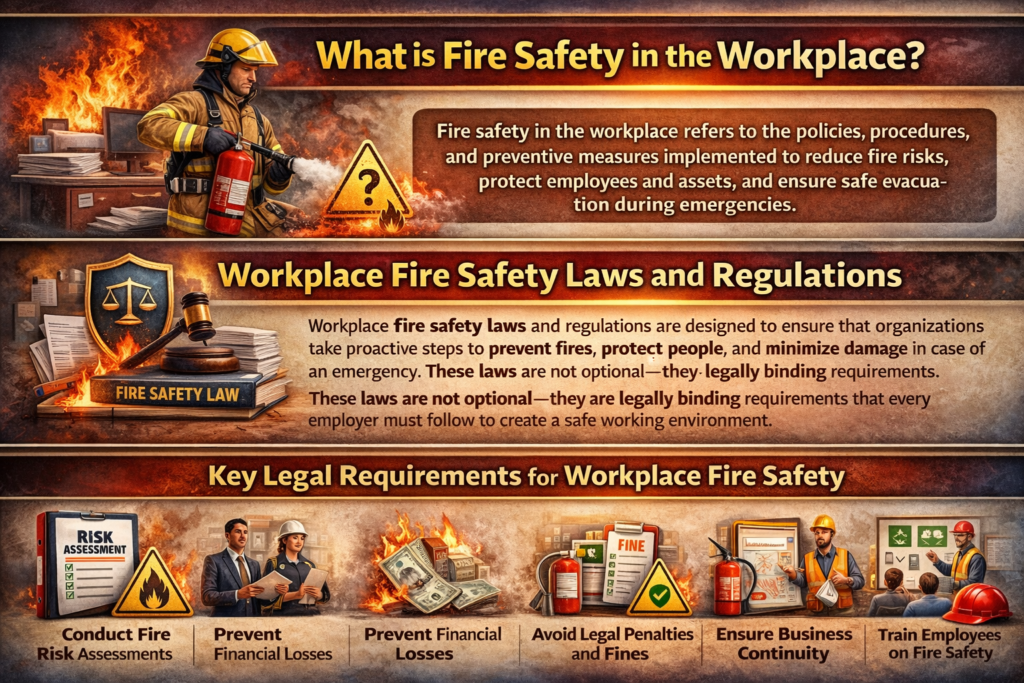
Workplace Fire Safety Laws and Regulations
Workplace fire safety laws and regulations are designed to ensure that organizations take proactive steps to prevent fires, protect people, and minimize damage in case of an emergency. These laws are not optional—they are legally binding requirements that every employer must follow to create a safe working environment.
Understanding and implementing these regulations properly helps organizations reduce risks, avoid legal consequences, and build a strong safety culture within the workplace.
Importance of Legal Compliance in Fire Safety
Legal compliance in fire safety is more than just following rules—it is about protecting lives, safeguarding assets, and ensuring smooth business operations. Below are the key reasons why compliance is essential:
Protect Employees and Visitors
The primary objective of fire safety laws is to ensure the safety of everyone present in the workplace.
- Employees spend a significant portion of their day at work, making it essential to provide a safe environment
- Visitors, clients, and contractors may not be familiar with the workplace layout
- Proper safety measures reduce the risk of injuries, fatalities, and panic during emergencies
A compliant workplace ensures that everyone knows how to respond quickly and safely in case of a fire.
Prevent Financial Losses
Fire incidents can cause severe financial damage to businesses.
- Destruction of property, equipment, and inventory
- Cost of repairs and replacements
- Loss of productivity due to downtime
- Potential increase in insurance premiums
Investing in fire safety measures is far more cost-effective than dealing with the aftermath of a fire.
Avoid Legal Penalties and Fines
Failure to comply with fire safety regulations can result in serious legal consequences.
- Heavy fines and penalties from regulatory authorities
- Legal actions or lawsuits
- Business closure in severe cases
Compliance protects organizations from legal risks and ensures smooth operations without interruptions.
Ensure Business Continuity
A fire can disrupt or completely shut down business operations.
- Loss of critical data and infrastructure
- Delays in services or production
- Damage to brand reputation
Proper fire safety planning helps businesses recover quickly and maintain continuity even after an incident.
Key Legal Requirements for Workplace Fire Safety
Most fire safety laws around the world follow similar principles. Employers are responsible for identifying risks, implementing preventive measures, and preparing for emergencies.
Conduct Fire Risk Assessments
Fire risk assessment is the foundation of workplace fire safety and a legal requirement in most countries.
What is a Fire Risk Assessment?
It is a systematic process of identifying potential fire hazards, evaluating risks, and implementing measures to reduce or eliminate those risks.
Key Steps Involved
1. Identify Fire Hazards
- Electrical equipment (faulty wiring, overloaded circuits)
- Flammable substances (chemicals, fuels, paper)
- Heat sources (machinery, heaters, cooking equipment)
2. Identify People at Risk
- Employees working in different areas
- Visitors unfamiliar with evacuation routes
- Vulnerable individuals (elderly, disabled persons)
3. Evaluate and Reduce Risks
- Determine the likelihood of fire occurrence
- Assess potential impact
- Introduce preventive measures
4. Record Findings
- Maintain written documentation of risks and actions taken
- Use records for audits and inspections
5. Review and Update Regularly
- Update assessments when workplace conditions change
- Review after incidents or near misses
A proper risk assessment helps in preventing fires before they occur.
Provide Fire Safety Equipment
Employers are legally required to install and maintain appropriate fire safety equipment.
Essential Fire Safety Equipment
Fire Extinguishers
- Used to control small fires in early stages
- Must be suitable for different fire types (electrical, chemical, etc.)
- Should be easily accessible and regularly inspected
Fire Alarms and Detectors
- Detect smoke or heat and alert occupants
- Provide early warning to evacuate safely
- Should be tested regularly
Emergency Lighting
- Helps people evacuate safely during power failure
- Illuminates escape routes and exits
- Must function properly at all times
Properly installed equipment can significantly reduce damage and save lives.
Develop Emergency Fire Safety Plans
Every workplace must have a clear and well-documented emergency plan.
Key Components of an Emergency Plan
Evacuation Procedures
- Step-by-step instructions on what to do during a fire
- Clearly defined escape routes
- Procedures for assisting vulnerable individuals
Assembly Points
- Designated safe locations outside the building
- Easy to access and known to all employees
- Used for headcounts after evacuation
Emergency Contacts
- Fire department numbers
- Internal emergency coordinators
- First aid responders
A well-prepared plan ensures quick and organized response during emergencies.
Train Employees on Fire Safety
Training is a crucial legal and practical requirement to ensure employees know how to act during a fire.
Types of Fire Safety Training
Fire Awareness Training
- Understanding fire risks and hazards
- Preventive measures
- Safe behavior in the workplace
Fire Extinguisher Training
- How to use different types of extinguishers
- When it is safe to fight a fire
Emergency Response Drills
- Practice evacuation procedures
- Improve response time and coordination
- Identify weaknesses in the plan
Benefits of Employee Training
- Increases confidence during emergencies
- Reduces panic and confusion
- Improves overall workplace safety culture
Well-trained employees are the first line of defense against workplace fires.
Workplace fire safety laws and regulations provide a structured framework to prevent fires and manage emergencies effectively. By complying with legal requirements such as conducting risk assessments, installing proper equipment, developing emergency plans, and training employees, organizations can create a safer environment for everyone.
Adopting these practices not only ensures compliance but also demonstrates a commitment to safety, responsibility, and long-term business success.
Fire Risk Assessment: Step-by-Step Guide
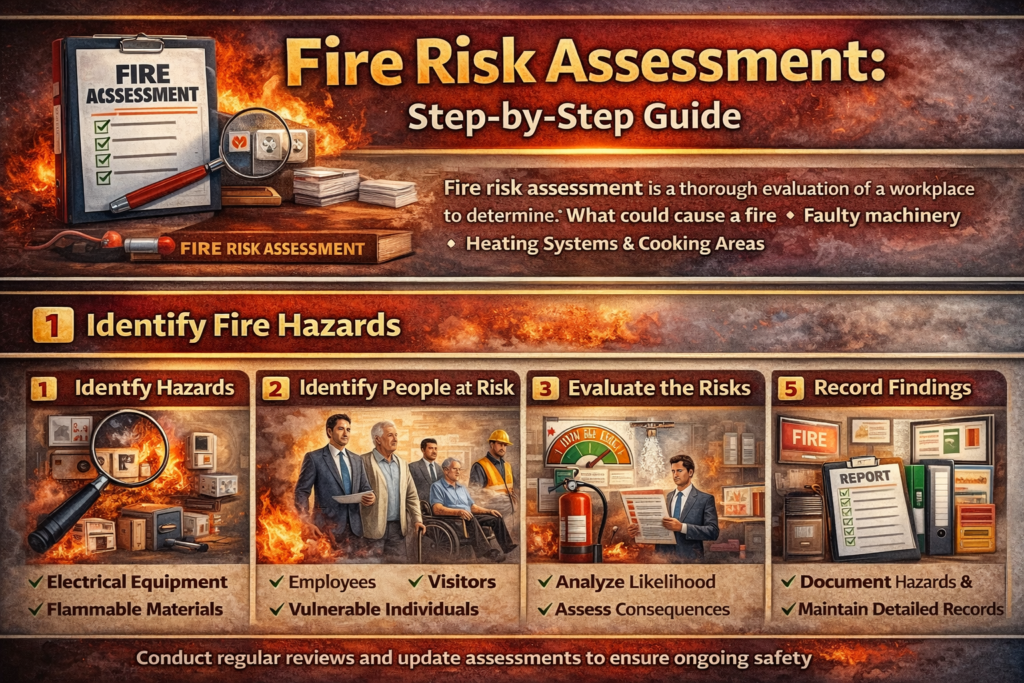
Fire risk assessment is the core element of workplace fire safety. It is a structured and systematic process used to identify potential fire hazards, evaluate the level of risk, and implement effective control measures to prevent fire incidents. Conducting a proper fire risk assessment is not only a legal requirement in many countries but also a critical practice for protecting lives, property, and business operations.
A well-executed fire risk assessment helps organizations identify weaknesses before they turn into disasters and ensures that appropriate preventive and protective measures are in place.
What is a Fire Risk Assessment?
A fire risk assessment is a thorough evaluation of a workplace to determine:
- What could cause a fire
- Who might be at risk
- How serious the risk is
- What actions are needed to reduce or eliminate the risk
It is a proactive approach that focuses on prevention rather than reaction.For a deeper understanding, check our detailed article on what is a fire risk assessment and how it is conducted in workplaces.
Step 1: Identify Fire Hazards
The first step in any fire risk assessment is to identify all possible sources that could start a fire. Fire hazards generally fall into three main categories: sources of ignition, fuel, and oxygen.
Common Fire Hazards in the Workplace
Electrical Equipment
Electrical faults are one of the leading causes of workplace fires.
- Overloaded sockets and circuits
- Damaged or exposed wiring
- Faulty machinery or equipment
- Improper use of extension cords
Regular inspection and maintenance of electrical systems are essential.
Flammable Materials
These materials can easily ignite and contribute to the spread of fire.
- Chemicals and solvents
- Paper, cardboard, and packaging materials
- Fuels such as petrol or diesel
- Cleaning products with flammable properties
Proper storage and labeling are crucial to minimize risks.
Heating Systems
Heating devices can become ignition sources if not properly maintained.
- Portable heaters placed near combustible materials
- Boilers and furnaces
- Overheating machinery
Ensure safe placement and routine servicing of heating equipment.
Cooking Areas
Workplaces with kitchens or canteens face additional risks.
- Open flames from gas stoves
- Oil and grease buildup
- Unattended cooking equipment
Implement strict safety procedures in kitchen areas.
Step 2: Identify People at Risk
Once hazards are identified, the next step is to determine who may be affected by a fire.
Categories of People at Risk
Employees
- Staff working in different departments
- Night shift workers who may have limited supervision
Visitors
- Clients or guests unfamiliar with the building layout
- Individuals who may not know evacuation routes
Disabled or Vulnerable Individuals
- People with mobility, hearing, or visual impairments
- Elderly individuals
Special arrangements must be made to assist them during evacuation.
Contractors and Temporary Workers
- Workers who may not be fully aware of safety procedures
- External personnel working on-site
Proper briefing and supervision are essential.
Step 3: Evaluate the Risks
After identifying hazards and people at risk, the next step is to analyze the level of risk and determine how dangerous each hazard is.
Key Factors to Consider
Likelihood of Fire Occurrence
- How likely is it that a fire could start?
- Are hazards frequently present?
- Are safety controls already in place?
Potential Consequences
- How severe could the damage be?
- Could it result in injuries or fatalities?
- Would it disrupt business operations?
Risk Prioritization
- High-risk areas should be addressed immediately
- Medium and low risks should also be managed systematically
This step helps organizations focus on the most critical risks first.
Step 4: Implement Control Measures
Once risks are evaluated, appropriate actions must be taken to eliminate or reduce those risks.
Types of Control Measures
Remove or Reduce Hazards
- Eliminate unnecessary flammable materials
- Replace faulty electrical equipment
- Improve workplace layout
Improve Storage Practices
- Store flammable substances in secure, labeled containers
- Keep materials away from heat sources
- Maintain proper ventilation
Install Fire Protection Systems
- Fire alarms and smoke detectors
- Fire extinguishers suitable for different fire types
- Sprinkler systems
Establish Safe Work Procedures
- Implement no-smoking policies
- Ensure proper handling of hazardous materials
- Enforce housekeeping standards
Control measures are essential to prevent fires and limit their impact.
Step 5: Record Findings
Documentation is a crucial part of the fire risk assessment process.
What Should Be Recorded?
- Identified hazards
- People at risk
- Risk evaluation results
- Control measures implemented
- Responsibilities assigned
Importance of Documentation
- Provides evidence of legal compliance
- Helps during inspections and audits
- Serves as a reference for future improvements
Proper records ensure accountability and continuous safety management.
Step 6: Review and Update the Assessment
Fire risk assessment is not a one-time activity—it must be regularly reviewed and updated.
When Should You Review?
After Workplace Changes
- New equipment or machinery
- Changes in layout or processes
- Introduction of new materials
Following Incidents or Near Misses
- Fire incidents
- Equipment failures
- Safety breaches
Periodic Reviews
- Regular scheduled assessments (e.g., annually)
- Routine safety inspections
Continuous review ensures that safety measures remain effective and up to date.
A fire risk assessment is a systematic and ongoing process that plays a vital role in workplace safety. By identifying hazards, understanding who is at risk, evaluating potential dangers, and implementing effective control measures, organizations can significantly reduce the likelihood of fire incidents.
Regular documentation and continuous review further strengthen safety practices, ensuring compliance with regulations and creating a secure working environment for everyone.
| Step | Action | Description |
|---|---|---|
| Step 1 | Identify Fire Hazards | Recognize potential sources of fire such as electrical faults, flammable materials, and heat sources. |
| Step 2 | Identify People at Risk | Determine who may be affected including employees, visitors, and vulnerable individuals. |
| Step 3 | Evaluate Risks | Assess the likelihood and impact of fire hazards to prioritize safety measures. |
| Step 4 | Implement Control Measures | Apply preventive actions such as removing hazards, improving storage, and installing safety systems. |
| Step 5 | Record Findings | Document all identified risks, actions taken, and responsibilities assigned. |
| Step 6 | Review & Update | Regularly review assessments and update them after changes or incidents. |
Example of Workplace Fire Incident
A workplace fire caused by overloaded electrical circuits resulted in major equipment damage and business downtime. Investigation showed lack of maintenance and poor safety checks. After implementing proper fire safety measures, the organization significantly reduced risks.
Common Causes of Workplace Fires
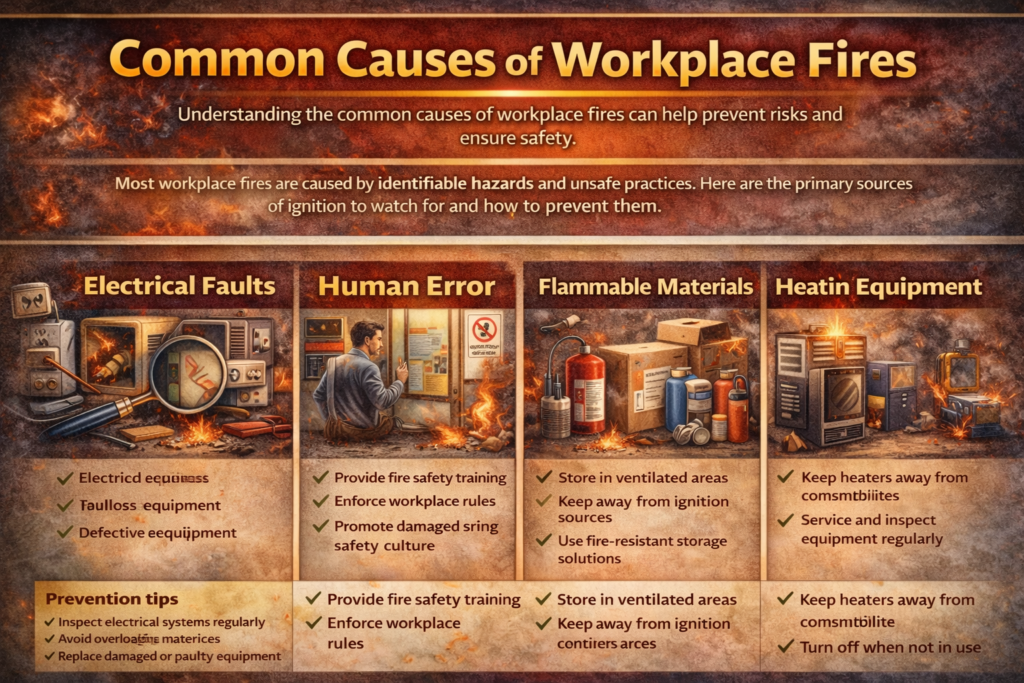
Understanding the common causes of workplace fires is essential for effective prevention and risk management. Most fire incidents do not occur randomly—they are often the result of identifiable hazards, unsafe practices, or lack of proper maintenance. By recognizing these causes, organizations can take proactive steps to eliminate risks and create a safer working environment.
Workplace fires typically start when three elements come together: heat (ignition source), fuel, and oxygen. Removing or controlling any of these elements can significantly reduce the likelihood of a fire.
Electrical Faults
Electrical issues are one of the leading causes of workplace fires across many industries. Since almost every workplace depends on electrical systems, even a small fault can quickly escalate into a serious hazard.
Common Electrical Fire Risks
Overloaded Circuits
- Plugging too many devices into a single outlet
- Excessive use of extension leads and adapters
- High-power equipment drawing more current than the circuit can handle
Overloading causes overheating, which can ignite surrounding materials.
Faulty or Damaged Wiring
- Exposed or frayed wires
- Poorly installed electrical systems
- Aging wiring infrastructure
Damaged wiring can create sparks, leading to fire outbreaks.
Defective Electrical Equipment
- Malfunctioning machines
- Poor-quality appliances
- Lack of regular maintenance
Faulty equipment increases the risk of short circuits and overheating.
Prevention Tips for Electrical Fires
- Conduct regular electrical inspections
- Avoid overloading sockets
- Replace damaged wiring immediately
- Use certified and well-maintained equipment
Human Error
Human behavior plays a significant role in workplace fire incidents. Many fires occur due to carelessness, lack of awareness, or failure to follow safety procedures.
Common Human-Related Fire Risks
Negligence
- Leaving equipment switched on unattended
- Ignoring safety protocols
- Blocking fire exits or escape routes
Even minor negligence can result in major consequences.
Improper Use of Equipment
- Using machinery without proper training
- Misusing electrical or heating devices
- Operating equipment beyond its safe limits
Incorrect usage can generate heat or sparks, leading to fires.
Smoking in Restricted Areas
- Discarding cigarette butts improperly
- Smoking near flammable materials
This is a common but preventable cause of fire incidents.
Prevention Tips for Human Error
- Provide regular fire safety training
- Enforce strict workplace policies
- Promote a strong safety culture
- Display clear warning signs
Flammable Materials
Flammable and combustible materials act as fuel for fires, allowing them to spread rapidly once ignited. Many workplaces store or use such materials, making proper handling essential.
Common Flammable Materials
Chemicals and Solvents
- Cleaning agents
- Industrial chemicals
- Paints and adhesives
These substances can ignite easily when exposed to heat or sparks.
Paper and Packaging Materials
- Cardboard boxes
- Office paper
- Packaging waste
These materials burn quickly and can accelerate fire spread.
Fuels and Gases
- Petrol, diesel
- Gas cylinders
- Aerosols
Highly flammable and dangerous if not stored properly.
Prevention Tips for Flammable Materials
- Store materials in designated, ventilated areas
- Use fire-resistant storage cabinets
- Keep flammable substances away from ignition sources
- Maintain proper labeling and handling procedures
Heating Equipment
Heating equipment is another common source of workplace fires, especially during colder seasons or in industrial environments.
Common Heating-Related Risks
Space Heaters
- Placed too close to combustible materials
- Left unattended for long periods
- Poor-quality or faulty devices
Space heaters can easily ignite nearby objects such as paper or fabric.
Boilers and Furnaces
- Lack of maintenance
- Overheating due to malfunction
- Accumulation of dust or debris
Poorly maintained systems increase fire risk significantly.
Industrial Machinery
- Equipment generating excessive heat
- Friction due to lack of lubrication
- Overuse without cooling periods
Overheating machinery can act as an ignition source.
Prevention Tips for Heating Equipment
- Keep heaters away from flammable materials
- Conduct regular servicing and inspections
- Turn off equipment when not in use
- Use only approved and safe heating devices
Additional Hidden Causes of Workplace Fires
To create a high-ranking and comprehensive blog, it’s important to include causes that many competitors miss:
Poor Housekeeping
- Accumulation of waste and debris
- Clutter blocking exits
Lack of Maintenance
- Ignoring routine inspections
- Delayed repairs
Arson or Intentional Fires
- Unauthorized access
- Lack of security measures
Static Electricity
- Common in industrial environments
- Can ignite flammable vapors
Workplace fires are often preventable when their root causes are properly understood and managed. Electrical faults, human error, flammable materials, and heating equipment are among the most common sources of fire incidents. By addressing these risks through proper maintenance, training, and safety practices, organizations can significantly reduce the likelihood of fires.
A proactive approach to identifying and controlling these causes not only enhances workplace safety but also ensures compliance with fire safety regulations and protects long-term business operations.
Example of Workplace Fire Incident
A workplace fire caused by overloaded electrical circuits resulted in major equipment damage and business downtime. Investigation showed lack of maintenance and poor safety checks. After implementing proper fire safety measures, the organization significantly reduced risks.
Fire Prevention Strategies in the Workplace
Fire prevention is the most effective way to protect lives, property, and business operations. While fire safety systems like alarms and extinguishers are essential, preventing a fire from starting in the first place is always the best strategy. A proactive approach to fire prevention reduces risks, ensures compliance with safety regulations, and creates a safer working environment for everyone.
Effective fire prevention is not based on a single action—it requires continuous monitoring, proper planning, employee awareness, and regular maintenance. Below are the key strategies every workplace should implement in detail
Maintain Equipment
Proper maintenance of workplace equipment is crucial in preventing fire incidents. Faulty or poorly maintained equipment can easily become a source of ignition.
Why Equipment Maintenance is Important
- Prevents overheating and electrical faults
- Reduces the risk of sparks and short circuits
- Ensures safe and efficient operation of machinery
Regular Inspections
Routine inspections help identify potential issues before they become serious hazards.
What to Inspect?
- Electrical systems and wiring
- Machinery and production equipment
- Heating and cooling systems
- Fire safety equipment (alarms, extinguishers)
Benefits of Regular Inspections
- Early detection of faults
- Reduced risk of unexpected failures
- Improved workplace safety
Inspections should be conducted by qualified personnel and scheduled regularly.
Preventive Maintenance
Preventive maintenance involves servicing equipment before problems occur.
Key Practices
- Lubricating moving parts to reduce friction
- Replacing worn-out components
- Cleaning equipment to prevent dust buildup
- Testing safety systems periodically
Why It Matters
- Prevents equipment breakdowns
- Minimizes fire risks caused by overheating
- Extends the lifespan of machinery
A well-maintained workplace significantly lowers the chances of fire incidents.
Proper Storage of Flammable Materials
Incorrect storage of flammable substances is a major cause of workplace fires. Proper storage practices are essential to minimize risks.
Safe Storage Practices
Store Flammable Materials Safely
- Keep materials in designated storage areas
- Maintain a safe distance from heat sources
- Ensure proper ventilation
Use Fire-Resistant Storage Cabinets
- Special cabinets designed to contain flammable substances
- Reduce the spread of fire in case of ignition
Use Labeled Containers
Proper labeling ensures safe handling and awareness.
Importance of Labeling
- Identifies hazardous materials clearly
- Provides handling and storage instructions
- Helps emergency responders act quickly
Best Practices
- Use standardized hazard labels
- Avoid storing materials in unmarked containers
- Train employees to understand labeling systems
Proper storage and labeling reduce confusion and prevent accidental fires.
Good Housekeeping Practices
Good housekeeping is one of the simplest yet most effective fire prevention strategies. A clean and organized workplace reduces the availability of fuel for fires.
Remove Waste Regularly
Accumulated waste can act as fuel for fires.
Common Waste Materials
- Paper and cardboard
- Packaging materials
- Dust and debris
Best Practices
- Dispose of waste daily
- Use designated waste bins
- Separate hazardous waste from general waste
Keep Exits and Pathways Clear
Blocked exits can turn a small fire into a major disaster.
Why It’s Important
- Ensures quick and safe evacuation
- Prevents panic during emergencies
- Allows emergency responders easy access
Key Actions
- Keep emergency exits unobstructed
- Avoid storing items in corridors
- Clearly mark escape routes
Good housekeeping improves both fire prevention and emergency response.
Electrical Safety Measures
Electrical hazards are one of the most common causes of workplace fires. Proper electrical safety practices are essential to minimize risks.
Avoid Overloading Circuits
Overloading electrical systems can lead to overheating and fire.
Common Causes
- Plugging multiple devices into one outlet
- Using low-quality extension cords
- Operating high-power equipment on unsuitable circuits
Prevention Tips
- Distribute electrical load evenly
- Use certified power strips
- Avoid daisy-chaining extension cords
Inspect Wiring Regularly
Faulty wiring is a major fire hazard.
What to Look For?
- Frayed or exposed wires
- Loose connections
- Burn marks or unusual smells
Best Practices
- Replace damaged wiring immediately
- Conduct periodic electrical audits
- Hire qualified electricians for repairs
Additional Electrical Safety Tips
- Turn off equipment when not in use
- Keep electrical panels accessible
- Avoid using damaged plugs or sockets
Proper electrical safety significantly reduces fire risks in the workplace.
Advanced Fire Prevention Strategies
To make your blog more comprehensive and competitive, include these advanced strategies that many blogs often miss:
Implement Fire Safety Policies
- Develop clear workplace fire safety rules
- Enforce no-smoking zones
- Assign responsibilities to staff
Employee Awareness Programs
- Conduct regular safety training sessions
- Display fire safety signage
- Encourage reporting of hazards
Use Technology for Fire Prevention
- Smart fire detection systems
- Automated shutdown systems
- Remote monitoring tools
Routine Fire Drills
- Practice emergency evacuation
- Identify weaknesses in response plans
- Improve coordination among employees
Fire prevention strategies are essential for reducing the risk of workplace fires and ensuring a safe working environment. By maintaining equipment, storing flammable materials properly, practicing good housekeeping, and following electrical safety measures, organizations can significantly minimize fire hazards.
A proactive and well-structured fire prevention plan not only protects people and property but also enhances compliance, operational efficiency, and overall workplace safety culture.
Fire Safety in Different Work Environments
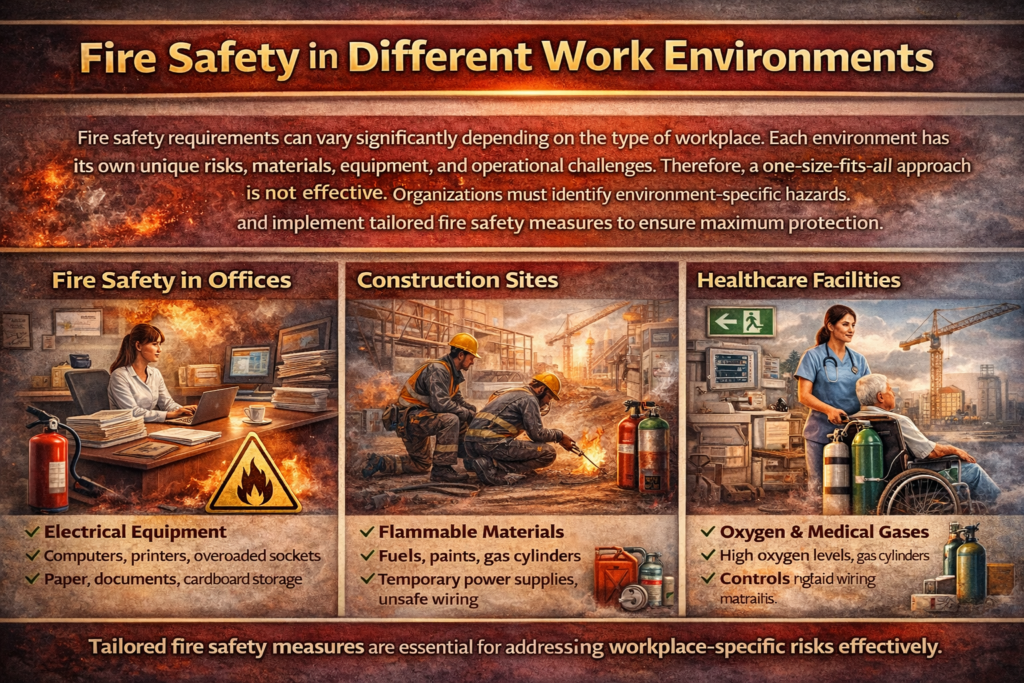
Fire safety requirements can vary significantly depending on the type of workplace. Each environment has its own unique risks, materials, equipment, and operational challenges. Therefore, a one-size-fits-all approach is not effective. Organizations must identify environment-specific hazards and implement tailored fire safety measures to ensure maximum protection.
Understanding these differences not only improves safety but also helps target industry-specific risks, which is an important factor for both compliance and SEO ranking.
Fire Safety in Offices
Office environments may appear low-risk, but they still face several fire hazards, primarily related to electrical systems and combustible materials.
Common Fire Risks in Offices
Electrical Equipment
- Computers, printers, and office devices running continuously
- Overloaded power sockets and extension cords
- Faulty wiring or poorly maintained equipment
Electrical faults are one of the leading causes of office fires.
Paper and Combustible Materials
- Large amounts of paper, files, and documents
- Cardboard storage boxes
- Office furniture made from combustible materials
These materials can fuel a fire and allow it to spread quickly.
Fire Safety Measures for Offices
Electrical Safety Management
- Avoid overloading circuits
- Use certified electrical equipment
- Conduct regular inspections
Safe Storage Practices
- Store paper and files away from heat sources
- Maintain organized storage systems
- Reduce unnecessary clutter
Fire Detection and Alarms
- Install smoke detectors throughout the office
- Ensure alarms are tested regularly
Employee Awareness
- Train staff on fire safety procedures
- Conduct evacuation drills
A well-managed office environment significantly reduces fire risks.
Fire Safety in Construction Sites
Construction sites are considered high-risk environments due to the presence of flammable materials, temporary installations, and ongoing activities.
Common Fire Risks on Construction Sites
Flammable Materials
- Fuels such as petrol and diesel
- Paints, solvents, and adhesives
- Gas cylinders
These materials can ignite easily if not handled properly.
Temporary Electrical Wiring
- Temporary power supplies
- Improperly installed wiring
- Exposure to harsh conditions
Faulty temporary wiring increases fire risk.
Hot Work Activities
- Welding, cutting, and grinding
- Sparks and high temperatures
These activities can easily ignite nearby materials.
Fire Safety Measures for Construction Sites
Proper Storage of Materials
- Store flammable substances in designated areas
- Keep materials away from ignition sources
Control of Hot Work
- Implement permit-to-work systems
- Provide fire watchers during operations
Electrical Safety
- Use safe and approved temporary wiring
- Conduct regular inspections
Fire Fighting Equipment
- Provide portable fire extinguishers on-site
- Ensure easy accessibility
Worker Training
- Train workers on fire risks and safety procedures
- Promote hazard reporting
Strong control measures are essential due to the dynamic nature of construction sites.
Fire Safety in Healthcare Facilities
Healthcare facilities present unique fire safety challenges due to the presence of vulnerable individuals and specialized equipment.
Common Fire Risks in Healthcare Settings
Oxygen and Medical Gases
- Oxygen-rich environments increase fire intensity
- Improper handling can lead to rapid fire spread
Electrical Equipment
- Medical devices operating continuously
- Complex electrical systems
Restricted Mobility of Patients
- Patients who cannot evacuate independently
- Dependence on medical equipment
Evacuation in healthcare settings is more complex than in other workplaces.
Fire Safety Measures for Healthcare Facilities
Safe Handling of Oxygen and Gases
- Store cylinders properly
- Keep away from heat sources
- Train staff in safe handling
Specialized Evacuation Plans
- Horizontal evacuation (moving patients to safe zones)
- Use of evacuation aids (chairs, stretchers)
Fire Compartmentation
- Divide buildings into fire-resistant zones
- Prevent rapid fire spread
Staff Training and Preparedness
- Train staff for emergency response
- Assign roles for patient evacuation
Regular Drills and Monitoring
- Conduct fire drills specific to healthcare scenarios
- Monitor equipment and systems regularly
Patient safety is the top priority, requiring highly organized and controlled evacuation procedures.
Why Industry-Specific Fire Safety Matters
Implementing fire safety measures tailored to each work environment provides several benefits:
- Addresses unique risks effectively
- Improves compliance with safety regulations
- Enhances emergency response efficiency
- Reduces the likelihood of fire incidents
Organizations that adopt environment-specific strategies are better prepared and more resilient.
Different workplaces require different fire safety approaches due to their unique risks and operational conditions. Offices must focus on electrical safety and combustible materials, construction sites require strict control of flammable substances and hot work, while healthcare facilities demand specialized evacuation planning and handling of medical gases.
By understanding these differences and implementing targeted safety measures, organizations can significantly improve workplace safety and ensure effective fire risk management across all environments.
Fire Protection Systems
Fire protection systems are essential components of workplace safety designed to detect, control, and limit the spread of fire. While fire prevention focuses on stopping fires before they start, fire protection systems ensure that if a fire does occur, its impact is minimized and people can evacuate safely.
These systems are generally divided into two main categories:
- Active Fire Protection (AFP) – systems that actively detect and respond to fire
- Passive Fire Protection (PFP) – built-in structural measures that contain fire and slow its spread
Both systems work together to provide a comprehensive fire safety strategy.
Active Fire Protection (AFP)
Active fire protection systems are designed to detect fires early and take immediate action to control or extinguish them. These systems often require manual or automatic activation.
Importance of Active Fire Protection
- Provides early warning to occupants
- Helps control fire before it spreads
- Reduces damage to property
- Supports safe and timely evacuation
Fire Alarms and Detection Systems
Fire alarms are the first line of defense in any workplace.
How Fire Alarms Work
- Detect smoke, heat, or flames
- Trigger audible and visual alerts
- Notify building occupants to evacuate
Types of Fire Detection Systems
Smoke Detectors
- Detect smoke particles in the air
- Ideal for offices and indoor environments
Heat Detectors
- Activate when temperature rises rapidly
- Suitable for kitchens and industrial areas
Manual Call Points
- Allow individuals to raise an alarm manually
- Installed near exits and accessible locations
Best Practices
- Install alarms in all critical areas
- Test systems regularly
- Ensure alarms are loud and visible
Early detection can save lives and significantly reduce fire damage.
Sprinkler Systems
Sprinkler systems automatically release water when a fire is detected.
How Sprinklers Work
- Activated by heat from a fire
- Release water directly over the affected area
- Control or extinguish the fire in early stages
Benefits of Sprinkler Systems
- Rapid response without human intervention
- Limits fire spread
- Reduces heat and smoke
Types of Sprinkler Systems
- Wet pipe systems (most common)
- Dry pipe systems (used in cold environments)
- Pre-action systems (for sensitive areas like data centers)
Maintenance Tips
- Conduct routine inspections
- Ensure water supply is adequate
- Test system functionality periodically
Sprinklers are highly effective in minimizing fire damage and saving lives.
Fire Extinguishers
Fire extinguishers are portable devices used to control small fires in their early stages.
Types of Fire Extinguishers
Water Extinguishers
- Used for fires involving solid materials (wood, paper)
CO₂ Extinguishers
- Suitable for electrical fires
Foam Extinguishers
- Effective for flammable liquids
Dry Powder Extinguishers
- Multi-purpose use for various fire types
Proper Use of Fire Extinguishers (PASS Method)
- P – Pull the pin
- A – Aim at the base of the fire
- S – Squeeze the handle
- S – Sweep side to side
Key Guidelines
- Place extinguishers in accessible locations
- Train employees on proper usage
- Inspect regularly for functionality
Fire extinguishers are critical for immediate response before emergency services arrive.
Passive Fire Protection (PFP)
Passive fire protection involves structural and design elements that help contain fires and prevent their spread. These systems do not require activation—they are always in place and functioning.
Importance of Passive Fire Protection
- Slows down the spread of fire and smoke
- Provides more time for evacuation
- Protects structural integrity of buildings
- Supports firefighting efforts
Fire-Resistant Walls
Fire-resistant walls are specially designed to withstand fire for a specific period.
Features
- Made from fire-rated materials
- Prevent fire from spreading between areas
- Maintain building stability during fire
Benefits
- Protects critical areas
- Reduces fire damage
- Enhances overall building safety
These walls act as barriers, containing fire within a limited space.
Fire Doors
Fire doors are specially constructed doors that prevent the spread of fire and smoke.
Key Features
- Made with fire-resistant materials
- Automatically close during a fire
- Equipped with seals to block smoke
Importance of Fire Doors
- Protect escape routes
- Slow down fire progression
- Provide safe evacuation pathways
Best Practices
- Keep fire doors closed at all times
- Do not block or wedge them open
- Inspect regularly for damage
Fire doors play a crucial role in saving lives during emergencies.
Compartmentation
Compartmentation is the process of dividing a building into smaller sections to contain fire.
How It Works
- Uses walls, floors, and doors to create fire-resistant compartments
- Limits the spread of fire and smoke
Benefits of Compartmentation
- Provides more time for evacuation
- Reduces damage to the entire building
- Helps firefighters control the situation
Examples
- Separate office sections
- Fire-resistant ceilings and floors
- Protected stairwells
Compartmentation ensures that fire does not spread rapidly across the building.
Integration of Active and Passive Systems
For maximum effectiveness, workplaces should integrate both active and passive fire protection systems.
Why Integration is Important
- Active systems detect and respond to fire
- Passive systems contain and slow fire spread
- Together, they provide complete protection
Advanced Fire Protection Measures
To make your blog more competitive and comprehensive, include these advanced elements:
Smart Fire Detection Systems
- AI-based fire detection
- Remote monitoring
Fire Safety Audits
- Regular inspections by professionals
- Compliance checks
Building Management Systems (BMS)
- Integrated control of fire systems
- Real-time alerts and monitoring
Use of Fire-Resistant Materials
- Advanced construction materials
- Improved fire resistance ratings
Fire protection systems are essential for minimizing the impact of workplace fires. Active fire protection systems, such as alarms, sprinklers, and extinguishers, provide immediate response, while passive systems like fire-resistant walls, fire doors, and compartmentation help contain the fire and protect building integrity.
By implementing and maintaining both systems effectively, organizations can ensure a safer workplace, reduce risks, and comply with fire safety regulations.
Emergency Preparedness and Evacuation
Emergency preparedness and evacuation planning are critical components of workplace fire safety. Even with strong prevention measures in place, emergencies can still occur. The key to minimizing injuries, panic, and damage is having a well-structured evacuation plan that ensures everyone knows exactly what to do in case of a fire.
A properly designed evacuation strategy helps organizations respond quickly, maintain order, and protect lives during critical situations. It also ensures compliance with fire safety regulations and demonstrates a commitment to employee well-being.
Why Emergency Preparedness is Important
Effective emergency preparedness provides several essential benefits:
- Ensures quick and safe evacuation of all occupants
- Reduces panic and confusion during emergencies
- Minimizes injuries and potential fatalities
- Supports emergency responders (firefighters, rescue teams)
- Protects business continuity and reputation
Being prepared can make the difference between a controlled evacuation and a chaotic situation.
Key Elements of an Effective Evacuation Plan
A successful evacuation plan must be clear, practical, and easy to follow. Below are the essential elements explained in detail:
Clear Exit Routes
Clear and accessible exit routes are the foundation of any evacuation plan. Employees must be able to leave the building quickly and safely.
Marked Emergency Exits
- All exits should be clearly marked with illuminated signs
- Signs should be visible even in low-light or smoky conditions
- Exit maps should be displayed throughout the workplace
Employees should always know the nearest exit from their location.
Unobstructed Pathways
- Corridors and escape routes must be free from obstacles
- Avoid storing equipment, furniture, or materials in pathways
- Doors along escape routes should open easily and quickly
Blocked exits can lead to dangerous delays during emergencies.
Multiple Exit Options
- Provide more than one escape route wherever possible
- Reduces congestion and improves evacuation speed
Alternative routes are crucial if one exit becomes inaccessible.
Assembly Points
Assembly points are designated safe areas where employees gather after evacuation.
Importance of Assembly Points
- Helps ensure everyone is accounted for
- Keeps people away from danger zones
- Allows emergency services to operate without interference
Key Features of a Good Assembly Point
- Located at a safe distance from the building
- Easily accessible and clearly communicated to all employees
- Large enough to accommodate all occupants
Headcount and Accountability
- Supervisors or fire wardens should conduct roll calls
- Identify missing individuals quickly
- Report to emergency services if needed
Assembly points play a critical role in ensuring no one is left behind.
Emergency Roles and Responsibilities
Assigning specific roles ensures a coordinated and efficient response during emergencies.
Fire Wardens (Fire Marshals)
Fire wardens are responsible for overseeing evacuation procedures.
Key Responsibilities
- Guide employees to exits
- Ensure all areas are evacuated
- Check rooms, restrooms, and hidden spaces
- Report to emergency coordinators
Fire wardens act as leaders during emergencies.
First Aid Responders
First aid responders provide immediate medical assistance if needed.
Key Responsibilities
- Treat minor injuries
- Assist injured individuals during evacuation
- Coordinate with emergency medical services
Emergency Coordinators
- Manage overall emergency response
- Communicate with fire services
- Ensure evacuation procedures are followed
Importance of Role Assignment
- Reduces confusion and delays
- Ensures organized evacuation
- Improves response efficiency
Every employee should know their role or who to follow during an emergency.
Regular Fire Drills and Practice
Fire drills are essential to test the effectiveness of evacuation plans and ensure employees are prepared.
Why Fire Drills are Important
- Familiarize employees with evacuation procedures
- Identify weaknesses in the plan
- Improve response time and coordination
How Often Should Drills Be Conducted?
- At least twice a year (recommended)
- After major changes in workplace layout or staff
What to Evaluate During Drills
- Evacuation time
- Employee behavior and response
- Effectiveness of communication systems
- Accessibility of exit routes
Continuous Improvement
- Review drill outcomes
- Update evacuation plans accordingly
- Provide feedback and additional training
Regular practice builds confidence and ensures a smooth response during real emergencies.
Additional Elements for a High-Quality Evacuation Plan
To make your blog more comprehensive and competitive, include these advanced elements:
Emergency Communication Systems
- Public address (PA) systems
- Alarm signals with clear instructions
- Mobile alerts or notifications
Evacuation Maps and Signage
- Display clear floor plans
- Highlight exits, fire equipment, and assembly points
Special Provisions for Vulnerable Individuals
- Assign helpers for disabled persons
- Provide accessible evacuation routes
- Use evacuation chairs if necessary
Do’s and Don’ts During Evacuation
Do’s
- Stay calm and follow instructions
- Use designated exit routes
- Assist others if possible
Don’ts
- Do not use elevators
- Do not run or panic
- Do not return to the building
Emergency preparedness and evacuation planning are essential for ensuring workplace safety during fire incidents. By establishing clear exit routes, designating assembly points, assigning emergency roles, and conducting regular fire drills, organizations can ensure a safe and organized response.
A well-prepared workplace not only protects lives but also demonstrates professionalism, compliance, and a strong commitment to safety. Continuous improvement and regular training further enhance the effectiveness of evacuation plans.
Fire Safety Training in the Workplace
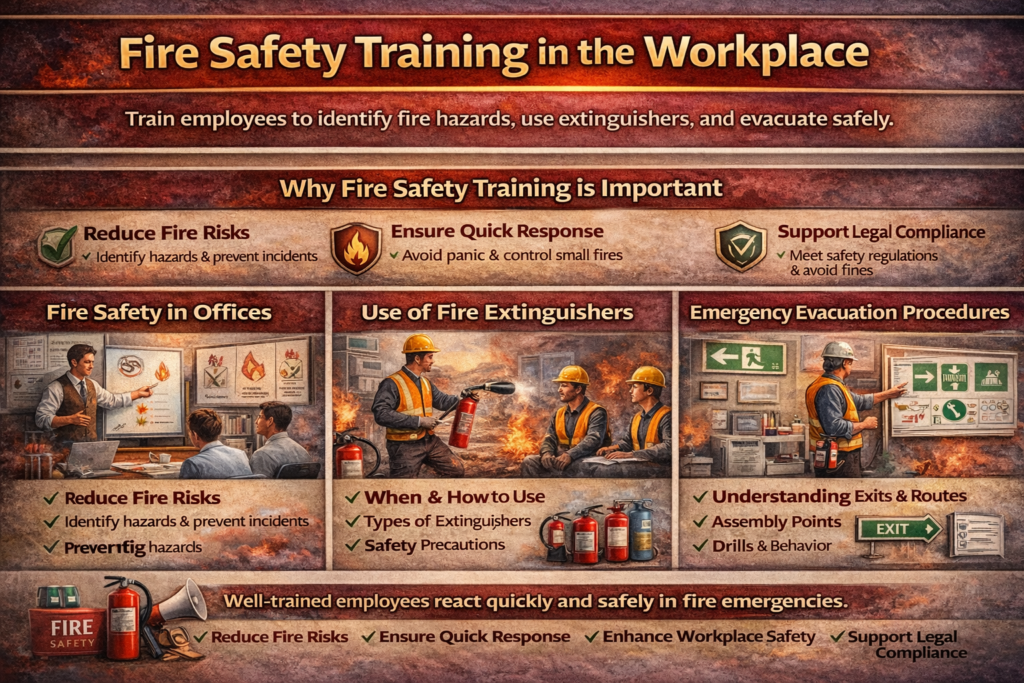
Fire safety training in the workplace is a critical element of an effective fire safety program. While having fire alarms, extinguishers, and evacuation plans is essential, these measures are only effective if employees know how to respond correctly during an emergency. Training equips staff with the knowledge, skills, and confidence needed to act quickly, safely, and responsibly in fire-related situations.
A well-trained workforce can significantly reduce the impact of a fire by preventing incidents, controlling small fires, and ensuring safe evacuation.
Why Fire Safety Training is Important
Fire safety training is not just a regulatory requirement—it is a practical necessity for every organization.
Key Reasons
- Helps employees identify fire hazards in their daily work
- Ensures quick and calm response during emergencies
- Reduces panic and confusion
- Minimizes injuries and property damage
- Supports compliance with workplace safety laws
Employees are often the first responders in a fire situation, making training essential.
Essential Fire Safety Training Topics
A comprehensive fire safety training program should cover multiple areas to ensure complete preparedness.
Fire Prevention Awareness
Fire prevention is the first and most important step in workplace safety.
What Employees Should Learn
Identifying Fire Hazards
- Electrical risks (damaged wires, overloaded sockets)
- Flammable materials (chemicals, paper, fuels)
- Unsafe practices (improper storage, poor housekeeping)
Safe Work Practices
- Proper handling of equipment
- Following safety protocols
- Maintaining cleanliness and organization
Reporting Hazards
- Informing supervisors about potential risks
- Taking immediate action to correct unsafe conditions
Awareness training helps employees prevent fires before they start.
Use of Fire Extinguishers
Employees should be trained on how to use fire extinguishers safely and effectively.
Key Learning Areas
Types of Fire Extinguishers
- Water extinguishers (for solid materials)
- CO₂ extinguishers (for electrical fires)
- Foam and dry powder extinguishers (for various fire types)
When to Use an Extinguisher
- Only for small, manageable fires
- When it is safe to do so
- When an exit route is available
How to Use (PASS Technique)
- P – Pull the pin
- A – Aim at the base of the fire
- S – Squeeze the handle
- S – Sweep from side to side
Safety Precautions
- Never attempt to fight large fires
- Always prioritize personal safety
- Evacuate if unsure
Proper training ensures employees act safely and confidently.
Emergency Evacuation Procedures
Evacuation training prepares employees to leave the workplace quickly and safely during a fire.
Key Components
Understanding Evacuation Routes
- Knowing primary and alternative exits
- Recognizing emergency signage
Assembly Points
- Knowing where to gather after evacuation
- Participating in headcounts
Behavior During Evacuation
- Stay calm and avoid panic
- Do not use elevators
- Assist others if needed
Importance of Practice
- Regular drills reinforce learning
- Improves response time
- Builds confidence
Evacuation training ensures a smooth and organized exit during emergencies.
Benefits of Fire Safety Training in the Workplace
Investing in fire safety training provides long-term advantages for both employees and organizations.
Reduced Risk of Fire Incidents
- Employees become more aware of hazards
- Preventive actions are taken proactively
- Unsafe practices are minimized
Prevention is always better than response.
Improved Response Time
- Employees know exactly what to do
- Faster reaction reduces fire spread
- Emergency procedures are executed efficiently
Quick action can save lives and property.
Enhanced Workplace Safety Culture
- Promotes responsibility and awareness
- Encourages teamwork during emergencies
- Builds a culture of safety and compliance
A strong safety culture leads to fewer incidents and better overall performance.
Legal and Regulatory Compliance
- Meets workplace safety requirements
- Avoids penalties and legal issues
- Demonstrates commitment to employee safety
Increased Employee Confidence
- Reduces fear and uncertainty
- Empowers employees to act effectively
- Improves morale and trust in the organization
Advanced Fire Safety Training Practices
To make your blog more comprehensive and competitive, include these advanced strategies:
Role-Specific Training
- Fire wardens receive advanced training
- First aid teams learn emergency medical response
- Supervisors manage evacuation coordination
Use of Simulations and Practical Sessions
- Hands-on extinguisher training
- Realistic fire drill scenarios
- Virtual training tools
Regular Refresher Courses
- Update employees on new procedures
- Reinforce knowledge and skills
- Ensure continuous improvement
Training Documentation
- Maintain records of training sessions
- Track employee participation
- Provide certificates if required
Fire safety training is a vital component of workplace safety that ensures employees are prepared to prevent and respond to fire emergencies effectively. By covering essential topics such as fire prevention, use of extinguishers, and evacuation procedures, organizations can significantly reduce risks and improve emergency response.
In addition to meeting legal requirements, effective training fosters a strong safety culture, enhances employee confidence, and protects both people and property. Continuous learning, regular drills, and advanced training methods further strengthen workplace preparedness.
Advanced Best Practices for High-Level Fire Safety
Achieving a high level of fire safety in the workplace requires more than just meeting basic legal requirements. Organizations that aim for excellence must adopt advanced strategies, modern technologies, and a proactive safety culture. These best practices not only reduce fire risks but also enhance operational efficiency, regulatory compliance, and long-term business resilience.
Implementing these advanced measures positions your organization ahead of competitors and demonstrates a strong commitment to health, safety, and continuous improvement.
Use Smart Fire Detection Systems
Modern workplaces are increasingly adopting intelligent fire detection systems that go beyond traditional alarms. These systems use advanced technologies to detect fire risks earlier and respond more efficiently.
AI-Based Fire Detection Sensors
Artificial Intelligence (AI) has transformed fire detection by improving accuracy and reducing false alarms.
Key Features
- Detect smoke, heat, and flame patterns in real time
- Analyze environmental changes using smart algorithms
- Differentiate between real fire threats and false triggers
Benefits
- Faster detection and response
- Reduced false alarms
- Improved safety in complex environments (factories, warehouses)
AI-powered systems provide early warning, allowing quicker action and minimizing damage.
Remote Monitoring Systems
Remote monitoring enables organizations to track fire safety systems from anywhere.
How It Works
- Connects fire alarms and sensors to centralized control systems
- Sends alerts via mobile devices, computers, or control rooms
- Allows real-time monitoring of multiple locations
Advantages
- Immediate notification of fire incidents
- Faster decision-making and response
- Ideal for large or multi-site organizations
Remote monitoring ensures 24/7 vigilance, even when the workplace is unattended.
Conduct Regular Fire Safety Audits
Regular audits are essential to ensure that fire safety systems and procedures remain effective and compliant.
Internal Safety Audits
Internal audits are conducted by the organization’s own safety team.
What They Include
- Inspection of fire safety equipment
- Review of risk assessments
- Evaluation of emergency procedures
Benefits
- Identifies gaps and weaknesses
- Ensures compliance with internal policies
- Promotes accountability
Third-Party Inspections
External audits are carried out by independent professionals or regulatory bodies.
Why They Matter
- Provide unbiased evaluation
- Ensure compliance with legal standards
- Enhance credibility and trust
Benefits
- Expert recommendations
- Improved safety standards
- Better preparedness for official inspections
Combining internal and external audits ensures a comprehensive safety evaluation.
Integrate a Strong Safety Culture
A strong safety culture is one of the most powerful tools for preventing workplace fires. It ensures that safety is not just a policy but a shared responsibility among all employees.
Employee Involvement
Employees should actively participate in maintaining fire safety.
Ways to Encourage Involvement
- Conduct regular safety meetings
- Encourage reporting of hazards
- Provide incentives for safe behavior
Benefits
- Increased awareness and accountability
- Early identification of risks
- Improved teamwork during emergencies
Continuous Improvement
Fire safety should be an ongoing process rather than a one-time effort.
Key Practices
- Regularly update safety procedures
- Learn from past incidents and near misses
- Adopt new technologies and best practices
Benefits
- Keeps safety measures up to date
- Enhances overall workplace resilience
- Reduces long-term risks
A proactive safety culture leads to sustainable and effective fire safety management.
Documentation and Reporting Systems
Proper documentation and reporting are essential for maintaining transparency, accountability, and continuous improvement in fire safety.
Maintain Safety Records
Accurate records help organizations track their fire safety performance.
What to Document
- Fire risk assessments
- Equipment inspection and maintenance logs
- Training records
- Fire drill reports
Importance
- Demonstrates legal compliance
- Supports audits and inspections
- Provides data for future improvements
Incident Reporting Systems
An effective reporting system ensures that all fire-related incidents and near misses are properly recorded and analyzed.
Key Elements
- Easy reporting procedures for employees
- Detailed incident investigation
- Corrective and preventive actions
Benefits
- Identifies root causes of incidents
- Prevents recurrence
- Improves overall safety performance
Additional Advanced Practices
To make your blog more comprehensive and SEO-friendly, include these often-missed points:
Integration with Building Management Systems (BMS)
- Centralized control of fire alarms, sprinklers, and ventilation
- Automated responses during emergencies
Use of Fire-Resistant Construction Materials
- Advanced materials that slow fire spread
- Improved structural integrity
Emergency Communication Technology
- Mobile alerts and notification systems
- Real-time instructions during emergencies
Data-Driven Safety Management
- Use analytics to identify trends and risks
- Improve decision-making
Advanced fire safety practices go beyond basic compliance to create a proactive, technology-driven, and people-focused safety system. By adopting smart detection systems, conducting regular audits, building a strong safety culture, and maintaining proper documentation, organizations can significantly enhance their fire safety standards.
These strategies not only reduce risks but also improve efficiency, ensure compliance, and strengthen business continuity. Organizations that invest in advanced fire safety measures are better prepared to prevent incidents and respond effectively when emergencies occur.
Workplace Fire Safety Checklist
A workplace fire safety checklist is a powerful tool that helps organizations ensure all essential fire safety measures are in place, functioning properly, and regularly maintained. Instead of relying on assumptions, a checklist provides a clear, structured approach to verify compliance, identify gaps, and improve safety standards.
Using a checklist consistently not only reduces fire risks but also supports legal compliance, employee safety, and operational continuity.
Why a Fire Safety Checklist is Important
- Ensures all safety measures are regularly reviewed
- Helps identify hazards before they become serious risks
- Improves accountability and documentation
- Supports audits and inspections
- Enhances overall workplace safety culture
A checklist transforms fire safety from a one-time task into a continuous process.
Essential Workplace Fire Safety Checklist
Below are the key elements every organization should include in its fire safety checklist, along with detailed explanations:
Fire Alarms Installed and Tested Regularly
Fire alarms are the first warning system in case of a fire.
What to Check
- Smoke and heat detectors are installed in all required areas
- Alarm systems are functioning properly
- Regular testing is conducted (weekly or monthly)
Why It Matters
- Early detection saves lives
- Provides time for safe evacuation
- Reduces fire damage
A non-functional alarm system can delay response and increase risk.
Fire Extinguishers Available and Maintained
Fire extinguishers are essential for controlling small fires before they spread.
What to Check
- Correct type of extinguishers (CO₂, foam, water, etc.)
- Easily accessible and properly placed
- Regular inspection and servicing
Why It Matters
- Enables quick response to minor fires
- Prevents escalation into major incidents
Employees must also be trained to use extinguishers safely.
Emergency Exits Clearly Marked and Unobstructed
Clear exit routes are critical for safe evacuation.
What to Check
- Exit signs are visible and illuminated
- Pathways are free from obstacles
- Doors open easily and are not locked
Why It Matters
- Ensures fast and safe evacuation
- Prevents panic and congestion
Blocked exits are one of the most dangerous fire safety violations.
Fire Risk Assessments Conducted and Updated
Fire risk assessments help identify hazards and implement control measures.
What to Check
- Assessments are documented
- Risks are clearly identified and evaluated
- Updates are made after changes or incidents
Why It Matters
- Prevents fire hazards before they occur
- Ensures compliance with legal requirements
Regular assessments keep safety measures relevant and effective.
Employees Trained in Fire Safety Procedures
Employees play a crucial role in fire prevention and emergency response.
What to Check
- Staff receive regular fire safety training
- Employees understand evacuation procedures
- Fire wardens are trained and assigned
Why It Matters
- Reduces panic during emergencies
- Improves response time
- Enhances overall safety culture
A trained workforce is your first line of defense.
Evacuation Plans Displayed and Communicated
A clear evacuation plan ensures organized response during emergencies.
What to Check
- Evacuation maps are displayed in visible areas
- Assembly points are clearly defined
- Procedures are communicated to all employees
Why It Matters
- Provides clear guidance during emergencies
- Ensures everyone knows where to go
Confusion during evacuation can lead to serious consequences.
Regular Fire Drills Conducted
Fire drills test the effectiveness of evacuation plans.
What to Check
- Drills are conducted at least twice a year
- All employees participate
- Performance is reviewed and improved
Why It Matters
- Improves preparedness
- Identifies weaknesses in plans
- Builds confidence among employees
Practice ensures a smooth and efficient evacuation.
Flammable Materials Stored Safely
Improper storage of flammable materials is a major fire hazard.
What to Check
- Materials stored in designated areas
- Proper labeling and containers used
- Kept away from ignition sources
Why It Matters
- Reduces risk of fire ignition
- Limits fire spread
Safe storage is essential for preventing workplace fires.
Common Fire Safety Mistakes in the Workplace
Even with safety measures in place, many organizations make critical mistakes that increase fire risks. Identifying and avoiding these mistakes is essential for maintaining a safe workplace.
Ignoring Regular Fire Risk Assessments
The Problem
- Assessments are outdated or not conducted
- Hazards remain unidentified
Impact
- Increased risk of fire incidents
- Non-compliance with regulations
Regular assessments are essential for effective risk management.
Blocking Emergency Exits
The Problem
- Exits obstructed by furniture or equipment
- Poor housekeeping practices
Impact
- Delays evacuation
- Increases risk of injuries or fatalities
Emergency exits must always remain clear and accessible.
Lack of Employee Training
The Problem
- Employees unaware of fire procedures
- No training on equipment use
Impact
- Panic during emergencies
- Ineffective response
Training is crucial for safety and preparedness.
Poor Maintenance of Equipment
The Problem
- Fire alarms not tested
- Extinguishers not serviced
- Faulty systems ignored
Impact
- Equipment failure during emergencies
- Increased fire damage
Maintenance ensures reliability of safety systems.
Improper Storage of Flammable Materials
The Problem
- Materials stored near heat sources
- Lack of proper labeling
Impact
- Higher risk of fire ignition
- Rapid fire spread
Proper storage is critical for prevention.
No Clear Evacuation Plan
The Problem
- Employees unsure what to do
- No defined routes or assembly points
Impact
- Chaos and confusion during emergencies
- Increased risk of injuries
A clear plan ensures safe and organized evacuation.
A well-structured workplace fire safety checklist ensures that all essential safety measures are in place and functioning effectively. It provides a practical framework for preventing fires, improving preparedness, and maintaining compliance with safety regulations.
At the same time, avoiding common fire safety mistakes is equally important. By addressing these gaps—such as lack of training, poor maintenance, and blocked exits—organizations can significantly reduce fire risks and create a safer, more resilient workplace environment.
Expert Tip:
Workplace fire safety is not just about compliance—it is about prevention, preparedness, and protection working together to create a safe and secure environment.
Conclusion
Fire safety in the workplace is a fundamental responsibility that directly impacts the well-being of employees, the protection of assets, and the continuity of business operations. A single fire incident can lead to severe consequences, including injuries, financial losses, operational disruptions, and long-term reputational damage. Therefore, organizations must adopt a proactive and structured approach to fire safety rather than reacting only after an incident occurs.If you are interested in building a career in this field, read our complete guide on how to become a fire safety officer in 2026, including salary and requirements.
By understanding and complying with fire safety laws and regulations, conducting thorough fire risk assessments, and implementing effective prevention and protection measures, businesses can significantly reduce the likelihood of fire incidents. Equally important is ensuring that employees are well-trained, emergency plans are clearly defined, and fire protection systems are properly maintained. When all these elements work together, they create a safe, prepared, and resilient workplace environment where risks are minimized and response capabilities are strong.
In addition to safety implementation, creating a high-ranking and authoritative blog requires a strategic approach to content development. Your content must be comprehensive, well-structured, and aligned with user intent, covering every critical aspect of the topic in depth. Including detailed explanations, practical examples, checklists, FAQs, and advanced insights not only improves readability but also increases engagement and credibility. By incorporating strong SEO practices such as keyword optimization, proper heading structure, and value-driven content, your blog can stand out from competitors.
Ultimately, success lies in combining expert-level knowledge with user-focused presentation. When your content provides real value, answers user queries effectively, and addresses gaps that competitors have missed, it naturally gains higher visibility on search engines. By consistently updating and improving your content, you can establish long-term authority and achieve top rankings in your niche.