Establishing a reliable health and safety loss event reporting and recording system is a critical element of effective workplace risk management. Organizations must have clear mechanisms in place to capture and document any unplanned events that may result in harm, damage, or operational disruption. These events, commonly referred to as loss events, include accidents, injuries, occupational illnesses, property damage, and even near misses that could have led to serious consequences. Accurately identifying and recording such incidents allows organizations to gain valuable insights into their underlying causes and take appropriate corrective and preventive measures.
A comprehensive reporting system goes beyond simple documentation; it creates a structured approach for collecting, analyzing, and managing incident-related information. By ensuring that all events are reported consistently and thoroughly, organizations can improve transparency, strengthen accountability, and meet legal and regulatory requirements. Moreover, the data generated through this system plays a vital role in identifying trends, evaluating the effectiveness of existing safety controls, and supporting continuous improvement in health and safety performance. This lesson therefore outlines the essential steps involved in developing an effective reporting and recording system, including identifying loss events, designing appropriate reporting forms, establishing clear procedures, planning implementation, maintaining accurate records, and ensuring timely reporting to relevant regulatory authorities.

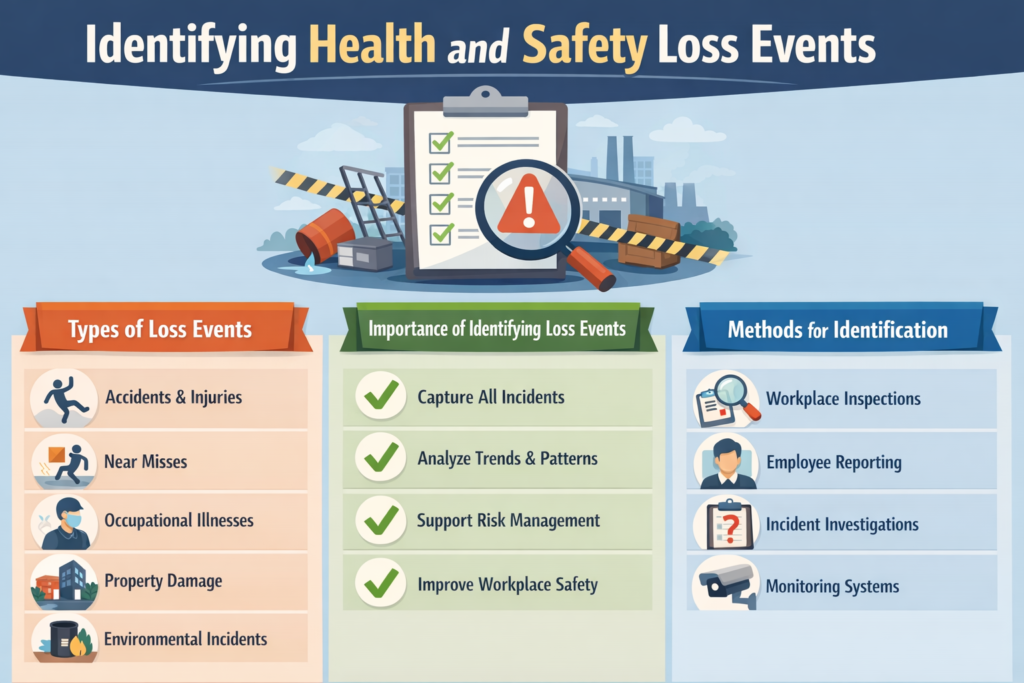
Identifying health and safety loss events is the foundation of any effective incident reporting and recording system. Without a clear understanding of what constitutes a loss event, organizations may fail to capture important information about workplace incidents, leading to incomplete data and ineffective safety management. Loss events include not only accidents that result in injury or damage but also near misses and other occurrences that have the potential to cause harm. Recognizing these events at an early stage enables organizations to take preventive measures and reduce the likelihood of recurrence.
In modern workplaces, where risks can arise from a variety of sources such as equipment, human behavior, and environmental conditions, the ability to accurately identify loss events is essential. It ensures that no incident goes unnoticed and that all relevant data is collected for analysis. This process supports informed decision-making, enhances compliance with safety regulations, and contributes to the development of a proactive safety culture. This section explores the different types of health and safety loss events, their importance, and the methods used to identify them effectively.
Understanding the different types of loss events is crucial for ensuring comprehensive reporting. Organizations must clearly define and categorize these events so that employees can easily recognize and report them.
Accidents and injuries are the most visible and commonly recognized types of loss events. These incidents involve physical harm to employees and may range from minor injuries to serious or fatal outcomes.
Accidents often occur due to unsafe conditions, unsafe acts, or a combination of both. Examples include slips, trips, falls, machinery-related injuries, and exposure to hazardous substances. These events require immediate attention, including medical treatment and investigation.
Near misses are incidents that did not result in injury or damage but had the potential to do so. They are often overlooked but are critical for preventing future accidents.
A near miss might involve a situation where an employee narrowly avoids injury, such as a falling object that misses a worker or a malfunctioning machine that does not cause harm. These events provide valuable opportunities for learning and improvement.
Occupational illnesses are health conditions that develop as a result of workplace exposures over time.
These illnesses may not be immediately visible and can develop gradually due to exposure to harmful substances, noise, or repetitive tasks. Examples include respiratory diseases, hearing loss, and musculoskeletal disorders.
Property damage refers to incidents that result in harm to equipment, tools, buildings, or other assets.
These events may occur due to equipment failure, human error, or external factors. While they may not always involve injury, they can disrupt operations and lead to financial losses.
Environmental incidents involve harm to the environment caused by workplace activities.
These may include chemical spills, air pollution, water contamination, or improper waste disposal. Such incidents can have serious consequences for both the environment and the organization.
Identifying loss events is a critical step in ensuring effective health and safety management. It provides the foundation for analysis, prevention, and continuous improvement.
Effective identification of loss events requires the use of systematic methods. Organizations must implement multiple approaches to ensure that all incidents are recognized and reported.
Workplace inspections involve regular checks of the work environment to identify hazards and potential risks.
Inspections can be conducted by safety officers, supervisors, or trained personnel. They help identify unsafe conditions such as faulty equipment, poor housekeeping, or inadequate safety measures.
Employees play a vital role in identifying loss events, as they are directly involved in daily operations.
Encouraging employees to report incidents, near misses, and hazards ensures that valuable information is captured. Organizations should create a culture where reporting is supported and not penalized.
Incident investigations are conducted to analyze the causes of loss events and identify corrective actions.
Investigations involve gathering information, interviewing witnesses, and analyzing evidence to determine the root cause of an incident. This process helps prevent recurrence.
Monitoring systems involve the use of tools and technologies to track safety performance and detect incidents.
These systems may include surveillance cameras, sensors, and digital reporting platforms. They provide real-time data and enhance the accuracy of incident identification.
| Category | Details | Examples / Activities | Purpose / Benefits |
|---|---|---|---|
| Types of Loss Events | Different forms of incidents that cause or could cause harm or damage | Accidents and injuries, near misses, occupational illnesses, property damage, environmental incidents | Helps classify incidents and ensure all events are recognized |
| Accidents and Injuries | Events causing physical harm to employees | Slips, trips, falls, machinery accidents | Ensures proper reporting and immediate response |
| Near Misses | Incidents with no harm but potential risk | Falling objects that miss workers, equipment malfunction | Supports proactive prevention of future incidents |
| Occupational Illnesses | Health conditions caused by workplace exposure | Respiratory issues, hearing loss, repetitive strain injuries | Helps monitor long-term health risks |
| Property Damage | Damage to workplace assets | Equipment failure, structural damage | Reduces operational disruptions and financial loss |
| Environmental Incidents | Events impacting the environment | Chemical spills, pollution, waste leakage | Ensures environmental compliance |
| Importance of Identification | Why recognizing loss events is essential | Capturing incidents, analyzing trends, improving safety | Supports risk management and safety improvement |
| Methods for Identification | Ways to detect and report incidents | Workplace inspections, employee reporting, investigations, monitoring systems | Ensures accurate and complete reporting |
A combination of different identification methods ensures a comprehensive approach to recognizing loss events.
Organizations may face challenges in identifying loss events effectively.
Identifying health and safety loss events is a fundamental step in developing an effective reporting and recording system. It ensures that all incidents, including near misses and minor events, are captured and analyzed. By understanding the different types of loss events and their impact, organizations can take proactive measures to improve safety and prevent future incidents.
The use of systematic identification methods, such as workplace inspections, employee reporting, incident investigations, and monitoring systems, enhances the accuracy and reliability of data collection. Overcoming challenges such as underreporting and lack of awareness further strengthens the effectiveness of the system.
Ultimately, a comprehensive approach to identifying loss events supports better decision-making, improves workplace safety, and contributes to a culture of continuous improvement and accountability.
Reporting forms are a fundamental component of any effective health and safety management system. They provide a structured method for collecting accurate, consistent, and detailed information about loss events occurring in the workplace. Without properly designed reporting forms, organizations may struggle to gather reliable data, leading to incomplete records, poor analysis, and ineffective decision-making. A well-developed reporting form ensures that all critical aspects of an incident are captured, enabling organizations to understand what happened, why it occurred, and how similar incidents can be prevented in the future.
In modern organizations, reporting forms serve not only as documentation tools but also as a means of promoting accountability and transparency. They help standardize the reporting process, ensuring that all employees follow the same format when documenting incidents. This consistency is essential for comparing data, identifying trends, and meeting legal and regulatory requirements. Additionally, well-designed forms support timely reporting, encourage employee participation, and contribute to a proactive safety culture. This section focuses on the key elements of reporting forms, important design considerations, and the benefits of using standardized formats in health and safety systems.
A comprehensive reporting form must include specific elements to ensure that all relevant information about a loss event is captured accurately and completely.
Basic information provides the foundational details required to identify and track the incident.
Capturing basic information is essential for organizing incident data and enabling effective analysis. For example, identifying whether incidents occur more frequently during specific shifts or in certain areas can help organizations implement targeted safety measures.
This section provides a clear and detailed description of what happened during the incident.
A detailed description allows investigators to reconstruct the incident and identify contributing factors. It ensures that no critical information is overlooked and provides a basis for implementing corrective actions.
This section identifies individuals affected by or involved in the incident.
Recording information about the persons involved is important for understanding how the incident impacted individuals and for ensuring that appropriate support and corrective actions are provided.
This section captures the extent and severity of harm caused by the incident.
Accurate documentation of injury or damage is essential for evaluating the impact of the incident and determining appropriate responses. It also helps in identifying trends related to specific types of injuries or damages.
This section records the actions taken immediately after the incident to control the situation.
Documenting immediate actions helps organizations assess how effectively incidents are managed and identify areas for improvement in emergency response procedures.
The design of reporting forms plays a crucial role in ensuring their effectiveness and usability.
A simple design encourages employees to complete the form accurately and promptly. Complex forms may discourage reporting or lead to errors.
Clear instructions reduce confusion and ensure that all required information is provided correctly.
A logical structure makes it easier for users to complete the form and for reviewers to analyze the information.
Modern organizations often use digital systems for reporting. Forms should be adaptable to both paper-based and electronic formats to ensure flexibility and efficiency.
Using standardized reporting forms provides several advantages for organizations.
| Section of Form | Details Included | Purpose | Example Information |
|---|---|---|---|
| Basic Information | Date, time, location of incident | Establishes when and where the event occurred | 12 March 2026, 10:30 AM, Warehouse Area |
| Details of the Event | Description of incident, sequence of events | Helps understand what happened and supports investigation | Worker slipped due to wet floor |
| Persons Involved | Names, roles of affected individuals | Identifies who was involved for follow-up and accountability | John (Operator), Supervisor |
| Injury or Damage Details | Type and severity of injury or damage | Assesses impact of the incident | Minor hand injury, equipment damage |
| Immediate Actions Taken | First aid, emergency response, corrective actions | Records how the situation was handled | First aid provided, area secured |
| Design Considerations | Simplicity, clarity, logical format | Ensures ease of use and accuracy | Clear sections, simple language |
| Standardization Benefits | Consistency, accuracy, data analysis | Improves reporting quality and decision-making | Uniform reporting format |
Creating effective reporting forms requires careful planning and consideration.
Organizations may face challenges when developing reporting forms.
Reporting forms should be integrated into the overall safety management system.
Devising effective health and safety loss event reporting forms is a critical step in building a reliable reporting and recording system. Well-designed forms ensure that all relevant information is captured accurately and consistently, enabling organizations to analyze incidents, identify root causes, and implement preventive measures.
By incorporating essential elements such as basic information, event details, persons involved, injury or damage details, and immediate actions, organizations can create comprehensive reporting tools. Attention to design considerations and the use of standardized formats further enhance the effectiveness of these forms.
Ultimately, effective reporting forms contribute to improved communication, better decision-making, and a stronger safety culture. They play a vital role in ensuring compliance, supporting continuous improvement, and protecting the health and safety of employees in the workplace.
3. Develop the Health and Safety Loss Event Reporting and Recording Procedure

A health and safety loss event reporting and recording procedure provides a structured framework that defines how incidents are identified, reported, documented, investigated, and managed within an organization. Without a clearly defined procedure, reporting may become inconsistent, delayed, or incomplete, which can result in ineffective incident management and increased risk of recurrence. A well-developed procedure ensures that every loss event—whether minor or major—is handled systematically, enabling organizations to capture accurate data and take appropriate corrective actions.
In modern health and safety management systems, procedures are essential for ensuring standardization, accountability, and compliance with legal and regulatory requirements. They guide employees on what actions to take when an incident occurs and ensure that responsibilities are clearly assigned. Furthermore, a robust reporting and recording procedure supports continuous improvement by enabling organizations to analyze trends, identify root causes, and implement preventive measures. This section focuses on the key components of such procedures, the steps involved in developing them, and their importance in maintaining an effective safety management system.
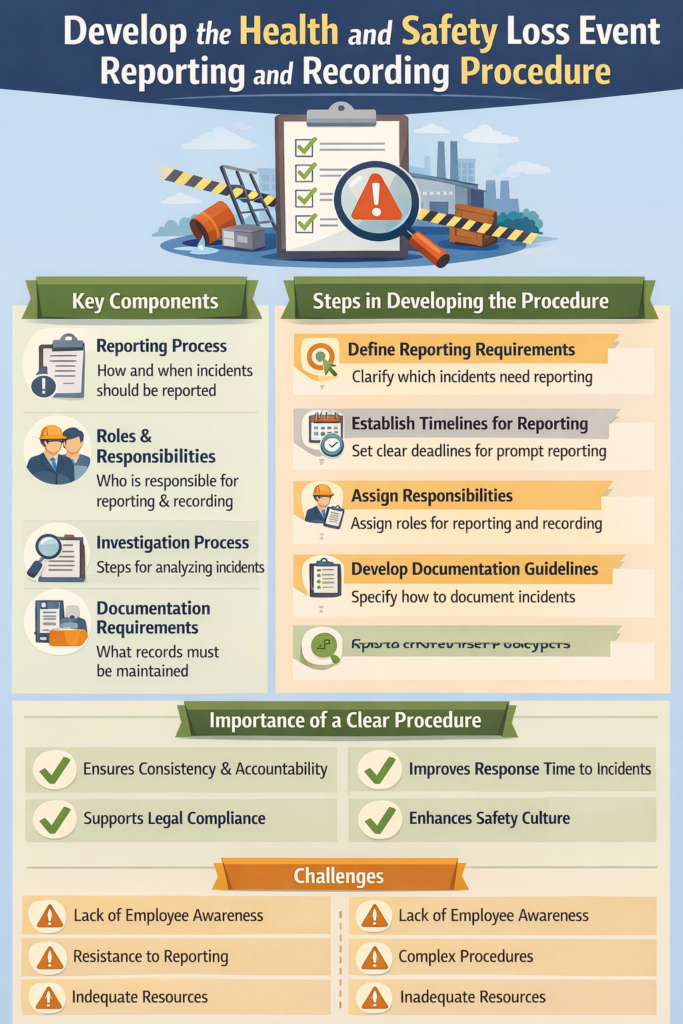
A comprehensive reporting and recording procedure must include several essential components to ensure clarity, effectiveness, and consistency.
The reporting process defines how and when incidents should be reported within the organization.
A well-defined reporting process ensures that incidents are communicated promptly and accurately. Immediate reporting is critical for enabling quick response and minimizing the impact of the incident. Clear communication channels and standardized methods help eliminate confusion and ensure that all employees follow the same procedures.
Clearly defining roles and responsibilities ensures accountability in the reporting and recording process.
Assigning responsibilities ensures that no aspect of the reporting process is overlooked. Each individual involved in the process must understand their role and act accordingly. This clarity improves efficiency and ensures that incidents are handled in a timely and organized manner.
The investigation process outlines the steps required to analyze incidents and determine their causes.
Investigations are essential for understanding why an incident occurred. By identifying root causes rather than just immediate causes, organizations can implement effective measures to prevent recurrence. A structured investigation process ensures consistency and thoroughness in analyzing incidents.
Documentation requirements specify what records must be maintained and how they should be managed.
Proper documentation ensures that all relevant information is available for analysis, audits, and legal purposes. It also supports transparency and accountability within the organization. Maintaining accurate and complete records is essential for effective safety management.
Developing an effective reporting and recording procedure requires a systematic approach.
Clearly defining reporting requirements ensures that all relevant incidents are captured and reported consistently. It helps eliminate ambiguity and ensures compliance with regulatory standards.
Timely reporting is critical for effective incident management. Establishing clear timelines ensures that incidents are addressed quickly and that necessary actions are taken without delay.
Assigning responsibilities ensures that each step of the procedure is carried out effectively. It also promotes accountability and prevents delays or omissions in the reporting process.
Documentation guidelines provide clarity on how information should be recorded and maintained. This ensures that records are accurate, complete, and easy to access when needed.
A well-defined reporting and recording procedure provides several significant benefits for organizations.
| Procedure Component | Description | Key Activities | Purpose / Outcome |
|---|---|---|---|
| Reporting Process | Defines how and when incidents are reported | Immediate reporting, use of forms, communication channels | Ensures timely and accurate reporting of incidents |
| Roles and Responsibilities | Assigns duties to individuals involved in reporting and recording | Employees report, supervisors verify, safety officers investigate, management reviews | Ensures accountability and proper handling of incidents |
| Investigation Process | Outlines steps to analyze incidents and identify causes | Data collection, witness interviews, root cause analysis | Prevents recurrence and improves safety measures |
| Documentation Requirements | Specifies records to be maintained and how they are stored | Incident reports, investigation reports, corrective action records | Ensures proper record-keeping and compliance |
| Define Reporting Requirements | Identifies which incidents must be reported | Setting criteria and thresholds for reporting | Ensures all relevant incidents are captured |
| Establish Timelines | Sets deadlines for reporting and documentation | Immediate reporting, timely submission of reports | Improves response time and efficiency |
| Assign Responsibilities | Allocates roles for each stage of the procedure | Assigning duties to staff and management | Enhances accountability and clarity |
| Documentation Guidelines | Provides instructions for recording and maintaining data | Standard formats, record storage, consistency checks | Ensures accurate and consistent documentation |
| Importance of Procedure | Highlights benefits of having a clear procedure | Consistency, compliance, improved response | Strengthens safety management system |
Table: Structure and Key Elements of a Health and Safety Reporting and Recording Procedure
Developing a procedure is only the first step; effective implementation is equally important.
Organizations may face challenges when developing reporting procedures.
The reporting and recording procedure should be integrated with the overall safety management system.
Developing a health and safety loss event reporting and recording procedure is a critical step in ensuring effective incident management and workplace safety. A well-structured procedure provides clear guidance on how incidents should be reported, investigated, and documented, ensuring consistency and accountability throughout the organization.
By incorporating key components such as reporting processes, defined roles and responsibilities, investigation procedures, and documentation requirements, organizations can create a comprehensive system that supports effective decision-making and continuous improvement. Following a systematic approach to development, including defining requirements, establishing timelines, assigning responsibilities, and developing documentation guidelines, further enhances the effectiveness of the procedure.
Ultimately, a clear and well-implemented procedure not only ensures compliance with legal requirements but also promotes a strong safety culture, reduces risks, and contributes to the overall success and sustainability of the organization.
Planning the implementation of a health and safety loss event reporting and recording procedure is a critical stage in ensuring that the system operates effectively within an organization. While developing a procedure provides a structured framework, its success largely depends on how well it is implemented in practice. Without proper planning, even the most well-designed procedures may fail due to lack of awareness, inadequate resources, or poor integration into daily operations.
Implementation planning ensures that the reporting system is embedded into the organization’s culture and workflows. It involves preparing employees, allocating resources, establishing communication channels, and testing the system before full deployment. A well-executed implementation plan not only ensures compliance with safety requirements but also enhances employee engagement, improves reporting accuracy, and strengthens overall safety performance. This section outlines the key steps involved in implementation, methods for monitoring effectiveness, and the benefits of a well-planned approach.
Successful implementation requires a structured and systematic approach. Organizations must focus on several key areas to ensure that the reporting and recording procedure is effectively adopted.
Training is one of the most important elements of implementation, as it ensures that employees understand how to use the reporting system correctly.
Effective training ensures that employees are aware of their responsibilities and are capable of reporting incidents accurately. It also helps eliminate confusion and reduces the likelihood of errors or omissions. Regular refresher training should be conducted to keep employees updated on any changes in procedures.
Clear and effective communication is essential for ensuring that all stakeholders are informed about the reporting system.
Communication ensures that the reporting system is understood and accepted across the organization. It helps create a culture where employees feel comfortable reporting incidents without fear of blame. Regular communication also reinforces the importance of safety and keeps employees engaged.
Providing the necessary resources is essential for the successful implementation of the reporting system.
Without adequate resources, the reporting system may not function effectively. Organizations must ensure that all required tools and support systems are in place to facilitate smooth implementation. This includes providing access to reporting platforms and ensuring that staff have the necessary training and support.
Testing the system before full implementation helps identify and resolve potential issues.
System testing allows organizations to assess whether the reporting procedure works as intended. It helps identify any practical challenges faced by users and provides an opportunity to make necessary improvements before full-scale implementation.
Monitoring is essential to ensure that the reporting system continues to function effectively after implementation.
Audits help ensure that the system is being used correctly and that all incidents are being reported and recorded as required. They also provide an opportunity to identify gaps and implement corrective actions.
Employees are the primary users of the reporting system, and their feedback is invaluable in identifying practical issues. Encouraging feedback helps create a sense of ownership and promotes continuous improvement.
Continuous improvement ensures that the reporting system remains relevant and effective over time. Organizations must regularly evaluate their procedures and make necessary adjustments to enhance performance.
A well-planned and executed implementation provides several advantages for organizations.
| Implementation Step | Description | Key Activities | Expected Outcome |
|---|---|---|---|
| Training Employees | Educating staff on reporting procedures and system usage | Training sessions, workshops, e-learning | Employees understand how to report incidents correctly |
| Communication | Informing stakeholders about the reporting system | Meetings, emails, notices, awareness campaigns | Increased awareness and participation |
| Resource Allocation | Providing necessary tools, personnel, and support | Reporting forms, software, trained staff | Smooth and effective implementation |
| System Testing | Evaluating the effectiveness of the procedure before full implementation | Pilot testing, simulations, feedback collection | Identification and correction of system issues |
| Regular Audits | Monitoring compliance with reporting procedures | Periodic reviews, inspections | Ensures system effectiveness and compliance |
| Employee Feedback | Gathering input from users to improve the system | Surveys, meetings, feedback forms | Improves usability and effectiveness |
| Continuous Improvement | Updating and refining the system based on feedback and data | Procedure updates, training refreshers | Enhances long-term performance |
| Benefits of Implementation | Outcomes of effective system implementation | Accurate reporting, participation, safety improvement | Strong safety culture and reduced risks |
Table: Implementation Steps and Outcomes of Health and Safety Reporting Procedure
Organizations should consider several additional factors to ensure successful implementation.
Organizations may face various challenges during implementation.
Planning the implementation of a health and safety loss event reporting and recording procedure is a crucial step in ensuring its success. A well-structured implementation plan ensures that the system is effectively integrated into organizational operations and that employees are equipped with the knowledge and resources needed to use it correctly.
By focusing on key steps such as training employees, ensuring effective communication, allocating resources, and testing the system, organizations can establish a strong foundation for successful implementation. Ongoing monitoring through audits, feedback, and continuous improvement further enhances the effectiveness of the system.
Ultimately, effective implementation leads to improved reporting accuracy, increased employee participation, and enhanced safety performance. It plays a vital role in creating a proactive safety culture and ensuring the long-term success of health and safety management systems within the organization.

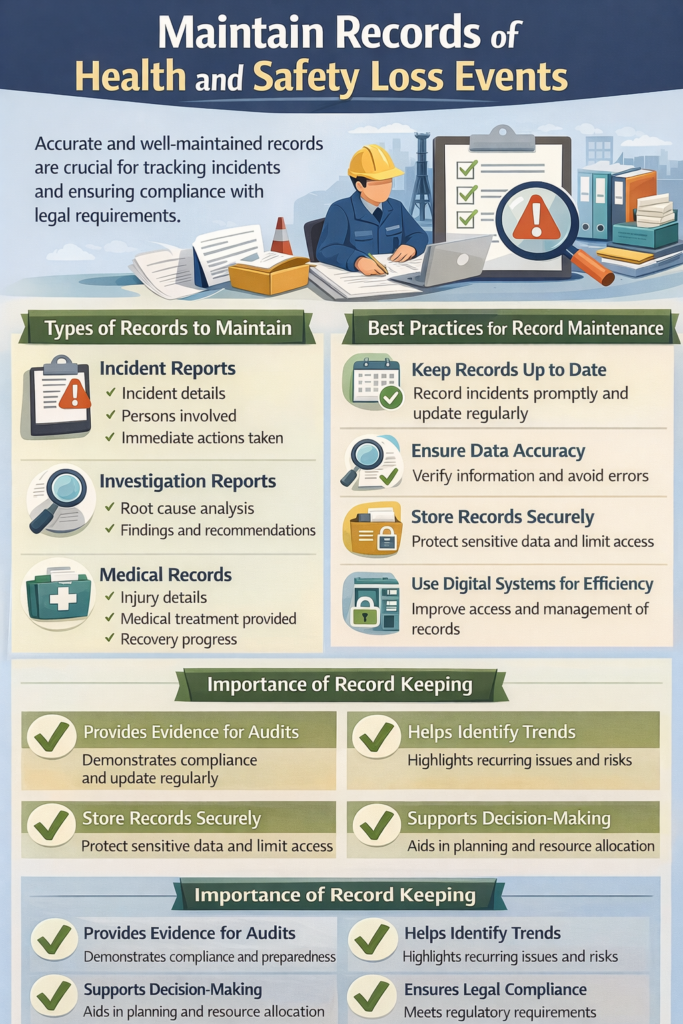
Maintaining accurate and well-organized records of health and safety loss events is a fundamental requirement for effective safety management within any organization. Record keeping ensures that all incidents—ranging from minor near misses to major accidents—are properly documented, tracked, and analyzed. Without reliable records, organizations may struggle to understand patterns, identify risks, or demonstrate compliance with legal and regulatory requirements.
In modern workplaces, record maintenance is not just an administrative task but a strategic activity that supports decision-making and continuous improvement. Proper documentation enables organizations to review past incidents, evaluate the effectiveness of safety measures, and implement corrective actions. It also provides essential evidence during audits, inspections, and legal proceedings. This section explores the types of records that must be maintained, best practices for effective record management, and the overall importance of maintaining accurate health and safety records.
Organizations must maintain various types of records to ensure comprehensive documentation of health and safety loss events.
Incident reports are the primary records that document details of any loss event.
Incident reports capture the initial information about a loss event and are usually completed immediately after the incident occurs. They are essential for ensuring that no critical details are missed and provide a foundation for further analysis and investigation.
Investigation reports provide a deeper analysis of incidents to identify their causes.
These reports go beyond basic incident details and focus on understanding why the incident occurred. By identifying root causes, organizations can implement effective corrective measures and improve overall safety performance.
Medical records document the health impact of incidents on employees.
Maintaining accurate medical records is essential for monitoring employee health and ensuring that appropriate support is provided. These records must be handled with confidentiality and in accordance with data protection regulations.
Corrective action reports document the measures taken to address identified issues.
These reports are crucial for closing the loop in the incident management process. They ensure that identified issues are addressed and that improvements are sustained over time.
Effective record maintenance requires adherence to best practices that ensure accuracy, security, and accessibility.
Timely updates ensure that records remain accurate and relevant. Delayed documentation may result in missing or incorrect information.
Accurate data is essential for reliable analysis and decision-making. Errors in records can lead to incorrect conclusions and ineffective safety measures.
Security is critical, especially for sensitive information such as medical records. Proper storage ensures compliance with data protection laws and prevents misuse of information.
Digital systems enhance efficiency by allowing quick access to records and facilitating data analysis. They also reduce the risk of data loss and improve overall organization.
Maintaining health and safety records provides several important benefits for organizations.
| Record Type / Practice | Description | Key Details / Activities | Purpose / Benefits |
|---|---|---|---|
| Incident Reports | Initial documentation of loss events | Date, time, location, event description, persons involved | Provides primary evidence and supports investigation |
| Investigation Reports | Detailed analysis of incidents | Root cause analysis, findings, recommendations | Prevents recurrence and improves safety systems |
| Medical Records | Records of injuries and treatments | Injury details, treatment, recovery status | Supports employee health monitoring and legal compliance |
| Corrective Action Reports | Documentation of actions taken after incidents | Actions implemented, responsible persons, timelines | Ensures issues are resolved and tracked |
| Keep Records Up to Date | Regular updating of records | Immediate recording, periodic review | Maintains accuracy and relevance |
| Ensure Data Accuracy | Verification of recorded information | Cross-checking data, avoiding errors | Improves reliability of information |
| Store Records Securely | Protection of sensitive data | Secure storage, restricted access | Ensures confidentiality and compliance |
| Use Digital Systems | Use of electronic tools for record management | Software systems, cloud storage | Enhances efficiency and accessibility |
| Importance of Record Keeping | Overall value of maintaining records | Evidence, trend analysis, decision-making | Strengthens safety management and compliance |
Table: Types and Best Practices of Health and Safety Record Maintenance
Organizations must establish a structured system for managing records.
Organizations may face challenges in maintaining records effectively.
Maintaining confidentiality is a critical aspect of record management.
Organizations should continuously improve their record-keeping practices.
Maintaining records of health and safety loss events is a vital component of an effective safety management system. Accurate and well-organized records enable organizations to track incidents, analyze trends, and implement corrective actions. They also provide essential evidence for audits, support decision-making, and ensure compliance with legal requirements.
By maintaining various types of records, including incident reports, investigation reports, medical records, and corrective action reports, organizations can create a comprehensive system for managing safety information. Adopting best practices such as keeping records up to date, ensuring accuracy, securing data, and using digital systems further enhances the effectiveness of record management.
Ultimately, effective record keeping contributes to improved safety performance, stronger compliance, and a proactive approach to risk management, ensuring the well-being of employees and the long-term success of the organization.
Organizations have a legal and ethical responsibility to report certain health and safety loss events to relevant regulatory authorities. These requirements are established to ensure transparency, protect workers, and enable authorities to monitor workplace safety standards. Failure to report such incidents can lead to serious legal consequences, including fines, penalties, and reputational damage. Therefore, developing a structured and reliable reporting system is essential for ensuring compliance with applicable laws and regulations.
A well-designed reporting system enables organizations to identify reportable incidents, gather accurate information, and communicate effectively with regulatory bodies. It ensures that all required reports are submitted within specified timelines and that proper documentation is maintained for future reference. In addition to legal compliance, such systems demonstrate an organization’s commitment to accountability and responsible management. This section explains the key requirements, reporting processes, importance, and steps involved in developing an effective system for reporting loss events to regulatory authorities.
To establish an effective reporting system, organizations must first understand and define the key requirements associated with regulatory reporting.
Organizations must clearly define which incidents are required to be reported to regulatory authorities.
Not all incidents are legally reportable. Organizations must understand the criteria that determine whether an incident must be reported. This ensures compliance and avoids unnecessary reporting or omission of critical incidents.
Understanding legal requirements is essential for compliance.
Organizations must ensure that their reporting systems align with national and international safety regulations. Regular updates and reviews are necessary to keep the system compliant with changing legal requirements.
Timely reporting is a key legal requirement.
Delays in reporting can lead to legal penalties and hinder effective response by authorities. Clear timelines ensure that all incidents are reported promptly and efficiently.
A structured reporting process ensures that incidents are communicated accurately and efficiently to regulatory authorities.
Accurate information is critical for effective reporting. Incomplete or incorrect data can lead to misunderstandings, delays, or non-compliance.
Regulatory authorities often require specific forms to be completed. Using standardized formats ensures consistency and compliance.
Submitting reports correctly and on time is essential for compliance. Organizations must follow the procedures specified by regulatory bodies.
Maintaining copies of submissions provides evidence of compliance and supports future reference or investigations.
Reporting loss events to regulatory authorities provides several significant benefits.
Creating a robust reporting system requires careful planning and organization.
Clear assignment of responsibilities ensures accountability and prevents delays in reporting.
Standardized formats improve accuracy and ensure that all required information is included.
Timely submission is critical for compliance and effective incident management.
Effective communication ensures smooth interaction with regulatory bodies and supports compliance.
| Component | Description | Key Activities | Purpose / Outcome |
|---|---|---|---|
| Identify Reportable Incidents | Determine which incidents must be reported by law | Recognize serious injuries, fatalities, dangerous occurrences | Ensures compliance with legal reporting requirements |
| Understand Legal Obligations | Awareness of applicable laws and regulations | Review legislation, update policies | Prevents non-compliance and legal issues |
| Establish Reporting Timelines | Set deadlines for reporting incidents | Immediate reporting, defined submission timeframes | Ensures timely communication with authorities |
| Collect Accurate Information | Gather complete and correct incident details | Data verification, incident documentation | Improves accuracy and reliability of reports |
| Complete Required Forms | Use official formats for reporting | Fill mandatory fields, follow guidelines | Ensures standardized and compliant reporting |
| Submit Reports to Authorities | Send reports through approved channels | Online submission, official communication | Meets regulatory requirements |
| Maintain Copies of Submissions | Keep records of submitted reports | Secure storage, easy retrieval | Provides evidence for audits and inspections |
| Assign Responsible Personnel | Allocate reporting duties to specific individuals | Define roles, provide training | Ensures accountability and efficiency |
| Use Standardized Formats | Maintain uniform reporting structure | Use templates and official forms | Improves consistency and analysis |
| Ensure Timely Submission | Monitor deadlines and reporting process | Tracking systems, reminders | Avoids delays and penalties |
| Maintain Communication with Authorities | Establish clear interaction with regulators | Respond to queries, provide updates | Strengthens compliance and transparency |
| Importance of Reporting | Overall value of regulatory reporting | Compliance, reputation, safety improvement | Enhances organizational credibility |
Table: Regulatory Reporting System for Health and Safety Loss Events
The reporting system should be integrated with existing safety and management systems.
Organizations may encounter challenges in reporting to authorities.
Developing a system to report health and safety loss events to regulatory authorities is a critical component of an effective safety management framework. It ensures that organizations comply with legal requirements, maintain transparency, and demonstrate accountability in managing workplace incidents.
By identifying reportable incidents, understanding legal obligations, establishing timelines, and following a structured reporting process, organizations can ensure accurate and timely communication with regulatory bodies. Incorporating key elements such as assigning responsibilities, using standardized formats, and maintaining clear communication further strengthens the effectiveness of the system.
Ultimately, an efficient reporting system not only ensures compliance but also contributes to improved safety performance, enhanced organizational reputation, and a proactive approach to risk management. It reflects a strong commitment to protecting employees and maintaining high standards of workplace safety.
WhatsApp us