Skip to content
Inspire College of Technologies UK Ltd.
  • Home
  • Our AccreditationsExpand
    • ProQual
    • Qualifi
    • ABMA
    • NOCN
    • RSPH
    • Qualsafe
    • OAL
    • Degree ProgramsExpand
      • Masters Top Up
      • Bachelors Top Up
      • MBAs
  • Trainings & CoursesExpand
    • Management
    • Health and Safety
    • Workplace Safety
    • Environmental Management Courses & Certifications
    • Health and Social Care
    • Law and Legal Services
    • IT & Advance Technologies
    • Construction and Civil Engineering
    • Professional Qualification
  • CSCS Cards
  • ProQual AC
  • Six Sigma Certifications
  • Blogs
Register Now
Inspire College of Technologies UK Ltd.
Register Now
  • Home
  • Courses

OTHM Level 6 Diploma in Occupational Health and Safety

Curriculum

  • 7 Sections
  • 29 Lessons
  • 60 Weeks
Expand all sectionsCollapse all sections
  • Unit 1 : Health and Safety Management Principles and Policy
    Health and Safety Management Principles and Policy provides a comprehensive foundation in understanding how effective health and safety systems are developed, implemented, and maintained within an organization. This unit focuses on the core principles of health and safety management, including the identification of workplace hazards, risk assessment methodologies, and the application of control measures to minimize potential risks. Learners gain in-depth knowledge of legal and regulatory frameworks, enabling them to ensure organizational compliance with national and international safety standards. The unit also explores the importance of proactive planning and continuous monitoring in establishing a safe and healthy working environment.In addition, this unit emphasizes the critical role of health and safety policies in shaping organizational culture and operational practices. Learners are guided on how to design, implement, and review effective safety policies that align with business objectives and stakeholder expectations. It highlights the responsibilities of management and employees in maintaining safety standards, as well as the importance of communication, training, and leadership in fostering a positive safety culture. By the end of this unit, learners will be equipped with the knowledge and skills required to develop strategic health and safety policies and contribute to the overall effectiveness of workplace safety management systems.
    8
    • 1.1
      Lesson No : 1 Understand the principles of health and safety management and its organisational systems.
    • 1.2
      Quiz No : 1 Understand the principles of health and safety management and its organisational systems.
      30 Minutes30 Questions
    • 1.3
      Lesson No : 2 Understand the principles of health and safety policy.
    • 1.4
      Quiz No : 2 Understand the principles of health and safety policy.
      30 Minutes30 Questions
    • 1.5
      Lesson No : 3 Be able to conduct a critical review of a health and safety policy in an organisation.
    • 1.6
      Quiz no : 3 Be able to conduct a critical review of a health and safety policy in an organisation.
      30 Minutes30 Questions
    • 1.7
      Lesson No : 4 Be able to assess internal and external factors that influence health and safety practices.
    • 1.8
      Quiz No : 4 Be able to assess internal and external factors that influence health and safety practices.
      30 Minutes30 Questions
  • Unit 2 : Health and Safety Management Practice
    Health and Safety Management Practice focuses on the practical application of health and safety principles within an organizational environment. This unit provides learners with a comprehensive understanding of how safety policies are implemented, monitored, and continuously improved in real-world settings. It emphasizes the importance of translating theoretical knowledge into effective workplace practices, ensuring that risks are properly identified, assessed, and controlled. Learners develop the ability to apply systematic approaches to managing health and safety, including the use of risk assessments, safe systems of work, and performance monitoring tools to maintain a safe and compliant working environment.In addition, this unit highlights the role of communication, training, and leadership in strengthening health and safety practices across all levels of an organization. It explores how organizations can create a proactive safety culture by engaging employees, promoting awareness, and encouraging participation in safety initiatives. The unit also addresses the importance of continuous improvement through regular audits, inspections, and reviews, enabling organizations to adapt to changing conditions and emerging risks. By the end of this unit, learners are equipped with the practical skills and knowledge required to effectively manage health and safety systems and contribute to the overall efficiency and sustainability of organizational operations.
    12
    • 2.1
      Lesson No : 1 Understand the process of planning and organising occupational health and safety practices in the workplace.
    • 2.2
      Quiz No : 1 Understand the process of planning and organising occupational health and safety practices in the workplace.
      30 Minutes30 Questions
    • 2.3
      Lesson No : 2 Understand the process of leading and controlling health and safety practices in the workplace.
    • 2.4
      Quiz No : 2 Understand the process of leading and controlling health and safety practices in the workplace.
      30 Minutes30 Questions
    • 2.5
      Lesson No : 3 Understand the process of reviewing the performance of health and safety practices in the workplace.
    • 2.6
      Quiz No : 3 Understand the process of reviewing the performance of health and safety practices in the workplace.
      30 Minutes30 Questions
    • 2.7
      Lesson No : 4 Understand the process of monitoring and auditing health and safety practices in the workplace.
    • 2.8
      Quiz No : 4 Understand the process of monitoring and auditing health and safety practices in the workplace.
      30 Minutes30 Questions
    • 2.9
      Lesson No : 5 Understand corporate social responsibilities and ethical codes of conduct and their impact on health and safety management
    • 2.10
      Quiz No : 5 Understand corporate social responsibilities and ethical codes of conduct and their impact on health and safety management
      30 Minutes30 Questions
    • 2.11
      Lesson No : 6 Understand the critical factors in the management of occupational health and well-being in the workplace.
    • 2.12
      Quiz No : 6 Understand the critical factors in the management of occupational health and well-being in the workplace.
      30 Minutes30 Questions
  • Unit 3 : Risk and Incident Management
    This section provides a thorough understanding of how workplace risks and incidents are systematically identified, assessed, and managed to ensure a safe and healthy working environment. It focuses on the development of proactive strategies that aim to minimize hazards and prevent accidents before they occur. Learners are introduced to structured methods of recognizing potential risks, evaluating their impact, and applying appropriate control measures. Emphasis is also placed on the continuous monitoring and review of these controls to ensure their effectiveness and adaptability within changing workplace conditions.In addition, the content explores the processes involved in managing workplace incidents, including proper reporting, investigation, and implementation of corrective actions. It highlights the importance of using incidents as opportunities for learning and improvement, enabling organizations to strengthen their safety practices. The role of legal compliance, accountability, and organizational responsibility is also addressed, ensuring that workplace practices align with regulatory standards. Overall, this section equips learners with the knowledge and practical understanding required to effectively manage risks and respond to incidents, contributing to improved safety performance and long-term organizational success.
    8
    • 3.1
      Lesson No : 1 Understand the processes and strategies for identifying hazards and evaluating risk levels when carrying out risk assessments in an organisation.
    • 3.2
      Quiz No : 1 Understand the processes and strategies for identifying hazards and evaluating risk levels when carrying out risk assessments in an organisation.
      30 Minutes30 Questions
    • 3.3
      Lesson No : 2 Understand the strategies and techniques of risk control.
    • 3.4
      Quiz No : 2 Understand the strategies and techniques of risk control.
      30 Minutes30 Questions
    • 3.5
      Lesson No : 3 Understand the models of loss causation, analysis of loss data and the importance of incident investigation.
    • 3.6
      Quiz No : 3 Understand the models of loss causation, analysis of loss data and the importance of incident investigation.
      30 Minutes30 Questions
    • 3.7
      Lesson No : 4 Understand processes and strategies to manage health and safety incidents in an organisation.
    • 3.8
      Quiz No : 4 Understand processes and strategies to manage health and safety incidents in an organisation.
      30 Minutes30 Questions
  • Unit 4: Promoting a Positive Health and Safety Culture
    A positive health and safety culture is essential for creating a workplace where employees feel secure, valued, and motivated to contribute to safe practices. This unit explores how organisations can actively foster an environment in which safety is not treated as a requirement alone, but as a shared responsibility embedded within daily operations. It focuses on the attitudes, beliefs, and behaviours that influence how individuals perceive and respond to risks, highlighting the importance of leadership commitment, clear communication, and employee engagement. By promoting awareness and encouraging proactive participation, organisations can ensure that safety becomes an integral part of their overall organisational culture rather than a reactive measure. The unit also examines practical strategies for strengthening safety culture, including training initiatives, effective communication systems, and the development of trust between management and employees. It emphasizes the role of continuous improvement, where feedback, incident learning, and regular evaluation are used to enhance safety performance over time. Additionally, the importance of a supportive, no-blame environment is discussed, as it encourages open reporting and collaboration in identifying hazards. Through these approaches, organisations can reduce risks, improve compliance, and build a sustainable culture that prioritizes health, safety, and well-being at every level.
    8
    • 4.1
      Lesson No : 1 Understand key organisational. factors that influence the health and safety culture in the workplace.
    • 4.2
      Quiz No : 1 Understand key organisational. factors that influence the health and safety culture in the workplace.
      30 Minutes30 Questions
    • 4.3
      Lesson No : 2 Understand key human factors that influence healthand safety performance and behaviour in the workplace.
    • 4.4
      Quiz No : 2 Understand key human factors that influence healthand safety performance and behaviour in the workplace.
      30 Minutes30 Questions
    • 4.5
      Lesson No : 3 Understand the impact of leadership, structure and consultation on the health and safety culture of an organisation.
    • 4.6
      Quiz No : 3 Understand the impact of leadership, structure and consultation on the health and safety culture of an organisation.
      30 Minutes30 Questions
    • 4.7
      Lesson No : 4 Be able to develop a strategyto improve the health and safety culture of an organisation.
    • 4.8
      Quiz No : 4 Be able to develop a strategyto improve the health and safety culture of an organisation.
      30 Minutes30 Questions
  • Unit 5 : Maintaining a Safe Workplace Environment
    Unit 5: Maintaining a Safe Workplace Environment focuses on the continuous processes and practical measures required to ensure that workplaces remain safe, healthy, and compliant with established standards. It emphasizes the importance of proactively identifying hazards, implementing effective control measures, and maintaining safe systems of work across all operational activities. This unit highlights how organisations must integrate safety into everyday practices by ensuring proper housekeeping, safe use of equipment, risk assessments, and adherence to procedures. It also underlines the role of regular monitoring, inspections, and maintenance in preventing accidents and sustaining a secure working environment.In addition, this unit explores the shared responsibility of both management and employees in maintaining workplace safety. It stresses the importance of clear communication, employee training, supervision, and engagement in safety practices. By fostering awareness and encouraging positive behaviours, organisations can create a culture where safety is consistently prioritised. The unit also addresses the need for continuous improvement through feedback, incident reporting, and corrective actions, ensuring that safety standards evolve with changing risks and organisational needs. Ultimately, maintaining a safe workplace environment contributes to employee well-being, operational efficiency, and long-term organisational success.
    10
    • 5.1
      Lesson No : 1 Understand the range of factors to consider to maintain a safe work environment.
    • 5.2
      Quiz No : 1 Understand the range of factors to consider to maintain a safe work environment.
      30 Minutes30 Questions
    • 5.3
      Lesson No : 2 Understand the hazards, risks and controls applicable to a range of workplace contexts
    • 5.4
      Quiz No : 2 Understand the hazards, risks and controls applicable to a range of workplace contexts
      30 Minutes30 Questions
    • 5.5
      Lesson No : 3 Understand the maintenance of fire safety and protection against explosion.
    • 5.6
      Quiz No : 3 Understand the maintenance of fire safety and protection against explosion.
      30 Minutes30 Questions
    • 5.7
      Lesson No : 4 Understand safe storage, handling and management of hazardous substances, including biological agents.
    • 5.8
      Quiz No : 4 Understand safe storage, handling and management of hazardous substances, including biological agents.
      30 Minutes30 Questions
    • 5.9
      Lesson No : 5 Understand safe management of work equipment and machinery.
    • 5.10
      Quiz No : 5 Understand safe management of work equipment and machinery.
      30 Minutes30 Questions
  • Unit 6 : Health and Safety Law, Regulation and Influence
    This unit focuses on understanding the legal framework that governs health and safety in the workplace and how it influences both employers and employees. Health and safety laws are designed to protect workers from harm by setting clear standards and responsibilities for organizations. These laws require employers to provide a safe working environment, conduct risk assessments, offer proper training, and ensure that equipment and procedures meet safety requirements. At the same time, employees also have responsibilities, such as following safety rules, using protective equipment, and reporting hazards. Regulations and guidelines issued by authorities help ensure that workplaces operate in a safe and controlled manner, reducing the risk of accidents, injuries, and occupational illnesses.In addition to legal requirements, this unit also explains how different factors influence health and safety practices in the workplace. These include government bodies, regulatory agencies, industry standards, and organizational policies that shape how safety is managed. Enforcement agencies play a key role by inspecting workplaces, investigating incidents, and ensuring compliance with laws. Moreover, workplace culture, leadership commitment, and employee awareness significantly impact how effectively safety measures are implemented. By understanding these laws and influences, individuals and organizations can develop a proactive approach to safety, ensuring not only compliance but also the well-being and protection of everyone involved in the work environment.
    6
    • 6.1
      Lesson No : 1 Understand international frameworks for legislation, regulation and enforcement.
    • 6.2
      Quiz No : 1 Understand international frameworks for legislation, regulation and enforcement.
      30 Minutes30 Questions
    • 6.3
      Lesson No : 2 Understand statutory and regulatory obligations for maintaining health and safety in an organisation.
    • 6.4
      Quiz No : 2 Understand statutory and regulatory obligations for maintaining health and safety in an organisation.
      30 Minutes30 Questions
    • 6.5
      Lesson No : 3 Understand the industry and community roles in influencing and promoting local and national positive health and safety outcomes.
    • 6.6
      Quiz No : 3 Understand the industry and community roles in influencing and promoting local and national positive health and safety outcomes.
      30 Minutes30 Questions
  • Unit 7 : Development of the Health and Safety Practitioner
    The development of a health and safety practitioner is an essential process that enables organisations to maintain safe, compliant, and efficient working environments. Health and safety practitioners play a critical role in identifying workplace hazards, assessing risks, implementing control measures, and ensuring compliance with legal and regulatory requirements. As industries continue to evolve due to technological advancements, changing legislation, and increasing workplace complexities, health and safety professionals must continuously enhance their knowledge, technical skills, leadership abilities, and professional competence. Their responsibilities extend beyond accident prevention and include promoting a positive safety culture, supporting employee well-being, advising management, and contributing to organisational sustainability and operational excellence.This unit focuses on the professional growth and continuous development of health and safety practitioners within modern organisations. It examines the knowledge, competencies, ethical responsibilities, communication skills, and leadership qualities required to perform effectively in health and safety roles. The unit also highlights the importance of continuous professional development, industry training, organisational learning, and adherence to international frameworks such as ISO 45001. Through ongoing learning, practical experience, and professional engagement, health and safety practitioners can improve their ability to manage workplace risks, influence organisational decision-making, and support continual improvement in occupational health and safety performance.
    6
    • 7.1
      Lesson No : 1 Understand roles and responsibilities of health and safety practitioners.
    • 7.2
      Quiz No : 1 Understand roles and responsibilities of health and safety practitioners.
      30 Minutes30 Questions
    • 7.3
      Lesson No : 2 Be able to assess organisational competence and skills requirements for health and safety practitioners.
    • 7.4
      Quiz No : 2 Be able to assess organisational competence and skills requirements for health and safety practitioners.
      30 Minutes30 Questions
    • 7.5
      Lesson No : 3 Be able to produce a personal and professional development plan in own area of responsibility as a health and safety practitioner.
    • 7.6
      Quiz No : 3 Be able to produce a personal and professional development plan in own area of responsibility as a health and safety practitioner.
      30 Minutes30 Questions

Lesson No : 3 Understand the industry and community roles in influencing and promoting local and national positive health and safety outcomes.

Health and safety management has evolved into a collective responsibility that extends far beyond the boundaries of individual organisations. In today’s interconnected industrial and social environment, the achievement of safe and healthy workplaces depends on the combined efforts of governments, industries, professional institutions, employer bodies, trade associations, media organisations, community groups, and corporate leadership. Each of these stakeholders plays an important role in shaping workplace behaviour, influencing public awareness, and promoting strong health and safety practices across local and national levels.

Modern organisations operate within environments where workplace safety is closely linked with social responsibility, ethical conduct, legal compliance, and sustainable business performance. As industries continue to expand and technologies become more advanced, the risks associated with workplace operations also become more complex. Because of this, organisations cannot rely solely on internal safety measures; they must also engage with external stakeholders that provide guidance, support, regulation, and public accountability.

Governments and regulatory authorities establish legal frameworks and national safety policies to protect workers and communities from harm. However, professional organisations and employer associations contribute by developing industry standards, delivering training programs, conducting research, and promoting best practices. Institutions such as the International Labour Organization and standards like ISO 45001 have significantly influenced global workplace safety systems by encouraging organisations to adopt structured and proactive approaches toward risk management and employee welfare.

In addition, media organisations and community groups have become powerful influences in raising awareness about workplace accidents, environmental concerns, and public safety issues. Through campaigns, reporting, and advocacy, they encourage organisations to maintain transparency, accountability, and responsible business practices. Organisational partnerships between industries, communities, and regulatory bodies further strengthen health and safety initiatives by enabling collaboration, resource sharing, and coordinated responses to risks and emergencies.

At the organisational level, ethical and social responsibilities also play a vital role in maintaining high safety standards. Organisations are expected not only to comply with legal requirements but also to demonstrate moral responsibility by protecting employees, contractors, visitors, customers, and the surrounding environment. This includes creating safe working conditions, supporting employee well-being, and ensuring that organisational activities do not negatively impact society.

Furthermore, corporate governance and self-regulation contribute to the continual improvement of health and safety systems by promoting accountability, leadership commitment, transparency, and proactive risk management. Strong governance structures help organisations integrate safety into business strategies, while self-regulation encourages continuous improvement beyond minimum legal requirements.

This lesson explores the important roles played by industry groups, community organisations, and corporate leadership in promoting positive health and safety outcomes. It also examines the ethical and social responsibilities of organisations and evaluates how corporate governance and self-regulation support the ongoing improvement of workplace health and safety standards.

1. Outline the Function of Professional and Employer Bodies, Trade Associations, Media and Community Groups and Organisational Partnerships in Influencing and Promoting Positive Health and Safety Outcomes
ChatGPT Image May 1 2026 09 52 21 AM e1777611208209

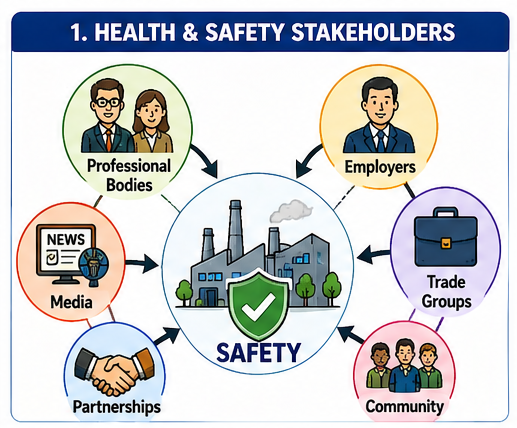
The promotion of positive health and safety outcomes is not achieved through the efforts of a single organisation alone. It requires cooperation and coordination between multiple stakeholders operating at local, national, and international levels. Professional institutions, employer bodies, trade associations, media organisations, community groups, and organisational partnerships all contribute significantly toward improving workplace safety standards, promoting awareness, influencing legislation, and encouraging responsible organisational behaviour.

These groups help organisations identify emerging risks, improve professional competence, implement best practices, and maintain compliance with legal and ethical requirements. Through training programs, research, advocacy, public awareness campaigns, and collaborative initiatives, they strengthen workplace safety culture and support sustainable organisational development.

In modern industrial environments, the role of these stakeholders has become increasingly important because workplace risks are continuously evolving due to technological advancements, changing work practices, and globalisation. Therefore, effective collaboration between industries, communities, and professional institutions is essential for achieving long-term health and safety improvements.

This section explains the functions and contributions of professional bodies, employer organisations, trade associations, media groups, community organisations, and organisational partnerships in influencing and promoting positive health and safety outcomes.

Professional Bodies
ChatGPT Image May 1 2026 09 52 21 AM 1 e1777611264670

Definition

Professional bodies are organisations established to support individuals working within specific professions or occupational sectors. These organisations promote professional competence, ethical conduct, technical excellence, and continuous professional development.

Examples include:

  • International Labour Organization
  • Institution of Occupational Safety and Health

Professional bodies play a vital role in improving workplace health and safety standards by providing guidance, qualifications, and professional support.

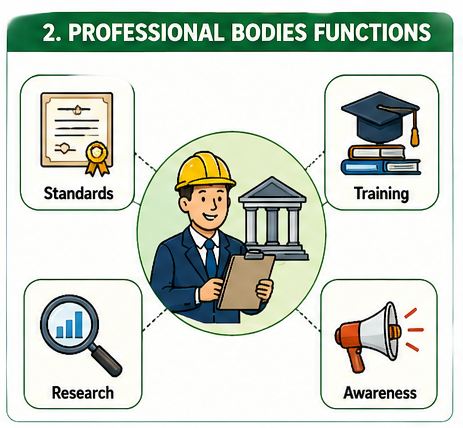
Functions of Professional Bodies

Development of Professional Standards

Professional bodies establish standards that define professional competence and ethical behaviour within industries.

Key Functions

  • Establish professional qualifications and competency requirements
  • Promote ethical conduct and responsible practices
  • Define industry expectations for health and safety performance
  • Encourage professional accountability and integrity

Importance

Professional standards help organisations ensure that employees possess the knowledge and skills required to perform their duties safely and effectively.

Education and Training

Training and education are essential functions of professional bodies.

Key Functions

  • Provide health and safety training programs
  • Organise workshops, seminars, and certification courses
  • Support continuous professional development
  • Deliver technical education on emerging risks and regulations

Importance

Training programs improve employee awareness, competence, and confidence in managing workplace hazards. They also help organisations maintain compliance with industry standards and legal requirements.

Research and Guidance

Professional institutions contribute to workplace safety through research and technical support.

Key Functions

  • Conduct research on workplace hazards and safety trends
  • Publish technical guidance documents and safety manuals
  • Develop recommendations for improving workplace practices
  • Study accident trends and preventive measures

Importance

Research helps organisations identify emerging risks and adopt evidence-based safety solutions that improve operational performance and reduce workplace incidents.

Advocacy and Awareness

Professional bodies actively promote health and safety awareness at both organisational and public levels.

Key Functions

  • Promote health and safety awareness campaigns
  • Influence workplace legislation and public policy
  • Encourage organisations to adopt best practices
  • Support national and international safety initiatives

Importance

Awareness campaigns help create a stronger safety culture by encouraging both employers and employees to prioritise workplace health and safety.

Employer Bodies

Definition

Employer bodies are organisations established to represent the interests of employers and businesses operating within specific sectors or industries.

These organisations act as a communication bridge between businesses and government authorities while promoting responsible workplace practices.

Functions of Employer Bodies

Representation of Employer Interests

Employer bodies ensure that the concerns and interests of businesses are considered during policy development and regulatory discussions.

Key Functions

  • Communicate industry concerns to government authorities
  • Participate in policy discussions and consultations
  • Represent employers during legal and regulatory reforms
  • Support fair and practical workplace regulations

Importance

Representation helps ensure that workplace safety regulations are practical, balanced, and suitable for industry operations.

Promotion of Best Practices

Employer bodies encourage organisations to implement effective safety systems and improve operational standards.

Key Functions

  • Encourage organisations to adopt effective safety systems
  • Share industry safety benchmarks and standards
  • Promote continuous improvement in workplace safety
  • Support implementation of modern risk management practices

Importance

The promotion of best practices helps reduce workplace accidents, improve productivity, and strengthen organisational reputation.

Support Services

Employer organisations provide valuable support services that assist businesses in maintaining compliance.

Key Functions

  • Provide legal and technical advice
  • Offer training and compliance assistance
  • Help organisations interpret regulatory requirements
  • Support risk management and safety planning

Importance

Support services help organisations address compliance challenges and improve their overall safety performance.

Trade Associations

Definition

Trade associations are organisations formed by businesses operating within the same industry to promote shared interests, improve industry standards, and encourage cooperation.

Functions of Trade Associations

Industry Guidance

Trade associations develop industry-specific guidance to support safe operations.

Key Functions

  • Develop industry-specific safety guidelines
  • Promote standard operating procedures
  • Encourage consistent safety practices across the industry
  • Support implementation of regulatory requirements

Importance

Industry guidance helps organisations maintain consistent safety standards and reduce operational risks.

Information Sharing

Trade associations facilitate communication and collaboration among member organisations.

Key Functions

  • Share knowledge about emerging risks and legal changes
  • Encourage collaboration between organisations
  • Provide updates on new technologies and safety practices
  • Disseminate industry research and statistics

Importance

Information sharing enables organisations to learn from each other’s experiences and adopt more effective safety measures.

Training and Development

Trade associations contribute to workforce development through training initiatives.

Key Functions

  • Organise safety training programs
  • Promote professional development opportunities
  • Encourage skill enhancement and competency improvement

Importance

Training improves workforce capability and supports the implementation of safer working practices.

Promotion of Innovation

Trade associations encourage industries to adopt innovative solutions for workplace safety.

Key Functions

  • Promote safer technologies and equipment
  • Encourage modern safety management systems
  • Support research and innovation initiatives

Importance

Innovation helps organisations improve operational efficiency while reducing workplace hazards.

Media
ChatGPT Image May 1 2026 09 52 21 AM 2 e1777611591453

Role of Media in Health and Safety

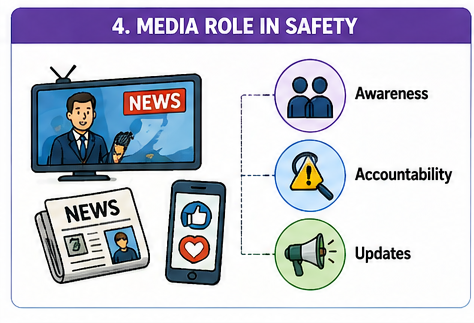
The media plays an influential role in shaping public opinion, increasing awareness, and encouraging accountability regarding workplace health and safety.

Media organisations include television, newspapers, online platforms, radio stations, and social media channels.

Functions of Media

Public Awareness

Media organisations help educate the public about workplace safety issues.

Key Functions

  • Highlight workplace accidents and safety concerns
  • Raise awareness about occupational diseases and hazards
  • Promote public understanding of health and safety responsibilities

Importance

Public awareness encourages organisations to improve their safety performance and helps employees become more informed about workplace risks.

Promotion of Accountability

Media coverage can influence organisational behaviour by promoting transparency and accountability.

Key Functions

  • Encourage organisations to maintain high safety standards
  • Expose unsafe working conditions and negligence
  • Support public scrutiny of organisational practices

Importance

Accountability pressures organisations to maintain compliance and avoid reputational damage.

Information Dissemination

Media organisations distribute important health and safety information.

Key Functions

  • Share updates on new regulations and standards
  • Promote safety campaigns and awareness initiatives
  • Provide information during emergencies and crises

Importance

Effective communication ensures that organisations and communities remain informed about health and safety developments.

Community Groups
ChatGPT Image May 1 2026 09 52 21 AM 3 e1777611649859

Definition

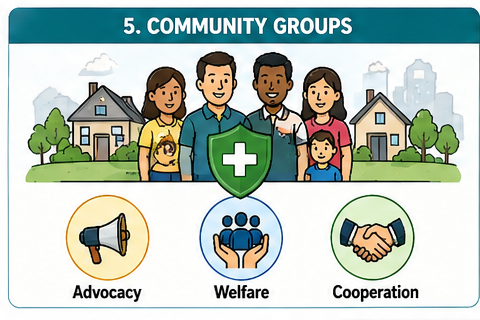
Community groups are local organisations and public interest groups that work to improve community welfare, environmental protection, and public safety.

Functions of Community Groups

Community Awareness

Community groups educate the public about local health and safety concerns.

Key Functions

  • Promote awareness about workplace and environmental risks
  • Encourage safe practices within communities
  • Support public health and environmental protection initiatives

Importance

Community awareness strengthens public participation in promoting safer workplaces and healthier environments.

Advocacy

Community groups represent public concerns regarding organisational activities.

Key Functions

  • Advocate for safer workplaces and environmental protection
  • Raise concerns about industrial hazards
  • Support public safety initiatives and reforms

Importance

Advocacy helps ensure that organisations remain socially responsible and accountable to local communities.

Collaboration

Community groups often work with businesses and authorities to improve safety outcomes.

Key Functions

  • Participate in joint safety initiatives
  • Support emergency preparedness and response activities
  • Encourage cooperation between industries and communities

Importance

Collaboration strengthens relationships between organisations and the communities in which they operate.

Organisational Partnerships
ChatGPT Image May 1 2026 09 52 21 AM 4 e1777611707208

Definition

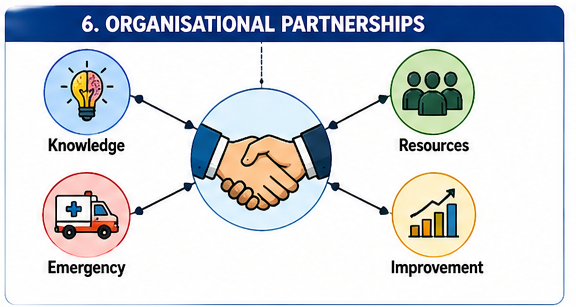
Organisational partnerships involve cooperation between businesses, professional institutions, government agencies, and community organisations to improve health and safety performance.

Functions of Organisational Partnerships

Shared Resources and Expertise

Partnerships allow organisations to exchange knowledge and technical expertise.

Key Functions

  • Share technical knowledge and safety experience
  • Develop joint training programs and initiatives
  • Support collaborative research and development

Importance

Resource sharing improves organisational capability and promotes more effective safety management.

Improvement of Safety Standards

Partnerships contribute to the development of stronger safety standards.

Key Functions

  • Promote industry-wide best practices
  • Encourage innovation and continual improvement
  • Support implementation of international standards

Importance

Improved standards lead to safer workplaces, better compliance, and enhanced organisational performance.

Crisis and Emergency Support

Partnerships are especially valuable during emergencies and disasters.

Key Functions

  • Coordinate emergency response activities
  • Share resources during crises
  • Improve disaster preparedness and recovery efforts

Importance

Collaborative emergency management helps minimise damage, injuries, and operational disruption.

Importance of Collaborative Efforts

Collaboration among professional institutions, employer bodies, trade associations, media organisations, community groups, and partnerships creates a stronger and more effective health and safety system.

Key Benefits

  • Strengthens workplace health and safety culture
  • Improves compliance with regulations and standards
  • Enhances organisational reputation and public trust
  • Encourages innovation and knowledge sharing
  • Reduces workplace accidents and occupational illnesses
  • Supports sustainable organisational development

Table: Stakeholders and Their Contributions to Health and Safety

StakeholderMain FunctionContribution to Health and Safety
Professional BodiesTraining and standardsImprove competence and ethics
Employer BodiesEmployer representationPromote compliance and best practices
Trade AssociationsIndustry collaborationShare guidance and innovation
MediaPublic communicationIncrease awareness and accountability
Community GroupsCommunity welfarePromote advocacy and collaboration
Organisational PartnershipsJoint cooperationImprove standards and emergency response

The promotion of positive health and safety outcomes depends on the combined efforts of professional institutions, employer organisations, trade associations, media groups, community organisations, and organisational partnerships. Each stakeholder contributes in different ways, including training, advocacy, awareness, policy influence, technical support, and collaborative initiatives.

Professional bodies and trade associations help establish standards and improve professional competence, while employer organisations support businesses through guidance and representation. Media and community groups strengthen public awareness and accountability, encouraging organisations to maintain responsible practices.

Organisational partnerships further enhance workplace safety by promoting collaboration, resource sharing, innovation, and coordinated emergency response. Together, these stakeholders create a comprehensive framework that supports continual improvement, strengthens safety culture, and contributes to healthier workplaces and safer communities.
2. Outline the Ethical and Social Responsibilities of Organisations to Develop High Standards of Health and Safety

ChatGPT Image May 1 2026 10 07 55 AM 1 e1777612216218

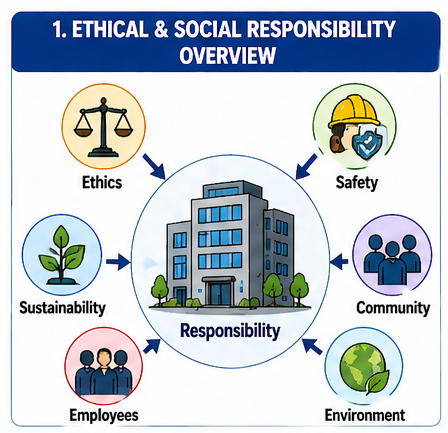
Modern organisations are expected to do more than simply comply with legal requirements related to workplace health and safety. In today’s business environment, organisations are also expected to demonstrate strong ethical values and social responsibility by protecting employees, customers, contractors, visitors, and the wider community from harm. Ethical and social responsibilities have become essential components of effective organisational management because they influence employee well-being, public trust, corporate reputation, and long-term sustainability.

Health and safety is closely connected with organisational ethics because every organisation has a moral duty to protect human life and ensure that work activities are conducted safely and responsibly. Employees spend a significant portion of their lives in the workplace, and organisations must therefore create environments that support physical safety, mental well-being, fairness, and respect. Organisations that fail to fulfil these responsibilities may face serious consequences, including workplace accidents, reputational damage, legal action, and loss of stakeholder confidence.

In addition to internal workplace responsibilities, organisations also have broader social obligations toward society and the environment. Industrial activities, transportation systems, manufacturing processes, and waste generation can all impact local communities and natural ecosystems. Because of this, organisations are increasingly expected to adopt sustainable practices, reduce environmental harm, support public welfare, and contribute positively to national health and safety goals.

Ethical and socially responsible organisations do not focus solely on profit generation. Instead, they integrate safety, sustainability, employee welfare, and community protection into their organisational strategies and decision-making processes. Standards such as ISO 45001 encourage organisations to adopt structured systems that support continual improvement, responsible leadership, and proactive risk management.

This section explains the ethical and social responsibilities of organisations in developing high standards of health and safety and highlights the benefits that responsible practices bring to organisations, employees, and society.

Ethical Responsibilities of Organisations

Definition

Ethical responsibilities refer to the moral obligations organisations have toward employees, contractors, customers, suppliers, visitors, and society. These responsibilities are based on principles such as fairness, honesty, integrity, respect, accountability, and protection of human life.

Ethical responsibilities often go beyond minimum legal requirements because they are based on what is morally right rather than simply what is legally required.

Key Ethical Responsibilities

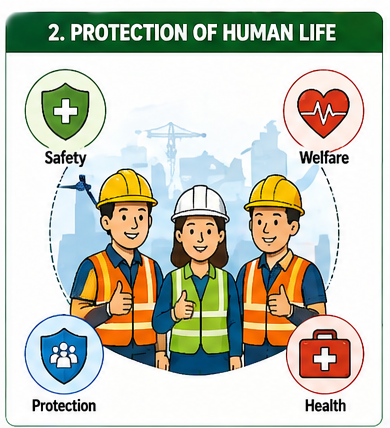
Protection of Human Life

Protecting human life is one of the most important ethical responsibilities of any organisation.

ChatGPT Image May 1 2026 10 07 55 AM 2 e1777612304273

Key Responsibilities

  • Prevent workplace injuries and illnesses
  • Ensure employee welfare and well-being
  • Identify and control workplace hazards
  • Provide safe working conditions and equipment
  • Reduce exposure to dangerous substances and activities

Organisations have a moral duty to ensure that employees return home safely at the end of each working day. Workplace accidents, occupational illnesses, and unsafe working conditions can have serious physical, emotional, and financial consequences for workers and their families.

To fulfil this responsibility, organisations must implement effective health and safety systems, conduct regular risk assessments, provide protective equipment, and ensure that employees receive appropriate training.

Protection of human life also includes supporting mental health and preventing work-related stress, fatigue, and psychological harm.

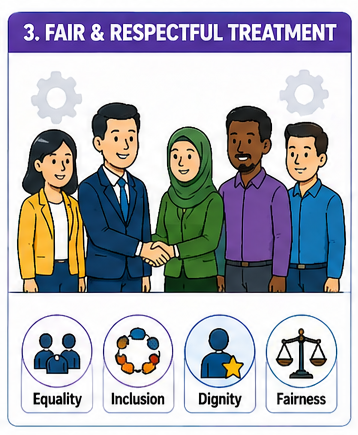
Fair and Respectful Treatment

Ethical organisations must treat all employees fairly and respectfully regardless of their role, background, gender, nationality, or experience level.

ChatGPT Image May 1 2026 10 07 55 AM 3 e1777612368436

Key Responsibilities

  • Provide equal protection to all employees
  • Promote dignity and respect in the workplace
  • Prevent discrimination and harassment
  • Encourage inclusion and fairness
  • Support employee rights and welfare

Fair treatment helps create a positive workplace culture where employees feel valued, respected, and motivated. Organisations that demonstrate fairness are more likely to build trust and cooperation among employees.

Discrimination, harassment, and unfair treatment can negatively affect employee morale, mental health, and productivity. Ethical organisations establish policies and procedures that promote equality, diversity, and respectful behaviour throughout the workplace.

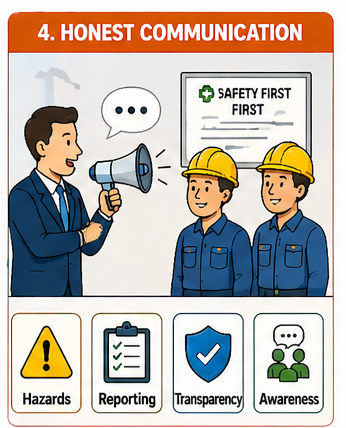
Honest Communication

Clear and transparent communication is essential for maintaining workplace safety and ethical behaviour.

ChatGPT Image May 1 2026 10 07 55 AM 4 e1777612428282

Key Responsibilities

  • Inform employees about workplace hazards
  • Report incidents accurately and transparently
  • Share safety procedures and emergency information
  • Encourage reporting of hazards and concerns
  • Maintain open communication channels

Employees can only work safely when they fully understand workplace risks and safety procedures. Organisations must therefore provide accurate and timely information regarding hazards, emergency procedures, and operational changes.

Honest communication also includes transparent reporting of workplace incidents and near misses. Concealing accidents or safety failures can lead to repeated incidents and loss of trust.

Open communication encourages employees to participate in safety initiatives and report concerns without fear of punishment.

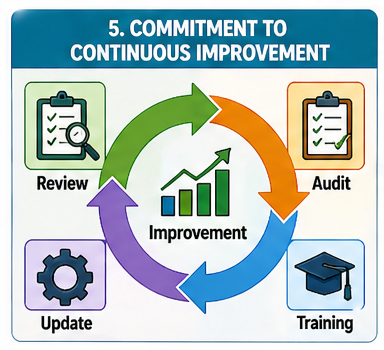
Commitment to Continuous Improvement

Ethical organisations continuously evaluate and improve their health and safety systems.

ChatGPT Image May 1 2026 10 07 55 AM 5 e1777612501838

Key Responsibilities

  • Regularly improve safety procedures and systems
  • Review organisational performance and incident data
  • Learn from accidents and near misses
  • Implement corrective and preventive actions
  • Invest in modern safety technologies and training

Continuous improvement demonstrates an organisation’s commitment to long-term employee protection and operational excellence. Workplace risks and technologies are constantly evolving, which means organisations must regularly update their procedures, training programs, and safety controls.

A proactive approach helps organisations identify weaknesses before incidents occur and promotes a culture of learning and improvement.

Social Responsibilities of Organisations

Definition

Social responsibilities refer to the obligations organisations have toward society, communities, and the environment. These responsibilities involve ensuring that organisational activities contribute positively to public welfare while minimising harm to people and ecosystems.

Social responsibility extends beyond workplace boundaries and includes environmental protection, community support, sustainability, and ethical business conduct.

Key Social Responsibilities

Community Protection

Organisations must ensure that their activities do not negatively impact surrounding communities.

Key Responsibilities

  • Prevent environmental pollution and public harm
  • Manage industrial risks responsibly
  • Protect nearby communities from hazards
  • Ensure safe transportation and waste management
  • Cooperate with local authorities during emergencies

Industrial accidents, chemical releases, fires, and environmental contamination can seriously affect local communities. Organisations therefore have a social responsibility to manage their operations safely and responsibly.

Community protection requires organisations to conduct environmental assessments, implement emergency plans, and maintain transparent communication with local stakeholders.

Sustainable Operations

Sustainability is an important aspect of social responsibility.

ChatGPT Image May 1 2026 10 07 55 AM 6 e1777612572820

Key Responsibilities

  • Use environmentally responsible practices
  • Reduce waste and emissions
  • Improve energy efficiency
  • Promote responsible resource management
  • Support environmentally friendly technologies

Sustainable operations help organisations reduce their environmental impact while supporting long-term business success. Excessive pollution, waste generation, and resource consumption can damage ecosystems and create public health concerns.

Responsible organisations adopt cleaner production methods, recycling systems, and energy-efficient technologies to minimise environmental harm.

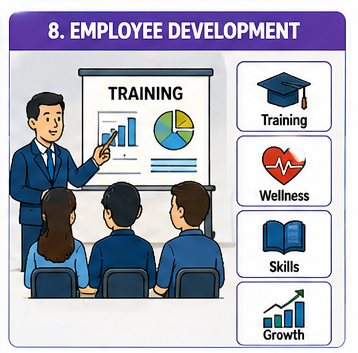
Employee Development

Socially responsible organisations invest in the development and well-being of their employees.

ChatGPT Image May 1 2026 10 07 55 AM 7 e1777612630793

Key Responsibilities

  • Invest in employee training and development
  • Support employee health and wellness programs
  • Encourage career growth and skill improvement
  • Promote work-life balance and mental well-being

Employee development improves workforce competence, motivation, and job satisfaction. Organisations that invest in training and wellness programs create healthier and more productive work environments.

Development programs also help employees adapt to changing technologies and workplace requirements, improving overall organisational performance.

Contribution to National Safety Goals

Organisations contribute to broader national and industry safety objectives.

Key Responsibilities

  • Support government and industry safety initiatives
  • Participate in national awareness campaigns
  • Comply with national health and safety regulations
  • Cooperate with regulatory authorities and professional bodies

Governments and regulatory authorities often establish national goals related to workplace safety, environmental protection, and public health. Organisations support these goals by implementing effective safety systems, participating in awareness programs, and maintaining compliance with legal standards.

This cooperation helps improve overall national safety performance and strengthens public trust in industries.

Benefits of Ethical and Social Responsibility

Organisations that demonstrate strong ethical and social responsibility gain both operational and reputational advantages.

Improve Employee Morale and Trust

Employees are more motivated and engaged when they feel safe, respected, and valued.

Benefits

  • Improved workplace relationships
  • Higher employee satisfaction
  • Increased loyalty and retention

Enhance Corporate Reputation

Responsible organisations are viewed more positively by customers, investors, regulators, and communities.

Benefits

  • Stronger public image
  • Greater stakeholder trust
  • Improved business opportunities

Increase Productivity and Stakeholder Confidence

Safe and ethical workplaces support efficient operations and stronger organisational performance.

Benefits

  • Reduced absenteeism and disruptions
  • Higher operational efficiency
  • Increased investor and customer confidence

Reduce Legal and Financial Risks

Strong ethical practices help organisations avoid accidents, penalties, and legal disputes.

Benefits

  • Reduced compensation costs
  • Lower risk of regulatory penalties
  • Improved compliance and operational stability

Table: Ethical and Social Responsibilities of Organisations

Responsibility AreaKey FocusOrganisational Contribution
Protection of Human LifeSafety and well-beingPrevent injuries and illnesses
Fair TreatmentEquality and respectPromote dignity and inclusion
Honest CommunicationTransparencyInform and educate employees
Continuous ImprovementSafety enhancementImprove systems and procedures
Community ProtectionPublic safetyPrevent environmental harm
Sustainable OperationsEnvironmental responsibilityReduce waste and emissions
Employee DevelopmentTraining and wellnessImprove workforce capability
National Safety GoalsRegulatory cooperationSupport safety initiatives

Ethical and social responsibilities are essential elements of effective organisational health and safety management. Organisations have a moral duty to protect employees, contractors, customers, and communities from harm while promoting fairness, honesty, and responsible behaviour.

Ethical responsibilities focus on protecting human life, ensuring fair treatment, maintaining transparent communication, and supporting continuous improvement. Social responsibilities extend these obligations to environmental protection, community welfare, sustainability, and national safety goals.

Organisations that demonstrate strong ethical and social responsibility not only improve workplace safety but also strengthen employee trust, corporate reputation, operational performance, and stakeholder confidence. By integrating ethical values and social responsibility into organisational strategies, businesses can achieve sustainable growth while contributing positively to society and creating safer working environments for all.

3. Assess the Role of Corporate Governance and Self-Regulation in Supporting Continual Improvement of Organisational Health and Safety Standards

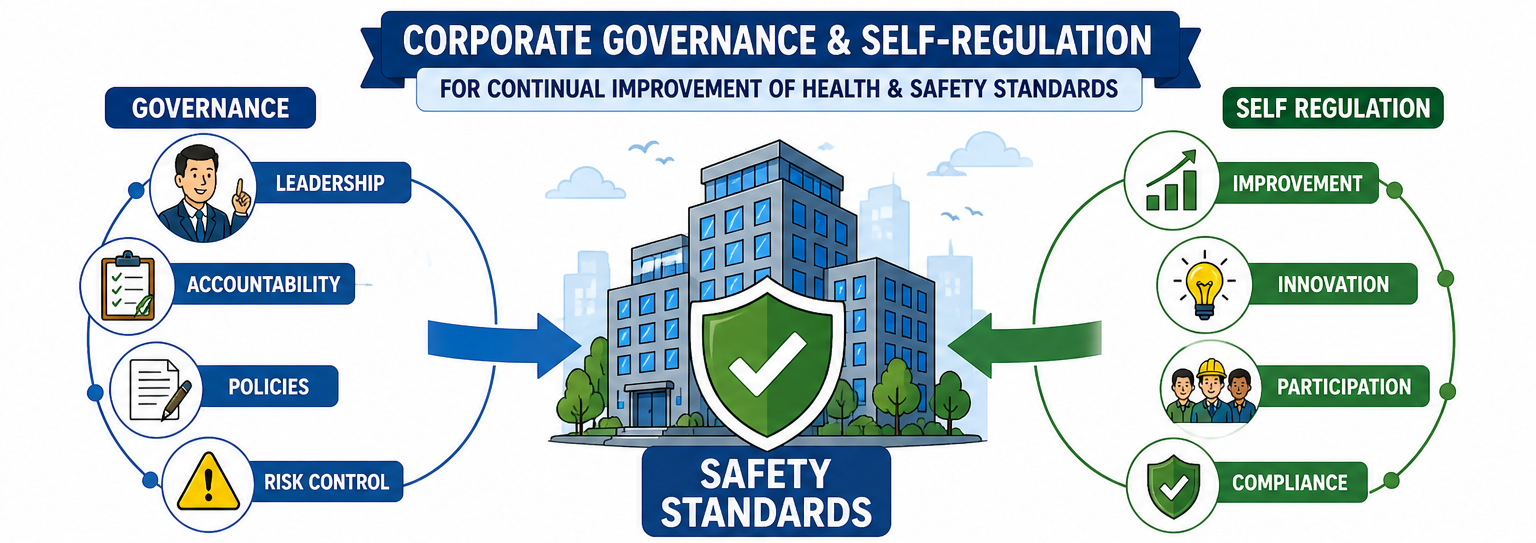
In modern organisations, workplace health and safety management has become an essential component of responsible business operations. Organisations are increasingly expected not only to comply with legal requirements but also to demonstrate strong leadership, accountability, and commitment toward protecting employees, contractors, visitors, customers, and the wider community. To achieve this, organisations rely heavily on effective corporate governance systems and self-regulation practices that support continual improvement in workplace health and safety standards.

Corporate governance provides the structure through which organisations are directed, controlled, and held accountable. It ensures that leadership establishes clear objectives, allocates resources, manages risks, and monitors organisational performance. Strong governance systems help organisations integrate health and safety into their strategic planning and operational decision-making processes.

At the same time, self-regulation encourages organisations to voluntarily exceed minimum legal requirements by adopting proactive approaches to risk management, employee participation, innovation, and continuous improvement. Organisations that embrace self-regulation focus not only on legal compliance but also on creating sustainable safety cultures that support long-term organisational success.

International frameworks such as ISO 45001 encourage organisations to combine governance structures with self-regulatory practices in order to improve workplace safety performance, strengthen accountability, and promote continual learning.

This section assesses the role of corporate governance and self-regulation in supporting continual improvement of organisational health and safety standards and explains how leadership, accountability, risk management, and employee participation contribute to sustainable workplace safety systems.
ChatGPT Image May 1 2026 10 21 06 AM e1777613005629

Corporate Governance

Definition

Corporate governance refers to the system by which organisations are directed, controlled, managed, and held accountable. It establishes the framework through which organisational objectives are achieved, risks are managed, and performance is monitored.

Corporate governance ensures that senior management and organisational leaders act responsibly while balancing operational performance, legal compliance, ethical behaviour, and stakeholder interests.

Role of Corporate Governance in Health and Safety

Corporate governance plays a major role in establishing effective health and safety management systems within organisations.

Leadership Commitment

Leadership commitment is one of the most important aspects of corporate governance.

Key Responsibilities

  • Senior management establishes safety priorities
  • Leaders allocate resources for safety management
  • Management promotes organisational safety culture
  • Leaders encourage compliance with health and safety policies
  • Executives support continual improvement initiatives

Effective health and safety management begins with strong leadership commitment. Senior leaders influence organisational culture by demonstrating that workplace safety is a core organisational value rather than simply a legal requirement.

When leaders actively support safety initiatives, employees are more likely to follow procedures, report hazards, and participate in safety programs. Leadership commitment also ensures that organisations allocate sufficient financial, technical, and human resources for health and safety management.

Organisations with visible leadership support often experience stronger safety cultures, lower accident rates, and improved employee trust.

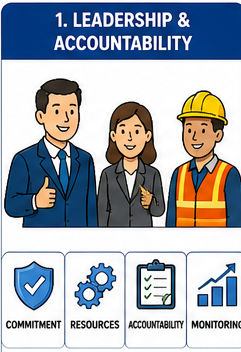
Accountability

Corporate governance establishes accountability at all organisational levels.

Key Responsibilities

  • Define clear health and safety responsibilities
  • Monitor organisational performance
  • Ensure managers and employees understand their duties
  • Evaluate compliance with policies and procedures
  • Promote transparent reporting and corrective actions

Clear accountability ensures that every individual within the organisation understands their role in maintaining workplace safety. Without accountability, safety responsibilities may become unclear, leading to inconsistent implementation of procedures and increased workplace risks.

Governance systems establish reporting structures, performance indicators, and monitoring processes that help organisations evaluate whether safety objectives are being achieved.

Accountability also encourages continuous monitoring of organisational performance and helps identify weaknesses that require improvement.
ChatGPT Image May 1 2026 10 21 06 AM 1 e1777613109908

Policy Development

Corporate governance supports the creation and implementation of workplace health and safety policies.

Key Responsibilities

  • Establish workplace health and safety policies
  • Ensure compliance with legal requirements
  • Define organisational safety objectives
  • Communicate policies to employees and stakeholders
  • Review and update policies regularly

Health and safety policies provide a structured framework for organisational operations. These policies outline expectations, responsibilities, and procedures that guide workplace activities.

Strong governance systems ensure that policies are aligned with legal requirements, industry standards, and organisational objectives. Policies also help organisations maintain consistency in safety practices across departments and operational locations.

Regular review and updating of policies are essential because workplace risks, technologies, and regulations continue to evolve.

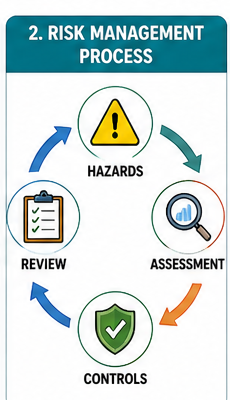
Risk Management

Risk management is a critical function of corporate governance.
ChatGPT Image May 1 2026 10 21 06 AM 2 e1777613170445

Key Responsibilities

  • Identify and control organisational risks
  • Integrate safety into business strategies
  • Conduct risk assessments and evaluations
  • Implement preventive and corrective controls
  • Monitor emerging workplace hazards

Effective governance requires organisations to identify hazards and manage risks systematically. Risk management helps prevent workplace accidents, occupational illnesses, environmental damage, and operational disruptions.

Integrating health and safety into organisational strategy ensures that safety considerations are included in decision-making processes, operational planning, and investment activities.

A proactive risk management approach helps organisations reduce incidents while improving operational efficiency and sustainability.

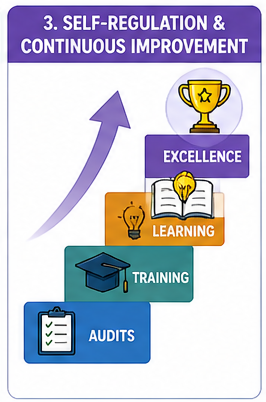
Self-Regulation
ChatGPT Image May 1 2026 10 21 06 AM 3 e1777613236804

Definition

Self-regulation refers to the voluntary actions organisations take to maintain and improve standards beyond minimum legal requirements. It involves organisations independently developing systems, policies, and initiatives that support high levels of workplace safety and operational excellence.

Self-regulation encourages organisations to adopt proactive approaches rather than relying solely on external enforcement.

Role of Self-Regulation

Proactive Safety Management

Self-regulation encourages organisations to actively identify and manage workplace hazards before incidents occur.

Key Responsibilities

  • Encourage organisations to identify hazards independently
  • Promote preventive approaches to risk management
  • Support proactive monitoring and inspections
  • Develop internal safety improvement programs
  • Strengthen organisational responsibility for safety performance

Proactive safety management focuses on prevention rather than reaction. Organisations that practice self-regulation continuously monitor workplace conditions, evaluate risks, and implement preventive controls even when not legally required.

This approach helps reduce accidents, improve employee confidence, and strengthen organisational resilience.

Proactive organisations often adopt advanced safety technologies, conduct additional training, and establish internal performance benchmarks that exceed regulatory requirements.

Continuous Improvement

Continual improvement is a core principle of self-regulation.

Key Responsibilities

  • Regularly review and improve safety systems
  • Implement lessons learned from incidents
  • Conduct audits and performance evaluations
  • Update procedures and training programs
  • Encourage innovation in safety practices

Continuous improvement ensures that organisations adapt to changing risks, technologies, and operational conditions. Organisations that continuously evaluate their systems are better able to identify weaknesses and improve overall performance.

Incident investigations, audits, inspections, and employee feedback provide valuable information that organisations can use to strengthen safety procedures and reduce future risks.

Continuous improvement also promotes learning and encourages organisations to remain competitive and responsible.

Adoption of International Standards

Self-regulation often involves the adoption of internationally recognised frameworks and standards.

Key Responsibilities

  • Use frameworks such as ISO 45001
  • Promote best practices across organisational operations
  • Align internal systems with international expectations
  • Encourage systematic health and safety management

International standards provide structured guidance for implementing effective health and safety systems. Organisations adopting internationally recognised frameworks demonstrate commitment to quality, consistency, accountability, and continual improvement.

Standards such as ISO 45001 help organisations establish processes for risk management, employee participation, incident investigation, and performance monitoring.

Adopting international standards can also improve organisational reputation and stakeholder confidence.

Employee Participation

Employee involvement is a major component of self-regulation and effective safety management.

Key Responsibilities

  • Encourage worker involvement in safety decisions
  • Strengthen organisational safety culture
  • Support reporting of hazards and near misses
  • Promote cooperation between management and employees
  • Encourage participation in training and safety programs

Employees often have direct knowledge of workplace hazards and operational challenges. Involving workers in safety decisions improves hazard identification and encourages greater compliance with safety procedures.

Employee participation also strengthens communication, trust, and organisational culture. Workers who feel involved and respected are more likely to support safety initiatives and contribute to continual improvement.

Strong employee participation helps create a shared sense of responsibility for workplace safety.

Continual Improvement in Health and Safety

Continual improvement is the ongoing process of enhancing organisational health and safety performance.

Key Activities

  • Regular audits and inspections
  • Monitoring safety performance
  • Updating procedures and training
  • Learning from incidents and near misses
  • Reviewing organisational objectives and controls

Importance of Continual Improvement

Continual improvement enables organisations to:

  • Adapt to changing workplace risks
  • Improve operational efficiency
  • Strengthen compliance and accountability
  • Reduce accidents and occupational illnesses
  • Enhance employee confidence and organisational reputation

Relationship Between Governance and Self-Regulation

Corporate governance and self-regulation work together to strengthen organisational health and safety systems.

Corporate Governance Provides

  • Structure
  • Leadership
  • Accountability
  • Strategic direction
  • Performance monitoring

Self-Regulation Provides

  • Flexibility
  • Innovation
  • Proactive improvement
  • Voluntary commitment
  • Continuous learning

Combined Impact

Together, governance and self-regulation create:

  • Strong and sustainable health and safety systems
  • Improved organisational performance
  • Better compliance and risk management
  • Enhanced employee participation and trust
  • Long-term organisational sustainability

Table: Stakeholders and Their Roles in Promoting Health and Safety

StakeholderMain RoleContribution
Professional BodiesTraining and standardsPromote competence and guidance
Employer BodiesEmployer representationSupport compliance and best practices
Trade AssociationsIndustry collaborationShare knowledge and standards
MediaPublic awarenessPromote accountability
Community GroupsPublic welfareAdvocate safer environments
Corporate GovernanceOrganisational controlEnsure accountability and leadership
Self-RegulationVoluntary improvementPromote continual safety enhancement

Conclusion

The promotion of positive health and safety outcomes requires cooperation between industries, organisations, governments, professional institutions, and communities. Professional bodies, employer organisations, trade associations, media groups, and community partnerships all contribute significantly to improving awareness, encouraging compliance, and promoting safer workplaces.

Organisations also carry ethical and social responsibilities to protect employees, customers, and the wider public from harm. By maintaining high safety standards, organisations demonstrate responsible leadership, strengthen stakeholder trust, and contribute positively to society.

Corporate governance and self-regulation further support continual improvement by ensuring accountability, proactive risk management, and the adoption of best practices. Through strong leadership, collaboration, and continuous improvement, organisations can create safer working environments and support long-term organisational sustainability.

Quiz No : 2 Understand statutory and regulatory obligations for maintaining health and safety in an organisation.
Prev
Quiz No : 3 Understand the industry and community roles in influencing and promoting local and national positive health and safety outcomes.
Next
HomeDegree Programs BlogsLearning Portal

Building Competence. Future Focused

Contact us here
  • info@inspirecollege.co.uk
  • Unit 3, Abercorn Commercial Centre, Manor Farm Road, Wembley, London, England, HA01AN
  • T: 02035 764371
  • M: +44 7441 396751

© 2026 Inspire College of Technologies UK Ltd. All Rights Reserved.

Facebook
Instagram
Instagram
Instagram

WhatsApp us

  • Home
  • Our Accreditations
    • ProQual
    • Qualifi
    • ABMA
    • NOCN
    • RSPH
    • Qualsafe
    • OAL
    • Degree Programs
      • Masters Top Up
      • Bachelors Top Up
      • MBAs
  • Trainings & Courses
    • Management
    • Health and Safety
    • Workplace Safety
    • Environmental Management Courses & Certifications
    • Health and Social Care
    • Law and Legal Services
    • IT & Advance Technologies
    • Construction and Civil Engineering
    • Professional Qualification
  • CSCS Cards
  • ProQual AC
  • Six Sigma Certifications
  • Blogs

Modal title

Main Content