Healthcare vs Social Care — Clear Guide for Students and Professionals
Healthcare and social care are interdependent systems that together uphold people’s wellbeing. In the UK, healthcare typically refers to medical diagnosis, treatment and prevention delivered by the NHS and other clinical services; social care refers to practical assistance with daily living help with bathing, eating, mobility, and household tasks that preserves independence and dignity. When clinical expertise and community support are coordinated, people recover more quickly, remain safer at home, and experience a higher quality of life.
In contemporary practice, it’s important to distinguish the clinical, regulatory remit of healthcare from the community‑centred, day‑to‑day support provided by social care. Although they are often discussed together, these sectors operate under different legal frameworks, employ distinct professional roles, and rely on separate funding streams. For anyone stepping into or progressing within this field whether a student beginning their studies or an experienced practitioner grasping both the division and the points of integration is essential for safe, compliant, and effective care.
Healthcare is care related to diagnosing, treating and preventing illness or injury, usually provided by doctors and nurses in clinical settings; Social care is support with daily living activities and maintaining independence, often provided by care workers or support staff in homes or community settings.
Key differences in Purpose and Settings:
Healthcare roles are primarily clinical, focused on restoring and maintaining medical stability through diagnosis and intervention. For example, a Patient Care Technician (PCT) typically works in a hospital setting, supporting nursing staff by monitoring vital signs, assisting with clinical procedures, and helping implement treatment plans.
By contrast, social care roles are supportive and person‑centred, concentrating on daily living, independence, and wellbeing. A Home Health Aide (HHA) usually provides care in the client’s home, assisting with personal tasks such as bathing, dressing, meal preparation, and mobility support. Although both types of roles are in high demand, they require different training and operate in distinct environments.
- Healthcare: Aims to diagnose, treat, and prevent illness. Services are delivered by clinicians (for example, general practitioners and medical specialists) using medical interventions such as surgery, prescriptions, and therapeutic procedures. Healthcare interventions are often time‑limited and clinically focused.
- Social Care: Aims to support daily living and promote independence. Services are provided by care staff and social workers who assist with personal care, mobility, housing needs, social engagement, and safeguarding. Social care tends to be ongoing and holistic, prioritising quality of life rather than cure.
- Environment: Healthcare is predominantly delivered in clinical settings hospitals, clinics, and GP surgeries where specialised equipment and clinical teams are available. Social care is mainly delivered in community settings people’s own homes, residential care homes, and day centres where the emphasis is on comfort, routine, and maintaining independence.
Understanding these distinctions helps individuals access the appropriate services and guides career choices. For example, someone requiring cardiac surgery should seek healthcare services; someone needing help with dressing or managing household bills would be best supported through social care.
Healthcare vs Social Care at a glance:
| Feature | Healthcare | Social Care |
| Primary Focus | Diagnosis, treatment, cure, and clinical rehabilitation | Support, daily living assistance, safeguarding, and long-term well-being |
| Typical Setting | Hospitals, doctor’s offices, clinics, acute care facilities | Private homes, day centres, residential homes, community settings |
| Key Goal | To restore health and manage disease | To maintain independence, dignity, and quality of life |
| Funding Source | Government (e.g., Medicare/Medicaid, NHS) and private insurance | Local authorities, self-funding, or government social safety nets |
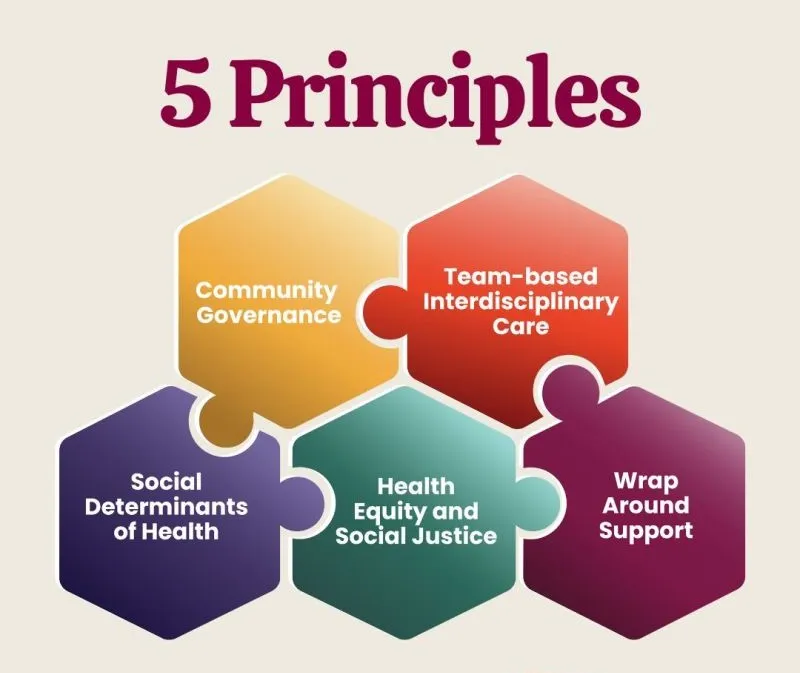
Five Guiding Principles:
These principles are recognized across both healthcare and social care sectors as foundational to safe, high-quality, and ethical practice. The focus here is on the person-centred approach and other elements necessary for effective integrated care.
- Person-centred care: Care that respects and is responsive to the individual’s preferences, needs, and values, treating them as a unique human being, not just a condition to be treated. In practice, this means involving the individual in shared decision-making.
- Safety: Ensuring care is delivered in a way that actively prevents harm. This includes mandatory training (like Moving and Handling and Fire Safety ), strong infection control practices, and establishing policies to reduce risk and error traps.
- Effectiveness: Care should be evidence-based, timely, and of the highest possible standard to meet the person’s comprehensive needs. This is often measured through outcomes, audits, and continuous quality assurance.
- Equity: Ensuring all people, everywhere, have access to the quality services they need, when and where they need them. This principle requires awareness of health inequalities and issues like how race or socioeconomic factors affect access to care.
- Collaboration (Partnership): Local community services, care providers, and health organizations must work together, sharing information and resources transparently , to protect and support vulnerable adults.
Practical Guidance for Professionals:
Improving integrated working — templates, MDT huddles, and shared care plans
For professionals, improving integration means actively reducing risk and increasing efficiency:
- Prioritize Compliance: Regulatory compliance is the single most important business concern for HCBS providers. Invest in training that covers the five key areas of compliance: Patient Safety, Data Protection (HIPAA), Ethical Billing, Workforce Safety, and Oversight of AI.
- Leverage Technology: Integrate technology solutions (like Electronic Visit Verification (EVV) or general compliance tools) to drive efficiency and ensure adherence to regulations.
- MDT Huddles: Implement brief, regular huddles to ensure coordinated care and clear communication during patient handovers, aligning with the Collaboration principle.
- Liability: Understand the accountability chain when AI makes an error, recognizing that responsibility can fall on the AI system, the developer, the human reviewer, or company leadership.
- Advanced Practice: Explore the expanded roles of Advanced Practice Nurses (NPs) to help ease workforce pressures and improve service delivery
Professional development and CPD ideas
Pursue learning on topics that span sectors. Courses on Integrated Care Systems or population health can be valuable. Joint training sessions (e.g. on safeguarding or dementia care) help health and social care staff understand each other’s roles. Remember that professional regulators often require CPD hours explore webinars or workshops accredited by Social Work England, Nursing & Midwifery Council, etc. Learn the latest in person-centred approaches and cultural competence.
Practical Guidance for Students:
Students must master mandatory skills before entering the workforce:
- Safeguarding: Complete mandatory training for both children and adults (Level 1 and 2) to understand the six principles (Empowerment, Prevention, Protection, etc.) and recognize the factors that increase the risk of abuse.
- Communication and Conflict Resolution: Mastering conflict resolution is a statutory requirement for many professional roles.
- Digital Literacy: Understand the basics of telehealth, electronic records, and the ethical use of AI to maintain confidentiality and client self-determination.
Roles and Responsibilities:
Healthcare Roles
| Role | Core Duties | Typical Qualifications |
| Doctors and specialists | Clinical diagnosis, treatment planning, prescribing medication, surgical intervention | Medical Degree (MD/DO), Residency, Fellowship, State Licensure |
| Nurses and allied health professionals | Direct patient care, vital sign monitoring, administering medications, patient education | Associate Degree in Nursing (ADN), Bachelor of Science in Nursing (BSN), State Licensure |
| Therapists and clinical technicians | Physical rehabilitation (PT), EKG monitoring, diagnostics, managing medical equipment | Certification (e.g., Certified EKG Technician ), specialized associate or bachelor’s degrees |
Social Care Roles
| Role | Core Duties | Typical Qualifications |
| Care workers and domiciliary staff | Assistance with daily living (ADLs: bathing, feeding, mobility), light housekeeping | Medical Degree (MD/DO), Residency, Fellowship, State Licensure |
| Social workers and care coordinators | Needs assessment, crisis management, legislative advocacy, developing action plans, safeguarding | Associate Degree in Nursing (ADN), Bachelor of Science in Nursing (BSN), State Licensure |
| Personal assistants and support planners | Managing finances, facilitating community inclusion, organizing personalized support schedules | Certification (e.g., Certified EKG Technician ), specialized associate or bachelor’s degrees |
Healthcare and social care are distinct yet deeply interdependent systems: healthcare delivers clinical diagnosis and treatment, while social care provides the practical, person‑centred support that sustains daily life and independence. Recognising their different roles, legal frameworks, and environments and deliberately strengthening the points of integration through shared plans, clear handovers, and collaborative practice improves safety, reduces avoidable harm, and enhances quality of life for the people we serve. Whether you are a student preparing for a placement or a professional leading a team, applying the principles of person‑centred care, safety, effectiveness, equity, and collaboration will help you deliver more compassionate, coordinated, and measurable outcomes.
Let’s Clear Things Up!
Lock In Your Spot
Get in Touch
+44 2035 764371
+44 7441 396751
info@ictqual.co.uk
www.inspirecollege.co.uk