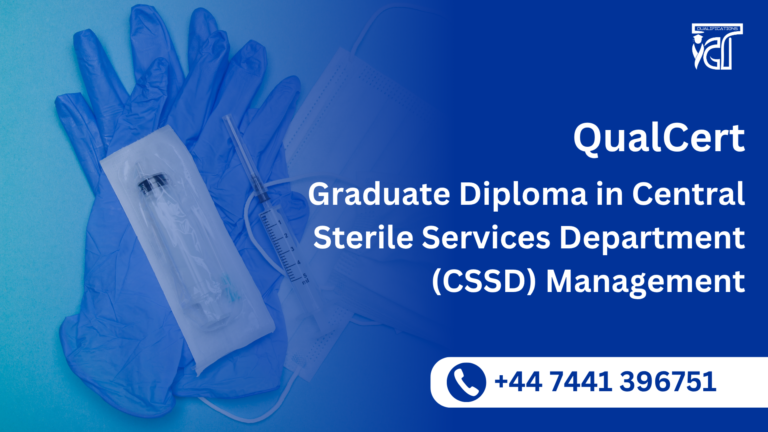
QualCert Intermediate Diploma in Central Sterile Services Department (CSSD) Management
Gain essential skills in sterilization, decontamination, and quality control.
Course Type
Non Ofqual
Awarding Body
QualCert
Credits
30
Study Mode
Online
Assessment
Assignment-based
Course Overview
What is this course
The QualCert Intermediate Diploma in Central Sterile Services Department (CSSD) Management is a professional qualification designed to develop essential knowledge and practical understanding of sterile services management in healthcare environments. The course focuses on the principles of cleaning, disinfection, sterilization, decontamination, and the safe handling of medical instruments used in clinical and surgical procedures. It helps learners understand the importance of effective CSSD operations in maintaining healthcare hygiene, reducing infection risks, and supporting patient safety across hospitals, clinics, and other medical facilities.
This diploma covers key aspects of Central Sterile Services Department management, including medical device reprocessing, sterilization methods, infection prevention and control, quality assurance, equipment maintenance, workflow management, and compliance with relevant healthcare safety standards. Learners develop an understanding of how to manage sterile instrument supplies, maintain accurate documentation, monitor sterilization processes, and apply safe working practices throughout the decontamination cycle. The qualification also highlights the importance of staff responsibilities, risk management, traceability, and consistent quality control in delivering reliable sterile services.
The QualCert Intermediate Diploma in Central Sterile Services Department (CSSD) Management is suitable for healthcare professionals, CSSD technicians, sterile processing personnel, decontamination staff, and individuals seeking to strengthen their expertise in medical instrument sterilization and healthcare support services. By developing knowledge of CSSD procedures, infection control principles, and operational management, the qualification supports professional competence in maintaining safe, efficient, and well-organized sterile services departments. It emphasizes the role of effective sterilization practices in protecting patients, supporting clinical teams, and maintaining high standards of healthcare quality and safety.
Course Content
Detailed Curriculum Structure
The QualCert Intermediate Diploma in Central Sterile Services Department (CSSD) Management, qualification consisting of 3 mandatory study units.
- Fundamentals of CSSD Operations and Management
- Infection Prevention, Decontamination and Sterilisation Practices
- Quality Assurance, Safety and Risk Management in CSSD
Why Choose the QualCert Intermediate Diploma in Central Sterile Services Department (CSSD) Management
The QualCert Intermediate Diploma in Central Sterile Services Department (CSSD) Management develops essential knowledge of sterilization, infection control, and healthcare safety.
- Gain knowledge of CSSD operations and sterile instrument processing.
- Understand cleaning, disinfection, decontamination, and sterilization methods.
- Develop awareness of infection prevention and patient safety.
- Learn quality assurance and sterilization monitoring procedures.
- Understand medical instrument handling, storage, and traceability.
- Build knowledge of CSSD equipment and workflow management.
- Strengthen understanding of healthcare hygiene and safety standards.
- Explore professional opportunities in hospital CSSD and sterile processing departments.
This qualification supports professional competence in CSSD management, sterile processing, and safe healthcare practices.
Learning Outcomes of QualCert Intermediate Diploma in Central Sterile Services Department (CSSD) Management
Fundamentals of CSSD Operations and Management
- Explain the role and purpose of a Central Sterile Services Department (CSSD) in healthcare settings.
- Describe the structure, functions and responsibilities of a CSSD department.
- Explain the stages of the medical instrument processing cycle.
- Identify the equipment and resources used in CSSD operations.
- Describe effective workflow management and coordination between CSSD and clinical departments.
- Explain the importance of accurate documentation and record-keeping in sterile services.
- Identify the roles and responsibilities of personnel involved in CSSD operations.
- Explain how effective CSSD management contributes to patient safety and healthcare quality.
Infection Prevention, Decontamination and Sterilisation Practices
- Explain the principles of infection prevention and control in healthcare environments.
- Identify potential sources of contamination associated with reusable medical devices.
- Describe cleaning and disinfection procedures for medical instruments.
- Explain the stages involved in inspecting, assembling and packaging reusable instruments.
- Compare common sterilisation methods used in healthcare settings.
- Describe appropriate procedures for sterile instrument storage and distribution.
- Explain the importance of following manufacturers’ instructions and established procedures.
- Identify safe working practices for handling contaminated instruments and materials.
- Explain how decontamination and sterilisation procedures help reduce infection risks.
Quality Assurance, Safety and Risk Management in CSSD
- Explain the principles of quality assurance in CSSD operations.
- Describe methods used to monitor and verify sterilisation processes.
- Explain the importance of equipment maintenance and performance monitoring.
- Describe documentation and traceability requirements for processed medical devices.
- Identify operational hazards and risks within sterile services environments.
- Explain procedures for incident reporting and non-conformity management.
- Describe risk control measures that support safe CSSD operations.
- Explain the role of continuous improvement in maintaining service quality.
- Evaluate how quality controls and risk management contribute to patient safety.
Who Should Attend
Target Audience and Participants
The QualCert Intermediate Diploma in Central Sterile Services Department (CSSD) Management is designed for individuals seeking to develop expertise in medical instrument sterilization, decontamination, and infection prevention. It is suitable for healthcare professionals aiming to strengthen their knowledge of CSSD operations and patient safety.
- CSSD technicians and sterile processing professionals.
- Healthcare workers involved in infection prevention and control.
- Hospital staff responsible for medical instrument sterilization.
- Decontamination technicians working in healthcare facilities.
- Nurses and clinical support staff handling sterile instruments.
- CSSD supervisors and sterile services team leaders.
- Healthcare quality assurance and patient safety personnel.
- Individuals interested in CSSD operations and sterile services management.
This qualification helps learners understand effective sterilization procedures, quality control, and safe CSSD management practices. It supports professional competence in maintaining hygienic healthcare environments and protecting patient safety.
Career & Learning Benefits
Career Progression and Benefits
The QualCert Intermediate Diploma in Central Sterile Services Department (CSSD) Management helps learners develop essential knowledge of sterilization, medical device reprocessing, infection prevention, and healthcare safety. The qualification can strengthen professional competence, support career development, and improve understanding of effective sterile services management in hospitals and other healthcare facilities.
Learning Benefits
- Develop a clear understanding of Central Sterile Services Department (CSSD) operations and management principles.
- Understand medical instrument cleaning, disinfection, decontamination, and sterilization procedures.
- Develop knowledge of infection prevention and control practices in healthcare environments.
- Understand the importance of sterilization standards and safe medical device reprocessing.
- Develop awareness of quality assurance and monitoring in sterile services departments.
- Understand instrument traceability, documentation, and sterile supply management.
- Develop knowledge of risk assessment and safe working practices in CSSD operations.
- Understand the importance of equipment maintenance and sterilization process monitoring.
- Improve confidence in maintaining hygiene, quality, and patient safety standards.
- Build a foundation for further professional development in sterile processing and healthcare services.
Career Benefits
- Support career development in Central Sterile Services Departments and sterile processing units.
- Strengthen professional opportunities in hospital sterilization and decontamination services.
- Prepare learners for responsibilities involving medical instrument reprocessing and sterile supplies.
- Support roles related to infection prevention and healthcare hygiene.
- Enhance professional knowledge relevant to CSSD technician and sterile processing responsibilities.
- Develop understanding applicable to quality assurance in sterile services operations.
- Support career development in healthcare support services and medical device reprocessing.
- Improve confidence when contributing to safe and efficient CSSD operations.
- Develop transferable skills relevant to healthcare safety, documentation, and quality control.
- Build a foundation for long-term professional development in CSSD management and sterile services.
Completing the QualCert Intermediate Diploma in Central Sterile Services Department (CSSD) Management can help learners strengthen their technical knowledge, improve professional capability, and prepare for responsibilities involving sterilization procedures, infection control, quality assurance, and safe sterile services management in healthcare settings.
Need More Information?
Frequently Asked Questions Explained
Enrollment Criteria
Entry Requirements for QualCert Intermediate Diploma in Central Sterile Services Department (CSSD) Management
- Age Requirement: Applicants must be at least 18 years old.
- Educational Background: A secondary school qualification or equivalent is recommended.
- Professional Experience: Healthcare or CSSD experience is beneficial but not mandatory.
- English Proficiency: Basic English reading, writing, and communication skills are recommended.
Lock In Your Spot
Get in Touch
+44 2035 764371
+44 7441 396751
info@inspirecollege.co.uk
www.inspirecollege.co.uk