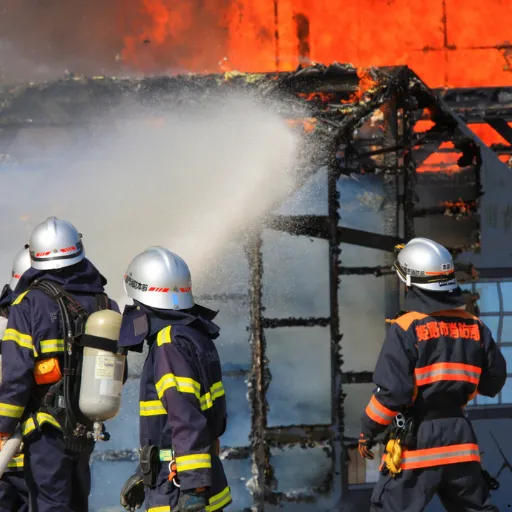
ProQual Accredited Certified Fire Safety Training Course

ICT logo
ProQual Accredited Certified Fire Safety Training Course

Approved by ProQual AC

8
Modules

Duration: 3 days 9 hours

Online Learning

Course Overview

What is this course

Fire safety is a fundamental responsibility in every workplace. Incidents not only endanger lives but can also cause severe damage and disrupt operations. To address these risks, organizations need trained professionals who understand fire prevention, risk management, and emergency response procedures.

The ProQual Accredited Certified Fire Safety Training Course provides learners with the essential knowledge and practical skills to manage fire safety effectively across diverse environments. Covering fire risk assessment, prevention strategies, and regulatory compliance, this qualification builds a strong foundation for professionals tasked with safeguarding people and assets.

Designed for safety officers, managers, supervisors, and individuals responsible for fire safety measures, the course empowers participants to proactively reduce risks, implement effective controls, and ensure a structured response in emergencies. Achieving certification demonstrates a clear commitment to workplace safety, compliance, and fostering a culture of preparedness.

Course Content

Detailed Curriculum Structure

  • Principles of Fire Safety
  • Fire Safety Legislation and Regulations
  • Fire Risk Assessment and Management
  • Fire Safety Management Systems
  • Fire Detection and Alarm Systems
  • Emergency Evacuation Procedures
  • Firefighting Equipment and Systems
  • Practical Fire Safety Exercises

Principles of Fire Safety

  • Grasp the fundamentals of fire dynamics, including the fire triangle and tetrahedron.
  • Recognize common fire hazards across different environments and assess their risks.
  • Apply effective fire prevention strategies to reduce the likelihood of incidents.
  • Demonstrate understanding of fire behavior and the factors influencing fire spread.

Fire Safety Legislation and Regulations

  • Explain key laws, regulations, and standards governing workplace and public fire safety.
  • Define the responsibilities of employers, employees, and stakeholders in compliance.
  • Assess the consequences of failing to meet fire safety requirements.
  • Develop strategies to ensure legal compliance and foster a safety-focused culture.

Fire Risk Assessment and Management

  • Conduct systematic fire risk assessments to identify and prioritize hazards.
  • Implement risk control measures to mitigate identified threats.
  • Maintain accurate records of assessments and update them regularly.
  • Design tailored emergency fire plans for specific environments.

Fire Safety Management Systems

  • Establish policies and procedures aligned with organizational and regulatory needs.
  • Deliver effective fire safety training programs for staff.
  • Monitor and audit fire safety practices to ensure compliance.
  • Apply continuous improvement methods to strengthen safety systems.

Fire Detection and Alarm Systems

  • Identify types of fire detection systems and their applications.
  • Explain alarm activation processes and appropriate response actions.
  • Perform routine testing and maintenance to ensure system reliability.
  • Integrate detection systems with wider building safety infrastructure.

Emergency Evacuation Procedures

  • Plan evacuation routes and assembly points for safe emergency exits.
  • Conduct drills to familiarize occupants with evacuation protocols.
  • Address the needs of vulnerable individuals in evacuation planning.
  • Implement post-evacuation procedures to account for personnel and coordinate with emergency services.

Firefighting Equipment and Systems

  • Identify fire extinguisher types and their correct usage.
  • Demonstrate proficiency in basic firefighting techniques.
  • Explain operation and maintenance of suppression systems such as sprinklers.
  • Coordinate emergency response teams to minimize damage and ensure safety.

Practical Fire Safety Exercises

  • Participate in simulated fire scenarios to apply theoretical knowledge.
  • Engage in role-play to strengthen decision-making, communication, and teamwork.
  • Conduct debriefings to evaluate performance and identify improvements.
  • Analyze real-life case studies to extract lessons and apply them to future responses.

By completing this qualification, learners will gain the knowledge, skills, and confidence to manage fire safety across diverse settings. They will be prepared to contribute proactively to fire prevention, emergency response, and organizational safety management, reinforcing a culture of compliance and preparedness.

Who Should Attend

Target Audience and Participants

  • Safety officers responsible for workplace fire prevention and emergency planning
  • Health and safety managers seeking accredited fire safety qualifications
  • Supervisors overseeing compliance with fire safety regulations
  • Facilities and building managers tasked with maintaining fire safety systems
  • HR and training professionals implementing organizational safety programs
  • Employees designated as fire wardens or emergency response coordinators
  • Individuals pursuing careers in occupational health and safety management
  • Organizations aiming to strengthen workplace safety culture and legal compliance

Why choose us?

Skills, Knowledge & Opportunities You Will Earn

  • ProQual Accredited Qualification – Gain a globally recognized certification that demonstrates professional competence in fire safety.
  • Comprehensive Curriculum – Covering fire dynamics, legislation, risk assessment, emergency planning, and practical exercises.
  • Expert Trainers – Learn from experienced fire safety professionals with real-world industry knowledge.
  • Hands-On Learning – Practical simulations, case studies, and role-play exercises to build confidence in emergency response.
  • Flexible Delivery – Options for classroom, blended, or online learning to suit diverse schedules and needs.
  • Career Advancement – Enhance your employability and open opportunities in occupational health, safety, and compliance roles.
  • Organizational Impact – Equip your team to reduce risks, safeguard assets, and ensure legal compliance.
  • Commitment to Excellence – We prioritize quality training, learner support, and continuous improvement in fire safety education.

Need More Information?

Frequently Asked Questions Explained

This program is designed for individuals responsible for fire safety in their organizations, including safety officers, managers, supervisors, and designated fire wardens. It is also suitable for professionals seeking to strengthen their expertise in fire safety management and compliance.

There are no formal educational requirements. However, participants should have a basic understanding of workplace safety practices. Since the course is delivered and assessed in English, proficiency in the language is essential.

The training runs over 3 days (9 hours total). With mandatory assessments conducted through Approved Training Centres (ATCs), the full process from enrollment to certification typically takes 1 to 3 weeks.

The course is available in multiple formats—online, in-person, or blended learning. Participants can select the option that best suits their schedule and learning style. Final arrangements are determined by the Approved Training Centre (ATC).

Yes. Learners must complete a formal assessment consisting of 100 multiple-choice questions (MCQs). A minimum score of 75% is required to successfully pass and achieve certification.

Enrollment Criteria

Minimum Eligibility Criteria for Enrollment

  • Minimum 18 years at enrollment
  • No formal qualifications required; basic workplace safety knowledge recommended
  • Prior fire safety or health & safety experience helpful but not essential
  • Proficiency in English (reading, writing, communication)

Lock In Your Spot

Get in Touch

+44 2035 764371

+44 7441 396751

info@ictqual.co.uk

www.inspirecollege.co.uk

Similar Posts