
Role-Play in Stakeholder Perspectives
Introduction
In community development, a single issue often looks completely different depending on
who you ask. A “Global Influence” like a new international trade policy might be a
financial opportunity for a business owner but a disaster for a local resident losing their
home to development.
This Knowledge Providing Task equips you with the vocational competency of
Stakeholder Empathy and Analysis. You will learn to navigate the conflicting
motivations of diverse groups, a critical skill for the learning outcomes regarding
advocacy and ethics. You will practice stepping out of your own worldview and into the
shoes of those you serve, ensuring your work aligns with the UK Equality Act 2010.
A. Knowledge Guide: The Stakeholder Landscape
To manage local challenges effectively, you must understand the “Players,” their
“Motivations,” and how “Diversity” filters their experience.
1: The Players: A “Who’s Who” in Community Development
In any UK community project, you will generally encounter these four key categories.
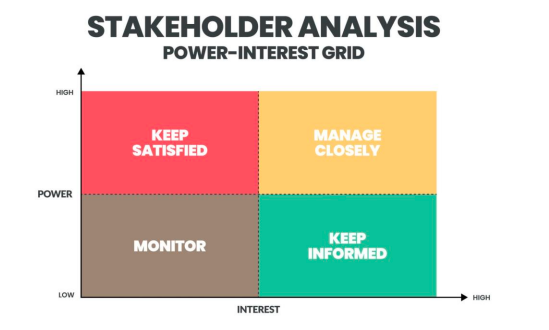
- The Community (Rights Holders):
o Who: Residents, local business owners, community groups, religious
congregations.
o Vocational Role: The beneficiaries (or victims) of the project. They hold
“lived experience” expertise. - The Public Sector (Duty Bearers):
o Who: Local Councils (e.g., Borough Council), Social Workers, NHS Trusts.
o Vocational Role: They provide funding and statutory services. They are
bound by the Public Sector Equality Duty. - The Private Sector (Investors):
o Who: Property developers, multinational corporations, local SMEs.
o Vocational Role: They bring capital and jobs but are driven by profit
margins and global market forces. - The Third Sector (Advocates):
o Who: Charities, NGOs, Social Enterprises.
o Vocational Role: They fill the gaps left by the state and advocate for the
vulnerable.
2: Motivations: The “What’s in it for me?” Factor
Different groups have different definitions of success.
| Stakeholder | Primary Motivation | Vocational Tension (The Challenge) |
| Local Council | Budget Efficiency & Compliance | Wants to improve the area but faces budget cuts from central government. |
| Global Investor | Return on Investment (ROI) | Wants to build high-end apartments (Global trend) rather than affordable housing (Local need). |
| Long-term Resident | Security & Stability | Wants to keep their community intact; fears “Gentrification” and displacement. |
| Social Worker | Wellbeing & Safety | Prioritizes the immediate needs of vulnerable clients over long-term infrastructure plans. |
3: Diversity: The Lens of Experience
A “Global Influence” like inflation does not hit everyone equally. You must apply an
Intersectional Lens—considering how age, race, and ability overlap.
The “Digital by Default” Example:
- o The Policy: Moving council services online to save money (Global
efficiency trend).
o Young Professional: Finds this convenient and fast.
o Elderly Resident (80+): May view this as a barrier to accessing pension
advice (Digital Exclusion).
o Non-Native English Speaker: May struggle if the website lacks translation
tools (Cultural Barrier).
Key UK Regulation:
The Equality Act 2010 (Protected Characteristics): As a practitioner, it is illegal to
discriminate against age, disability, race, religion, sex, etc. You must consider these
characteristics when analyzing stakeholder needs.
B. Learner Task Template
Task 3: In Their Shoes (Role-Play)
Instructions:
You will be presented with a scenario where a Global Influence (International
Economic Pressure) is creating a Local Challenge. You must adopt the persona of a
specific stakeholder.
The Scenario:
“The Green-Tech Gentrification”
A multinational “Green Tech” company has purchased a large plot of land in a lowincome borough to build their new UK headquarters. This is part of a global push for
sustainable business.
The Benefit: They promise 500 new high-tech jobs.
The Cost: To build the HQ, they are demolishing the “Meadow Estate” community
centre and a row of affordable shops. Rents in the surrounding area have already risen
by 20% in anticipation. The Local Council supports the deal to boost the local economy.
Your Role:
Persona: A Single Mother (35) working two part-time jobs on minimum wage, living in
the Meadow Estate.
The Question:
“How does this situation affect your daily life, and what specific support do you need
from a Community Development Worker?”
Your Response (Guide):
- Write 3–4 sentences in the first person (“I”).
- Reference your specific barriers (Time, Income, Housing).
- Reference the “Global Influence” (The tech company) from your local
perspective.
[Learner Input Area]
Example Answer Structure:
“This new headquarters sounds good for the economy, but I am terrified. My rent is
already taking half my wages, and if the local shops go, I can’t afford to travel to the big
supermarket. I don’t have the qualifications for these ‘high-tech’ jobs they are promising,
so I feel like I’m being pushed out of my own home to make room for wealthy strangers. I need a Community Worker to help me understand my tenant rights and advocate for
affordable housing guarantees before they knock our centre down.”
Learner Guidelines & Submission Requirements
Task Guidelines:
- Empathy First: Do not analyze the person; become the person. Use emotional language appropriate to their situation (fear, hope, frustration).
- Vocational Validity: Your “needs” must be realistic. A resident wouldn’t ask for
“Global Policy Change”; they would ask for “Legal Advice” or “Rent Control.” - UK Context: If you mention rights, ensure they exist in the UK (e.g., “Right to
challenge planning permission” or “Tenant protections”).
Submission Requirements:
- Format: Text entry in the LMS or a short-written reflection.
- Word Count: 100–150 words per persona (if multiple is assigned).
- Grading Criteria:
o Perspective Taking: Does the voice sound authentic to the assigned
role?
o Impact Identification: Did the learner correctly identify how the global
event impacts the local reality?
o Support Request: Is the requested support relevant to Community
Development work (Advocacy/Service Provision)?