
ProQual QA/QC Template Demonstration
Table of Contents
Knowledge Provision Task Intro
Welcome to this comprehensive development document designed specifically for candidates undertaking the ProQual Level 6 Diploma in Quality Control and Quality Assurance (QA/QC) – Engineering. This extensive guide serves as your operational blueprint, bridging the gap between foundational knowledge and the advanced competency required of a senior engineering professional operating within the United Kingdom. As you engage with this material, you must approach the content not as a student memorizing textbook theories, but as a seasoned practitioner executing complex decision-making processes on active engineering sites. The focus here is strictly on vocational application, professional judgment, and absolute adherence to stringent UK industrial frameworks.
- This framework focuses exclusively on the ProQual Level 6 engineering qualification standards without deviation.
- The content is entirely vocational, prioritizing on-site competency and complex hazard mitigation over academic theory.
- All scenarios and compliance mandates are strictly aligned with United Kingdom statutory instruments and industrial regulations.
- The primary objective is to cultivate your professional judgment for high-stakes, senior-level engineering operations.
Purpose Of This Document
The core intent of this specialized training material is to transition your capabilities from baseline operational awareness into advanced, competency-driven professional application. You will be guided through a meticulously detailed framework that demonstrates exactly how to navigate, document, and execute a critical risk management process. By dissecting a professional-grade template, you will learn to anticipate compounding variables, avoid catastrophic operational pitfalls, and ensure your documentation stands up to rigorous scrutiny by regulatory auditors. This document is engineered to empower you to lead cross-functional teams and enforce uncompromising quality standards across complex engineering lifecycles.
- Provides a comprehensive, step-by-step demonstration of completing a critical quality control template.
- Highlights severe operational pitfalls and documentation errors that candidates must rigorously avoid.
- Ensures your decision-making processes align with the highest expectations of regulatory compliance.
- Establishes a definitive baseline for executing senior-level quality assurance reviews and audits.
Concept Explainer Core Sheet
Before diving into the functional templates and risk registers, it is vital to ground your understanding in the fundamental mechanisms of quality management through this concept explainer. This section serves as your professional anchor, ensuring you grasp the profound nuances between proactive process assurance and reactive component control. A senior professional understands that quality cannot simply be inspected into a product at the end of a lifecycle; it must be systematically embedded into the design, procurement, and execution phases. This explainer clarifies how continuous improvement acts as the engine driving the entire framework forward, mitigating hazards before they manifest into critical non-conformances.
- Quality Assurance represents the proactive framework of policies designed to prevent engineering defects.
- Quality Control operates as the reactive inspection mechanism to identify and rectify physical non-conformances.
- Risk Management serves as the analytical bridge, anticipating system failures and deploying resilient controls.
- Continuous Improvement ensures that operational lessons are systematically fed back into the planning phases.
Principles Of Quality Control
Understanding these foundational principles requires more than simply reading organizational standards; it demands an ingrained culture of absolute precision within your engineering operations. Quality control acts as the final gatekeeper on any project, ensuring that every fabricated component, structural weld, and assembled system meets the stringent baseline criteria before deployment into the field. As a senior professional, you are responsible for orchestrating these control measures, calibrating the inspection tools, and fostering an environment where operators feel empowered to halt production the moment a critical deviation is detected.
- Mandates the execution of rigorous, documented inspection protocols at every distinct operational milestone.
- Requires the meticulous, uncompromised documentation of all identified non-conformances and their immediate rectifications.
- Relies entirely on properly calibrated measurement tools to guarantee absolute accuracy in operational environments.
- Empowers inspection personnel with the authority to instantly halt operations upon detecting critical structural failures.
Quality Standards And Regulations
Navigating the regulatory landscape within the United Kingdom is a non-negotiable competency for any senior engineering professional overseeing quality portfolios. Compliance is never merely a box-ticking exercise; it forms the legal, operational, and ethical backbone of all engineering projects governed by the Health and Safety Executive and other statutory bodies. Your professional judgment must always be rooted in a deep understanding of primary legislation, ensuring that every operational procedure, risk assessment, and quality manual inherently satisfies the rigorous demands of UK law. Failure to align with these standards exposes the organization to severe legal liabilities and catastrophic project failures.
- Requires strict, unwavering adherence to the fundamental Health and Safety at Work etc. Act 1974.
- Demands comprehensive compliance with the Construction (Design and Management) Regulations 2015 for project execution.
- Necessitates alignment with the Provision and Use of Work Equipment Regulations (PUWER) for machinery safety.
- Mandates the implementation of robust, tamper-proof audit trails to definitively prove ongoing regulatory compliance.
Quality Assurance Lifecycle Stages
The lifecycle of quality assurance is an iterative, continuous loop designed specifically to foster organizational evolution and drive down the rates of operational non-conformance. By embedding quality management directly into the initial scoping and design phases, senior engineering teams can drastically reduce the downstream impact of structural or systemic failures. This lifecycle requires vigilant oversight, transitioning smoothly from initial project planning into controlled execution, followed by rigorous internal auditing, and culminating in management reviews that dictate strategic process enhancements for future engineering endeavors.
- Initiates with comprehensive project quality planning, resource allocation, and defined structural scoping.
- Progresses seamlessly into controlled project execution with deeply embedded, proactive assurance checkpoints.
- Involves systematic, independent internal auditing protocols to verify strict adherence to organizational processes.
- Culminates in executive management reviews utilizing audit data to drive strategic, long-term operational enhancements.
Risk Management In Engineering
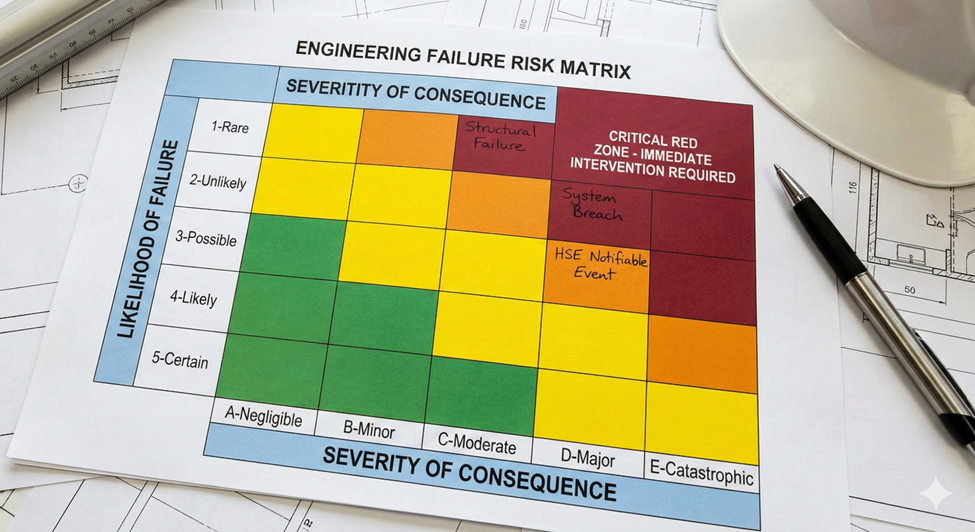
At the advanced level of professional competency, risk management transcends basic hazard spotting and enters the highly complex realm of systemic operational analysis. It requires the professional capability to anticipate exactly how compounding variables, environmental factors, and human errors might trigger a cascade of quality failures across an entire project infrastructure. You must utilize advanced analytical frameworks to forecast these disruptions, collaborating with cross-functional teams to identify hidden risks, and prioritizing the implementation of highly resilient, foolproof mitigation strategies that protect both the workforce and the structural integrity of the project.
- Utilizes advanced, multifaceted analytical frameworks to accurately forecast potential downstream project disruptions.
- Demands intensive cross-functional collaboration to uncover hidden, systemic risks within complex engineering designs.
- Prioritizes the rapid deployment of highly resilient, engineered mitigation strategies over basic administrative controls.
- Requires the continuous, active monitoring and updating of dynamic risk profiles throughout the execution phase.
Advanced Defect Prevention Strategies
Executing advanced defect prevention requires a paradigm shift from finding errors to engineering an environment where errors are physically or procedurally impossible to make. As a senior practitioner, your objective is to design operational workflows that are inherently robust, utilizing mechanisms such as process interlocking, automated environmental controls, and extensive vendor qualification audits. By scrutinizing the supply chain and mandating strict material certifications before components ever reach the UK assembly site, you effectively neutralize potential quality deviations at their primary source, safeguarding the entire project lifecycle.
- Implements stringent vendor qualification audits to ensure external suppliers meet exact UK compliance standards.
- Utilizes automated environmental controls during sensitive fabrication processes to eliminate human error variables.
- Mandates comprehensive material test reports for all raw materials prior to acceptance into the fabrication facility.
- Designs procedural workflows that incorporate mandatory, dual-verification hold points for all critical structural assemblies.
Operational Compliance Impacts Evaluation
Evaluating the impact of compliance deviations involves a deep, analytical review of how non-conformities ripple through an engineering organization, affecting timelines, structural safety, and legal standing. When quality standards are compromised, the repercussions extend far beyond simple rework; they can trigger immediate interventions by the Health and Safety Executive, leading to halted operations and severe organizational penalties. Your professional judgment is crucial in evaluating these impacts, ensuring that every member of the engineering team understands the catastrophic consequences of ignoring established quality control protocols or bypassing safety interlocking mechanisms.
- Analyzes the cascading timeline delays caused by mandatory rework following the identification of major non-conformances.
- Evaluates the severe legal liabilities and regulatory penalties associated with breaching UK statutory engineering laws.
- Assesses the immediate structural safety risks posed to operational personnel when quality assurance protocols are bypassed.
- Investigates the long-term reputational damage inflicted upon the engineering firm following public compliance failures.
Complex Decision Making Scenarios
Operating at a senior level means you will routinely face scenarios where standard operating procedures offer no clear solution, demanding complex, independent decision-making based on deep vocational experience. Whether you are balancing critical project deadlines against the discovery of a subtle material defect, or resolving conflicts between specialized engineering departments regarding tolerance stack-ups, your decisions must remain grounded in objective quality standards. You must possess the professional courage to halt a multi-million-pound operation if safety or structural integrity is compromised, demonstrating absolute commitment to the principles of quality assurance.
- Requires balancing high-pressure project delivery timelines against the uncompromising need for structural quality.
- Involves mediating highly technical disputes between specialized engineering disciplines regarding dimensional tolerances.
- Demands the professional authority and courage to immediately halt major operations upon detecting critical defects.
- Necessitates the rapid synthesis of conflicting operational data to determine the safest, most compliant path forward.
Professional Judgment In Action
The application of professional judgment is what separates a novice inspector from a senior quality assurance leader. It involves looking beyond the immediate data presented on an inspection sheet to identify underlying systemic trends, degrading equipment calibrations, or workforce fatigue that could precipitate a quality failure. You must continuously validate the information provided to you, physically verifying critical structural nodes, and ensuring that the mitigation strategies formulated in the boardroom translate effectively into practical, foolproof actions on the active engineering site.
- Involves identifying subtle, underlying systemic trends that indicate an impending breakdown in quality controls.
- Requires the continuous, physical verification of critical structural assemblies rather than relying solely on secondary reports.
- Demands the formulation of practical, site-specific mitigation strategies that workforce personnel can easily execute.
- Necessitates adjusting baseline inspection frequencies dynamically based on real-time project risk indicators.
Analyzing Root Cause Failures
When a non-conformance occurs, applying a superficial fix is entirely unacceptable at this level of qualification; you must relentlessly pursue the absolute root cause of the failure. This process involves utilizing advanced investigative methodologies to strip away the symptoms of the defect and expose the fundamental breakdown in the quality assurance lifecycle, whether it be a flaw in the initial design, a lapse in supply chain vetting, or a failure in equipment maintenance. By accurately identifying and documenting this root cause, you ensure that targeted corrective actions are implemented, permanently eradicating the issue from all future operations.
- Utilizes advanced investigative methodologies to completely isolate the fundamental origin of an engineering defect.
- Differentiates clearly between the visible symptoms of a non-conformance and the underlying procedural breakdown.
- Ensures that targeted, robust corrective actions are deployed to permanently eliminate the identified operational flaw.
- Mandates the comprehensive documentation of the entire failure analysis to update organizational knowledge bases.
Step By Step Template
We will now explicitly deconstruct a professional-grade template designed for a critical Quality Control and Quality Assurance task. This specific section focuses on the practical demonstration of a complex Risk Assessment Report, tailored specifically to meet the vocational expectations of a senior engineering professional. By reviewing this model line-by-line, you will observe precisely how to articulate hazards, evaluate severity, and document robust, legally compliant control measures. This template serves as your definitive benchmark, illustrating the depth of detail, professional language, and strict compliance alignment required for your upcoming learner assessment.
- Provides a highly realistic, fully completed model of an advanced engineering risk assessment document.
- Breaks down the strategic rationale behind every specific risk categorization and severity scoring decision.
- Demonstrates how to draft actionable, highly specific, and legally compliant hazard mitigation instructions.
- Serves as your primary reference benchmark for successfully completing the mandatory learner task requirement.
Risk Assessment Model Example
Below is the meticulously completed model of an engineering risk assessment, specifically focusing on the critical hazard of structural welding quality within a high-pressure, commercial piping system. Observe carefully how the professional descriptions rigorously avoid vague, unhelpful language, instead pinpointing the exact failure mode, the compounding variables, and the precise control measures currently active. This level of granular detail is exactly what auditors and senior management look for when verifying that an engineering firm has adequately assessed and mitigated its operational risks under UK statutory regulations.
- Identified Hazard Condition: Extensive porosity forming in structural steel welds due to uncontrolled moisture in welding electrodes.
- Potential Operational Consequence: Catastrophic joint rupture under high systemic pressure, causing immediate facility shutdown.
- Current Preventative Controls: Mandatory electrode baking protocols and utilization of humidity-controlled onsite storage lockers.
- Required Additional Actions: Implementation of strictly documented, daily calibration checks of all baking ovens by QC personnel.
Further Template Line Details
Continuing with the advanced risk assessment model, the next critical phase involves evaluating the severe operational impact of misaligned structural components during the heavy assembly stage. A senior professional must anticipate the concept of tolerance stacking, where multiple minor, seemingly acceptable deviations compound over the length of a structure into a major system non-conformance. The documentation must reflect proactive interventions, utilizing advanced technology to catch these deviations early, rather than relying on reactive force to fit components together, which severely compromises the structural integrity of the final engineered product.
- Identified Hazard Condition: Cumulative dimensional deviations exceeding the specified tolerance limits of the UK design code.
- Potential Operational Consequence: Complete inability to mate critical structural components, resulting in massive project delays.
- Current Preventative Controls: Mandatory utilization of precision 3D laser scanning during the early primary fabrication stages.
- Required Additional Actions: Formal implementation of mandatory, dual-signed hold-point inspections immediately prior to final assembly.
Common Form Filling Mistakes
When reviewing documentation submitted by junior staff, senior professionals consistently identify a specific set of recurring, dangerous errors that compromise the integrity of the entire quality system. The most prevalent mistake is the use of generic, non-specific terminology that fails to address the unique variables of the engineering site, effectively rendering the risk assessment useless in a practical scenario. Furthermore, candidates often fail to assign specific, named individuals to corrective actions, creating a vacuum of accountability where critical safety interventions are assumed to be completed by others, ultimately leading to catastrophic compliance failures.
- Utilizing vague, non-specific terminology that completely fails to address the unique, localized hazards of the site.
- Failing to assign strict, named accountability for the execution of critical corrective actions and mitigation strategies.
- Creating highly theoretical mitigation steps that are physically impossible or highly impractical to execute on-site.
- Neglecting to update the risk register dynamically when significant new equipment or environmental variables are introduced.
Ensuring Strict UK Compliance
Your documentation is only as strong as its alignment with the legal frameworks governing the jurisdiction in which you operate. In the United Kingdom, ensuring strict compliance means that your quality control procedures and risk assessments must explicitly map back to the requirements established by the Health and Safety Executive. Every hazard mitigation strategy you document must be defensible in a court of law, proving beyond any doubt that the engineering organization took all reasonably practicable steps to foresee, evaluate, and control the risks associated with the project’s execution.
- Explicitly links all documented operational procedures back to the requirements of the Health and Safety Executive.
- Ensures every formulated mitigation strategy is entirely defensible under strict UK engineering and safety legislation.
- Proves that the organization implemented all reasonably practicable measures to eliminate foreseeable operational hazards.
- Maintains a tamper-proof, time-stamped archive of all risk assessments to satisfy mandatory external regulatory audits.
Learner Task Evidence Requirement
You are now required to step into the demanding role of a lead QA/QC professional and independently generate a comprehensive Risk Assessment Report for a complex, heavy engineering scenario of your own choosing. This single, highly focused piece of evidence is the only document you will submit for this specific task, and it will be rigorously evaluated to verify your senior-level competency in understanding risk management within the QA/QC framework. You must apply all the principles, professional judgments, and regulatory alignments discussed in this guide to produce a document that exceeds basic compliance and demonstrates true vocational mastery.
- Develop exactly one highly detailed Risk Assessment Report focused entirely on a complex engineering project scenario.
- Ensure your submitted report strictly references current UK legislation, safety regulations, and operational standards.
- Demonstrate advanced professional judgment in accurately evaluating both the likelihood and the severity of hazards.
- Formulate highly robust, competency-based, and practical mitigation strategies for every single identified operational risk.
Final Submission Guidelines Required
To ensure your evidence meets the uncompromising, rigorous standards of the ProQual Level 6 Diploma, you must format and submit your final work according to these strict professional protocols. Failure to adhere to these foundational guidelines will instantly result in your submission being returned for fundamental revision before any formal assessment can take place. Your work must reflect the polish, precision, and authority of a professional who is fully prepared to take command of quality assurance operations on a major, high-stakes engineering project within the United Kingdom.
- Submit your completed Risk Assessment Report strictly as a formal, professionally formatted organizational document.
- Ensure all written language reflects advanced vocational competency, eliminating any academic or theoretical fluff entirely.
- Verify absolutely that no other distinct evidence types are improperly bundled within this specific task submission.
- Cross-check every single proposed mitigation strategy against the most current UK health and safety legislation prior to submission.