
ProQual QA/QC: Photo Task Explained
Table of Contents
Introduction to Task
Stepping into a senior role within the engineering sector requires a profound shift in perspective, moving far beyond theoretical knowledge into the realm of complex, high-stakes decision-making. As an experienced practitioner guiding your journey through the ProQual Level 6 Diploma in Quality Control and Quality Assurance (QA/QC) – Engineering, I have designed this exercise to test your vocational competency and professional judgment. In real-world UK engineering environments, the ability to rapidly assess, interpret, and rectify systemic issues within structural plans and process mappings is what separates a novice from a leader. You are required to demonstrate a granular understanding of how quality systems are designed, deployed, and monitored across complex supply chains and large-scale infrastructure projects. This specific Knowledge Provision Task focuses entirely on your ability to observe, interpret, and correct systemic flaws embedded within procedural visual data, ensuring that critical engineering operations remain compliant, safe, and efficient.
- Vocational Application: You must approach this activity as a senior site inspector evaluating a tier-two contractor’s operational readiness.
- Competency Focus: Your primary objective is to demonstrate proactive risk identification within procedural maps before physical works commence.
- Professional Judgment: You are expected to apply critical thinking to identify hidden non-compliances that a standard audit might easily overlook.
- Sector Alignment: The context is strictly aligned with heavy engineering and structural fabrication sectors operating under strict UK regulatory frameworks.
Purpose of Task
The primary objective of this assessment is to evaluate your capability to dissect and scrutinize complex procedural visual information, specifically focusing on the third learning outcome of your unit: examining the quality assurance lifecycle. In advanced engineering projects, lifecycle diagrams are not merely illustrative graphics; they are legally binding procedural commitments that dictate the flow of materials, inspections, and approvals. If a lifecycle diagram contains architectural flaws, missing inspection gates, or regulatory gaps, the physical engineering output will inevitably suffer from systemic non-conformances. This task will measure your ability to identify missing control measures, evaluate the logical flow of quality gates, and recommend robust corrective actions that align with stringent UK statutory requirements. By mastering this competency, you ensure that quality is engineered into the process from the initial design phase through to final handover, rather than merely inspected at the very end.
- Objective Alignment: Directly satisfies the requirement to examine and critically evaluate the quality assurance lifecycle within an engineering context.
- Risk Mitigation: Trains you to intercept procedural failures before they manifest as physical defects on the engineering site.
- Regulatory Compliance: Ensures you can map visual process flows against mandatory UK statutory obligations.
- Continuous Improvement: Encourages the integration of advanced continuous improvement tools into static procedural workflows.
Concept Explainer Sheet
To successfully navigate this competency assessment, you must deeply understand the anatomy of a robust engineering quality assurance lifecycle and how it integrates with UK-specific legislative frameworks. A compliant QA lifecycle in the engineering sector is a closed-loop system that continuously monitors, measures, and refines processes to guarantee structural integrity and operational safety. This involves a rigorous sequence starting from design verification, moving through material procurement and traceability, advancing to manufacturing and site execution, and culminating in final commissioning and handover. Throughout this lifecycle, specific hold points and witness points must be clearly established, ensuring that critical phases cannot proceed without authorized sign-off. Furthermore, this entire lifecycle must be underpinned by adherence to the Construction (Design and Management) Regulations 2015 (CDM 2015) and the Supply of Machinery (Safety) Regulations, ensuring that safety and quality are inextricably linked at every phase of the project.
- Design and Verification: The initial stage where engineering tolerances, material specifications, and regulatory standards are established and validated.
- Material Traceability: Ensuring all components possess corresponding Material Test Reports conforming to BS EN standards before entering the production stream.
- Inspection and Testing: The strategic placement of Non-Destructive Testing (NDT) and visual inspections throughout the fabrication process.
- Non-Conformance Management: The structured process for identifying, isolating, and rectifying defects through Root Cause Analysis.
- UK Regulatory Alignment: Strict adherence to the Health and Safety at Work etc. Act 1974 and relevant UKCA marking requirements.
Quality Assurance Lifecycle
The engineering quality assurance lifecycle is a dynamic, continuous process that demands rigorous oversight and an unwavering commitment to objective evidence. At a Level 6 standard, you must look beyond the basic inputs and outputs of a process; you must evaluate the transitional friction between stages, the robustness of data handover, and the clarity of accountability. A well-constructed lifecycle flowchart acts as the central nervous system of a project, dictating exactly when a welding inspector must verify a joint, when a surveyor must confirm structural alignment, and when a client representative must authorize a commercial release. If these verification gates are poorly defined or incorrectly sequenced within the lifecycle documentation, the project is immediately exposed to severe operational and legal risks. Your role as a senior QA/QC professional is to audit these lifecycles, ensuring they are not only logically sound but also practically executable on a demanding engineering site.
- Preventative Architecture: Designing the lifecycle to prevent defects through process control rather than relying on retrospective sorting.
- Stakeholder Accountability: Clearly defining who holds the authority to release a product at each critical juncture of the lifecycle.
- Feedback Mechanisms: Embedding loops within the lifecycle that route failure data back to the design phase for continuous improvement.
- Documentation Control: Ensuring that the generation, storage, and retrieval of quality records are hardwired into the process flow.
Process Flow Diagram
Visualizing the procedural flow is essential for identifying bottlenecks and compliance gaps within the quality lifecycle. The following representation outlines a standard, albeit simplified, engineering QA lifecycle flow that a contractor might submit for approval. In real-world scenarios, these diagrams are complex matrices of dependencies and critical paths. When interpreting such diagrams, a senior professional must trace the logic path meticulously, questioning what happens if an inspection fails, where the quarantined items are directed, and who authorizes the rework. The flow diagram serves as the definitive map for project execution; therefore, any ambiguity regarding inspection authorities or testing frequencies presents an unacceptable risk to the structural integrity of the final deliverable.
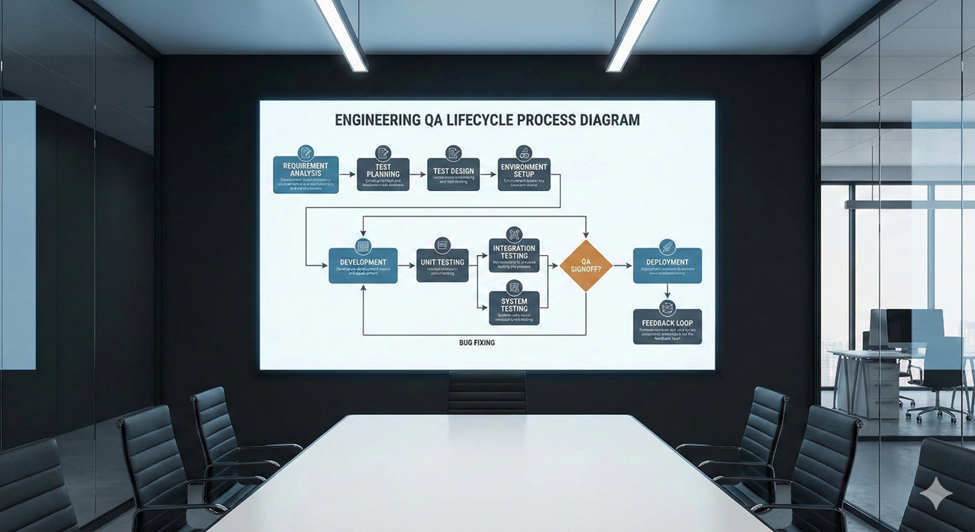
- Initiation Phase: Client Requirements -> Engineering Design -> Design Review & Approval (Hold Point).
- Procurement Phase: Supplier Assessment -> Purchase Orders -> Goods Receipt & Material Verification (Witness Point).
- Execution Phase: Fabrication/Construction -> In-Process Inspections -> Defect Identification -> Rework Loop.
- Finalization Phase: Final Testing -> As-Built Documentation Review -> Client Handover -> Post-Project Evaluation.
Diagram Interpretation Guide
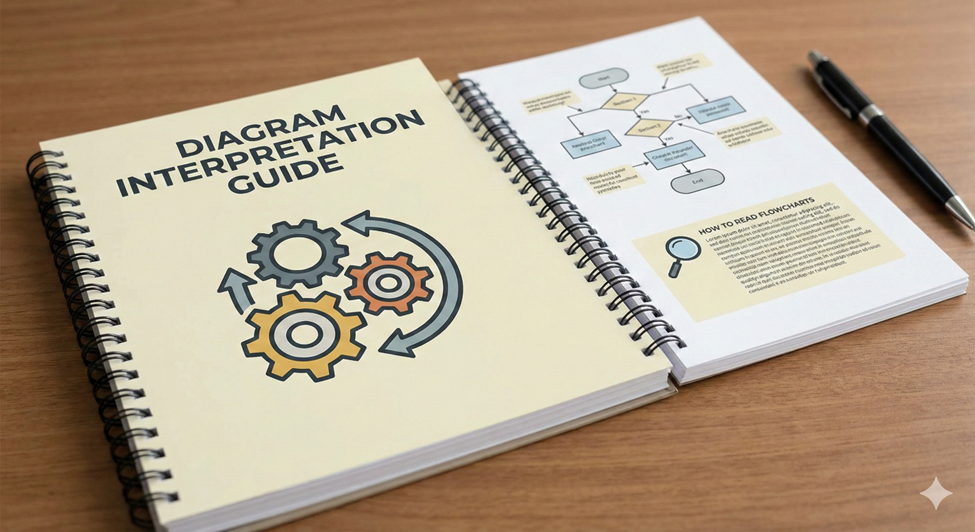
Interpreting a complex lifecycle diagram requires a systematic and highly critical approach, demanding that you view the document through the lens of worst-case scenarios and strict regulatory compliance. When presented with a process flowchart, your first action should be to identify the mandatory ‘Hold Points’—stages where work must absolutely cease until an authorized inspection is completed and signed off. Next, you must look for the ‘Rework Loops’; if a non-conformance is identified, the diagram must clearly show the path for segregation, root cause analysis, and corrective action before the item can re-enter the main production flow. A common, yet critical, failure in contractor submissions is the omission of these rework pathways, which implies a dangerous assumption of first-time flawless execution. You must also evaluate whether the diagram references the correct UK-specific standards at the appropriate validation gates, ensuring that the process is not operating in a regulatory vacuum.
- Identify Critical Gates: Locate and verify the appropriateness of all Hold Points and Witness Points within the process mapping.
- Analyze Failure Pathways: Ensure that the flowchart dictates clear, controlled actions for dealing with non-compliant materials or failed inspections.
- Verify Document Linkages: Check that the process steps correctly reference external governing documents, such as Inspection and Test Plans (ITPs) and Method Statements.
- Assess Logical Sequencing: Confirm that subsequent operations do not commence before prerequisite quality checks are definitively closed out.
Learner Task Section
Evidence Provided:
Diagrams or flowcharts of the QA lifecycle.
Scenario:
You have been appointed as the Lead QA/QC Engineer for a major bridge infrastructure project in the UK. A tier-two steel fabrication contractor has submitted their proposed ‘Quality Assurance Lifecycle Flowchart’ for the manufacturing of critical load-bearing structural girders. Upon your initial high-level review, you suspect that the contractor’s proposed lifecycle diagram contains significant procedural omissions, lacks adequate defect management routing, and fails to integrate key UK compliance standards.
Your Task:
You are required to conduct a deep, critical interpretation of the provided lifecycle diagram (utilizing the principles outlined in the Concept Explainer Sheet) and produce a formal ‘Lifecycle Assessment and Corrective Action Report’. Your report must be comprehensive, highly analytical, and demonstrate advanced professional judgment.
- Identify Deficiencies: Detail at least five critical omissions or logical failures within the contractor’s proposed QA lifecycle flowchart.
- Regulatory Impact Assessment: Explain how these specific procedural failures violate UK engineering regulations, specifically referencing frameworks like CDM 2015 and relevant BS EN standards.
- Rework Pathway Design: Formulate a detailed, step-by-step rework and non-conformance management loop that must be integrated into the contractor’s diagram.
- Strategic Recommendations: Provide senior-level recommendations on how the contractor can embed continuous improvement methodologies (such as Six Sigma principles) directly into their revised lifecycle documentation.
Task Submission Guidelines
Your final submission must reflect the professional standards expected of a Level 6 QA/QC engineering candidate. The document must be structured logically, presenting complex technical arguments with absolute clarity and precision. As a senior professional reviewing your work, I am looking for depth of analysis, practical competency, and an unwavering commitment to structural safety and regulatory adherence. Generic textbook definitions of quality control will not meet the assessment criteria; your response must be deeply contextualized within the high-stakes environment of UK heavy engineering. Ensure your findings are actionable and your recommendations are highly specific to the flaws you have identified within the lifecycle evidence.
- Format Requirement: Submit a formal technical report in a standardized word processing format, structured with clear professional headings and an executive summary.
- Evidence Utilization: Your entire analysis must stem directly from the single piece of evidence provided: the ‘Diagrams or flowcharts of the QA lifecycle’.
- Tone and Style: Maintain an authoritative, objective, and strictly professional tone throughout the document.
- Final Review: Prior to submission, cross-reference your findings against the learning outcomes of the ‘Principles of Quality Control and Quality Assurance’ unit to ensure complete alignment.