
ProQual Level 6: Faults in QA/QC
Table of Contents
Introduction to Module
This module serves as a critical junction in your professional development within the engineering sector, specifically focusing on the meticulous processes of quality oversight. Operating at a senior level requires more than just a theoretical understanding; it demands the practical ability to dissect complex operational documents and ensure strict adherence to established protocols. You are expected to demonstrate advanced analytical skills and an uncompromising approach to identifying systemic failures. The focus here is strictly on vocational competency, professional judgment, and complex decision-making within real-world engineering environments.
- Requires advanced critical thinking and document analysis.
- Focuses on real-world application of quality management systems.
- Demands strict adherence to established engineering protocols.
- Evaluates your capacity for independent, authoritative judgment.
Purpose of Assessment
The primary objective of this specific task is to rigorously evaluate your competency in identifying, reviewing, and rectifying technical non-conformances within critical project documentation. At this advanced level of your career, the ability to spot intentional or accidental flaws in safety and quality records is paramount to preventing catastrophic engineering failures. By engaging with intentionally flawed materials, you will prove your capability to enforce standards and protect the integrity of the project lifecycle.
- Validates your practical fault identification capabilities.
- Tests your knowledge of mandatory documentation standards.
- Assesses your ability to formulate robust corrective actions.
- Confirms your readiness for senior quality oversight roles.
Core QA Principles
Quality Assurance represents the proactive, systemic backbone of any successful engineering project, focusing heavily on process control rather than just end-product inspection. It is the comprehensive framework that guarantees all activities are planned, executed, and monitored in a way that inherently prevents defects from occurring in the first place. This requires a deep integration of quality policies into the daily operational matrix, ensuring that every team member understands their role in maintaining structural and procedural integrity.
- Proactive process mapping and strategic quality planning.
- Implementation of comprehensive internal audit schedules.
- Continuous alignment with overarching client specifications.
- Development of a site-wide defect prevention culture.
Core QC Principles
In contrast to assurance, Quality Control is the reactive, inspection-driven methodology used to verify that the physical outputs and associated documentation meet the pre-defined standards. It is the tactical, on-the-ground execution of testing, measuring, and visually inspecting engineering components and systems. When deviations occur, it is the quality control process that logs the non-conformance and halts further progression until the issue is entirely resolved.
- Tactical, product-oriented detection methodologies.
- Rigorous physical inspections and material testing.
- Detailed logging of dimensional and material variations.
- Immediate execution of defect correction procedures.
UK Regulatory Frameworks
Operating within the United Kingdom engineering sector mandates an absolute, non-negotiable adherence to specific domestic legislative frameworks. Ignorance of these statutory instruments is not a defense, and as a senior practitioner, you are responsible for ensuring all site documentation reflects these legal requirements. Your oversight must guarantee that all project phases remain entirely compliant with domestic law to prevent legal action and ensure workforce safety.
- Strict compliance with the Health and Safety at Work Act 1974.
- Adherence to the Construction (Design and Management) Regulations 2015.
- Implementation of the Building Safety Act 2022 obligations.
- Familiarity with the Provision and Use of Work Equipment Regulations 1998.
Quality Assurance Lifecycle
The lifecycle of quality oversight is not a linear path but a continuous, iterative loop designed to foster perpetual improvement across all project phases. It begins long before ground is broken, starting with meticulous planning and the establishment of measurable quality objectives. As the project transitions into the execution phase, the lifecycle demands constant performance monitoring, data collection, and the agile implementation of corrective measures whenever the project drifts from its intended baseline.
- Initial establishment of project quality plans.
- Active execution of approved operational procedures.
- Routine performance monitoring and data analysis.
- Strategic implementation of continuous improvement initiatives.
Engineering Risk Management
Risk management within this sector is an active, ongoing competency that directly impacts the safety and viability of the engineering asset. It requires the methodical identification of potential hazards, an evaluation of their potential severity, and the implementation of robust control measures to mitigate those risks to an acceptable level. A senior quality professional must be able to integrate these risk management principles directly into the daily operational documentation.
- Systematic hazard identification and environmental categorization.
- Qualitative evaluation of likelihood versus potential severity.
- Development of robust, actionable mitigation strategies.
- Routine updating of project-wide risk registers.
Concept Explainer Sheet
To ensure absolute clarity on the terminology and mechanisms expected during this competency evaluation, you must internalize the following essential concepts. These terms form the vocabulary of senior quality management and must be applied accurately during your document review and fault identification processes. A deep understanding of these concepts is required to successfully navigate the complexities of non-conformance management.
- Non-Conformance: Any proven deviation from established engineering standards, approved drawings, or statutory regulations.
- Root Cause Analysis: The methodical, step-by-step investigation required to find the underlying, systemic reason for a documented failure.
- Corrective Action: The immediate, targeted steps taken to eliminate the root cause of an existing non-conformity and prevent its recurrence.
- Risk Mitigation: The strategic reduction of the severity or likelihood of a hazard through applied engineering controls.
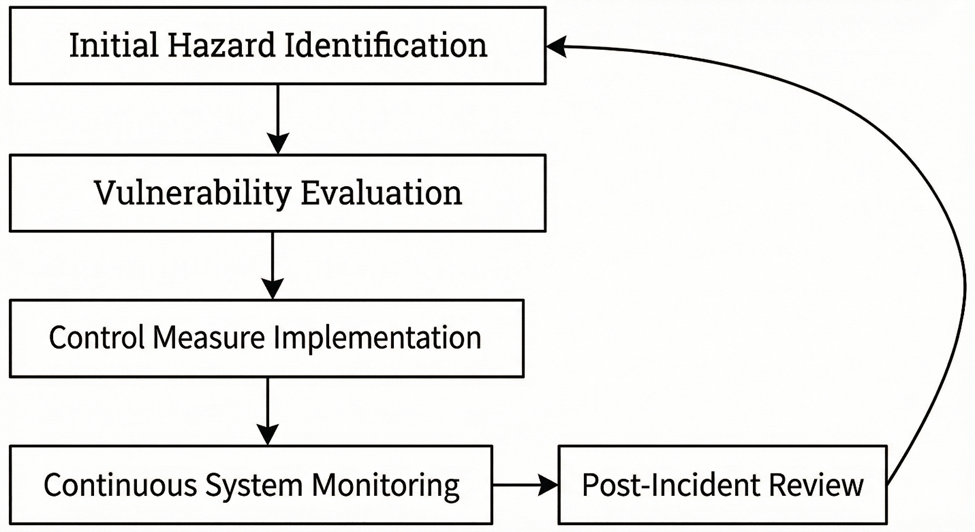
Fault Identification Process
Identifying critical faults in engineering documentation requires a methodical, highly skeptical approach, where nothing is taken at face value. You must cross-reference every claim, methodology, and control measure against the approved baseline standards and UK statutory requirements. It is your professional duty to isolate omissions, contradictory data points, and weak hazard controls that could lead to catastrophic failures on site.
- Methodical cross-referencing against approved project specifications.
- Rigorous scrutiny of logical flow and technical validity.
- Identification of critical omissions and contradictory statements.
- Verification of appropriate sign-off and authorization levels.
Non-Conformance Review
Once a documentary or physical fault is identified, it must be formally managed through a rigorous, transparent review process to ensure it is not buried or ignored. This involves documenting the exact nature of the deviation, assessing its immediate impact on the project, and formulating actionable resolutions. The review must be thorough, objective, and solely focused on returning the project to a state of absolute compliance.
- Formal documentation of the exact nature of the deviation.
- Immediate assessment of the impact on structural integrity.
- Collaboration with engineering teams for viable solutions.
- Formulating actionable, legally compliant corrective resolutions.
Learner Assessment Task
For this assessment, you are provided with a single piece of evidence: an intentionally flawed Risk Assessment Report concerning the high-level installation of structural steelwork on a UK commercial site. The document below is weak, lacks specific regulatory grounding, and demonstrates poor professional judgment. Your task is to apply your competency to identify every error, omission, and weak control measure within this text, and subsequently rewrite the entire Risk Assessment Report to meet the rigorous standards expected at your level.
Flawed Evidence for Review (Risk Assessment Report – Structural Steel):
“Task: Putting up steel beams. Hazard: Falling down or dropping things. Controls: Workers should try to be careful when up high. Wear hard hats if you want to. Make sure the crane looks okay before lifting the heavy metal. If it rains too much, maybe stop working. Reviewed by: Site Helper.”
- Critically analyze the provided intentionally incorrect Risk Assessment text.
- Identify all technical, regulatory, and procedural omissions.
- Rewrite the document to reflect a highly competent, compliant risk assessment.
- Ensure the rewritten report integrates relevant UK safety regulations and strict control measures.
Task Submission Guidelines
Your final submission must reflect the meticulous professional standard expected of an authoritative practitioner operating within this demanding sector. The rewritten report must be comprehensive, logically structured, and devoid of ambiguity. Adherence to submission protocols is considered part of your competency evaluation, demonstrating your ability to follow strict administrative requirements.
- Ensure the rewritten document is fully comprehensive and professionally formatted.
- Verify that all proposed control measures are practical and legally compliant.
- Submit all required documentation exclusively via the approved internal portal.
- Maintain strict version control and appropriate file naming conventions on your submission.