
ProQual QA/QC: Procedure Task Explained
Table of Contents
Introduction To Task
Welcome to your advanced policy interpretation assessment, specifically engineered for the ProQual Level 6 Diploma in Quality Control and Quality Assurance (QA/QC) – Engineering. This comprehensive document is designed to aggressively challenge your professional judgment, critical thinking, and operational competency within the highly regulated UK engineering sector. As a Level 6 candidate, you are stepping into a senior realm where complex decision-making is a daily requirement and basic theoretical knowledge is insufficient. We are not looking for textbook answers; we demand practical, site-tested competency that proves you can manage and direct high-stakes engineering quality systems. You will be evaluated on your ability to dissect dense organizational procedures and translate them into rigorous, compliant, and actionable workplace operations.
- Validates high-level vocational engineering competency and complex decision-making.
- Demands strict interpretation and enforcement of UK quality and safety policies.
- Rejects basic academic theory in favor of aggressive, practical site application.
- Evaluates senior-level operational quality management and leadership capabilities.
- Ensures strict adherence to the overarching ProQual Level 6 qualification standards.
Purpose Of Task
The explicit objective of this extensive assessment is to aggressively test your capability to dissect complex organizational policies and standard operating procedures. You must accurately translate dense regulatory text, specifically those aligning with British Standards Institution frameworks, into actionable and compliant engineering practices on the ground. This requires a deep, vocational understanding of how proactive quality systems prevent catastrophic structural failures, mitigate severe operational risks, and ensure that every single phase of an engineering project adheres to rigorous UK compliance mandates. You must prove your ability to anticipate the severe operational, legal, and financial implications of regulatory non-compliance, demonstrating the professional judgment expected of an industry veteran overseeing live project deliverables.
Concept Explainer Sheet
- Quality Assurance (QA): The proactive, systemic, and heavily documented process mapping designed to engineer defects out of the project lifecycle before any physical works commence on site.
- Quality Control (QC): The reactive, stringent physical inspection protocols executed on-site to verify that all materials, welding, and structural workmanship meet predetermined British Standards.
- Vocational Competency: The demonstrated, evidence-based ability to execute complex quality management decisions flawlessly under the intense pressure of live UK site conditions.
- Policy Interpretation: The professional judgment required to translate overarching corporate quality manuals into daily, task-specific engineering methodologies for site operatives.
- Compliance Risk: The severe legal and operational vulnerabilities associated with contravening overarching UK frameworks such as the Construction (Design and Management) Regulations.
- Continuous Improvement: The ongoing, systemic effort to refine engineering processes, ensuring that quality protocols evolve alongside advancing UK industrial standards.
UK Engineering Context
Operating within the United Kingdom demands an unwavering commitment to established statutory frameworks and rigorous quality protocols. Your role as a senior professional involves navigating complex mandates to ensure total site integrity and public safety. Quality is never an accidental outcome; it is the direct result of deliberate, complex decision-making, rigorous policy enforcement, and an uncompromising stance on structural tolerances. You must embed a culture where quality parameters dictate the pace and methodology of the engineering works, ensuring that every deliverable withstands intense regulatory scrutiny and auditing.
- Integration of UK-specific quality management systems is an absolute operational mandatory.
- Advanced risk management must preempt physical site hazards before they materialize.
- All engineering decisions must withstand aggressive regulatory scrutiny and compliance audits.
- Professional judgment consistently supersedes basic, entry-level compliance checklists.
- The integrity of the final structure relies entirely on your strict QA and QC enforcement.
Policy Interpretation Guide
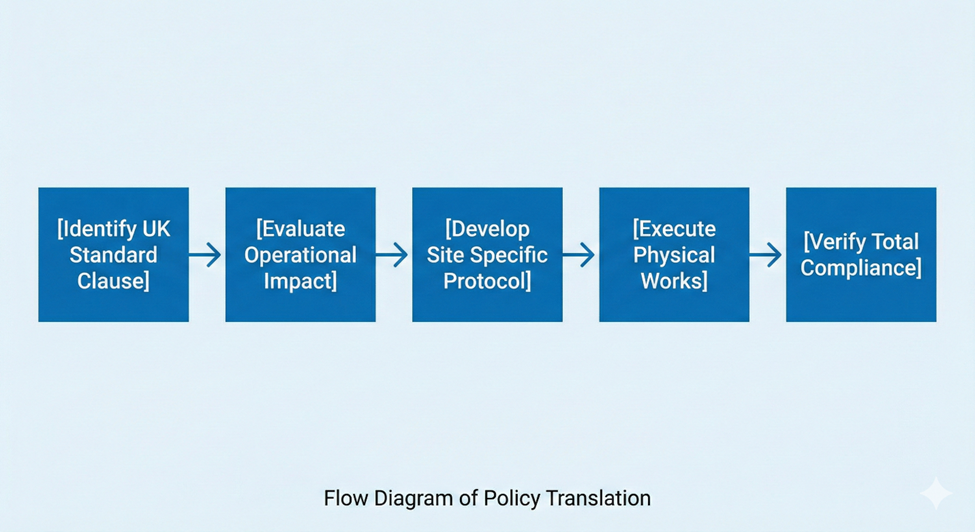
To successfully navigate this rigorous task, you must approach organizational documents through the critical lens of a seasoned professional. Isolating key paragraphs from an overarching quality manual is only the preliminary step. You must systematically evaluate how a specific clause alters site behavior, dictates resource allocation, and fundamentally shifts the risk profile of the entire engineering project. This requires an exhaustive analysis of the written word, converting static policy into dynamic, site-specific workflows that protect the structural integrity of the build and the safety of the workforce.
- Isolate critical, high-risk clauses within the organizational quality manual.
- Cross-reference these directives with current and upcoming physical site activities.
- Formulate immediate, practical, and highly compliant workplace application steps.
- Enforce total compliance through structured, uncompromising engineering oversight.
QA Control Principles
Quality Assurance is the architectural foundation of any successful and compliant engineering endeavor. It demands a forward-looking, highly strategic perspective where processes are rigorously audited, refined, and validated long before a single piece of material arrives on the construction site. You must demonstrate how proactive quality planning eliminates the root causes of potential defects, saving the project from critical delays and structural rework. This involves establishing rigorous supplier vetting protocols, conducting comprehensive design reviews, and maintaining continuous process audits that perfectly align with UK industrial expectations. Your QA strategy must act as an impenetrable shield against procedural drift, ensuring that the operational baseline is set perfectly from day one and maintained throughout the project lifecycle.
QC Execution Framework
- Implementation of strict, unyielding physical site inspections across all engineering disciplines.
- Utilization of highly calibrated testing equipment aligning with UK testing protocols.
- Exhaustive documentation and cataloging of all material compliance certificates.
- Immediate and decisive quarantine of any non-conforming engineering components or materials.
- Verification of micro-structural tolerances directly against approved project blueprints.
- Continuous auditing of site operative workmanship to prevent systemic physical defects.
- Final sign-off procedures ensuring zero deviation from the agreed quality parameters.
Workplace Application Strategy
Translating overarching policy into tangible physical practice is the core metric of your vocational competency. You must take the theoretical framework of QA and QC and aggressively mold it into a daily operational cadence that cannot be ignored or bypassed by site teams. This means creating a site culture where every operative fully understands their specific, non-negotiable role in maintaining quality standards, and where deviations are reported, documented, and rectified without hesitation. You are the bridge between the corporate quality manual and the physical reality of the engineering build.
- Conduct daily, mandatory quality briefings for all specialized site engineering teams.
- Embed rigorous quality checks directly into all standard operating procedures.
- Foster an aggressively transparent reporting culture for any structural or material defects.
- Maintain an unbroken, highly detailed chain of compliance documentation for audits.
Non Compliance Implications
The severe ramifications of failing to consistently uphold strict UK quality standards extend far beyond the immediate boundaries of the engineering project. Non-compliance invites aggressive regulatory intervention, potentially halting all physical works immediately. It triggers catastrophic financial liabilities, debilitating project delays, and profound, irreversible reputational destruction for the organization. More critically, compromised quality control directly threatens the physical safety of site personnel and the ultimate end-users of the engineering asset. A failure in professional judgment here can lead to systemic structural failure, proving that strict adherence to policy is not merely administrative, but a critical life-safety imperative.
Learner Task Assignment
You are now tasked with dissecting an organizational Quality Manual excerpt to critically distinguish the functional, operational boundaries between Quality Assurance and Quality Control. As a senior professional, you must evaluate a specific UK engineering scenario, interpreting exactly how the proactive, process-driven measures of QA intertwine with the reactive, product-driven inspections of QC to guarantee total project success. Your written analysis must showcase high-level professional judgment, completely moving beyond basic descriptions to critically analyze complex workplace implementation. You must prove that you understand how these two distinct disciplines operate cohesively within a highly regulated environment.
- Evaluate the underlying principles of the provided organizational quality directives.
- Articulate the deep, systemic operational differences between QA and QC methodologies.
- Demonstrate extreme competency in applying these distinct principles to live site scenarios.
- Highlight the severe operational and compliance risks of conflating the two disciplines.
Required Evidence Detail
- Production of a single, highly comprehensive, and deeply analytical written comparison document.
- Detailed, vocational analysis contrasting Quality Control versus Quality Assurance operations.
- Evidential focus strictly and entirely rooted in practical, UK workplace application.
- Complete and total exclusion of generalized, academic-style theoretical discussions.
- Strict and unyielding alignment with UK-specific engineering environments and compliance standards.
- Demonstration of complex decision-making and professional judgment expected at Level 6.
Submission Guideline Steps
To successfully finalize this rigorous assessment, your final submission must reflect the authoritative tone, meticulous attention to detail, and deep structural understanding expected of a senior quality professional. Your document will be aggressively scrutinized for its practical applicability, its absolute adherence to UK regulations, and its undeniable demonstration of complex, vocational decision-making. Ensure that your single piece of evidence is distinct, highly robust, and formatted to the absolute highest professional industry standards.
- Submit your comprehensive written comparison strictly under the correct task heading.
- Ensure absolute, unwavering alignment with the ProQual Level 6 Diploma standards.
- Verify that only one specific, highly detailed piece of evidence is attached for this KPT.
- Review your entire document for professional tone, formatting consistency, and engineering accuracy.
- Confirm that no academic theory is present, focusing entirely on operational site competency.