
What Is a Level 6 Diploma? Complete Guide to Qualifications, Equivalency, Benefits and Career Opportunities
A Level 6 Diploma is an advanced qualification that sits at the same academic level as the final year of a bachelor’s degree within the UK qualifications framework. It is designed for learners who want to develop specialist knowledge, professional competence, and industry-relevant skills in a particular field. Level 6 qualifications are widely recognised by employers, professional bodies, colleges, and universities across the UK and internationally.
Whether you are considering further education, career advancement, or professional development, understanding what a Level 6 Diploma is and how it compares to other qualifications can help you make an informed decision about your future.
Understanding the UK Qualification Framework
The UK uses a regulated qualifications framework that categorises qualifications according to their level of difficulty and complexity. As learners progress through the levels, they are expected to demonstrate increasingly advanced knowledge, skills, and understanding.
Level 6 is considered a higher education qualification and represents advanced learning. According to the UK qualification framework, Level 6 qualifications include honours bachelor’s degrees, graduate diplomas, degree apprenticeships, Level 6 certificates, Level 6 diplomas, and Level 6 NVQs.
This means that a Level 6 Diploma is recognised as a qualification at degree level, although the structure and focus may differ from a traditional university degree.
What Is a Level 6 Diploma?
A Level 6 Diploma is a specialised qualification designed to provide advanced knowledge and practical expertise in a specific subject area. Unlike some academic programmes that focus heavily on theory, many Level 6 Diplomas combine theoretical understanding with practical and professional application.
These qualifications are commonly offered in areas such as:
- Business Management
- Health and Safety
- Education and Training
- Information Technology
- Healthcare Management
- Construction Management
- Project Management
- Logistics and Supply Chain Management
- Tourism and Hospitality
- Human Resource Management
The primary objective of a Level 6 Diploma is to prepare learners for professional roles, leadership positions, and further academic progression.
What Is a Level 6 Diploma Equivalent To?
One of the most frequently asked questions is whether a Level 6 Diploma is equivalent to a degree.
The answer is that a Level 6 Diploma is equivalent to a bachelor’s degree in terms of academic level. Both qualifications sit at Level 6 within the UK qualifications framework. However, they are not necessarily identical qualifications and may differ in content, learning approach, and assessment methods.
A Level 6 qualification is generally comparable to:
- Bachelor’s Degree with Honours
- Graduate Diploma
- Degree Apprenticeship
- Level 6 NVQ
- Ordinary Bachelor’s Degree
The key point is that they share the same qualification level, demonstrating advanced knowledge and competence.
Level 6 Diploma vs Bachelor’s Degree
While both qualifications are positioned at the same academic level within the UK qualifications framework, they differ in several important ways.
Focus
Bachelor’s Degree
- Provides a broad academic understanding of a subject.
- Emphasises theoretical concepts, research, and critical analysis.
- Covers a wide range of topics to build comprehensive subject knowledge.
- Often combines academic learning with independent study.
Level 6 Diploma
- Focuses on practical application and professional development.
- Develops industry-specific skills and workplace competence.
- Emphasises real-world scenarios, problem-solving, and job-related knowledge.
- Designed to prepare learners for professional responsibilities within a specific field.
Learning Style
Bachelor’s Degree
- Commonly includes lectures, seminars, tutorials, and examinations.
- Places significant emphasis on academic research and theoretical study.
- Requires learners to complete essays, dissertations, and research-based assignments.
- Often follows a structured academic learning approach.
Level 6 Diploma
- Primarily assessed through assignments, projects, and practical activities.
- Encourages the application of knowledge to workplace and industry situations.
- Frequently incorporates case studies, professional reports, and competency-based assessments.
- Focuses on developing practical skills that can be applied directly in a professional environment.
Career Preparation
Bachelor’s Degree
- Supports progression into both academic and professional pathways.
- Can provide a foundation for postgraduate study and research opportunities.
- Suitable for learners seeking broad subject knowledge and career flexibility.
- Often prepares graduates for a wide range of employment sectors.
Level 6 Diploma
- Designed to develop job-ready skills and professional competence.
- Focuses on the knowledge and abilities required within a specific industry.
- Helps learners enhance their practical expertise and career prospects.
- Particularly beneficial for individuals seeking career advancement or specialist professional roles.
Who Should Study a Level 6 Diploma?
A Level 6 Diploma is suitable for a wide range of learners, including:
- Individuals seeking career progression
- Professionals aiming for management roles
- Learners wishing to gain specialist expertise
- Those looking for an alternative to traditional university study
- Employees wanting to enhance workplace skills
- Individuals preparing for postgraduate education
- Career changers entering a new industry
The qualification can be particularly valuable for learners who prefer practical and industry-focused learning.
Who Awards Level 6 Diplomas?
Level 6 Diplomas are awarded by recognised awarding organisations that develop qualifications in line with established educational standards and industry requirements. These qualifications are regulated within recognised qualification frameworks, helping to ensure consistency, quality assurance, and credibility. This regulation provides learners and employers with confidence that the qualification meets defined academic and professional standards.
Some of the widely recognised awarding organisations include:
- OTHM Qualifications
- Qualifi
- ProQual
- ATHE
- NCC Education
These awarding organisations work closely with industry experts and subject specialists to design qualifications that reflect current workplace practices and professional expectations. Approved learning centres deliver the programmes, providing learners with structured learning resources, assessment guidance, and quality-assured certification.
Because Level 6 Diplomas are developed within recognised qualification frameworks and subject to quality assurance processes, they are valued by employers, professional bodies, and educational institutions. This recognition can support career progression, professional development, and further study opportunities for learners seeking to advance their knowledge and expertise.
Entry Requirements for a Level 6 Diploma
Entry requirements vary depending on the awarding organisation and course provider. However, many institutions may require one or more of the following:
- A Level 5 qualification in a related subject
- A Higher National Diploma (HND)
- A Foundation Degree
- Relevant professional qualifications
- Significant work experience in a related field
Some providers may consider mature learners with extensive industry experience even if they do not possess formal academic qualifications.
What Skills Do You Gain from a Level 6 Diploma?
A Level 6 Diploma helps learners develop advanced professional and academic skills that are highly valued by employers.
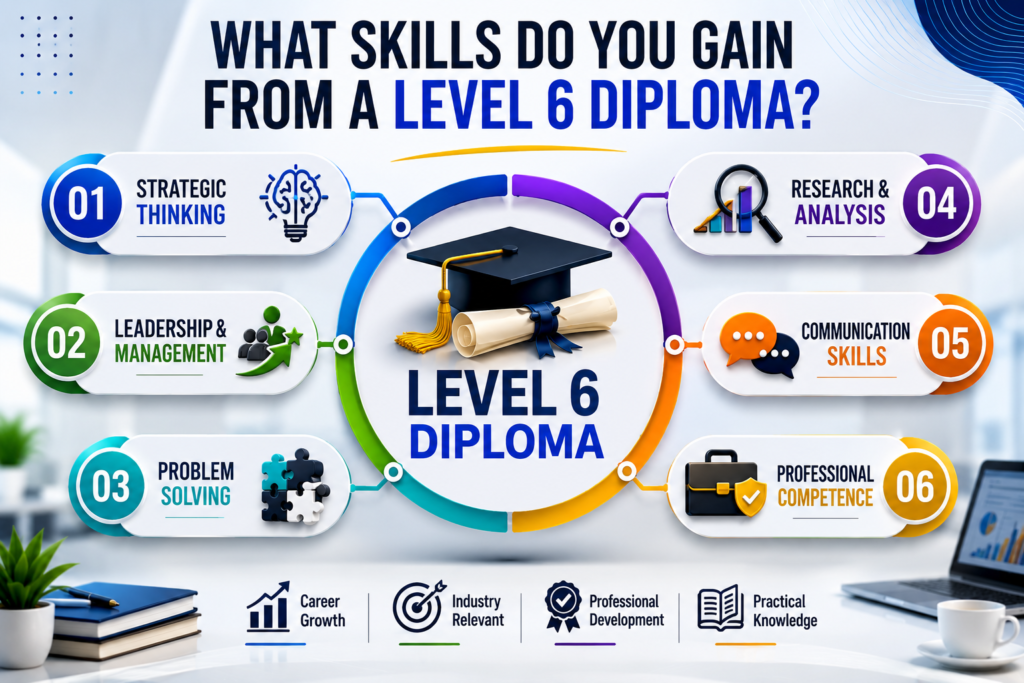
Strategic Thinking
A Level 6 Diploma helps learners develop advanced strategic thinking skills that are essential in today’s competitive professional environment. Students learn how to analyse complex situations, assess potential risks and opportunities, and evaluate information from multiple sources before making decisions. This ability enables individuals to approach challenges with a broader perspective and develop effective long-term solutions. Strategic thinking is particularly valuable for leadership roles where informed decision-making can significantly impact organisational success.
Leadership and Management
Many Level 6 Diploma programmes place a strong emphasis on leadership and management development. Learners gain an understanding of how to lead teams, manage organisational resources, and improve workplace performance. The qualification explores key management principles, including planning, delegation, motivation, and performance monitoring. These skills help individuals become confident leaders who can effectively guide teams, support business objectives, and contribute to organisational growth.
Problem Solving
Effective problem-solving is a fundamental skill developed throughout a Level 6 Diploma programme. Learners are encouraged to identify challenges, investigate underlying causes, and evaluate different solutions before implementing appropriate actions. Through practical assignments and real-world case studies, students learn how to address workplace issues in a structured and professional manner. This capability enables them to make informed decisions and contribute positively to organisational improvement and operational efficiency.
Research and Analysis
Research and analytical skills form an important part of Level 6 study. Learners develop the ability to gather relevant information, assess the reliability of sources, and interpret data to support decision-making processes. They learn how to conduct detailed investigations, evaluate findings, and present evidence-based conclusions. These skills are highly valuable in both academic and professional settings, where accurate analysis often influences business strategies, project outcomes, and organisational planning.
Communication Skills
A Level 6 Diploma enhances communication skills that are essential for professional success. Learners improve their ability to communicate ideas clearly through written reports, presentations, discussions, and professional correspondence. The qualification also strengthens interpersonal skills, enabling individuals to collaborate effectively with colleagues, clients, and stakeholders. Strong communication abilities help professionals build relationships, resolve conflicts, and confidently convey information in a variety of workplace situations.
Professional Competence
The qualification enables learners to develop professional competence and industry-specific expertise within their chosen field. Through practical learning activities, assignments, and applied knowledge, students gain a deeper understanding of current industry practices and standards. This experience helps them perform their roles more effectively and demonstrates their commitment to professional development. As a result, graduates are often better prepared to meet employer expectations and pursue career advancement opportunities.
Benefits of Studying a Level 6 Diploma
There are numerous advantages to earning a Level 6 Diploma.
Degree-Level Recognition
A Level 6 Diploma is widely recognised as a qualification that reflects advanced learning and a high level of professional competence. Positioned at the same academic level as a bachelor’s degree within the UK qualifications framework, it demonstrates that learners have acquired in-depth knowledge and specialised skills in their chosen field. This recognition enhances the credibility of the qualification and provides learners with a respected credential that is valued by employers, educational institutions, and professional organisations. As a result, graduates can confidently showcase their expertise when pursuing career or academic opportunities.
Career Advancement
One of the key benefits of a Level 6 Diploma is its ability to support career progression and professional growth. The qualification equips learners with advanced industry knowledge, leadership capabilities, and practical skills that are highly valued in today’s job market. Employers often view Level 6 graduates as individuals who possess the competence and commitment required for senior-level responsibilities. This can lead to increased opportunities for promotion, greater workplace responsibilities, and access to management or specialist positions across various industries.
Increased Employability
A Level 6 Diploma can significantly improve employability by providing a strong combination of theoretical understanding and practical application. Employers increasingly seek candidates who can apply knowledge effectively in real-world situations, and this qualification helps learners develop exactly those capabilities. The advanced skills and industry-relevant expertise gained during the programme can make candidates more competitive in the job market. Consequently, graduates may find it easier to secure employment opportunities and stand out when applying for professional roles.
Flexible Learning Opportunities
Many Level 6 Diploma programmes are designed with flexibility in mind, making them accessible to a wide range of learners. Online, blended, and distance-learning options allow students to balance their studies with work, family, and other commitments. This flexibility enables professionals to continue developing their qualifications without interrupting their careers. As a result, learners can gain valuable knowledge and skills at a pace that suits their personal and professional circumstances.
Professional Development
A Level 6 Diploma plays an important role in ongoing professional development by helping individuals expand their expertise and stay current within their industry. The qualification encourages continuous learning and supports the development of advanced competencies that are relevant to modern workplace requirements. By gaining updated knowledge and practical skills, professionals can improve their performance, adapt to industry changes, and increase their value to employers. This commitment to professional growth can contribute to long-term career success and personal achievement.
Pathway to Further Education
For learners who wish to continue their academic journey, a Level 6 Diploma can serve as an excellent pathway to higher-level study. Many graduates choose to progress to Level 7 qualifications, postgraduate diplomas, professional certifications, or master’s degree programmes, depending on entry requirements. The advanced knowledge and academic skills developed during the qualification provide a strong foundation for further education. This progression route allows learners to continue building their expertise and pursue higher-level professional or academic goals.
Career Opportunities After a Level 6 Diploma
Graduates of Level 6 Diploma programmes often pursue senior and specialist roles within their industries.
Depending on the subject studied, potential career opportunities may include:
Business and Management
- Operations Manager
- Business Development Manager
- Project Manager
- Department Manager
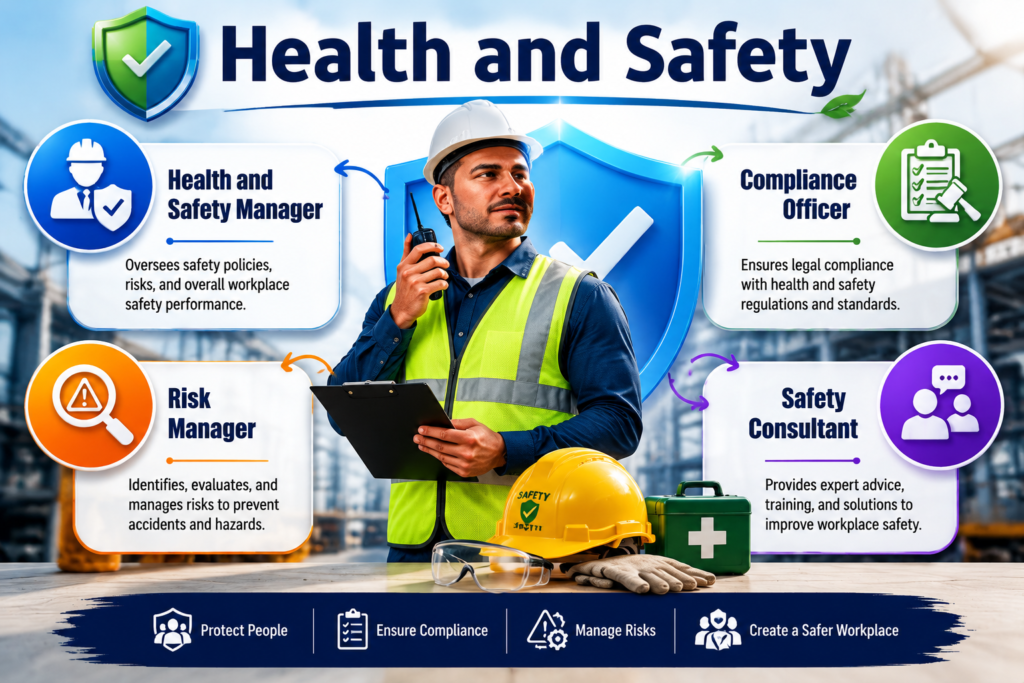
Health and Safety
- Health and Safety Manager
- Compliance Officer
- Risk Manager
- Safety Consultant
Information Technology
- IT Manager
- Systems Analyst
- Cybersecurity Specialist
- Technology Consultant
Education and Training
- Training Manager
- Education Consultant
- Learning and Development Specialist
- Curriculum Coordinator
Logistics and Supply Chain
- Supply Chain Manager
- Procurement Manager
- Logistics Coordinator
- Operations Director
Career outcomes will depend on factors such as industry experience, professional certifications, and individual performance.
Progression Routes After a Level 6 Diploma
One of the greatest advantages of a Level 6 Diploma is the opportunity for further progression.
Possible progression routes include:
Level 7 Diploma
A Level 7 Diploma is a popular progression route for learners who have successfully completed a Level 6 qualification and wish to continue their professional or academic development. Positioned at the same academic level as postgraduate study, this qualification enables individuals to gain advanced specialist knowledge and develop higher-level strategic, analytical, and leadership skills. It is particularly beneficial for professionals seeking senior management positions or specialised roles within their industry. Completing a Level 7 Diploma can also strengthen a learner’s profile for further postgraduate study and professional advancement.
Master’s Degree
Many learners use a Level 6 Diploma as a stepping stone towards a master’s degree or other postgraduate qualifications. Depending on the university and its admission criteria, graduates may be eligible to apply for relevant master’s programmes that align with their academic background and career goals. Pursuing postgraduate study allows individuals to deepen their expertise, enhance their research capabilities, and gain advanced knowledge in a specialised field. This progression can open doors to higher-level career opportunities and increased professional recognition.
Professional Certifications
Industry-specific professional certifications are another valuable progression option for Level 6 Diploma holders. These certifications allow learners to demonstrate specialised expertise and stay up to date with current industry standards, regulations, and best practices. By combining a Level 6 qualification with recognised industry credentials, individuals can strengthen their professional profile and increase their competitiveness in the job market.
Chartered Status
In certain professions, a Level 6 Diploma may contribute towards the educational requirements needed for chartered membership or professional recognition. While additional qualifications, assessments, and practical experience are often required, the diploma can provide a strong foundation for achieving professional status. Chartered recognition is widely respected and demonstrates a high level of competence, ethical practice, and commitment to professional development. Achieving this status can enhance career prospects, increase professional credibility, and provide access to greater opportunities within the industry.
Is a Level 6 Diploma Worth It?
For many learners, the answer is yes.
A Level 6 Diploma offers degree-level learning, practical industry knowledge, professional development opportunities, and progression routes into higher education. It can help individuals strengthen their expertise, improve employability, and prepare for leadership positions within their chosen profession.
The value of the qualification ultimately depends on your career goals, industry requirements, and personal ambitions. However, for professionals seeking recognised higher-level qualifications without necessarily following a traditional university route, a Level 6 Diploma can be an excellent investment in future success.
Conclusion
A Level 6 Diploma is a respected higher education qualification that represents advanced learning and professional competence. Positioned at the same academic level as a bachelor’s degree, it equips learners with specialised knowledge, practical skills, and career-focused expertise.
Whether your goal is career advancement, professional recognition, leadership development, or progression to postgraduate study, a Level 6 Diploma can provide a strong foundation for long-term success. With flexible learning options, industry relevance, and recognised academic standing, it remains one of the most valuable qualifications for ambitious learners seeking to enhance their knowledge and career prospects.
Frequently Asked Questions:
What Can learners After Completing a Level 6 Diploma?
After completing a Level 6 Diploma, learners can pursue higher-level qualifications, professional certifications, career advancement opportunities, or specialist roles within their chosen industry.
How Long Does It Take to Complete a Level 6 Diploma?
The duration can vary depending on the subject, study mode, and learning pace. Many learners complete a Level 6 Diploma within several months to a year, while some may take longer depending on their circumstances.
What Subjects Are Available at Level 6?
Level 6 Diplomas are available in a wide range of disciplines, including business, management, health and safety, construction, information technology, education, healthcare, logistics, and project management.
What Is the Difference Between a Level 5 and Level 6 Diploma?
A Level 5 Diploma focuses on intermediate to advanced knowledge, while a Level 6 Diploma involves more complex concepts, strategic thinking, and higher-level professional skills associated with degree-level learning.
Why Choose a Level 6 Diploma?
A Level 6 Diploma offers an excellent combination of academic knowledge and practical application. It helps learners build expertise, strengthen professional credibility, and prepare for future career and educational opportunities.