
What Are CSCS Cards? Complete Guide
The construction sector is a fast-paced and constantly evolving industry that plays a vital role in shaping infrastructure and economic development. However, it is also one of the most safety-critical environments, where workers are exposed to potential hazards such as heavy machinery, working at heights, and complex operational tasks. In such conditions, having the right skills, proper training, and a strong understanding of safety procedures is not just beneficial—it is essential.
To address these challenges and promote a safer, more competent workforce, the Construction Skills Certification Scheme (CSCS) was established. This scheme provides a structured and widely accepted way to verify that individuals working on construction sites possess the appropriate qualifications, practical knowledge, and awareness of health and safety standards required for their roles.
CSCS cards are a key part of this system. They act as official evidence that a worker has met specific training and competency requirements relevant to their job. Although holding a CSCS card is not a legal obligation in every case, it has become an industry norm across the UK, with most employers and contractors requiring workers to present a valid card before being allowed on-site. In many situations, it serves as a gateway to employment, helping employers quickly assess whether a worker is qualified and safe to perform assigned tasks.
This complete guide is designed to give you a clear and in-depth understanding of CSCS cards. It covers what they are, why they matter, the different types available, and how to apply for one. In addition, it explores key requirements, associated costs, benefits for career development, and common mistakes to avoid during the application process. Whether you are new to the construction industry or looking to advance your career, this guide will provide the essential knowledge needed to navigate the CSCS system with confidence and make informed decisions for your professional growth.
What Are CSCS Cards?
CSCS cards are official certification cards issued to individuals working in the construction industry to confirm that they have the required skills, qualifications, and understanding of health and safety practices for their specific job roles. These cards are a central part of the Construction Skills Certification Scheme, which is designed to ensure that construction sites are staffed by competent and properly trained workers.
In simple terms, a CSCS card acts as evidence of competence. It tells employers, site managers, and contractors that the person carrying the card has met certain standards and is capable of working safely and effectively within a construction environment.
CSCS cards are available in both physical and digital formats, making them easy to carry and verify on-site. Today, many construction sites use digital systems to check the validity of cards, ensuring that only qualified individuals are allowed access.
Purpose of CSCS Cards
The main purpose of CSCS cards is to create a safer and more professional construction industry. Construction sites can be dangerous if workers are not properly trained, so these cards help reduce risks by ensuring that everyone on-site understands their responsibilities.
CSCS cards are used to:
- Confirm that workers have the necessary qualifications
- Ensure workers understand health and safety regulations
- Help employers quickly verify worker competence
- Promote a standardized system across the construction industry
By introducing this system, the industry has been able to significantly improve safety awareness and reduce workplace accidents.
How CSCS Cards Work in Practice
When a worker applies for a CSCS card, they must meet specific requirements related to their job role. This usually includes completing a recognized qualification and passing a health and safety test. Once approved, the worker receives a card that reflects their level of skill and experience.
On construction sites, employers often check CSCS cards before allowing workers to begin work. This ensures that:
- Only qualified workers are present on-site
- Workers are assigned tasks suitable to their skill level
- Safety standards are consistently maintained
In many cases, workers without a valid CSCS card may be denied entry to the site, which shows how important these cards have become in the industry.
Key Features of CSCS Cards
CSCS cards include several important features that make them valuable for both workers and employers.
1. Proof of Skills and Qualifications
Each CSCS card confirms that the holder has achieved a certain level of training or qualification relevant to their role. This helps employers trust that the worker is capable of performing their duties effectively.
2. Verification of Health and Safety Knowledge
Before receiving a CSCS card, applicants must pass a health and safety test. This ensures that they understand how to work safely, identify hazards, and follow site regulations.
3. Industry Recognition
CSCS cards are widely recognized across the UK construction sector. Most employers consider them a standard requirement, which means having one can significantly improve job opportunities.
4. Role-Based Card System
Different types of CSCS cards are issued depending on the worker’s role, experience, and qualifications. For example:
- Entry-level workers receive one type of card
- Skilled workers receive another
- Supervisors and managers have higher-level cards
This structured system ensures that workers are properly categorized based on their expertise.
Why CSCS Cards Matter for Workers and Employers
CSCS cards are not just a formality—they play a crucial role in shaping the construction workforce.
For workers, they:
- Increase employability
- Provide career progression opportunities
- Demonstrate professionalism
For employers, they:
- Make it easier to verify worker competence
- Reduce risks on-site
- Improve overall productivity and safety
Simple Example to Understand CSCS Cards
Imagine a construction company hiring workers for a building project. Without CSCS cards, it would be difficult to know whether each worker is qualified or trained. However, with CSCS cards:
- A labourer shows a basic-level card
- A skilled electrician shows an advanced-level card
- A site manager presents a high-level card
This system allows employers to quickly understand who is capable of doing what, ensuring that the right people are assigned to the right tasks.
CSCS cards are an essential part of the modern construction industry. They provide a reliable way to confirm that workers have the necessary skills, qualifications, and safety knowledge to perform their roles. By promoting competence and standardization, these cards help create safer workplaces, improve efficiency, and support long-term career development in construction.
Why Are CSCS Cards Important?
CSCS cards are far more than just identification—they are a key element in maintaining safety, professionalism, and efficiency across the construction industry. In a sector where risks are high and responsibilities are significant, these cards help ensure that every worker on-site is properly trained, qualified, and aware of safety procedures.
Issued under the Construction Skills Certification Scheme, CSCS cards provide a standardized way for employers to verify competence and for workers to demonstrate their ability to perform tasks safely and effectively.
Let’s explore in detail why CSCS cards are so important.
1. Enhancing Workplace Safety
One of the primary reasons CSCS cards exist is to improve safety on construction sites.
Understanding the Risks in Construction
Construction environments are naturally hazardous. Workers may face:
- Operating heavy machinery
- Working at heights
- Exposure to electrical systems
- Handling hazardous materials
Without proper training, these risks can lead to serious injuries or even fatalities.
How CSCS Cards Improve Safety
To obtain a CSCS card, workers must pass a Health, Safety, and Environment Test, which ensures they:
- Understand workplace hazards
- Know how to use equipment safely
- Can follow site safety procedures
- Are aware of emergency protocols
Real Impact on Safety
When all workers on-site are trained and certified:
- Accidents are significantly reduced
- Workers become more confident in handling tasks
- Safety becomes a shared responsibility
In simple terms, CSCS cards help create a safer working environment for everyone.
2. Improving Employability
In today’s competitive construction job market, having a CSCS card can make a significant difference.
Employer Expectations
Most construction companies and contractors:
- Prefer candidates with valid CSCS cards
- Often make it a requirement for site entry
- Use it as a quick screening tool during hiring
How It Benefits Job Seekers
With a CSCS card, workers:
- Have better chances of getting hired
- Can access more job opportunities
- Stand out from non-certified applicants
Career Opportunities
CSCS certification also opens doors to:
- Higher-level roles
- Specialized job positions
- Long-term career growth
Simply put, a CSCS card increases your value and credibility in the job market.
3. Industry Recognition and Professionalism
CSCS cards are widely recognized across the construction industry as a symbol of competence and professionalism.
Building Trust with Employers
When a worker presents a CSCS card, it shows that they:
- Have completed relevant training
- Meet industry standards
- Take their role seriously
Professional Image
Holding a CSCS card reflects:
- Commitment to personal development
- Awareness of industry expectations
- Responsibility toward workplace safety
Standardization Across the Industry
CSCS cards help create a uniform system where:
- Skills and qualifications are easily understood
- Workers are categorized based on expertise
- Employers can make informed decisions quickly
This recognition helps maintain a professional and organized workforce.
4. Supporting Compliance with Industry Standards
Although CSCS cards are not legally required in all cases, they are strongly aligned with industry best practices.
Site Requirements
Many construction sites:
- Require workers to hold valid CSCS cards
- Use them as part of their safety policies
- Conduct checks before allowing site access
Health and Safety Regulations
CSCS cards support compliance with:
- Workplace safety guidelines
- Risk management procedures
- Industry-approved practices
Employer Responsibility
Employers are responsible for ensuring that workers are competent. CSCS cards make this process easier by:
- Providing verified proof of training
- Reducing liability risks
- Ensuring consistent safety standards
In practice, CSCS cards act as a bridge between legal expectations and real-world safety implementation.
5. Promoting Career Development and Progression
Another important aspect often overlooked is how CSCS cards support long-term career growth.
Structured Career Path
Different CSCS card types represent different levels of experience:
- Entry-level workers
- Skilled professionals
- Supervisors and managers
Encouraging Skill Development
To upgrade their card, workers must:
- Gain additional qualifications
- Improve their skills
- Take on more responsibility
Long-Term Benefits
This system encourages workers to:
- Continuously learn and improve
- Aim for higher roles
- Build a stable career in construction
CSCS cards are not just about current skills—they help shape future career success.
6. Improving Efficiency on Construction Sites
CSCS cards also contribute to smoother and more efficient operations.
Right Person for the Right Job
Because each card reflects a worker’s skill level:
- Tasks can be assigned appropriately
- Mistakes are reduced
- Productivity increases
Faster Verification Process
Site managers can quickly:
- Check worker qualifications
- Confirm eligibility
- Maintain organized records
This leads to better workflow and fewer delays.
CSCS cards are essential for maintaining a safe, efficient, and professional construction environment. They:
- Reduce workplace risks
- Improve job opportunities
- Establish industry standards
- Support compliance and safety
- Encourage career growth
By ensuring that every worker is trained, qualified, and aware of safety practices, CSCS cards play a vital role in strengthening the overall construction industry.
Types of CSCS Cards
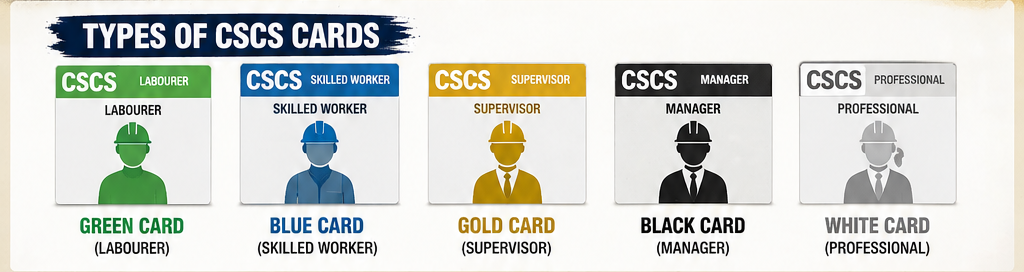
CSCS cards are designed to reflect the skill level, qualifications, and responsibilities of individuals working in the construction industry. Instead of using a single card for everyone, the Construction Skills Certification Scheme uses a color-coded system to clearly identify different roles—from entry-level labourers to senior managers and highly qualified professionals.
This structured approach helps employers quickly understand a worker’s capability and assign tasks accordingly, ensuring both efficiency and safety on construction sites.
Why Are There Different Types of CSCS Cards?
The construction industry includes a wide range of roles, each requiring different levels of expertise. A beginner cannot perform the same tasks as a supervisor or manager. Therefore, CSCS cards are categorized to:
- Match skills with job roles
- Ensure workers are properly qualified
- Support career progression
- Improve site safety and organization
Each card type represents a specific stage in a worker’s career journey.
Main Types of CSCS Cards
Let’s explore the most common types of CSCS cards in detail.
1. Green Card (Labourer Card)
The Green Card is the entry-level CSCS card, designed for individuals who are new to the construction industry or working in basic labouring roles.
Who Is It For?
- General labourers
- New entrants to construction
- Workers performing basic tasks under supervision
Requirements
To obtain a Green Card, applicants must:
- Complete a basic health and safety course (such as Level 1 Award in Health and Safety in a Construction Environment)
- Pass the CSCS Health, Safety and Environment Test
Key Responsibilities
Workers with a Green Card typically:
- Assist skilled workers
- Handle materials
- Maintain site cleanliness
- Follow instructions from supervisors
Why It Matters
This card ensures that even entry-level workers:
- Understand safety procedures
- Are aware of risks
- Can contribute safely to site operations
It is the starting point for most construction careers.
2. Blue Card (Skilled Worker Card)
The Blue Card is issued to individuals who have gained formal training and qualifications in a specific trade.
Who Is It For?
- Electricians
- Plumbers
- Carpenters
- Bricklayers
- Other skilled tradespeople
Requirements
To qualify, workers must:
- Hold a relevant NVQ Level 2 (or equivalent)
- Pass the appropriate health and safety test
Key Responsibilities
Blue Card holders:
- Perform specialized tasks
- Work independently
- Apply technical knowledge in their trade
Why It Matters
This card demonstrates that a worker:
- Is fully trained in their field
- Can work with minimal supervision
- Meets industry standards
It represents a significant step forward in career development.
3. Gold Card (Advanced Craft / Supervisor Card)
The Gold Card is designed for experienced professionals who have advanced skills or supervisory responsibilities.
Two Main Categories
- Advanced Craft Card – for highly skilled workers
- Supervisor Card – for those managing teams on-site
Who Is It For?
- Senior tradespeople
- Team leaders
- Site supervisors
Requirements
Applicants typically need:
- NVQ Level 3 or higher
- Relevant supervisory training
- Successful completion of the safety test
Key Responsibilities
Gold Card holders:
- Supervise workers
- Ensure tasks are completed correctly
- Maintain safety standards
- Coordinate daily site activities
Why It Matters
This card shows that the individual:
- Has advanced expertise
- Can manage teams effectively
- Plays a key role in site operations
It marks the transition from worker to leadership roles.
4. Black Card (Manager Card)
The Black Card is the highest level within the CSCS system for management professionals.
Who Is It For?
- Site managers
- Project managers
- Construction directors
Requirements
To obtain this card, applicants must:
- Hold NVQ Level 6 or 7 in construction management (or equivalent)
- Pass the management-level safety test
Key Responsibilities
Black Card holders are responsible for:
- Planning and managing projects
- Overseeing site operations
- Ensuring compliance with safety regulations
- Making strategic decisions
Why It Matters
This card represents:
- High-level expertise
- Leadership and decision-making ability
- Full responsibility for site performance
It is ideal for those aiming for top-level roles in construction management.
5. White Card (Academically Qualified Person Card)
The White Card is intended for individuals with academic qualifications related to construction.
Who Is It For?
- Engineers
- Architects
- Surveyors
- Construction-related graduates
Requirements
Applicants must:
- Hold a degree, HND, or equivalent qualification in construction
- Pass the relevant safety test
Key Responsibilities
White Card holders:
- Provide technical expertise
- Support planning and design
- Work alongside site teams
Why It Matters
This card recognizes:
- Academic achievement
- Technical knowledge
- Professional contribution to construction projects
It bridges the gap between education and practical industry work.
Additional CSCS Card Types
Apart from the main cards, there are other specialized cards, such as:
- Red Cards – for trainees, apprentices, or experienced workers without full qualifications
- Yellow Cards – for specific roles like visitors or professionals with limited site involvement
These cards support workers at different stages of training and development.
Understanding the CSCS Card System
The CSCS card system is designed to be progressive, meaning workers can move from one level to another as they gain experience and qualifications.
Typical Career Path:
- Green Card → Entry-level
- Blue Card → Skilled worker
- Gold Card → Supervisor
- Black Card → Manager
This progression encourages continuous learning and professional growth.
The different types of CSCS cards provide a clear and structured way to identify a worker’s skills, experience, and role within the construction industry. Each card level serves a specific purpose, ensuring that:
- Workers are properly qualified
- Tasks are assigned appropriately
- Safety standards are maintained
- Career development is supported
By understanding these card types, both workers and employers can make better decisions, leading to a safer, more efficient, and more professional construction environment.
How to Apply for a CSCS Card
Applying for a CSCS card may seem complicated at first, but when you understand the process step by step, it becomes straightforward and manageable. The system is designed by the Construction Skills Certification Scheme to ensure that only qualified and safety-aware individuals are allowed to work on construction sites.
In this section, you will learn the complete application process, along with practical guidance to help you avoid mistakes and complete your application successfully.
Overview of the Application Process
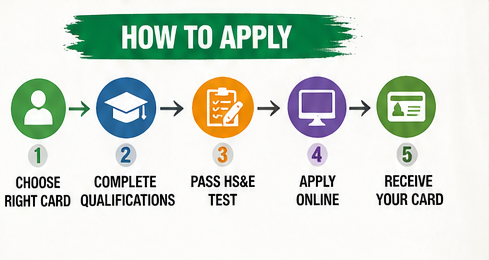
Before going into detail, it’s important to understand that applying for a CSCS card involves three main stages:
- Getting the right qualification
- Passing the safety test
- Submitting your application
Each stage is essential, and missing any step can delay or even reject your application.
Step-by-Step Process to Apply for a CSCS Card
Step 1: Choose the Right CSCS Card Type
Selecting the correct card type is the most important first step.
Why This Step Matters
Each CSCS card is linked to a specific role and qualification level. If you apply for the wrong card:
- Your application may be rejected
- You may waste time and money
- You could delay your career progress
How to Choose the Right Card
Ask yourself:
- What is my current job role?
- What qualifications do I have?
- What level of experience do I possess?
Examples
- New worker → Green Card
- Skilled tradesperson → Blue Card
- Supervisor → Gold Card
- Manager → Black Card
Always match your card type with your actual qualifications and responsibilities.
Step 2: Complete the Required Qualifications
Once you’ve chosen your card, the next step is to ensure you meet the qualification requirements.
What Are These Qualifications?
Most CSCS cards require:
- NVQ (National Vocational Qualification)
- Construction-related diplomas or certificates
- Approved training courses
Why Qualifications Are Important
They prove that you:
- Have practical knowledge of your job
- Understand how to perform tasks correctly
- Meet industry standards
Examples of Qualification Levels
- Entry-level → Health & Safety course
- Skilled worker → NVQ Level 2
- Supervisor → NVQ Level 3
- Manager → NVQ Level 6 or higher
Without the correct qualification, you cannot proceed with your application.
Step 3: Pass the Health, Safety and Environment (HS&E) Test
This is a mandatory requirement for all CSCS card applicants.
What Is the HS&E Test?
It is a test designed to assess your knowledge of:
- Workplace hazards
- Safety procedures
- Risk management
- Environmental awareness
Why This Test Is Important
Construction sites can be dangerous, so this test ensures that:
- You can identify risks
- You know how to prevent accidents
- You understand emergency procedures
Types of Tests
Different roles require different versions of the test:
- Operatives test (for labourers and workers)
- Specialist test
- Supervisory test
- Managers and professionals test
Tips to Pass the Test
- Study official materials
- Practice mock tests
- Understand real-life safety scenarios
Passing this test shows that you are ready to work safely on-site.
Step 4: Apply Online Through the Official CSCS Platform
After completing your qualifications and passing the test, you can submit your application.
How to Apply
- Visit the official CSCS application website
- Fill out the application form
- Upload required documents
Documents You May Need
- Proof of qualification
- Test pass certificate
- Identification documents
Application Process
- Select your card type
- Enter personal details
- Upload supporting documents
- Pay the application fee
Important Tips
- Double-check all information before submission
- Ensure documents are clear and valid
- Use accurate contact details
A complete and correct application increases your chances of quick approval.
Step 5: Receive Your CSCS Card
Once your application is approved, your CSCS card will be issued.
What Happens Next?
- Your card is processed and printed
- It is sent to your registered address
- You may also access a digital version
Processing Time
- Usually takes a few working days to a few weeks
Using Your Card
After receiving your card, you can:
- Show it to employers
- Gain access to construction sites
- Start or continue your work legally and safely
Your CSCS card becomes your professional identity in the construction industry.
Common Mistakes to Avoid During Application
Many applicants face delays due to simple mistakes. Avoid the following:
- Applying for the wrong card type
- Submitting incomplete documents
- Failing the safety test due to poor preparation
- Entering incorrect personal details
Careful preparation can save time and prevent rejection.
Pro Tips for a Smooth Application
To ensure a successful application:
- Choose your card type carefully
- Complete all required training beforehand
- Prepare well for the HS&E test
- Keep your documents ready and organized
- Apply through official and trusted platforms
Applying for a CSCS card involves a clear and structured process that ensures workers are qualified, trained, and safety-aware. By following the correct steps—choosing the right card, completing qualifications, passing the safety test, and submitting a proper application—you can successfully obtain your CSCS card and move forward in your construction career.
Understanding this process not only helps you avoid delays but also ensures that you meet industry standards and are fully prepared to work safely and professionally on construction sites.
CSCS Card Requirements
To successfully obtain a CSCS card, applicants must meet a set of clearly defined criteria established by the Construction Skills Certification Scheme. These requirements are designed to ensure that every individual working on a construction site is qualified, competent, and aware of safety standards.
Understanding these requirements in detail will help you avoid delays and increase your chances of approval.
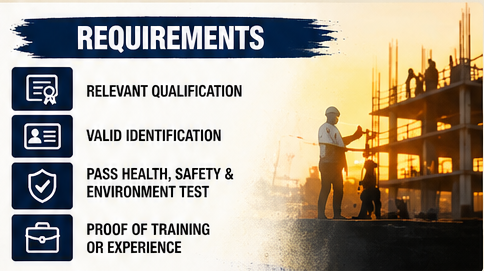
1. Relevant Construction Qualification
One of the most important requirements is having a recognized construction-related qualification.
What Does This Mean?
You must demonstrate that you have the knowledge and skills required for your specific role.
Examples of Accepted Qualifications
- NVQ (National Vocational Qualification)
- Construction diplomas or certificates
- Health and safety training courses (for entry-level roles)
Why It Matters
Qualifications prove that you:
- Understand your job responsibilities
- Can perform tasks correctly and safely
- Meet industry standards
Without the correct qualification, your application may be rejected.
2. Valid Identification
Applicants must provide official identification to verify their identity.
Accepted Forms of ID
- Passport
- Driving license
- National identity documents
Purpose of Identification
This ensures that:
- The application is genuine
- The card is issued to the correct person
- Fraud or misuse is prevented
Always ensure your ID is valid and matches your application details.
3. Passing the Health, Safety and Environment Test
This is a mandatory requirement for all CSCS cards.
What the Test Covers
- Workplace hazards
- Safety procedures
- Risk prevention
- Environmental awareness
Why This Test Is Important
Construction sites can be dangerous, and this test ensures that:
- You can identify risks
- You know how to respond to emergencies
- You understand safety regulations
Key Tip
Preparation is essential—study materials and practice tests can significantly improve your chances of passing.
4. Proof of Training or Experience
In addition to qualifications, you may need to provide evidence of your practical experience or training.
What Can Be Used as Proof
- Work experience records
- Training certificates
- Employer verification
Why This Is Required
It ensures that you:
- Have hands-on experience
- Can apply your knowledge in real situations
- Are capable of working independently or under supervision
Cost and Validity of CSCS Cards
Understanding the financial and time-related aspects of CSCS cards is essential for proper planning.
Cost of CSCS Cards
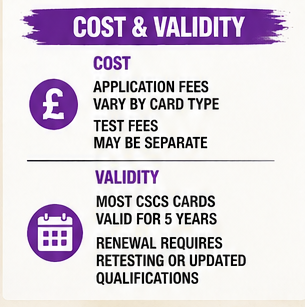
The total cost of obtaining a CSCS card can vary depending on several factors.
1. Application Fees
- Each card type has its own fee
- Higher-level cards may cost more
2. Test Fees
- The Health, Safety and Environment Test is usually charged separately
- Retakes may require additional payment
3. Additional Costs
- Training courses
- Qualification programs
It’s important to budget for the full process, not just the card itself.
Validity of CSCS Cards
CSCS cards are not permanent and must be renewed periodically.
Standard Validity Period
- Most CSCS cards are valid for 5 years
Why Cards Expire
- Skills and safety standards evolve
- Workers need to stay updated
Renewal Requirements
To renew your card, you may need to:
- Retake the safety test
- Provide updated qualifications
- Submit a new application
Keeping your card valid ensures uninterrupted work opportunities.
Benefits of CSCS Cards
Holding a CSCS card offers multiple advantages that go beyond basic certification.

1. Increased Job Opportunities
Many construction employers:
- Prefer CSCS-certified workers
- Require cards for site entry
This significantly improves your chances of getting hired.
2. Higher Earning Potential
Workers with CSCS cards often:
- Earn higher wages
- Qualify for better roles
Certification reflects skill and reliability, which employers value.
3. Improved Safety Awareness
Through training and testing, workers:
- Understand workplace risks
- Follow safety procedures
- Reduce accidents
This creates a safer environment for everyone.
4. Career Advancement Opportunities
CSCS cards support career growth by:
- Allowing progression to higher-level cards
- Encouraging skill development
- Opening leadership roles
You can move from labourer to manager over time.
5. Industry-Wide Recognition
CSCS cards are widely accepted across the construction sector, meaning:
- Your skills are recognized nationally
- You can work on multiple sites and projects
This adds credibility and professionalism to your profile.
Common Mistakes to Avoid
Many applicants face delays or rejection due to avoidable errors. Understanding these mistakes can save time and effort.
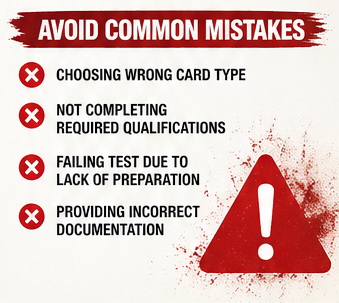
1. Choosing the Wrong Card Type
Problem
Applying for a card that doesn’t match your qualifications.
Solution
- Carefully review eligibility criteria
- Select the card that fits your role and experience
2. Not Completing Required Qualifications
Problem
Submitting an application without the necessary training.
Solution
- Complete all required courses before applying
- Ensure certificates are valid and recognized
3. Failing the Safety Test
Problem
Lack of preparation leads to failing the exam.
Solution
- Study official materials
- Take practice tests
- Understand real-life safety scenarios
4. Providing Incorrect or Incomplete Documentation
Problem
Missing or incorrect documents can delay approval.
Solution
- Double-check all details
- Upload clear and accurate documents
- Ensure consistency in personal information
Meeting the requirements for a CSCS card is essential for ensuring that workers are qualified, competent, and safety-conscious. By understanding the criteria, costs, validity, and benefits, you can approach the application process with confidence.
Avoiding common mistakes and preparing properly will not only help you obtain your CSCS card smoothly but also support your long-term success in the construction industry.
Career Progression in Construction (Unique Insight)
One of the most valuable—but often overlooked—aspects of CSCS cards is how they support long-term career growth in the construction industry. The Construction Skills Certification Scheme is not just a certification system; it also acts as a clear roadmap for professional development, helping individuals move step-by-step from entry-level roles to senior management positions.
Unlike many industries where career paths are unclear, construction offers a structured and practical progression route, and CSCS cards play a central role in that journey.
Why Career Progression Matters in Construction
Before exploring the stages, it’s important to understand why career progression is so important.
Benefits of Career Growth
- Increases earning potential
- Enhances job security
- Builds professional reputation
- Opens leadership opportunities
- Encourages continuous learning
With the right approach, a beginner can grow into a highly skilled professional or even a project manager.
Typical Career Path with CSCS Cards
The CSCS system is designed to reflect different levels of experience and responsibility. As workers gain qualifications and experience, they can move up through different card levels.
1. Labourer (Green Card) – Entry Level
This is the starting point for most individuals entering the construction industry.
Role and Responsibilities
- Assisting skilled workers
- Carrying materials and tools
- Maintaining cleanliness on-site
- Following instructions from supervisors
Skills Developed at This Stage
- Basic understanding of construction work
- Awareness of health and safety practices
- Teamwork and communication
What to Focus On
- Learning from experienced workers
- Completing basic training
- Gaining hands-on experience
This stage builds the foundation for future growth.
2. Skilled Worker (Blue Card) – Technical Development
After gaining experience and completing relevant qualifications, workers can move to the skilled level.
Role and Responsibilities
- Performing specialized tasks (e.g., electrical work, plumbing, carpentry)
- Working independently
- Following technical specifications
Skills Developed
- Trade-specific expertise
- Problem-solving abilities
- Technical knowledge
Requirements to Progress
- NVQ Level 2 or equivalent qualification
- Practical experience in a specific trade
Career Impact
- Higher pay compared to entry-level roles
- Increased responsibility
- Recognition as a trained professional
This stage transforms a worker into a qualified specialist.
3. Supervisor (Gold Card) – Leadership Stage
At this level, individuals move from performing tasks to managing and supervising others.
Role and Responsibilities
- Overseeing teams on-site
- Ensuring work is completed correctly
- Monitoring safety practices
- Coordinating daily operations
Skills Developed
- Leadership and team management
- Decision-making
- Communication and coordination
Requirements
- NVQ Level 3 or higher
- Experience in a skilled role
- Understanding of site management
Career Impact
- Transition into leadership roles
- Greater authority on-site
- Improved earning potential
This stage marks the shift from worker to leader.
4. Manager (Black Card) – Senior Level
The highest level in the CSCS system represents management and strategic roles.
Role and Responsibilities
- Planning and managing construction projects
- Supervising multiple teams
- Ensuring compliance with safety regulations
- Managing budgets and timelines
Skills Developed
- Strategic planning
- Risk management
- Leadership at an organizational level
Requirements
- NVQ Level 6 or 7 in construction management (or equivalent)
- Extensive industry experience
Career Impact
- Top-level positions (site manager, project manager)
- High earning potential
- Full responsibility for project success
This stage represents professional mastery and leadership.
How CSCS Cards Support Career Growth
CSCS cards are directly linked to your level of experience and qualification. As you progress:
- You upgrade your card type
- You gain access to better job roles
- You increase your earning potential
Structured Growth System
- Each card represents a step forward
- Encourages continuous improvement
- Motivates workers to gain new qualifications
Recognition of Skills
Employers can instantly identify:
- Your experience level
- Your capabilities
- Your suitability for specific roles
Additional Career Opportunities in Construction
Beyond the traditional path, CSCS cards also support entry into specialized roles such as:
- Health and safety officers
- Site inspectors
- Construction planners
- Engineers and consultants
This shows that the construction industry offers diverse and flexible career options.
Tips to Progress Faster in Your Career
To move up the career ladder efficiently:
- Gain relevant qualifications (NVQs, diplomas)
- Continuously improve your skills
- Learn from experienced professionals
- Take on additional responsibilities
- Stay updated with industry standards
Common Challenges in Career Progression
While the path is clear, some workers face challenges such as:
- Lack of training opportunities
- Limited awareness of career options
- Failure to upgrade qualifications
Overcoming these challenges requires planning, commitment, and continuous learning.
Career progression in construction is well-structured and achievable, especially with the support of CSCS cards. Starting from a labourer role and advancing to managerial positions, workers can build a stable and rewarding career by gaining experience, improving skills, and obtaining higher-level qualifications.
CSCS cards not only validate your current abilities but also guide your future growth, making them an essential tool for long-term success in the construction industry.-level roles to leadership positions.
Conclusion
CSCS cards have become a fundamental part of the modern construction industry, serving as a reliable way to ensure that workers are properly trained, qualified, and aware of essential health and safety practices. Through the framework established by the Construction Skills Certification Scheme, these cards help create a standardized system where competence can be easily verified, risks can be minimized, and professionalism can be maintained across construction sites. In an industry where safety and precision are critical, CSCS cards provide both employers and workers with confidence that tasks are being carried out by capable individuals.
Beyond safety, CSCS cards also play a significant role in shaping career opportunities. They act as a gateway to employment, making it easier for workers to access job opportunities, gain industry recognition, and progress into higher roles. By understanding the different types of CSCS cards, the application process, required qualifications, and associated benefits, individuals can plan their career path more effectively. Additionally, avoiding common mistakes—such as choosing the wrong card type or failing to meet requirements—can help streamline the certification process and prevent unnecessary delays.
For anyone looking to enter or grow within the construction sector, obtaining a CSCS card is more than just a requirement—it is an investment in long-term professional success. It not only enhances employability but also supports continuous learning, career advancement, and workplace safety. As the construction industry continues to evolve, having a valid CSCS card will remain a key factor in building a stable, credible, and successful career.