
ProQual Level 7 NVQ Diploma in Strategic Management and Leadership
In today’s competitive business environment, organisations need leaders who can think strategically, drive change, manage resources effectively, and achieve long-term business goals. As businesses face increasing challenges such as digital transformation, market competition, and evolving customer expectations, the demand for skilled strategic leaders continues to grow.
The ProQual Level 7 NVQ Diploma in Strategic Management and Leadership is a prestigious vocational qualification designed for experienced managers, senior professionals, directors, and business leaders who want to enhance their leadership capabilities and demonstrate their competence in a real workplace environment. Unlike traditional academic qualifications, this diploma focuses on practical leadership skills, strategic decision-making, and organisational performance improvement.
This qualification helps learners develop the knowledge, skills, and confidence required to lead teams, manage organisational change, formulate business strategies, and contribute to long-term business success. In this guide, we will explore the qualification structure, assessment process, key benefits, career opportunities, and the value it brings to both individuals and organisations.

What is the ProQual Level 7 NVQ Diploma in Strategic Management and Leadership?
The ProQual Level 7 NVQ Diploma in Strategic Management and Leadership is a work-based qualification designed for senior managers and leaders who are responsible for developing and implementing organisational strategies. It enables professionals to demonstrate their ability to lead effectively, make strategic decisions, and manage organisational performance at a senior level.
The qualification focuses on practical application rather than theoretical learning. Candidates are assessed based on their workplace performance, allowing them to demonstrate their competence through real business activities and leadership responsibilities.
Qualification Overview
This diploma is aimed at individuals who already hold significant management responsibilities within their organisations. It provides a structured framework for developing advanced leadership skills and strategic management expertise while allowing learners to continue working in their current roles.
The qualification covers key areas such as strategic planning, organisational leadership, change management, stakeholder engagement, performance improvement, and risk management. These competencies are essential for leaders who want to drive business growth and organisational success.
Purpose of the Qualification
The primary purpose of the qualification is to develop capable leaders who can successfully manage complex organisational challenges and contribute to long-term business objectives.
It helps learners:
- Develop strategic leadership capabilities
- Improve decision-making skills
- Enhance organisational performance
- Lead teams more effectively
- Manage change and transformation initiatives
- Align business operations with strategic goals
The qualification ensures that learners can apply leadership principles in real workplace situations, making it highly relevant and practical.
Level 7 Qualification Explained
The qualification is positioned at Level 7 on the Regulated Qualifications Framework (RQF), which represents an advanced level of learning and professional competence.
A Level 7 qualification demonstrates that an individual possesses highly developed knowledge, leadership capabilities, and strategic thinking skills. It is generally comparable to postgraduate-level study in terms of complexity and responsibility, although it focuses heavily on workplace competence rather than academic research.
Learners are expected to operate at a senior management level, taking responsibility for strategic planning, organisational performance, and leadership decisions that impact the wider business.
Industry Recognition
The ProQual Level 7 NVQ Diploma in Strategic Management and Leadership is widely recognised by employers across various industries. Its emphasis on workplace competence makes it particularly attractive to organisations seeking proven leaders who can deliver measurable business results.
Because the qualification is assessed through real workplace performance, employers can have confidence that holders possess practical leadership experience rather than simply theoretical knowledge.
Industries that value this qualification include:
- Manufacturing
- Construction
- Healthcare
- Logistics and Supply Chain
- Financial Services
- Retail
- Public Sector Organisations
- Corporate Enterprises
Why Employers Value It
Employers value the qualification because it develops leaders who can contribute directly to organisational success. The diploma focuses on practical skills that can be immediately applied in the workplace.
Key reasons employers recognise the qualification include:
- Demonstrates proven leadership competence
- Supports succession planning initiatives
- Improves strategic decision-making capabilities
- Enhances organisational performance
- Develops future senior leaders
- Encourages continuous professional development
For organisations, investing in strategic leadership development often leads to improved productivity, stronger team performance, and better long-term business outcomes.
| Feature | Details |
|---|---|
| Qualification Title | ProQual Level 7 NVQ Diploma in Strategic Management and Leadership |
| Qualification Level | Level 7 |
| Qualification Type | Vocational Qualification |
| Assessment Method | Workplace-Based Assessment |
| Study Mode | Flexible and Work-Based |
| Entry Requirements | Relevant Management Experience |
| Target Audience | Senior Managers and Leaders |
| Exams | No Traditional Exams |
| Evidence Required | Workplace Portfolio and Supporting Documents |
| Recognition | Internationally Recognised |
This qualification is designed to fit around professional commitments, making it ideal for busy managers who wish to gain a recognised leadership qualification without interrupting their careers.
Why This Qualification Matters
Strategic leadership plays a critical role in the success of modern organisations. Businesses need leaders who can adapt to changing environments, inspire teams, and implement effective strategies to achieve organisational goals.
Importance of Strategic Leadership
Strategic leadership involves creating a vision for the future, setting organisational objectives, and ensuring that resources are aligned to achieve those goals. Effective leaders influence organisational culture, improve performance, and drive innovation.
Without strong strategic leadership, organisations often struggle to respond to market changes, manage growth, and maintain competitiveness.
Leadership Skills Shortage
Many organisations face a shortage of leaders with the ability to manage complex challenges and lead large-scale business initiatives. As industries evolve and competition increases, the need for qualified strategic leaders continues to rise.
This qualification helps bridge that gap by developing the competencies required to lead effectively at a senior level.
Business Competitiveness
Organisations that invest in leadership development are often better positioned to compete in today’s dynamic business environment. Strategic leaders can identify opportunities, manage risks, and create sustainable competitive advantages.
The qualification equips learners with the tools needed to improve organisational effectiveness and maintain long-term business success.
Organisational Performance
Strong leadership has a direct impact on employee engagement, productivity, and overall business performance. Leaders who understand strategic planning and performance management can create environments that support continuous improvement and operational excellence.
By developing these capabilities, the qualification helps organisations achieve better outcomes and stronger performance.
Career Advancement Opportunities
For professionals seeking career progression, the qualification provides a recognised pathway to senior leadership positions. It demonstrates advanced leadership competence and can significantly enhance professional credibility.
Many learners use the qualification to progress into roles such as:
- Strategic Manager
- Operations Director
- General Manager
- Business Development Director
- Managing Director
- Chief Operating Officer (COO)
Key Features of the Qualification
The ProQual Level 7 NVQ Diploma in Strategic Management and Leadership offers several unique features that make it highly valuable for experienced professionals.
Work-Based Assessment
One of the most significant advantages of the qualification is its workplace-based assessment approach. Learners demonstrate their competence through real work activities rather than relying solely on classroom-based learning.
This ensures that knowledge is applied directly within the organisation and produces tangible business benefits.
Flexible Study Approach
The qualification is designed to accommodate the needs of busy professionals. Learners can continue working while completing their studies, allowing them to balance career responsibilities with professional development.
This flexibility makes the qualification accessible to managers and leaders across various industries.
Competency-Based Learning
Rather than focusing purely on theory, the qualification measures a learner’s ability to perform effectively in a real workplace environment.
Candidates are assessed on their ability to apply leadership principles, manage teams, make strategic decisions, and deliver organisational results.
No Written Exams
Unlike many traditional qualifications, there are no formal written examinations. Assessment is based on practical evidence collected from workplace activities, making the learning experience more relevant and meaningful.
International Recognition
The qualification is recognised by employers both nationally and internationally. Its focus on leadership competence and strategic management makes it valuable across a wide range of sectors and geographical locations.
Qualification Structure and Assessment Process
The qualification combines leadership development with practical workplace assessment, ensuring learners develop both knowledge and competence.
Qualification Structure
The diploma consists of a range of units covering critical areas of strategic management and leadership.
Typical areas include:
- Strategic Planning
- Organisational Leadership
- Change Management
- Stakeholder Management
- Performance Improvement
- Risk Management
- Business Development
These units help learners build a comprehensive understanding of leadership and organisational strategy.
Mandatory Units
Mandatory units focus on core leadership competencies that every strategic leader should possess. These units ensure a consistent foundation of leadership knowledge and practical skills.
Optional Units
Optional units allow learners to tailor the qualification to their professional responsibilities and career goals, providing flexibility and relevance.
Learning Outcomes
Upon successful completion, learners will be able to:
- Lead organisations strategically
- Develop and implement business plans
- Manage organisational change
- Improve business performance
- Engage stakeholders effectively
- Make informed strategic decisions
Assessment Process
Assessment is designed to evaluate real workplace competence and leadership performance.
Portfolio Development
Learners compile a portfolio containing evidence that demonstrates their leadership capabilities and workplace achievements.
Workplace Evidence
Evidence may include:
- Strategic plans
- Business reports
- Performance reviews
- Meeting records
- Project documentation
- Leadership initiatives
Professional Discussions
Assessors conduct professional discussions to evaluate the learner’s understanding and application of leadership principles.
Observation and Documentation
Assessors may observe workplace activities and review supporting documents to verify competence and ensure assessment requirements are met.
This practical assessment approach ensures that learners develop meaningful leadership capabilities that deliver value to both themselves and their organisations.
Who Should Enrol?
The ProQual Level 7 NVQ Diploma in Strategic Management and Leadership is designed for professionals who hold leadership responsibilities or aspire to move into senior management positions. The qualification is suitable for individuals across various industries who want to strengthen their strategic leadership capabilities and contribute more effectively to organisational success.
Senior Managers
Senior managers are responsible for overseeing departments, teams, and business functions while ensuring organisational objectives are achieved. This qualification helps senior managers develop advanced leadership skills, improve strategic planning abilities, and enhance decision-making capabilities.
The diploma enables senior managers to move beyond operational management and focus on long-term business growth, organisational development, and strategic leadership.
Department Heads
Department heads often manage teams, budgets, and departmental performance. They play a critical role in translating organisational strategy into operational success.
This qualification helps department heads:
- Align departmental goals with organisational objectives
- Improve leadership effectiveness
- Develop strategic planning skills
- Enhance team performance management
By gaining a broader understanding of organisational leadership, department heads can contribute more effectively to business success.
Operations Managers
Operations managers are responsible for ensuring efficient business processes and achieving operational excellence. They often oversee resources, workflows, and performance management systems.
Through this qualification, operations managers learn how to:
- Develop strategic operational plans
- Improve productivity and efficiency
- Manage organisational change
- Support long-term business objectives
The qualification strengthens their ability to balance operational responsibilities with strategic leadership requirements.
Directors
Directors are responsible for shaping organisational strategy and making high-level decisions that impact business performance.
The qualification helps directors:
- Strengthen strategic leadership capabilities
- Improve governance and accountability
- Lead organisational transformation
- Drive sustainable business growth
It also provides a structured framework for enhancing leadership effectiveness at an executive level.
Business Owners
Business owners must make strategic decisions that influence the future success of their organisations. They often manage growth, financial performance, and organisational development simultaneously.
This qualification helps business owners:
- Develop stronger leadership skills
- Improve strategic planning
- Manage risks effectively
- Build high-performing teams
- Create sustainable growth strategies
By enhancing their leadership capabilities, business owners can improve business performance and competitiveness.
Aspiring Strategic Leaders
Professionals who wish to progress into senior leadership positions can use this qualification as a stepping stone toward higher-level management roles.
The qualification provides valuable experience in:
- Strategic thinking
- Leadership development
- Organisational management
- Business decision-making
It helps aspiring leaders gain the competencies needed to take on greater responsibilities and leadership challenges.
Strategic Management and Leadership Explained
Strategic management and leadership are essential components of organisational success. While management focuses on achieving operational goals, leadership provides the vision and direction needed for long-term growth and sustainability.
Leadership vs Management
Although leadership and management are closely related, they serve different purposes within an organisation.
Management focuses on:
- Planning daily activities
- Organising resources
- Monitoring performance
- Achieving operational objectives
Leadership focuses on:
- Creating a vision
- Inspiring people
- Driving change
- Building organisational culture
A successful strategic leader combines both management and leadership skills to achieve organisational goals while motivating and developing employees.
Strategic Thinking
Strategic thinking involves analysing information, identifying opportunities, and developing plans that support long-term business objectives.
Strategic leaders constantly evaluate:
- Market trends
- Industry developments
- Competitive threats
- Business opportunities
For example, a strategic leader may identify emerging technology trends and develop plans to integrate new technologies before competitors do.
Strategic Decision-Making
Strategic decision-making involves making informed choices that impact the future direction of an organisation.
Effective strategic decisions are based on:
- Data analysis
- Risk assessment
- Stakeholder input
- Organisational objectives
Leaders must evaluate multiple options and select solutions that create long-term value.
Organisational Leadership
Organisational leadership focuses on influencing people, managing change, and creating a culture that supports success.
Strong organisational leaders:
- Build trust
- Encourage collaboration
- Develop future leaders
- Promote continuous improvement
They ensure that employees remain engaged and aligned with organisational goals.
Business Growth Leadership
Business growth leadership involves identifying opportunities to expand operations, improve profitability, and strengthen market position.
Strategic leaders support growth by:
- Developing innovative solutions
- Exploring new markets
- Improving customer satisfaction
- Strengthening organisational capabilities
Their leadership helps organisations remain competitive in changing business environments.
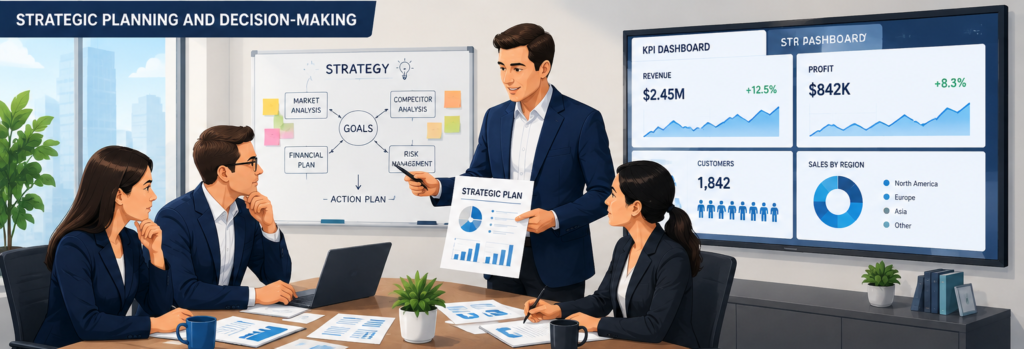
Core Skills Developed Through the Qualification
The qualification develops a wide range of practical leadership and management skills that can be applied directly in the workplace.
Strategic Planning
Learners develop the ability to create long-term business strategies that support organisational objectives.
This includes:
- Setting strategic goals
- Allocating resources
- Developing action plans
- Monitoring progress
For example, a manager may create a three-year business strategy to increase revenue and improve customer satisfaction.
Change Management
Change is a constant part of modern business. Leaders must be able to guide organisations through transitions effectively.
Learners develop skills in:
- Leading change initiatives
- Managing resistance
- Communicating change
- Supporting employees during transformation
Stakeholder Management
Successful organisations depend on positive relationships with stakeholders.
Learners learn how to:
- Identify stakeholder needs
- Manage expectations
- Build partnerships
- Maintain effective communication
For example, a leader may work closely with suppliers, customers, and investors to support organisational objectives.
Risk Management
Strategic leaders must identify potential risks and develop plans to minimise their impact.
This includes:
- Risk identification
- Risk assessment
- Risk mitigation planning
- Business continuity management
Effective risk management helps organisations avoid disruptions and maintain stability.
Performance Management
Performance management focuses on improving organisational effectiveness and employee productivity.
Learners develop skills in:
- Setting performance targets
- Monitoring progress
- Providing feedback
- Driving continuous improvement
Leadership Communication
Communication is one of the most important leadership skills.
Effective leaders communicate:
- Organisational vision
- Strategic objectives
- Expectations
- Performance feedback
Strong communication improves employee engagement and organisational alignment.
Problem-Solving
Leaders frequently encounter challenges that require effective solutions.
The qualification helps learners:
- Analyse problems
- Evaluate alternatives
- Implement solutions
- Monitor outcomes
Decision-Making
Strategic leaders must make decisions that affect organisational performance.
Learners develop skills in:
- Data analysis
- Critical thinking
- Strategic evaluation
- Evidence-based decision-making
These abilities support better business outcomes and organisational success.
Benefits for Learners
The qualification offers significant benefits for professionals seeking leadership development and career advancement.
Career Progression
The diploma demonstrates advanced leadership competence and can support progression into senior management and executive roles.
Leadership Confidence
Learners gain confidence in their ability to lead teams, manage change, and make strategic decisions.
Professional Recognition
The qualification is recognised by employers and demonstrates a commitment to professional development.
Higher Earning Potential
Senior leadership qualifications often improve access to higher-paying positions and greater career opportunities.
Improved Decision-Making Abilities
Learners develop the skills needed to make informed decisions that contribute to organisational success.
Benefits for Employers
Employers also benefit from investing in leadership development through this qualification.
Stronger Leadership Teams
Organisations gain leaders who can manage complex challenges and drive performance improvement.
Improved Organisational Performance
Effective leaders contribute to increased productivity, efficiency, and business growth.
Better Succession Planning
The qualification helps organisations develop future leaders and ensure continuity in key positions.
Increased Employee Engagement
Strong leadership improves workplace culture, employee motivation, and retention.
Sustainable Business Growth
Strategic leadership supports long-term success by aligning business activities with organisational objectives.
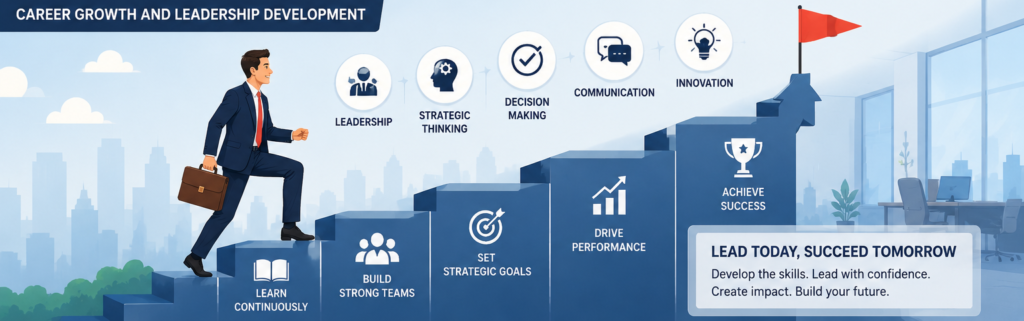
Career Opportunities After Completion
The qualification prepares learners for a wide range of senior leadership positions.
Strategic Manager
Strategic managers develop business strategies, coordinate organisational initiatives, and support long-term growth.
Operations Director
Operations directors oversee organisational processes and ensure operational efficiency across departments.
General Manager
General managers supervise business operations, manage resources, and implement strategic plans.
Business Development Director
These professionals identify growth opportunities, build partnerships, and drive revenue generation.
Managing Director
Managing directors provide overall leadership and are responsible for achieving organisational objectives.
Chief Operating Officer (COO)
The COO oversees day-to-day operations while supporting the organisation’s strategic vision and long-term goals.
These roles offer significant progression opportunities into executive leadership and board-level positions.
Industry Applications
The skills developed through this qualification are valuable across numerous industries.
Corporate Organisations
Leaders manage strategic planning, organisational performance, and business growth initiatives.
Manufacturing
Strategic leadership improves operational efficiency, productivity, and quality management.
Healthcare
Leaders support service improvement, workforce development, and organisational transformation.
Construction
Strategic management helps organisations deliver projects efficiently while managing risks and resources.
Logistics
Leaders improve supply chain performance, operational effectiveness, and customer satisfaction.
Financial Services
Strategic leadership supports regulatory compliance, business growth, and customer-focused innovation.
Public Sector Organisations
Leaders manage public services, policy implementation, and organisational improvement initiatives.
Real-World Leadership Example
Consider a senior operations manager working for a manufacturing company experiencing declining productivity and employee engagement.
The manager developed a strategic improvement plan that included:
- Performance measurement systems
- Employee development initiatives
- Stakeholder engagement strategies
- Process improvement programmes
By implementing these initiatives, productivity increased, employee satisfaction improved, and operational costs were reduced. This example demonstrates how strategic planning, leadership communication, and performance management can produce measurable business results.
Common Challenges in Strategic Management and Leadership
Resistance to Change
Employees may resist new initiatives due to uncertainty or fear.
Solution:
Leaders should communicate clearly, involve employees in the process, and provide support during transitions.
Resource Limitations
Limited budgets and resources can restrict organisational growth.
Solution:
Strategic leaders prioritise initiatives and allocate resources effectively.
Stakeholder Conflicts
Different stakeholder groups often have competing priorities.
Solution:
Leaders should maintain open communication and focus on shared objectives.
Market Uncertainty
Economic conditions and industry changes can create uncertainty.
Solution:
Strategic planning and risk management help organisations remain adaptable.
Performance Issues
Poor performance can affect organisational success.
Solution:
Leaders should establish clear expectations, monitor progress, and implement improvement plans.
Best Practices for Effective Strategic Leadership
Setting Clear Objectives
Leaders should establish measurable goals that support organisational vision.
Effective Communication
Regular communication ensures alignment and engagement across the organisation.
Continuous Learning
Successful leaders continually update their knowledge and leadership skills.
Data-Driven Decision-Making
Using data and analytics improves decision quality and reduces uncertainty.
Building High-Performing Teams
Leaders should invest in employee development and create collaborative work environments.
Encouraging Innovation
Organisations that encourage innovation are better positioned for long-term success.
Future Trends in Strategic Management and Leadership
Artificial Intelligence in Leadership
AI is helping leaders analyse data, identify trends, and make more informed decisions.
Digital Transformation
Technology continues to reshape business operations and leadership responsibilities.
Data-Driven Strategy
Organisations increasingly rely on data analytics to guide strategic planning and performance management.
Hybrid Workforce Management
Leaders must effectively manage teams working across both remote and office-based environments.
Sustainable Business Leadership
Modern leaders are expected to balance profitability with environmental responsibility, ethical governance, and long-term sustainability.
These emerging trends will continue to shape the future of strategic management and leadership, making advanced leadership qualifications increasingly valuable for professionals seeking long-term career success.elps differentiate your content from competitors.
Conclusion
The ProQual Level 7 NVQ Diploma in Strategic Management and Leadership is a valuable qualification for experienced professionals who want to strengthen their leadership capabilities and progress into senior management roles. By focusing on practical workplace competence, strategic planning, decision-making, change management, and organisational leadership, the qualification equips learners with the skills needed to lead effectively in today’s complex and competitive business environment. Its flexible, work-based assessment approach makes it an ideal choice for managers and leaders who wish to continue their professional development while remaining active in their current roles.
Whether you are a senior manager, department head, director, business owner, or aspiring executive leader, this qualification can help you enhance your professional credibility, improve organisational performance, and unlock new career opportunities. As businesses continue to seek leaders who can drive innovation, manage change, and achieve long-term success, the ProQual Level 7 NVQ Diploma in Strategic Management and Leadership remains a highly respected pathway for developing the strategic leadership skills required to succeed at the highest levels of management.