
ProQual Level 6 Diploma in Advanced Fire Safety Design and Building Risk Management
Fire safety and building risk management have become essential components of modern construction, facilities management, and regulatory compliance across the United Kingdom. With the rapid development of high-rise buildings, complex infrastructure projects, mixed-use properties, and advanced construction methods, organisations are under increasing pressure to ensure that buildings are designed, managed, and maintained according to strict fire safety standards. In recent years, the importance of competent fire safety professionals has grown significantly due to rising concerns about occupant protection, emergency preparedness, structural safety, and legal accountability within residential, commercial, and industrial environments.
Following major incidents such as the Grenfell Tower fire, the UK government introduced stronger fire safety legislation, tougher building compliance regulations, and enhanced risk management requirements to improve public safety and reduce the likelihood of fire-related disasters. New regulations, including the Building Safety Act 2022 and the Fire Safety Act 2021, have transformed the responsibilities of building owners, construction professionals, facilities managers, and fire safety specialists throughout the country. As a result, there is now a growing demand for qualified professionals who possess advanced technical knowledge in fire prevention, fire protection systems, building safety compliance, evacuation planning, and risk assessment procedures.
The ProQual Level 6 Diploma in Advanced Fire Safety Design and Building Risk Management is a professionally recognised qualification developed to meet these evolving industry requirements. The diploma is specifically designed for individuals who want to build advanced expertise in fire safety engineering principles, building risk control strategies, fire protection technologies, and legal compliance within the built environment. It equips learners with the practical and theoretical knowledge required to identify fire hazards, evaluate complex building risks, implement preventive measures, and maintain compliance with modern UK fire safety legislation and British Standards.
This advanced qualification covers a broad range of essential topics related to fire safety design and risk management, including active and passive fire protection systems, compartmentation, fire detection systems, smoke control measures, emergency evacuation procedures, and fire safety auditing. Learners also gain a deeper understanding of building construction methods, high-risk environments, fire behaviour, and the management of safety risks associated with residential towers, commercial premises, healthcare facilities, educational institutions, and industrial sites.
In addition to technical fire safety knowledge, the course develops important leadership and management skills required for senior-level roles within the fire safety and compliance sectors. Professionals completing this diploma can pursue careers in fire risk assessment, construction safety management, building compliance, facilities management, fire consultancy, and health and safety leadership. The qualification is particularly valuable for individuals responsible for ensuring that buildings remain legally compliant, operationally safe, and fully prepared to respond to fire emergencies.
As fire safety regulations continue to evolve across the UK, employers increasingly seek competent professionals who can manage modern building risks, improve safety performance, and support long-term compliance strategies. The ProQual Level 6 Diploma in Advanced Fire Safety Design and Building Risk Management provides a strong foundation for career progression while helping organisations create safer environments for occupants, employees, contractors, and the wider community.
What Is the ProQual Level 6 Diploma in Advanced Fire Safety Design and Building Risk Management?
The ProQual Level 6 Diploma in Advanced Fire Safety Design and Building Risk Management is a professionally recognised advanced qualification developed for individuals who want to build specialist knowledge and practical expertise in fire safety, building protection, and risk management within modern built environments. The qualification focuses on the management of fire-related hazards, building safety systems, emergency planning, and legal compliance requirements that apply to residential, commercial, industrial, and public sector buildings throughout the United Kingdom.
As fire safety regulations continue to evolve across the UK construction and facilities management sectors, organisations increasingly require qualified professionals who can identify building risks, implement effective fire protection strategies, and ensure compliance with current legislation and British Standards. This diploma has been designed to meet these growing industry demands by preparing learners for senior-level responsibilities in fire safety management and building risk control.
The qualification combines technical fire safety knowledge with practical management skills, allowing learners to understand how fires develop, how fire protection systems operate, and how building safety risks can be reduced through proper planning, monitoring, and compliance management. It also provides learners with a strong understanding of modern fire safety design principles used within high-rise buildings, commercial premises, healthcare facilities, educational institutions, construction sites, and industrial environments.
Understanding the Purpose of the Qualification
The main purpose of this qualification is to prepare professionals to manage fire safety risks effectively while ensuring that buildings remain safe for occupants, workers, contractors, and visitors. The course develops the knowledge and skills required to deal with complex fire safety challenges in modern buildings and supports organisations in meeting their legal obligations under UK fire safety legislation.
The qualification focuses on both preventive and protective approaches to fire safety management. Learners are trained to identify hazards before incidents occur and to implement suitable fire protection systems that minimise damage, support safe evacuation, and improve emergency response procedures.
This diploma is particularly important because modern buildings are becoming increasingly complex due to advanced construction materials, new architectural designs, energy-efficient systems, and mixed-use developments. These changes have increased the need for competent professionals who understand how to manage building risks in accordance with modern safety standards and legal requirements.
Advanced Fire Safety Knowledge and Technical Expertise
One of the most valuable aspects of the ProQual Level 6 Diploma is its focus on advanced technical fire safety knowledge. Learners gain a detailed understanding of fire behaviour, fire spread, smoke movement, and the impact of building design on occupant safety.
The course introduces learners to a wide range of technical concepts related to fire prevention and fire protection systems, including:
Active Fire Protection Systems
Active fire protection systems are designed to detect, control, or suppress fires automatically or manually during an emergency situation.
Examples include:
- Fire alarm systems
- Smoke detection systems
- Sprinkler systems
- Fire extinguishers
- Smoke ventilation systems
- Emergency lighting systems
Learners understand how these systems operate, how they should be maintained, and how they contribute to overall building safety strategies.
Passive Fire Protection Systems
Passive fire protection focuses on controlling the spread of fire and smoke within buildings by using fire-resistant construction methods and materials.
This area includes:
- Fire-resistant walls and floors
- Compartmentation systems
- Fire doors
- Fire stopping systems
- Fire-resistant glazing
- Structural fire protection
The qualification helps learners understand how passive fire protection measures can protect escape routes, reduce property damage, and provide occupants with sufficient time to evacuate safely.
Fire Risk Assessment Principles
Fire risk assessment is one of the most important responsibilities within fire safety management. The course teaches learners how to identify fire hazards, evaluate risks, and implement appropriate control measures to reduce potential dangers.
Key areas include:
- Identifying ignition sources
- Evaluating combustible materials
- Assessing vulnerable occupants
- Reviewing evacuation procedures
- Monitoring safety controls
- Recording and reviewing findings
Learners develop the ability to carry out detailed fire risk assessments for various building types and occupancy levels.
Building Risk Management and Safety Compliance
Building risk management plays a major role in this qualification. Learners develop the skills required to manage safety risks associated with building design, occupancy, maintenance activities, and operational procedures.
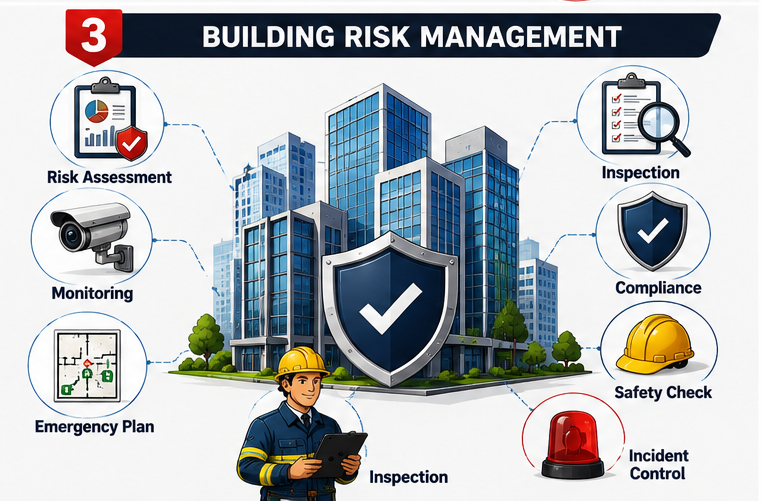
The course explores how building safety management systems are implemented and monitored within different industries and property types. Learners also understand how to evaluate risks related to:
- High-rise residential buildings
- Commercial offices
- Shopping centres
- Warehouses
- Hospitals
- Educational facilities
- Hotels and hospitality premises
- Industrial plants
The qualification also explains how organisations can improve safety culture, maintain compliance records, and establish effective emergency response plans.
Understanding UK Fire Safety Legislation
A major part of the qualification focuses on UK fire safety laws, regulations, and compliance standards. Professionals working in fire safety management must understand their legal duties and ensure that buildings meet all regulatory requirements.
The course introduces learners to important legislation such as:
Regulatory Reform (Fire Safety) Order 2005
This legislation places legal responsibilities on employers, building owners, landlords, and responsible persons to manage fire risks and maintain safe premises.
Building Safety Act 2022
This Act introduced stricter building safety requirements following the Grenfell Tower tragedy and increased accountability within the construction and property management sectors.
Fire Safety Act 2021
This legislation strengthened fire safety requirements for multi-occupied residential buildings and clarified responsibilities related to external walls and flat entrance doors.
Building Regulations 2010
These regulations establish minimum standards for building design, construction safety, and fire protection measures within UK construction projects.
Development of Management and Leadership Skills
In addition to technical knowledge, the qualification develops important leadership and management skills required for senior fire safety roles. Professionals working in building safety often manage teams, coordinate contractors, communicate with regulators, and oversee compliance systems.
The diploma helps learners improve:
- Communication skills
- Leadership abilities
- Decision-making techniques
- Incident investigation skills
- Emergency planning capabilities
- Safety monitoring procedures
- Problem-solving approaches
These skills are highly valuable for individuals progressing into management positions within construction, facilities management, health and safety, and fire safety consultancy sectors.
Industries That Require Advanced Fire Safety Professionals
The knowledge gained through this qualification can be applied across many industries where fire safety and building compliance are essential.
Industries that commonly require qualified fire safety professionals include:
- Construction and engineering
- Facilities management
- Property development
- Manufacturing
- Healthcare services
- Education sector
- Hospitality industry
- Retail and commercial operations
- Local authorities
- Public sector organisations
As UK fire safety regulations continue to become stricter, employers increasingly seek professionals who possess advanced qualifications in fire safety design and building risk management.
Who Is This Qualification Suitable For?
The ProQual Level 6 Diploma is suitable for both experienced professionals and individuals seeking career progression within fire safety and building compliance sectors.
This qualification is particularly beneficial for:
Fire Safety Managers
Professionals responsible for developing and implementing fire safety systems within organisations.
Fire Risk Assessors
Individuals conducting fire risk assessments and identifying hazards within buildings.
Health and Safety Managers
Professionals managing workplace safety, compliance, and emergency planning procedures.
Construction Managers
Managers responsible for ensuring fire safety compliance during construction and refurbishment projects.
Facilities Managers
Professionals overseeing building operations, maintenance, and occupant safety.
Compliance Officers
Individuals responsible for ensuring that organisations follow fire safety regulations and legal requirements.
Building Safety Managers
Professionals managing safety risks within high-rise and complex buildings.
Property Managers
Individuals responsible for maintaining safe residential and commercial properties.
Professional Recognition and Career Development
The ProQual Level 6 Diploma in Advanced Fire Safety Design and Building Risk Management is recognised across the UK and supports professional development within the fire safety, construction, and building compliance industries.
The qualification can improve career opportunities by helping learners progress into senior-level positions involving:
- Fire safety consultancy
- Building compliance management
- Risk assessment
- Health and safety leadership
- Construction safety planning
- Facilities management
- Emergency preparedness coordination
With increasing focus on building safety standards and legal compliance across the UK, qualified fire safety professionals are now in high demand across both public and private sectors.
Why This Qualification Is Important in Modern Industry
Modern buildings require more advanced fire safety strategies than ever before. High-rise developments, modern construction materials, energy-efficient building systems, and changing occupancy patterns have increased the complexity of building risk management.
This qualification helps professionals understand how to manage these modern risks effectively while protecting lives, property, and business operations. It also supports organisations in maintaining compliance with UK fire safety legislation and reducing the likelihood of fire-related incidents.
The ProQual Level 6 Diploma in Advanced Fire Safety Design and Building Risk Management provides learners with the technical expertise, practical skills, and legal understanding needed to succeed in one of the UK’s most important and rapidly developing safety sectors.
Importance of Fire Safety in Modern Buildings
Fire safety has become one of the most essential aspects of modern building design, construction management, and property operations throughout the United Kingdom and around the world. As cities continue to grow and buildings become larger, taller, and more technologically advanced, the risks associated with fire incidents have also increased significantly. Modern structures now include complex electrical systems, energy-efficient materials, smart technologies, underground facilities, mixed-use developments, and high-density occupancy arrangements, all of which create additional fire safety challenges for building owners, developers, facilities managers, and safety professionals.
In today’s construction and property management sectors, fire safety is no longer limited to installing fire extinguishers or emergency alarms. It now involves a complete safety strategy that includes fire prevention, risk assessment, emergency evacuation planning, fire-resistant building design, smoke control systems, legal compliance, and ongoing maintenance of safety systems. Proper fire safety management helps protect lives, minimise property damage, maintain business continuity, and ensure that buildings remain compliant with modern safety regulations.
Following major incidents such as the Grenfell Tower fire, governments and regulatory authorities introduced stricter fire safety requirements and building safety regulations to improve occupant protection and reduce fire-related risks. This has increased the demand for qualified fire safety professionals who understand modern fire prevention strategies, advanced fire protection systems, and legal compliance responsibilities.
Why Fire Safety Is Essential in Modern Buildings
Modern buildings are significantly different from traditional structures built decades ago. Today’s buildings often contain advanced architectural designs, modern construction materials, sophisticated electrical systems, and large numbers of occupants. These developments provide many operational benefits, but they also increase the complexity of fire safety management.
Without proper fire safety measures, even a small fire incident can spread rapidly, leading to serious consequences for people, businesses, and property owners.
Effective fire safety management is important because it helps:
- Protect human life
- Reduce the spread of fire and smoke
- Support safe evacuation procedures
- Minimise structural damage
- Protect valuable assets and equipment
- Maintain legal compliance
- Reduce financial losses
- Improve emergency preparedness
Fire safety planning is now considered a critical part of building risk management within residential, commercial, industrial, healthcare, educational, and public sector environments.
Increasing Complexity of Modern Buildings
One of the biggest reasons why fire safety has become more important is the growing complexity of modern buildings and construction methods.
Several factors contribute to this increased complexity, including:
High-Rise Buildings
High-rise buildings present major fire safety challenges because fires can spread quickly between floors, evacuation procedures become more difficult, and emergency services may face limited access during rescue operations.
High-rise residential towers, hotels, office buildings, and mixed-use developments require advanced fire safety systems such as:
- Smoke control systems
- Pressurised staircases
- Fire compartmentation
- Emergency communication systems
- Automatic sprinkler systems
Professionals responsible for these buildings must ensure that all systems operate effectively to protect occupants during emergencies.
Mixed-Use Developments
Modern developments often combine residential apartments, retail shops, restaurants, offices, entertainment facilities, and parking areas within a single structure. These mixed-use environments create different fire risks because each area may contain unique hazards, occupancy levels, and operational activities.
For example:
- Restaurants may involve cooking oil fire hazards
- Retail shops may contain combustible materials
- Residential areas require safe evacuation routes
- Underground parking areas may increase smoke risks
Managing fire safety within mixed-use developments requires careful planning and coordination between multiple stakeholders.
Modern Construction Materials
Many modern construction materials are lightweight, energy-efficient, and cost-effective, but some may behave differently during fire incidents compared to traditional materials.
Certain materials may:
- Produce toxic smoke
- Increase fire spread
- Reduce structural stability
- Affect evacuation conditions
Fire safety professionals must understand how different building materials react during fires and how suitable fire protection systems can reduce these risks.
Advanced Electrical and Mechanical Systems
Modern buildings depend heavily on electrical equipment, heating systems, data networks, battery storage systems, and automated technologies. Faults within these systems can increase the likelihood of fire incidents.
Common fire risks associated with modern systems include:
- Electrical overloads
- Faulty wiring
- Battery failures
- Equipment overheating
- Generator malfunctions
- HVAC system faults
Proper maintenance and regular safety inspections are essential to minimise these risks.
Consequences of Poor Fire Safety Planning
Poor fire safety management can have devastating consequences for individuals, businesses, and organisations. A lack of effective fire prevention measures can increase the likelihood of fire outbreaks, rapid fire spread, and emergency response failures.
Below are some of the most serious consequences of inadequate fire safety planning.
Loss of Life and Serious Injuries
The most serious consequence of poor fire safety is the risk to human life. Fires can spread rapidly, producing intense heat, toxic smoke, and dangerous gases that place occupants at immediate risk.
Inadequate fire safety systems may result in:
- Delayed fire detection
- Blocked escape routes
- Failed evacuation procedures
- Panic during emergencies
- Smoke inhalation injuries
- Fatalities
Fire safety management plays a critical role in protecting occupants, employees, visitors, contractors, and emergency responders.
Property Damage and Structural Destruction
Fire incidents can cause severe damage to buildings, equipment, inventory, and infrastructure. In many cases, structural damage caused by fire and smoke can make buildings unsafe for future use.
Property damage may include:
- Destruction of offices and facilities
- Damage to machinery and equipment
- Loss of important records
- Damage to electrical systems
- Smoke contamination
- Water damage from firefighting operations
Repairing fire-damaged buildings can require significant financial investment and lengthy reconstruction work.
Business Interruption and Financial Losses
Fire incidents can disrupt business operations for weeks, months, or even permanently. Many organisations struggle to recover after major fire-related incidents due to operational downtime and financial losses.
Business interruption may result in:
- Loss of revenue
- Production delays
- Contract cancellations
- Reduced customer confidence
- Staff displacement
- Supply chain disruption
Organisations with strong fire safety systems are better prepared to reduce operational risks and recover more effectively after emergencies.
Legal Penalties and Regulatory Action
UK fire safety laws place legal responsibilities on employers, building owners, landlords, and responsible persons to maintain safe premises and manage fire risks effectively.
Failure to comply with fire safety regulations may lead to:
- Enforcement notices
- Improvement notices
- Financial penalties
- Legal prosecution
- Business closure orders
- Imprisonment in severe cases
Important legislation includes:
- Regulatory Reform (Fire Safety) Order 2005
- Building Safety Act 2022
- Fire Safety Act 2021
Understanding these legal responsibilities is essential for organisations operating within the UK.
Insurance Complications
Insurance providers often require organisations to maintain appropriate fire safety systems and risk management procedures. Poor fire safety management may affect insurance claims, premiums, and policy approvals.
Potential insurance-related problems include:
- Increased insurance costs
- Rejected claims
- Reduced policy coverage
- Delays in compensation
- Legal disputes with insurers
Effective fire safety management can help organisations demonstrate compliance and reduce insurance risks.
Damage to Business Reputation
A major fire incident can severely damage an organisation’s reputation and public image. Customers, clients, investors, and stakeholders may lose confidence in businesses that fail to maintain safe environments.
Reputational damage may lead to:
- Loss of customer trust
- Negative media attention
- Reduced investment opportunities
- Difficulty securing contracts
- Employee dissatisfaction
Strong fire safety practices demonstrate professionalism, responsibility, and commitment to public safety.
Importance of Advanced Fire Safety Management
Advanced fire safety management involves much more than responding to emergencies. It focuses on preventing incidents before they occur and creating safer environments through strategic planning, technical expertise, and continuous monitoring.
Effective fire safety management includes:
- Conducting fire risk assessments
- Installing suitable fire protection systems
- Maintaining fire alarms and detection systems
- Implementing evacuation procedures
- Training employees and occupants
- Monitoring compliance standards
- Reviewing emergency response plans
- Managing contractor safety
Advanced fire safety management helps organisations reduce risks while improving operational safety and legal compliance.
Role of Fire Safety Professionals in Modern Buildings
Qualified fire safety professionals play a major role in protecting modern buildings and their occupants. Their responsibilities include identifying hazards, implementing fire prevention measures, and ensuring that buildings comply with legal requirements and industry standards.
Professionals working in fire safety may be responsible for:
- Fire risk assessments
- Building safety inspections
- Fire system maintenance reviews
- Compliance audits
- Emergency planning
- Staff safety training
- Incident investigations
- Safety reporting
Their expertise is essential for maintaining safe and legally compliant environments across multiple industries.
Fire Safety and Future Building Challenges
The future of fire safety management will continue to evolve as buildings become more technologically advanced and environmentally sustainable. New risks associated with battery storage systems, renewable energy technologies, smart buildings, and modern construction methods will require even greater levels of expertise in fire safety and building risk management.
Emerging fire safety challenges include:
- Lithium-ion battery fires
- Electric vehicle charging systems
- Smart building technologies
- Sustainable construction materials
- Modular construction methods
- Energy-efficient insulation systems
As these technologies continue to develop, qualified professionals with advanced fire safety knowledge will remain in high demand across the UK construction and property sectors.
Fire safety is now one of the most important aspects of modern building management, construction safety, and regulatory compliance. The increasing complexity of buildings, stricter UK fire safety laws, and growing awareness of occupant protection have made advanced fire safety management essential across all industries.
Effective fire safety planning helps protect lives, reduce property damage, maintain business continuity, and support legal compliance. It also ensures that buildings remain safe, resilient, and prepared to respond effectively during emergencies.
For organisations and professionals working within modern built environments, understanding fire safety principles and building risk management strategies is no longer optional. It is a critical responsibility that supports public safety, operational stability, and long-term compliance with evolving industry standards.ent helps organisations minimise risks and protect building occupants, emergency responders, and surrounding communities.
Course Overview
The ProQual Level 6 Diploma in Advanced Fire Safety Design and Building Risk Management is an advanced vocational qualification developed to provide learners with professional knowledge, technical expertise, and practical skills in fire safety management, building protection, and risk control within modern built environments. The course has been designed to meet the increasing demand for qualified professionals who can manage fire safety responsibilities, maintain legal compliance, and improve building safety standards across various industries within the United Kingdom.
This qualification focuses on both theoretical understanding and practical workplace application. Learners gain detailed knowledge of fire prevention strategies, fire protection systems, building risk assessment procedures, emergency planning, and UK fire safety legislation. The course also develops leadership and management abilities required for senior-level positions within fire safety, health and safety, construction management, facilities management, and building compliance sectors.
The qualification is suitable for individuals who are already working within the industry as well as professionals seeking career progression into advanced fire safety and building risk management roles. It provides learners with the opportunity to improve their technical competence while developing the practical decision-making skills needed to manage complex fire safety challenges in residential, commercial, industrial, and public sector buildings.
Qualification Level
Level 6 Qualification Standard
The ProQual Level 6 Diploma is positioned at Level 6 within the UK qualification framework. This means the course is considered an advanced-level qualification designed for professionals who require in-depth knowledge, technical understanding, and strategic management skills within their field of work.
Level 6 qualifications are generally comparable to:
- Bachelor’s degree level study
- Graduate-level vocational learning
- Advanced professional qualifications
This qualification is not an introductory course. Instead, it is intended for learners who want to build specialist expertise in fire safety design, building risk management, compliance systems, and safety leadership.
The Level 6 standard reflects the complexity of the subjects covered throughout the qualification. Learners are expected to analyse fire safety risks, evaluate building safety systems, interpret legal requirements, and develop effective fire prevention strategies suitable for modern environments.
Advanced Professional Knowledge
At this level, learners develop advanced professional knowledge in several key areas, including:
- Fire safety legislation
- Building risk management
- Fire prevention strategies
- Emergency evacuation planning
- Fire protection systems
- Compliance monitoring
- Fire risk assessment
- Construction safety
- Safety management systems
The qualification also encourages critical thinking and professional judgement, which are essential for individuals working in high-responsibility safety and compliance roles.
Strategic Management Focus
Unlike lower-level fire safety courses that mainly focus on basic awareness and operational tasks, the Level 6 Diploma places greater emphasis on strategic planning and management responsibilities.
Learners develop the ability to:
- Evaluate complex fire safety risks
- Develop organisational safety strategies
- Monitor compliance procedures
- Improve emergency preparedness
- Lead safety improvement initiatives
- Manage fire safety systems across multiple properties or projects
This strategic approach makes the qualification highly valuable for professionals progressing into management and leadership positions.
Qualification Type
Vocational Diploma
The ProQual Level 6 Diploma in Advanced Fire Safety Design and Building Risk Management is a vocational qualification. Vocational qualifications are designed to provide practical, industry-relevant skills that can be directly applied within real workplace environments.
Unlike purely academic programmes, vocational diplomas focus on helping learners develop professional competence and practical abilities required by employers within the industry.
The qualification combines:
- Technical knowledge
- Practical workplace application
- Professional development
- Real-world problem-solving
- Industry-specific competencies
This makes the diploma highly suitable for professionals currently working within fire safety, construction, facilities management, health and safety, and compliance-related sectors.
Industry-Relevant Learning
One of the main advantages of vocational learning is that the course content is closely linked to current industry practices and legal requirements. Learners study topics that are directly relevant to modern fire safety and building management responsibilities.
The course focuses on practical workplace issues such as:
- Managing fire risks in buildings
- Implementing fire safety systems
- Conducting safety inspections
- Monitoring legal compliance
- Developing evacuation procedures
- Reviewing fire protection measures
- Managing emergency response planning
This practical approach helps learners build confidence and professional competence within their roles.
Workplace-Based Skill Development
The qualification encourages learners to apply their knowledge within real workplace situations. This helps individuals understand how fire safety principles operate within different industries and building environments.
Learners may develop practical experience in:
- Residential properties
- Commercial buildings
- Construction projects
- Industrial sites
- Healthcare facilities
- Educational institutions
- Hospitality environments
- Public sector premises
This workplace-based learning approach supports professional growth and helps learners develop industry-ready skills.
Assessment Method
Assignment-Based Assessment
The ProQual Level 6 Diploma is commonly assessed through assignment-based learning rather than traditional written examinations. This assessment method allows learners to demonstrate their knowledge, understanding, and professional competence through practical tasks and workplace activities.
Assignments may include:
- Written reports
- Risk assessments
- Case studies
- Safety audits
- Professional discussions
- Project work
- Evidence portfolios
Assignment-based assessment is beneficial because it allows learners to apply theoretical concepts to realistic workplace situations and industry challenges.
Workplace Evidence
Many training providers require learners to provide workplace evidence as part of the assessment process. Workplace evidence demonstrates that learners can apply their fire safety knowledge and management skills within real operational environments.
Examples of workplace evidence may include:
- Fire risk assessment documents
- Safety inspection records
- Emergency evacuation plans
- Compliance reports
- Incident investigation records
- Maintenance documentation
- Safety monitoring activities
This practical assessment approach helps learners build professional confidence while proving their competence within their industry role.
Practical Competence Development
The assessment process focuses heavily on practical competence rather than memorisation of theoretical information. Learners are encouraged to demonstrate:
- Problem-solving abilities
- Decision-making skills
- Technical understanding
- Leadership capabilities
- Compliance management
- Risk evaluation techniques
This ensures that learners are fully prepared to manage real-life fire safety responsibilities within modern buildings and workplaces.
Study Mode
Flexible Learning Options
The ProQual Level 6 Diploma offers flexible study options to support learners from different professional and personal backgrounds. Many training providers understand that learners may already be working full-time within construction, facilities management, health and safety, or fire safety sectors.
To support flexibility, the qualification is commonly available through:
- Online learning
- Blended learning
- Classroom-based delivery
- Distance learning
These study modes allow learners to choose a learning method that best suits their schedule, location, and learning preferences.
Online Learning
Online learning has become one of the most popular study options for professional qualifications. This method allows learners to access study materials, complete assignments, and communicate with tutors remotely.
Benefits of online learning include:
- Flexible study schedules
- Access from any location
- Reduced travel requirements
- Self-paced learning
- Suitable for working professionals
Online learning is particularly useful for individuals balancing studies with work responsibilities and family commitments.
Blended Learning
Blended learning combines online study with face-to-face teaching sessions, workshops, or practical assessments. This approach provides learners with both flexibility and direct interaction with tutors and industry professionals.
Blended learning may include:
- Virtual classrooms
- In-person workshops
- Practical training sessions
- Tutor support meetings
- Online assessment activities
This learning method helps learners benefit from both independent study and guided instruction.
Classroom-Based Learning
Some providers also offer traditional classroom-based learning for individuals who prefer face-to-face teaching environments. Classroom learning provides direct interaction with tutors and opportunities for group discussions and collaborative learning activities.
Benefits may include:
- Structured study schedules
- Immediate tutor feedback
- Peer interaction
- Practical demonstrations
- Classroom discussions
This method is suitable for learners who prefer a more traditional educational environment.
Industry Recognition
Recognised Across the UK
The ProQual Level 6 Diploma in Advanced Fire Safety Design and Building Risk Management is recognised within the UK fire safety, health and safety, construction, and facilities management industries. The qualification supports professional development and demonstrates advanced competence in fire safety and building risk management practices.
Employers increasingly value recognised qualifications because they demonstrate that individuals possess the technical knowledge and practical skills required to manage fire safety responsibilities effectively.
Relevance to Modern Industry Requirements
The qualification aligns with modern industry requirements and supports organisations operating under strict fire safety and building compliance regulations.
Industries that commonly recognise this qualification include:
- Construction and engineering
- Property management
- Facilities management
- Manufacturing
- Healthcare services
- Education sector
- Hospitality industry
- Retail operations
- Public sector organisations
The qualification is particularly valuable due to increasing legal responsibilities introduced through modern UK fire safety legislation.
Support for Career Progression
Industry recognition helps learners improve career opportunities and progress into senior-level roles involving:
- Fire safety management
- Building compliance
- Risk assessment
- Construction safety
- Facilities management
- Safety consultancy
- Emergency planning
- Compliance leadership
Employers often seek professionals who possess recognised qualifications because they contribute to improved safety performance, regulatory compliance, and operational risk reduction.
Growing Demand for Qualified Fire Safety Professionals
The demand for qualified fire safety professionals continues to increase across the UK due to stricter legislation, higher building safety expectations, and growing awareness of fire-related risks.
Following regulatory changes introduced after the Grenfell Tower fire, organisations now place greater importance on:
- Fire risk management
- Building compliance
- Fire protection systems
- Emergency preparedness
- Safety leadership
- Occupant protection
As a result, individuals holding advanced fire safety qualifications are increasingly sought after across multiple sectors and industries.
The ProQual Level 6 Diploma in Advanced Fire Safety Design and Building Risk Management is a comprehensive vocational qualification designed to prepare learners for advanced responsibilities within fire safety, building compliance, and risk management sectors.
The qualification combines technical knowledge, workplace competence, and strategic management skills to help professionals manage modern fire safety challenges effectively. Through flexible study options, practical assessment methods, and industry-recognised learning outcomes, the course provides valuable opportunities for career progression and professional development.
For individuals seeking to build advanced expertise in fire safety design, building risk assessment, and compliance management, this qualification offers a strong foundation for long-term success within one of the UK’s most important and rapidly evolving professional sectors.
Entry Requirements
The ProQual Level 6 Diploma in Advanced Fire Safety Design and Building Risk Management is an advanced professional qualification designed for individuals who want to develop specialist expertise in fire safety management, building compliance, and risk control within modern built environments. Because the qualification is positioned at Level 6, learners are generally expected to have prior knowledge, practical experience, or relevant qualifications related to fire safety, health and safety, construction, facilities management, or building operations.
Entry requirements may vary depending on the training provider, delivery method, and learner background. Some providers may have flexible admission policies for experienced professionals, while others may require evidence of previous qualifications or workplace experience before enrolment. However, most learners are typically expected to meet one or more of the educational, professional, or language-related requirements outlined below.
The purpose of these entry requirements is to ensure that learners possess the basic understanding, communication skills, and professional awareness needed to successfully complete the qualification and apply advanced fire safety principles within real workplace environments.
Educational Background Requirements
A suitable educational background can help learners understand the technical, legal, and operational concepts covered throughout the qualification. Although some providers may accept experienced professionals without formal qualifications, having previous education in related fields is highly beneficial.
The course involves advanced-level study and may require learners to analyse fire safety systems, interpret regulations, prepare professional reports, and evaluate building risks. Therefore, prior academic or vocational learning can support learner success throughout the programme.
Level 3 Qualifications in Relevant Subjects
Many providers recommend that learners hold a Level 3 qualification in a relevant subject area before enrolling onto the ProQual Level 6 Diploma.
Relevant Level 3 qualifications may include:
- Fire Safety qualifications
- Health and Safety qualifications
- Construction Safety courses
- Building Services qualifications
- Facilities Management courses
- Occupational Safety programmes
- Construction-related diplomas
A Level 3 qualification helps learners build foundational knowledge in workplace safety, hazard awareness, compliance procedures, and operational risk management.
These qualifications may introduce learners to topics such as:
- Basic fire safety principles
- Workplace risk assessments
- Health and safety legislation
- Emergency procedures
- Construction site safety
- Safety monitoring practices
This background knowledge provides a strong starting point for progressing into advanced fire safety and building risk management studies.
Level 5 Qualifications and Advanced Learning
Some learners may already hold Level 5 qualifications related to fire safety, occupational health and safety, construction management, or facilities management. Having a Level 5 qualification can be highly beneficial because it demonstrates a more advanced understanding of safety systems, compliance management, and workplace operations.
Relevant Level 5 qualifications may include:
- Fire Safety Management qualifications
- Occupational Health and Safety Diplomas
- Construction Management courses
- Facilities Management qualifications
- Building Safety programmes
- Risk Management diplomas
Learners with Level 5 experience may already possess knowledge of:
- Fire risk assessment processes
- Health and safety auditing
- Emergency planning procedures
- Safety management systems
- Regulatory compliance monitoring
- Incident investigation techniques
This experience helps learners transition more effectively into Level 6 professional responsibilities and strategic fire safety management concepts.
Relevant Vocational Qualifications
Vocational qualifications are particularly valuable because they focus on practical workplace competence and industry-relevant learning. Many training providers accept vocational qualifications as evidence that learners possess suitable professional knowledge and operational experience.
Relevant vocational qualifications may include:
- NVQs in Construction
- Health and Safety NVQs
- Fire Safety Diplomas
- Building Services qualifications
- Facilities Management certificates
- Occupational Safety qualifications
Vocational learning helps learners develop practical abilities in areas such as:
- Workplace safety management
- Risk assessment procedures
- Fire prevention practices
- Compliance monitoring
- Safety inspections
- Building operations
This practical foundation supports learner progression into advanced fire safety design and building risk management roles.
Professional Experience Requirements
Professional experience is often one of the most important entry considerations for this qualification. Since the diploma focuses heavily on workplace application and practical fire safety management, many providers value industry experience alongside academic qualifications.
Learners with professional experience are usually better prepared to understand real-world fire safety challenges, compliance responsibilities, and operational risk management procedures.
Industry experience also helps learners apply course concepts directly within their workplace environments.
Experience in Fire Safety Management
Professionals already working within fire safety roles are well suited for this qualification because they often possess practical experience in managing fire prevention systems and compliance responsibilities.
Relevant fire safety management experience may include:
- Conducting fire risk assessments
- Managing fire alarm systems
- Monitoring fire protection equipment
- Reviewing emergency procedures
- Coordinating evacuation drills
- Investigating fire incidents
- Managing safety documentation
Individuals working within fire safety departments can use this qualification to improve technical expertise and progress into senior management positions.
Experience in Construction Safety Roles
Construction sites present many fire-related risks due to hot work activities, temporary electrical systems, combustible materials, and changing site conditions. Professionals working within construction safety roles often develop strong understanding of workplace hazards and safety control measures.
Relevant construction safety experience may include:
- Site safety supervision
- Construction compliance monitoring
- Temporary fire safety planning
- Contractor safety management
- Risk assessment activities
- Emergency response coordination
Construction professionals studying this qualification can develop advanced skills in fire safety design, building protection, and long-term building risk management.
Facilities Management Experience
Facilities management professionals are often responsible for maintaining building safety systems and ensuring that premises remain operationally safe for occupants and visitors.
Relevant facilities management responsibilities may include:
- Building maintenance coordination
- Fire system inspections
- Safety monitoring activities
- Contractor management
- Emergency planning
- Compliance record management
Because facilities managers oversee daily building operations, this qualification helps them improve their understanding of advanced fire safety systems and compliance obligations.
Building Compliance Operations
Professionals involved in building compliance operations are also suitable candidates for this qualification. These individuals often work closely with safety regulations, inspections, and legal compliance procedures.
Relevant compliance-related duties may include:
- Monitoring building regulations
- Conducting compliance audits
- Reviewing safety procedures
- Maintaining legal documentation
- Managing regulatory inspections
- Supporting building safety programmes
This qualification provides advanced knowledge that can strengthen compliance management capabilities and improve understanding of fire safety legislation.
Health and Safety Positions
Health and safety professionals are among the most common learners enrolled onto advanced fire safety qualifications because many workplace safety responsibilities overlap with fire risk management.
Professionals working within health and safety positions may already possess experience in:
- Workplace risk assessments
- Safety inspections
- Incident investigations
- Emergency planning
- Safety training programmes
- Compliance management
- Hazard identification
The qualification helps health and safety professionals expand their expertise into specialist fire safety and building protection areas.
Transferable Industry Experience
In some cases, providers may also accept learners with transferable experience from related industries even if they do not hold formal fire safety qualifications.
Transferable industries may include:
- Engineering
- Property management
- Security management
- Industrial operations
- Public sector services
- Environmental safety
- Maintenance operations
Professionals from these industries may already understand operational risks, safety procedures, and regulatory responsibilities that support successful completion of the qualification.
Language Requirements
Strong communication skills are essential for professionals working within fire safety and building risk management. Learners are generally expected to possess suitable English language abilities to understand course materials, complete written assignments, and communicate effectively within workplace environments.
The qualification requires learners to read technical documents, interpret legislation, prepare reports, and analyse safety information. Therefore, good reading, writing, speaking, and comprehension skills are important for academic and professional success.
English Reading and Writing Skills
Learners should be able to:
- Read technical safety documents
- Understand fire safety legislation
- Interpret risk assessment reports
- Complete written assignments
- Prepare professional documentation
- Communicate safety procedures clearly
Strong written communication skills are especially important because many assessment tasks involve producing detailed reports and workplace evidence.
Communication Skills in Workplace Environments
Professionals working in fire safety roles regularly communicate with:
- Building owners
- Contractors
- Safety inspectors
- Emergency services
- Employees
- Occupants
- Regulatory authorities
The ability to communicate fire safety information clearly and professionally is essential for maintaining safe environments and ensuring compliance with legal requirements.
Analytical and Problem-Solving Abilities
Because the qualification involves advanced fire safety and building risk management concepts, learners should also possess basic analytical and problem-solving skills.
These abilities help learners:
- Evaluate building risks
- Interpret safety regulations
- Develop fire prevention strategies
- Identify operational hazards
- Review emergency procedures
- Recommend safety improvements
Critical thinking and professional judgement are important skills for individuals progressing into senior-level fire safety and compliance roles.
Flexible Entry Opportunities
Some training providers may offer flexible entry routes for experienced professionals who do not hold formal qualifications but possess significant workplace experience within fire safety, construction, facilities management, or health and safety sectors.
Providers may assess:
- Employment history
- Professional responsibilities
- Previous training
- Workplace competence
- Industry experience
This flexibility helps experienced professionals access advanced qualifications and continue their career development within the fire safety industry.
Why Entry Requirements Are Important
Entry requirements help ensure that learners are capable of successfully completing the qualification and understanding the advanced technical and legal concepts covered throughout the course.
Having suitable educational backgrounds, workplace experience, and communication skills helps learners:
- Complete assignments effectively
- Understand fire safety legislation
- Apply safety principles in practice
- Manage building risks professionally
- Develop advanced leadership skills
- Improve workplace safety performance
These entry standards also help maintain the professional quality and industry value of the qualification.
The ProQual Level 6 Diploma in Advanced Fire Safety Design and Building Risk Management is designed for individuals who want to build advanced expertise in fire safety systems, compliance management, and building risk control. Although entry requirements may vary between providers, learners are generally expected to possess relevant qualifications, professional experience, and communication skills suitable for advanced vocational study.
Educational backgrounds in fire safety, construction, health and safety, and facilities management provide valuable foundations for the course. At the same time, workplace experience in safety management, compliance operations, and building maintenance helps learners apply their knowledge within real professional environments.
With flexible entry routes available for experienced professionals, the qualification provides excellent opportunities for career progression within one of the UK’s most important and rapidly growing safety sectors.ss suitable English reading and writing skills to complete assignments and professional reports.
Who Is This Qualification For?
The ProQual Level 6 Diploma in Advanced Fire Safety Design and Building Risk Management is designed for professionals who want to build advanced knowledge, technical competence, and leadership skills in fire safety, building compliance, and risk management. The qualification is particularly suitable for individuals who are already working within industries where fire prevention, emergency preparedness, and building safety are essential responsibilities.
As modern buildings become more complex and UK fire safety legislation continues to evolve, organisations increasingly require qualified professionals who can identify fire risks, implement effective protection systems, and ensure compliance with safety regulations. This qualification supports professionals who want to improve their expertise, progress into senior-level positions, or strengthen their understanding of fire safety management within residential, commercial, industrial, and public sector environments.
The diploma is also highly beneficial for individuals responsible for maintaining safe premises, protecting occupants, managing emergency procedures, and ensuring organisations meet their legal obligations under UK fire safety laws and building regulations.
Professionals Seeking Career Progression
Many individuals enrol on this qualification to improve their career opportunities and progress into higher-level management or specialist fire safety roles. The course develops both technical knowledge and strategic management abilities, making it suitable for professionals aiming to take on greater responsibilities within their organisations.
The qualification helps learners:
- Improve professional competence
- Develop advanced technical knowledge
- Gain recognised industry credentials
- Strengthen leadership skills
- Increase employability
- Progress into senior management positions
- Improve understanding of UK fire safety legislation
This makes the diploma valuable for professionals across a wide range of industries and operational environments.
Fire Safety Officers
Fire Safety Officers play a major role in protecting buildings, occupants, and business operations from fire-related risks. These professionals are responsible for implementing fire safety measures, monitoring compliance, and ensuring emergency procedures remain effective.
The qualification is highly suitable for Fire Safety Officers because it provides advanced knowledge in:
- Fire prevention systems
- Fire risk assessment
- Fire safety legislation
- Building compliance management
- Emergency planning
- Fire protection technologies
Fire Safety Officers studying this qualification can strengthen their ability to manage complex building risks while improving organisational safety performance.
Responsibilities of Fire Safety Officers
Typical responsibilities may include:
- Conducting fire safety inspections
- Monitoring fire alarm systems
- Reviewing evacuation procedures
- Managing fire safety records
- Coordinating emergency drills
- Investigating fire incidents
- Supporting legal compliance
The qualification helps professionals perform these responsibilities more effectively within modern building environments.
Fire Risk Assessors
Fire Risk Assessors are responsible for identifying fire hazards, evaluating risks, and recommending suitable control measures to reduce the likelihood of fire incidents.
This qualification is highly relevant for Fire Risk Assessors because it develops advanced understanding of:
- Fire behaviour
- Hazard identification
- Risk control strategies
- Building safety systems
- Fire protection measures
- Regulatory requirements
The diploma also helps assessors understand how different building types, construction materials, and occupancy arrangements influence fire safety risks.
Importance of Fire Risk Assessment
Fire risk assessment is a legal requirement under UK fire safety legislation and plays a vital role in protecting people and property.
Risk assessors may be responsible for:
- Identifying ignition sources
- Evaluating evacuation routes
- Reviewing safety systems
- Assessing vulnerable occupants
- Monitoring compliance standards
- Preparing professional reports
The qualification helps professionals improve both technical assessment skills and legal compliance knowledge.
Health and Safety Managers
Health and Safety Managers are often responsible for maintaining workplace safety systems, managing compliance procedures, and reducing operational risks across organisations.
This qualification is highly valuable for Health and Safety Managers because fire safety is one of the most important areas of workplace risk management.
The diploma supports professionals working within:
- Manufacturing
- Construction
- Healthcare
- Warehousing
- Hospitality
- Education
- Industrial operations
Health and Safety Managers can use this qualification to improve their expertise in fire prevention strategies, emergency planning, and building safety management.
Skills Developed for Health and Safety Managers
The course helps managers improve:
- Risk assessment skills
- Incident investigation techniques
- Emergency response planning
- Safety leadership abilities
- Compliance monitoring procedures
- Fire safety auditing
These skills are essential for maintaining safe working environments and ensuring organisations comply with legal requirements.
Construction Managers
Construction Managers oversee building projects and are responsible for ensuring that construction activities remain safe, legally compliant, and operationally efficient.
Construction sites present significant fire risks due to:
- Hot work activities
- Temporary electrical systems
- Combustible materials
- Fuel storage
- Equipment operations
- Changing site conditions
The qualification helps Construction Managers understand advanced fire safety design principles and long-term building risk management strategies.
Benefits for Construction Professionals
Construction Managers can use this qualification to improve their understanding of:
- Fire-safe building design
- Construction fire risks
- Building regulations
- Fire compartmentation
- Emergency procedures
- Site safety management
This knowledge is increasingly important due to stricter building safety regulations introduced across the UK construction industry.
Facilities Managers
Facilities Managers are responsible for maintaining building operations, managing maintenance activities, and ensuring the safety of occupants and visitors.
Because they oversee building systems and operational safety, Facilities Managers benefit significantly from advanced fire safety knowledge.
The qualification helps Facilities Managers improve their understanding of:
- Fire protection systems
- Building maintenance safety
- Emergency evacuation procedures
- Compliance management
- Contractor safety monitoring
- Building risk control
This knowledge supports safer building operations and improved legal compliance.
Operational Responsibilities in Facilities Management
Facilities Managers may be responsible for:
- Monitoring building safety systems
- Coordinating maintenance activities
- Managing contractors
- Maintaining compliance records
- Reviewing emergency procedures
- Ensuring occupant safety
The qualification strengthens their ability to manage these responsibilities effectively.
Compliance Officers
Compliance Officers ensure that organisations follow legal requirements, safety standards, and regulatory obligations. Fire safety compliance is now one of the most important areas of organisational risk management.
This qualification helps Compliance Officers understand:
- UK fire safety legislation
- Building compliance requirements
- Fire risk management systems
- Safety auditing procedures
- Documentation standards
- Regulatory responsibilities
The diploma supports professionals responsible for maintaining compliance within commercial, residential, industrial, and public sector buildings.
Building Safety Managers
Following the introduction of stricter building safety regulations after the Grenfell Tower fire, Building Safety Managers have become increasingly important across the UK property and construction sectors.
These professionals oversee safety management within high-rise and complex buildings and ensure compliance with modern building safety standards.
The qualification helps Building Safety Managers improve their expertise in:
- Fire prevention systems
- Occupant safety
- Building risk management
- Safety compliance
- Emergency planning
- Fire safety inspections
This role is particularly important within residential tower developments and mixed-use buildings.
Property Managers
Property Managers oversee residential and commercial properties and are responsible for ensuring buildings remain safe, compliant, and operationally effective.
The qualification helps Property Managers understand:
- Fire safety responsibilities
- Building maintenance risks
- Tenant safety requirements
- Compliance procedures
- Emergency preparedness
- Fire protection systems
This knowledge helps property professionals reduce legal risks while improving occupant safety.
Fire Protection Specialists
Fire Protection Specialists work with fire detection systems, suppression technologies, passive fire protection measures, and building safety systems.
The qualification supports these professionals by developing advanced knowledge in:
- Fire alarm systems
- Sprinkler systems
- Smoke control measures
- Passive fire protection
- Fire-resistant materials
- System maintenance requirements
This expertise is essential for designing and maintaining effective fire protection solutions within modern buildings.
Safety Consultants
Safety Consultants provide professional advice to organisations regarding workplace safety, compliance management, and operational risk reduction.
The qualification is highly suitable for consultants who want to expand their expertise in fire safety and building risk management.
The course supports consultants involved in:
- Safety audits
- Fire risk assessments
- Compliance reviews
- Emergency planning
- Incident investigations
- Regulatory guidance
Advanced fire safety qualifications improve professional credibility and consultancy capabilities.
Key Topics Covered in the Qualification
The ProQual Level 6 Diploma in Advanced Fire Safety Design and Building Risk Management covers a wide range of advanced technical, legal, and operational topics related to fire safety and building protection. The course provides learners with both theoretical understanding and practical workplace knowledge required for managing modern fire safety challenges.
The qualification focuses on helping learners understand how to identify fire hazards, implement prevention measures, maintain compliance, and manage building safety systems effectively.
Fire Safety Legislation
Understanding fire safety legislation is one of the most important aspects of the qualification. Learners gain detailed knowledge of UK laws, regulations, and compliance responsibilities that apply to building owners, employers, facilities managers, and responsible persons.
Key legislation covered may include:
- Regulatory Reform (Fire Safety) Order 2005
- Building Safety Act 2022
- Fire Safety Act 2021
- Building Regulations 2010
Learners understand legal duties related to fire prevention, emergency planning, risk assessment, and building compliance.
Fire Risk Assessment
Fire risk assessment is a core element of fire safety management and building protection. Learners develop the ability to identify hazards, evaluate risks, and implement suitable control measures.
The course covers:
- Hazard identification
- Risk evaluation
- Occupant vulnerability assessment
- Fire prevention strategies
- Safety monitoring procedures
- Review and reporting processes
Learners also understand how risk assessments vary between different building types and operational environments.
Fire Prevention Strategies
Preventing fires before they occur is one of the most effective approaches to building safety management.
The qualification teaches learners how to develop proactive fire prevention systems by focusing on:
- Hazard reduction
- Safe storage practices
- Electrical safety
- Hot work controls
- Equipment maintenance
- Fire-safe operational procedures
These strategies help organisations reduce the likelihood of fire incidents and improve workplace safety standards.
Building Risk Management
Building risk management focuses on identifying, monitoring, and controlling safety risks associated with modern buildings and operational environments.
The qualification explores risks linked to:
- High-rise buildings
- Commercial properties
- Industrial facilities
- Healthcare environments
- Educational institutions
- Mixed-use developments
Learners understand how building design, occupancy levels, maintenance activities, and operational systems influence fire safety risks.
Fire Protection Systems
The course provides detailed understanding of active and passive fire protection systems used within modern buildings.
Active Fire Protection Systems
These systems actively respond to fire incidents and may include:
- Fire alarms
- Smoke detectors
- Sprinkler systems
- Smoke extraction systems
- Fire suppression technologies
Passive Fire Protection Systems
Passive systems help contain fires and protect escape routes through:
- Fire-resistant walls
- Fire doors
- Compartmentation systems
- Fire stopping materials
- Structural fire protection
Learners understand how these systems work together to improve occupant safety and reduce fire spread.
Emergency Planning
Emergency planning is essential for protecting occupants during fire incidents and ensuring safe evacuation procedures.
The qualification teaches learners how to design effective emergency response strategies, including:
- Evacuation procedures
- Emergency communication systems
- Assembly point management
- Occupant safety planning
- Fire drills and exercises
- Emergency coordination procedures
Effective emergency planning helps reduce panic, improve evacuation efficiency, and support emergency services during incidents.
Fire Safety Auditing
Fire safety auditing involves monitoring and reviewing organisational compliance with fire safety regulations and internal safety procedures.
The qualification develops skills in:
- Safety inspections
- Compliance auditing
- Documentation reviews
- Performance monitoring
- Incident investigation
- Corrective action planning
These auditing skills help organisations identify weaknesses, improve compliance, and maintain effective fire safety systems.
The ProQual Level 6 Diploma in Advanced Fire Safety Design and Building Risk Management is designed for a wide range of professionals responsible for protecting buildings, occupants, and business operations from fire-related risks. The qualification supports career progression within fire safety, construction, facilities management, compliance management, and health and safety sectors.
Through comprehensive study of fire safety legislation, risk assessment, fire prevention strategies, emergency planning, and fire protection systems, learners develop the advanced technical and managerial skills required to manage modern building safety challenges effectively.
As the demand for qualified fire safety professionals continues to grow across the UK, this qualification provides valuable opportunities for professional development, industry recognition, and long-term career advancement within one of the country’s most important safety sectors.wing fire safety compliance within organisations.
Fire Safety Design Principles
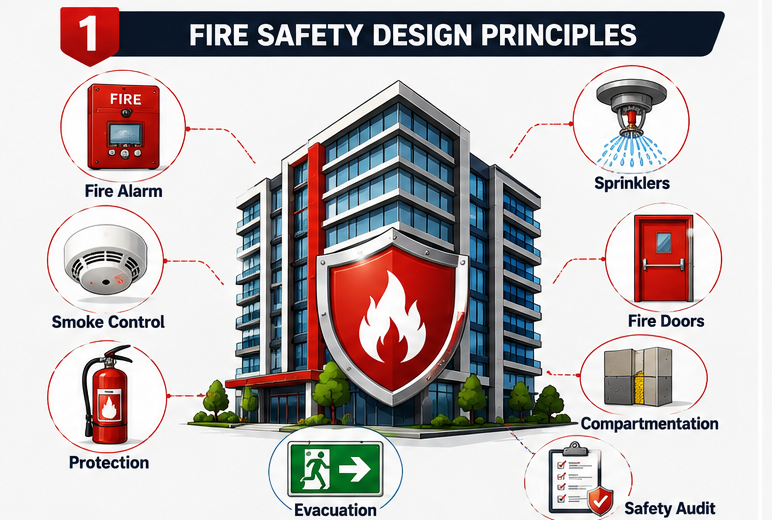
Fire safety design is one of the most essential components of modern building construction, risk management, and occupant protection. In today’s construction and property management industries, buildings are becoming larger, more complex, and more technologically advanced. As a result, fire safety design now plays a critical role in ensuring that buildings remain safe, legally compliant, and capable of protecting people, property, and business operations during emergency situations.
Fire safety design involves the planning, installation, and management of systems and structural measures that help prevent fires, reduce the spread of smoke and flames, support safe evacuation, and minimise damage during fire incidents. Effective fire safety design combines engineering principles, building regulations, emergency planning strategies, and modern fire protection technologies to create safer built environments.
The main purpose of fire safety design is not only to respond to fires but also to reduce the likelihood of fire incidents occurring in the first place. A well-designed fire safety system can provide occupants with valuable time to evacuate safely, assist emergency responders during rescue operations, and protect the structural integrity of buildings.
Modern fire safety design is especially important in:
- High-rise residential buildings
- Commercial offices
- Shopping centres
- Industrial facilities
- Warehouses
- Hospitals
- Educational institutions
- Hotels and hospitality environments
- Mixed-use developments
As UK fire safety legislation continues to become stricter, organisations must ensure that fire safety systems are designed, maintained, and managed according to current regulations and industry standards.
Importance of Fire Safety Design in Modern Buildings
Fire safety design is essential because modern buildings contain many potential fire hazards, including electrical systems, heating equipment, combustible materials, fuel sources, and complex architectural structures. Without effective fire safety planning, even a small fire can spread rapidly and place occupants, emergency responders, and property at serious risk.
Proper fire safety design helps organisations:
- Protect human life
- Support safe evacuation
- Reduce property damage
- Limit fire and smoke spread
- Improve emergency response
- Maintain legal compliance
- Protect business operations
- Reduce financial losses
Fire safety design also helps organisations meet their responsibilities under UK legislation such as:
- Regulatory Reform (Fire Safety) Order 2005
- Building Safety Act 2022
- Fire Safety Act 2021
- Building Regulations 2010
These laws place legal responsibilities on building owners, employers, landlords, and responsible persons to maintain safe premises and implement suitable fire protection measures.
Main Objectives of Fire Safety Design
The primary goal of fire safety design is to create buildings that can effectively protect occupants and reduce fire-related risks during emergencies.
Key objectives include:
- Preventing fire outbreaks
- Detecting fires quickly
- Controlling the spread of fire and smoke
- Protecting escape routes
- Supporting safe evacuation
- Protecting structural stability
- Assisting emergency services
- Reducing damage to property and infrastructure
Modern fire safety design focuses on both prevention and protection strategies to ensure that buildings remain resilient during fire incidents.
Understanding Fire Behaviour in Buildings
An important part of fire safety design involves understanding how fires behave within buildings. Fire development can be influenced by several factors, including:
- Building layout
- Ventilation systems
- Construction materials
- Occupancy levels
- Heat sources
- Fuel loads
- Smoke movement
Understanding fire behaviour helps professionals design effective fire protection systems that minimise risks and improve occupant safety.
For example:
- Smoke can spread faster than flames
- Poor ventilation may trap heat and toxic gases
- Combustible materials may accelerate fire spread
- Open-plan layouts may increase evacuation challenges
Fire safety professionals must evaluate these factors when designing building safety systems.
Active Fire Protection Systems
Active fire protection systems are designed to detect, control, suppress, or respond to fires automatically or manually during emergency situations. These systems play a critical role in reducing fire damage, protecting occupants, and supporting emergency response procedures.
Unlike passive fire protection measures, active systems require movement, activation, or operational response to function effectively.
Active fire protection systems are commonly installed in residential, commercial, industrial, and public sector buildings to improve fire detection and emergency preparedness.
Purpose of Active Fire Protection Systems
The main purpose of active fire protection systems is to:
- Detect fires quickly
- Alert building occupants
- Control fire spread
- Support evacuation procedures
- Suppress flames
- Assist emergency services
- Reduce property damage
These systems are essential for improving emergency response times and reducing the impact of fire incidents.
Fire Alarm Systems
Fire alarm systems are one of the most important active fire protection measures within modern buildings. These systems detect signs of fire and provide early warning alerts to occupants and emergency responders.
Fire alarms may operate through:
- Smoke detection
- Heat detection
- Manual activation points
- Integrated monitoring systems
Modern fire alarm systems can also connect to emergency communication systems, security networks, and evacuation control procedures.
Importance of Fire Alarms
Fire alarm systems help:
- Alert occupants quickly
- Reduce evacuation delays
- Improve emergency response
- Prevent panic during incidents
- Protect vulnerable occupants
Regular testing and maintenance are essential to ensure alarm systems remain fully operational.
Smoke Detectors
Smoke detectors identify the presence of smoke particles within buildings and provide early warning signs before fires become uncontrollable.
Different types of smoke detectors include:
- Optical smoke detectors
- Ionisation detectors
- Multi-sensor detectors
- Aspirating smoke detection systems
Smoke detection systems are especially important because smoke inhalation is one of the leading causes of fire-related injuries and fatalities.
Benefits of Smoke Detection Systems
Effective smoke detection systems help:
- Detect fires during early stages
- Reduce evacuation response times
- Improve occupant safety
- Support emergency coordination
- Minimise smoke-related injuries
Smoke detectors are commonly installed in escape routes, sleeping areas, plant rooms, and high-risk operational environments.
Sprinkler Systems
Sprinkler systems are automatic fire suppression systems designed to control or extinguish fires before they spread throughout buildings.
When heat activates sprinkler heads, water is released directly onto the fire source to reduce temperatures and suppress flames.
Sprinkler systems are widely used in:
- High-rise buildings
- Warehouses
- Shopping centres
- Hotels
- Hospitals
- Industrial facilities
Advantages of Sprinkler Systems
Sprinkler systems provide several important benefits, including:
- Rapid fire suppression
- Reduced fire spread
- Lower property damage
- Improved occupant survival rates
- Enhanced firefighter safety
Modern sprinkler systems are considered one of the most effective fire protection technologies available within building safety management.
Fire Extinguishers
Fire extinguishers provide immediate manual fire-fighting capability during small fire incidents before fires become uncontrollable.
Different extinguisher types are designed for specific fire classes, including:
- Water extinguishers
- Foam extinguishers
- CO2 extinguishers
- Dry powder extinguishers
- Wet chemical extinguishers
Selecting the correct extinguisher type is essential for safe and effective fire response.
Importance of Fire Extinguisher Training
Occupants and employees should receive proper training on:
- Fire extinguisher use
- Fire classification
- Emergency response procedures
- Personal safety during fires
Incorrect use of extinguishers may increase risks during emergencies.
Smoke Control Systems
Smoke control systems help manage the movement of smoke within buildings during fire incidents. Smoke is often more dangerous than flames because it reduces visibility, spreads toxic gases, and affects evacuation routes.
Smoke control systems may include:
- Smoke ventilation systems
- Mechanical extraction systems
- Pressurised staircases
- Smoke curtains
- Roof vents
These systems improve visibility and provide safer escape conditions for building occupants.
Importance of Smoke Management
Effective smoke management helps:
- Maintain escape routes
- Improve visibility
- Reduce smoke inhalation risks
- Assist emergency responders
- Protect critical building areas
Smoke control is particularly important within high-rise and complex buildings.
Passive Fire Protection
Passive fire protection focuses on containing fires and limiting the spread of smoke and flames throughout buildings. Unlike active systems, passive fire protection does not require activation or movement to operate.
Passive fire protection is built into the structure of buildings and helps maintain structural stability during fire incidents.
The purpose of passive protection systems is to:
- Slow fire spread
- Protect escape routes
- Maintain compartmentation
- Improve evacuation time
- Protect structural elements
Passive fire protection is a critical part of long-term building safety management.
Fire-Resistant Walls
Fire-resistant walls are specially designed barriers that can withstand fire exposure for specific time periods. These walls help contain fires within designated areas and prevent flames and smoke from spreading rapidly throughout buildings.
Fire-resistant walls are commonly used in:
- Escape routes
- Plant rooms
- Stairwells
- Residential buildings
- Commercial facilities
These walls support safe evacuation and protect structural integrity during emergencies.
Compartmentation
Compartmentation is one of the most important passive fire protection strategies used in modern building design. It involves dividing buildings into fire-resistant sections to control fire spread.
Compartmentation systems may include:
- Fire-resistant walls
- Fire doors
- Fire-resistant floors
- Smoke barriers
This design approach limits fire movement and allows occupants additional time to evacuate safely.
Importance of Compartmentation
Compartmentation helps:
- Protect escape routes
- Reduce smoke spread
- Limit property damage
- Improve firefighter access
- Maintain building stability
Failures in compartmentation can significantly increase fire risks within buildings.
Fire Doors
Fire doors are specially designed doors that resist fire and smoke for specified time periods. They play a major role in protecting escape routes and maintaining compartmentation systems.
Fire doors are commonly installed in:
- Corridors
- Staircases
- Plant rooms
- Apartment entrances
- High-risk operational areas
Proper installation and maintenance are essential to ensure fire doors operate effectively during emergencies.
Fire Stopping Systems
Fire stopping systems are used to seal openings and gaps within fire-resistant walls and floors. These systems prevent fire and smoke from spreading through service penetrations, cable routes, and pipe installations.
Fire stopping materials may include:
- Fire-resistant sealants
- Fire collars
- Fire wraps
- Intumescent materials
These systems help maintain the effectiveness of compartmentation structures.
Fire-Resistant Glazing
Fire-resistant glazing is specially manufactured glass designed to withstand high temperatures and limit fire spread during emergencies.
Fire-resistant glazing may be used in:
- Escape corridors
- Stairwells
- Commercial buildings
- Healthcare facilities
- Educational environments
This glazing helps improve visibility while maintaining fire protection performance.
Integration of Active and Passive Fire Protection
Modern fire safety design requires both active and passive fire protection systems to work together effectively. While active systems detect and suppress fires, passive systems contain fire spread and protect structural integrity.
Together, these systems help:
- Improve occupant safety
- Support evacuation procedures
- Reduce fire damage
- Maintain building resilience
- Enhance emergency response
Integrated fire safety design creates safer environments and improves compliance with modern building safety regulations.
Fire safety design principles are essential for protecting modern buildings, occupants, and business operations from fire-related risks. Effective fire safety design combines active fire protection systems, passive fire protection measures, emergency planning strategies, and compliance management to create safer and more resilient environments.
As buildings continue to become more advanced and complex, the importance of professional fire safety design will continue to grow across the construction, facilities management, and property sectors. Understanding fire safety principles, fire protection technologies, and building risk management strategies is now a critical responsibility for organisations operating within modern built environments.
Building Risk Management Responsibilities
Building risk management is one of the most important areas of modern fire safety and building compliance. It involves identifying, assessing, controlling, and continuously monitoring risks that may affect the safety, stability, and legal compliance of buildings. Effective building risk management helps organisations protect occupants, reduce operational hazards, maintain regulatory compliance, and prevent fire-related incidents within residential, commercial, industrial, and public sector environments.
Modern buildings contain a wide range of safety risks due to advanced construction systems, electrical infrastructure, heating equipment, combustible materials, complex occupancy arrangements, and changing operational activities. Without proper risk management procedures, these hazards can lead to serious accidents, property damage, legal action, business interruption, and loss of life.
Following major incidents such as the Grenfell Tower fire, building risk management has become a major focus within the UK construction, facilities management, and property sectors. New legislation and stricter safety regulations now require organisations to adopt more advanced approaches to fire safety management, compliance monitoring, and emergency preparedness.
Building risk management is not limited to responding to emergencies after they occur. Instead, it focuses on preventing incidents before they happen by implementing proactive safety systems, conducting regular inspections, reviewing operational procedures, and maintaining effective fire protection measures.
Importance of Building Risk Management
Effective building risk management helps organisations maintain safe environments while protecting employees, residents, contractors, visitors, and emergency responders. It also ensures that buildings remain compliant with legal requirements and industry standards.
Proper building risk management helps:
- Reduce fire-related risks
- Improve occupant safety
- Prevent property damage
- Maintain business continuity
- Support emergency preparedness
- Improve operational efficiency
- Protect organisational reputation
- Ensure legal compliance
As buildings become more complex, the responsibilities associated with building safety management continue to increase across all industries.
Identifying Building Hazards
One of the main responsibilities within building risk management is identifying hazards that may create fire risks or compromise occupant safety.
Building hazards may include:
- Faulty electrical systems
- Combustible materials
- Poor housekeeping practices
- Blocked escape routes
- Inadequate fire protection systems
- Unsafe storage arrangements
- Equipment overheating
- Gas leaks
- Structural weaknesses
Hazard identification allows organisations to recognise potential risks before incidents occur and implement suitable control measures to reduce dangers.
Controlling Building Risks
Once hazards have been identified, organisations must implement effective control measures to minimise risks and improve safety performance.
Risk control measures may include:
- Installing fire protection systems
- Improving building maintenance
- Conducting safety inspections
- Implementing safe working procedures
- Training employees
- Improving emergency planning
- Monitoring contractor activities
- Maintaining compliance documentation
Risk control strategies help organisations reduce the likelihood of fire incidents while improving operational safety standards.
Monitoring and Reviewing Risks
Building risk management is an ongoing process that requires continuous monitoring and regular reviews. Risks within buildings can change over time due to renovations, occupancy changes, equipment upgrades, or operational activities.
Continuous monitoring helps organisations:
- Identify new hazards
- Review existing safety controls
- Improve compliance systems
- Maintain fire protection measures
- Monitor contractor activities
- Evaluate emergency procedures
Regular reviews ensure that fire safety systems remain effective and aligned with current legislation and operational requirements.
Conducting Fire Risk Assessments
Fire risk assessment is one of the most important responsibilities within building risk management. It involves identifying fire hazards, evaluating potential risks, and implementing appropriate measures to protect occupants and property.
Fire risk assessments are legally required under UK fire safety legislation and must be carried out by competent individuals.
Purpose of Fire Risk Assessments
The purpose of a fire risk assessment is to:
- Identify ignition sources
- Evaluate combustible materials
- Review evacuation procedures
- Assess vulnerable occupants
- Monitor fire protection systems
- Recommend safety improvements
Fire risk assessments help organisations understand how fires may start, spread, and affect building occupants during emergencies.
Key Steps in Fire Risk Assessment
Fire risk assessment procedures commonly involve:
- Identifying fire hazards
- Identifying people at risk
- Evaluating existing control measures
- Recording findings
- Reviewing emergency procedures
- Updating safety documentation
These assessments should be reviewed regularly to ensure they remain accurate and effective.
Managing Compliance Records
Maintaining accurate compliance records is another important responsibility within building risk management. Compliance documentation helps organisations demonstrate that safety procedures, inspections, and maintenance activities are being completed according to legal requirements.
Compliance records may include:
- Fire risk assessment reports
- Fire alarm maintenance records
- Emergency lighting inspections
- Fire extinguisher servicing reports
- Staff training records
- Evacuation drill documentation
- Safety audit reports
Proper documentation supports legal compliance and provides evidence during inspections or investigations.
Importance of Compliance Documentation
Accurate records help organisations:
- Demonstrate regulatory compliance
- Monitor maintenance activities
- Identify recurring safety issues
- Support audits and inspections
- Improve accountability
- Reduce legal risks
Poor documentation may result in enforcement action or legal penalties during regulatory investigations.
Reviewing Building Safety Systems
Building safety systems must be regularly reviewed to ensure they remain operational, effective, and suitable for current building conditions.
Safety systems requiring regular review may include:
- Fire alarm systems
- Smoke detection systems
- Sprinkler systems
- Emergency lighting
- Smoke ventilation systems
- Fire doors
- Passive fire protection measures
Regular inspections and testing help identify faults before emergencies occur.
Importance of System Maintenance
Proper maintenance ensures that safety systems function correctly during emergencies.
Poorly maintained systems may result in:
- Delayed fire detection
- Failed evacuation procedures
- Increased fire spread
- Occupant injuries
- Regulatory non-compliance
Routine inspections and preventive maintenance are essential parts of effective building risk management.
Coordinating Emergency Planning
Emergency planning is a critical component of building safety management. Organisations must establish clear procedures for responding to fires and other emergency situations.
Emergency planning responsibilities may include:
- Developing evacuation procedures
- Establishing assembly points
- Coordinating emergency communication
- Conducting evacuation drills
- Supporting vulnerable occupants
- Liaising with emergency services
Well-planned emergency procedures help reduce panic and improve occupant safety during incidents.
Importance of Evacuation Planning
Evacuation planning ensures that occupants can leave buildings safely and efficiently during emergencies.
Effective evacuation procedures should consider:
- Building layout
- Occupancy levels
- Vulnerable individuals
- Escape route availability
- Smoke control systems
- Emergency communication methods
Regular evacuation drills help ensure occupants understand emergency procedures and evacuation routes.
Monitoring Contractor Safety
Contractors working within buildings may introduce additional fire risks through maintenance activities, electrical work, welding operations, or temporary equipment installations.
Building risk managers must monitor contractor safety to ensure all activities comply with fire safety procedures and operational controls.
Contractor-Related Fire Risks
Common contractor-related risks may include:
- Hot work activities
- Temporary electrical systems
- Combustible material storage
- Gas cylinder use
- Equipment overheating
- Obstructed escape routes
Monitoring contractor activities helps reduce the likelihood of workplace fires and safety incidents.
Safe Contractor Management
Effective contractor safety management may involve:
- Reviewing risk assessments
- Issuing permit-to-work systems
- Conducting site inspections
- Monitoring compliance procedures
- Providing safety inductions
- Reviewing emergency arrangements
These measures help maintain safe working conditions during maintenance and construction activities.
Ensuring Legal Compliance
Legal compliance is one of the most important responsibilities within building risk management. Organisations must ensure that buildings meet all applicable fire safety laws, building regulations, and industry standards.
Failure to comply with legal requirements may lead to:
- Enforcement notices
- Financial penalties
- Business closures
- Legal prosecution
- Insurance complications
- Reputational damage
Building risk managers must understand current legislation and ensure organisations meet their legal duties.
UK Fire Safety Laws and Regulations
Understanding UK fire safety legislation is essential for professionals working in fire safety, building management, construction, facilities management, and compliance operations. UK fire safety laws establish legal responsibilities for building owners, employers, landlords, and responsible persons to protect occupants and maintain safe premises.
Modern legislation has become increasingly strict due to rising concerns regarding building safety, high-rise residential risks, and fire prevention standards.
Regulatory Reform (Fire Safety) Order 2005
The Regulatory Reform (Fire Safety) Order 2005 is one of the most important fire safety laws in the UK. It places legal responsibilities on employers, landlords, building owners, and responsible persons to manage fire risks effectively within non-domestic premises.
Key Responsibilities Under the Order
Responsibilities may include:
- Conducting fire risk assessments
- Maintaining fire protection systems
- Providing staff training
- Developing emergency procedures
- Ensuring safe escape routes
- Monitoring fire safety arrangements
Failure to comply with the Order may result in legal enforcement action and financial penalties.
Fire Safety Act 2021
The Fire Safety Act 2021 was introduced to strengthen fire safety responsibilities for multi-occupied residential buildings.
The legislation focuses on:
- External wall systems
- Flat entrance doors
- Building structure safety
- Fire risk assessment requirements
This Act clarified the responsibilities of building owners and responsible persons following concerns raised after the Grenfell Tower tragedy.
Building Safety Act 2022
The Building Safety Act 2022 introduced major reforms to improve building safety standards throughout the UK construction and property sectors.
The Act focuses heavily on:
- High-rise residential safety
- Accountability within construction projects
- Building safety management
- Resident protection
- Regulatory oversight
The legislation introduced stricter responsibilities for developers, contractors, and building managers.
Importance of the Building Safety Act 2022
The Act aims to:
- Improve resident safety
- Strengthen compliance standards
- Increase accountability
- Improve construction quality
- Reduce building-related risks
This legislation has significantly changed how organisations manage building safety and compliance responsibilities.
Building Regulations 2010
Building Regulations 2010 establish minimum standards for construction safety, structural performance, energy efficiency, accessibility, and fire protection within UK building projects.
The regulations apply to:
- New construction projects
- Building alterations
- Refurbishments
- Extensions
- Certain maintenance activities
Compliance with Building Regulations is essential for ensuring safe and legally compliant buildings.
Approved Document B
Approved Document B provides practical guidance regarding fire safety requirements within building design and construction projects.
The guidance covers important areas such as:
- Fire resistance
- Means of escape
- Fire spread prevention
- Smoke control
- Access for firefighters
- Structural fire protection
Construction professionals, architects, engineers, and fire safety specialists frequently use Approved Document B when designing or reviewing building safety systems.
British Standards Relevant to Fire Safety
Professionals working within fire safety management should understand key British Standards that support fire prevention, building safety, and compliance management across the UK.
British Standards provide recognised guidance for designing, installing, maintaining, and monitoring fire protection systems and building safety measures.
BS 9999
BS 9999 provides guidance on fire safety in the design, management, and use of buildings.
The standard focuses on:
- Building design principles
- Occupant safety
- Evacuation planning
- Fire protection systems
- Risk-based fire safety approaches
BS 9999 is widely used within commercial, residential, and public sector building projects.
BS 9991
BS 9991 focuses specifically on fire safety within residential buildings.
The standard provides guidance regarding:
- Flats and apartments
- Residential towers
- Means of escape
- Fire compartmentation
- Smoke control systems
This standard is particularly important within high-rise residential developments.
BS 5839
BS 5839 provides guidance for fire detection and fire alarm systems within buildings.
The standard covers:
- Fire alarm installation
- System maintenance
- Detector placement
- Alarm testing procedures
- Emergency communication systems
Compliance with BS 5839 helps ensure reliable fire detection and occupant warning systems.
PAS 9980
PAS 9980 provides guidance for assessing fire risks associated with external wall systems and cladding within multi-storey residential buildings.
The standard became increasingly important following concerns related to cladding systems after the Grenfell Tower incident.
PAS 9980 supports:
- External wall risk assessments
- Building safety evaluations
- Fire spread analysis
- Compliance management
Importance of British Standards
British Standards help organisations:
- Improve building safety
- Maintain compliance
- Reduce fire risks
- Support professional best practice
- Improve system reliability
- Protect occupants and property
Understanding these standards is essential for professionals responsible for fire safety design, building compliance, and risk management.
Building risk management involves a wide range of responsibilities focused on protecting occupants, reducing fire-related risks, maintaining legal compliance, and improving overall building safety performance. Professionals working within fire safety and building management must understand how to identify hazards, monitor safety systems, coordinate emergency procedures, and maintain compliance with UK legislation and British Standards.
As fire safety regulations continue to evolve across the UK, organisations increasingly require qualified professionals capable of managing complex building risks and implementing effective fire prevention strategies. Understanding fire safety laws, Approved Document B guidance, and key British Standards is now essential for maintaining safe, legally compliant, and operationally resilient buildings within modern built environments.ards support safe building design, evacuation planning, fire detection systems, and fire risk assessments.
Importance of Fire Safety After the Grenfell Tower fire
The Grenfell Tower tragedy became one of the most significant fire safety incidents in modern UK history and completely transformed the way building safety, fire prevention, and compliance management are viewed across the construction and property sectors. The incident highlighted serious weaknesses in fire safety systems, building management procedures, emergency response planning, and regulatory oversight within high-rise residential buildings.
Following the tragedy, governments, regulatory authorities, construction professionals, property managers, and safety organisations recognised the urgent need to improve fire safety standards, strengthen compliance procedures, and increase accountability across the built environment. The incident also created a major shift in public awareness regarding occupant safety, emergency preparedness, and the responsibilities of building owners and managers.
As a result, the UK introduced stricter fire safety legislation, more rigorous building safety regulations, and greater emphasis on fire risk assessment and building compliance management. Organisations now require highly qualified professionals capable of implementing effective fire prevention systems, managing complex building risks, and ensuring that buildings remain safe for residents, employees, contractors, and visitors.
The ProQual Level 6 Diploma in Advanced Fire Safety Design and Building Risk Management has become increasingly important because it prepares professionals to manage these modern fire safety challenges while supporting compliance with evolving UK regulations and industry standards.
How the Grenfell Tower Incident Changed UK Fire Safety
The Grenfell Tower fire exposed serious weaknesses within several areas of building safety management and fire protection practices. The tragedy demonstrated how failures in building design, construction materials, emergency planning, and compliance monitoring can lead to devastating consequences.
The incident forced organisations and regulatory bodies to re-evaluate:
- Fire safety legislation
- Building design standards
- Cladding systems
- Fire compartmentation
- Emergency evacuation procedures
- Fire risk assessments
- Compliance monitoring
- Resident safety protections
The event also increased demand for qualified fire safety professionals with advanced technical knowledge and risk management expertise.
Concerns Regarding Building Materials
One of the major concerns raised after the Grenfell Tower incident was the use of certain building materials that contributed to rapid fire spread. Modern construction projects often use lightweight, energy-efficient, and cost-effective materials, but some materials may behave dangerously during fire incidents if not properly tested or installed.
Fire safety professionals now place greater focus on:
- Material combustibility
- Smoke production
- Heat resistance
- Structural fire performance
- Fire spread behaviour
Understanding how construction materials react during fires has become a critical part of modern building risk management.
Importance of Material Testing
Building materials used within high-rise and residential developments must meet strict fire safety standards and performance requirements.
Fire safety professionals may review:
- Fire resistance ratings
- Combustibility classifications
- Smoke emission characteristics
- External wall system performance
- Insulation materials
These assessments help reduce the risk of rapid fire spread and improve occupant protection.
Cladding System Risks
Cladding systems became one of the most heavily scrutinised areas of building safety following the Grenfell Tower tragedy. External wall systems can significantly influence how quickly fire spreads across buildings.
Poorly designed or combustible cladding systems may:
- Accelerate fire spread
- Produce toxic smoke
- Compromise evacuation procedures
- Increase structural risks
As a result, fire safety professionals must now understand how cladding systems are assessed, monitored, and managed within modern buildings.
Modern Cladding Safety Requirements
Modern building safety management now involves:
- External wall risk assessments
- Cladding inspections
- Fire spread analysis
- Material compliance reviews
- PAS 9980 assessments
These processes help ensure that buildings meet updated fire safety standards and occupant protection requirements.
Fire Compartmentation Failures
Compartmentation is one of the most important passive fire protection strategies used within modern buildings. The Grenfell Tower incident highlighted how failures in compartmentation systems can allow smoke and flames to spread rapidly throughout buildings.
Compartmentation is designed to:
- Contain fires within specific areas
- Protect escape routes
- Slow fire spread
- Maintain structural safety
- Provide occupants with evacuation time
Fire safety professionals must ensure that compartmentation systems remain properly designed, installed, and maintained.
Examples of Compartmentation Systems
Compartmentation measures may include:
- Fire-resistant walls
- Fire doors
- Fire-resistant floors
- Smoke barriers
- Fire stopping systems
Failures in these systems can seriously compromise building safety during emergencies.
Emergency Evacuation Procedures
The tragedy also highlighted the importance of effective evacuation planning and emergency response procedures within high-rise residential buildings.
Poor evacuation procedures may result in:
- Delayed escape
- Occupant confusion
- Increased panic
- Smoke inhalation injuries
- Loss of life
Modern fire safety management now places much greater emphasis on emergency preparedness and evacuation strategy development.
Importance of Evacuation Planning
Effective evacuation procedures should include:
- Clearly marked escape routes
- Emergency communication systems
- Assembly points
- Support for vulnerable occupants
- Fire drills and training
- Smoke control systems
Fire safety professionals must ensure evacuation plans are suitable for building design, occupancy levels, and operational activities.
Compliance Failures and Regulatory Oversight
The Grenfell Tower incident exposed weaknesses in regulatory compliance, building inspections, and safety monitoring processes. This led to widespread reforms within UK building safety legislation and greater accountability for developers, contractors, landlords, and responsible persons.
Following the incident, the UK introduced stronger regulations such as:
- Building Safety Act 2022
- Fire Safety Act 2021
These laws strengthened responsibilities for maintaining safe buildings and managing fire risks effectively.
Changes in Building Management Practices
Modern building management practices have changed significantly since the Grenfell Tower tragedy. Organisations now place greater emphasis on:
- Resident safety
- Compliance monitoring
- Fire risk assessments
- Building inspections
- Safety record management
- Emergency planning
- Fire protection system maintenance
Building managers are now expected to demonstrate higher levels of competence, accountability, and safety awareness.
Increased Demand for Fire Safety Professionals
The changes introduced after Grenfell created a major demand for skilled fire safety professionals capable of managing modern building risks and compliance responsibilities.
Professionals are now needed across industries such as:
- Construction
- Facilities management
- Property management
- Healthcare
- Manufacturing
- Hospitality
- Public sector services
This increased demand has made advanced fire safety qualifications highly valuable for career progression and professional development.
Skills and Knowledge You Will Gain
The ProQual Level 6 Diploma in Advanced Fire Safety Design and Building Risk Management develops a combination of technical, operational, and management skills required for modern fire safety and compliance roles.
The qualification prepares learners to manage fire risks, evaluate safety systems, maintain legal compliance, and improve overall building safety performance.
Technical Skills
Technical skills are essential for professionals responsible for managing fire prevention systems, conducting risk assessments, and ensuring building safety compliance.
Fire Risk Assessment Skills
Learners develop the ability to:
- Identify fire hazards
- Evaluate risks
- Assess occupant vulnerability
- Review escape routes
- Recommend control measures
- Prepare professional reports
These skills are essential for maintaining safe and legally compliant buildings.
Fire Safety Auditing
The course develops auditing skills used to review fire safety systems and compliance procedures within organisations.
Learners understand how to:
- Conduct safety inspections
- Review compliance documentation
- Monitor maintenance records
- Identify operational weaknesses
- Recommend improvements
Fire safety auditing supports continuous improvement and regulatory compliance.
Building Safety Analysis
Learners gain knowledge of how to analyse building layouts, operational systems, occupancy arrangements, and construction features to identify potential fire safety risks.
This includes understanding:
- High-rise building risks
- Smoke movement
- Fire spread behaviour
- Structural fire protection
- Evacuation challenges
These analytical skills help professionals improve building safety strategies.
Fire Protection System Evaluation
The qualification helps learners understand how active and passive fire protection systems operate and how their effectiveness should be evaluated.
Learners review systems such as:
- Fire alarms
- Sprinkler systems
- Smoke control systems
- Fire doors
- Compartmentation structures
This knowledge supports effective fire prevention and emergency response planning.
Compliance Monitoring
Compliance monitoring skills help professionals ensure organisations follow legal requirements and industry standards.
Learners understand how to:
- Review regulatory compliance
- Maintain safety documentation
- Monitor inspection schedules
- Support legal obligations
- Identify compliance failures
These skills are essential for maintaining safe operational environments.
Management Skills
In addition to technical expertise, the qualification develops important leadership and management abilities required for senior fire safety positions.
Leadership Skills
Fire safety professionals often supervise teams, coordinate contractors, and manage emergency procedures. Strong leadership skills are essential for maintaining safety standards and improving organisational performance.
Learners develop the ability to:
- Lead safety initiatives
- Coordinate emergency response activities
- Support safety culture development
- Supervise operational teams
Communication Skills
Clear communication is extremely important within fire safety and building management roles.
Professionals regularly communicate with:
- Contractors
- Building owners
- Employees
- Emergency services
- Regulatory authorities
- Occupants
The course helps learners improve professional communication and reporting abilities.
Decision-Making Skills
Fire safety professionals often make important decisions regarding:
- Emergency response
- Risk control measures
- Building evacuations
- Safety system improvements
- Compliance actions
The qualification helps learners develop structured decision-making approaches for managing complex situations.
Incident Management
Incident management involves responding effectively to fire-related incidents and operational emergencies.
Learners understand how to:
- Investigate incidents
- Review emergency procedures
- Coordinate response activities
- Identify root causes
- Recommend corrective actions
These skills help organisations improve future safety performance.
Safety Planning Skills
Safety planning focuses on creating structured systems for maintaining long-term fire safety and operational compliance.
Learners develop knowledge in:
- Emergency planning
- Safety management systems
- Compliance procedures
- Evacuation strategy development
- Preventive maintenance planning
These skills help organisations reduce risks and improve resilience.
Benefits of This Qualification
The ProQual Level 6 Diploma offers a wide range of professional, technical, and career-related benefits for individuals working within fire safety, building compliance, and construction management sectors.
Career Advancement
The qualification supports progression into senior-level positions within fire safety and building risk management industries.
Professionals may progress into roles involving:
- Strategic fire safety management
- Compliance leadership
- Building safety coordination
- Emergency planning management
- Safety consultancy
Advanced qualifications improve career prospects and professional credibility.
Industry Recognition
The diploma is recognised across:
- Construction industries
- Facilities management sectors
- Health and safety professions
- Property management organisations
- Fire safety operations
Industry recognition increases employability and professional reputation.
Legal Compliance Knowledge
The qualification helps learners understand important UK legislation, including:
- Regulatory Reform (Fire Safety) Order 2005
- Fire Safety Act 2021
- Building Safety Act 2022
Understanding these laws is essential for modern building management and compliance operations.
Improved Safety Management
The course strengthens organisational safety performance by helping professionals implement:
- Better fire prevention systems
- Improved risk assessments
- Stronger compliance procedures
- More effective emergency planning
This supports safer workplaces and improved occupant protection.
Increased Employability
Due to changing regulations and increased building safety expectations, employers increasingly seek qualified fire safety professionals capable of managing complex risks and compliance responsibilities.
Career Opportunities
Completing this qualification can open doors to a wide range of career opportunities across the UK construction, property, facilities management, and safety sectors.
Potential Job Roles
Career opportunities may include:
- Fire Safety Manager
- Fire Risk Assessor
- Building Safety Manager
- Health and Safety Consultant
- Compliance Officer
- Fire Protection Specialist
- Facilities Manager
- Construction Safety Manager
These roles involve responsibilities related to building safety, fire prevention, emergency planning, and compliance management.
Salary Expectations in the UK
Salary levels vary depending on experience, qualifications, industry sector, and geographic location.
| Job Role | Average UK Salary |
|---|---|
| Fire Safety Officer | £35,000 – £50,000 |
| Fire Risk Assessor | £40,000 – £60,000 |
| Building Safety Manager | £50,000 – £75,000 |
| Health and Safety Consultant | £45,000 – £70,000 |
| Compliance Manager | £50,000+ |
Senior professionals with advanced qualifications and extensive experience may achieve significantly higher earnings.
How This Qualification Supports Building Compliance
This qualification helps organisations improve compliance with modern fire safety expectations by strengthening:
- Fire prevention systems
- Building safety strategies
- Risk assessment procedures
- Emergency response planning
- Regulatory compliance management
Professionals trained in advanced fire safety and building risk management can help organisations reduce operational risks, improve occupant safety, and maintain compliance with UK legislation.
Difference Between Fire Safety Management and Fire Risk Assessment
Although closely related, fire safety management and fire risk assessment involve different responsibilities within building safety operations.
| Fire Safety Management | Fire Risk Assessment |
|---|---|
| Focuses on overall safety systems | Focuses on identifying hazards |
| Strategic management approach | Inspection and evaluation process |
| Ongoing compliance monitoring | Periodic risk assessment |
| Covers emergency planning | Covers hazard identification |
| Includes policy implementation | Includes risk evaluation |
| Manages long-term safety systems | Reviews immediate fire risks |
Both areas are essential for maintaining safe and legally compliant buildings.
Online Learning and Flexibility
Many training providers offer flexible learning options suitable for working professionals who need to balance studies with employment and personal responsibilities.
Study Options
Flexible learning methods may include:
- Online learning
- Distance learning
- Blended learning
- Workplace assessment
These options help learners access professional education regardless of location or work schedules.
Benefits of Flexible Learning
Flexible learning allows learners to:
- Study at convenient times
- Continue full-time employment
- Access materials remotely
- Complete workplace-based assessments
- Balance personal responsibilities
This makes the qualification accessible to a wide range of professionals across the UK and internationally.
Why Choose This Qualification?
The ProQual Level 6 Diploma in Advanced Fire Safety Design and Building Risk Management is highly valuable because it combines advanced technical knowledge with practical workplace competence and modern compliance understanding.
Key Advantages of the Qualification
The course provides:
- Advanced fire safety expertise
- Practical workplace skills
- UK compliance knowledge
- Building safety management competence
- Career development opportunities
- Industry-recognised learning
The qualification supports long-term professional growth within one of the UK’s fastest-growing compliance and safety sectors.
Tips to Succeed in Fire Safety and Building Risk Management
Success within fire safety and building risk management requires continuous learning, practical experience, and strong professional awareness.
Stay Updated with Regulations
Fire safety legislation changes regularly, so professionals should monitor updates from:
- Health and Safety Executive
- Local fire authorities
- Industry guidance organisations
- Government safety departments
Keeping updated helps professionals maintain compliance and improve safety practices.
Develop Practical Experience
Hands-on workplace experience helps learners improve:
- Technical competence
- Risk assessment abilities
- Emergency planning skills
- Compliance management knowledge
Practical experience is extremely valuable within fire safety professions.
Improve Communication Skills
Fire safety professionals regularly communicate with:
- Contractors
- Building owners
- Emergency responders
- Employees
- Regulatory inspectors
Strong communication skills improve coordination, reporting, and emergency response effectiveness.
Understand Modern Building Risks
Modern buildings introduce new fire safety challenges that professionals must understand.
Important modern risks include:
- High-rise building safety
- Lithium-ion battery fires
- Modern construction materials
- Smart building technologies
- Electric vehicle charging systems
- Complex smoke control systems
Understanding these risks helps professionals manage future building safety challenges more effectively.
The ProQual Level 6 Diploma in Advanced Fire Safety Design and Building Risk Management provides learners with the advanced knowledge, technical expertise, and management skills required to manage modern fire safety and building compliance responsibilities effectively.
Following major regulatory changes after the Grenfell Tower tragedy, the demand for competent fire safety professionals continues to grow across construction, facilities management, property management, and health and safety sectors. This qualification supports career progression, improves employability, strengthens legal compliance knowledge, and helps professionals contribute to safer buildings and more resilient operational environments.
For individuals seeking long-term professional growth within the fire safety and building compliance industries, this qualification offers a strong foundation for leadership, technical competence, and ongoing career development within one of the UK’s most important safety sectors.
Conclusion
The ProQual Level 6 Diploma in Advanced Fire Safety Design and Building Risk Management is one of the most valuable professional qualifications for individuals who want to develop advanced expertise in fire safety, building compliance, emergency planning, and risk management within modern built environments. As construction methods, building technologies, and occupancy arrangements continue to evolve across the United Kingdom, the importance of qualified fire safety professionals has increased significantly. Organisations now require competent individuals who can manage complex fire risks, implement effective fire prevention strategies, and ensure compliance with strict UK fire safety legislation and building regulations.
Following major changes introduced after the Grenfell Tower fire, fire safety has become a major priority within residential, commercial, industrial, and public sector buildings. Modern regulations such as the Building Safety Act 2022 and the Fire Safety Act 2021 have created stronger responsibilities for building owners, construction professionals, facilities managers, and safety specialists. As a result, professionals with advanced knowledge of fire protection systems, building risk management, fire risk assessment, emergency evacuation procedures, and compliance monitoring are now in high demand throughout the UK construction and property industries.
This qualification provides learners with a strong combination of technical knowledge, practical workplace skills, and strategic management abilities required for senior-level fire safety and compliance roles. Throughout the course, learners develop expertise in areas such as active and passive fire protection systems, fire safety legislation, building safety analysis, fire prevention planning, safety auditing, and emergency response coordination. The qualification also strengthens important leadership, communication, and decision-making skills that are essential for managing modern fire safety responsibilities within complex operational environments.
Another major advantage of the ProQual Level 6 Diploma is its flexibility and industry relevance. Many training providers offer online, blended, and workplace-based learning options, allowing professionals to continue their education while maintaining employment and personal responsibilities. The practical and vocational nature of the qualification ensures that learners can apply their knowledge directly within real workplace environments, making the course highly beneficial for professionals working in construction, facilities management, health and safety, property management, engineering, and compliance operations.
The diploma also supports long-term career progression by improving employability and opening opportunities within a wide range of sectors. Professionals who complete this qualification may progress into senior roles such as Fire Safety Manager, Fire Risk Assessor, Building Safety Manager, Compliance Officer, Facilities Manager, Health and Safety Consultant, and Fire Protection Specialist. With growing regulatory expectations and increasing awareness of building safety risks, organisations are actively seeking qualified professionals who can help improve safety performance, reduce operational risks, and maintain compliance with modern legislation and British Standards.
In addition to career development benefits, this qualification plays an important role in improving public safety and protecting lives. Effective fire safety management helps reduce the likelihood of fire incidents, supports safe evacuation procedures, protects property and infrastructure, and improves organisational resilience during emergencies. Qualified professionals contribute directly to creating safer buildings and more secure working and living environments for occupants, employees, residents, visitors, and emergency responders.
As the fire safety and building compliance sectors continue to evolve, professionals must remain prepared to manage new and emerging risks associated with modern construction methods, energy-efficient materials, smart building technologies, lithium-ion battery systems, and high-rise developments. The ProQual Level 6 Diploma in Advanced Fire Safety Design and Building Risk Management provides a strong foundation for individuals who want to remain competitive, professionally competent, and fully prepared for the future demands of the fire safety industry.
For anyone seeking advanced knowledge, professional recognition, and long-term career growth within fire safety and building risk management, this qualification offers an excellent pathway into one of the UK’s most important and rapidly developing professional sector