
ProQual Level 5 Diploma in Fire Engineering Design: Complete Guide, Units, Career & Benefits (2026)
Why Fire Engineering Design Matters More Than Ever
In today’s rapidly evolving built environment, the risk of fire is not just a possibility—it is a serious challenge that can have catastrophic consequences. From residential buildings to commercial infrastructures, fire incidents continue to result in loss of life, severe property damage, and long-term economic disruption. As cities grow taller and buildings become more complex in design and materials, the need for advanced fire safety planning and engineering has never been more important.
This is where fire engineering design plays a vital role. It is not just about installing alarms or extinguishers—it is a science-driven approach that integrates safety into the very structure of a building. By combining engineering principles with fire safety strategies, professionals can predict fire behavior, control its spread, and design environments that protect both occupants and assets.
The ProQual Level 5 Diploma in Fire Engineering Design is a specialized qualification developed to meet this growing demand for skilled professionals. This course provides in-depth knowledge of fire safety systems, building design considerations, and risk management techniques. It prepares learners to design safer buildings, comply with international safety standards, and contribute effectively to fire prevention and protection strategies across various industries.
In this comprehensive guide, you will explore everything you need to know about the course—from its structure and units to career opportunities and salary expectations in 2026. More importantly, this blog introduces the concept of a Fire Safety Blueprint—a strategic framework that emphasizes prevention, preparedness, and protection. By the end of this guide, you will clearly understand how this qualification not only enhances your career but also empowers you to play a crucial role in building a safer and more resilient world.
What is ProQual Level 5 Diploma in Fire Engineering Design?
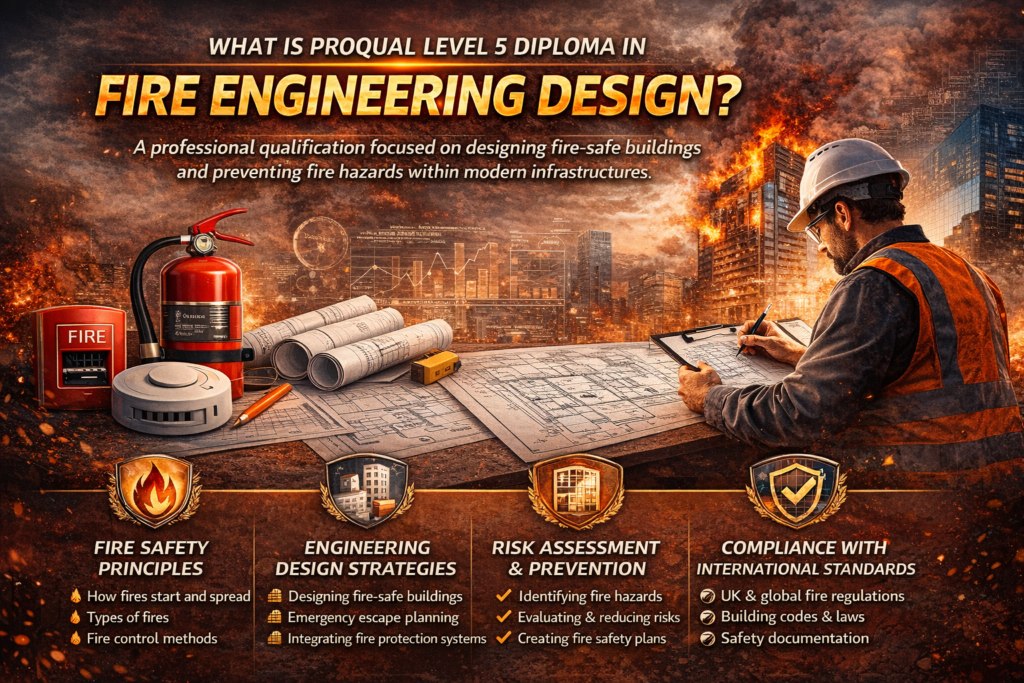
The ProQual Level 5 Diploma in Fire Engineering Design is a professional, internationally recognized qualification that focuses on the science and application of fire safety within buildings and infrastructure. It is designed to develop the knowledge and practical skills required to prevent fire incidents, control fire spread, and ensure safe evacuation in emergencies.
Unlike basic fire safety courses, this diploma goes deeper into the engineering and design aspects of fire protection, making it highly valuable for those who want to work in construction, safety engineering, consultancy, or building design.
Purpose of the Qualification
The main objective of this course is to prepare learners to:
- Understand how fire behaves in different environments
- Design buildings with integrated fire safety systems
- Identify and reduce fire risks effectively
- Ensure compliance with international fire safety regulations
In simple terms, this qualification helps you become someone who can design safer buildings and protect lives through intelligent planning and engineering.
Core Areas Covered in This Diploma
This course is structured around several key areas that form the foundation of fire engineering design. Let’s break them down in a simple and easy-to-understand way:
1. Fire Safety Principles
This is the starting point of fire engineering. You will learn:
- How fires start (ignition sources)
- How fire spreads (heat transfer, fuel, oxygen)
- Different types of fires and their behavior
- Methods to control and extinguish fires
Understanding these principles is essential because you cannot design fire safety systems without knowing how fire behaves.
2. Engineering Design Strategies
This is the most important part of the course.
You will learn how to:
- Design buildings with fire safety in mind
- Plan safe escape routes and emergency exits
- Integrate fire protection systems into building layouts
- Use materials that resist fire spread
This means you are not just reacting to fire—you are designing buildings to prevent disasters before they happen.
3. Risk Assessment and Prevention
Risk assessment is a critical skill in fire safety.
You will learn how to:
- Identify fire hazards in buildings
- Evaluate the level of risk
- Implement control measures to reduce risk
- Create fire safety plans
This helps in preventing fire incidents rather than just responding to them.
4. Compliance with International Standards
Fire safety is strictly regulated worldwide.
This course teaches you:
- UK and international fire safety regulations
- Building codes and compliance requirements
- Legal responsibilities of organizations
- Safety documentation and reporting
This ensures that your designs are not only safe but also legally approved and professionally acceptable.
Who is This Course For?
The ProQual Level 5 Diploma in Fire Engineering Design is ideal for individuals who want to build or advance their careers in fire safety and engineering.
Suitable for:
- Fire Safety Officers
- Health & Safety Professionals
- Engineers and Construction Professionals
- Building Designers and Architects
- Facility and Risk Managers
What Makes This Qualification Unique?
This diploma stands out because:
- It focuses on design, not just theory
- It provides practical, real-world knowledge
- It is internationally recognized
- It opens doors to high-demand careers
In short, this course transforms you from someone who understands fire safety into someone who can design and implement advanced fire protection systems.
This diploma teaches you how to design buildings that are safe from fire, how to reduce risks, and how to protect people and property using engineering knowledge.sionals aiming to specialize in fire protection engineering and building safety design.
Why Fire Engineering Design is Critical in Modern Buildings
In today’s world, buildings are no longer simple structures made of basic materials. Modern architecture includes high-rise towers, shopping malls, hospitals, industrial plants, and smart buildings—all of which are more complex and densely occupied than ever before. While these advancements bring convenience and innovation, they also introduce serious fire risks if not properly managed.
This is where fire engineering design becomes essential. It is not just about reacting to fire emergencies—it is about predicting, preventing, and controlling fire risks at the design stage of a building.
Let’s explore in detail why fire engineering design is so important in modern construction:
Here’s a quick summary of why fire engineering design is essential in modern buildings
| Key Area | Purpose | Key Methods / Features | Benefits |
|---|---|---|---|
| Protecting Human Lives | Ensure safe evacuation and reduce casualties | • Safe escape routes & emergency exits • Fire-resistant materials • Smoke control systems | Faster evacuation Reduced injuries & fatalities Improved safety during emergencies |
| Minimizing Fire Spread | Control and contain fire within limited areas | • Fire compartmentation • Fire-rated walls & doors • Smoke ventilation systems | Slows down fire spread Gives more time for evacuation Limits damage |
| Protecting Property & Infrastructure | Reduce structural damage and asset loss | • Fire-resistant construction • Sprinkler systems • Fire suppression systems | Prevents building collapse Protects valuable assets Reduces repair costs |
| Preventing Financial Losses | Minimize business disruption and economic damage | • Fire protection planning • Early detection systems • Risk mitigation strategies | Saves operational costs Reduces downtime Protects business continuity |
| Legal & Regulatory Compliance | Meet national and international fire safety laws | • Compliance with building codes • Safety audits & approvals • Documentation & reporting | Avoids legal penalties Ensures project approval Builds trust & credibility |
| Supporting Sustainable Design | Integrate safety with modern and eco-friendly buildings | • Fire-safe sustainable materials • Smart fire systems • Design integration | Maintains aesthetics Supports green buildings Enhances efficiency |
| Smart Building Safety | Use technology for advanced fire protection | • Automated fire alarms • Smart detection systems • Integrated monitoring | Faster response time Real-time monitoring Increased safety efficiency |
| Managing Urban Fire Risks | Address risks in high-density environments | • Risk assessments • Planning for complex layouts • Hazard control measures | Better risk control Safer urban infrastructure Reduced disaster impact |
1. Protecting Human Lives
The primary goal of fire engineering design is to save lives. In any fire incident, the biggest danger is not just the fire itself but smoke, toxic gases, and panic during evacuation.
How Fire Engineering Design Protects Lives:
Safe Evacuation Routes
- Buildings are designed with clear, accessible escape routes
- Emergency exits are strategically placed for quick evacuation
- Staircases and corridors are designed to handle large crowds
This ensures that people can leave the building quickly and safely during an emergency.
Minimizing Fire Spread
- Fire-resistant materials are used in walls, doors, and ceilings
- Buildings are divided into compartments to contain fire
- Smoke control systems are installed
This helps to slow down the fire, giving occupants more time to escape and reducing casualties.
Smoke Management Systems
- Smoke is often more dangerous than flames
- Ventilation systems are designed to control smoke movement
This improves visibility and reduces the risk of suffocation.
2. Protecting Property and Infrastructure
Fires can cause massive damage to buildings, equipment, and valuable assets. Without proper fire engineering design, even a small fire can turn into a major disaster.
How It Protects Property:
Reducing Structural Damage
- Fire-resistant construction materials maintain building stability
- Structural elements are designed to withstand high temperatures
This prevents building collapse during a fire.
Limiting Fire Damage
- Fire suppression systems (sprinklers, extinguishers) are integrated
- Fire compartments stop fire from spreading across the building
This ensures that damage is contained to a smaller area.
Preventing Financial Losses
- Businesses can avoid major repair costs
- Reduces downtime and operational disruption
Fire engineering design helps organizations save millions in potential losses.
3. Ensuring Legal and Regulatory Compliance
Fire safety is not optional—it is a legal requirement in most countries, including the UK and many international regions.
Importance of Compliance:
Meeting Building Regulations
- Buildings must follow strict fire safety codes
- Designs must be approved by regulatory authorities
Failure to comply can result in penalties, project delays, or shutdowns.
Protecting Organizations from Legal Risks
- Non-compliance can lead to lawsuits and liabilities
- Ensures safety responsibilities are fulfilled
Proper fire engineering design helps organizations avoid legal consequences.
Following International Standards
- Aligns with globally recognized safety frameworks
- Ensures buildings are safe for international use
This is especially important for multinational companies and large projects.
4. Supporting Sustainable and Modern Design
Modern buildings aim to be energy-efficient, environmentally friendly, and aesthetically advanced. However, these features must not compromise safety.
How Fire Engineering Supports Sustainability:
Integration with Modern Architecture
- Fire safety systems are designed to blend with building aesthetics
- Does not interfere with innovative designs
Safety and design go hand in hand.
Use of Advanced Materials
- Eco-friendly materials are selected with fire resistance in mind
- Sustainable construction methods are used
This ensures both environmental responsibility and safety.
Smart Building Technologies
- Integration of fire alarms with smart systems
- Automated fire detection and response
Enhances both efficiency and safety in modern buildings.
5. Addressing Increasing Fire Risks in Urban Environments
As cities become more crowded and buildings more complex, fire risks increase due to:
- Electrical systems and heavy machinery
- High population density
- Use of combustible materials
- Complex building layouts
Fire engineering design helps to manage these risks effectively by planning ahead and implementing preventive measures.
Fire engineering design ensures that buildings are safe before a fire happens, protected during a fire, and manageable after a fire.
It focuses on:
- Saving lives
- Protecting property
- Following laws
- Supporting modern construction
Fire engineering design is no longer optional—it is a critical requirement in modern construction and infrastructure development. With increasing risks and stricter regulations, professionals with expertise in fire engineering are in high demand globally.
By understanding and applying fire engineering principles, we can create buildings that are not only modern and efficient but also safe, compliant, and resilient against fire hazards.
Fire Safety Blueprint: Building a Safer Environment Through Prevention & Preparedness
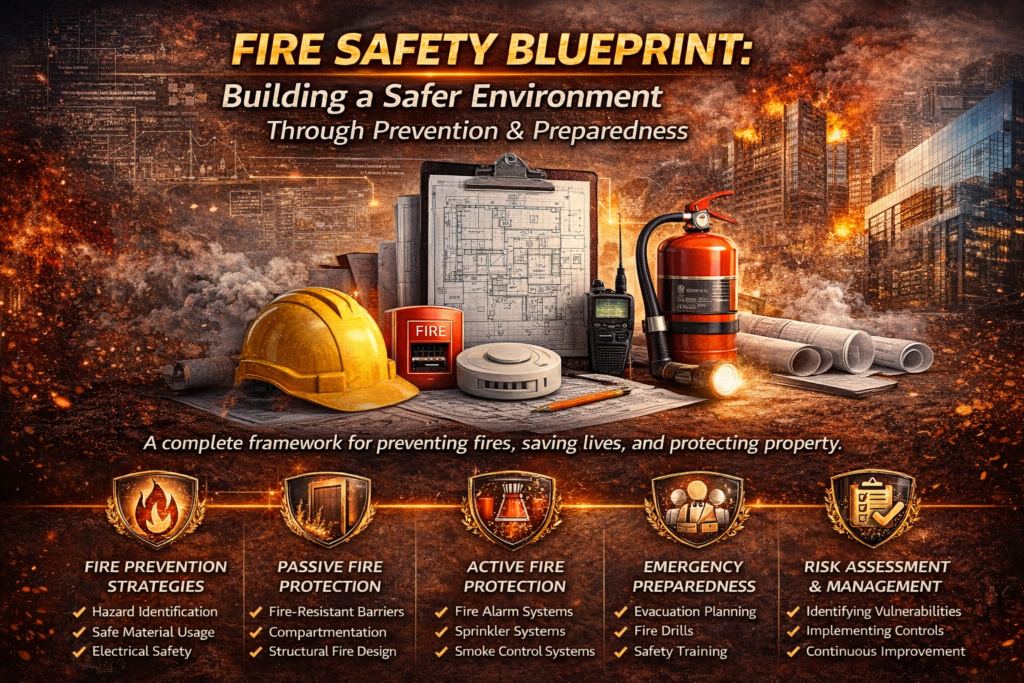
A Fire Safety Blueprint is a comprehensive and strategic approach used to design, manage, and maintain fire safety in buildings and workplaces. It is not limited to installing fire alarms or extinguishers—instead, it combines prevention, protection, and preparedness into a single, well-planned system.
Think of it as a complete safety plan that starts before a building is constructed and continues throughout its lifecycle. This approach ensures that fire risks are minimized, controlled, and effectively managed in case of an emergency.
What is a Fire Safety Blueprint?
In simple terms:
A Fire Safety Blueprint is a step-by-step framework that helps professionals:
- Prevent fires from starting
- Control fire spread if it occurs
- Ensure safe evacuation of occupants
- Protect property and infrastructure
It is widely used in modern construction, industrial facilities, commercial buildings, and residential complexes.
Key Elements of a Fire Safety Blueprint
To fully understand how this framework works, let’s break down its core components in detail:
1. Fire Prevention Strategies
Prevention is always the first and most important step. The goal is to stop fire incidents before they even occur.
Key Components:
Identifying Hazards
- Detect potential fire risks such as faulty wiring, flammable materials, and unsafe equipment
- Regular inspections to identify hidden dangers
Early identification helps in eliminating risks before they become serious threats.
Safe Material Usage
- Using fire-resistant and non-combustible materials in construction
- Avoiding highly flammable substances in building interiors
This reduces the chances of fire spreading rapidly.
Electrical Safety Management
- Proper installation of electrical systems
- Regular maintenance and inspection of wiring and equipment
- Avoiding overloading circuits
Many fires start due to electrical faults, so this step is critical for prevention.
2. Passive Fire Protection
Passive fire protection focuses on built-in safety features within the structure of a building. These systems do not require activation—they are always working in the background.
Key Components:
Fire-Resistant Walls and Doors
- Special materials that can withstand fire for a specific duration
- Prevent fire from spreading between rooms or sections
This gives occupants more time to evacuate safely.
Compartmentation
- Dividing a building into smaller sections (fire compartments)
- Containing fire within a limited area
This prevents the fire from spreading throughout the entire building.
Structural Fire Design
- Designing buildings to maintain stability during fire exposure
- Protecting load-bearing elements like beams and columns
This reduces the risk of structural collapse.
3. Active Fire Protection
Active fire protection systems are those that detect and respond to fire automatically or manually.
Key Components:
Fire Alarm Systems
- Early detection of smoke or heat
- Alerts occupants immediately
Early warning is crucial for quick evacuation and response.
Sprinkler Systems
- Automatically release water when fire is detected
- Control or extinguish fire at an early stage
This significantly reduces fire damage and spread.
Smoke Control Systems
- Ventilation systems to remove smoke
- Maintain visibility during evacuation
Helps people escape safely without inhaling toxic smoke.
4. Emergency Preparedness
Even with strong prevention and protection systems, emergencies can still happen. Preparedness ensures that people know exactly what to do during a fire.
Key Components:
Evacuation Planning
- Clearly marked escape routes
- Emergency exit signs and lighting
- Designated assembly points
Ensures a smooth and panic-free evacuation
Fire Drills
- Regular practice sessions for occupants
- Testing evacuation plans and response times
Builds confidence and reduces panic during real emergencies.
Safety Training
- Educating employees and occupants about fire safety
- Training on how to use fire extinguishers and alarms
Knowledge saves lives—trained individuals respond faster and more effectively.
5. Risk Assessment & Management
Risk assessment is the backbone of the Fire Safety Blueprint. It ensures continuous monitoring and improvement of safety measures.
Key Components:
Identifying Vulnerabilities
- Analyzing weak points in building design or operations
- Assessing fire load and potential hazards
Helps in understanding where the biggest risks exist.
Implementing Control Measures
- Applying safety improvements based on risk findings
- Updating fire safety systems regularly
This creates a proactive approach to fire safety management.
Why This Section Gives You a Competitive Advantage
Most competitor blogs only provide basic course information, but this section:
Adds real-world value
Shows expert-level understanding
Improves user engagement (time on page)
Targets high-ranking keywords like “fire safety strategy” and “fire protection systems”
This is exactly what helps your blog rank higher on Google.
Course Units and Structure
The ProQual Level 5 Diploma in Fire Engineering Design is carefully structured to provide both theoretical knowledge and practical skills required in the fire safety industry.
Each unit is designed to build your understanding step by step, making it easier to apply knowledge in real-world situations.
| Unit | Focus Area | What You Will Learn | Key Outcome |
|---|---|---|---|
| Fire Engineering Principles | Fire science fundamentals | • How fire starts and spreads • Heat transfer (conduction, convection, radiation) • Fire growth stages | Builds strong foundation of fire behavior understanding |
| Fire Risk Assessment | Risk identification & prevention | • Hazard identification techniques • Risk evaluation methods • Fire safety planning | Helps prevent fire incidents before they occur |
| Building Design and Fire Safety | Safe building design | • Designing fire-safe structures • Planning escape routes • Integrating fire systems into design | Enables designing safer buildings from the start |
| Fire Protection Systems | Fire control systems | • Fire alarms & detection systems • Sprinklers & suppression systems • Fire-resistant materials | Teaches how to control and manage fires effectively |
| Human Behaviour in Fire Situations | Human response in emergencies | • Panic behavior & crowd movement • Evacuation challenges • Decision-making under stress | Improves evacuation planning and safety design |
| Fire Safety Legislation | Laws & compliance | • UK & international fire laws • Building regulations • Legal responsibilities | Ensures designs are compliant and legally approved |
1. Fire Engineering Principles
This unit covers the fundamentals of fire science and behavior.
What You Will Learn:
- How fire starts and spreads
- Heat transfer methods (conduction, convection, radiation)
- Fire dynamics and growth stages
This forms the foundation of all fire engineering knowledge.
2. Fire Risk Assessment
This unit focuses on identifying and managing fire risks.
What You Will Learn:
- Hazard identification techniques
- Risk evaluation methods
- Fire safety planning
Helps you prevent fire incidents before they occur.
3. Building Design and Fire Safety
This is one of the most important units.
What You Will Learn:
- Designing buildings with fire safety in mind
- Planning escape routes and exits
- Integrating fire safety systems into architecture
You learn how to design safer buildings from the start.
4. Fire Protection Systems
This unit covers both active and passive fire protection systems.
What You Will Learn:
- Fire alarms and detection systems
- Sprinklers and suppression systems
- Fire-resistant construction materials
Ensures you understand how to control and manage fires effectively.
5. Human Behaviour in Fire Situations
Understanding how people react during fire is crucial.
What You Will Learn:
- Panic behavior and crowd movement
- Evacuation challenges
- Decision-making during emergencies
Helps in designing systems that support safe evacuation.
6. Fire Safety Legislation
This unit focuses on legal and regulatory requirements.
What You Will Learn:
- UK and international fire safety laws
- Building regulations and compliance
- Legal responsibilities of organizations
Ensures your designs are safe, legal, and approved.
The course teaches you:
- How fire works
- How to prevent it
- How to design safe buildings
- How to protect people and property
The combination of a Fire Safety Blueprint and structured course units makes this qualification highly valuable. It not only provides technical knowledge but also prepares you to handle real-world fire safety challenges with confidence.eal-world application and practical knowledge.
Entry Requirements for ProQual Level 5 Diploma in Fire Engineering Design
Before enrolling in the ProQual Level 5 Diploma in Fire Engineering Design, it’s important to understand the eligibility criteria. This qualification is designed for individuals who already have a basic foundation in safety, engineering, or construction-related fields, but it is also flexible enough for motivated learners who want to advance their careers.
Let’s break down the entry requirements in a clear and simple way:
| Category | Requirement / Detail | Description | Key Benefit |
|---|---|---|---|
| Educational Qualification | Level 3 or Level 4 (recommended) | • Fire Safety • Health & Safety • Engineering • Construction or related fields | Builds strong foundation for advanced learning |
| Basic Fire Safety Knowledge | Fundamental understanding | • How fire starts & spreads • Awareness of hazards • Basic prevention methods | Helps in faster learning and better understanding |
| Work Experience (Preferred) | Relevant industry experience | • Fire Safety Officer roles • Construction / design experience • Health & Safety roles • Facility management | Connects theory with real-world application |
| Flexible Entry Routes | Alternative eligibility options | • Entry without formal qualification possible • Assessment via interview or prior learning | Makes course accessible to more learners |
| Course Duration | 6 – 12 Months | Depends on study mode, experience, and provider structure | Flexible timeline for different learners |
| Study Modes | Online / Classroom | • Online: Flexible & self-paced • Classroom: Structured & interactive | Allows balance between study and work |
| Assignments | Written assessments | Based on real-world scenarios to test knowledge | Enhances practical understanding |
| Practical Evaluation | Skill-based assessment | Case studies and workplace tasks | Ensures job-ready skills |
| Portfolio Submission | Evidence of learning | Collection of completed work and projects | Demonstrates professional competency |
| Examinations | No traditional exams | Focus on coursework instead of written exams | Reduces stress, promotes practical learning |
1. Relevant Educational Qualification
Most training providers recommend that candidates have:
- A Level 3 or Level 4 qualification in:
- Fire Safety
- Health & Safety
- Engineering
- Construction or related fields
This ensures that learners already understand basic concepts, making it easier to grasp advanced topics in fire engineering design.
2. Basic Understanding of Fire Safety
Even if you don’t have a formal qualification, having basic knowledge of fire safety principles is highly beneficial.
This may include:
- Understanding how fires start and spread
- Awareness of fire hazards
- Knowledge of basic fire prevention methods
This foundational knowledge helps you learn faster and apply concepts more effectively during the course.
3. Relevant Work Experience (Preferred but Not Mandatory)
Although not always compulsory, having experience in related fields is a strong advantage.
Examples of Relevant Experience:
- Working as a Fire Safety Officer
- Experience in construction or building design
- Health & Safety roles in organizations
- Facility or site management
Practical experience allows you to connect theory with real-world situations, making your learning more effective.
Important Note
Many institutes offer flexible entry routes, meaning:
- You may still enroll without formal qualifications if you have relevant experience or strong interest
- Some providers may assess your eligibility through interviews or prior learning
This makes the course accessible to a wider range of learners.
Course Duration & Assessment
Understanding how long the course takes and how you will be assessed is crucial for planning your studies.
Course Duration
The duration of the ProQual Level 5 Diploma in Fire Engineering Design typically ranges from:
6 to 12 Months
This depends on several factors:
- Your study mode (full-time or part-time)
- Your previous knowledge and experience
- The training provider’s structure
Flexible Learning Options
Most institutes offer:
Online Learning
- Study at your own pace
- Ideal for working professionals
Classroom-Based Learning
- Structured schedule
- Direct interaction with trainers
This flexibility allows you to balance studies with work or personal commitments.
Assessment Methods
Unlike traditional academic programs, this diploma focuses on practical and competency-based assessment.
1. Assignments
- Written tasks based on real-world scenarios
- Test your understanding of concepts
Helps you apply theoretical knowledge practically.
2. Practical Evaluations
- Assessment of your ability to implement fire safety strategies
- May include case studies or workplace-based tasks
Ensures you are job-ready and capable of handling real situations.
3. Portfolio Submission
- Collection of your work and evidence
- Demonstrates your skills and knowledge
Acts as proof of your professional competency.
No Traditional Exams
One of the biggest advantages of this course is:
No written exams in most cases
This reduces stress and focuses on practical learning rather than memorization.
Who Should Take This Course?
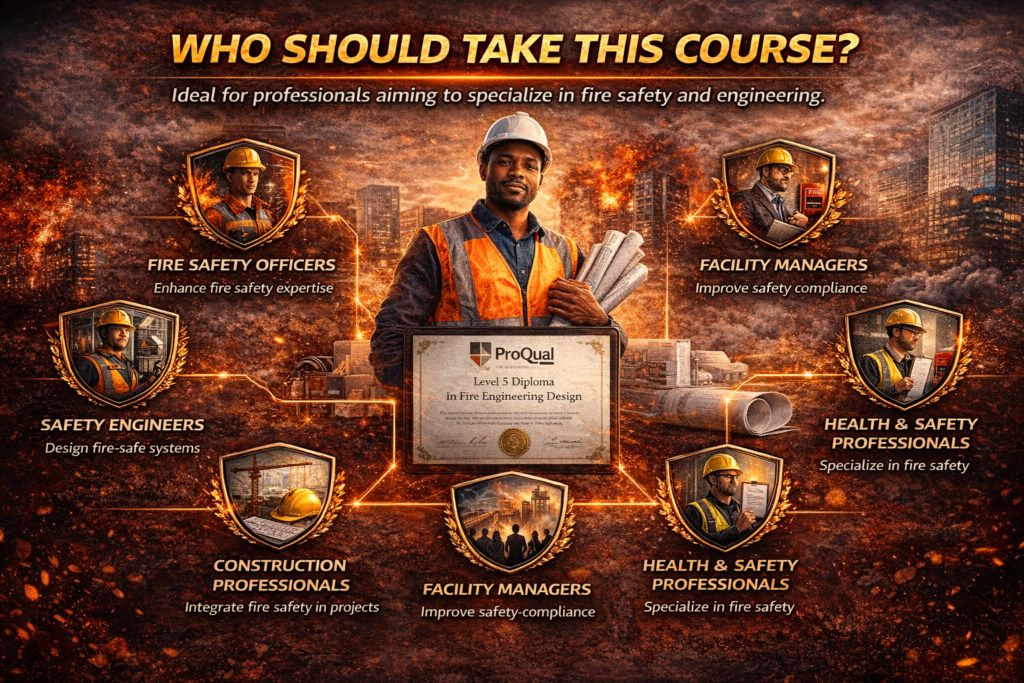
The ProQual Level 5 Diploma in Fire Engineering Design is designed for a wide range of professionals who want to specialize or advance in fire safety and engineering.
Let’s explore who can benefit the most:
1. Fire Safety Officers
- Responsible for implementing fire safety measures
- Conduct inspections and risk assessments
This course helps them upgrade their skills to a more advanced, design-focused level.
2. Safety Engineers
- Work on safety systems in industrial and construction environments
The diploma enhances their ability to design fire-safe systems and structures.
3. Construction Professionals
- Builders, contractors, and project managers
Helps them understand how to integrate fire safety into building design and construction.
4. Facility Managers
- Manage buildings and ensure safety compliance
This course enables them to implement effective fire safety systems and emergency plans.
5. Health & Safety Professionals
- Focus on workplace safety and compliance
The qualification allows them to specialize in fire safety engineering, increasing their career value.
6. Career Changers & Aspiring Professionals
- Individuals looking to enter the fire safety field
With the right dedication, this course can be a gateway to a high-demand career.
This course is suitable for:
- People already working in safety or construction
- Professionals who want career growth
- Beginners with interest in fire safety
The entry requirements are flexible yet structured, making this qualification accessible while maintaining professional standards. Combined with a practical assessment approach and flexible duration, the course is ideal for anyone looking to build a strong career in fire engineering design.
Career Opportunities After Completing ProQual Level 5 Diploma in Fire Engineering Design
Completing the ProQual Level 5 Diploma in Fire Engineering Design opens the door to a wide range of high-demand and well-respected career opportunities in the fire safety and engineering industry. As governments and organizations continue to enforce stricter fire safety regulations, the demand for qualified professionals is growing rapidly across the UK, Middle East, Asia, and other international markets.
This qualification not only enhances your technical knowledge but also positions you as a specialist capable of designing, managing, and implementing fire safety systems in modern buildings.
Top Job Roles You Can Pursue
After completing this diploma, you can explore various career paths depending on your experience, interests, and industry exposure.
| Job Role | Key Responsibilities | Industry Areas | Salary Range (2026) |
|---|---|---|---|
| Fire Safety Engineer | • Design fire detection & suppression systems • Plan evacuation routes • Analyze fire risks in buildings | Construction, Engineering Firms, Consultancy | £40,000 – £65,000+ $50,000 – $90,000 |
| Fire Risk Assessor | • Conduct risk assessments • Identify hazards • Ensure compliance • Prepare reports | Commercial Buildings, Government, Industry | £35,000 – £55,000 $40,000 – $70,000 |
| Fire Protection Designer | • Design sprinkler & alarm systems • Plan passive fire protection • Ensure system compliance | Construction, Design Consultancies | £38,000 – £60,000 $45,000 – $80,000 |
| Safety Consultant | • Advise on fire safety policies • Conduct audits • Train staff • Develop safety strategies | Consultancy Firms, Corporate Sector | £40,000 – £70,000+ $50,000 – $85,000 |
| Building Safety Officer | • Monitor safety systems • Conduct inspections • Ensure legal compliance • Manage emergencies | Hospitals, Malls, Residential & Commercial Buildings | £30,000 – £50,000 PKR 150,000 – 400,000/month |
1. Fire Safety Engineer
A Fire Safety Engineer is responsible for designing systems that prevent and control fire hazards in buildings.
Key Responsibilities:
- Designing fire detection and suppression systems
- Ensuring safe evacuation routes
- Analyzing fire risks in building designs
- Collaborating with architects and engineers
This is one of the most technical and high-paying roles in the field.
2. Fire Risk Assessor
A Fire Risk Assessor evaluates buildings to identify potential fire hazards and ensures compliance with safety regulations.
Key Responsibilities:
- Conducting detailed fire risk assessments
- Identifying hazards and vulnerabilities
- Recommending safety improvements
- Preparing compliance reports
This role is crucial for legal compliance and workplace safety.
3. Fire Protection Designer
A Fire Protection Designer focuses on integrating fire safety systems into building designs.
Key Responsibilities:
- Designing sprinkler and alarm systems
- Planning passive fire protection measures
- Working with construction teams
- Ensuring system efficiency and compliance
Ideal for professionals interested in design and engineering aspects.
4. Safety Consultant
A Safety Consultant provides expert advice to organizations on improving their fire safety measures.
Key Responsibilities:
- Advising companies on fire safety policies
- Conducting audits and inspections
- Developing safety strategies
- Training staff on fire safety procedures
This role offers flexibility and opportunities for independent consultancy.
5. Building Safety Officer
A Building Safety Officer ensures that buildings comply with fire safety standards and regulations.
Key Responsibilities:
- Monitoring safety systems
- Conducting regular inspections
- Ensuring compliance with laws
- Managing emergency procedures
This role is essential in commercial buildings, hospitals, and residential complexes.
Industries Where You Can Work
With this qualification, you can find opportunities in:
| Industry | Opportunities Available |
|---|---|
| Construction & Real Estate | Fire safety design, compliance, site safety |
| Oil & Gas | High-risk safety systems, hazard control |
| Manufacturing | Industrial fire safety management |
| Government & Regulatory Bodies | Inspections, policy enforcement |
| Consultancy Firms | Risk assessment & advisory services |
| Facility Management | Building safety & emergency planning |
- Construction and Real Estate
- Oil & Gas Industry
- Manufacturing and Industrial Facilities
- Government and Regulatory Bodies
- Safety Consultancy Firms
- Facility Management Companies
Fire safety is required everywhere, which means job opportunities are diverse and global.
Salary Expectations in 2026
One of the biggest advantages of this qualification is its strong earning potential. Salaries vary depending on experience, location, and job role.
United Kingdom
- Entry-Level: £35,000 per year
- Experienced Professionals: £50,000 – £65,000+
The UK market offers high demand and excellent career progression.
International (Middle East, Europe, etc.)
- $40,000 – $90,000 annually
Countries like UAE, Saudi Arabia, and Qatar offer tax-free salaries and additional benefits.
Pakistan
- PKR 150,000 – 250,000/month (mid-level)
- PKR 300,000 – 400,000+/month (experienced professionals)
With international certification, professionals can secure high-paying roles locally or abroad.
Factors That Influence Salary
Your earning potential depends on:
- Experience level
- Industry (Oil & Gas pays higher)
- Location (UK & Middle East offer better packages)
- Additional certifications and skills
The more experience and specialization you have, the higher your salary potential.
Career Growth & Future Scope
Fire engineering is a future-proof career with strong growth potential.
Why Demand is Increasing:
- Strict fire safety regulations worldwide
- Rapid urbanization and infrastructure development
- Increased focus on building safety after major fire incidents
This means long-term job security and career stability.
Is This Course Worth It in 2026?
Short Answer: Absolutely YES!
But let’s understand why in detail:
1. High Demand Globally
Fire safety professionals are needed in:
- Construction projects
- Industrial sectors
- Government organizations
Demand is continuously growing worldwide.
2. Strong Career Growth
- Opportunities to move into senior roles
- Potential to become a consultant or specialist
- Career progression into management positions
You are not limited to one role—growth opportunities are vast.
3. International Recognition
The qualification is recognized in:
- UK
- Middle East
- Asia and other regions
This allows you to work globally and explore international careers.
4. Practical, Job-Ready Skills
This course focuses on:
- Real-world applications
- Practical assessments
- Industry-relevant knowledge
You gain skills that are directly applicable in the workplace.
5. High Return on Investment (ROI)
- Short duration (6–12 months)
- High earning potential
- Long-term career benefits
It is a smart investment for your future.
This course helps you:
- Get better job opportunities
- Earn a higher salary
- Work internationally
- Build a stable career
The ProQual Level 5 Diploma in Fire Engineering Design is more than just a qualification—it is a career accelerator. With growing global demand, strong salaries, and diverse job roles, this diploma offers a powerful pathway into the fire safety and engineering industry.
Fire Engineering Design vs Fire Safety & Risk Management
When exploring career options in fire safety, many learners get confused between Fire Engineering Design and Fire Safety & Risk Management. While both fields aim to improve safety and prevent fire incidents, they differ significantly in terms of focus, approach, and career outcomes.
Understanding this difference is very important because it helps you choose the right career path based on your interests and goals.
What is Fire Engineering Design?
Fire Engineering Design is a technical and engineering-focused discipline that deals with designing buildings and systems to prevent and control fire.
It focuses on:
- How buildings are designed to resist fire
- How fire behaves in structures
- How to integrate fire protection systems into construction
It is more suitable for individuals interested in:
- Engineering
- Building design
- Technical problem-solving
What is Fire Safety & Risk Management?
Fire Safety & Risk Management is a management and compliance-based field that focuses on identifying risks and ensuring safety procedures are followed.
It focuses on:
- Risk assessments
- Safety audits
- Fire safety policies
- Workplace compliance
It is ideal for those interested in:
- Safety management
- Inspections and audits
- Policy implementation
Detailed Comparison
Let’s break down the key differences in a simple and structured way:
1. Focus
Fire Engineering Design
- Focuses on building design and fire safety integration
- Ensures structures are safe from fire at the design stage
Example: Designing fire-resistant walls or escape routes
Fire Safety & Risk Management
- Focuses on identifying and managing fire risks in existing environments
- Ensures safety procedures are followed
Example: Conducting fire risk assessments in offices
2. Approach
Fire Engineering Design
- Technical and engineering-based
- Uses scientific principles and calculations
- Involves planning and designing systems
Requires analytical and technical skills
Fire Safety & Risk Management
- Management-based approach
- Focuses on policies, procedures, and compliance
- Involves inspections and documentation
Requires organizational and communication skills
3. Career Path
Fire Engineering Design
Leads to roles such as:
- Fire Safety Engineer
- Fire Protection Designer
- Building Design Consultant
Focus is on design and technical roles
Fire Safety & Risk Management
Leads to roles such as:
- Fire Risk Assessor
- Safety Officer
- Compliance Manager
Focus is on compliance and management roles
4. Work Environment
Fire Engineering Design
- Construction sites
- Engineering firms
- Design consultancies
Fire Safety & Risk Management
- Offices and commercial buildings
- Industrial workplaces
- Government organizations
Fire Engineering Design = Designing safe buildings
Fire Safety & Risk Management = Managing fire risks in buildings
Which One Should You Choose?
Choose Fire Engineering Design if you:
Enjoy technical work and engineering
Want to work on building design
Prefer high-paying, specialized role
Choose Fire Safety & Risk Management if you:
Prefer management and compliance roles
Like inspections and safety planning
Want a broader safety career
Online vs Classroom Learning: Which Option is Better?
When enrolling in the ProQual Level 5 Diploma in Fire Engineering Design, you usually have two main study options: online learning and classroom-based learning.
Each mode has its own advantages, and the best choice depends on your schedule, learning style, and professional commitments.
Online Learning
Online learning has become increasingly popular, especially for working professionals.
Key Benefits:
Flexibility
- Study anytime, anywhere
- Learn at your own pace
Ideal for those who are working or have busy schedules.
Cost-Effective
- No travel or accommodation costs
- Often more affordable than classroom courses
Helps you save money while gaining a professional qualification.
Global Access
- Access to international training providers
- Learn from anywhere in the world
Perfect for students who want global exposure.
Self-Paced Learning
- Revisit lectures and materials anytime
- Learn according to your speed
Improves understanding and retention.
Classroom Learning
Classroom learning provides a more traditional and structured educational experience.
Key Benefits:
Direct Interaction
- Face-to-face communication with instructors
- Immediate feedback and guidance
Helps in better understanding of complex topics.
Practical Exposure
- Hands-on training sessions
- Real-life demonstrations
Useful for gaining practical skills and experience.
Networking Opportunities
- Connect with other students and professionals
- Build industry relationships
Helps in career growth and job opportunities.
Structured Learning Environment
- Fixed schedule and discipline
- Guided learning path
Ideal for those who prefer organized study routines.
Online vs Classroom: Quick Comparison
| Feature | Online Learning | Classroom Learning |
|---|---|---|
| Flexibility | High | Limited |
| Cost | Lower | Higher |
| Interaction | Limited | High |
| Practical Training | Moderate | High |
| Convenience | Very High | Moderate |
Which Option Should You Choose?
Choose Online Learning if you:
- Are working full-time
- Need flexibility
- Prefer self-paced study
Choose Classroom Learning if you:
- Want hands-on experience
- Prefer direct interaction
- Need structured learning
Both learning modes are effective—it depends on your personal needs and career goals. The good news is that the ProQual Level 5 Diploma in Fire Engineering Design is flexible enough to support both options.
Conclusion
The ProQual Level 5 Diploma in Fire Engineering Design is not just an academic qualification—it is a powerful career pathway that prepares individuals to play a critical role in modern safety and construction industries. In a world where buildings are becoming more complex and fire risks are increasing, the need for skilled professionals who can design, evaluate, and implement effective fire safety systems is more important than ever.
This diploma equips you with a combination of technical knowledge, practical skills, and industry-relevant expertise. From understanding fire behavior and risk assessment to designing fire protection systems and ensuring compliance with international standards, the course prepares you to handle real-world challenges with confidence. It enables you to move beyond basic safety practices and become a specialist who can actively contribute to safer building environments and improved emergency preparedness.
Moreover, the impact of this qualification goes beyond personal career growth. As a trained professional in fire engineering design, you become part of a field that directly contributes to saving lives, protecting property, and reducing economic losses caused by fire incidents. Whether you work in construction, consultancy, or safety management, your role will have a meaningful and lasting impact on society.
In conclusion, investing in the ProQual Level 5 Diploma in Fire Engineering Design is a step toward a secure, respected, and future-proof career. It opens doors to global opportunities, offers strong earning potential, and places you at the forefront of an industry dedicated to safety and innovation. With the right commitment and skills, you can become a key contributor to building a safer, more resilient world.