Fire Safety: Complete Guide to Prevention, Equipment & Risk Assessment
Fire is one of the most dangerous and unpredictable hazards that can occur in any environment, often starting without warning and spreading within moments. A minor spark, a faulty wire, or a small act of negligence can quickly escalate into a devastating incident, causing loss of life, severe injuries, and significant damage to property. This is why fire safety is not just a precautionary measure—it is a critical responsibility for individuals, organizations, and communities alike.
In today’s modern and highly industrialized world, the risk of fire has increased considerably. The widespread use of electrical equipment, complex machinery, flammable substances, and high-energy systems has made environments more vulnerable to fire hazards. From offices and factories to homes and healthcare facilities, no place is completely immune. Unfortunately, many fire incidents still occur due to a lack of awareness, inadequate safety practices, or failure to follow basic precautions.Fire safety is essential in every environment. To explore more resources and expert insights, visit our Fire safety is essential in every environment. To explore more resources and expert insights, visit our Fire Safety Category for comprehensive guides and updates.
for comprehensive guides and updates.
Effective fire safety goes beyond simply responding to emergencies. It involves a proactive approach that includes identifying potential hazards, implementing preventive measures, installing appropriate safety equipment, and ensuring that people are trained to act quickly and correctly in case of a fire. A well-prepared environment not only reduces the likelihood of fire incidents but also minimizes their impact when they do occur.
Moreover, fire safety plays a vital role in ensuring legal compliance and maintaining operational continuity, especially in workplaces. Organizations are required to follow strict safety regulations, conduct regular risk assessments, and provide proper training to employees. Failing to do so can result in serious legal consequences, financial losses, and reputational damage.
By developing a strong understanding of fire risks and adopting a culture of safety, individuals and organizations can significantly reduce the chances of fire-related incidents. Promoting awareness, conducting regular inspections, and investing in proper training are key steps toward creating a safer environment for everyone. Ultimately, fire safety is about being prepared, staying vigilant, and taking responsibility to protect lives and property at all times.
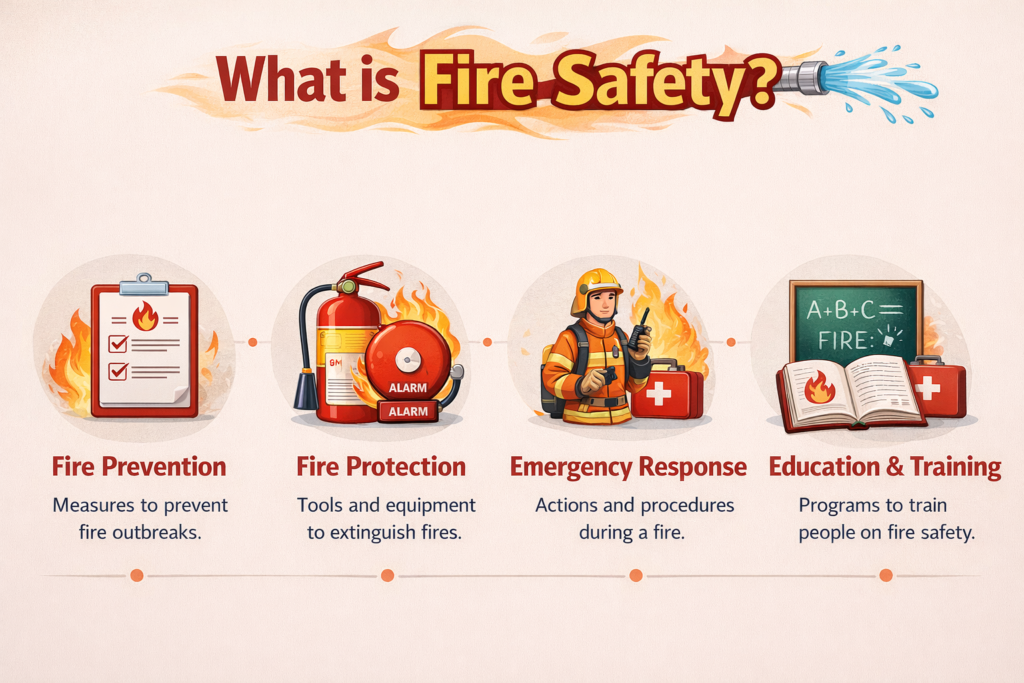
What is Fire Safety?
Fire safety is a comprehensive and systematic approach that involves the identification, prevention, and control of fire hazards to protect human life, property, and the environment. It is not limited to just installing fire extinguishers or alarms; rather, it is a combination of planning, awareness, technology, and training that works together to reduce the likelihood of fire incidents and ensure effective response when they occur.
In any environment—whether residential, commercial, or industrial—fire safety plays a critical role in maintaining a secure and controlled setting. It focuses on three key areas: preventing fires from starting, detecting and controlling fires quickly, and ensuring people can safely evacuate during an emergency. A strong fire safety system ensures that risks are minimized and that individuals are prepared to act confidently in critical situations.
Professional Definition
Fire safety can be defined as the organized implementation of preventive measures, protective systems, and emergency response procedures aimed at reducing fire risks and safeguarding lives, infrastructure, and assets from fire-related hazards.
Why Fire Safety is Important
Fire safety is a fundamental aspect of safety management and has far-reaching benefits across all sectors. Below is a detailed explanation of its importance:
| Aspect | Description |
|---|---|
| Definition | Fire safety is a systematic approach to prevent fires and protect life and property |
| Core Objective | To minimize fire risks and ensure safe emergency response |
| Key Components | Prevention, detection, protection, and evacuation |
| Human Life Protection | Ensures safe evacuation and reduces risk of injury or death |
| Property Protection | Minimizes damage to buildings, equipment, and assets |
| Legal Compliance | Helps organizations follow fire safety laws and regulations |
| Business Continuity | Reduces operational disruption and financial losses |
| Environmental Protection | Prevents pollution and environmental damage caused by fire incidents |
| Risk Assessment | Identifies hazards and evaluates fire risks |
| Safety Equipment | Includes extinguishers, alarms, and sprinkler systems |
| Training & Awareness | Prepares individuals to respond effectively in emergencies |
| Emergency Planning | Establishes evacuation procedures and response strategies |
Protection of Human Life
The most important objective of fire safety is to save lives. Fires can spread rapidly, producing heat, smoke, and toxic gases that can be fatal within minutes. By implementing proper safety measures such as alarms, evacuation plans, and training, individuals can escape safely and reduce the risk of injury or death.
Reduction of Property Damage
Fire incidents can destroy buildings, equipment, and valuable assets, leading to severe financial losses. Effective fire prevention strategies and early detection systems help minimize damage and control fires before they escalate.
Legal and Regulatory Compliance
Fire safety is governed by strict laws and regulations in most countries. Organizations are required to follow these standards to ensure a safe environment. Compliance not only avoids penalties but also demonstrates a commitment to safety and professionalism.
Business Continuity and Operational Stability
A fire can disrupt business operations, causing downtime, loss of productivity, and reputational damage. By implementing fire safety measures, organizations can reduce risks, avoid interruptions, and ensure smooth operations even after an incident.
Environmental Protection
Fires can release harmful chemicals and pollutants into the environment, affecting air quality and ecosystems. Proper fire safety practices help reduce environmental damage and support sustainability efforts.
Legal Responsibilities and Obligations
Fire safety is not just a recommendation—it is a legal and ethical responsibility for employers, property owners, and organizations. Authorities require strict adherence to fire safety standards to protect occupants and assets.
Key Responsibilities Explained:
Conducting Fire Risk Assessments
Organizations must regularly assess their environment to identify potential fire hazards such as faulty wiring, flammable materials, or unsafe practices. This helps in taking preventive action before a fire occurs.
Installing and Maintaining Fire Safety Equipment
Proper equipment such as fire extinguishers, alarm systems, and sprinklers must be installed and regularly maintained to ensure they function effectively during emergencies.
Providing Training and Awareness
Employees and occupants should be trained on fire safety procedures, including how to use equipment, respond to alarms, and evacuate safely. Training ensures quick and effective action during emergencies.
Maintaining Emergency Exits and Evacuation Routes
Clear, accessible, and well-marked emergency exits are essential for safe evacuation. Blocked or poorly maintained exits can lead to panic and increased risk during a fire.
Developing Emergency Response Plans
Organizations must have a structured plan that outlines the steps to be taken in case of a fire. This includes evacuation procedures, emergency contacts, and roles and responsibilities.
Consequences of Non-Compliance
Failure to follow fire safety regulations can lead to serious consequences, including:
- Heavy fines and legal penalties
- Business shutdown or suspension
- Loss of reputation and trust
- Increased risk of injuries and fatalities
Most importantly, neglecting fire safety puts human lives in danger, which can result in irreversible loss.
Common Causes of Fire
Understanding the root causes of fire is a fundamental step in developing effective prevention strategies. Most fire incidents do not occur randomly—they are often the result of identifiable hazards, unsafe practices, or system failures. By recognizing these causes, individuals and organizations can take proactive measures to eliminate risks and create safer environments.
Fire hazards can exist in any setting, from homes and offices to complex industrial facilities. A lack of awareness, poor maintenance, or negligence can quickly turn a minor issue into a major disaster. Therefore, identifying and addressing these risks is essential for maintaining a strong fire safety system.
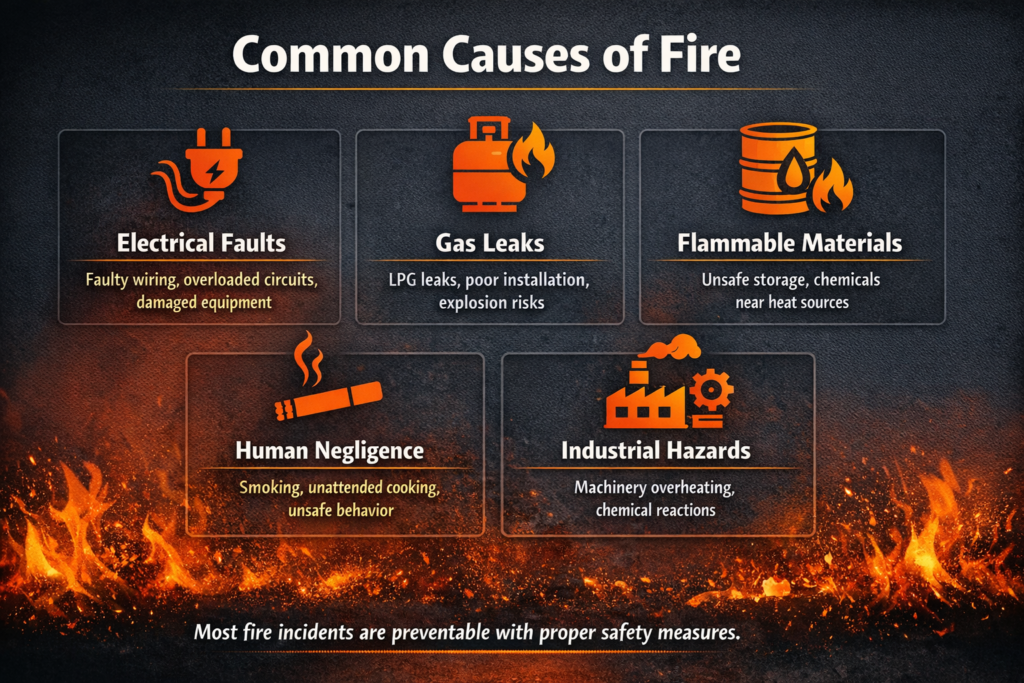
Major Fire Hazards
Electrical Faults and Short Circuits
Electrical issues are one of the leading causes of fire incidents worldwide. Faulty wiring, overloaded circuits, damaged cables, and poorly maintained electrical equipment can generate excessive heat, leading to sparks and ignition. Regular inspection and maintenance of electrical systems are crucial to prevent such hazards.
Gas Leaks and Explosions
Gas leaks, particularly from LPG or industrial gases, pose a significant fire risk. When gas accumulates in a confined space, even a small spark can trigger a powerful explosion. Proper installation, leak detection systems, and routine checks are essential to minimize this risk.
Improper Storage of Flammable Materials
Flammable substances such as fuels, chemicals, and combustible materials must be stored with extreme care. Inadequate storage conditions, lack of labeling, or exposure to heat sources can increase the likelihood of fire. Safe storage practices and adherence to safety guidelines are critical in preventing such incidents.
Human Negligence
Human error remains one of the most common and preventable causes of fire. Activities such as unattended cooking, careless smoking, misuse of electrical appliances, and ignoring safety protocols can easily lead to fire outbreaks. Promoting awareness and responsible behavior is key to reducing these risks.
Industrial and Chemical Hazards
Industrial environments often involve high temperatures, heavy machinery, and hazardous chemicals, making them more prone to fire incidents. Chemical reactions, equipment overheating, and lack of safety controls can all contribute to fire risks. Implementing strict safety procedures and regular monitoring is essential in such settings.
According to the National Safety Council, the majority of fire incidents are caused by preventable factors. This highlights the importance of awareness, proper training, and adherence to safety standards in reducing fire-related accidents.areness and training.
Understanding the common causes of fire is essential for preventing incidents and improving safety. Most fires occur due to identifiable hazards such as electrical faults, gas leaks, improper storage of flammable materials, human negligence, and industrial risks. The table below highlights key fire causes along with their risk levels and preventive measures.
| Cause of Fire | Description | Risk Level | Prevention Method |
|---|---|---|---|
| Electrical Faults & Short Circuits | Faulty wiring, overloaded circuits, damaged cables causing sparks | High | Regular inspection and proper maintenance |
| Gas Leaks & Explosions | Leakage of LPG or industrial gases leading to ignition | High | Install leak detectors and routine checks |
| Flammable Material Storage | Unsafe storage of fuels, chemicals, or combustible items | Medium | Proper storage and labeling |
| Human Negligence | Smoking, unattended cooking, ignoring safety procedures | High | Awareness and safety training |
| Industrial & Chemical Hazards | Machinery overheating, chemical reactions, unsafe processes | High | Safety protocols and monitoring |
Fire Prevention Tips
Preventing fire is always more effective, practical, and cost-efficient than responding to its consequences. Fire incidents can escalate within seconds, causing severe harm to people, property, and operations. However, most fire risks can be significantly reduced—or completely avoided—through proactive planning, continuous monitoring, and responsible behavior. Fire prevention is not a one-time action; it is an ongoing process that requires awareness, discipline, and commitment at every level, whether in homes, workplaces, or industrial environments.
A well-structured fire prevention approach focuses on identifying potential hazards, minimizing ignition sources, and ensuring that safety systems are always functional. By adopting preventive measures, organizations and individuals can not only reduce risks but also create a culture of safety and preparedness.
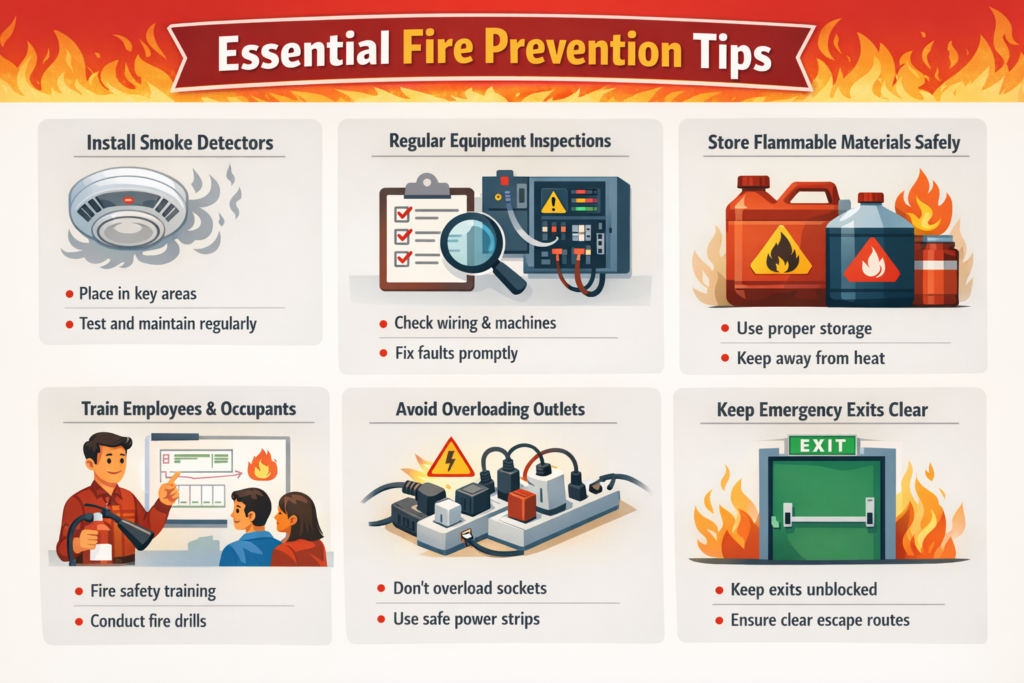
Essential Fire Prevention Tips
Install Smoke Detectors in Key Areas
Smoke detectors are one of the most important components of fire prevention and early warning systems. They are designed to detect smoke at an early stage, often before flames become visible, giving occupants valuable time to respond and evacuate safely.
Best Practices:
- Install smoke detectors in high-risk areas such as kitchens, hallways, offices, and near sleeping zones
- Ensure detectors are placed at appropriate heights and locations for maximum effectiveness
- Test smoke alarms regularly (at least once a month)
- Replace batteries and maintain devices to ensure continuous operation
- Use interconnected alarm systems in larger buildings for wider coverage
Conduct Regular Equipment Inspections
Faulty or poorly maintained equipment is a major contributor to fire hazards. Electrical systems, machinery, and appliances can develop faults over time, leading to overheating, sparks, or short circuits. Regular inspection and maintenance are essential to identify and eliminate these risks before they escalate.
Key Actions:
- Inspect electrical wiring, switches, and panels for signs of wear or damage
- Check appliances and machinery for overheating or unusual performance
- Replace damaged cables and faulty equipment immediately
- Schedule routine preventive maintenance and safety audits
- Ensure only qualified personnel handle electrical and technical repairs
Store Flammable Materials Safely
Flammable and combustible materials pose a significant fire risk if not handled and stored properly. These materials can ignite easily when exposed to heat, sparks, or open flames. Proper storage reduces the likelihood of accidental ignition and helps contain risks.
Safety Measures:
- Store fuels, chemicals, and combustible materials in designated, well-ventilated areas
- Keep flammable substances away from ignition sources such as electrical equipment or heat-producing devices
- Use approved containers and follow proper labeling standards
- Limit the quantity of flammable materials stored in one location
- Follow safety data guidelines and regulatory requirements for hazardous substances
Train Employees and Occupants
Training and awareness are essential elements of fire prevention. Individuals who are well-informed about fire hazards and safety procedures are more likely to act responsibly and prevent incidents. Training also ensures that people can respond effectively in case of an emergency.
Training Should Include:
- Identification of common fire hazards in the environment
- Safe handling and use of equipment and materials
- Proper use of fire extinguishers and safety devices
- Understanding alarm systems and emergency signals
- Evacuation procedures and assembly points
- Regular fire drills to reinforce preparedness and response time
Avoid Overloading Electrical Outlets
Overloading electrical outlets is a common yet dangerous practice that can lead to overheating and fire. When multiple high-power devices are connected to a single outlet, it can exceed the capacity of the circuit, increasing the risk of short circuits and sparks.
Preventive Steps:
- Avoid using multiple high-energy appliances on a single socket
- Use certified extension cords and avoid excessive use of adapters
- Ensure proper wiring and circuit distribution
- Monitor electrical load and upgrade systems if necessary
- Turn off and unplug unused devices to reduce load and heat buildup
Keep Emergency Exits Clear
Emergency exits are critical for safe evacuation during a fire incident. Blocked or inaccessible exits can cause panic, delays, and serious injuries. Maintaining clear evacuation routes ensures that occupants can leave the premises quickly and safely.
Important Points:
- Keep all exit routes free from obstructions such as furniture, equipment, or storage items
- Clearly mark exits with visible signage and ensure proper lighting
- Regularly inspect and maintain exit doors and pathways
- Ensure doors open easily and are not locked or restricted
- Conduct evacuation drills to familiarize occupants with exit routes
The table below summarizes key fire prevention measures and their practical applications for quick understanding.
| Prevention Measure | Description | Key Action |
|---|---|---|
| Smoke Detectors | Early warning system that detects smoke and alerts occupants | Install, test, and maintain regularly |
| Equipment Inspection | Identifies faults in electrical systems and machinery | Conduct routine checks and maintenance |
| Safe Storage of Materials | Prevents ignition of flammable substances | Store properly away from heat sources |
| Training & Awareness | Educates people on fire risks and response | Conduct training and fire drills |
| Electrical Safety | Reduces risk of overheating and short circuits | Avoid overloading and use proper wiring |
| Clear Emergency Exits | Ensures safe and quick evacuation | Keep exits accessible and well-marked |
Best Practice
Develop a fire safety culture within your organization by promoting awareness and conducting regular drills.
Fire Safety Equipment
Fire safety equipment forms the backbone of any effective fire protection system. These tools and systems are specifically designed to detect fires at an early stage, control or suppress them, and ensure safe evacuation of occupants. In both residential and commercial environments, having the right equipment in place can make the difference between a minor incident and a major disaster.
It is important to understand that fire safety equipment is not just about installation—it requires proper selection, correct placement, routine inspection, and user awareness. Each type of equipment serves a unique purpose, and when used together, they create a comprehensive safety system that minimizes risk and enhances emergency response.
Fire safety equipment plays a crucial role in protecting lives and property. To understand how these systems fit into a complete safety framework, read this detailed guide on fire safety essentials prevention protection and preparedness.
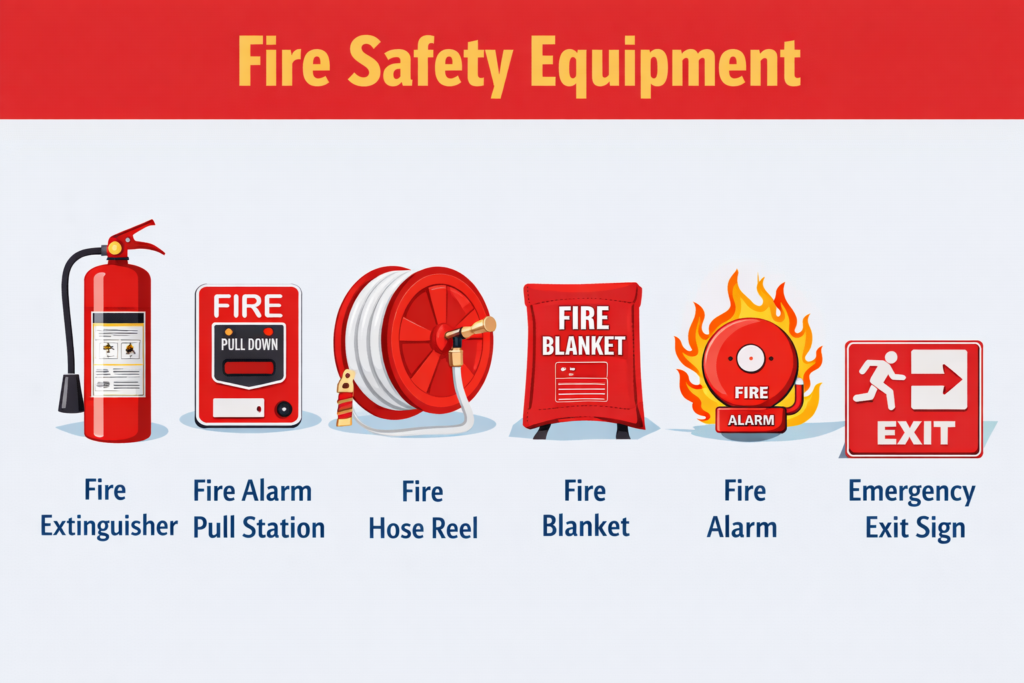
Essential Fire Safety Equipment
Fire Extinguishers
Fire extinguishers are one of the most commonly used and essential fire safety tools. They are designed to control or extinguish small fires in their initial stages before they spread and become uncontrollable.
Fire extinguishers come in different types, each suitable for specific classes of fire, such as electrical fires, flammable liquids, or ordinary combustibles. Choosing the correct type is critical for effective fire control.
Key Points:
- Must be placed in visible and easily accessible locations
- Different types include water, foam, CO₂, and dry powder extinguishers
- Require regular inspection, refilling, and servicing
- Users must be trained in proper usage techniques (e.g., PASS method: Pull, Aim, Squeeze, Sweep)
- Should be checked for pressure levels and expiry dates
Fire Alarm Systems
Fire alarm systems are essential for early detection and immediate warning. They help alert occupants as soon as smoke, heat, or fire is detected, allowing quick evacuation and emergency response.
These systems can range from simple smoke detectors in homes to complex, integrated alarm systems in commercial and industrial buildings.
Key Points:
- Include smoke detectors, heat sensors, manual call points, and alarm panels
- Provide audible and visual alerts to warn occupants
- Can be connected to emergency services in advanced systems
- Must be tested regularly to ensure reliability
- Require proper installation in strategic locations for maximum coverage
Sprinkler Systems
Sprinkler systems are automatic fire suppression systems that activate when a certain temperature is reached. They release water directly over the fire source, helping to control or extinguish it before it spreads.
These systems are widely used in offices, factories, warehouses, and public buildings due to their effectiveness.
Key Points:
- Activated by heat, not smoke
- Operate automatically without human intervention
- Highly effective in limiting fire spread and reducing damage
- Require a reliable water supply and proper pressure levels
- Need regular inspection to ensure pipes, valves, and nozzles are functioning correctly
Emergency Exit Signs
Emergency exit signs play a crucial role in guiding occupants to safety during a fire emergency. In situations where visibility may be reduced due to smoke or panic, clear signage ensures that people can quickly locate exits.
These signs are especially important in large buildings, workplaces, and public areas.
Key Points:
- Must be clearly visible, illuminated, and easy to understand
- Should be placed above doors and along evacuation routes
- Often include backup power systems to function during outages
- Must comply with safety standards and regulations
- Require regular checks to ensure proper lighting and positioning
Fire Blankets
Fire blankets are simple yet highly effective fire safety tools used to smother small fires. They work by cutting off the oxygen supply, which is essential for combustion.
They are particularly useful in kitchens, laboratories, and areas where small fires may occur.
Key Points:
- Must be maintained and replaced if damaged consider enrolling in our
Fire Safety Course . - To enhance your skills and career opportunities.
- Made from fire-resistant materials such as fiberglass
- Ideal for extinguishing small fires or wrapping around a person whose clothing has caught fire
- Easy to use and requires minimal training
- Should be stored in accessible and clearly marked locations
The table below provides a quick overview of essential fire safety equipment, their purpose, and maintenance requirements.
| Equipment Type | Purpose | Key Features | Maintenance Requirement |
|---|---|---|---|
| Fire Extinguishers | Used to control or extinguish small fires in early stages | Available in different types (CO₂, foam, powder) | Regular inspection, refilling, pressure check |
| Fire Alarm Systems | Detects smoke or heat and alerts occupants | Smoke detectors, heat sensors, alarm panels | Routine testing and system checks |
| Sprinkler Systems | Automatically suppresses fire using water | Heat-activated, automatic operation | Regular inspection of pipes and water supply |
| Emergency Exit Signs | Guides people to safe exits during emergencies | Illuminated, clearly visible signage | Check lighting and backup power systems |
| Fire Blankets | Smothers small fires by cutting off oxygen | Fire-resistant material, easy to use | Inspect condition and replace if damaged |
Fire risk assessment is a comprehensive and methodical process used to identify potential fire hazards, analyze the level of risk they pose, and implement appropriate measures to prevent or control fire incidents. It is a fundamental part of fire safety management and plays a crucial role in protecting lives, property, and business operations.
Rather than reacting to fire incidents, fire risk assessment focuses on a proactive approach—anticipating possible dangers before they occur and taking steps to eliminate or reduce them. This process is essential in all environments, including homes, offices, factories, hospitals, and public spaces, where even a small oversight can lead to serious consequences.
A well-executed fire risk assessment not only reduces the likelihood of fire but also ensures that people are prepared to respond effectively in case of an emergency. It supports legal compliance, improves workplace safety, and helps organizations maintain operational continuity.
Fire Risk Assessment
Fire risk assessment is a comprehensive and methodical process used to identify potential fire hazards, analyze the level of risk they pose, and implement appropriate measures to prevent or control fire incidents. It is a fundamental part of fire safety management and plays a crucial role in protecting lives, property, and business operations.
Rather than reacting to fire incidents, fire risk assessment focuses on a proactive approach—anticipating possible dangers before they occur and taking steps to eliminate or reduce them. This process is essential in all environments, including homes, offices, factories, hospitals, and public spaces, where even a small oversight can lead to serious consequences.
A well-executed fire risk assessment not only reduces the likelihood of fire but also ensures that people are prepared to respond effectively in case of an emergency. It supports legal compliance, improves workplace safety, and helps organizations maintain operational continuity.
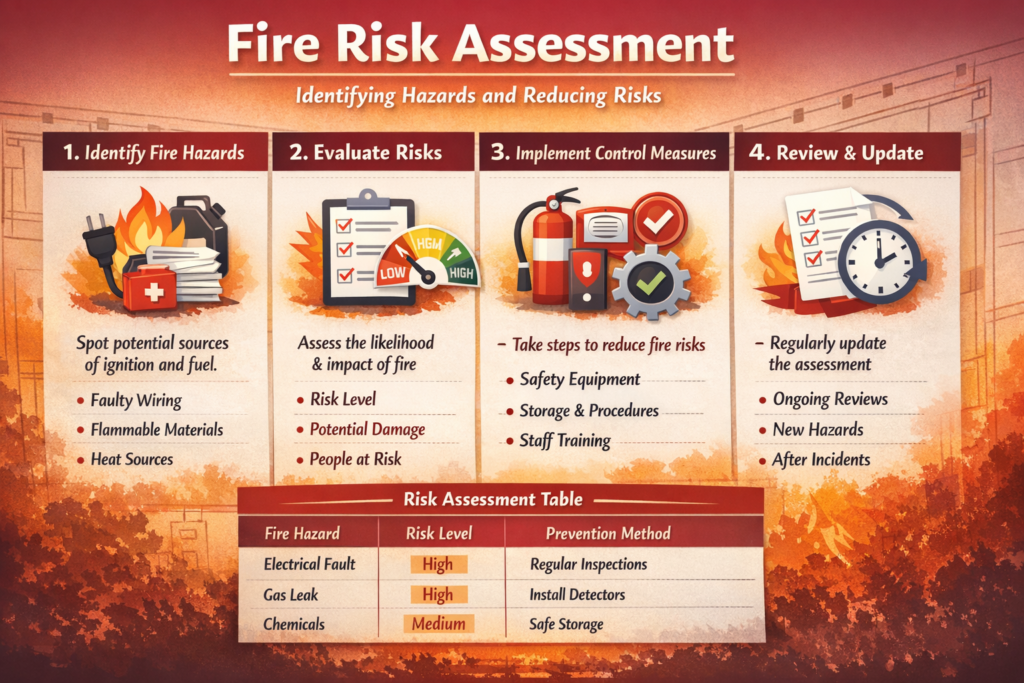
Key Steps in Fire Risk Assessment
Identify Fire Hazards
The first and most critical step is to identify all possible fire hazards within the environment. A fire typically requires three elements—heat (ignition source), fuel (flammable material), and oxygen. Recognizing these elements helps in understanding how a fire could start and spread.
Detailed Hazard Identification Includes:
- Sources of ignition: faulty wiring, electrical equipment, open flames, sparks, heating systems
- Sources of fuel: paper, wood, chemicals, gases, textiles, fuels
- Environmental factors: poor ventilation, cluttered spaces, improper storage
It is important to conduct a thorough inspection of the entire premises, including hidden areas, storage rooms, and high-risk zones. Identifying hazards early allows for timely preventive action.
Evaluate Risks
After identifying hazards, the next step is to evaluate the level of risk associated with each hazard. This involves analyzing both the likelihood of a fire occurring and the severity of its potential impact.
Detailed Risk Evaluation Factors:
- How likely is the hazard to cause a fire?
- What could be the extent of damage (minor, serious, catastrophic)?
- How many people could be affected?
- Are there vulnerable individuals (elderly, disabled, children)?
- What safety measures are already in place?
Risk evaluation often uses a risk matrix (low, medium, high) to prioritize actions. High-risk hazards require immediate attention, while medium and low risks can be managed with planned controls.
Implement Control Measures
Once risks are evaluated, the next step is to implement effective control measures to eliminate or reduce those risks. These measures focus on prevention, protection, and preparedness.
Detailed Control Measures Include:
Preventive Measures:
- Repair or replace faulty wiring and equipment
- Proper storage and handling of flammable materials
- Maintain safe housekeeping practices
Protective Measures:
- Install fire detection systems (smoke detectors, alarms)
- Use fire suppression systems (extinguishers, sprinklers)
- Ensure proper ventilation and fire-resistant materials
Organizational Measures:
- Develop fire safety policies and procedures
- Conduct employee training and awareness programs
- Establish clear emergency evacuation plans
Effective implementation of these measures significantly reduces fire risks and ensures a faster response during emergencies.
Review and Update the Assessment
Fire risk assessment is an ongoing and dynamic process. Environments change over time, and new risks may emerge, making it essential to review and update assessments regularly.
When to Review:
- Introduction of new machinery, equipment, or materials
- Changes in building layout or operations
- After fire incidents or near-miss events
- Periodic scheduled reviews (e.g., annually)
Regular reviews help ensure that all safety measures remain effective, up to date, and aligned with current regulations.
The following tables provide a structured overview of the fire risk assessment process and common hazards with their control measures.
| Step | Description | Key Activities | Outcome |
|---|---|---|---|
| Identify Hazards | Recognizing potential sources of fire such as ignition, fuel, and heat | Inspect wiring, equipment, flammable materials, and heat sources | Clear understanding of fire risks |
| Evaluate Risks | Assessing the likelihood and impact of each identified hazard | Analyze risk level (low, medium, high), number of people at risk | Prioritized list of risks |
| Implement Control Measures | Taking actions to eliminate or reduce fire risks | Install safety systems, repair faults, improve storage, provide training | Reduced risk and improved safety |
| Review & Update | Continuously monitoring and updating the assessment | Regular inspections, updates after changes or incidents | Ongoing safety improvement |
Risk Assessment Table
| Fire Hazard | Risk Level | Detailed Risk Description | Prevention Method |
|---|---|---|---|
| Electrical Fault | High | Faulty wiring or overloaded circuits causing sparks | Regular inspection, maintenance, upgrades |
| Gas Leak | High | Gas accumulation leading to explosion risk | Install detectors, routine leak checks |
| Chemicals | Medium | Flammable substances igniting under heat or poor storage | Safe storage, labeling, ventilation |
What to Do in Case of Fire
A fire emergency is one of the most critical situations where every second matters. Fires can spread rapidly, producing intense heat, thick smoke, and toxic gases that can endanger lives within minutes. In such scenarios, the difference between safety and disaster often depends on how quickly and correctly people respond.
It is important to understand that during a fire, panic is one of the biggest risks. Lack of awareness or improper actions—such as using elevators, ignoring alarms, or attempting to retrieve belongings—can lead to serious consequences. Therefore, having a clear understanding of emergency procedures, combined with regular training and preparedness, ensures that individuals can act confidently and responsibly.
Whether in a workplace, home, or public environment, following structured emergency steps helps to minimize injuries, prevent loss of life, and reduce property damage. A well-informed response not only protects you but also helps in guiding others to safety.For a structured and strategic approach, check out our comprehensive fire safety blueprint guide.
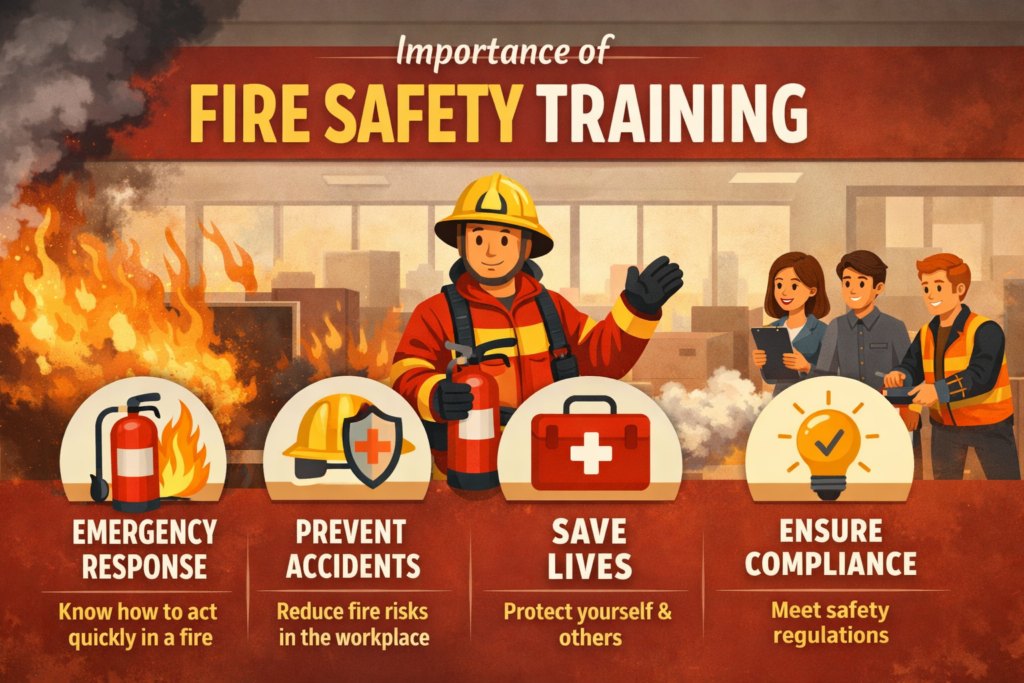
Emergency Steps
Stay Calm and Avoid Panic
Remaining calm is the foundation of an effective response during a fire emergency. Panic can lead to confusion, poor judgment, and unsafe actions that may increase the risk of injury.
Key Points:
- Stay focused and assess the situation quickly
- Avoid shouting unnecessarily or causing chaos
- Follow established emergency procedures
- Help others remain calm, especially vulnerable individuals
Detailed Explanation:
When individuals panic, they may ignore exit routes, rush toward unsafe areas, or fail to follow instructions. Staying calm allows for better decision-making, enabling individuals to act quickly and safely. A composed response also helps maintain order during evacuation.
Raise the Alarm Immediately
Early warning is critical in any fire emergency. Alerting others as soon as a fire is detected ensures that everyone has enough time to evacuate safely.
Key Points:
- Activate the nearest fire alarm system
- Verbally warn others by shouting “Fire!”
- Inform supervisors or safety personnel immediately
- Ensure everyone in the vicinity is aware of the danger
Detailed Explanation:
Delays in raising the alarm can result in people being trapped or unaware of the fire. A prompt alert allows occupants to begin evacuation early and enables emergency response teams to act without delay.
Evacuate Using Emergency Exits
Evacuation is the most critical step in ensuring personal safety. All occupants should leave the premises immediately using designated emergency routes.
Key Points:
- Follow clearly marked exit signs and evacuation routes
- Never use elevators during a fire
- Stay low to avoid inhaling smoke and toxic gases
- Close doors behind you to help contain the fire
- Assist others who may need help
Detailed Explanation:
Smoke inhalation is one of the leading causes of fatalities during fires. Staying low reduces exposure to smoke and improves visibility. Using proper exit routes ensures an organized evacuation and prevents crowding or confusion.
Use Fire Extinguisher (If Trained)
If the fire is small and manageable, and you have received proper training, you may attempt to control it using a fire extinguisher.
Key Points:
- Only attempt if it is safe and the fire is in its early stage
- Use the correct type of extinguisher for the fire
- Follow proper techniques (e.g., PASS method)
- Maintain a safe distance and clear exit path
Detailed Explanation:
Using a fire extinguisher without proper knowledge can worsen the situation. If the fire grows or becomes uncontrollable, evacuation should be prioritized immediately. Personal safety must always come first.
Call Emergency Services
Contacting emergency services is essential to ensure professional assistance arrives quickly to control the fire and manage the situation.
Key Points:
- Call emergency services as soon as you are in a safe location
- Provide accurate information about the location and type of fire
- Do not assume someone else has already made the call
- Follow instructions given by emergency responders
Detailed Explanation:
Emergency services rely on clear and timely communication to respond effectively. Providing accurate details helps them prepare the right resources and respond faster, reducing damage and saving lives.
The table below provides a quick and clear overview of essential actions to take during a fire emergency.
| Step | Action | Key Purpose | Important Note |
|---|---|---|---|
| Stay Calm | Remain composed and assess the situation | Enables clear thinking and decision-making | Panic can lead to unsafe actions |
| Raise the Alarm | Activate alarm systems and alert others immediately | Provides early warning | Do not delay—inform everyone nearby |
| Evacuate Safely | Use emergency exits and follow evacuation routes | Ensures safe escape | Avoid elevators and stay low in smoke |
| Use Fire Extinguisher | Control small fires if trained | Prevents fire from spreading | Only attempt if fire is small and manageable |
| Call Emergency Services | Contact fire services and provide accurate information | Ensures professional response | Call as soon as you are in a safe location |
Emergency Response Overview Table
| Step | Action | Key Purpose | Important Note |
|---|---|---|---|
| Stay Calm | Maintain control and avoid panic | Ensures clear thinking and safe actions | Panic can increase risk |
| Raise Alarm | Alert others and activate warning systems | Provides early warning | Immediate action is critical |
| Evacuate Safely | Use emergency exits and follow evacuation routes | Protects lives | Avoid elevators, stay low in smoke |
| Use Fire Extinguisher | Control small fires if trained | Prevents fire spread | Only if safe and manageable |
| Call Emergency Services | Contact professionals for assistance | Ensures rapid response | Provide clear and accurate information |
Importance of Fire Safety Training
Fire safety training is a critical component of any effective safety system, as it equips individuals with the knowledge, practical skills, and confidence required to prevent fire incidents and respond appropriately during emergencies. While having fire safety equipment is essential, it is equally important that people know how to use that equipment and follow correct procedures when a fire occurs.
Training transforms individuals from passive occupants into active responders, enabling them to identify hazards, take preventive actions, and manage emergency situations in a controlled and efficient manner. In workplaces, organizations, and public environments, fire safety training plays a vital role in creating a culture of awareness, responsibility, and preparedness.
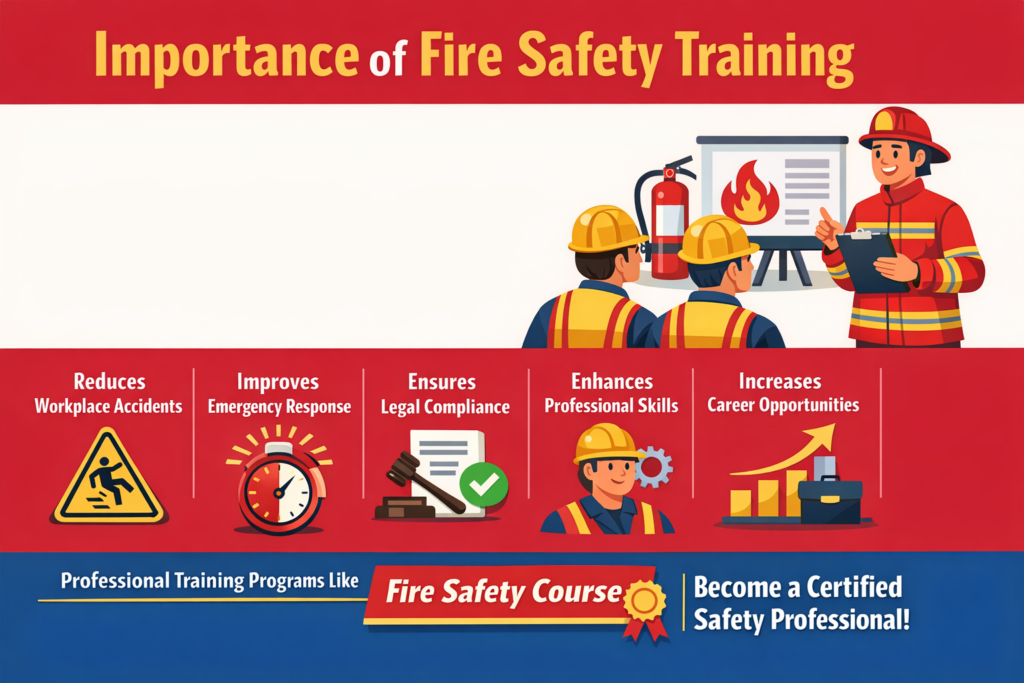
Benefits of Fire Safety Training
Reduces Workplace Accidents
Fire safety training helps individuals recognize potential hazards and unsafe practices that could lead to fire incidents. By understanding risks such as faulty wiring, improper storage of materials, and unsafe behavior, employees can take preventive actions before an incident occurs.
Key Points:
- Promotes awareness of fire hazards
- Encourages safe handling of equipment and materials
- Reduces chances of human error and negligence
Explanation:
When individuals are trained, they are more likely to follow safety procedures and avoid risky behavior. This significantly reduces the number of workplace accidents and creates a safer working environment.
Improves Emergency Response Time
During a fire emergency, quick and correct action is essential. Fire safety training ensures that individuals know exactly what to do, reducing confusion and delays.
Key Points:
- Familiarizes individuals with emergency procedures
- Improves decision-making under pressure
- Enables faster evacuation and response
Explanation:
Trained individuals can react immediately by raising alarms, using fire extinguishers, and evacuating safely. This rapid response helps control the situation and minimizes damage.
Ensures Legal Compliance
Many countries have strict fire safety regulations that require organizations to provide training and maintain safety standards. Fire safety training helps ensure compliance with these legal requirements.
Key Points:
- Meets workplace safety regulations
- Avoids fines and legal penalties
- Demonstrates organizational responsibility
Explanation:
Organizations that invest in fire safety training show their commitment to safety and compliance. This not only avoids legal issues but also enhances credibility and trust.
Enhances Professional Skills
Fire safety training develops valuable skills that are useful in both professional and personal environments. These include risk assessment, emergency handling, and safety management.
Key Points:
- Builds practical fire safety knowledge
- Improves problem-solving and decision-making skills
- Enhances confidence in handling emergencies
Explanation:
These skills are highly valued in industries such as construction, healthcare, manufacturing, and safety management, making individuals more competent and reliable.
Increases Career Opportunities
Fire safety training opens up new career paths and advancement opportunities, especially in safety-related roles. Certified professionals are in high demand across various industries.
Key Points:
- Increases employability in safety roles
- Supports career growth and promotions
- Provides professional certification opportunities
Explanation:
Individuals with fire safety training can pursue careers as safety officers, fire wardens, or health and safety professionals. This training adds value to their profile and improves job prospects.
Fire Safety Training – Benefits Overview Table
| Benefit | Description | Key Impact |
|---|---|---|
| Reduces Workplace Accidents | Identifies hazards and promotes safe practices | Safer work environment |
| Improves Response Time | Enables quick and effective action during emergencies | Faster evacuation and control |
| Ensures Legal Compliance | Meets safety regulations and standards | Avoids penalties and legal issues |
| Enhances Professional Skills | Develops knowledge and emergency handling abilities | Improves competence and confidence |
| Increases Career Opportunities | Opens pathways for safety-related roles and certifications | Better job prospects and growth |
Fire Safety in Different Industries
Fire risks are not the same across all environments—each industry has its own unique hazards, operational processes, and materials that influence the likelihood and impact of fire incidents. Therefore, a one-size-fits-all approach to fire safety is not effective. Instead, organizations must implement industry-specific fire prevention strategies, safety equipment, and training programs tailored to their working conditions.
Understanding how fire risks vary across industries helps in developing targeted control measures, improving emergency preparedness, and ensuring compliance with safety regulations. Below is a detailed breakdown of fire safety considerations in different sectors.
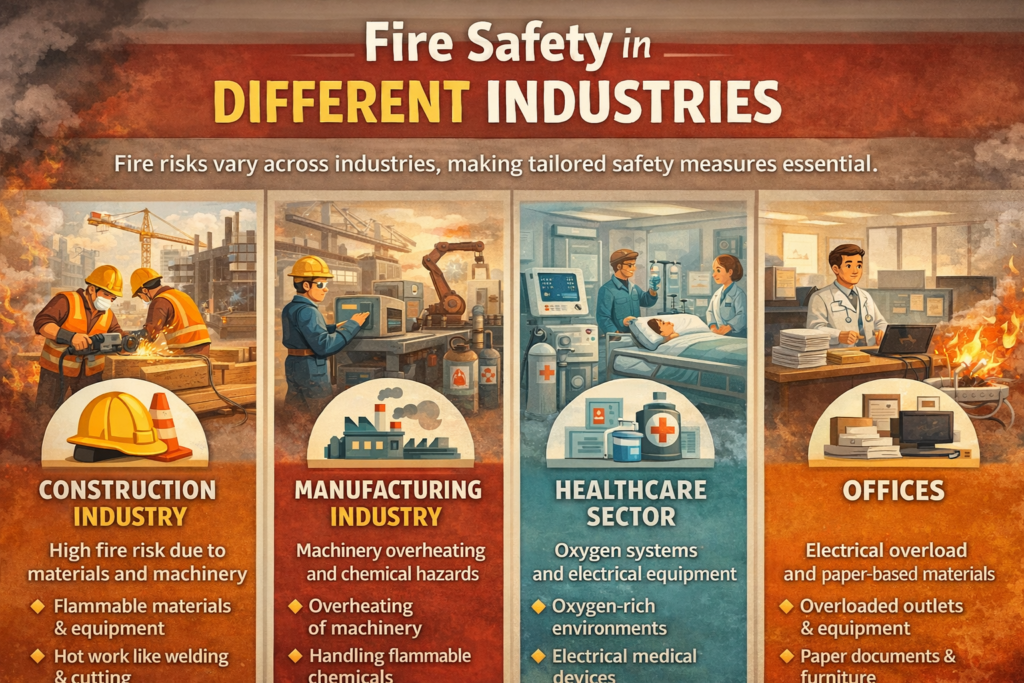
Industry-Wise Fire Risk and Safety Measures
Construction Industry
The construction industry is considered one of the highest-risk environments for fire incidents due to the presence of flammable materials, temporary electrical systems, and heavy machinery.
Key Fire Risks:
- Storage of flammable materials such as wood, fuel, and chemicals
- Welding, cutting, and other hot work activities producing sparks
- Temporary wiring and electrical installations
- Lack of permanent fire protection systems on-site
Safety Measures:
- Proper storage and handling of combustible materials
- Strict control of hot work through permits and supervision
- Regular inspection of electrical systems and equipment
- Availability of fire extinguishers and emergency plans
Explanation:
Construction sites are constantly changing environments, which increases unpredictability. Implementing strict safety protocols and continuous monitoring is essential to reduce fire risks.
Manufacturing Industry
Manufacturing facilities involve complex machinery, high temperatures, and hazardous substances, making them highly vulnerable to fire incidents.
Key Fire Risks:
- Overheating of machinery and equipment
- Use of flammable chemicals and gases
- Accumulation of dust and combustible particles
- Electrical system failures
Safety Measures:
- Routine maintenance and monitoring of machinery
- Safe storage and handling of chemicals
- Installation of fire detection and suppression systems
- Implementation of strict operational safety procedures
Explanation:
In manufacturing, even a minor fault can escalate quickly due to the presence of combustible materials and automated systems. Preventive maintenance and safety training are critical.
Healthcare Sector
Hospitals and healthcare facilities have special fire safety challenges due to the presence of patients, medical equipment, and oxygen systems.
Key Fire Risks:
- Oxygen-rich environments increasing fire intensity
- Electrical equipment such as ventilators and monitors
- Flammable medical supplies and chemicals
- Limited mobility of patients during evacuation
Safety Measures:
- Strict control and monitoring of oxygen systems
- Regular inspection of electrical medical equipment
- Fire-resistant infrastructure and compartmentalization
- Well-planned evacuation procedures for patients and staff
Explanation:
Fire safety in healthcare is not only about prevention but also about safe and efficient evacuation, especially for patients who cannot move independently.
Offices
Office environments may appear low-risk, but they still face fire hazards due to electrical usage and combustible materials.
Key Fire Risks:
- Overloaded electrical circuits and devices
- Use of multiple electronic equipment (computers, printers, servers)
- Paper documents and furniture acting as fuel
- Lack of awareness among employees
Safety Measures:
- Avoid overloading electrical outlets
- Regular inspection of office equipment and wiring
- Proper storage of paper and combustible materials
- Conduct fire safety training and drills
Explanation:
Office fires often result from negligence or lack of awareness. Simple preventive actions and employee training can significantly reduce risks.
Fire Safety in Industries – Overview Table
| Industry | Key Fire Risks | Safety Measures | Risk Level |
|---|---|---|---|
| Construction | Flammable materials, hot work, temporary wiring | Material control, inspections, fire equipment | High |
| Manufacturing | Machinery overheating, chemicals, dust | Maintenance, storage safety, detection systems | High |
| Healthcare | Oxygen systems, electrical equipment | Monitoring systems, evacuation planning | High |
| Offices | Electrical overload, paper materials | Safe usage, inspections, training | Medium |
Real-Life Example
A warehouse fire caused by faulty electrical wiring resulted in significant financial losses and operational disruption. A simple inspection and preventive maintenance could have avoided the incident.
This example highlights the importance of fire safety practices and risk assessment in preventing disasters.
Conclusion
Fire safety is far more than a simple precaution—it is a shared responsibility and a critical aspect of everyday life. Whether in homes, workplaces, or public environments, the importance of fire safety cannot be overstated. A single moment of negligence or lack of awareness can lead to devastating consequences, including loss of life, property damage, and long-term disruption. Therefore, adopting a proactive approach to fire safety is essential for ensuring the well-being of individuals and communities.Implementing effective fire prevention measures—such as maintaining electrical systems, safely storing flammable materials, and installing reliable fire detection systems—plays a vital role in reducing the likelihood of fire incidents. Equally important is the use of appropriate fire safety equipment, which enables quick response and helps control fires before they escalate. However, equipment alone is not enough; individuals must also be properly trained to use these tools and respond confidently during emergencies.Regular fire risk assessments further strengthen safety by identifying potential hazards and allowing timely corrective actions. When combined with continuous training and awareness programs, these measures create a culture of safety where risks are minimized, and preparedness is maximized.Ultimately, fire safety is about prevention, preparedness, and responsibility. By understanding fire hazards, following safety practices, and investing in proper training, both individuals and organizations can significantly reduce risks and protect lives. Creating a safe environment is not a one-time effort—it is an ongoing commitment that requires vigilance, knowledge, and collective action.