
CSCS Blue Card Guide for Skilled Workers UK
The CSCS Blue Card plays a vital role in the UK construction sector, acting as a recognised proof that a worker has the necessary skills, qualifications, and safety awareness required to operate on-site. In an industry where compliance and competence are essential, this card helps employers quickly verify that individuals meet industry standards and can perform their duties responsibly.
For skilled tradespeople—such as bricklayers, carpenters, electricians, plumbers, and other specialists—the CSCS Blue Card is more than just an identification card. It represents professional credibility and demonstrates that you have achieved a relevant qualification, typically an NVQ Level 2, alongside passing the required health and safety test. As a result, holding this card can open doors to better job opportunities, higher earning potential, and access to larger construction projects across the UK.The CSCS Blue Card is part of the wider CSCS Card system used in the UK construction industry.
In this comprehensive guide, you will gain a clear understanding of everything related to the CSCS Blue Card for skilled workers. From eligibility criteria and step-by-step application procedures to costs, renewal, career benefits, and expert tips, this blog is designed to provide practical, up-to-date information that helps you move forward confidently in your construction career.
What Is a CSCS Blue Card?
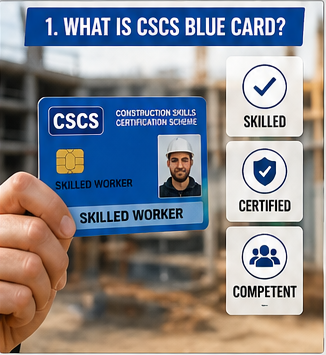
The CSCS Blue Card is a certification issued under the Construction Skills Certification Scheme that is specifically intended for individuals who are working in skilled roles within the UK construction industry. It serves as formal evidence that a worker has gained the necessary practical experience, technical knowledge, and recognised qualifications required to perform a specific trade safely and effectively on a construction site.
In the UK, construction employers place strong emphasis on health, safety, and verified competence. The CSCS Blue Card helps meet these expectations by allowing site managers and contractors to quickly confirm that a worker is properly trained and qualified. Unlike entry-level cards, this card is not for beginners; it is designed for individuals who have already developed hands-on experience and completed a relevant qualification, most commonly an NVQ Level 2 in their trade.
This card is widely accepted across construction sites throughout the UK and is often a standard requirement for accessing job opportunities in skilled roles. It also reflects a worker’s progression from basic labour-level positions to a more advanced and specialised level within the industry.
Purpose of the CSCS Blue Card
The main purpose of the CSCS Blue Card is to ensure that skilled workers meet industry standards for both competence and safety. Construction sites involve complex tasks and potential hazards, so employers need assurance that workers understand proper procedures and can carry out their responsibilities without risk to themselves or others.
The card acts as a reliable verification tool that demonstrates a worker has completed structured training and assessment. It supports safer working environments by ensuring that only qualified individuals are performing specialised tasks.
Who the CSCS Blue Card Is Designed For
The CSCS Blue Card is suitable for individuals who are already working in a specific construction trade and have achieved a recognised qualification. It is ideal for workers who have progressed beyond entry-level roles and are now considered competent in their field.
Typical roles that fall under this category include:
- Bricklayers who construct and repair structures using bricks and blocks
- Carpenters and joiners involved in woodwork and structural frameworks
- Electricians responsible for wiring and electrical systems
- Plumbers installing and maintaining water systems
- Painters and decorators finishing interior and exterior surfaces
- Groundworkers preparing construction sites and foundations
For these professionals, the CSCS Blue Card is a clear indication that they are skilled, qualified, and capable of working independently or as part of a team on construction projects.
Key Features of the CSCS Blue Card
The CSCS Blue Card comes with several important features that make it valuable for both workers and employers. Each of these features plays a role in improving employability, ensuring compliance, and maintaining high standards within the construction industry.
Confirms competence in a specific trade
One of the most important aspects of the CSCS Blue Card is that it verifies a worker’s ability to perform a particular trade. This is achieved through recognised qualifications such as NVQ Level 2, which are assessed based on real work performance rather than theoretical exams. This ensures that cardholders are not only knowledgeable but also practically skilled.
Required on most UK construction sites
Although the CSCS card is not legally mandatory, it is required by the majority of construction companies and contractors across the UK. Many employers will not allow workers onto a site without a valid CSCS card, especially for skilled roles. This makes the Blue Card an essential requirement for securing consistent employment in the industry.
Valid for five years
The CSCS Blue Card is issued with a validity period of five years. This ensures that workers maintain up-to-date knowledge of safety practices and industry standards. After this period, renewal is required, which helps ensure continued compliance with current regulations and practices.
Recognised by major construction employers
The card is widely recognised by leading construction companies, contractors, and organisations across the UK. It is often used as a benchmark for hiring decisions, as it provides assurance that the worker meets industry-approved standards. This recognition enhances a worker’s credibility and makes it easier to access larger and more reputable projects.
Importance of the CSCS Blue Card in Career Progression
Holding a CSCS Blue Card is not only about meeting site requirements; it also plays a significant role in career development. It demonstrates that a worker has moved beyond entry-level positions and has achieved a recognised level of skill and competence.
With this card, workers can access better job opportunities, take on more responsibility, and potentially progress to higher-level roles such as supervisors or site managers in the future. It also creates a pathway for further qualifications, such as NVQ Level 3 or higher, which can lead to advanced CSCS cards like the Gold or Black card.
The CSCS Blue Card is a key certification for skilled workers in the UK construction industry. It confirms that an individual has the necessary qualifications, practical experience, and safety awareness to perform their role effectively. By meeting industry standards and gaining employer trust, this card becomes an essential tool for building a stable and successful career in construction.
Who Needs a CSCS Blue Card?

The CSCS Blue Card is specifically intended for individuals who are actively working in skilled roles within the UK construction industry and have gained both practical experience and a recognised qualification. It is not designed for beginners or general labourers, but rather for workers who have developed trade-specific abilities and can perform tasks independently while maintaining high standards of safety and quality.
In modern construction environments, employers need assurance that every worker on site is competent in their role. The CSCS Blue Card provides this assurance by confirming that a person has completed structured training, usually in the form of an NVQ Level 2, and has demonstrated their skills in real working conditions. As a result, this card is often required for access to construction sites and is considered a standard benchmark for skilled workers across the UK.
Workers who are new to the industry usually start with a CSCS Green Card before progressing to the Blue Card.
Skilled Workers in Construction
The CSCS Blue Card is most suitable for individuals who have moved beyond entry-level roles and are now considered trained and competent in a particular trade. These workers are typically responsible for carrying out specialised tasks that require technical knowledge, precision, and adherence to safety regulations.
Skilled workers play a critical role on construction sites, as their work directly impacts the quality, durability, and safety of buildings and infrastructure. Because of this responsibility, employers rely on certifications like the CSCS Blue Card to ensure that only qualified individuals are assigned to these roles.
Common Trades That Require a CSCS Blue Card
There are many different trades within the construction industry that fall under the category of skilled work. The CSCS Blue Card is applicable to a wide range of these professions, each of which requires specific training and hands-on experience.
Bricklayers
Bricklayers are responsible for constructing walls, structures, and foundations using bricks, blocks, and other materials. Their work requires precision, knowledge of building plans, and an understanding of structural integrity. A CSCS Blue Card helps demonstrate that a bricklayer has the required training and competence to perform these tasks safely.
Carpenters and Joiners
Carpenters and joiners work with wood to create structural frameworks, fittings, and finishes such as doors, windows, and staircases. This role requires both technical skill and attention to detail. Holding a CSCS Blue Card confirms that the individual has achieved a recognised qualification and can carry out woodworking tasks professionally on-site.
Electricians
Electricians are responsible for installing, maintaining, and repairing electrical systems in buildings. Due to the high level of risk associated with electrical work, it is essential that electricians are properly trained and qualified. The CSCS Blue Card helps verify that they meet industry standards for safety and competence.
Plumbers
Plumbers install and maintain water supply systems, drainage, and heating systems. Their work is essential for ensuring that buildings function properly and meet regulatory requirements. A CSCS Blue Card indicates that a plumber has the necessary skills and training to carry out these responsibilities effectively.
Painters and Decorators
Painters and decorators focus on finishing surfaces, both internally and externally, to improve the appearance and protection of buildings. While this may seem less technical than other trades, it still requires skill, preparation, and knowledge of materials. The CSCS Blue Card ensures that these professionals are trained and capable of delivering high-quality results.
Groundworkers
Groundworkers prepare construction sites by carrying out tasks such as excavation, laying foundations, and installing drainage systems. Their role is crucial in the early stages of construction projects, as it sets the groundwork for all subsequent work. The CSCS Blue Card confirms that they have the experience and training needed to perform these tasks safely and efficiently.
Workers Progressing from Entry-Level Roles
The CSCS Blue Card is also ideal for individuals who started their careers as general labourers and have since gained experience and completed further training. Many workers begin with a basic card, such as a labourer card, and then progress by obtaining an NVQ Level 2 qualification in a specific trade.
This progression demonstrates career development and a commitment to improving skills. Once the qualification is achieved, applying for the CSCS Blue Card becomes the next logical step, allowing workers to transition into skilled roles and access better opportunities.
Individuals with Recognised Qualifications
Anyone who holds a recognised construction-related qualification, particularly an NVQ Level 2, is eligible to apply for the CSCS Blue Card. These qualifications are typically assessed in the workplace, meaning that the individual must demonstrate their ability to perform tasks to industry standards.
This ensures that cardholders are not only knowledgeable but also capable of applying their skills in real-world situations. For employers, this provides confidence that the worker can contribute effectively to the project.
Importance for Employment and Site Access
In many cases, having a CSCS Blue Card is not just beneficial but necessary. Most construction companies and contractors in the UK require workers to hold a valid CSCS card before they are allowed to enter a site. This requirement is part of broader efforts to improve safety, reduce accidents, and maintain high standards across the industry.
Without a CSCS Blue Card, skilled workers may find it difficult to secure consistent employment or access larger projects. On the other hand, those who hold the card are more likely to be trusted by employers and considered for higher-paying roles.
The CSCS Blue Card is designed for skilled construction workers who have gained practical experience and achieved a recognised qualification in their trade. It is suitable for a wide range of professions, including bricklayers, carpenters, electricians, plumbers, painters, and groundworkers. Whether you are progressing from an entry-level role or already working in a skilled position, obtaining this card is an essential step toward building a stable and successful career in the UK construction industry.xperience and a relevant qualification, this is the correct card for you.
CSCS Blue Card Requirements
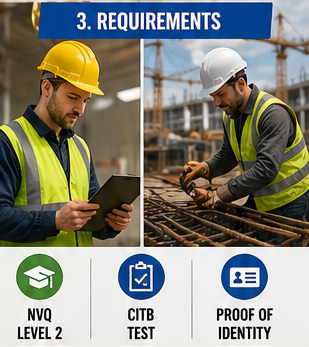
To successfully apply for the CSCS Blue Card, you must meet a set of essential criteria that demonstrate your competence, qualifications, and awareness of health and safety practices within the construction industry. These requirements are designed to ensure that every skilled worker on-site is properly trained and capable of performing their role safely and effectively.
Understanding these requirements in detail will help you avoid delays, prevent application rejection, and prepare properly for each stage of the process.
NVQ Level 2 Qualification
The most important requirement for obtaining a CSCS Blue Card is holding a relevant Level 2 NVQ (National Vocational Qualification) in your specific trade. This qualification confirms that you are skilled and competent in your field.
What an NVQ Level 2 Represents
An NVQ Level 2 is a work-based qualification that focuses on practical skills rather than theoretical knowledge. It is designed to assess your ability to perform real tasks in your job role according to industry standards.
Key Characteristics of NVQ Level 2
- It is completed while you are working on-site
- Assessment is based on your daily work activities
- There are no traditional written exams
- Evidence is collected through observation, photos, and reports
This means you do not need to attend regular classroom sessions. Instead, an assessor evaluates your performance in your actual work environment, ensuring that your skills meet industry expectations.
Importance of Choosing the Right NVQ
It is essential to select an NVQ that matches your specific trade. For example, a bricklayer must complete a bricklaying NVQ, while a carpenter must complete a carpentry qualification. Choosing the wrong qualification can lead to rejection of your CSCS application.
Pass the CITB Health, Safety and Environment Test
Another mandatory requirement is passing the CITB Health, Safety and Environment Test. This test ensures that you understand the safety rules and regulations required on construction sites.
Purpose of the Test
Construction sites can be hazardous environments, so it is important that all workers are aware of safety procedures, risk prevention methods, and emergency protocols. This test confirms that you have the necessary knowledge to work safely.
Test Structure and Format
- The test consists of 50 multiple-choice questions
- The total duration is 45 minutes
- Questions cover health, safety, and environmental topics
- The pass mark is typically around 90 percent
Topics Covered in the Test
- General site safety
- Hazard awareness
- Use of personal protective equipment
- Emergency procedures
- Environmental protection
Preparation Tips
- Study official revision materials
- Take mock tests to improve confidence
- Understand practical safety scenarios rather than memorising answers
Passing this test is a crucial step, as your application cannot proceed without it.
Proof of Identity
To apply for the CSCS Blue Card, you must provide valid identification documents. This ensures that your application is genuine and that your qualifications are linked to your identity.
Acceptable Forms of Identification
- Valid passport
- UK driving licence
- Other approved government-issued ID
Why Identification Is Important
Identity verification helps maintain the integrity of the certification system and prevents misuse or fraudulent applications. Make sure your documents are valid, up to date, and clearly readable before submitting them.
Step-by-Step: How to Get a CSCS Blue Card
Once you meet the requirements, you can follow a structured process to obtain your card. Each step is important and must be completed in the correct order.
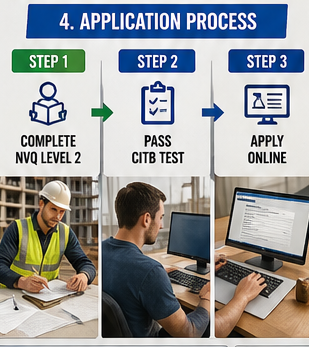
Step 1: Complete NVQ Level 2
The first step is enrolling in a recognised training provider to begin your NVQ Level 2 qualification.
What Happens During This Step
- You register with an approved training organisation
- You continue working while completing your qualification
- An assessor observes your work and collects evidence
- You demonstrate competence in your trade
Duration of NVQ Level 2
Most candidates complete their NVQ within 3 to 6 months, depending on their experience and availability. Workers with prior experience may complete it more quickly.
Step 2: Pass the CITB Test
After or during your NVQ, you must book and pass the CITB Health, Safety and Environment Test.
How to Complete This Step
- Book your test at an approved test centre
- Prepare using official materials and practice exams
- Attend the test and achieve the required score
Passing this test confirms that you are aware of workplace safety standards, which is essential for construction site access.
Step 3: Apply for the CSCS Blue Card
Once you have your NVQ Level 2 and have passed the CITB test, you can proceed with the application.
Application Process
- Submit your application through official CSCS channels
- Upload your qualification certificates and test results
- Provide identification documents
- Pay the required application fee
After submission, your application will be reviewed, and your card will be issued if all requirements are met.
Timeline Overview
Understanding the timeline helps you plan your journey more effectively and set realistic expectations.
Typical Time Required for Each Stage
- NVQ Level 2 completion usually takes between 3 to 6 months
- CITB test can be completed in a single day
- Application processing typically takes 1 to 2 weeks
Overall Timeframe
In most cases, the entire process can be completed within a few months, depending on how quickly you complete your NVQ and pass the test.
The requirements for obtaining a CSCS Blue Card are designed to ensure that skilled workers are fully qualified, competent, and aware of safety practices. By completing an NVQ Level 2, passing the CITB test, and providing valid identification, you can successfully apply for the card. Following the step-by-step process and understanding the timeline will help you achieve your goal efficiently and avoid unnecessary delays in your construction career.
CSCS Blue Card Cost
Understanding the total cost of obtaining the CSCS Blue Card is an important part of planning your certification journey. The overall expense is made up of several components, including training, testing, and the application fee. While some costs are fixed, others may vary depending on the training provider and your location.
Breakdown of Typical Costs
The following are the main expenses involved in obtaining a CSCS Blue Card:
CITB Health, Safety and Environment Test
The CITB test is a mandatory requirement for all applicants.
- The cost is approximately £22.50
- It must be passed before applying for the card
- Retakes require paying the fee again
This is a relatively low-cost step, but it is essential for progressing in the application process.
CSCS Card Application Fee
Once you have completed your qualification and passed the test, you must apply for the card.
- The standard fee is around £36
- This is a one-time payment for issuing the card
- Payment is made during the application process
NVQ Level 2 Qualification
The NVQ Level 2 is the most significant cost in the process, as it involves training and assessment.
- Typical cost ranges from £600 to £1500
- Prices vary depending on the training provider
- Some providers offer flexible payment options
This cost reflects the practical training, assessment, and certification required to prove your competence in a skilled trade.
Factors That Affect the Total Cost
The total amount you pay may vary based on several factors:
- The type of trade you are qualifying in
- The training provider you choose
- Whether you need additional support or fast-track options
- Any retakes for the CITB test
It is always recommended to compare providers and ensure they are recognised before enrolling.
Validity and Renewal
Once issued, the CSCS Blue Card is valid for a fixed period. Understanding its validity and renewal process is essential to maintaining uninterrupted access to construction sites.
Card Validity
- The CSCS Blue Card is valid for five years
- During this time, it confirms your qualification and competence
- It allows you to work on most construction sites across the UK
Renewal Requirements
To renew your card after it expires, you must meet certain conditions:
Valid CITB Test
You must pass the CITB Health, Safety and Environment Test again before renewal. This ensures your knowledge of safety practices remains up to date.
Existing Qualification
Your original NVQ Level 2 qualification remains valid and does not need to be repeated. However, it must still be relevant to your trade.
Importance of Timely Renewal
Renewing your card before it expires is important because:
- Expired cards may restrict site access
- Employers may not allow you to continue working
- Delays in renewal can affect job opportunities
Planning ahead and renewing on time helps maintain your professional standing in the industry.
CSCS Card Comparison
Understanding how the CSCS Blue Card compares to other cards helps you see where it fits within the construction career pathway.
Blue Card vs Green Card vs Gold Card
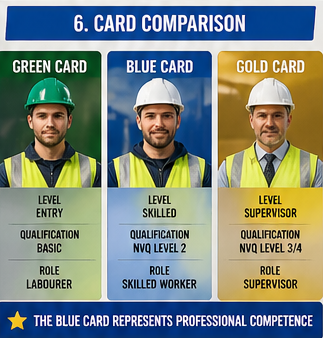
Each card represents a different level of experience and qualification.
Green Card
- Designed for entry-level workers
- Requires basic health and safety knowledge
- Suitable for labourers with little or no experience
Blue Card
- Designed for skilled workers
- Requires NVQ Level 2 qualification
- Confirms trade-specific competence
Gold Card
- Designed for supervisors or advanced craft workers
- Requires NVQ Level 3 or Level 4
- Indicates higher responsibility and leadership roles
Position of the Blue Card
The CSCS Blue Card sits at the middle level within the CSCS structure. It represents a transition from general labour to skilled work and demonstrates that you are qualified to perform specialised tasks independently.
Can You Get a Blue Card Without NVQ?
This is a common question among workers who have experience but lack formal qualifications.
Direct Answer
It is not possible to obtain a CSCS Blue Card without holding a relevant NVQ Level 2 qualification. The qualification is a mandatory requirement and cannot be bypassed.
Alternative Pathway
If you do not yet have an NVQ, there is still a clear route you can follow:
Step 1: Apply for a Red Card
The red card is a temporary card designed for trainees or experienced workers who are working towards a qualification.
Step 2: Complete NVQ Level 2
While holding the red card, you can enroll in an NVQ programme and complete your qualification through on-site assessment.
Step 3: Upgrade to Blue Card
Once your NVQ is completed and you have passed the CITB test, you can apply for the CSCS Blue Card.
Why This Path Exists
This pathway allows experienced workers to continue working while gaining formal recognition of their skills. It supports career progression without interrupting employment.
Career Benefits of CSCS Blue Card
Obtaining a CSCS Blue Card offers several long-term advantages that can significantly improve your career prospects in the construction industry.
Better Job Opportunities
Many construction companies require workers to hold a valid CSCS card before they can access a site.
- Increases your chances of being hired
- Allows access to larger and more reputable projects
- Makes you more competitive in the job market
Higher Salary Potential
Skilled workers with recognised qualifications often earn more than general labourers.
- Higher pay rates due to specialised skills
- Increased demand for qualified tradespeople
- Opportunities for overtime and long-term contracts
Professional Recognition
The CSCS Blue Card serves as proof of your skills and qualifications.
- Builds trust with employers
- Demonstrates commitment to your trade
- Enhances your professional reputation
Career Progression Opportunities
Holding a Blue Card can open pathways to higher-level roles.
- Opportunity to progress to supervisor positions
- Ability to pursue NVQ Level 3 or higher
- Potential to upgrade to Gold or Black CSCS cards
After gaining experience as a skilled worker, many professionals choose to progress by completing an NVQ Level 3 qualification, which can lead to supervisory roles and eligibility for higher-level CSCS cards.
Common Mistakes to Avoid
Many applicants face delays or rejection due to avoidable mistakes. Being aware of these issues can help you complete the process smoothly.
Applying Without the Correct Qualification
Submitting an application without a valid NVQ Level 2 will result in rejection. Always ensure your qualification matches your trade.
Booking the Wrong CITB Test
There are different types of CITB tests. Booking the incorrect one can delay your application, as you may need to retake the correct test.
Submitting Incorrect or Incomplete Documents
Missing or unclear documents can slow down the application process. Always double-check your submission before applying.
Letting Your CITB Test Expire
The CITB test has a validity period. If it expires before you apply, you will need to retake it
Expert Tips for Success
Following practical advice can make the process easier and increase your chances of success.
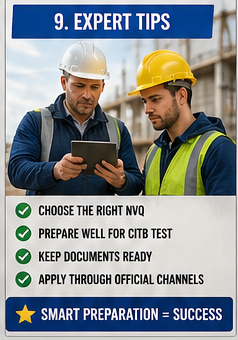
Choose the Right NVQ
Select a qualification that directly matches your trade. This ensures your application is accepted without issues.
Prepare Thoroughly for the CITB Test
Understanding safety concepts is more effective than memorising answers. Use practice tests to build confidence.
Organise Your Documents in Advance
Having your qualification certificates, ID, and test results ready can speed up the application process
Apply Through Official Channels
Always use trusted and official platforms when applying for your CSCS card to avoid scams or unnecessary delays.
Stay Updated with Industry Requirements
Construction standards and requirements can change over time. Keeping yourself informed ensures that you remain compliant and competitive.
The CSCS Blue Card involves a combination of costs, requirements, and processes that reflect its importance in the construction industry. From understanding the financial investment to maintaining validity and avoiding common mistakes, each step plays a role in ensuring a smooth and successful application. By following the correct pathway and applying expert guidance, you can secure your CSCS Blue Card and build a strong foundation for your career as a skilled worker in the UK.
Conclusion
The CSCS Blue Card plays a crucial role in shaping a stable and successful career within the UK construction industry. It is not simply a card, but a recognised proof of your technical ability, practical experience, and commitment to maintaining high standards of safety on-site. In an industry where employers prioritise competence and compliance, holding this card makes you a more reliable and trusted professional. It also demonstrates that you have achieved the necessary qualifications, such as an NVQ Level 2, and understand essential health and safety practices required in modern construction environments.
For skilled workers, the benefits of obtaining this card go beyond meeting basic job requirements. It opens access to better employment opportunities, allows you to work on larger and more reputable projects, and increases your chances of earning higher wages. In addition, it provides a clear pathway for career progression, enabling you to move towards advanced roles such as supervisors or site managers in the future. By investing time in gaining the right qualification and completing the required steps, you position yourself for long-term growth and stability in a competitive industry.
Achieving the CSCS Blue Card becomes much easier when you clearly understand the process, prepare properly, and avoid common mistakes. From selecting the correct NVQ qualification to successfully passing the CITB test and submitting accurate documentation, each step plays an important role in ensuring a smooth application. With the right approach and commitment, you can confidently obtain your CSCS Blue Card and take a significant step forward in building a rewarding and professional career in the UK construction sector.