I-CERT Lean Six Sigma Black Belt Certification

ICT logo
I-CERT Lean Six Sigma Black Belt Certification
Course Level

Six Sigma

Course Type

Non- Ofqual

Awarding Body

ICTQual 

Duration

4 to 6 months

Study Mood

Online

Assessment

Assignments Based

Course Overview

What is this course

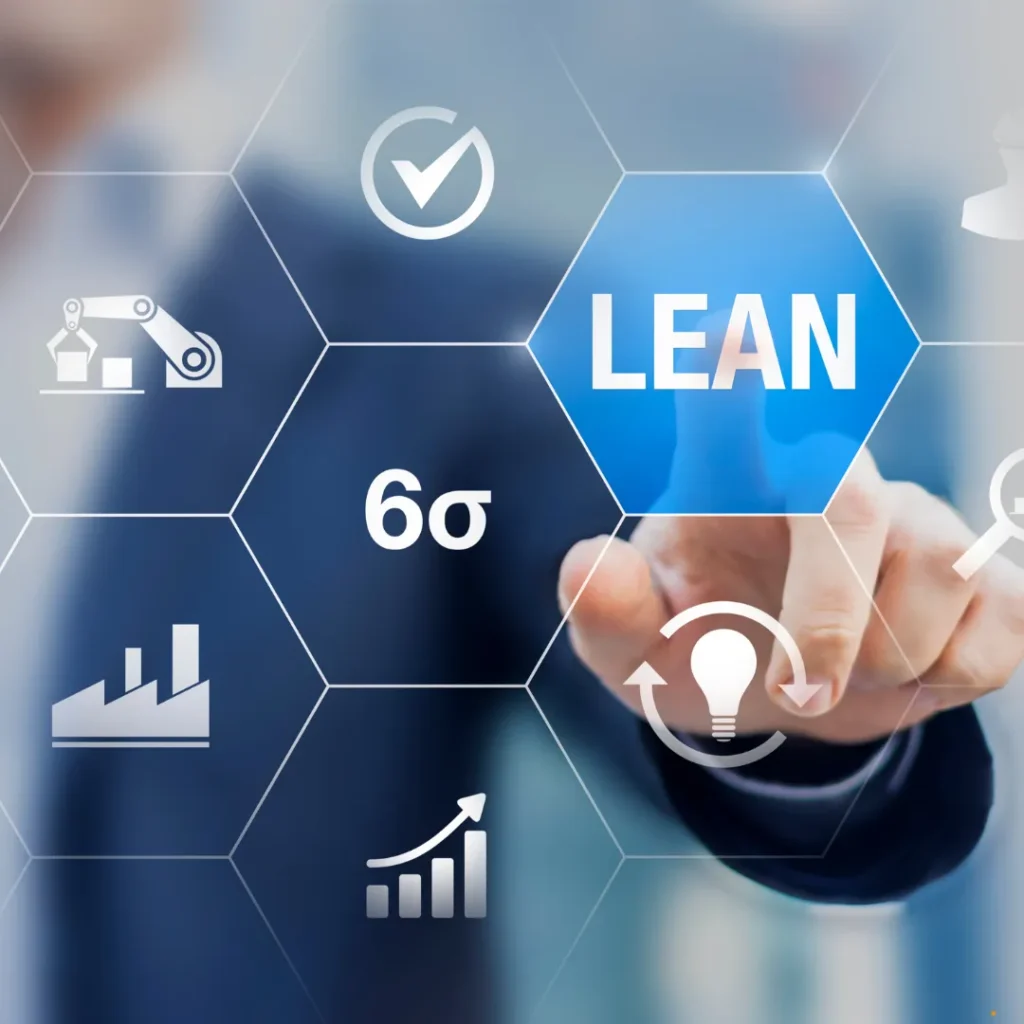
The I‑CERT Lean Six Sigma Black Belt Certification is a globally recognized program designed for professionals who want to master advanced Lean Six Sigma methodologies and lead organizational transformation. This certification equips learners with the skills to manage complex projects, optimize processes, and deliver measurable improvements in quality, efficiency, and performance. With a structured and user‑friendly approach, it ensures participants gain confidence in applying advanced problem‑solving techniques across industries.

Learners will explore key areas such as statistical process control, advanced root cause analysis, project leadership, and data‑driven decision making. The program emphasizes practical application, making advanced concepts easy to understand and implement. By combining theory with real‑world case studies, participants develop the ability to analyze processes, eliminate inefficiencies, and drive sustainable improvements. This certification is particularly valuable for professionals in manufacturing, healthcare, finance, and service industries where precision and efficiency are critical.

Completing the I‑CERT Lean Six Sigma Black Belt Certification demonstrates professional excellence and leadership capability. It enhances employability, opens opportunities in senior management and consulting roles, and builds confidence in leading enterprise‑level Lean Six Sigma initiatives. With industry‑focused content and flexible learning options, this certification is an excellent choice for professionals who want to elevate their careers, lead organizational change, and achieve long‑term business success.

Course Content

Detailed Curriculum Structure

The I-CERT Lean Six Sigma Black Belt Certification program is structured into 12 comprehensive study units delivered over a total duration of 4 to 6 months. Learners can choose between online self-paced learning or instructor-led workshops, ensuring flexibility while gaining advanced skills in Lean Six Sigma methodologies aligned with international standards.

  1. Introduction to Lean Six Sigma & Black Belt Role
  2. Define Phase – Project Selection & Chartering
  3. Measure Phase – Data Collection & Performance Metrics
  4. Measure Phase – Statistical Foundations
  5. Analyze Phase – Root Cause & Data Analysis
  6. Improve Phase – Solution Development & Validation
  7. Control Phase – Sustaining Improvements
  8. Advanced Lean Tools & Techniques
  9. Leadership & Change Management
  10. Financial Analysis & Project Benefits Realisation
  11. Risk Management & Compliance in Process Improvement
  12. Black Belt Capstone Project

Learning Objectives

Upon completion of the I-CERT Lean Six Sigma Black Belt Certification, participants will have the advanced skills and expertise to lead complex process improvement initiatives, implement Lean Six Sigma methodologies, and deliver measurable operational and business results across industries.

Module 1: Introduction to Lean Six Sigma & Black Belt Role

  • Understand Lean Six Sigma principles and methodology at an advanced level.
  • Comprehend the strategic responsibilities and role of a Black Belt.
  • Recognize the organizational impact of process improvement initiatives.
  • Identify opportunities to apply Lean Six Sigma within manufacturing and service environments.

Module 2: Define Phase – Project Selection & Chartering

  • Select high-impact projects aligned with business objectives.
  • Develop detailed project charters defining scope, objectives, and success metrics.
  • Prioritize initiatives based on organizational strategy and operational value.
  • Establish measurable goals and timelines for process improvement projects.

Module 3: Measure Phase – Data Collection & Performance Metrics

  • Collect accurate and reliable process data for analysis.
  • Map processes to identify inefficiencies and key performance indicators (KPIs).
  • Establish baseline performance metrics to track improvement.
  • Analyze process inputs and outputs to ensure comprehensive measurement.

Module 4: Measure Phase – Statistical Foundations

  • Apply statistical techniques to evaluate process variation.
  • Conduct measurement system analysis to ensure data reliability.
  • Interpret data to support fact-based decision-making.
  • Utilize charts, graphs, and statistical tools to visualize performance trends.

Module 5: Analyze Phase – Root Cause & Data Analysis

  • Identify root causes of defects, inefficiencies, and process bottlenecks.
  • Use advanced data analysis techniques to validate hypotheses.
  • Translate analytical findings into actionable improvement strategies.
  • Perform risk and impact analysis to prioritize corrective actions.

Module 6: Improve Phase – Solution Development & Validation

  • Develop, test, and implement effective process improvement solutions.
  • Optimize workflows and eliminate operational waste.
  • Validate solutions using data-driven methods to ensure impact.
  • Engage cross-functional teams to implement improvements successfully.

Module 7: Control Phase – Sustaining Improvements

  • Develop control plans to maintain process improvements.
  • Monitor KPIs to ensure long-term stability and performance.
  • Implement corrective measures for deviations.
  • Foster a culture of continuous improvement and sustainability.

Module 8: Advanced Lean Tools & Techniques

  • Apply advanced Lean tools such as 5S, Kaizen, and Value Stream Mapping.
  • Integrate Lean tools with Six Sigma methodologies for maximum impact.
  • Enhance operational efficiency, productivity, and product quality.
  • Reduce waste and standardize processes across manufacturing and service operations.

Module 9: Leadership & Change Management

  • Lead cross-functional teams to implement improvement initiatives.
  • Drive cultural change and promote a continuous improvement mindset.
  • Develop stakeholder engagement and communication strategies.
  • Manage resistance to change and ensure adoption of Lean Six Sigma practices.

Module 10: Financial Analysis & Project Benefits Realisation

  • Evaluate financial impact and ROI of process improvement initiatives.
  • Quantify cost savings, efficiency gains, and operational benefits.
  • Communicate business value to leadership and stakeholders.
  • Align project outcomes with strategic organizational goals.

Module 11: Risk Management & Compliance in Process Improvement

  • Identify risks and develop mitigation strategies within processes.
  • Ensure compliance with ISO and industry standards.
  • Integrate risk management practices into Lean Six Sigma initiatives.
  • Monitor and sustain compliance while implementing continuous improvements.

Module 12: Black Belt Capstone Project

  • Execute a real-world project demonstrating mastery of Lean Six Sigma tools.
  • Apply DMAIC methodology to deliver measurable operational improvements.
  • Present results, insights, and recommendations to leadership.
  • Showcase practical expertise in leading strategic process improvement initiatives.

Who Should Attend

Target Audience and Participants

The I‑CERT Lean Six Sigma Black Belt Certification is designed for professionals and leaders who want to master advanced Lean Six Sigma tools and lead organizational excellence.

  • Senior managers aiming to drive enterprise‑level process improvement
  • Quality assurance and operations leaders seeking advanced expertise
  • Professionals in manufacturing, healthcare, finance, and service industries
  • Project managers responsible for complex Lean Six Sigma initiatives
  • Consultants specializing in business transformation and efficiency
  • Team leaders wanting to strengthen problem‑solving and analytical skills
  • Career changers pursuing leadership roles in process optimization
  • Entrepreneurs embedding Lean Six Sigma into business strategy
  • Organizations training staff in advanced Lean Six Sigma methodologies

Career & Learning Benefits

Skills, Knowledge & Opportunities You Will Earn

Completing the I‑CERT Lean Six Sigma Black Belt Certification provides advanced career opportunities and equips learners with the ability to lead complex projects and organizational transformation.

  • Earn a globally recognized Lean Six Sigma Black Belt credential
  • Gain expertise in advanced statistical analysis and process control
  • Lead enterprise‑wide Lean Six Sigma initiatives successfully
  • Strengthen skills in root cause analysis and problem‑solving
  • Improve organizational efficiency, productivity, and quality
  • Build confidence in applying advanced Lean Six Sigma tools
  • Enhance employability in senior management and consulting roles
  • Develop sustainable solutions for long‑term business performance
  • Foster a culture of continuous improvement and accountability

Need More Information?

Frequently Asked Questions Explained

Participants gain expert-level proficiency in the DMAIC framework, advanced hypothesis testing, and regression analysis. The curriculum focuses on using statistical software to identify root causes and implementing robust control plans that ensure long-term, sustainable improvements in performance.

Holding an I-CERT Black Belt title signals to global employers that you possess the analytical and leadership skills required to deliver multi-million dollar savings. It qualifies you for executive-level positions such as Director of Quality, Senior Operations Manager, or Lean Six Sigma Consultant.

This certification follows international ISO and ASQ-aligned standards, making it a prestigious credential across all global markets. It serves as a professional benchmark for high-level analytical competence and is highly sought after by multinational corporations in manufacturing, finance, and technology.

While a Green Belt assists with projects, a Black Belt is a full-time leader responsible for the entire project lifecycle and statistical analysis. This level focuses on complex, cross-functional problems and involves mentoring Green Belts to ensure organizational alignment and high-level technical execution.

A Black Belt acts as a strategic change agent who translates high-level business goals into actionable, data-driven improvement projects. You will learn to identify areas of significant financial leakage and implement robust solutions that directly enhance the bottom line and operational resilience.

Enrollment Criteria

Minimum Eligibility Criteria for Enrollment

  • Age 23 or above
  • High school diploma or equivalent professional training
  • Previous experience in process improvement or quality management
  • Proficiency in English (reading, writing, speaking)

Lock In Your Spot

Get in Touch

+44 2035 764371

+44 7441 396751

info@ictqual.co.uk

www.inspirecollege.co.uk

Similar Posts