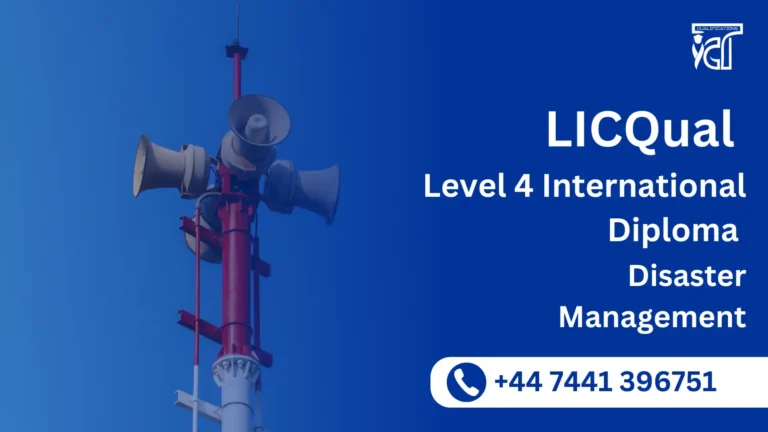
LICQual Level 7 International Diploma in Disaster Management

ICT logo
LICQual Level 7 International Diploma in Disaster Management

Course Level

Level 7

Course Type

Non- Ofqual

Awarding Body

LICQual

Credits

120

Study Mood

Online

Assessment

Assignments Based

Course Overview

What is this course

The LICQual Level 7 International Diploma in Disaster Management is designed for professionals seeking to develop advanced expertise in disaster preparedness, response, and recovery. This course provides a comprehensive understanding of disaster management principles, risk assessment, emergency planning, and crisis leadership. Learners explore strategies for mitigating the impact of natural and man-made disasters, while gaining the knowledge to coordinate effective responses across organizations, communities, and international contexts.

Participants will also study frameworks for emergency management, resource mobilization, and stakeholder coordination during crises. The course emphasizes practical skills, enabling learners to assess hazards, plan emergency interventions, and lead teams effectively during high-pressure situations. Real-world case studies, simulations, and scenario-based learning ensure participants can apply theoretical knowledge in practical, life-saving situations.

The LICQual Level 7 International Diploma in Disaster Management is ideal for professionals working in emergency services, humanitarian aid, government agencies, NGOs, and corporate risk management. It also provides a pathway to further advanced certifications and leadership roles in disaster management and emergency planning. By completing this diploma, learners demonstrate strategic expertise and practical competence to manage disasters effectively and lead sustainable, resilient responses in any context.

Course Content

Detailed Curriculum Structure

This qualification, LICQual Level 7 International Diploma in Disaster Management, consists of 6 mandatory units.

  • Principles of disaster management
  • Confronting the Challenges of Disaster Risk Reduction and Development
  • Disaster Resilience, Adaptation and Sustainability
  • Vulnerability and Risk Assessment
  • Advanced Research Methodology- Dissertation
  • Participants – Governmental Disaster Management Agencies

Learning Objectives

By the end of this course, learners will be able to:

1. Principles of Disaster Management

  • Understand and apply core principles of disaster management, including risk assessment, preparedness, response, recovery, and mitigation.
  • Analyze global disaster management frameworks and their relevance to national and local disaster policies and practices.
  • Develop comprehensive disaster management strategies based on an understanding of disaster cycles and principles.

2. Confronting the Challenges of Disaster Risk Reduction and Development

  • Identify and critically assess the challenges associated with disaster risk reduction (DRR) and sustainable development.
  • Develop strategies to integrate DRR into development planning, addressing vulnerabilities and improving community resilience.
  • Evaluate the impact of development practices on disaster risk and implement policies that reduce exposure to hazards.

3. Disaster Resilience, Adaptation and Sustainability

  • Examine the concepts of disaster resilience and adaptation, and their application in vulnerable communities.
  • Design and implement strategies that enhance the sustainability of disaster recovery efforts and long-term resilience building.
  • Understand the relationship between environmental sustainability and disaster risk management, promoting eco-friendly recovery approaches.

4. Vulnerability and Risk Assessment

  • Conduct advanced vulnerability and risk assessments, considering both physical and socio-economic factors.
  • Develop frameworks to assess the potential impacts of disasters on communities, infrastructure, and ecosystems.
  • Use risk analysis tools to identify key areas of vulnerability and develop targeted interventions to reduce risk.

5. Advanced Research Methodology – Dissertation

  • Gain proficiency in advanced research methodologies relevant to disaster management and risk reduction.
  • Conduct independent research for the dissertation project, contributing new knowledge or solutions to the field of disaster management.
  • Analyze data, critically evaluate existing literature, and present findings effectively in an academic or professional context.

6. Participants – Governmental Disaster Management Agencies

  • Understand the roles and responsibilities of governmental disaster management agencies at local, national, and international levels.
  • Develop strategies for improving coordination, communication, and cooperation between government agencies and other stakeholders during disaster response.
  • Assess the effectiveness of governmental agencies in disaster preparedness, response, and recovery, recommending improvements for better management of disaster risks.

Who Should Attend

Target Audience and Participants

  • Emergency Services Professionals: Firefighters, paramedics, and rescue teams seeking advanced disaster management skills.
  • Humanitarian & NGO Workers: Those involved in disaster relief, humanitarian aid, and crisis intervention programs.
  • Government & Policy Officials: Professionals responsible for public safety, emergency planning, and disaster preparedness policies.
  • Corporate Risk Managers: Individuals managing organizational risk, business continuity, and emergency response planning.
  • Aspiring Disaster Management Leaders: Learners aiming for leadership roles in disaster response, crisis management, or emergency coordination.

Career & Learning Benefits

Skills, Knowledge & Opportunities You Will Earn

  • Advanced Disaster Management Skills: Learn to assess risks, plan responses, and coordinate resources in emergencies.
  • Leadership & Decision-Making: Develop abilities to lead teams and make critical decisions under pressure.
  • Practical Application: Apply knowledge through case studies, simulations, and real-world scenarios.
  • Career Advancement: Enhance your professional profile for leadership roles in disaster management, emergency services, and humanitarian organizations.
  • Global Perspective: Gain insight into international standards, best practices, and cross-border disaster management strategies.

Need More Information?

Frequently Asked Questions Explained

This diploma is ideal for emergency service professionals, humanitarian aid workers, government officials, corporate risk managers, and anyone aiming for leadership roles in disaster management.

Learners will develop advanced skills in disaster preparedness, emergency response, risk assessment, crisis leadership, and strategic planning. The course also enhances decision-making abilities for managing high-pressure situations effectively.

Learners have access to tutor guidance, online resources, discussion forums, and assessment support to ensure they fully understand and can apply course content.

Yes, learners engage in simulations, case studies, and scenario-based exercises that allow them to apply theoretical knowledge to real-world disaster situations. This ensures skills are practical and directly applicable in professional environments.

Yes, learners gain knowledge of global best practices, international disaster management standards, and strategies for coordinating cross-border disaster responses.

Enrollment Criteria

Minimum Eligibility Criteria for Enrollment

  • Proficiency in English (reading, writing, speaking)
  • Age: 21+ years
  • Education: Bachelor’s degree or relevant experience
  • Recommended in disaster or emergency management

Lock In Your Spot

Get in Touch

+44 2035 764371

+44 7441 396751

info@ictqual.co.uk

www.inspirecollege.co.uk

Similar Posts