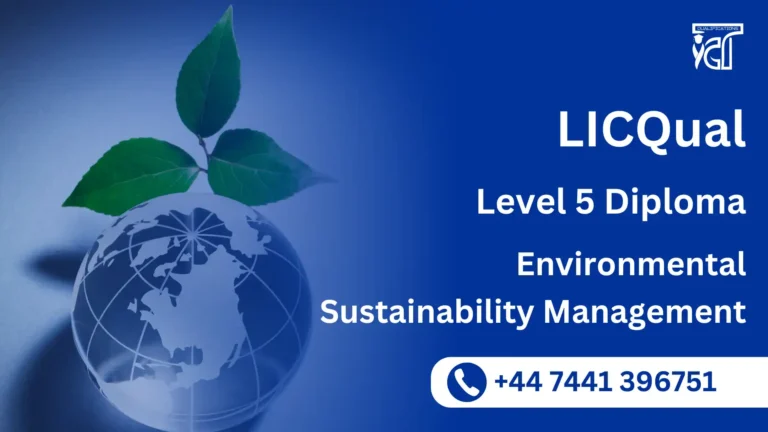
The LICQual Level 7 Diploma in Environmental Sustainability Management is a UK-based, advanced qualification designed for professionals aiming to lead organizations toward sustainable growth and environmental excellence. This comprehensive program equips learners with the strategic knowledge, practical skills, and leadership capabilities required to implement effective sustainability initiatives, drive environmental performance, and influence organizational policies. Ideal for senior managers, sustainability consultants, and environmental officers, the course enables participants to align business operations with global environmental standards and long-term sustainability objectives.
The course follows an assignment-based structure, allowing learners to apply theoretical knowledge to real-world environmental and sustainability challenges. Participants will gain expertise in key areas such as environmental policy, sustainability frameworks, resource management, and risk assessment. The curriculum also explores contemporary topics including climate change mitigation, carbon footprint reduction, renewable energy strategies, and corporate social responsibility. By integrating leadership principles with environmental expertise, the diploma prepares professionals to foster a culture of sustainability and lead strategic initiatives that deliver measurable results.
Graduates of the LICQual Level 7 Diploma in Environmental Sustainability Management are equipped to assume senior roles such as Sustainability Manager, Environmental Director, or Policy Advisor. The program enhances career prospects by providing internationally recognized credentials and positioning learners as influential drivers of sustainable development within their organizations and industries.
With its flexible, assignment-based approach, the course is suitable for working professionals seeking to advance their qualifications without disrupting their careers. Learners benefit from a blend of theoretical insights and practical application, ensuring they are prepared to address complex environmental challenges and implement innovative sustainability solutions. Enroll in the LICQual Level 7 Diploma in Environmental Sustainability Management to gain the expertise, strategic vision, and confidence needed to lead transformative environmental and sustainability initiatives globally
LICQual Level 7 Diploma in Environmental Sustainability Management
The Study Units of LICQual Level 7 Diploma in Environmental Sustainability Management are as :
| Unit Ref# | Unit Title | G-L-H | GLH |
| LICQ2200022-1 | Environmental Policy and Governance | 60 | 100 |
| LICQ2200022-2 | Sustainable Development Strategies | 60 | 100 |
| LICQ2200022-3 | Resource Management and Conservation | 60 | 100 |
| LICQ2200022-4 | Renewable Energy Technologies | 60 | 100 |
| LICQ2200022-5 | Environmental Impact Assessment | 60 | 100 |
| LICQ2200022-6 | Corporate Social Responsibility | 60 | 100 |
GLH (Guided Learning Hours) and TQT (Total Qualification Time) are terms commonly used in vocational qualifications to help define the amount of time a learner is expected to spend on their studies.
1. GLH (Guided Learning Hours)
GLH refers to the number of hours a learner spends being directly taught, supervised, or supported during their course. This includes the time spent in activities such as:
- Classroom instruction
- Practical workshops
- One-on-one tutoring or mentoring sessions
- Online learning sessions with tutor support
In other words, GLH represents the time that learners are actively engaged with their instructors or learning activities.
2. TQT (Total Qualification Time)
TQT represents the total amount of time a learner is expected to invest in completing a qualification, including:
- GLH (Guided Learning Hours): Time spent on direct learning, as explained above.
- Self-Directed Learning: This includes time spent on independent study, research, assignment completion, preparation for exams, and any other work the learner does outside of direct teaching hours.
TQT is a broader measure that includes all the time required to achieve the qualification. It helps learners and employers understand the overall commitment required for the qualification.
Key Differences Between GLH and TQT:
- GLH focuses on direct learning with guidance or supervision.
- TQT includes GLH as well as independent study time and other learning-related activities.
Example:
If a qualification has a TQT of 600 hours and a GLH of 250 hours, it means the learner should spend 250 hours in direct learning (classroom, online, or tutor-led sessions) and 350 hours on independent study or research.
The LICQual Level 7 Diploma in Environmental Sustainability Management is a high-level qualification designed for professionals seeking to develop advanced expertise in sustainability, environmental governance, and strategic management. The program equips learners with the knowledge and skills to lead sustainable initiatives, influence organizational policies, and implement practical solutions that address global environmental challenges. Each study unit is carefully structured to provide both theoretical understanding and practical application, preparing participants to drive effective sustainability programs and make informed decisions in complex environmental contexts.
- Environmental Policy and Governance
This unit focuses on the development, implementation, and evaluation of environmental policies and governance frameworks. Learners will gain insights into regulatory compliance, environmental standards, and strategic decision-making processes. Learning outcomes include analyzing environmental legislation, advising on policy implementation, and promoting governance practices that enhance organizational sustainability and compliance. - Sustainable Development Strategies
Participants will explore frameworks and approaches for achieving sustainable development within organizations and communities. This unit emphasizes strategic planning, long-term sustainability goals, and balancing economic, social, and environmental priorities. Learning outcomes include designing effective sustainability strategies, integrating sustainable practices into organizational planning, and monitoring progress against global sustainability benchmarks. - Resource Management and Conservation
This unit develops skills in managing natural resources efficiently while minimizing environmental impact. Learners will study techniques for conservation, sustainable use, and optimization of resources. Learning outcomes include implementing resource management plans, assessing environmental risks, and promoting conservation initiatives to ensure sustainable organizational practices. - Renewable Energy Technologies
This unit introduces learners to the principles, applications, and benefits of renewable energy solutions. Participants will evaluate different technologies and their environmental, social, and economic impacts. Learning outcomes include assessing renewable energy options, designing implementation strategies, and promoting sustainable energy solutions within organizational frameworks. - Environmental Impact Assessment
Learners will gain expertise in assessing, managing, and mitigating the environmental impacts of projects and organizational activities. This unit emphasizes analytical skills, risk evaluation, and regulatory compliance. Learning outcomes include conducting comprehensive environmental impact assessments, identifying potential risks, and recommending mitigation strategies to support sustainable development. - Corporate Social Responsibility
This unit explores the integration of ethical, social, and environmental responsibilities into business operations. Learners will study CSR frameworks, stakeholder engagement, and reporting standards. Learning outcomes include designing CSR initiatives, enhancing corporate sustainability, and promoting ethical practices that align business objectives with societal and environmental goals.
This structured curriculum ensures that graduates emerge as competent, strategic, and influential leaders in environmental sustainability management.
The LICQual Level 7 Diploma in Environmental Sustainability Management is a professional qualification designed for senior managers, sustainability consultants, and environmental leaders who aim to drive organizational change and promote sustainable practices. This advanced course combines theoretical knowledge with practical, assignment-based learning to equip professionals with the skills needed to implement effective sustainability strategies, manage environmental risks, and enhance corporate responsibility. Completing this diploma provides a competitive advantage, career growth opportunities, and the expertise to lead impactful sustainability initiatives.
- Advanced Leadership in Sustainability
This diploma empowers professionals to take on senior leadership roles, enabling them to influence sustainability policies, drive organizational change, and foster a culture of environmental responsibility across their organization. - Strategic Environmental Management Skills
Learners develop advanced skills in environmental policy, resource management, and sustainability strategy. These competencies allow professionals to design, implement, and evaluate initiatives that reduce environmental impact and enhance operational efficiency. - Career Growth and Professional Recognition
The Level 7 diploma enhances career prospects, positioning graduates for roles such as Sustainability Manager, Environmental Director, or Policy Advisor. It demonstrates high-level expertise and commitment to sustainable development, recognized by organizations worldwide. - Practical, Real-World Application
With its assignment-based structure, the course enables learners to apply theoretical concepts to real-world environmental and sustainability challenges, ensuring they can deliver tangible results within their organizations. - Expertise in Renewable Energy and Climate Strategies
Participants gain knowledge in renewable energy technologies, climate change mitigation, and adaptation strategies, equipping them to lead initiatives that align with global sustainability standards and reduce environmental impact. - Corporate Social Responsibility and Ethical Practices
The diploma also emphasizes CSR and ethical business practices, enabling learners to design and implement programs that balance environmental, social, and economic objectives while enhancing corporate reputation. - Innovation and Research Competence
Graduates develop advanced research and problem-solving skills, preparing them to introduce innovative sustainability solutions and evidence-based strategies that address complex environmental challenges.
This course ensures that learners graduate as strategic, knowledgeable, and influential leaders in environmental sustainability management, ready to drive meaningful change in their organizations and industries.
The LICQual Level 7 Diploma in Environmental Sustainability Management is designed for experienced professionals and leaders who aspire to advance their careers in sustainability, environmental management, and corporate responsibility. This high-level qualification is ideal for individuals seeking to gain strategic knowledge, practical skills, and leadership capabilities to implement effective environmental initiatives and influence organizational sustainability policies. The course is suitable for professionals across industries who want to drive change and promote sustainable practices at senior levels.
- Senior Managers and Executives
This course is perfect for senior managers, directors, and executives responsible for sustainability, environmental strategy, or corporate responsibility within their organizations. These learners benefit from advanced leadership and strategic decision-making skills that enable them to implement and oversee sustainability initiatives. - Environmental and Sustainability Professionals
Professionals working in environmental consultancy, sustainability management, or corporate social responsibility roles will gain the expertise needed to design, implement, and monitor effective sustainability strategies. The course enhances their ability to provide solutions for complex environmental challenges. - Policy Makers and Regulatory Advisors
The diploma is suitable for policy advisors, regulators, and government officials involved in environmental planning, regulation, and compliance. Learners develop the knowledge and skills to guide sustainable practices, advise on policy development, and ensure organizational compliance with environmental standards. - Aspiring Sustainability Leaders
Individuals aiming to take on leadership roles in sustainability and environmental management will find this course valuable. It prepares learners to manage projects, lead cross-functional teams, and drive initiatives that align business objectives with global sustainability goals. - Professionals Seeking Global Competence
The course is ideal for professionals in international organizations, NGOs, or multinational corporations. Learners gain a global perspective on environmental standards and sustainability practices, equipping them to manage initiatives effectively across diverse industries and regions.
This diploma ensures that participants emerge as competent, strategic, and influential leaders capable of driving meaningful environmental and sustainability outcomes.
Entry Requirements
Register Now
Qualification Process
LICQual Level 7 Diploma in Environmental Sustainability Management
- Self-Assessment:
Begin by evaluating your eligibility to ensure you meet the qualification requirements, including work experience, knowledge, and language proficiency. - Registration:
Complete your registration by submitting the required documents, including a scanned copy of a valid ID, and paying the registration fee. - Induction:
An assessor will conduct an induction to confirm your eligibility for the course and explain the evidence requirements. If you do not meet the criteria, your registration will be canceled, and the fee will be refunded. - Assignmnets & Evidence Submission:
Provide all assignmnets and the necessary evidence based on the assessment criteria outlined in the course. If you are unsure of the required evidence, consult with the assessor for guidance on the type and nature of evidence needed. - Feedback and Revision:
The assessor will review your submitted evidence and provide feedback. Evidence that meets the criteria will be marked as “Criteria Met,” while any gaps will be identified. You will be asked to revise and resubmit if needed. - Competence Evidence:
Submit final evidence demonstrating that all learning outcomes have been met. This evidence will be marked as “Criteria Met” by the assessor once it is satisfactory. - Internal Quality Assurance (IQA):
The Internal Quality Assurance Verifier (IQA) will review your evidence to ensure consistency, quality, and compliance with standards. - External Verification:
The IQA will submit your portfolio to LICQual External Quality Assurance Verifiers (EQA) for final confirmation. The EQA may contact you directly to verify the authenticity of your evidence. - Certification:
Upon successful completion of all checks, LICQual will issue your official certificate, confirming that you have attained the LICQual Level 7 Diploma in Environmental Sustainability Management