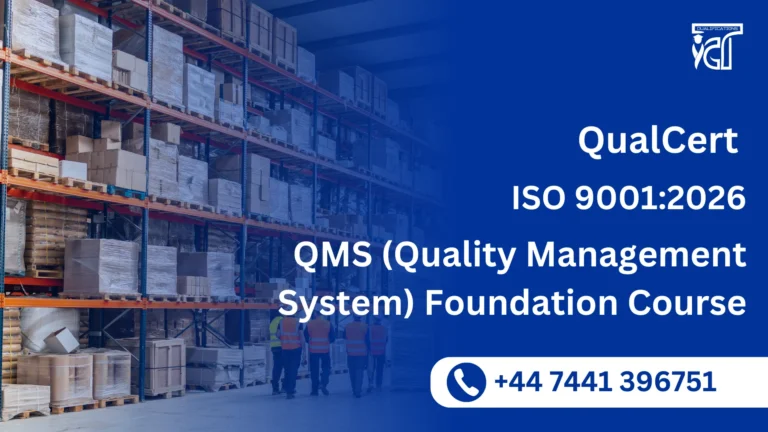
LICQual ISO 9001:2026 QMS (Quality Management System) Transition Foundation Course

ICT logo
LICQual ISO 9001:2026 QMS (Quality Management System) Transition Foundation Course

Course Level

ISO

Course Type

Non- Ofqual

Awarding Body

LICQual

Duration

28 Credits

Study Mood

Online

Assessment

Assignments Based

Course Overview

What is this course

The LICQual ISO 9001:2026 QMS Transition Foundation Course is designed to provide participants with a solid understanding of the updated ISO 9001:2026 requirements and prepare them for effective Quality Management System (QMS) transitions. This course introduces fundamental concepts of quality management, risk-based thinking, process approach, compliance obligations, and continuous improvement principles, enabling organizations to maintain high standards of quality and operational excellence.

Participants will gain practical knowledge on QMS structure, terminology, documentation requirements, and the changes introduced in ISO 9001:2026. The course provides step-by-step guidance for planning and preparing organizations for a successful transition, ensuring participants can support QMS initiatives confidently. Interactive sessions and real-world examples help learners understand the essentials of QMS implementation and auditing.

Ideal for beginners, quality professionals, and team members involved in QMS projects, this foundation course strengthens awareness and understanding of ISO 9001:2026. Graduates gain foundational skills to contribute effectively to QMS transition projects, support internal audits, ensure compliance with quality standards, and participate in continuous improvement initiatives, setting the stage for further advanced ISO 9001:2026 QMS training and professional development.

Course Content

Detailed Curriculum Structure

This qualification, the LICQual ISO 9001:2026 QMS (Quality Management System) Transition Foundation Course , consists of 6 mandatory units.

  • Strategic Drivers Behind ISO 9001:2026 Revision
  • Transition Readiness & Gap Assessment Methodology
  • Evolving Organizational Context & Stakeholder Expectations
  • Enhanced Risk-Based Thinking & Process Performance
  • Digital QMS Platforms & AI-Enabled Quality Monitoring
  • Compliance Assurance & Continual Improvement Post-Transition

Learning Objectives

By the end of this course, Applicants will be able to:

Strategic Drivers Behind ISO 9001:2026 Revision

  • Understand the key factors that led to the revision of ISO 9001:2026 and its strategic objectives.
  • Identify how global quality trends and sustainability considerations influence ISO standards.
  • Analyze the impact of organizational performance requirements on QMS updates.
  • Recognize the role of AI and digital technologies in shaping modern quality management frameworks.
  • Explore how regulatory changes and international guidelines drive standard evolution.
  • Evaluate the benefits of adopting ISO 9001:2026 for enhanced organizational competitiveness.

Transition Readiness & Gap Assessment Methodology

  • Learn to conduct a comprehensive gap analysis between ISO 9001:2015 and ISO 9001:2026 requirements.
  • Understand the principles of transition readiness and planning for QMS updates.
  • Identify critical areas requiring change for successful standard adoption.
  • Apply AI tools to automate data collection and gap assessment processes.
  • Develop actionable transition plans to minimize operational disruptions.
  • Assess organizational capabilities to implement changes efficiently and effectively.

Evolving Organizational Context & Stakeholder Expectations

  • Understand the importance of organizational context in ISO 9001:2026 compliance.
  • Identify internal and external factors affecting quality and environmental management.
  • Analyze stakeholder needs, expectations, and their impact on strategic decision-making.
  • Apply digital monitoring tools to track stakeholder engagement and satisfaction.
  • Evaluate how organizational objectives align with evolving quality and sustainability goals.
  • Integrate AI-enabled insights to enhance decision-making and stakeholder responsiveness.

Enhanced Risk-Based Thinking & Process Performance

  • Understand risk-based thinking principles in ISO 9001:2026.
  • Identify potential risks and opportunities within organizational processes.
  • Apply AI and analytics to predict and mitigate quality or environmental risks.
  • Monitor process performance using digital QMS dashboards and tools.
  • Evaluate the effectiveness of risk mitigation strategies in achieving organizational goals.
  • Promote a culture of proactive quality and environmental management.

Digital QMS Platforms & AI-Enabled Quality Monitoring

  • Explore the role of digital QMS platforms in modern quality management systems.
  • Learn how AI-enabled tools support real-time monitoring of process performance.
  • Understand integration of digital workflows for improved compliance and reporting.
  • Evaluate data-driven insights for continuous quality improvement.
  • Apply AI analytics for predictive maintenance, audit readiness, and corrective actions.
  • Optimize resource allocation and operational efficiency through digital technologies.

Compliance Assurance & Continual Improvement Post-Transition

  • Understand the mechanisms for ensuring compliance with ISO 9001:2026 standards.
  • Develop processes for ongoing monitoring and evaluation of QMS effectiveness.
  • Identify corrective and preventive actions to address non-conformities.
  • Apply AI tools to track compliance trends and performance metrics.
  • Promote a culture of continual improvement aligned with digital transformation.
  • Evaluate the impact of QMS changes on organizational sustainability and efficiency.

Who Should Attend

Target Audience and Participants

  • Beginners and new team members involved in QMS transition projects
  • Quality professionals seeking foundational knowledge of ISO 9001:2026
  • Internal auditors needing awareness of updated QMS requirements
  • Compliance officers and management representatives supporting QMS transition
  • Employees involved in documentation, monitoring, and reporting for QMS
  • Consultants and trainees preparing for advanced ISO 9001:2026 training
  • Professionals seeking to enhance understanding of quality management fundamentals
  • Team members aiming to support organizational continuous improvement initiatives
  • Individuals interested in building a strong base in ISO 9001:2026 QMS principles
  • Anyone planning to pursue advanced ISO 9001:2026 lead implementer or auditor courses

Career & Learning Benefits

Skills, Knowledge & Opportunities You Will Earn

  • Beginners and new team members involved in QMS transition projects
  • Quality professionals seeking foundational knowledge of ISO 9001:2026
  • Internal auditors needing awareness of updated QMS requirements
  • Compliance officers and management representatives supporting QMS transition
  • Employees involved in documentation, monitoring, and reporting for QMS
  • Consultants and trainees preparing for advanced ISO 9001:2026 training
  • Professionals seeking to enhance understanding of quality management fundamentals
  • Team members aiming to support organizational continuous improvement initiatives
  • Individuals interested in building a strong base in ISO 9001:2026 QMS principles
  • Anyone planning to pursue advanced ISO 9001:2026 lead implementer or auditor courses

Need More Information?

Frequently Asked Questions Explained

Participants learn the fundamentals of ISO 9001:2026, risk-based thinking, process approach, documentation, and supporting internal audits.

The course typically runs 1 to 2 days, combining interactive sessions, examples, and exercises for foundational learning.

Yes, participants receive the LICQual ISO 9001:2026 QMS Transition Foundation Certificate, recognized for professional development.

Manufacturing, healthcare, logistics, IT, construction, aviation, and service-based industries seeking QMS awareness.

Graduates gain foundational ISO 9001:2026 knowledge, preparing them for advanced training and professional roles in quality management.

Enrollment Criteria

Minimum Eligibility Criteria for Enrollment

  • Age: Minimum 18 years
  • Language: Proficiency in English (reading, writing, speaking)
  • Educational Background:No specific qualifications required; high school diploma recommended
  • Experience: No prior QMS experience required; ideal for beginners

Lock In Your Spot

Get in Touch

+44 2035 764371

+44 7441 396751

info@ictqual.co.uk

www.inspirecollege.co.uk
Similar Posts