
Photo & Diagram Interpretation Skills: Knowledge Providing Tasks for NVQ Diploma Learners
Introduction
This Knowledge Providing Task is developed for learners undertaking the ProQual Level 3 NVQ Diploma in Testing, Inspecting and Thorough Examination Occupations (Construction). The purpose of this task is to build strong inspection awareness through photo and diagram interpretation. In real construction environments, inspectors and testing operatives rely heavily on visual evidence such as site photographs, drawings, and technical diagrams to confirm the correct occupational method of work. This task helps learners observe hazards, defects, and non-compliances, interpret what they mean in practice, and decide what actions are required. The task is fully aligned with UK construction practice and focuses on competence, professional judgement, and safe decision-making.
Importance of Photo and Diagram Interpretation in Testing and Inspection
In testing, inspection, and thorough examination roles, photographs and diagrams are often used when direct access is limited or when evidence must be reviewed before work starts. These images form part of project data and must be assessed accurately. A competent operative can identify risks, missing controls, and incorrect practices from images alone. This ability supports safe planning, correct method selection, and clear communication.
Key objectives of this task include:
- Improving observation skills
- Linking visual defects to unsafe work methods
- Identifying missing or unclear project information
- Supporting compliance with UK legal duties
Relevant UK legislation includes:
- Health and Safety at Work etc. Act 1974
- Construction (Design and Management) Regulations 2015
- Provision and Use of Work Equipment Regulations 1998 (PUWER)
- Lifting Operations and Lifting Equipment Regulations 1998 (LOLER)
Photo Scenario 1 – Mobile Crane Set-Up on Uneven Ground
Description of the Picture
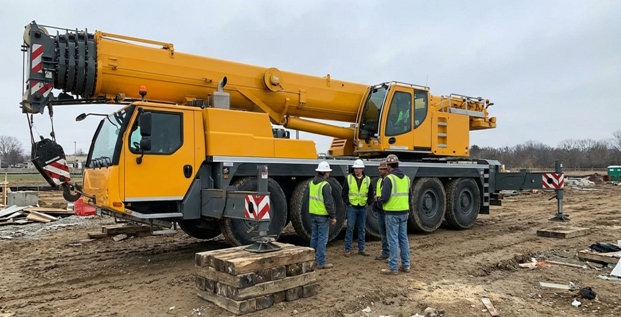
The photo shows a mobile crane positioned on uneven ground. One outrigger is placed on timber blocks, while another outrigger appears partially raised. There is no visible exclusion zone, and workers are standing close to the crane.
Observation and Interpretation
The image shows unsafe crane set-up conditions. Uneven ground and poor outrigger support increase the risk of crane instability. The absence of barriers suggests inadequate control of the work area.
Link to Occupational Method of Work
Available project data from the image suggests that the lifting method of work has not been correctly applied. Ground conditions and exclusion zones are not being controlled as required by lifting plans.
Additional Information Required
The operative would need to review:
- The lifting plan
- Ground bearing capacity information
- Crane manufacturer’s instructions
Recommended Corrective Actions
- Stop lifting operations immediately
- Ensure outriggers are fully deployed on suitable mats
- Establish an exclusion zone
- Confirm the method of work with the lifting supervisor
Diagram Scenario 2 – Concrete Reinforcement Layout Drawing
Description of the Diagram
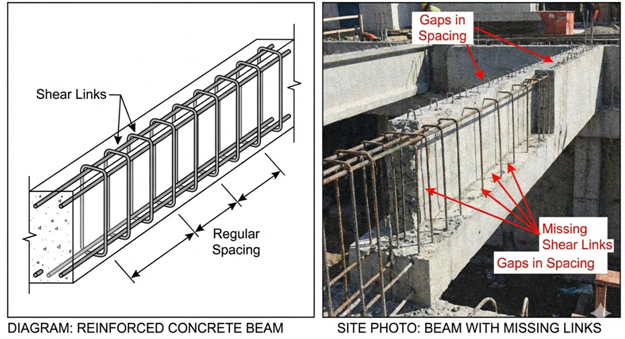
The diagram shows a reinforced concrete beam with shear links spaced at regular intervals. A site photo alongside the diagram shows missing shear links in one section.
Observation and Interpretation
The comparison between the diagram and site condition shows non-compliance with the design. Missing shear reinforcement can lead to structural failure.
Link to Occupational Method of Work
The correct method of work requires inspection against approved drawings before concrete pouring. The image confirms that this method has not been fully followed.
Additional Information Required
- Structural drawings revision status
- Engineer’s design notes
- Inspection and test plan (ITP)
Recommended Corrective Actions
- Stop concrete pouring
- Inform the site engineer
- Rectify reinforcement installation
- Re-inspect before approval
Photo Scenario 3 – MEWP Access and Guardrail Defect
Description of the Picture
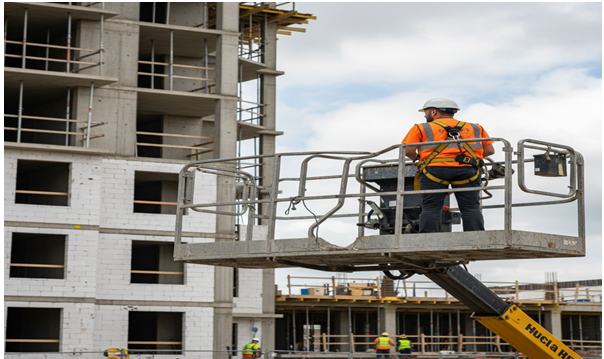
The image shows a MEWP with a damaged guardrail. The platform is raised, and the operator is wearing a harness, but no visible lanyard is attached.
Observation and Interpretation
The damaged guardrail and lack of fall restraint attachment present a serious fall risk. This indicates failure to comply with equipment safety requirements.
Link to Occupational Method of Work
The method of work for MEWP use requires safe equipment condition and proper fall protection measures. The image shows that this method is not being correctly applied.
Additional Information Required
- MEWP thorough examination report
- Site working at height procedure
- Operator training records
Recommended Corrective Actions
- Lower and isolate the MEWP
- Remove it from service
- Arrange repair and re-examination
- Brief operatives on correct use
Photo Scenario 4 – Fuel Spill Near Drain During Generator Inspection
Description of the Picture
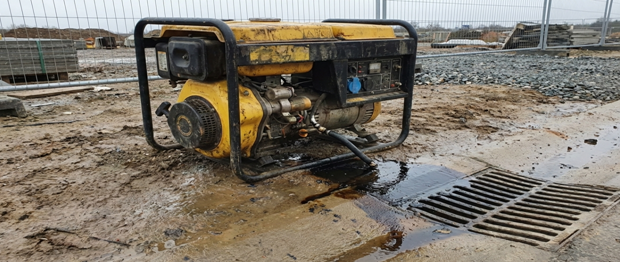
The photo shows a portable generator with a fuel leak. Diesel is visible on the ground and flowing towards a surface water drain. No spill kit is visible nearby.
Observation and Interpretation
The image highlights an environmental hazard and a breach of site environmental controls. This situation can lead to pollution and legal action.
Link to Occupational Method of Work
The inspection method of work must include environmental protection measures. The image confirms that environmental controls are either missing or not applied.
Additional Information Required
- Site environmental management plan
- Spill response procedure
- COSHH information for diesel
Recommended Corrective Actions
- Stop inspection activity
- Use spill kit to contain the leak
- Protect the drain
- Report the incident to site management
Diagram Scenario 5 – Inspection Tag and Certification Display
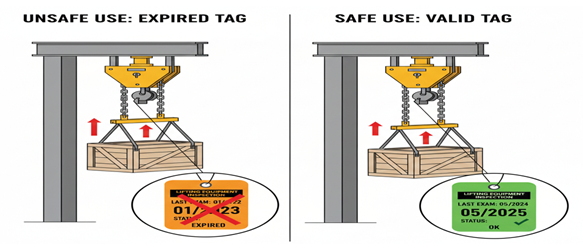
Description of the Diagram
The diagram shows lifting equipment with an inspection tag displaying an expired examination date. The equipment is shown in active use.
Observation and Interpretation
The expired tag indicates non-compliance with LOLER. Using equipment without a valid thorough examination is unsafe and unlawful.
Link to Occupational Method of Work
The correct method of work requires verification of inspection status before use. The image confirms failure to follow this method.
Additional Information Required
- Latest thorough examination report
- Equipment register
- Maintenance records
Recommended Corrective Actions
- Stop use of equipment
- Quarantine until examined
- Inform supervisor and record non-conformance
Vocational Competence and Visual Evidence Use
This task demonstrates how photos and diagrams form part of essential project data. Competent operatives do not rely on assumptions. They interpret visual evidence, identify risks, and take action. Correct interpretation supports safe work, efficient use of resources, and legal compliance. Clear communication of findings ensures that the confirmed method of work is understood by all relevant personnel.
Learner Task
The learner is required to:
- Review each photo or diagram scenario provided by the assessor.
- Identify hazards, defects, or non-compliances visible in each image.
- Explain how the image affects the occupational method of work.
- Identify what additional information is required to confirm the method of work.
- Describe the corrective actions and how these would be communicated to relevant personnel.