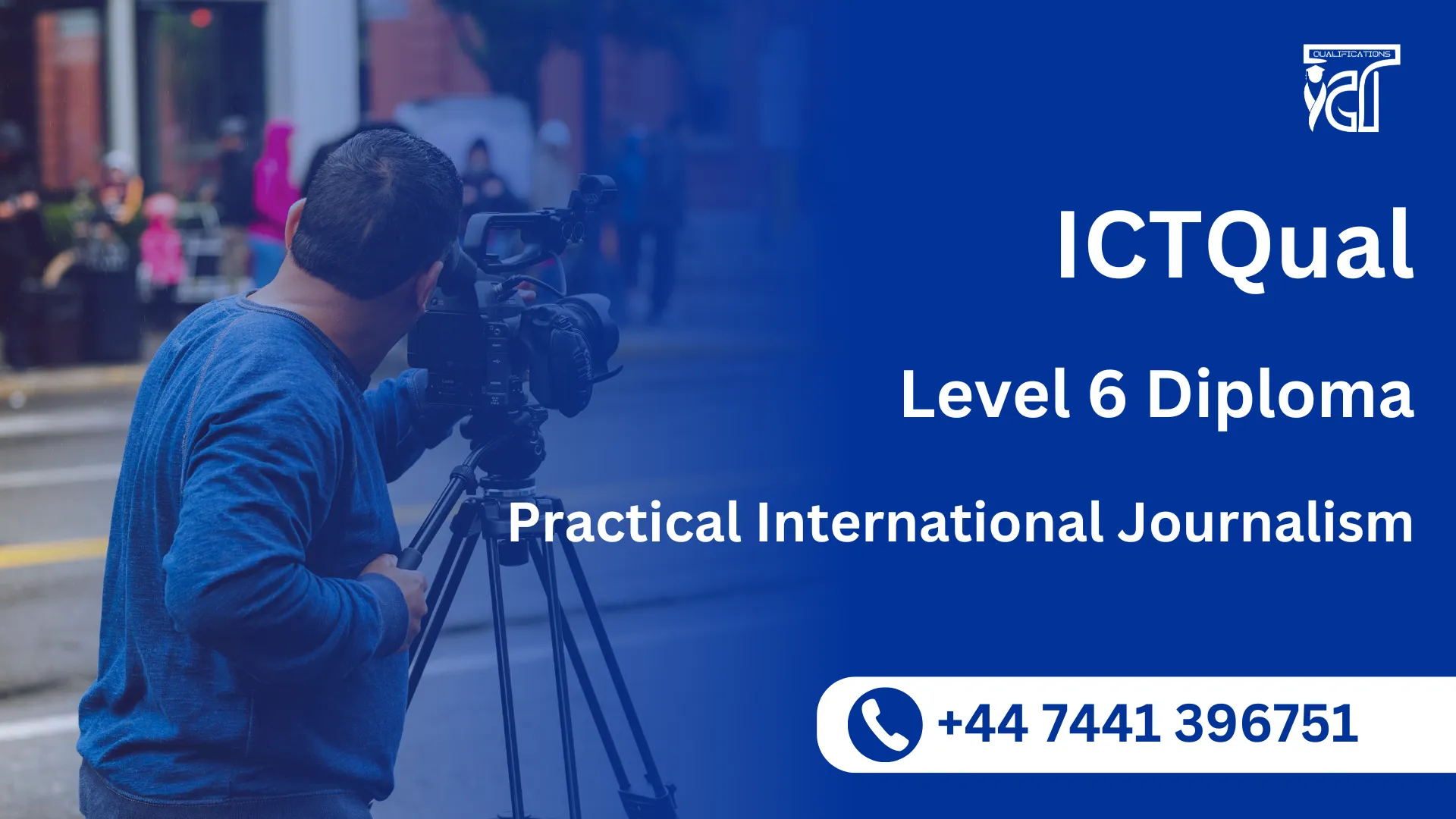
The ICTQual Level 6 Diploma in Practical International Journalism is an advanced qualification designed to prepare learners for the realities of global media practice. This program emphasizes practical skills, ethical standards, and cross-cultural communication, equipping participants to operate effectively in diverse international journalism environments.
Modern journalism requires professionals who can adapt to rapidly changing technologies, global perspectives, and complex political and cultural contexts. This diploma focuses on investigative reporting, multimedia production, and digital communication, while ensuring learners develop the ability to report accurately, responsibly, and with integrity across international platforms.
The qualification is particularly suited for individuals aspiring to careers in international news agencies, global media organizations, or independent reporting. Learners will gain hands-on experience in producing content for print, broadcast, and digital outlets, while also exploring media law, ethics, and the role of journalism in promoting transparency and accountability worldwide.
Ultimately, the ICTQual Level 6 Diploma in Practical International Journalism provides a pathway to senior roles and specialized reporting opportunities. It prepares learners to contribute meaningfully to international journalism, whether through investigative projects, editorial leadership, or digital innovation, ensuring they are ready to meet the demands of a globalized media landscape.
ICTQual Level 6 Diploma in Practical International Journalism
This qualification, the ICTQual Level 6 Diploma in Practical International Journalism, consists of 6 mandatory units.
| Sr# | Unit Title |
| 1 | Editorial Strategy, Newsroom Management, and Leadership |
| 2 | Advanced Investigative Journalism and Data Analysis |
| 3 | International Media Law, Ethics, and Policy Frameworks |
| 4 | Multimedia Production, Digital Innovation, and Emerging Media |
| 5 | Strategic Reporting, Public Affairs, and Policy Communication |
| 6 | Professional Journalism Practice, Portfolio Development, and Industry Engagement |
Learning Outcomes for the ICTQual Level 6 Diploma in Practical International Journalism:
Editorial Strategy, Newsroom Management, and Leadership
- Develop and implement comprehensive editorial strategies aligned with organisational objectives.
- Lead and manage newsroom teams effectively, ensuring productivity and high-quality output.
- Apply decision-making and leadership skills to balance news value, ethics, and public interest.
- Coordinate content planning, workflow management, and deadline adherence across platforms.
- Evaluate audience insights and analytics to refine editorial strategies and engagement.
- Foster innovation, collaboration, and professional standards within editorial teams.
- Manage resources, including personnel, digital tools, and publication budgets.
- Promote accountability, transparency, and inclusivity in newsroom operations.
Advanced Investigative Journalism and Data Analysis
- Conduct complex investigative research using advanced reporting techniques.
- Analyse data sets to identify trends, patterns, and actionable insights for stories.
- Apply verification and fact-checking methods to ensure accuracy and credibility.
- Develop in-depth investigative reports suitable for print, broadcast, and digital media.
- Protect sources and handle sensitive information ethically and responsibly.
- Integrate statistical and qualitative data into compelling news narratives.
- Manage investigative projects, timelines, and associated legal risks.
- Communicate investigative findings effectively to target audiences.
International Media Law, Ethics, and Policy Frameworks
- Interpret international media laws, regulations, and policy frameworks.
- Apply ethical principles to ensure impartiality, fairness, and accountability in reporting.
- Analyse the balance between freedom of expression and public interest globally.
- Recognise copyright, defamation, privacy, and intellectual property considerations.
- Develop editorial guidelines that comply with legal and ethical standards.
- Evaluate ethical dilemmas and regulatory challenges in international journalism.
- Understand the impact of misinformation, bias, and censorship on global media.
- Promote transparency, responsibility, and professionalism in media practice.
Multimedia Production, Digital Innovation, and Emerging Media
- Create high-quality multimedia content using video, audio, and graphics.
- Integrate innovative technologies such as AI, AR/VR, and data visualisation in journalism.
- Optimise content for digital, social, and mobile platforms to enhance reach and engagement.
- Apply storytelling principles across multiple media formats.
- Manage multimedia production workflows from concept to publication.
- Evaluate the effectiveness of digital content using analytics and audience feedback.
- Adapt multimedia strategies to emerging trends and technologies.
- Develop creative solutions for engaging international and diverse audiences.
Strategic Reporting, Public Affairs, and Policy Communication
- Analyse political, economic, and social issues for accurate and impactful reporting.
- Communicate public affairs and policy matters clearly to diverse audiences.
- Build professional relationships with stakeholders, institutions, and organisations.
- Investigate and report on government, international, and civic developments.
- Apply ethical and legal considerations when reporting on sensitive public affairs.
- Develop media campaigns to inform, educate, or influence audiences responsibly.
- Conduct in-depth analysis for strategic and policy-oriented journalism.
- Evaluate the role of journalism in shaping public opinion and accountability.
Professional Journalism Practice, Portfolio Development, and Industry Engagement
- Demonstrate professional conduct, ethical awareness, and editorial standards in all work.
- Develop a comprehensive portfolio showcasing a wide range of journalistic skills and outputs.
- Engage with media organisations and professionals through projects, placements, or networking.
- Apply critical thinking, research, and project management to professional journalism tasks.
- Reflect on personal development to enhance professional growth and career readiness.
- Adapt to emerging technologies, global trends, and industry demands.
- Plan and manage journalistic projects from inception to publication.
- Exhibit leadership, creativity, and strategic insight in media practice and professional engagement.
The ICTQual Level 6 Diploma in Practical International Journalism equips learners with advanced skills to thrive in the global media landscape. It emphasizes practical training, ethical standards, and cross-cultural communication, preparing participants to report accurately and responsibly across international platforms.
Advanced Technical Expertise
- Develop mastery in investigative reporting and cross-border journalism
- Gain proficiency in multimedia production for print, broadcast, and digital outlets
- Learn to apply international media law and ethical frameworks
- Acquire skills in digital journalism, social media reporting, and global communication
- Enhance ability to produce impactful content for diverse audiences worldwide
Career Advancement
- Access opportunities in international news agencies and global media organizations
- Prepare for roles as foreign correspondents, investigative reporters, or editorial leaders
- Strengthen employability with internationally recognized journalism competencies
- Build credibility in cross-cultural and multilingual reporting environments
- Open pathways to senior editorial and specialized international reporting positions
Professional Skills Development
- Improve communication and storytelling abilities across global platforms
- Strengthen analytical and critical thinking skills for complex reporting
- Develop confidence in handling sensitive and cross-cultural information
- Enhance adaptability to rapidly evolving technologies and media practices
- Collaborate effectively with international newsroom and production teams
Organizational Impact
- Contribute to transparent and ethical journalism practices worldwide
- Support organizations in delivering credible, high-quality international reporting
- Ensure compliance with global media standards and professional ethics
- Provide reliable content that informs and engages diverse audiences
The ICTQual Level 6 Diploma in Practical International Journalism is designed for individuals who aspire to operate at a professional level in global media. The ideal learner is someone motivated to report across borders, adapt to diverse cultural contexts, and uphold ethical standards while producing impactful journalism for international audiences.
Technical Background
- Learners with prior exposure to journalism, media, or communication disciplines
- Individuals familiar with reporting and writing who wish to advance into international practice
- Those interested in developing skills in investigative journalism, multimedia production, and digital reporting
- Candidates with experience in local or national journalism seeking to expand into global contexts
- Professionals aiming to strengthen their technical foundation in cross-border journalism practices
Career Aspirations
- Individuals seeking roles as foreign correspondents, investigative reporters, or international editors
- Learners preparing to work in global news agencies, international broadcasters, or digital media platforms
- Those motivated to progress into senior editorial or leadership positions in international journalism
- Candidates interested in specialized reporting areas such as political, economic, or cultural journalism
- Professionals aiming to contribute to transparency and accountability through global reporting
Professional Qualities
- Learners with strong attention to detail and accuracy in reporting
- Individuals committed to ethical standards and responsible journalism across diverse contexts
- Those who value adaptability and resilience in fast-changing international environments
- Candidates with curiosity and a passion for cross-cultural storytelling
- Professionals with a proactive approach to research, analysis, and multimedia communication
Workplace Contribution
- Learners who aim to support organizations with credible and impactful international content
- Individuals focused on producing journalism that informs and engages global audiences
- Those committed to strengthening transparency and ethical practices in international media
- Candidates who want to add value to newsroom teams through advanced reporting and editing skills
- Professionals seeking to grow into leadership or specialized international journalism roles over time
The ICTQual Level 6 Diploma in Practical International Journalism equips learners with advanced skills and global perspectives, opening pathways to senior roles and further academic or professional development. It prepares participants to progress into specialized journalism, editorial leadership, and international media management positions.
Academic and Professional Qualifications
- Progression to Level 7 Diplomas in Journalism, Media, or International Communication
- Opportunities to pursue advanced certifications in investigative journalism, broadcast media, or digital communication
- Access to continuous professional development programs in global reporting, media ethics, and multimedia production
- Pathways to advanced qualifications in media management, public relations, or international communication studies
- Eligibility for professional memberships in international journalism associations and press bodies
Career Development
- Advancement into roles as foreign correspondents, senior reporters, or international editors
- Opportunities to specialize in political, economic, cultural, or conflict journalism
- Increased employability in global media organizations and international news agencies
- Potential to work on cross-border investigative projects and global reporting initiatives
- Preparation for leadership responsibilities in editorial and newsroom management worldwide
Leadership and Specialized Roles
- Development towards consultancy positions in international media and communication strategy
- Ability to provide editorial guidance and mentoring to junior journalists and trainees
- Opportunities to contribute to policy-making and media governance at global levels
- Preparation for leadership roles in international press organizations or global media outlets
- Transition into specialized roles focusing on investigative reporting, media law, or digital transformation in journalism
Long-Term Opportunities
- Contribution to transparent and ethical journalism practices across borders
- Enhanced career stability through advanced technical and managerial competencies
- Ability to adapt to emerging technologies in digital and multimedia journalism
- Opportunities to influence industry standards and best practices in international reporting
- Pathways to lifelong learning and continuous career growth
Entry Requirements
Learners must meet the following criteria to be considered for admission into the course:
- Age Requirement: Minimum age of 19 years at the time of enrollment
- Educational Background: Completion of a Level 5 qualification or equivalent in journalism, media, communication, or related fields. Secondary education plus substantial professional experience in journalism may also be considered
- Work Experience: At least 2–3 years of relevant industry experience in journalism, media, or communication preferred. Learners without formal experience may be admitted if they demonstrate strong writing ability and commitment to professional training
- English Language Proficiency: Good command of spoken and written English is essential, as the program is delivered entirely in English. International learners may be asked to provide evidence of proficiency through recognized language tests (e.g., IELTS, TOEFL, or equivalent)
Register Now
Qualification Process
Qualification Process for the ICTQual Level 6 Diploma in Practical International Journalism
- Self-Assessment:
Begin by evaluating your eligibility to ensure you meet the qualification requirements, including work experience, knowledge, and language proficiency. - Registration:
Complete your registration by submitting the required documents, including a scanned copy of a valid ID, and paying the registration fee. - Induction:
An assessor will conduct an induction to confirm your eligibility for the course and explain the evidence requirements. If you do not meet the criteria, your registration will be cancelled, and the fee will be refunded. - Assignments & Evidence Submission:
Provide all assignments and the necessary evidence based on the assessment criteria outlined in the course. If you are unsure of the required evidence, consult with the assessor for guidance on the type and nature of evidence needed. - Feedback and Revision:
The assessor will review your submitted evidence and provide feedback. Evidence that meets the criteria will be marked as “Criteria Met,” while any gaps will be identified. You will be asked to revise and resubmit if needed. - Competence Evidence:
Submit final evidence demonstrating that all learning outcomes have been met. This evidence will be marked as “Criteria Met” by the assessor once it is satisfactory. - Internal Quality Assurance (IQA):
The Internal Quality Assurance Verifier (IQA) will review your evidence to ensure consistency, quality, and compliance with standards. - External Verification:
The IQA will submit your portfolio to ICTQUAL AB External Quality Assurance Verifiers (EQA) for final confirmation. The EQA may contact you directly to verify the authenticity of your evidence. - Certification:
Upon successful completion of all checks, ICTQUAL AB will issue your official certificate, confirming that you have attained the ICTQual Level 6 Diploma in Practical International Journalism