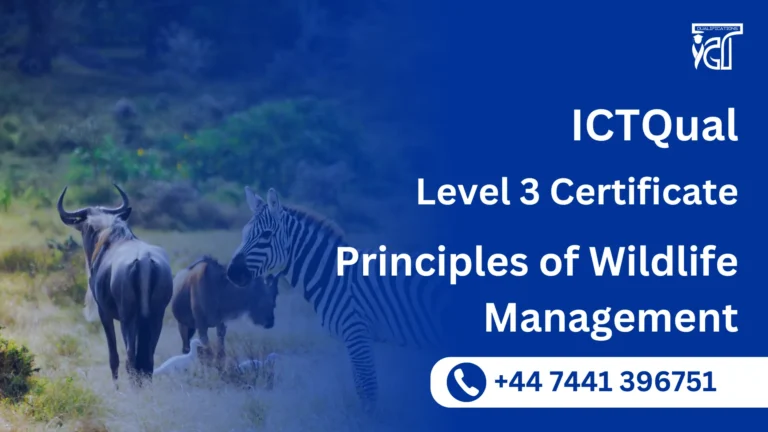
Principles of Protected Areas Management

ICT logo
ICTQual Level 3 Diploma in Principles of Protected Areas Management

Course Level

Level 3

Course Type

Non- Ofqual

Awarding Body

ICTQual 

Duration

30 Credits Hours

Study Mood

Online

Assessment

Assignments Based

Course Overview

What is this course

The ICTQual Level 3 Diploma in Principles of Protected Areas Management is designed to provide learners with the knowledge and skills required to manage and conserve protected natural environments. This qualification introduces the principles of sustainable management, biodiversity conservation, and the responsibilities involved in safeguarding ecosystems for future generations.

Learners will explore key topics such as ecological monitoring, habitat preservation, visitor management, environmental legislation, and community engagement. The course emphasizes practical approaches to balancing conservation priorities with human activities, ensuring that protected areas remain resilient and sustainable.

On completion, participants will hold a recognized Level 3 diploma that enhances career opportunities in conservation, environmental management, and related fields. This qualification demonstrates competence in managing protected areas and supports progression into higher‑level studies or professional roles within environmental and conservation organizations.

Course Content

Detailed Curriculum Structure

This qualification, the ICTQual Level 3 Diploma in Principles of Protected Areas Management, consists of 6 mandatory units.

  1. Protected Area Governance
  2. Monitoring and Evaluation
  3. Sustainable Tourism in Protected Areas
  4. Conflict Resolution in Conservation
  5. Environmental Education and Outreach
  6. Applied Conservation Techniques

Learning Objectives

Learning Outcomes for the ICTQual Level 3 Diploma in Principles of Protected Areas Management:

Protected Area Governance

  • Understand the role of governance structures in managing protected areas effectively.
  • Identify responsibilities of government agencies, NGOs, and community stakeholders in conservation.
  • Recognize the importance of transparency and accountability in governance processes.
  • Demonstrate awareness of participatory decision‑making in protected area management.
  • Apply governance principles to balance ecological, social, and economic priorities.
  • Evaluate how strong governance supports long‑term sustainability and biodiversity protection.

Monitoring and Evaluation

  • Understand the purpose of monitoring and evaluation in conservation management.
  • Identify key indicators for assessing ecological health, visitor impact, and community involvement.
  • Recognize the importance of accurate data collection and reporting for decision‑making.
  • Demonstrate awareness of tools and techniques used in monitoring protected areas.
  • Apply evaluation methods to measure the effectiveness of conservation strategies.
  • Evaluate how monitoring supports adaptive management and continuous improvement.

Sustainable Tourism in Protected Areas

  • Understand the principles of sustainable tourism and its role in conservation.
  • Identify strategies to minimize negative impacts of tourism on ecosystems.
  • Recognize the importance of visitor education in promoting responsible tourism practices.
  • Demonstrate awareness of eco‑tourism models that benefit both communities and conservation.
  • Apply sustainable tourism practices to enhance visitor experiences while protecting biodiversity.
  • Evaluate how tourism can generate economic benefits without compromising conservation goals.

Conflict Resolution in Conservation

  • Understand common sources of conflict in protected area management, such as land use and resource access.
  • Identify strategies for resolving disputes between communities, authorities, and conservation groups.
  • Recognize the importance of negotiation and mediation in conservation contexts.
  • Demonstrate awareness of cultural sensitivity in conflict resolution processes.
  • Apply problem‑solving skills to address human‑wildlife conflicts and stakeholder disagreements.
  • Evaluate how effective conflict resolution strengthens conservation outcomes and community trust.

Environmental Education and Outreach

  • Understand the role of education in promoting conservation awareness.
  • Identify methods for delivering conservation messages to diverse audiences.
  • Recognize the importance of outreach programmes in engaging communities and schools.
  • Demonstrate awareness of communication strategies for environmental advocacy.
  • Apply educational tools to encourage responsible behavior in protected areas.
  • Evaluate how education and outreach contribute to long‑term conservation success.

Applied Conservation Techniques

  • Understand practical techniques used in habitat restoration and species protection.
  • Identify methods such as reforestation, invasive species control, and wildlife monitoring.
  • Recognize the importance of applying scientific knowledge to conservation practices.
  • Demonstrate awareness of field safety and ethical considerations in conservation work.
  • Apply hands‑on skills to support ecological restoration and biodiversity management.
  • Evaluate how applied techniques contribute to measurable conservation outcomes.

Who Should Attend

Target Audience and Participants

  • Individuals aspiring to work in conservation and environmental management.
  • Staff and volunteers in national parks, wildlife reserves, and protected areas.
  • Community members engaged in local environmental stewardship projects.
  • Entry‑level professionals seeking formal training in sustainable area management.
  • NGO workers involved in biodiversity conservation and habitat protection.
  • Government or municipal employees responsible for managing natural resources.
  • Students interested in building a foundation for careers in ecology or conservation.
  • Anyone passionate about protecting ecosystems and promoting sustainable land use.

Career & Learning Benefits

Skills, Knowledge & Opportunities You Will Earn

  • Gain foundational knowledge in managing and conserving protected natural environments.
  • Develop practical skills in ecological monitoring, habitat preservation, and biodiversity protection.
  • Learn to balance conservation priorities with visitor management and sustainable land use.
  • Strengthen understanding of environmental legislation, policies, and compliance requirements.
  • Enhance employability in conservation, environmental management, and related fields.
  • Build confidence in engaging communities and stakeholders in protected area stewardship.
  • Earn a recognized Level 3 diploma that validates competence in protected area management.
  • Establish a pathway for progression into advanced conservation and environmental qualifications.

Need More Information?

Frequently Asked Questions Explained

A basic understanding of environmental or conservation concepts is helpful, but not mandatory. The course is designed to introduce learners to the principles of protected area management while building practical skills.

On successful completion, learners are awarded the ICTQual Level 3 Diploma in Principles of Protected Areas Management, a recognized qualification that validates competence in conservation and environmental management.

It enhances career prospects in conservation, environmental management, and related fields. Learners gain credibility, practical expertise, and the potential to progress into more advanced roles in environmental organizations.

You will learn to monitor ecosystems, manage habitats, balance conservation with visitor activities, and engage communities in sustainable stewardship.

Yes. ICTQual qualifications are designed to meet professional standards and are recognized by many conservation and environmental organizations worldwide.

Enrollment Criteria

Minimum Eligibility Criteria for Enrollment

  • Proficiency in English (reading, writing, speaking)
  • Basic qualification or experience in environmental studies, conservation, or related fields
  • Interest in protected areas, sustainability, and conservation practices
  • Age 18 or above

Lock In Your Spot

Get in Touch

+44 2035 764371

+44 7441 396751

info@ictqual.co.uk

www.inspirecollege.co.uk
Similar Posts