
What is Fire Safety?
What is Fire Safety? Importance, Workplace Rules, and Safety Guidelines
Fire safety is a critical part of workplace health and safety management. Every year, thousands of fires occur in workplaces, industrial facilities, offices, and residential buildings, causing injuries, fatalities, and significant property damage. Implementing effective fire safety measures helps protect employees, visitors, property, and business operations.
Understanding fire safety is essential for organizations, safety professionals, and employees because it ensures that proper prevention, detection, and emergency response measures are in place. Businesses that prioritize fire safety not only comply with safety regulations but also create a safer working environment for everyone.
In this guide, we will explain what fire safety is, why it is important, key workplace fire safety rules, and essential guidelines organizations should follow to prevent fire incidents.
What is Fire Safety?
Fire safety refers to the systematic practices, policies, and safety measures implemented to prevent fires, control fire hazards, and protect people, property, and the environment from fire-related risks. It is an essential component of workplace health and safety management and plays a critical role in reducing injuries, fatalities, and financial losses caused by fire incidents.
In simple terms, fire safety involves identifying potential fire hazards, implementing preventive strategies, installing fire protection systems, and ensuring that individuals know how to respond effectively during a fire emergency. Organizations, industries, and public institutions must adopt proper fire safety practices to ensure a safe working and living environment.
Effective fire safety management requires a combination of risk assessment, safety planning, employee training, and the installation of appropriate fire detection and suppression systems. By implementing these measures, organizations can significantly reduce the likelihood of fires and minimize damage if a fire occurs.
Fire safety is particularly important in workplaces such as industrial facilities, offices, construction sites, hospitals, and educational institutions, where the presence of electrical equipment, machinery, chemicals, and combustible materials can increase fire risks.
A comprehensive fire safety program generally focuses on three key elements: fire prevention, fire protection, and emergency preparedness.
Fire Prevention
Fire prevention involves taking proactive measures to reduce the chances of a fire starting in the first place. This is the most important aspect of fire safety because preventing a fire is always more effective than responding to one.
Fire prevention activities typically include identifying potential fire hazards, maintaining equipment properly, and implementing safe work practices. Organizations conduct regular fire risk assessments to identify ignition sources, combustible materials, and unsafe conditions that could lead to a fire.
Common fire hazards that require preventive action include:
- Faulty or overloaded electrical systems
- Improper storage of flammable liquids and gases
- Accumulation of combustible waste materials
- Poor housekeeping practices
- Unsafe handling of machinery or equipment
By addressing these hazards and maintaining proper safety standards, workplaces can significantly reduce the likelihood of fire incidents.
Fire Protection
Fire protection focuses on detecting, controlling, and suppressing fires if they occur. This includes the installation and maintenance of fire protection systems that help limit the spread of fire and provide early warning to occupants.
Fire protection measures typically include the use of fire detection systems, fire suppression equipment, and structural safety features designed to contain fires.
Common fire protection systems include:
- Fire alarm systems that alert occupants when a fire is detected
- Smoke detectors that identify smoke particles in the air
- Fire extinguishers used to control small fires
- Automatic sprinkler systems that activate when temperatures rise
- Fire-resistant building materials and fire doors that help contain fires
These systems are designed to provide early detection and immediate response, allowing people to evacuate safely while minimizing damage to property.
Emergency Preparedness
Emergency preparedness ensures that individuals and organizations are fully prepared to respond quickly and effectively in the event of a fire emergency. Even with strong prevention and protection measures in place, fires can still occur, which is why preparedness is critical.
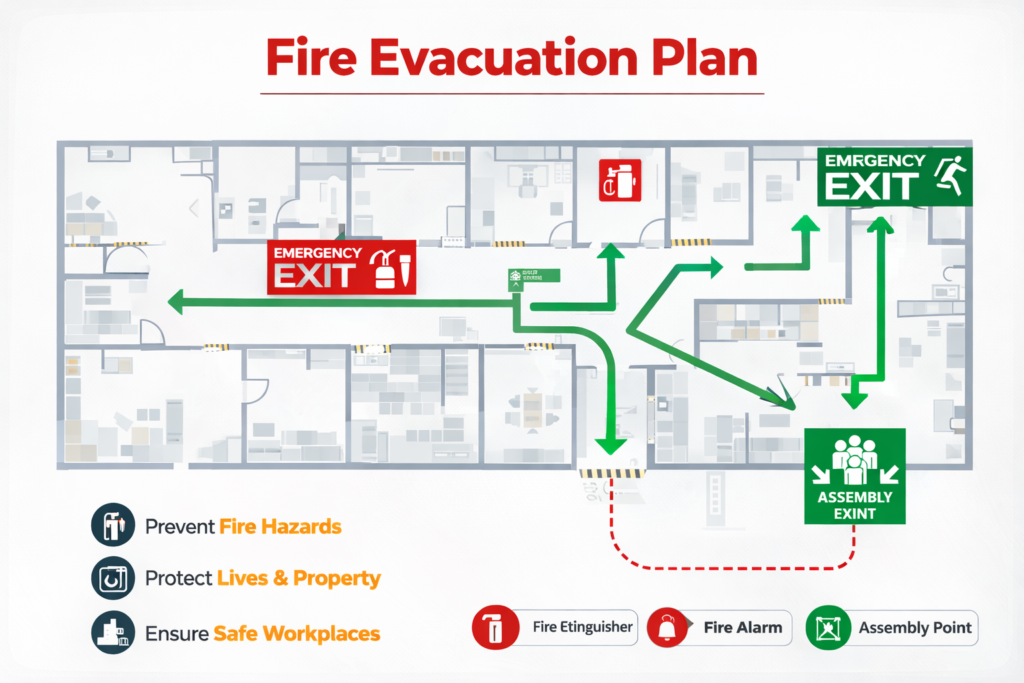
Emergency preparedness includes developing clear evacuation plans, conducting fire drills, and training employees on emergency response procedures. Workers must understand how to respond calmly and safely during a fire incident.
Important components of emergency preparedness include:
- Clearly marked emergency exits and escape routes
- Designated assembly points outside the building
- Emergency communication systems and alarm procedures
- Regular fire drills to practice evacuation procedures
- Training employees on the proper use of fire extinguishers
Proper emergency planning ensures that people can evacuate quickly, reduce panic, and assist others safely during fire emergencies.
The Importance of an Integrated Fire Safety Approach
An effective fire safety program combines prevention, protection, and preparedness to create a comprehensive safety system. These elements work together to minimize fire risks, detect fires early, and ensure a coordinated response during emergencies.
Organizations that implement strong fire safety strategies not only protect their employees and assets but also comply with workplace safety regulations and standards. Additionally, fire safety awareness and training help create a culture of safety where employees actively participate in identifying hazards and preventing accidents.
Ultimately, fire safety is not just about responding to fires it is about creating safer environments by preventing fires, reducing risks, and ensuring that everyone knows how to act when emergencies occur.
Why Fire Safety is Important
Fire safety is essential for protecting people, property, and business operations. Without proper fire safety measures, even a small fire can quickly escalate into a major disaster.
Protects Human Lives
The most important reason for implementing fire safety measures is to protect human life. Fires can spread rapidly, producing smoke and toxic gases that can cause severe injuries or fatalities. Proper fire safety training and emergency procedures can save lives during critical situations.
Prevents Property Damage
Fires can cause extensive damage to buildings, machinery, and equipment. For businesses, this can lead to significant financial losses and long periods of operational downtime.
Ensures Legal Compliance
Most countries have strict fire safety regulations that organizations must follow. Employers are responsible for maintaining safe workplaces and ensuring that proper fire safety systems are in place.
Supports Business Continuity
A fire incident can disrupt business operations and damage a company’s reputation. By implementing strong fire safety measures, organizations can reduce risks and maintain continuity.
Common Causes of Workplace Fires
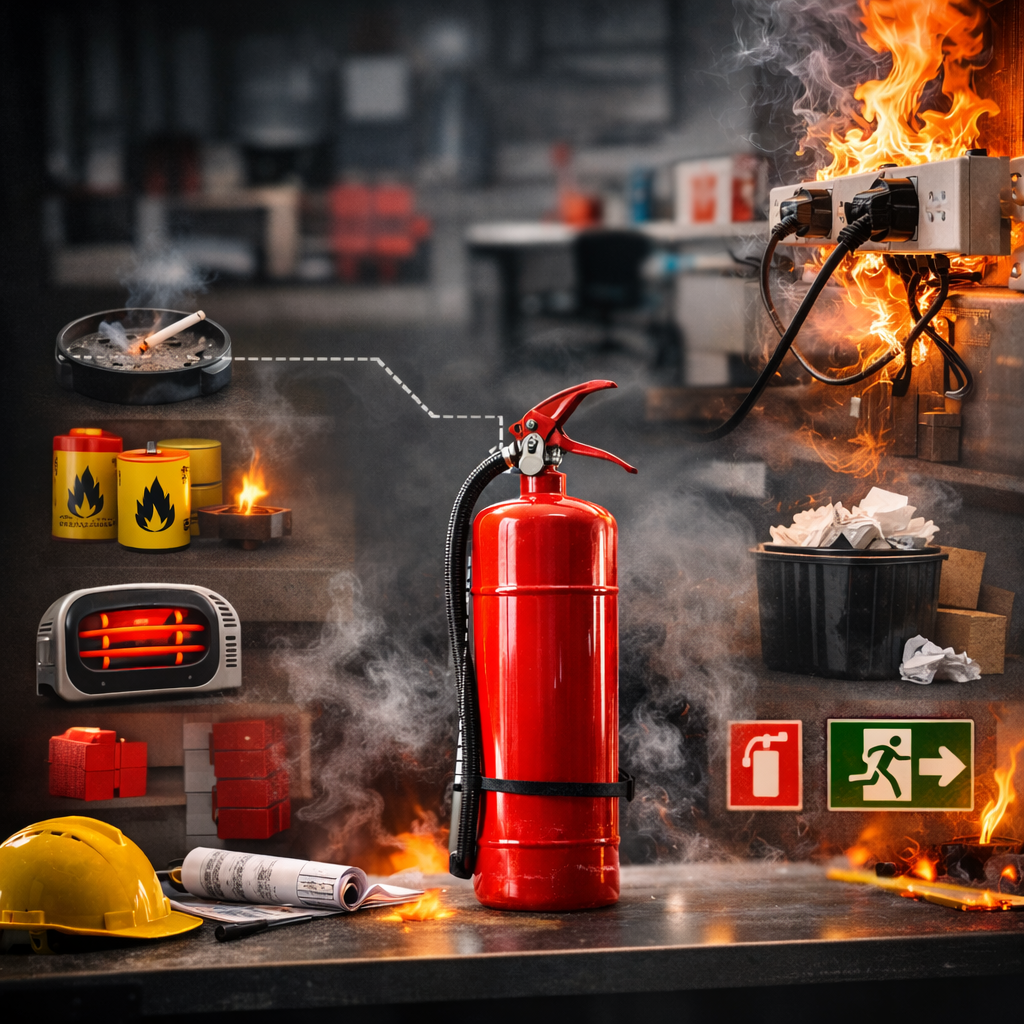
Understanding the causes of fires is the first step in preventing them. Many workplace fires occur due to preventable hazards.
Some of the most common causes include:
Electrical Faults
Damaged wiring, overloaded circuits, and poorly maintained electrical equipment are major causes of workplace fires.
Flammable Materials
Improper storage of flammable liquids, gases, and chemicals can significantly increase fire risk.
Human Error
Negligence, unsafe work practices, or lack of awareness can lead to fire incidents.
Overheating Equipment
Machinery or equipment that overheats due to poor maintenance may ignite surrounding materials.
Smoking
Improper disposal of cigarette butts or smoking in restricted areas can start fires.
By identifying these risks early, organizations can take preventive actions to reduce the chances of fire incidents.
Key Fire Safety Rules for Workplaces
Every workplace should follow essential fire safety rules to ensure a safe working environment. These rules help prevent fires and ensure proper response during emergencies.
1. Conduct Regular Fire Risk Assessments
Organizations should regularly assess their workplaces to identify fire hazards and evaluate potential risks. Risk assessments help determine the necessary safety measures to reduce fire risks.
2. Install Fire Detection Systems
Smoke detectors and fire alarm systems help detect fires early and alert occupants, allowing them to evacuate quickly.
3. Maintain Fire Extinguishers
Fire extinguishers should be installed in accessible locations and inspected regularly to ensure they are functional when needed.
4. Keep Emergency Exits Clear
Emergency exits and escape routes must always remain clear and easily accessible to allow safe evacuation during emergencies.
5. Train Employees on Fire Safety
Employees should receive proper fire safety training so they understand evacuation procedures, fire prevention practices, and how to respond in emergencies.
6. Store Flammable Materials Safely
Flammable substances should be stored in designated areas with proper ventilation and safety controls.
7. Install Fire Alarm Systems
Fire alarms help alert occupants quickly, reducing evacuation time and minimizing risk.
8. Conduct Regular Fire Drills
Fire drills help employees practice evacuation procedures and ensure they know what to do in an emergency situation.
Essential Fire Safety Equipment
Fire safety equipment plays an important role in detecting and controlling fires. Workplaces should install appropriate fire protection systems to minimize risks.
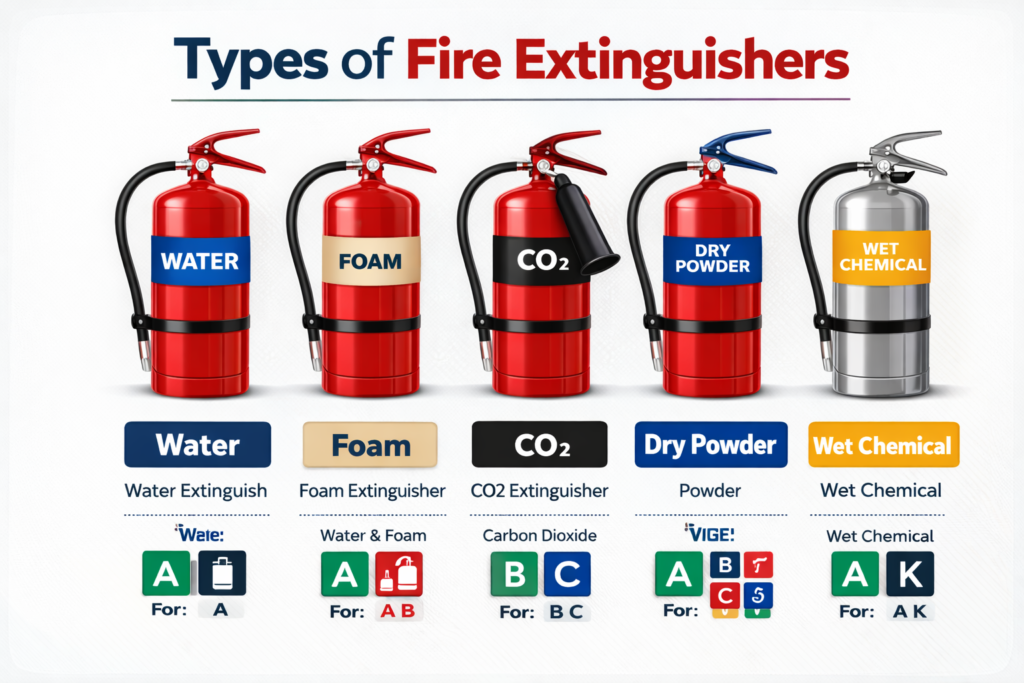
Fire Extinguishers
Fire extinguishers are essential for controlling small fires before they spread. Different types of extinguishers are used for different classes of fire.
Smoke Detectors
Smoke detectors identify smoke particles in the air and activate alarms to warn occupants about potential fires.
Fire Alarm Systems
Fire alarm systems provide early warning signals, allowing employees to evacuate safely.
Sprinkler Systems
Automatic sprinkler systems release water when high temperatures are detected, helping control fires before they grow larger.
Emergency Lighting
Emergency lighting ensures visibility during evacuation in case of power failure.
Workplace Fire Safety Responsibilities
Fire safety is a shared responsibility between employers and employees.
Employer Responsibilities
Employers are responsible for ensuring that workplaces comply with fire safety regulations and that adequate safety measures are implemented.
Key responsibilities include:
- Conducting fire risk assessments
- Installing fire safety equipment
- Developing emergency evacuation plans
- Providing fire safety training to employees
- Maintaining fire protection systems
Employee Responsibilities
Employees also play an important role in maintaining fire safety.
They should:
- Follow fire safety procedures
- Report potential hazards immediately
- Participate in fire drills and training programs
- Use equipment safely
- Avoid unsafe practices
When both employers and employees work together, workplace fire safety can be significantly improved.
Fire Risk Assessment Process
A fire risk assessment helps identify potential hazards and determine appropriate safety measures.
The typical fire risk assessment process includes the following steps:
Step 1: Identify Fire Hazards
Identify possible ignition sources, flammable materials, and other fire hazards within the workplace.
Step 2: Identify People at Risk
Determine who may be at risk in case of a fire, including employees, visitors, and contractors.
Step 3: Evaluate the Risks
Assess the likelihood of a fire occurring and evaluate existing safety controls.
Step 4: Implement Safety Measures
Introduce measures to eliminate or reduce risks, such as installing alarms, improving storage practices, and conducting training.
Step 5: Review and Update
Fire risk assessments should be reviewed regularly to ensure they remain effective.
Fire Prevention Tips for Workplaces
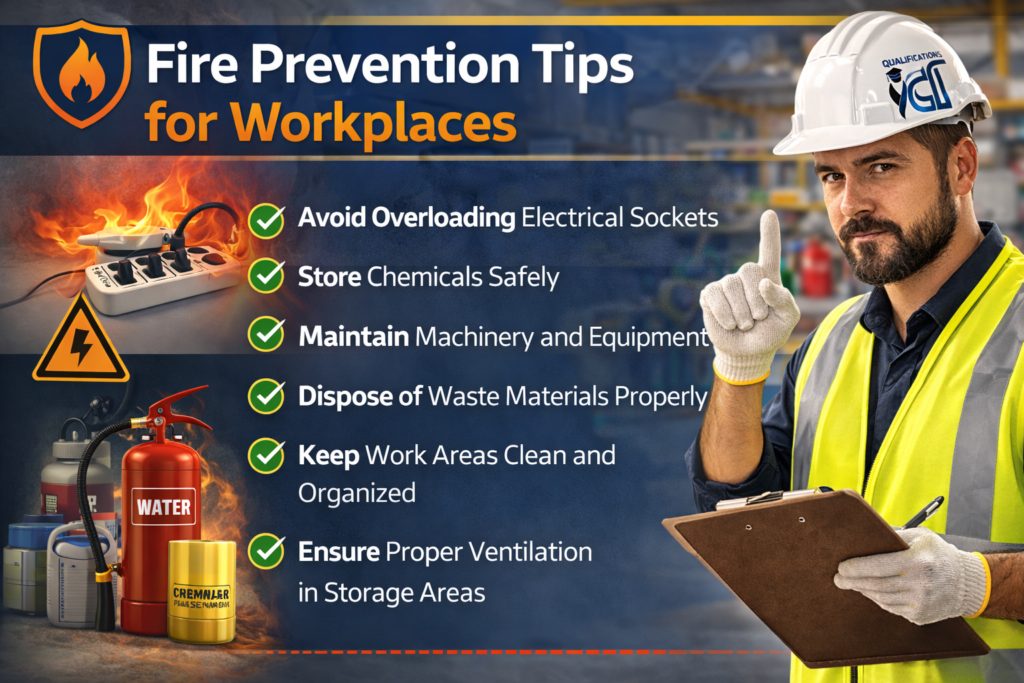
Preventing fires is always better than responding to them. Organizations can reduce fire risks by implementing simple preventive measures.
Important fire prevention tips include:
- Avoid overloading electrical sockets
- Maintain electrical equipment regularly
- Store chemicals safely
- Dispose of waste materials properly
- Keep work areas clean and organized
- Ensure proper ventilation in storage areas
- Train employees on fire prevention practices
These actions help reduce the likelihood of fire incidents and create safer workplaces.
Importance of Fire Safety Training
Fire safety training is essential for ensuring that employees understand fire risks and know how to respond during emergencies.
Training programs help employees:
- Recognize fire hazards
- Use fire extinguishers correctly
- Follow evacuation procedures
- Respond quickly during emergencies
Organizations that provide regular fire safety training are better prepared to prevent and manage fire incidents.
For individuals interested in developing professional fire safety skills, certified fire safety training programs can provide valuable knowledge and qualifications that support career development in health and safety management.
How to Build a Fire Safety Culture in the Workplace
Creating a strong fire safety culture ensures that safety becomes part of everyday workplace practices.
Organizations can build a fire safety culture by:
- Promoting safety awareness
- Encouraging hazard reporting
- Conducting regular training sessions
- Performing safety inspections
- Ensuring leadership commitment to safety
When safety becomes a shared responsibility, organizations can significantly reduce fire risks.
Fire safety is an essential component of workplace health and safety. By implementing effective fire prevention strategies, installing proper safety equipment, and providing training to employees, organizations can reduce fire risks and protect both people and property.
Understanding fire safety principles and following workplace guidelines can prevent accidents and ensure quick response during emergencies. Businesses that prioritize fire safety not only comply with regulations but also create safer working environments for employees and visitors.
Investing in fire safety awareness and training is one of the most effective ways to minimize risks and maintain a secure workplace.