Fire Risk Assessment: Step-by-Step Guide for Workplace Safety
What is a Fire Risk Assessment?
Fire risk assessment is a systematic process used to identify fire hazards and evaluate risks. It is a key part of a broader fire safety strategy. To understand how it connects with prevention, protection, and preparedness, read this guide on fire safety essentials prevention protection and preparedness
This process involves a detailed examination of all factors that could contribute to a fire, including potential ignition sources such as electrical equipment or machinery, combustible materials like paper, chemicals, or fuels, and environmental conditions that may support the spread of fire. It also includes reviewing existing fire safety arrangements, such as detection systems, alarm systems, firefighting equipment, and emergency evacuation procedures.Fire risk assessment is a key part of overall fire safety explore our Fire Safety Complete Guide to understand the complete framework of prevention and protection.
The primary objective of a fire risk assessment is to prevent fire incidents before they occur and to ensure that, if a fire does break out, its impact is minimized and all occupants can evacuate safely. It is not a one-time activity but an ongoing process that must be regularly reviewed and updated in line with changes in the workplace.
To understand the broader concept of fire prevention and protection, read our complete guide on what is fire safety.
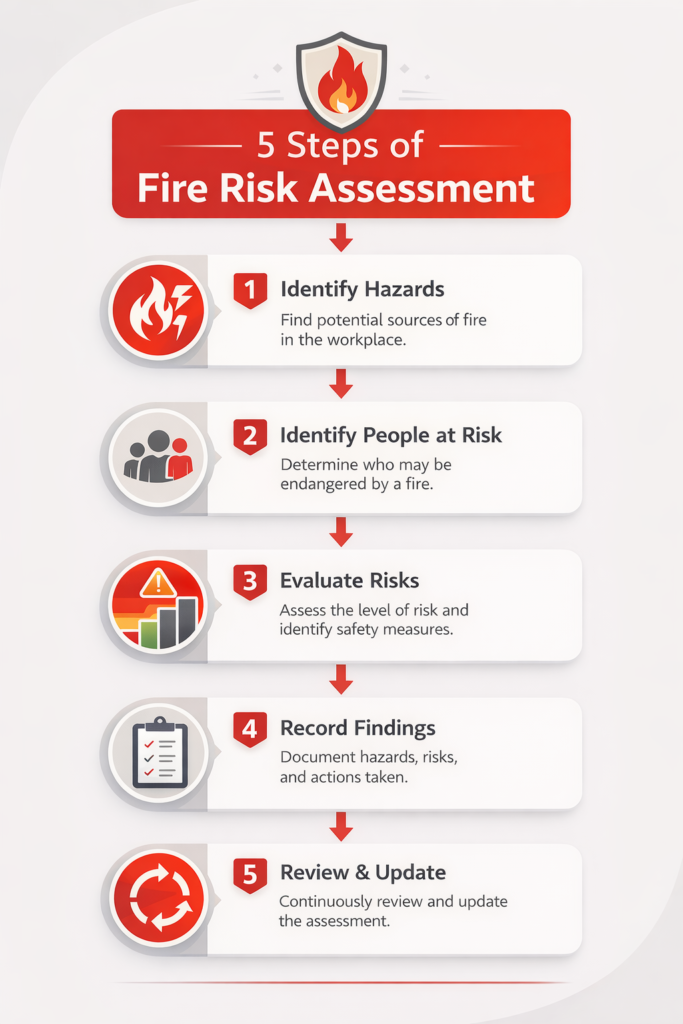
What are the 5 Steps of Fire Risk Assessment?
A fire risk assessment follows a structured five-step approach designed to systematically identify hazards, evaluate risks, and implement effective safety measures. These steps ensure that workplaces remain compliant, prepared, and protected against potential fire incidents.
- Identify Fire Hazards
Assess the workplace to identify potential sources of ignition, fuel, and oxygen that could contribute to a fire. - Identify People at Risk
Determine who may be at risk, including employees, visitors, and vulnerable individuals, particularly those who may require assistance during evacuation. - Evaluate and Reduce Risks
Analyze the likelihood and potential impact of identified hazards, and implement appropriate control measures to eliminate or minimize risks. - Record Findings and Implement Measures
Document all findings, safety procedures, and corrective actions, and ensure that necessary fire safety measures are effectively put in place. - Review and Update Regularly
Continuously monitor and review the assessment, updating it whenever there are changes in the workplace or after incidents, to maintain ongoing safety and compliance.
This structured approach ensures a proactive and comprehensive fire safety strategy, helping organizations protect lives, assets, and operations.
Why is Fire Risk Assessment Important?
- Reduces the likelihood of fire incidents
- Ensures safe evacuation procedures
- Protects equipment and infrastructure
- Builds a strong safety culture
Legal Requirements and Compliance
In many countries, fire risk assessments are mandatory under workplace safety laws such as:
- Fire Safety Regulations (UK)
- OSHA Standards (USA)
- International Safety Guidelines
Failure to comply can result in:
- Heavy fines
- Legal action
- Business shutdown
Types of Fire Risk Assessment
Understanding different types of fire risk assessment helps organizations choose the most appropriate approach based on their workplace environment and level of risk.
Qualitative Fire Risk Assessment
This is the most common type used in workplaces. It involves identifying hazards and assessing risks based on professional judgment rather than numerical data. It is simple, practical, and suitable for offices, retail spaces, and small businesses.
Quantitative Fire Risk Assessment
This method uses numerical data and calculations to assess risk levels. It is often applied in high-risk environments such as industrial facilities, chemical plants, and large infrastructure projects. It provides a more detailed and scientific analysis of fire risks.
Dynamic Fire Risk Assessment
This type is carried out in real-time, usually by emergency responders or safety personnel. It involves continuously assessing changing conditions during operations or emergencies and making immediate decisions to control risks.
Who is Responsible for Conducting a Fire Risk Assessment?
A fire risk assessment must be carried out by a competent person someone with the necessary knowledge, training, and experience to identify hazards and implement appropriate safety measures. Responsibility typically falls on the following roles:
Employers and Duty Holders
- Employers are legally responsible for ensuring that a fire risk assessment is conducted and regularly updated.
- They must take all reasonable steps to protect employees, visitors, and the workplace from fire risks.
- Duty holders are also responsible for implementing recommended control measures and maintaining fire safety systems.
- This includes providing staff training, ensuring proper maintenance of equipment, and keeping accurate records of assessments.
Fire Safety Officers
- Fire safety officers or designated safety personnel are often appointed to carry out or manage fire risk assessments.
- They are responsible for identifying hazards, evaluating risks, and recommending appropriate control measures.
- Their role includes ensuring compliance with fire safety regulations and organizational policies.
- They also oversee fire drills, staff training, and ongoing monitoring of fire safety practices.
You can also build a professional career in this field by becoming a certified fire safety officer. Learn more in our detailed guide on how to become a fire safety officer.
When to Hire a Professional Fire Risk Assessor
In some situations, it is necessary to engage an external specialist or qualified fire risk assessor:
- When the workplace is large, complex, or involves multiple buildings
- When high-risk materials such as flammable chemicals, gases, or industrial processes are present
- When there is limited internal expertise or lack of trained personnel
- When required by law, insurance providers, or regulatory authorities
- When previous assessments indicate significant or unresolved risks
⚠️ Types of Fire Hazards in the Workplace
Understanding hazards is the first step toward prevention.
Electrical Fire Hazards
- Faulty wiring
- Overloaded circuits
- Damaged equipment
Flammable Materials and Chemicals
- Fuels and solvents
- Paper and packaging
- Gases and combustible liquids
Human Factors
- Smoking in restricted areas
- Poor housekeeping
- Lack of training
Structural and Equipment Risks
- Blocked exits
- Poor ventilation
- Lack of fire detection systems
Step-by-Step Fire Risk Assessment Process
This is the most important section follow these five steps to conduct an effective assessment.
Step 1 – Identify Fire Hazards
Look for anything that could start a fire:
- Heat sources (machinery, electrical systems)
- Fuel sources (flammable materials)
- Oxygen sources (ventilation systems)
👉 Example:
A warehouse storing chemicals near electrical panels increases fire risk.
Step 2 – Identify People at Risk
Determine who may be affected:
- Employees
- Visitors
- Disabled individuals
- Night shift workers
👉 Pay special attention to vulnerable groups.
Step 3 – Evaluate, Remove, or Reduce Risks
Assess the likelihood and severity of fire hazards.
Control measures include:
- Installing fire alarms
- Using fire-resistant materials
- Safe storage of chemicals
- Regular equipment maintenance
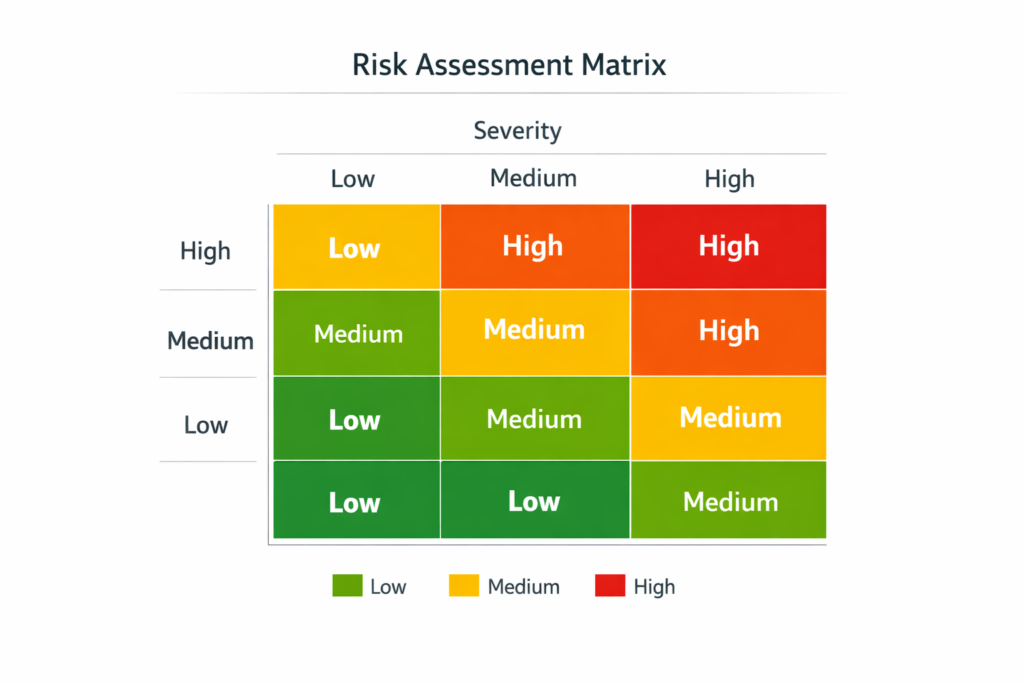
Step 4 – Record Findings and Implement Safety Measures
Document everything:
- Hazards identified
- Risk levels
- Control measures
Then:
- Assign responsibilities
- Implement safety procedures
- Train employees
Step 5 – Review and Update Regularly
A fire risk assessment is not a one-time task.
Review when:
- Workplace layout changes
- New equipment is introduced
- After a fire incident
- Annually (recommended minimum)
Fire Risk Assessment Checklist (Workplace Use)
Use this checklist to ensure full compliance:
Fire Detection Systems
- Smoke detectors installed and working
- Fire alarms tested regularly
Emergency Exits
- Clearly marked escape routes
- Exits are unobstructed
Firefighting Equipment
- Fire extinguishers available
- Sprinkler systems functional
Training and Drills
- Employees trained in fire safety
- Regular evacuation drills conducted
Maintenance Records
- Equipment inspection logs maintained
- Electrical systems checked periodically
Fire Risk Assessment Report Format
A well-structured fire risk assessment report is essential for documentation, compliance, and future reference. It provides clear evidence that risks have been identified and appropriate measures have been implemented.
Key Components of a Fire Risk Assessment Report
1. General Information
- Name and location of the workplace
- Date of assessment
- Name of the assessor
2. Identification of Fire Hazards
- Sources of ignition
- Combustible materials
- Environmental risk factors
3. People at Risk
- Employees
- Visitors
- Vulnerable individuals
4. Risk Evaluation
- Likelihood of fire occurrence
- Potential consequences
- Risk level classification
5. Control Measures
- Existing fire safety measures
- Recommended improvements
6. Action Plan
- Required actions
- Responsible persons
- Deadlines for implementation
7. Review and Monitoring
- Schedule for future assessments
- Continuous improvement strategies
Fire Risk Assessment Examples
Office Environment Example
Hazard: Overloaded power sockets
Risk: Electrical fire
Control: Install additional outlets and inspect wiring
Construction Site Example
Hazard: Flammable materials near welding work
Risk: Fire outbreak
Control: Separate storage and enforce safety protocols
Industrial Facility Example
Hazard: Chemical storage
Risk: Explosion and fire
Control: Use fireproof storage and ventilation systems
Common Mistakes to Avoid
Avoiding common errors is essential to ensure that a fire risk assessment remains effective, compliant, and capable of protecting lives and property. The following are some of the most critical mistakes organizations should be aware of:
Ignoring Hidden Hazards
- Overlooking less obvious risks such as overloaded sockets, poor storage practices, or blocked ventilation systems
- Failing to assess areas that are not frequently used, such as storage rooms or basements
- Underestimating minor hazards that can escalate into serious fire incidents if left unmanaged
Lack of Documentation
- Failing to properly record identified hazards, risk levels, and control measures
- Not maintaining written evidence of inspections, maintenance, and safety actions
- Inability to demonstrate compliance during audits or inspections due to missing records
Not Updating the Assessment
- Treating the fire risk assessment as a one-time task rather than an ongoing process
- Neglecting to review the assessment after changes in layout, equipment, or processes
- Relying on outdated information that no longer reflects current workplace risks
Poor Training and Awareness
- Employees not being aware of fire hazards or emergency procedures
- Lack of regular fire drills and safety training sessions
- Staff being unprepared to respond effectively during a fire emergency
Addressing these common mistakes ensures that a fire risk assessment remains accurate, up to date, and capable of providing a high level of protection for both people and the workplace.
How Often Should a Fire Risk Assessment Be Reviewed?
Recommended Frequency
- At least once a year
Immediate Review Required When:
- New equipment is installed
- Workplace layout changes
- After incidents
Continuous Improvement
Regular updates ensure ongoing safety and compliance.
Benefits of Conducting a Fire Risk Assessment
Carrying out a fire risk assessment provides significant advantages for organizations, going beyond basic compliance to support overall workplace safety, operational efficiency, and long-term sustainability.
Improved Workplace Safety
- Identifies potential fire hazards before they lead to incidents
- Reduces the risk of injuries, fatalities, and emergency situations
- Ensures proper safety measures such as alarms, extinguishers, and escape routes are in place
- Creates a safer environment for employees, visitors, and contractors
Legal Compliance
- Helps organizations meet local and international fire safety regulations
- Demonstrates due diligence and responsibility toward employee safety
- Reduces the risk of penalties, fines, or legal action from regulatory authorities
- Supports successful inspections and audits
Reduced Financial Loss
- Minimizes damage to buildings, equipment, and inventory in case of fire
- Prevents costly business interruptions and downtime
- Reduces insurance claims and may help lower insurance premiums
- Protects the overall financial stability of the organization
Increased Employee Confidence
- Builds trust by showing commitment to employee health and safety
- Ensures staff feel secure and prepared in case of emergencies
- Encourages a proactive safety culture within the workplace
- Improves morale, productivity, and overall job satisfaction
Conducting regular fire risk assessments is therefore a critical investment that protects not only people and property but also the long-term success of the organization.
Fire Risk Assessment Tools and Templates
Using the right tools and templates is essential for conducting an accurate, consistent, and efficient fire risk assessment. Whether you choose digital or manual methods, the goal is to ensure that hazards are properly identified, risks are evaluated, and all findings are clearly documented for future reference and compliance.
Digital vs Manual Methods
Both digital and manual approaches can be used to carry out fire risk assessments, depending on the size, complexity, and needs of the organization.
Digital Methods
- Provide faster and more efficient data collection and reporting
- Allow real-time updates and easy access to records from multiple locations
- Offer automated features such as reminders, risk scoring, and report generation
- Reduce human error and improve accuracy through standardized formats
- Ideal for large organizations or workplaces with complex operations
Manual Methods
- Simple and easy to implement without the need for specialized software
- Suitable for small businesses or low-risk environments
- Typically involve paper-based checklists and written reports
- More time-consuming and prone to errors or missing information
- Difficult to store, retrieve, and update records over time
Recommended Fire Risk Assessment Tools
Organizations can choose from a variety of tools to support their fire risk assessment process:
Fire Safety Applications
- Mobile or desktop applications designed to conduct inspections and record findings
- Enable users to capture photos, notes, and risk ratings during assessments
- Improve efficiency and streamline reporting
Inspection Checklists
- Structured templates that guide assessors through each step of the process
- Ensure consistency and completeness in identifying hazards and control measures
- Can be used in both digital and paper formats
Risk Assessment Software
- Advanced platforms that provide comprehensive risk management solutions
- Include features such as hazard tracking, compliance monitoring, and analytics
- Suitable for organizations requiring detailed reporting and regulatory compliance
Selecting the appropriate tools and templates not only improves the quality of the fire risk assessment but also ensures that the process remains organized, repeatable, and aligned with legal and safety requirements.
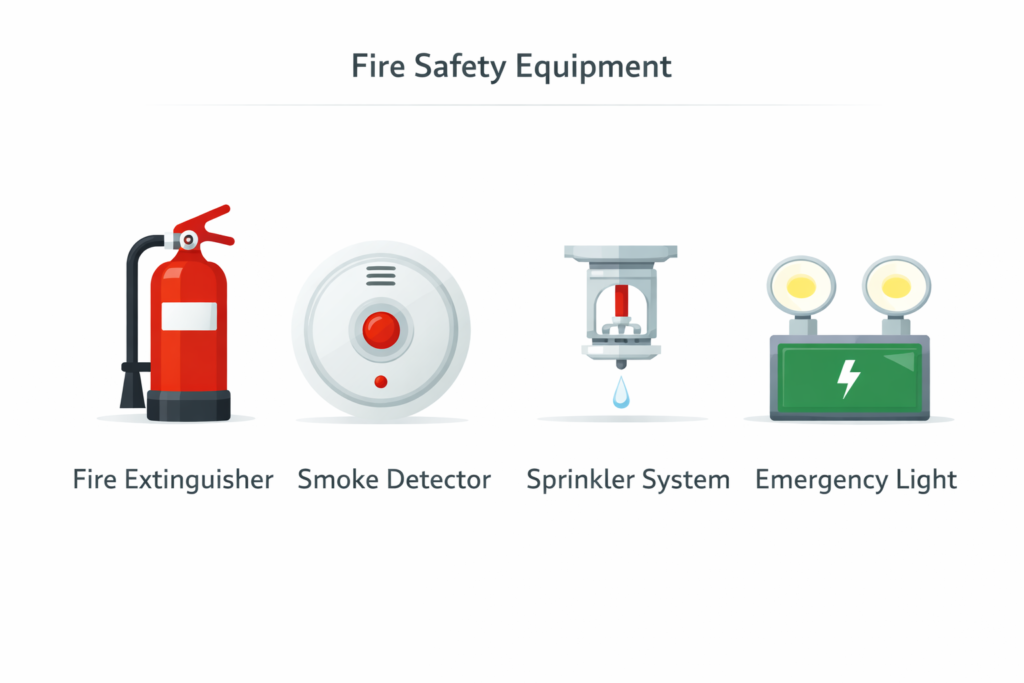
Role of Fire Safety Equipment in Risk Reduction
Fire safety equipment plays a critical role in preventing, controlling, and responding to fire incidents. Proper selection, installation, and maintenance of equipment significantly reduce risks.
Fire Extinguishers
- Used for controlling small fires in early stages
- Must be appropriate for different fire types (electrical, chemical, etc.)
- Should be easily accessible and regularly inspected
Fire Alarm Systems
- Provide early warning to occupants
- Enable quick evacuation
- Must be tested regularly to ensure functionality
Sprinkler Systems
- Automatically activate when a fire is detected
- Help control or extinguish fires before they spread
- Essential for high-risk environments
Emergency Lighting
- Ensures visibility during evacuation
- Helps occupants safely navigate escape routes
- Critical during power failures
Industries That Require Fire Risk Assessment
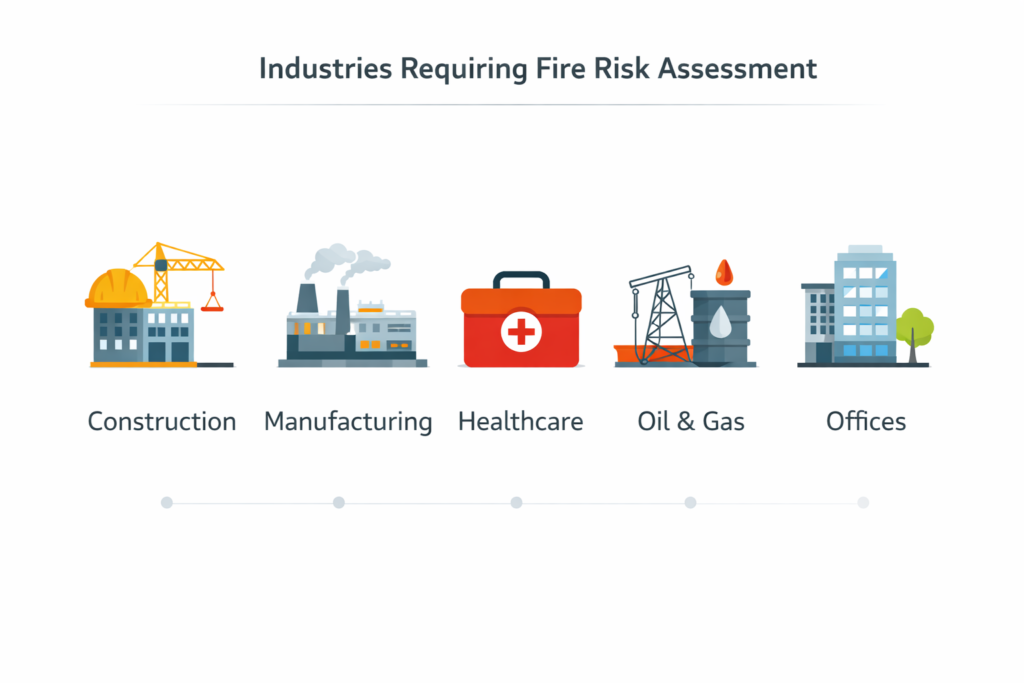
Fire risk assessment is essential across a wide range of industries, particularly those with higher exposure to fire hazards.
Construction Industry
- Presence of flammable materials and hot work activities
- Constantly changing work environments
Manufacturing and Industrial Facilities
- Use of machinery, chemicals, and high temperatures
- Increased risk of large-scale fire incidents
Healthcare Sector
- Vulnerable occupants such as patients
- Need for strict evacuation planning
Oil and Gas Industry
- Highly flammable substances
- High-risk operations requiring strict safety controls
Offices and Commercial Buildings
- Electrical equipment and high occupancy levels
- Need for organized evacuation procedures
Fire Risk Assessment Case Study (Step-by-Step Example)
A practical example helps in understanding how a fire risk assessment is conducted in a real workplace scenario.
Scenario: Medium-Sized Office Building
Step 1: Identify Hazards
- Overloaded electrical sockets
- Paper storage near electrical equipment
- Blocked emergency exit
Step 2: Identify People at Risk
- Office employees
- Visitors and clients
- Cleaning staff working after hours
Step 3: Evaluate Risks
- High risk of electrical fire
- Increased danger due to blocked exit
- Moderate risk from combustible materials
Step 4: Implement Control Measures
- Install additional power outlets
- Relocate paper storage away from heat sources
- Clear and mark emergency exits
Step 5: Record and Review
- Document findings and actions taken
- Assign responsibility to facility manager
- Schedule review every 6 months
This example demonstrates how simple actions can significantly reduce fire risks and improve workplace safety.
Additional Fire Prevention Tips for Workplaces
To further enhance fire safety, organizations should adopt proactive prevention strategies:
- Conduct regular fire drills to ensure preparedness
- Maintain clear and accessible escape routes at all times
- Store flammable materials safely and securely
- Ensure all electrical systems are regularly inspected
- Provide continuous fire safety training to employees
Final Thoughts
Expanding your fire risk assessment approach beyond basic compliance allows organizations to build a safer, more resilient workplace. By integrating structured assessments, proper documentation, modern tools, and continuous training, businesses can significantly reduce fire risks and ensure long-term safety.
A comprehensive fire risk assessment is not just about identifying hazards it is about creating a proactive safety culture that protects people, assets, and operations at every level.For a complete understanding of how risk assessment fits into a broader safety strategy, explore our fire safety blueprint guide.