
Fire Safety Risk Assessment: Complete Guide to Hazards, Prevention & Control Measures
Fire safety is a fundamental component of health and safety management, playing a vital role in protecting lives, safeguarding property, and ensuring the continuity of business operations. Fires can occur unexpectedly and spread rapidly, often leading to devastating consequences such as injuries, loss of life, structural damage, and financial disruption. For this reason, organisations and individuals must take proactive steps to identify and control fire-related risks before they escalate into serious incidents.To learn more, read our fire safety guide.
A Fire Safety Risk Assessment is a systematic and structured process designed to identify potential fire hazards, evaluate the level of risk they pose, and implement appropriate preventive and protective measures. It goes beyond simply recognising obvious dangers; it involves a thorough examination of the environment, work activities, equipment, and human factors that could contribute to a fire. By assessing these elements, responsible persons can make informed decisions to eliminate hazards where possible and reduce risks to an acceptable level.
This process is essential across a wide range of settings, including workplaces, commercial premises, industrial facilities, and residential properties. Each environment presents its own unique set of risks, making it crucial to tailor fire safety measures accordingly. Conducting a comprehensive fire risk assessment not only helps in preventing fire incidents but also ensures that effective emergency procedures are in place, enabling safe and efficient evacuation if a fire does occur.
Moreover, fire safety risk assessments are often a legal requirement in many regions, placing responsibility on employers, property owners, and designated duty holders to maintain a safe environment. Compliance with fire safety regulations demonstrates a commitment to health and safety standards while reducing the likelihood of legal penalties and reputational damage.
In today’s evolving safety landscape, fire risk assessment is not a one-time task but an ongoing process that requires regular review and updates. Changes in building layout, workforce size, equipment, or materials can introduce new hazards, making continuous monitoring essential. Ultimately, a well-executed fire safety risk assessment forms the foundation of an effective fire safety strategy, helping to create safer environments for everyone.
What is Fire Safety Risk Assessment?
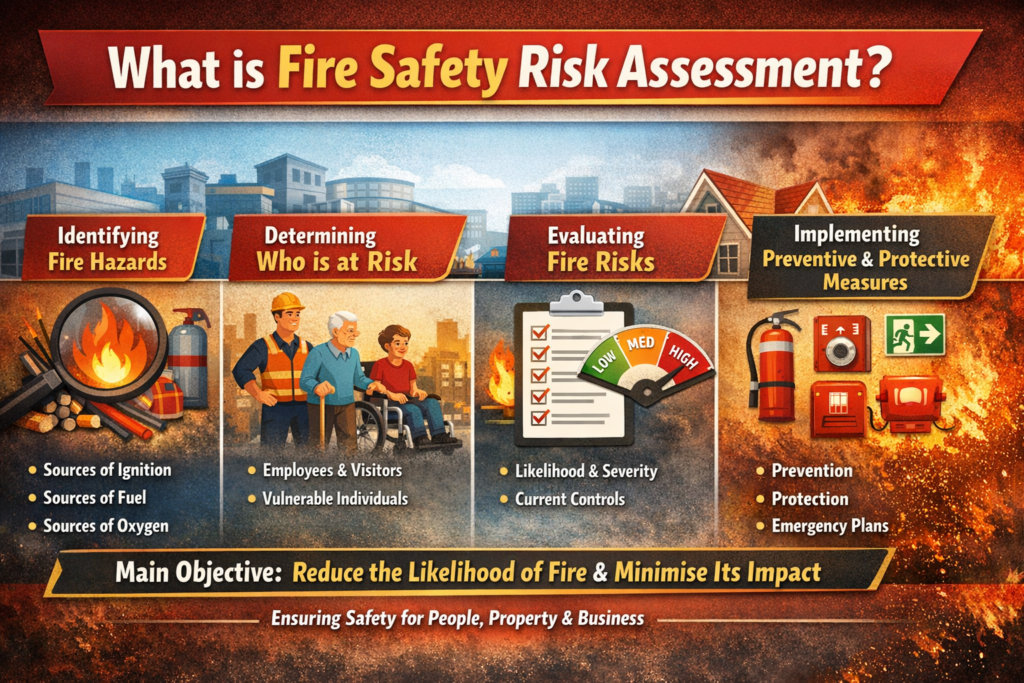
A Fire Safety Risk Assessment is a comprehensive and systematic process used to identify potential fire hazards, evaluate the level of risk associated with those hazards, and implement appropriate preventive and protective measures to ensure the safety of people, property, and business operations. It is a fundamental element of effective health and safety management and plays a critical role in reducing fire-related incidents across all types of environments, including workplaces, commercial buildings, industrial facilities, and residential properties.
Fire can occur unexpectedly and spread rapidly, often causing severe consequences such as injury, loss of life, structural damage, financial loss, and disruption to business activities. For this reason, a proactive approach to fire safety is essential. A fire safety risk assessment enables responsible persons—such as employers, building owners, landlords, or safety officers—to thoroughly examine their premises, identify areas of concern, and take informed actions to control or eliminate risks before they lead to dangerous situations.
Unlike a one-time inspection, a fire risk assessment is an ongoing and dynamic process. As workplaces evolve, equipment changes, and new materials are introduced, the level of fire risk can also change. Therefore, regular reviews and updates are necessary to ensure that fire safety measures remain effective and relevant. This continuous approach helps organisations maintain a safe environment and comply with legal and regulatory requirements.To see how risk assessment connects with prevention and preparedness, read our fire safety blueprint guide.
Detailed Elements of Fire Safety Risk Assessment
A fire safety risk assessment is typically based on four key components. Each step is essential and contributes to building a strong and effective fire safety strategy.The following table summarises the key steps involved in a Fire Safety Risk Assessment:
| Step | Key Activity | Description | Examples |
|---|---|---|---|
| 1. Identify Fire Hazards | Detect potential fire sources | Identify anything that can start or fuel a fire | Faulty wiring, flammable liquids, open flames |
| 2. Identify People at Risk | Recognise vulnerable individuals | Determine who may be affected in case of fire | Employees, visitors, elderly, disabled persons |
| 3. Evaluate Risks | Assess likelihood and impact | Analyse how likely a fire is and its consequences | High-risk areas, poor safety systems |
| 4. Implement Control Measures | Apply safety actions | Reduce or eliminate fire risks | Fire alarms, extinguishers, safe storage |
| 5. Review and Update | Maintain effectiveness | Regularly update assessment as conditions change | New equipment, layout changes |
1. Identifying Fire Hazards
The first and most crucial step is to identify all possible fire hazards within the premises. A fire hazard is anything that has the potential to start a fire or contribute to its spread. These hazards are generally grouped into three main categories:
- Sources of ignition: These include electrical systems, faulty wiring, overloaded sockets, heating equipment, open flames, cooking appliances, and machinery that generates heat or sparks.
- Sources of fuel: Any combustible material that can burn, such as paper, cardboard, wood, textiles, furniture, flammable liquids, chemicals, and waste materials.
- Sources of oxygen: Oxygen supports combustion and can intensify a fire. It may come from natural air flow or from additional sources such as oxygen cylinders or ventilation systems.
A thorough inspection of the workplace or building is required to identify both visible and hidden hazards. Early identification of these risks is essential for preventing fire incidents at their source.
2. Determining Who is at Risk
After identifying fire hazards, the next step is to determine who may be at risk if a fire occurs. This involves considering all individuals who are present on the premises, including:
- Employees and workers
- Visitors, customers, and contractors
- Vulnerable individuals such as elderly people, children, or persons with disabilities
- Staff working alone, in remote areas, or during night shifts
Understanding who is at risk is important because different individuals may require different levels of assistance during an emergency. For example, people with limited mobility may need additional support to evacuate safely. This step ensures that fire safety measures and emergency plans are inclusive and effective for everyone.
3. Evaluating Fire Risks
Once hazards and at-risk individuals have been identified, the next step is to evaluate the level of risk. This involves assessing:
- The likelihood of a fire starting
- The potential severity of its consequences
- The effectiveness of existing control measures
At this stage, it is important to review current fire safety arrangements, such as fire alarms, extinguishers, escape routes, and staff training. If these measures are found to be insufficient, additional actions must be taken to reduce the level of risk.
Risk evaluation helps prioritise actions, ensuring that the most serious hazards are addressed first. The goal is to reduce all risks to a level that is as low as reasonably practicable.
4. Implementing Preventive and Protective Measures
The final step is to implement appropriate measures to eliminate or control identified risks. These measures can be broadly divided into three categories:
Preventive Measures
These focus on reducing the chances of a fire occurring. Examples include:
- Regular maintenance of electrical systems and equipment
- Safe storage and handling of flammable materials
- Good housekeeping practices to reduce clutter and waste
- Implementing no-smoking policies in designated areas
Protective Measures
These are designed to control and limit the impact of a fire if it occurs. Examples include:
- Installation of fire detection and alarm systems
- Availability of fire extinguishers and sprinkler systems
- Fire-resistant construction materials
- Clearly marked fire exits and escape routes
Emergency Preparedness
These measures ensure that people can respond effectively in case of a fire. Examples include:
- Developing and communicating evacuation plans
- Conducting regular fire drills
- Providing fire safety training to staff
- Installing emergency lighting and signage
Implementing these measures ensures that both the likelihood and consequences of fire incidents are significantly reduced.
Main Objective of Fire Safety Risk Assessment
The primary objective of a Fire Safety Risk Assessment is to:
- Reduce the likelihood of a fire occurring and minimise its potential impact on people, property, and business operations.
By systematically identifying hazards, assessing risks, and applying effective control measures, organisations can create a safe and secure environment. In addition to protecting lives, a well-conducted fire risk assessment also supports legal compliance, enhances organisational reputation, and ensures long-term operational stability.
Why is Fire Risk Assessment Important?
Fire risk assessment is a fundamental element of effective health and safety management, providing a structured approach to identifying, evaluating, and controlling fire-related risks within any environment. Fires can develop rapidly and often without warning, leading to serious consequences such as injuries, fatalities, extensive property damage, financial loss, and operational disruption. For this reason, organisations and individuals must adopt a proactive approach to fire safety rather than relying on reactive measures after an incident occurs.
A Fire Safety Risk Assessment helps responsible persons—such as employers, building owners, landlords, and safety officers—gain a clear understanding of potential fire hazards and the level of risk they pose. It enables informed decision-making, ensuring that appropriate preventive and protective measures are implemented to reduce both the likelihood of fire and its potential impact. Moreover, it promotes a culture of safety awareness, where risks are continuously monitored, reviewed, and improved over time.
The table below highlights the key reasons why fire risk assessment is important:
| Reason | Description | Key Benefits |
|---|---|---|
| Protects Lives | Ensures fire alarms, detection systems, and safe evacuation plans are in place to protect people | Reduces injuries and saves lives |
| Prevents Property Damage | Identifies fire hazards and applies measures to protect buildings, equipment, and assets | Minimises financial loss and damage |
| Ensures Safe Evacuation | Establishes clear escape routes, emergency exits, and fire drills | Enables quick and safe evacuation |
| Supports Business Continuity | Reduces risk of disruption and ensures recovery plans are in place | Maintains operations and reduces downtime |
| Ensures Legal Compliance | Helps meet fire safety laws and regulations | Avoids fines and legal issues |
| Improves Safety Awareness | Promotes training and awareness among employees and occupants | Builds a strong safety culture |
Detailed Importance of Fire Risk Assessment
1. Protecting Lives and Minimising Injuries
The primary and most critical purpose of a fire risk assessment is to protect human life. Fires can spread quickly, producing smoke, heat, and toxic gases that can be life-threatening within minutes. A proper assessment ensures that:
- Fire detection and warning systems are installed and functioning effectively
- Safe and accessible evacuation routes are clearly identified
- Emergency exits are adequately marked and free from obstruction
- Staff and occupants are trained to respond appropriately during emergencies
Additionally, it considers the needs of vulnerable individuals such as elderly people, children, and persons with disabilities, ensuring that tailored evacuation procedures are in place. By addressing these factors, the risk of injuries and fatalities can be significantly reduced.
2. Preventing Property Damage and Asset Loss
Fires can cause severe destruction to buildings, infrastructure, equipment, and valuable assets. The financial impact of such damage can be substantial, especially for businesses that rely on physical resources for their operations. A fire risk assessment helps to:
- Identify areas with a high concentration of combustible materials
- Ensure proper storage and handling of flammable substances
- Maintain electrical systems and equipment to prevent faults
- Install fire protection systems such as alarms, extinguishers, and sprinklers
By implementing these preventive measures, organisations can reduce the likelihood of fire incidents and limit the extent of damage if a fire does occur.
3. Ensuring Safe and Efficient Evacuation
In emergency situations, the ability to evacuate quickly and safely is crucial. A fire risk assessment plays a key role in ensuring that evacuation procedures are well-planned and effective. This includes:
- Designing clear and unobstructed escape routes
- Providing adequate emergency exits based on occupancy levels
- Installing emergency lighting and signage for visibility
- Conducting regular fire drills to prepare occupants
Furthermore, it ensures that evacuation plans account for all individuals, including those who may require assistance. A well-prepared evacuation strategy reduces panic, confusion, and delays during emergencies, ultimately saving lives.
4. Supporting Business Continuity and Operational Stability
For organisations, fire incidents can lead to significant disruptions, including downtime, loss of productivity, and damage to reputation. In some cases, businesses may struggle to recover from the financial impact of a major fire. A fire risk assessment helps maintain business continuity by:
- Minimising the likelihood of fire incidents through preventive measures
- Protecting critical infrastructure, equipment, and data
- Ensuring that emergency response plans are in place
- Reducing downtime and enabling quicker recovery after an incident
By safeguarding operations, organisations can maintain stability and ensure long-term success.
5. Ensuring Legal Compliance and Avoiding Penalties
In many jurisdictions, conducting a fire risk assessment is a legal obligation for employers, property owners, and designated responsible persons. Regulatory authorities require organisations to identify risks, implement safety measures, and maintain proper documentation. Failure to comply can result in:
- Heavy fines and legal penalties
- Enforcement actions or closure of premises
- Damage to reputation and loss of trust
A properly conducted fire risk assessment ensures that all legal requirements are met, demonstrating a commitment to safety, responsibility, and professional standards.
6. Promoting a Culture of Safety and Awareness
Beyond compliance and prevention, fire risk assessment contributes to building a strong safety culture within an organisation. It encourages:
- Regular training and awareness among employees
- Active participation in safety practices
- Continuous monitoring and improvement of safety measures
When individuals are aware of fire risks and understand how to respond, the overall safety of the environment is significantly enhanced.
The 5 Steps of Fire Safety Risk Assessment
A Fire Safety Risk Assessment is carried out using a structured five-step approach that ensures all potential fire risks are carefully identified, evaluated, and controlled. These steps are widely recognised in professional safety practices and are essential for creating a safe and compliant environment. Each step plays a crucial role in reducing the likelihood of fire and minimising its potential impact.
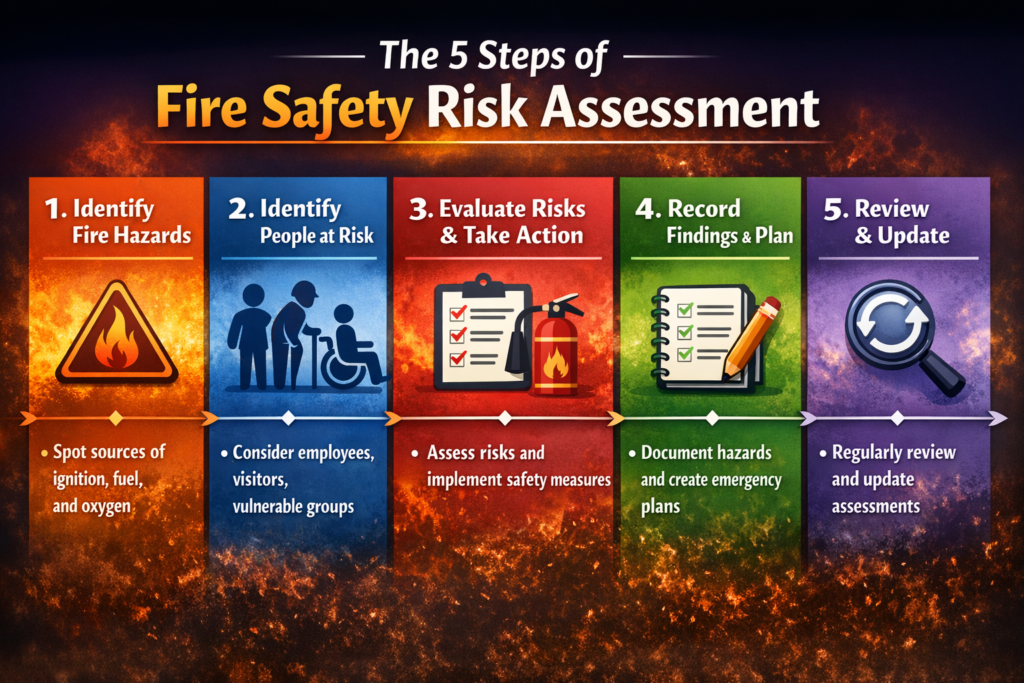
The table below summarises the five essential steps involved in a fire safety risk assessment:
| Step | Stage | Description | Key Actions |
|---|---|---|---|
| 1 | Identify Fire Hazards | Detect anything that can start or spread a fire within the premises | Check ignition sources, flammable materials, poor housekeeping |
| 2 | Identify People at Risk | Determine who may be affected during a fire, especially vulnerable individuals | Consider employees, visitors, disabled persons, lone workers |
| 3 | Evaluate Risks & Take Action | Assess likelihood and severity of fire and apply control measures | Remove hazards, install alarms/extinguishers, improve storage |
| 4 | Record Findings & Plan | Document hazards, risks, and safety measures and develop action plans | Maintain records, create emergency plans, assign responsibilities |
| 5 | Review & Update | Regularly review and update the assessment to keep it effective | Update after changes in layout, staff, or equipment |
The first and most important step in this process is identifying fire hazards, as it forms the foundation for all further actions.
1. Identify Fire Hazards
Identifying fire hazards is the starting point and one of the most critical stages of a fire safety risk assessment. A fire hazard is anything that has the potential to start a fire or contribute to its spread. If hazards are not properly identified at this stage, the entire risk assessment process may become ineffective, as unidentified risks cannot be controlled.
This step involves conducting a detailed and systematic inspection of the premises, including all rooms, work areas, storage spaces, and hidden corners. It requires careful observation, awareness of workplace activities, and an understanding of how different materials and equipment can interact to create fire risks.
Fire hazards are generally associated with three key elements often referred to as the fire triangle:
- Sources of ignition (anything that can produce heat or sparks)
- Sources of fuel (materials that can burn)
- Sources of oxygen (which supports combustion and intensifies fire)
Understanding this concept helps in identifying how a fire could start, develop, and spread within a particular environment.
Common Fire Hazards in Detail
1. Electrical Faults
Electrical systems are one of the leading causes of fire incidents. Hazards may include:
- Damaged or exposed wiring
- Overloaded sockets and extension leads
- Faulty electrical appliances
- Lack of regular maintenance and inspection
These issues can generate excessive heat or sparks, which may ignite nearby combustible materials. Regular inspection and proper usage of electrical systems are essential to minimise this risk.
2. Flammable and Combustible Materials
Any material that can easily catch fire acts as fuel for a fire. Common examples include:
- Paper, cardboard, and packaging materials
- Wooden furniture and textiles
- Chemicals, gases, and flammable liquids
- Waste materials and rubbish accumulation
Improper storage or handling of these materials can significantly increase the speed at which a fire spreads. Keeping such materials organised and stored safely is crucial for fire prevention.
3. Cooking Equipment
Cooking areas are considered high-risk zones due to the presence of heat, flames, and oils. Hazards include:
- Unattended cooking appliances
- Overheated oil or grease
- Gas leaks or faulty cooking equipment
These risks are especially common in commercial kitchens, restaurants, and staff break areas. Proper supervision and maintenance are essential to reduce fire incidents in these areas.
4. Heating Systems
Heating equipment can become dangerous if not properly managed. Common risks include:
- Portable heaters placed near flammable materials
- Faulty boilers or radiators
- Lack of maintenance or improper installation
Heating devices should always be used safely and kept at a safe distance from combustible items to prevent ignition.
5. Poor Housekeeping Practices
Poor housekeeping is often an overlooked but significant fire hazard. It includes:
- Accumulation of waste and debris
- Cluttered workspaces
- Blocked ventilation or escape routes
- Improper storage of materials
Clutter not only increases the amount of fuel available for a fire but can also obstruct evacuation routes, making emergencies more dangerous.
Importance of Identifying Fire Hazards
This step is crucial because it allows organisations to detect risks at an early stage and take preventive action before a fire occurs. By identifying hazards, responsible persons can:
- Eliminate or reduce ignition sources
- Control or safely store flammable materials
- Improve overall workplace safety
- Prevent minor risks from turning into major incidents
A thorough and well-documented hazard identification process ensures that no potential danger is overlooked and provides a strong foundation for the remaining steps of the fire risk assessment.
2. Identify People at Risk
The second step in a Fire Safety Risk Assessment is to identify all individuals who may be affected if a fire occurs. This stage is essential because fire safety is not only about controlling hazards—it is also about protecting people, especially those who may be more vulnerable or require additional assistance during an emergency.
Identifying people at risk involves carefully analysing who is present on the premises, where they are located, and how easily they can respond to a fire situation. It also requires consideration of different working conditions, physical abilities, and levels of awareness. By understanding these factors, organisations can develop effective evacuation plans and ensure that appropriate safety measures are in place for everyone.
Who May Be at Risk?
1. Employees and Staff
Employees are the primary occupants in most workplaces and are directly exposed to fire risks during daily operations. Their level of risk may vary depending on:
- The nature of their work (e.g., working with machinery, chemicals, or heat sources)
- Their location within the building
- Their familiarity with fire safety procedures
Providing proper training, clear instructions, and regular fire drills ensures that employees can respond quickly and safely in an emergency.
2. Visitors, Customers, and Contractors
Visitors are often unfamiliar with the layout of the premises and may not be aware of fire safety procedures or emergency exits. This includes:
- Customers in commercial settings
- Contractors working temporarily on-site
- Delivery personnel
Because of their limited knowledge of the environment, they may be at greater risk during a fire. It is important to ensure that:
- Fire exit signs are clearly visible
- Staff are available to guide visitors
- Safety instructions are easy to understand
3. Disabled Individuals
People with physical, sensory, or cognitive impairments may face additional challenges during a fire emergency. These may include:
- Limited mobility (difficulty using stairs or moving quickly)
- Visual or hearing impairments (difficulty seeing signs or hearing alarms)
- Cognitive conditions (difficulty understanding instructions)
Special arrangements must be made to support these individuals, such as:
- Personal evacuation plans (PEEPs)
- Accessible escape routes
- Assistance from trained staff
Ensuring inclusivity in fire safety planning is essential for protecting all occupants.
4. Elderly People
Older individuals may have reduced mobility, slower reaction times, or underlying health conditions that make evacuation more difficult. They may also require:
- Additional time to respond to alarms
- Physical assistance during evacuation
- Clear and simple instructions
Careful planning and support systems are necessary to ensure their safety in case of fire.
5. People Working Alone or in Isolated Areas
Individuals working alone or in remote parts of a building are at increased risk because:
- They may not be immediately aware of a fire
- They may not receive help quickly
- Communication during emergencies may be limited
Examples include night shift workers, security staff, or maintenance personnel. To reduce risks, organisations should implement:
- Effective communication systems
- Regular check-ins or monitoring
- Clear emergency procedures
Why Identifying People at Risk is Important
Understanding who is at risk allows organisations to design targeted safety measures that address the needs of different individuals. This step helps to:
- Develop effective and inclusive evacuation plans
- Ensure adequate support for vulnerable persons
- Improve response time during emergencies
- Reduce panic and confusion
By considering all occupants—not just the general workforce—organisations can create a safer and more prepared environment.
3. Evaluate Risks and Take Action
After identifying fire hazards and recognising who may be at risk, the next crucial stage is to evaluate the level of risk and implement appropriate control measures. This step is where the assessment becomes practical and meaningful, as it converts observations into real actions that improve safety.
Evaluating fire risk involves carefully analysing how likely a fire is to occur, how serious its consequences could be, and whether the existing safety arrangements are strong enough to manage those risks. It requires a balanced and informed approach, ensuring that all risks are reduced to a level that is as low as reasonably practicable while maintaining an efficient and functional environment.
This stage is not only about identifying problems—it is about prioritising risks and making decisions on how to eliminate or control them effectively.
In-Depth Understanding of Risk Evaluation
At this stage, responsible persons such as employers, safety officers, or building managers must carry out a detailed assessment of three key factors:
1. Likelihood of Fire Occurrence
This refers to the probability of a fire starting within the premises. Factors that influence likelihood include:
- Faulty or poorly maintained electrical systems
- Unsafe working practices or human error
- Presence of ignition sources near combustible materials
- Lack of supervision in high-risk areas
Understanding likelihood helps determine which hazards pose the greatest threat and require immediate attention.
2. Potential Consequences of Fire
This involves assessing the possible impact if a fire were to occur. Considerations include:
- Risk of injury or loss of life
- Extent of property and structural damage
- Disruption to business operations
- Environmental and financial consequences
A fire in a high-occupancy or high-risk area may have severe consequences, even if the likelihood is low.
3. Effectiveness of Existing Control Measures
It is essential to review current fire safety systems and procedures, such as:
- Fire alarms and detection systems
- Fire extinguishers and suppression systems
- Emergency exits and escape routes
- Staff training and awareness
This evaluation helps determine whether existing measures are sufficient or if improvements are needed.
Prioritising Risks
Not all risks carry the same level of severity. Therefore, it is important to prioritise hazards based on their level of risk:
- High-risk hazards → Require immediate action
- Medium-risk hazards → Need planned improvements
- Low-risk hazards → Should be monitored regularly
Prioritisation ensures that resources are used effectively and that the most serious risks are addressed first.
Key Actions to Control Fire Risks
Once risks have been evaluated, appropriate control measures must be implemented. These actions aim to both prevent fire incidents and minimise their impact if they occur.
1. Eliminate or Minimise Fire Hazards
The most effective approach to fire safety is to remove hazards entirely. Where this is not possible, risks should be reduced to a safe level. This can be achieved by:
- Repairing or replacing defective electrical systems and equipment
- Keeping ignition sources away from flammable materials
- Reducing the quantity of combustible substances stored on-site
- Implementing regular maintenance schedules for machinery and systems
By addressing hazards at their origin, the chances of fire starting are significantly reduced.
2. Install Fire Detection and Firefighting Systems
Early detection is critical in controlling fire incidents. Properly installed and maintained fire safety equipment ensures a quick response. Key systems include:
- Fire alarms and smoke detectors for early warning
- Fire extinguishers positioned in easily accessible areas
- Sprinkler systems to control and suppress fire spread
- Automatic fire suppression systems in high-risk environments
Routine testing and maintenance of these systems are essential to ensure reliability during emergencies.
3. Improve Ventilation and Safe Storage Practices
Ventilation and storage play a vital role in fire prevention. Poor airflow can lead to the accumulation of heat and flammable vapours, increasing fire risk. Effective measures include:
- Ensuring proper ventilation in all working and storage areas
- Storing flammable materials in designated, well-ventilated locations
- Using appropriate containers for hazardous substances
- Keeping storage areas organised and free from excess clutter
These practices help reduce both ignition risk and fire intensity.
4. Provide Clear Signage and Safety Information
Clear communication is essential during a fire emergency. Proper signage ensures that occupants can quickly identify escape routes and safety equipment. Important measures include:
- Clearly marked fire exits and evacuation routes
- Visible and easy-to-understand fire safety signs
- Emergency lighting to guide occupants in low visibility
- Fire action notices displayed in key locations
Effective signage reduces panic, improves response time, and supports safe evacuation.
Importance of Taking Immediate and Effective Action
Evaluating risks alone is not enough—taking action is what truly enhances safety. This step ensures that all identified hazards are actively managed and controlled. By implementing appropriate measures, organisations can:
- Significantly reduce the likelihood of fire incidents
- Limit the severity of damage if a fire occurs
- Improve emergency preparedness and response
- Create a safer working and living environment
- Ensure compliance with fire safety laws and standards
4. Record Findings and Plan
After identifying fire hazards and evaluating the level of risk, the next critical step is to record all findings and develop a structured fire safety plan. This stage ensures that the entire risk assessment process is properly documented, communicated, and translated into clear actions. Without accurate records and a well-defined plan, even the most thorough assessment can fail to deliver real safety improvements.
Recording findings is not just about writing down observations—it is about creating a reliable system for managing fire safety, assigning responsibilities, and ensuring that all identified risks are effectively controlled over time. It also provides documented evidence that an organisation is taking its legal and moral responsibilities seriously.
Purpose of Recording Findings
Proper documentation serves several important functions:
- It ensures that all hazards and risks are clearly identified and not forgotten
- It provides a reference for future inspections and reviews
- It supports communication between management, staff, and safety officers
- It demonstrates compliance with fire safety laws and regulations
- It helps track progress in implementing safety improvements
A well-maintained record acts as a central source of information, making it easier to manage fire safety systematically and consistently.
Key Components of Recording and Planning
1. Documenting Hazards, Risks, and Control Measures
The first part of this step involves creating a detailed record of all findings from the risk assessment. This should include:
- A clear description of each identified fire hazard
- The location of the hazard within the premises
- The level of risk associated with each hazard (low, medium, high)
- The individuals or groups who may be affected
- Existing control measures already in place
In addition, any gaps or weaknesses in current safety arrangements should be highlighted. This structured documentation allows organisations to clearly understand where improvements are needed and ensures that no risk is overlooked.
2. Maintaining Comprehensive Safety Records
Maintaining up-to-date fire safety records is essential for ongoing risk management. These records should be organised, accessible, and regularly reviewed. Key records include:
- Fire risk assessment reports and updates
- Maintenance and inspection logs for fire alarms, extinguishers, and sprinkler systems
- Records of fire drills and evacuation exercises
- Staff training and awareness records
- Incident and near-miss reports
Keeping these records ensures that all safety activities are tracked and monitored. It also provides evidence during audits or inspections that appropriate fire safety measures are being maintained.
3. Developing a Detailed Emergency Plan
An effective fire safety strategy must include a well-structured emergency plan. This plan outlines the actions to be taken in the event of a fire and ensures that everyone knows how to respond quickly and safely. A comprehensive emergency plan should cover:
- Clearly defined evacuation procedures
- Designated escape routes and emergency exits
- Assembly points for occupants after evacuation
- Roles and responsibilities of staff during an emergency (e.g., fire wardens)
- Procedures for assisting vulnerable individuals
- Emergency contact details, including fire services
The plan should be simple, easy to understand, and communicated to all occupants. Regular fire drills should be conducted to test the effectiveness of the plan and improve preparedness.
Action Planning and Implementation
Recording findings must be followed by a clear and actionable plan. This involves turning identified risks into specific tasks and responsibilities. An effective action plan should include:
- Prioritisation of risks based on their severity
- Assignment of responsibilities to competent individuals
- Realistic deadlines for completing corrective actions
- Monitoring systems to track progress and ensure completion
This approach ensures that risks are not only documented but also actively managed and resolved in a timely manner.
Importance of Recording and Planning
This step is vital because it creates a structured and accountable approach to fire safety management. It helps organisations to:
- Maintain consistency in safety practices
- Improve communication and coordination
- Ensure readiness for emergency situations
- Continuously monitor and improve safety measures
- Demonstrate compliance with legal and regulatory requirements
5. Review and Update
The final step in a Fire Safety Risk Assessment is to review and update the assessment on a regular basis to ensure it remains accurate, effective, and aligned with current conditions. Fire safety is not a one-time task—it is an ongoing and evolving process that must adapt to changes in the workplace, building structure, equipment, and workforce.
Over time, new hazards can arise, existing risks may increase or decrease, and previously implemented safety measures may no longer be sufficient. Without regular review, even a well-prepared fire risk assessment can become outdated, reducing its effectiveness and increasing the likelihood of fire incidents. Therefore, continuous monitoring and timely updates are essential to maintain a high standard of safety.
Importance of Reviewing Fire Risk Assessments
Regularly reviewing the fire risk assessment ensures that safety measures remain relevant and effective. This process helps organisations to:
- Keep safety measures up to date so they continue to provide adequate protection
- Identify new or emerging hazards that were not previously present
- Verify the effectiveness of existing controls, such as alarms and escape routes
- Ensure compliance with legal and regulatory requirements
- Promote continuous improvement in fire safety practices
By carrying out regular reviews, organisations can prevent small issues from becoming major risks and maintain a proactive approach to safety.
When Should a Fire Risk Assessment Be Reviewed?
A fire risk assessment should be reviewed periodically and whenever significant changes occur. The most common situations include:
1. Regular Scheduled Reviews
Routine reviews should be conducted at planned intervals, such as annually or as required by regulations. These reviews help to:
- Reassess previously identified hazards
- Confirm that control measures are still effective
- Ensure consistency in fire safety management
Regular reviews provide a structured approach to maintaining safety standards over time.
2. Changes in Equipment or Work Processes
Introducing new equipment or modifying processes can create new fire risks. Examples include:
- Installation of new machinery or electrical systems
- Use of new materials, especially flammable substances
- Changes in operational procedures
Such changes require reassessment to ensure that appropriate control measures are in place.
3. Changes in Building Layout or Structure
Any modification to the physical environment can impact fire safety. This may include:
- Renovations, extensions, or structural alterations
- Changes in room usage or storage arrangements
- Adjustments to escape routes or emergency exits
These changes can affect evacuation procedures and hazard locations, making it essential to update the assessment accordingly.
4. Changes in Workforce or Occupancy
Variations in the number or type of occupants can influence fire risk. This includes:
- Increase or decrease in staff numbers
- Presence of vulnerable individuals (e.g., elderly or disabled persons)
- Changes in working patterns, such as night shifts or lone working
Such changes may require adjustments to evacuation plans and safety measures.
5. After a Fire Incident or Near Miss
Any fire incident or near miss should trigger an immediate review. This helps to:
- Identify weaknesses in existing safety systems
- Understand the causes of the incident
- Implement corrective actions to prevent recurrence
Learning from real incidents is one of the most effective ways to improve fire safety.
How to Effectively Review and Update
An effective review process should be thorough and well-organised. It typically involves:
- Re-examining all previously identified hazards and risks
- Inspecting fire safety equipment to ensure proper functioning
- Reviewing evacuation procedures and emergency plans
- Consulting employees to gather feedback and identify concerns
- Updating documentation to reflect any changes or improvements
All updates should be clearly recorded and communicated to relevant personnel to ensure proper implementation and awareness.
Importance of Keeping Assessments Up to Date
Maintaining an up-to-date fire risk assessment ensures that safety measures remain aligned with current conditions. It enables organisations to:
- Respond quickly to new and emerging risks
- Maintain a high level of preparedness for emergencies
- Avoid complacency in safety practices
- Demonstrate ongoing compliance with fire safety regulations
Types of Fire Hazards
Understanding the different types of fire hazards is essential for conducting an effective fire safety risk assessment. Fire hazards can arise from various sources within a workplace or building, and each type presents unique risks that must be properly managed. By identifying and categorising these hazards, organisations can implement targeted control measures to prevent fire incidents and reduce their impact.
Fire hazards are generally grouped into four main categories: electrical, chemical, human, and environmental hazards. Each of these plays a significant role in increasing the likelihood of fire if not properly controlled.
1. Electrical Hazards
Electrical hazards are one of the most common causes of fire incidents, particularly in workplaces and commercial environments. These hazards occur when electrical systems or equipment are damaged, overloaded, or poorly maintained.
Common Electrical Hazards Include:
- Faulty wiring
Damaged, exposed, or outdated wiring can generate heat or sparks, which may ignite nearby combustible materials. - Overloaded circuits
Plugging too many devices into a single outlet or extension lead can cause overheating, increasing the risk of fire. - Defective electrical equipment
Malfunctioning appliances or machines can produce excessive heat or electrical faults. - Lack of maintenance
Failure to regularly inspect and service electrical systems can allow small issues to develop into serious hazards.
Why It Matters
Electrical hazards are often hidden and can go unnoticed until a fire occurs. Regular inspection, proper installation, and safe usage are essential to minimise these risks.
2. Chemical Hazards
Chemical hazards involve substances that are flammable, explosive, or reactive, making them highly dangerous in the presence of heat or ignition sources. These hazards are common in industrial, laboratory, and storage environments.
Common Chemical Hazards Include:
- Flammable liquids
Substances such as petrol, solvents, and cleaning chemicals can ignite easily and burn rapidly. - Gases
Compressed or liquefied gases (e.g., propane, butane) can leak and form explosive mixtures in the air. - Improper storage
Storing chemicals in unsuitable conditions or containers can increase the risk of fire or explosion.
Why It Matters
Even small amounts of flammable chemicals can lead to serious fire incidents. Proper handling, storage, and ventilation are critical to controlling these risks.
3. Human Factors
Human behaviour is a significant contributor to fire risk. Many fire incidents occur due to carelessness, lack of awareness, or unsafe practices.
Common Human-Related Hazards Include:
- Negligence
Leaving equipment unattended, improper use of machinery, or ignoring safety procedures can lead to fire incidents. - Smoking
Improper disposal of cigarettes or smoking in restricted areas can easily ignite flammable materials. - Lack of training
Employees who are not trained in fire safety may unknowingly create hazardous situations. - Unsafe practices
Poor decision-making or shortcuts in work processes can increase fire risk.
Why It Matters
Human error is often preventable. Proper training, awareness, and enforcement of safety rules can significantly reduce these risks.
4. Environmental Hazards
Environmental hazards relate to the conditions of the workplace or building that can contribute to fire risk or allow a fire to spread more rapidly.
Common Environmental Hazards Include:
- Poor ventilation
Inadequate airflow can cause heat and flammable vapours to accumulate, increasing the risk of ignition. - Cluttered spaces
Accumulation of materials, waste, or debris provides additional fuel for fire and can obstruct escape routes. - Blocked exits
Obstructed evacuation routes can make it difficult for occupants to escape safely during a fire. - Poor housekeeping
Untidy and disorganised environments increase both fire risk and the potential severity of an incident.
Why It Matters
Environmental conditions can significantly influence how a fire starts and spreads. Maintaining a clean, organised, and well-ventilated space is essential for fire prevention.
Fire Prevention and Control Measures
Effective fire safety depends on a combination of preventive actions, protective systems, and well-planned emergency procedures. Together, these measures reduce the likelihood of a fire starting and ensure that, if it does occur, its impact is controlled and people can respond safely.
A strong fire safety strategy is not based on a single solution—it requires a layered approach that addresses risks at every stage: before, during, and after a fire incident.
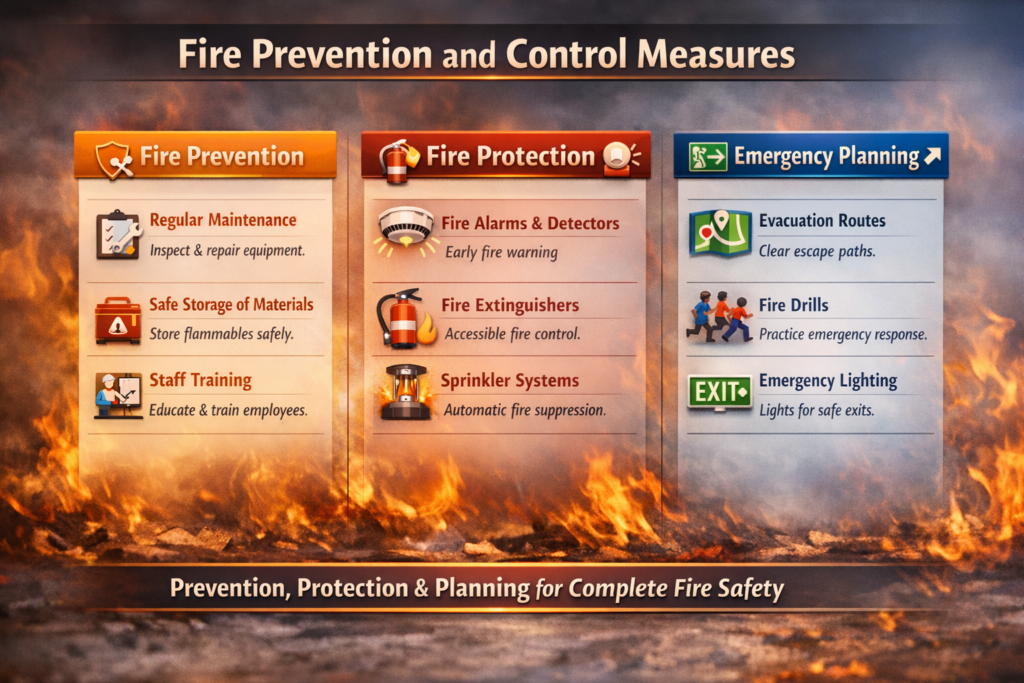
The table below summarises the key fire prevention and control measures:
| Category | Measure | Description | Key Benefits |
|---|---|---|---|
| Prevention | Regular Maintenance | Inspect and maintain electrical systems, equipment, and machinery to prevent faults | Reduces chances of fire starting |
| Prevention | Safe Storage of Materials | Store flammable and combustible materials safely and away from ignition sources | Limits fire spread and fuel sources |
| Prevention | Staff Training | Train employees on fire safety, hazard awareness, and safe practices | Prevents human errors and improves response |
| Protection | Fire Alarms | Install smoke detectors and alarm systems for early fire detection | Provides early warning and quick response |
| Protection | Fire Extinguishers | Place extinguishers in accessible locations and ensure proper usage | Helps control small fires quickly |
| Protection | Sprinkler Systems | Use automatic systems to detect and suppress fire | Reduces fire spread and damage |
| Emergency Planning | Evacuation Routes | Design clear and accessible escape routes and exits | Ensures safe and quick evacuation |
| Emergency Planning | Fire Drills | Conduct regular drills to prepare occupants for emergencies | Improves readiness and reduces panic |
| Emergency Planning | Emergency Lighting | Install backup lighting and exit signs for visibility | Helps safe evacuation in low visibility |
1. Fire Prevention Measures
Fire prevention focuses on stopping a fire before it starts by identifying and controlling potential hazards. These measures are proactive and play a key role in reducing fire risks.
Regular Maintenance
Proper maintenance of equipment and systems is essential to prevent fire hazards. This includes:
- Routine inspection of electrical systems and wiring
- Servicing machinery and heating equipment
- Repairing faulty appliances immediately
- Checking gas lines and connections
Regular maintenance helps detect problems early and prevents overheating, sparks, or system failures that could lead to fire.
Safe Storage of Materials
Incorrect storage of materials—especially flammable substances—can significantly increase fire risk. Safe storage practices include:
- Keeping flammable materials away from ignition sources
- Storing chemicals in approved containers and designated areas
- Reducing the quantity of combustible materials on-site
- Maintaining clear and organised storage spaces
Proper storage limits the availability of fuel for fire and reduces the chances of rapid fire spread.
Staff Training and Awareness
Human behaviour plays a major role in fire safety. Providing training ensures that employees understand risks and follow safe practices. Training should include:
- Awareness of fire hazards and prevention methods
- Proper use of equipment and machinery
- Safe handling of flammable substances
- Understanding fire safety procedures and responsibilities
Well-trained staff are more likely to prevent unsafe situations and respond effectively in emergencies.
2. Fire Protection Measures
Fire protection measures are designed to detect, control, and suppress fires if they occur. These systems help minimise damage and provide critical time for evacuation.
Fire Alarms and Detection Systems
Fire alarms and smoke detectors provide early warning, allowing occupants to react quickly. Key features include:
- Automatic detection of smoke, heat, or flames
- Audible and visual alerts to warn occupants
- Integration with emergency systems
Early detection is crucial in preventing small fires from becoming major incidents.
Fire Extinguishers
Fire extinguishers are essential for controlling small fires before they spread. Important considerations include:
- Placement in accessible and visible locations
- Availability of different types for different fire classes
- Regular inspection and maintenance
- Staff training on proper usage
Quick access to extinguishers can significantly reduce fire damage.
Sprinkler and Suppression Systems
Automatic sprinkler systems are highly effective in controlling and extinguishing fires. These systems:
- Activate automatically when heat is detected
- Help contain fire spread
- Reduce damage to property
- Increase chances of survival
Sprinklers are especially important in large buildings and high-risk environments.
3. Emergency Planning and Preparedness
Even with preventive and protective measures in place, it is essential to be prepared for emergencies. Emergency planning ensures that people can respond quickly, safely, and efficiently during a fire.
Evacuation Routes and Exits
Clear and accessible escape routes are critical for safe evacuation. This includes:
- Clearly marked and unobstructed fire exits
- Well-planned evacuation routes
- Sufficient exits for the number of occupants
- Easy access for all individuals, including vulnerable persons
Proper evacuation planning reduces panic and ensures a smooth exit during emergencies.
Fire Drills
Regular fire drills help prepare occupants for real emergency situations. They ensure that:
- People understand evacuation procedures
- Response times are improved
- Weaknesses in emergency plans are identified
- Staff become familiar with their roles
Practicing evacuation regularly builds confidence and readiness.
Emergency Lighting and Signage
In a fire, visibility may be reduced due to smoke or power failure. Emergency lighting ensures that occupants can safely find their way out. This includes:
- Backup lighting systems for escape routes
- Illuminated exit signs
- Clear directional signage
These features help guide people to safety, even in low-visibility conditions.
Legal Responsibilities in Fire Safety
Employers, property owners, and those responsible for managing premises have a legal duty to ensure fire safety within their buildings. These responsibilities are not optional—they are enforced by law to protect lives, property, and business continuity. Failing to meet these obligations can lead to severe consequences, including fines, prosecution, or even imprisonment in serious cases.
Below is a detailed explanation of the key legal responsibilities:
1. Conduct Fire Risk Assessments
One of the most critical legal duties is to carry out regular fire risk assessments. This involves systematically identifying potential fire hazards, evaluating the level of risk, and implementing appropriate control measures.
A proper fire risk assessment should:
- Identify sources of ignition (e.g., electrical equipment, open flames)
- Recognise combustible materials (e.g., paper, chemicals, fabrics)
- Evaluate who is at risk, including vulnerable individuals
- Assess existing fire safety measures
- Recommend improvements where necessary
These assessments must be reviewed regularly, especially when there are changes to the building, processes, or workforce. Proper documentation is also essential to demonstrate compliance.
2. Provide Adequate Fire Safety Equipment
Employers are legally required to install and maintain appropriate fire safety equipment to reduce risks and respond effectively in case of an emergency.
This includes:
- Fire extinguishers suitable for different types of fires
- Fire alarms and detection systems
- Emergency lighting
- Fire blankets and sprinkler systems (where necessary)
All equipment must be:
- Easily accessible
- Clearly marked
- Regularly inspected and serviced
Providing the right equipment ensures quick action can be taken to control or extinguish a fire before it escalates.
3. Train Employees and Occupants
Fire safety training is a legal requirement and plays a vital role in preventing incidents and ensuring safe evacuation.
Training should cover:
- Fire prevention awareness
- How to use fire extinguishers safely
- Emergency evacuation procedures
- Understanding alarm signals and escape routes
Employers must ensure that:
- New employees receive training during induction
- Refresher training is provided periodically
- Fire drills are conducted regularly
Well-trained staff are more likely to respond calmly and effectively during emergencies, reducing the risk of injury or panic.
4. Maintain Fire Safety Records
Maintaining accurate and up-to-date fire safety documentation is essential for legal compliance and accountability.
Important records include:
- Fire risk assessment reports
- Equipment maintenance and inspection logs
- Training and drill records
- Incident and near-miss reports
These records provide evidence that fire safety measures are being properly managed and can be crucial during inspections or investigations.
5. Ensure Safe Evacuation Procedures
In addition to the above, responsible persons must ensure that safe evacuation procedures are clearly established and communicated.
This involves:
- Clearly marked emergency exits
- Unobstructed escape routes
- Displayed evacuation plans
- Designated assembly points
Special arrangements should also be made for individuals with disabilities or mobility issues.
6. Consequences of Non-Compliance
Failure to comply with fire safety laws can result in serious legal and financial consequences, such as:
- Heavy fines and penalties
- Business closure or enforcement notices
- Legal prosecution
- Imprisonment in severe cases
Beyond legal implications, non-compliance can lead to loss of life, property damage, and reputational harm. and serious risks.
Fire Safety in the Workplace
Fire safety in the workplace is a critical responsibility for every organisation, regardless of its size or industry. It involves implementing practical measures, policies, and procedures that help prevent fires, protect people, and minimise damage if an incident occurs. A well-structured fire safety plan not only ensures legal compliance but also creates a safer and more confident working environment for employees.
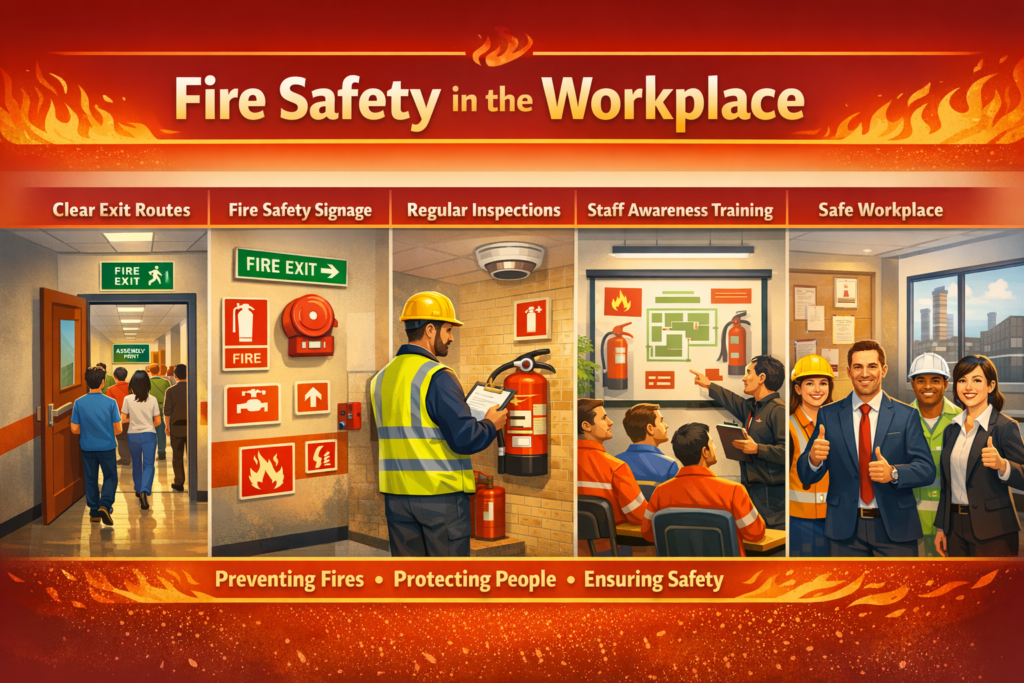
Below is a detailed explanation of the key components of workplace fire safety:
1. Clear Exit Routes
One of the most essential aspects of workplace fire safety is ensuring that emergency exit routes are clearly defined and easily accessible at all times.
This means:
- All escape routes must be free from obstructions such as furniture, equipment, or storage items
- Exit doors should open easily and in the direction of escape
- Routes must be wide enough to accommodate all occupants safely
- Emergency exits should lead to a safe assembly point outside the building
In an emergency, confusion and panic can occur quickly. Clearly maintained exit routes allow for fast and safe evacuation, reducing the risk of injuries or fatalities.
2. Fire Safety Signage
Proper fire safety signage plays a crucial role in guiding people during emergencies, especially for visitors or new employees who may not be familiar with the building layout.
Effective signage includes:
- Clearly marked fire exit signs
- Directional arrows showing escape routes
- Locations of fire extinguishers and alarms
- Warning signs for fire hazards
All signs should be:
- Visible and well-lit (or glow in the dark in case of power failure)
- Positioned at appropriate heights and locations
- Easy to understand using universal symbols
Good signage ensures that people can quickly identify what actions to take, even under stress.
3. Regular Inspections
Routine fire safety inspections are necessary to ensure that all safety measures remain effective and compliant with regulations.
Inspections should involve:
- Checking fire alarms and detection systems
- Inspecting fire extinguishers for pressure and usability
- Ensuring emergency lighting is functional
- Verifying that escape routes remain clear
- Identifying new hazards introduced by changes in the workplace
Regular inspections help detect issues early and allow corrective actions to be taken before they become serious risks.
4. Staff Awareness Training
Employees are the first line of defence in fire safety. Providing comprehensive fire safety training ensures that staff know how to prevent fires and respond effectively if one occurs.
Training should include:
- Understanding common fire hazards in the workplace
- Safe use of electrical equipment and materials
- How to raise the alarm in case of fire
- Correct use of fire extinguishers (where appropriate)
- Evacuation procedures and assembly points
In addition:
- Fire drills should be conducted regularly
- Training should be refreshed periodically
- New employees must receive training during onboarding
Well-informed staff can act quickly and calmly, significantly reducing the impact of an emergency.
5. Importance of a Safe Workplace
A safe workplace reduces risks and ensures the protection of employees, visitors, and property.
When fire safety measures are properly implemented:
- The likelihood of fire incidents is greatly reduced
- Employees feel more secure and confident in their environment
- Business operations are less likely to be disrupted
- Organisations avoid legal penalties and reputational damage
Fire safety is not a one-time effort—it requires continuous monitoring, training, and improvement.d improves productivity.
| Component | Description | Importance |
|---|---|---|
| Clear Exit Routes | Ensuring all emergency exits are accessible, unobstructed, and clearly defined | Enables fast and safe evacuation, reducing risk of injuries and fatalities |
| Fire Safety Signage | Use of clear signs indicating exits, hazards, alarms, and equipment | Helps people quickly understand actions during emergencies |
| Regular Inspections | Routine checks of alarms, extinguishers, lighting, and escape routes | Identifies issues early and ensures all systems are functional |
| Staff Awareness Training | Training employees on fire prevention, evacuation, and equipment use | Improves response time and reduces panic during emergencies |
| Safe Workplace Environment | Implementing overall fire safety measures and maintaining safe conditions | Reduces fire risks and ensures protection of people and property |
Career Opportunities in Fire Safety (Your Advantage Section)
Fire safety is a rapidly growing and highly respected field, driven by increasing regulations, urban development, and the need to protect lives and infrastructure. Professionals in this sector play a vital role in preventing fire incidents, ensuring compliance with safety laws, and responding effectively to emergencies. As a result, there are diverse and rewarding career opportunities available for individuals with the right skills and training.
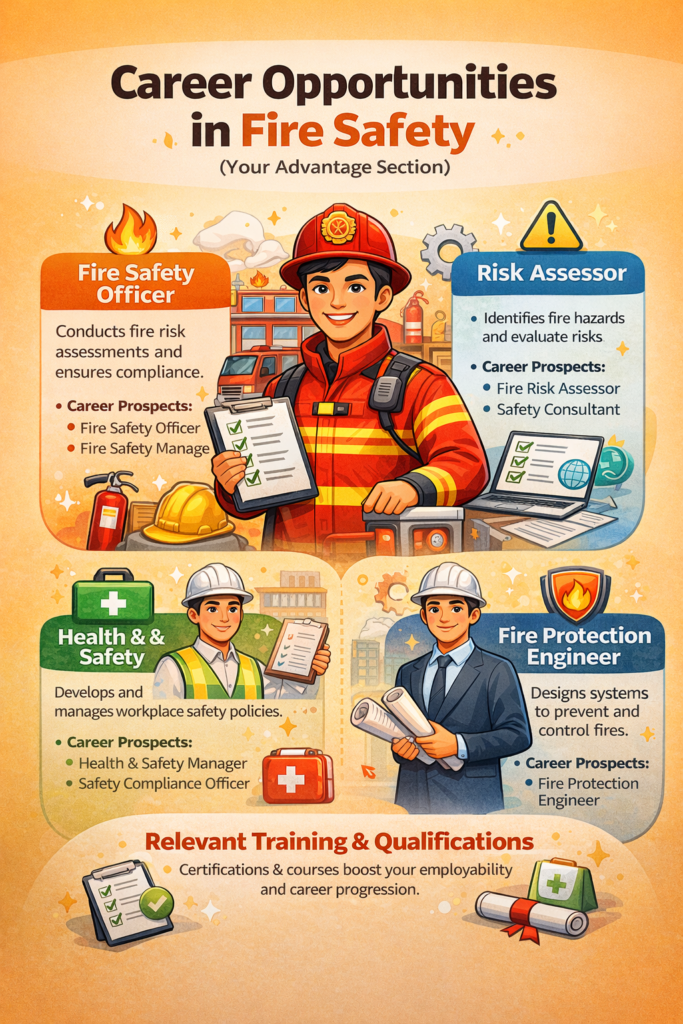
The following table provides an overview of key career roles in fire safety, including their responsibilities and suitability.
| Role | Description | Key Responsibilities | Suitable For |
|---|---|---|---|
| Fire Safety Officer | Oversees fire prevention and safety measures within organisations | Conduct risk assessments, ensure compliance, inspect equipment, manage evacuations, train staff | Individuals interested in practical safety roles |
| Risk Assessor | Identifies fire hazards and evaluates risks in different environments | Analyse hazards, recommend controls, prepare reports, advise on safety compliance | Analytical and detail-oriented professionals |
| Health & Safety Manager | Manages overall workplace safety including fire safety | Develop policies, monitor compliance, conduct audits, manage risks, lead safety programs | Those seeking leadership and management roles |
| Fire Protection Engineer | Designs systems to prevent and control fire incidents | Design fire systems, ensure code compliance, analyse fire risks, work with construction teams | Engineering and technical professionals |
Below is a detailed breakdown of the key career paths and how you can enter this field:
Fire Safety Officer
A Fire Safety Officer is responsible for overseeing fire prevention measures within an organisation or facility.
Key responsibilities include:
- Conducting fire risk assessments
- Ensuring compliance with fire safety regulations
- Inspecting fire safety equipment and systems
- Coordinating emergency evacuation procedures
- Delivering fire safety training to staff
This role is ideal for individuals who enjoy practical safety management and on-site responsibility.
Risk Assessor
A Fire Risk Assessor specialises in identifying potential fire hazards and evaluating risks in different environments such as offices, factories, hospitals, and residential buildings.
Core duties:
- Analysing fire hazards and vulnerabilities
- Recommending control measures and improvements
- Preparing detailed risk assessment reports
- Advising organisations on compliance and best practices
This career requires strong analytical skills and attention to detail, making it suitable for those interested in inspection, evaluation, and consultancy work.
Health & Safety Manager
A Health and Safety Manager has a broader role that includes fire safety as part of overall workplace safety management.
Responsibilities include:
- Developing and implementing safety policies
- Monitoring compliance with health and safety laws
- Managing workplace risks, including fire hazards
- Conducting audits and safety inspections
- Leading training programs and safety initiatives
This role offers leadership opportunities and is ideal for those aiming to work at a managerial level across industries.
Fire Protection Engineer
A Fire Protection Engineer focuses on the design and implementation of systems that prevent and control fires.
Typical tasks:
- Designing fire detection and suppression systems
- Ensuring buildings meet fire safety codes and standards
- Analysing fire dynamics and structural safety
- Collaborating with architects and construction teams
This is a technical and high-level career suited for individuals with an engineering background and interest in building safety systems.
Relevant Training and Qualifications
To succeed in fire safety careers, obtaining the right qualifications and training is essential. These credentials not only enhance your knowledge but also improve your employability and career progression.
The table below highlights the essential training and qualifications required to build a successful career in fire safety.
| Qualification Type | Description | Benefits |
|---|---|---|
| Fire Safety Certifications | Training in fire prevention, emergency planning, and compliance | Improves credibility, recognised globally, supports entry-level roles |
| Risk Assessment Courses | Focused training on identifying and managing fire risks | Builds analytical skills, supports assessor roles, enhances practical knowledge |
| Health & Safety Diplomas | Comprehensive study of workplace safety including fire safety | Opens managerial opportunities, supports long-term career growth |
Fire Safety Certifications
These certifications provide foundational and advanced knowledge in fire prevention, emergency planning, and safety compliance.
Benefits:
- Recognised by employers worldwide
- Improve credibility and professional standing
- Essential for entry-level and supervisory roles
Risk Assessment Courses
Specialised courses in fire risk assessment teach you how to identify hazards, evaluate risks, and recommend effective control measures.
You will learn:
- Risk assessment methodologies
- Legal requirements and standards
- Practical inspection techniques
These courses are particularly useful for those pursuing roles as Fire Risk Assessors or Safety Officers.
Health & Safety Diplomas
Diplomas in health and safety provide comprehensive knowledge of workplace safety, including fire safety management.
Key advantages:
- Open doors to managerial positions
- Cover a wide range of safety topics
- Enhance long-term career growth
Modern Trends in Fire Safety
Fire safety has significantly evolved in recent years due to advancements in technology and increasing regulatory demands. Modern approaches focus not only on responding to fires but also on predicting, preventing, and managing risks proactively. These innovations help organisations improve safety standards, reduce response times, and ensure better protection of lives and property.
Below is a detailed explanation of the key modern trends in fire safety:
Smart Fire Detection Systems
Smart fire detection systems represent a major upgrade from traditional smoke alarms. These systems use advanced sensors and intelligent algorithms to detect different signs of fire, such as smoke, heat, and gas leaks, with greater accuracy.
Unlike conventional systems, smart detectors can:
- Differentiate between real fire threats and false alarms
- Provide real-time alerts through connected devices such as smartphones or control panels
- Integrate with building management systems for automated responses
For example, in case of smoke detection, the system can automatically trigger alarms, activate sprinklers, and notify emergency services simultaneously. This level of automation ensures faster response and reduced risk of escalation.
AI-Based Monitoring
Artificial Intelligence (AI) is transforming fire safety by enabling systems to analyse data and detect risks in real time without human intervention.
AI-based monitoring systems work by:
- Analysing video footage from surveillance cameras to identify smoke or flames
- Monitoring temperature patterns and detecting unusual changes
- Predicting potential fire hazards based on historical data and environmental conditions
These systems are especially useful in large-scale environments such as factories, warehouses, and commercial buildings where continuous monitoring is required. AI enhances fire safety by providing early warnings and reducing reliance on manual supervision.
Digital Risk Assessment Tools
Traditional fire risk assessments often rely on manual processes and paperwork, which can be time-consuming and prone to errors. Modern fire safety practices now utilise digital risk assessment tools to improve efficiency and accuracy.
These tools allow organisations to:
- Conduct inspections using mobile devices or software platforms
- Record findings instantly and generate automated reports
- Store data securely in cloud-based systems
- Track compliance and monitor improvements over time
Digital tools make it easier to maintain up-to-date records and ensure that all safety measures are consistently reviewed. This leads to better decision-making and stronger regulatory compliance.
Remote Alarm Systems
Remote alarm systems enable fire safety systems to be monitored and controlled from off-site locations. This is particularly beneficial for organisations with multiple facilities or buildings that are not occupied at all times.
Key capabilities include:
- Sending instant alerts to responsible personnel via mobile devices
- Connecting directly to emergency response teams or monitoring centres
- Allowing real-time monitoring of fire alarm systems from anywhere
This ensures that even if a building is empty, any fire incident can be detected and responded to immediately. Remote systems provide continuous protection and faster emergency response, reducing potential damage.
Importance of Modern Fire Safety Trends
These modern trends are reshaping fire safety by shifting the focus from reactive measures to proactive risk management. By adopting these technologies, organisations can:
- Detect fire hazards earlier and more accurately
- Minimise false alarms and unnecessary disruptions
- Improve response times during emergencies
- Enhance overall safety management and compliance
Common Mistakes to Avoid in Fire Safety
Even with proper fire safety systems in place, many incidents occur due to simple but critical mistakes. These errors often develop over time through negligence, lack of awareness, or poor management practices. Understanding and avoiding these common mistakes is essential for maintaining a safe environment and ensuring compliance with fire safety regulations.
Below is a detailed explanation of the most frequent mistakes and how they impact workplace safety:
Ignoring Small Hazards
One of the most common mistakes is overlooking minor fire hazards, assuming they are not serious enough to cause harm. However, small risks can quickly escalate into major incidents if left unaddressed.
Examples of small hazards include:
- Overloaded electrical sockets
- Damaged wiring or faulty equipment
- Improper storage of flammable materials
- Blocked ventilation or heat-producing devices
These issues may seem insignificant at first, but they can act as ignition sources under the right conditions. Ignoring them increases the likelihood of a fire starting unexpectedly.
Why this is dangerous:
Small hazards are often early warning signs. Failing to address them can lead to larger, uncontrollable fires.
Lack of Training
Another major mistake is not providing adequate fire safety training to employees or occupants. Without proper knowledge, people may panic or respond incorrectly during an emergency.
Common training gaps include:
- Not knowing how to use fire extinguishers
- Lack of awareness of evacuation routes
- Failure to recognise fire risks in daily tasks
- Not understanding alarm signals or emergency procedures
Impact:
Untrained individuals may delay evacuation, misuse equipment, or fail to report hazards, which can significantly worsen the situation during a fire incident.
Regular training ensures that everyone knows their role and can respond quickly and effectively.
Poor Maintenance of Equipment
Fire safety equipment is only effective if it is properly maintained and regularly inspected. Neglecting maintenance is a serious mistake that can render safety systems useless when they are needed most.
Examples of poor maintenance:
- Expired or non-functional fire extinguishers
- Faulty fire alarms or detectors
- Broken emergency lighting
- Blocked or damaged sprinkler systems
Why this matters:
In an emergency, faulty equipment can fail to operate, leading to delayed response and increased damage. Regular servicing ensures that all systems remain fully operational and reliable.
Not Updating Fire Risk Assessments
Fire risk assessments are not a one-time task—they must be reviewed and updated regularly. A common mistake is failing to revise assessments when changes occur in the workplace.
Situations that require updates:
- Changes in building layout or structure
- Introduction of new equipment or materials
- Increase in staff or occupancy
- Changes in processes or operations
Consequences:
Outdated assessments may not reflect current risks, leaving new hazards unidentified and unmanaged. This can lead to gaps in safety measures and increased vulnerability.
Why Avoiding These Mistakes is Important
Avoiding these common mistakes helps organisations:
- Reduce the likelihood of fire incidents
- Improve emergency response and preparedness
- Ensure compliance with legal requirements
- Protect lives, property, and business operations
Conclusion
A Fire Safety Risk Assessment is not just a legal obligation but a vital and ongoing process that ensures the protection of lives, property, and business operations. It allows organisations to take a proactive approach by identifying potential fire hazards, carefully evaluating the risks they present, and implementing effective measures to control or eliminate those risks. By doing so, workplaces become safer, more organised, and better prepared to prevent fire incidents before they occur. It also strengthens awareness among employees, ensuring that everyone understands their responsibilities and can respond appropriately in case of an emergency.
Furthermore, fire safety risk assessments must be continuously reviewed and updated to reflect changes in the workplace, such as new equipment, processes, or layouts. This ongoing commitment helps organisations maintain compliance with regulations while also improving overall safety standards. In the long term, a well-managed fire safety strategy reduces the likelihood of incidents, minimises potential damage, and reinforces a strong culture of safety, ultimately ensuring a secure and resilient environment for everyone.
Fire risk assessment is a critical step in identifying hazards and implementing control measures. For a broader understanding of fire safety principles, including prevention, protection, and preparedness, you can explore this guide on fire safety essentials prevention protection and preparedness.